Connect with us

Technology

Machine Translation Market to Grow by USD 1.23 Billion (2024-2028), Driven by Content Localization Demand, with AI Redefining Market Landscape – Technavio

Published

on

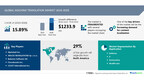
NEW YORK, Nov. 18, 2024 /PRNewswire/ — Report with market evolution powered by AI – The global machine translation market  size is estimated to grow by USD 1.23 billion from 2024-2028, according to Technavio. The market is estimated to grow at a CAGR of  15.89%  during the forecast period. Increasing demand for content localization is driving market growth, with a trend towards rising use of multilingual AI. However, availability of open-source machine translation service tools  poses a challenge.Key market players include Alphabet Inc., ARGOS TRANSLATIONS Sp. Z o.o., Babylon Software Ltd., Cloudwords Inc., CSOFT International Inc., Global Lingo Ltd., Honyaku Center Inc., International Business Machines Corp., Lingotek Inc., Lingua Custodia, Lionbridge Technologies LLC, Microsoft Corp., Omniscien Technologies, Promt, SYSTRAN SA, Teleperformance SE, thebigword Group Ltd., TransPerfect Global Inc., Welocalize Inc., and RWS Holdings PLC.

AI-Powered Market Evolution Insights. Our comprehensive market report ready with the latest trends, growth opportunities, and strategic analysis- View Free Sample Report PDF

Forecast period

2024-2028

Base Year

2023

Historic Data

2018 – 2022

Segment Covered

Application (Defense, IT, Automotive, and Healthcare), Deployment (On-premises and Cloud), and Geography (North America, Europe, APAC, South America, and Middle East and Africa)

Region Covered

North America, Europe, APAC, South America, and Middle East and Africa

Key companies profiled

Alphabet Inc., ARGOS TRANSLATIONS Sp. Z o.o., Babylon Software Ltd., Cloudwords Inc., CSOFT International Inc., Global Lingo Ltd., Honyaku Center Inc., International Business Machines Corp., Lingotek Inc., Lingua Custodia, Lionbridge Technologies LLC, Microsoft Corp., Omniscien Technologies, Promt, SYSTRAN SA, Teleperformance SE, thebigword Group Ltd., TransPerfect Global Inc., Welocalize Inc., and RWS Holdings PLC

Key Market Trends Fueling Growth

Machine translation (MT) is a growing market driven by the need for multilingual communication in various industries. Artificial intelligence (AI) and deep learning techniques are trending in MT, enabling better quality and accuracy through neural networks and natural language processing. Big data and internet penetration have expanded language data availability, benefiting language service providers. E-commerce, education, healthcare, legal services, and travel industries are major consumers of MT. Chatbots and real-time translation are emerging trends, while hybrid approaches offer domain-specific adaptation. Limited language coverage remains a challenge, but advancements in AI and natural language understanding are addressing this issue. Multilingual content creation and customer support are essential for businesses targeting emerging economies and internet users. Speech recognition and deep neural networks are future technologies poised to revolutionize MT. 

In today’s global business landscape, companies and organizations require effective communication with customers, partners, and stakeholders across linguistic borders. Multilingual Artificial Intelligence (AI) solutions enable seamless communication by translating text in real-time. This technology expands market reach and improves access to information and services for non-English speaking populations. Advertising agencies and marketing firms utilize advanced neural machine translation technologies to tailor advertisements and localize content based on audience demographics and purchase history. By automating translation tasks, businesses can streamline processes and enhance customer engagement. 

Insights on how AI is driving innovation, efficiency, and market growth- Request Sample!

Market Challenges

The Machine Translation (MT) market is experiencing significant growth due to the increasing need for multilingual communication in various industries. However, challenges persist in delivering accurate and high-quality translations. Artificial Intelligence (AI) and Deep Learning Techniques are being used to improve MT, but limited language coverage and data availability remain obstacles. Big data and Internet penetration are driving the growth of MT in emerging economies and e-commerce. However, domain-specific adaptation and hybrid approaches are necessary to ensure quality and accuracy. Chatbots and real-time translation are revolutionizing multilingual customer support, while speech recognition and natural language processing are enhancing communication infrastructure. The education, healthcare, legal services, and travel industries are major consumers of MT. Despite these advancements, the role of professional linguists remains crucial in ensuring the quality of translations. Overall, the MT market is evolving rapidly, with AI, big data, and real-time translation being key drivers.The machine translation market is growing due to the use of advanced software like translation memory (TM), translation management software (TMS), and computer-assisted translation (CAT). While proprietary versions of these tools can be expensive, such as SDL Trados Studio, many small and medium-sized enterprises (SMEs) opt for open-source alternatives. Free CAT tools, like Omega T Open TM2 and Anaphraseus, and open-source machine translation engines, such as Apertium and Moses, are available online. These options put pressure on vendors’ pricing strategies, making machine translation more accessible to businesses of all sizes.

Insights into how AI is reshaping industries and driving growth- Download a Sample Report

Segment Overview 

This machine translation market report extensively covers market segmentation by

Application 1.1 Defense1.2 IT1.3 Automotive1.4 HealthcareDeployment 2.1 On-premises2.2 CloudGeography 3.1 North America3.2 Europe3.3 APAC3.4 South America3.5 Middle East and Africa

1.1 Defense-  The global machine translation market is experiencing significant growth due to the increasing demand for advanced electronic warfare systems in defense sectors. These systems are essential for safeguarding critical assets and infrastructure, as well as countering unconventional security threats. Machine translation plays a crucial role in the development of electronic warfare systems, with extensive use in various stages. The need for improved intelligence, stealth capabilities, and precision attack is driving the market’s growth. Modern electronic warfare systems offer multiple advantages, including the ability to combine support, protection, and attack functions in one unit. They also provide real-time impact recording and offer defensive countermeasure solutions. Defense forces can quickly update their threat library and classify new and existing threats using machine translation. The equipment used in electronic warfare is undergoing advancements, thanks to progressions in algorithms and software. These systems are available in various sizes and power levels, making them suitable for use on land, air, sea, or space. The demand for machine translation in defense sectors is expected to continue, leading to market growth.

Download complimentary Sample Report to gain insights into AI’s impact on market dynamics, emerging trends, and future opportunities- including forecast (2024-2028) and historic data (2018 – 2022) 

Research Analysis

Machine translation (MT) is a subfield of computational linguistics that utilizes artificial intelligence (AI), deep neural networks, and natural language processing to translate text from one language to another. The market for machine translation is growing rapidly due to the increasing demand for multilingual communication in various sectors, including digital content, e-commerce, travel, healthcare, and more. Deep learning techniques, such as neural networks, are increasingly being used to improve the accuracy and fluency of machine translation. The proliferation of the internet and smartphone penetration, as well as the availability of big data, are also driving the growth of the machine translation market. Language localization is a critical application of machine translation, enabling businesses to reach international audiences more effectively. However, it is important to note that machine translation is not a replacement for professional linguists and translation theory, but rather a tool to facilitate communication and streamline the translation process. Communication infrastructure, including translation memory systems and terminology databases, are essential for effective machine translation. The market for machine translation is expected to continue growing as more industries recognize the value of multilingual communication in an increasingly globalized world.

Market Research Overview

Machine Translation (MT) is a subfield of Natural Language Processing (NLP) that utilizes Artificial Intelligence (AI), Deep Learning Techniques, and Neural Networks to translate text or speech from one language to another. The market for Machine Translation is growing rapidly due to the increasing need for multilingual communication, multilingual content creation, and multilingual customer support. Factors driving the growth of the market include Internet penetration, smartphone penetration, and the availability of large amounts of language data. Big data and Deep Learning Techniques are being used to improve the quality and accuracy of MT systems. The market covers various applications such as E-commerce, Education, Healthcare, Legal Services, Travel, and others. Challenges include limited language coverage and the need for domain-specific adaptation. Hybrid Approaches that combine AI and professional linguists are also gaining popularity. Chatbots and Speech Recognition are also being integrated into MT systems to provide real-time translation and multilingual communication infrastructure.

Table of Contents:

1 Executive Summary
2 Market Landscape
3 Market Sizing
4 Historic Market Size
5 Five Forces Analysis
6 Market Segmentation

ApplicationDefenseITAutomotiveHealthcareDeploymentOn-premisesCloudGeographyNorth AmericaEuropeAPACSouth AmericaMiddle East And Africa

7 Customer Landscape
8 Geographic Landscape
9 Drivers, Challenges, and Trends
10 Company Landscape
11 Company Analysis
12 Appendix

About Technavio

Technavio is a leading global technology research and advisory company. Their research and analysis focuses on emerging market trends and provides actionable insights to help businesses identify market opportunities and develop effective strategies to optimize their market positions.

With over 500 specialized analysts, Technavio’s report library consists of more than 17,000 reports and counting, covering 800 technologies, spanning across 50 countries. Their client base consists of enterprises of all sizes, including more than 100 Fortune 500 companies. This growing client base relies on Technavio’s comprehensive coverage, extensive research, and actionable market insights to identify opportunities in existing and potential markets and assess their competitive positions within changing market scenarios.

Contacts

Technavio Research
Jesse Maida
Media & Marketing Executive
US: +1 844 364 1100
UK: +44 203 893 3200
Email: media@technavio.com
Website: www.technavio.com/

View original content to download multimedia:https://www.prnewswire.com/news-releases/machine-translation-market-to-grow-by-usd-1-23-billion-2024-2028-driven-by-content-localization-demand-with-ai-redefining-market-landscape—technavio-302308097.html

SOURCE Technavio

Continue Reading
Click to comment

Leave a Reply

Your email address will not be published. Required fields are marked *

Technology

TiTE x IHT 2026: The Definitive Hub for Taiwan’s Hardware Manufacturing Excellence

Published

on

By

TAICHUNG, May 6, 2026 /PRNewswire/ — When sourcing from Taiwan, location is the ultimate strategic advantage. Don’t be misled by smaller, general trade shows held in city centers like Taipei. To truly connect with the source, you must go where the products are born. TiTE x IHT (Oct 20-22, 2026) in Taichung is the undisputed largest and most vital hardware industrial expo on the island. Hosted directly in the heart of Taiwan’s precision manufacturing cluster, this event features 1,000+ booths and 500+ top-tier manufacturers, offering a scale and industrial depth that no other exhibition can replicate.

Why Global Buyers Choose the Taichung Source Over Urban Trade Shows:

The Revolutionary “Exhibition as Factory” Model: Taichung is the global epicenter for hardware, home to 70% of Taiwan’s industry output. Our unique location enables the “30-Minute Sourcing Circle.” This allows you to verify high-end samples on the show floor in the morning and audit world-class production lines by the afternoon. By eliminating the travel gap between the booth and the factory, we reduce traditional procurement cycles from weeks to hours, providing unmatched transparency for R&D, capacity assessment, and quality control.ESG & CBAM Compliance for Western Markets: As the EU’s Carbon Border Adjustment Mechanism (CBAM) and global ESG mandates reshape trade, our exhibitors are already ahead of the curve. Discover CBAM-ready solutions and green manufacturing processes specifically designed to meet the strict sustainability requirements of the European and American markets. We provide more than just tools; we provide carbon-footprint-managed resilience for your brand.AI-Driven Smart Manufacturing: Address global labor shortages and rising costs with Taiwan’s latest innovations. The 2026 expo focuses on “AI Empowerment,” showcasing collaborative robotics, automated digital inspection, and data-driven supply chain management. These technologies ensure lead-time stability and high-precision consistency for premium global brand owners.Direct Sourcing & Global Matchmaking: Skip the middlemen and trading agencies. Our “Global Buyer Day” offers exclusive, pre-arranged matchmaking with the actual OEMs/ODMs. This is the primary decision-making platform for major distributors seeking resilient, direct-to-factory partnerships that guarantee the best pricing and priority production slots.

Experience the synergy of smart manufacturing and global trade. Stop at the source—where the world’s hardware is actually built. Secure your competitive edge in the true heart of the industry.

【TiTE x IHT】

Date: October 20-22, 2026Venue: TICEC, Taichung, TaiwanRegister Now: https://accu.ps/g8MZ1SHousing Subsidy: https://forms.gle/34VHVxSrEw7g8GxDAOfficial Website: https://www.hardwareexpotw.com

View original content to download multimedia:https://www.prnewswire.com/news-releases/tite-x-iht-2026-the-definitive-hub-for-taiwans-hardware-manufacturing-excellence-302763625.html

SOURCE TiTE x IHT

Continue Reading

Technology

KIST Accelerates U.S. Expansion of Quantum Deep-Tech Startups Through SelectUSA 2026

Published

on

By

SEOUL, South Korea, May 5, 2026 /PRNewswire/ — The Korea Institute of Science and Technology (KIST) President Oh Sang-rok announced that it will participate in the SelectUSA Investment Summit 2026 as part of a Korean delegation, together with quantum technology startups supported by the Ministry of SMEs and Startups under the Deeptech Project (DIPS).

The initiative, supported by South Korea’s Ministry of SMEs and Startups (MSS), is part of the government’s “Deeptech Incubator Project for Startups” (DIPS) initiative, which aims to nurture globally competitive deep-tech ventures.

KIST, which serves as the lead institution for the quantum technology sector under the program, said it will oversee the global commercialization efforts of participating firms. In particular, the “Global Bridge Program,” jointly developed with the U.S. Embassy in Korea in September 2025, is an official program designed to generate tangible overseas expansion outcomes by linking investment attraction with local market entry through diplomatic channels.

Organized by the U.S. Department of Commerce, the SelectUSA Investment Summit is the largest investment promotion event in the US, connecting international startups with venture capital firms, corporate investors and state-level economic development agencies.

It serves as an execution-oriented platform that extends to investment, corporate establishment, site selection, and tax incentives, and is considered a key entry gateway for deep-tech companies, including those in quantum technology.

KIST said participation in the summit is particularly significant for deep-tech sectors such as quantum technology, where access to the US innovation ecosystem is seen as key to growth.

The program is conducted in two stages. From April 30 to May 1, companies took part in a spin-off program hosted by the State of Maryland, which included visits to research institutions and tours of the regional quantum technology ecosystem.

During this period, the delegation also conducted localized activities with the Maryland state government and its economic development agencies, focusing on investment attraction, corporate collaboration, and joint R&D. In addition, on May 5, the delegation held discussions with U.S. Department of Commerce Deputy Secretary William Kimmitt on potential areas of cooperation.

The delegation will also meet officials from Fairfax County Government to explore collaboration and investment opportunities.

The main summit, currently ongoing from May 3 to May 6, features exhibitions, pitching sessions and meetings with US state representatives, with participating firms expected to engage in discussions on investment and market entry.

The delegation is structured to encompass the entire quantum industry rather than a single technology domain.

The Korean delegation comprises five startups, alongside Kyung Hee University Department of Future Science & Technology Commercialization Policy and Entrepreneurship, with approximately 20 participants forming an integrated ecosystem that combines research institutes, academia, and startups, enabling a full-cycle support system from technology validation to commercialization and global expansion.

One of the firms, OptiQ-Labs, was selected for an official pitching session on May 4, where it presented its laser-based optical modules designed for ion-trap quantum computing systems.

This highly competitive program selects only around 100 companies from more than 20,000 applicants worldwide. If selected as the winner of the pitching session, the company will receive follow-up meetings with U.S. state governments and economic development agencies, access to global investor networks, support for local entity establishment, and connections to site selection and tax incentive programs.

Other participating companies include QUAD, which develops single-photon detection technology; SLEEX, focused on underwater sensing; Elixir (StatUp AI), which works on quantum-classical hybrid algorithms for healthcare; and SQK (QMEDIC), specializing in physics-based imaging solutions.

KIST Project Director, Kang Sunjoon, said, “This program represents a critical milestone for Korean quantum startups to directly connect with global investors and industry ecosystems. Via the DIPS program, we are actively promoting the global commercialization of quantum technologies.”

Through its participation in SelectUSA, KIST has established a package-type global expansion model that integrates technology validation, investment attraction, and U.S. market entry.

The summit serves as a turning point for South Korea’s quantum sector, enabling startups to move into the next phase of validation, investment, and overseas expansion.

For more information, visit https://eng.kist.re.kr/.

About KIST 

KIST was established in 1966 as the first government-funded research institute in South Korea. KIST now strives to solve national and social challenges and secure growth engines through leading and innovative research.

About Participating Quantum Startups

QUAD, led by Chief Executive Officer, Oh Byung-doo, develops quantum sensing technologies based on superconducting nanowire single-photon detectors (SNSPDs), offering high sensitivity and precision with applications spanning quantum communication, quantum computing, semiconductor inspection, and defense.

SLEEX is developing an advanced perception technology that combines quantum LiDAR and electric field sensing to overcome limitations of existing underwater sensors, particularly by eliminating blind zones within the 0–2 meter range, with strong potential in autonomous navigation, maritime security, and defense, with Lee Jeho at the helm as Chief Executive Officer.  (https://www.thesleex.com)

Elixir, headed by Chief Executive Officer Jang Jung-kwon, develops a drug discovery and biomarker analysis platform based on quantum-classical hybrid algorithms, targeting the precision medicine market through the integration of bioinformatics and quantum machine learning. (statupai.com)

SQK develops medical imaging AI based on quantum-physics constraints, addressing the hallucination issues of conventional AI by ensuring physical consistency in CT and MRI reconstruction. Under the leadership of Chief Executive Officer Kim Yoon-hak, SQK is improving reliability and reducing the need for re-scans in clinical settings. (www.sqkcloud.com)

View original content to download multimedia:https://www.prnewswire.com/news-releases/kist-accelerates-us-expansion-of-quantum-deep-tech-startups-through-selectusa-2026-302763636.html

SOURCE The Korea Institute of Science and Technology (KIST)

Continue Reading

Technology

Former Visa Asia Pacific Executive David Tay Joins YeahPay as Global Vice President

Published

on

By

SINGAPORE, May 6, 2026 /PRNewswire/ — YeahPay, the international payment brand under YEAHKA (9923.HK), has appointed David Tay, a former senior executive at Visa Asia Pacific, as Global Vice President, tasking him with overseeing the strategic direction and product ecosystem development of YEAHKA’s overseas payment business. The appointment comes as global digital trade enters a new phase defined by ecosystem integration, with payment infrastructure undergoing a generational shift in acceleration.

David Tay, a Singaporean national, is a rising leader in the payments industry. During his career at Visa, David played a key role in driving business growth across multiple Southeast Asian markets, demonstrating early promise in commercial insight and innovation. He subsequently moved into Visa’s Innovation division, where he rose to serve as Head of Innovation, leading Visa Pacific’s product innovation and new business.

In that capacity, David led the commercialization of cutting-edge payment paradigms including Visa Flex Credential and Pay by Palm. He was also involved in the evaluation and governance of strategic partners across the region, accumulating deep expertise in collaborating with banks, fintechs, and large-scale enterprise merchants.

David’s track record spans the full go-to-market lifecycle, from concept to pilot to scale, as well as deep capabilities in cross-institutional partnerships and ecosystem development. His appointment comes at an inflection point for YEAHKA’s international expansion. According to YEAHKA’s 2025 annual report, its overseas business delivered full-year Gross Payment Volume (GPV) surpassing RMB 5 billion, representing a 323.3% year-on-year surge from RMB 1.1 billion in 2024.

View original content:https://www.prnewswire.com/apac/news-releases/former-visa-asia-pacific-executive-david-tay-joins-yeahpay-as-global-vice-president-302763652.html

SOURCE Yeahka

Continue Reading

Trending