Connect with us

Technology

Automation Market in Textile Industry to Grow by USD 775.92 Million (2024-2028) as AI Powers Market Evolution, Facility Upgrades Boost Energy Efficiency – Technavio

Published

on

NEW YORK, Nov. 20, 2024 /PRNewswire/ — Report on how AI is driving market transformation – The global automation market in textile industry size is estimated to grow by USD 775.92 million from 2024-2028, according to Technavio. The market is estimated to grow at a CAGR of over 3.75%  during the forecast period.Upgrading industrial facilities to improve energy efficiency is driving market growth, with a trend towards use of erp solutions in textile manufacturing plants. However, shortage of skilled workforce  poses a challenge.Key market players include ABB Ltd., ATE Pvt. Ltd., Baumuller Nurnberg GmbH, BrainChild Electronic Co. Ltd., CLD Automation, Cotmac Electronics Pvt. Ltd., Delta Electronics Inc., Festo SE and Co. KG, Hitachi Ltd., Honeywell International Inc., KUKA AG, Lenze SE, Niagara Automations, Parker Hannifin Corp., Rockwell Automation Inc., SAURER AG, Schneider Electric SE, SIEGER SPINTECH EQUIPMENTS Pvt. Ltd., Siemens AG, and Yaskawa Electric Corp..

Key insights into market evolution with AI-powered analysis. Explore trends, segmentation, and growth drivers- View Free Sample PDF

Automation Market In Textile Industry Scope

Report Coverage

Details

Base year

2023

Historic period

2018 – 2022

Forecast period

2024-2028

Growth momentum & CAGR

Accelerate at a CAGR of 3.75%

Market growth 2024-2028

USD 775.92 million

Market structure

Fragmented

YoY growth 2022-2023 (%)

2.96

Regional analysis

APAC, Europe, North America, South America, and Middle East and Africa

Performing market contribution

APAC at 44%

Key countries

US, China, India, Pakistan, and Germany

Key companies profiled

ABB Ltd., ATE Pvt. Ltd., Baumuller Nurnberg GmbH, BrainChild Electronic Co. Ltd., CLD Automation, Cotmac Electronics Pvt. Ltd., Delta Electronics Inc., Festo SE and Co. KG, Hitachi Ltd., Honeywell International Inc., KUKA AG, Lenze SE, Niagara Automations, Parker Hannifin Corp., Rockwell Automation Inc., SAURER AG, Schneider Electric SE, SIEGER SPINTECH EQUIPMENTS Pvt. Ltd., Siemens AG, and Yaskawa Electric Corp.

Market Driver

The textile industry is experiencing significant automation trends that are revolutionizing textile processing, from raw material upgrading at the blow room line to finishing line operations. Automated systems are boosting process efficiency and effectiveness, with innovations like automatic curling, autolevellers, and automated spinning. Sizing, weaving, and dyeing processes are also being transformed with technologies like shuttleless looms, Investa air jets, and aerodynamic systems. Practical automation is key in textile manufacturing, from knitting and dyeing to garment assembly. Robotics, sensors, and artificial intelligence algorithms are driving production efficiency, product quality, and operational flexibility. Faster turnaround times, customization, and sustainability are becoming increasingly important, with technology advancements in digital printing technologies, color accuracy, design flexibility, and environmental sustainability. Textile manufacturers are investing in modern technology to optimize production, reduce energy consumption, and minimize waste. Financial planning and compatibility with existing IT infrastructure are crucial considerations. Workforce displacement, data security, and intellectual property rights are also key concerns. Overall, automation is transforming the textile industry, from traditional production methods to high-quality goods in apparel, home textiles, technical textiles, and industrial textiles. 

Enterprise Resource Planning (ERP) software is a valuable tool for textile manufacturers, streamlining business operations across finance, human resources, production, supply chain, services, and purchasing. ERP solutions enhance communication and data exchange between departments, reducing approval times and boosting departmental efficiency. By coordinating business functions, textile plants can minimize miscommunication and improve overall productivity. ERP systems are increasingly popular in the textile industry due to their ability to optimize resources and automate processes. 

Request Sample of our comprehensive report now to stay ahead in the AI-driven market evolution!

Market Challenges

The textile industry is undergoing a significant transformation with the adoption of automation in various processes. Challenges such as raw material upgrading at the blow room line and finishing at the finishing line are being addressed through process boosting and effective carding. Automatic curling, autolevellers, and spinning are being automated for improved production efficiency and product quality. Investment in automated systems for sizing, shuttleless looms, and aerodynamic systems is on the rise. Innovative automation in weaving, multiphase weaving, heat recuperation, and exhaust air purification is optimizing textile manufacturing. Dye houses are adopting practical automation for environmental safe dyeing using AI algorithms and digital printing technologies. Knitting, dyeing, and finishing operations are being streamlined with robotics, sensors, and fabric inspection for faster turnaround times and customization. Technology advancements in textile manufacturing include AI for production optimization, smart textiles, wearable technologies, and electronic components. Sustainability is a key focus with resource utilization, waste minimization, energy consumption, and environmental impact reduction. Investment cost, compatibility, integration, IT infrastructure, workforce displacement, data security, and intellectual property rights are important considerations in automating textile production facilities. Training and upskilling programs are essential for workforce adaptation to modern technology. The automation market is driving the textile industry towards higher productivity, customization, and production of high-quality goods in apparel, home textiles, technical textiles, and industrial textiles.Textile manufacturing facilities face a significant challenge in finding enough skilled workers to operate their automated systems. Reports indicate that there were over 63,000 unfilled apprenticeship or training positions in Germany alone in 2021. These facilities require a workforce capable of managing various hardware and software components. However, providing extensive training to existing staff is time-consuming and costly, potentially leading to production downtime. The scarcity of skilled labor in the textile industry necessitates a reevaluation of workforce development strategies to ensure efficient and effective operation of automated systems.

Discover how AI is revolutionizing market trends- Get your access now!

Segment Overview 

This automation market in textile industry report extensively covers market segmentation by  

Component 1.1 Field devices1.2 Control devices1.3 CommunicationSolution 2.1 Hardware and software2.2 ServicesGeography 3.1 APAC3.2 Europe3.3 North America3.4 South America3.5 Middle East and Africa

1.1 Field devices-  The textile industry’s automation market experienced significant growth in 2022, with the field devices segment leading in revenue generation. Comprising motors, drives, valves, and actuators, these devices are essential for controlling machinery functions and the dyeing process. Their extensive use results in high replacement rates, driving sales. As the textile industry continues to upgrade facilities, demand for automation solutions, particularly field devices, is expected to increase, fueling market expansion. These devices are fundamental to the industry, and their demand is projected to rise throughout the forecast period due to ongoing investments in the industrial sector.

Download a Sample of our comprehensive report today to discover how AI-driven innovations are reshaping competitive dynamics

Research Analysis

The automation market in the textile industry is witnessing significant growth due to the increasing demand for high-quality, efficient, and sustainable textile production. Automation in textile processing includes various stages such as blow room line, finishing line, ginning, carding, drawing, and spinning. Automation in raw material upgrading through processes like autolevellers and sensors enhances resolution and reduces wastage. Robotics and automation in knitting, dyeing, and garment assembly increase factory production and improve product consistency. Process boosting technologies like automatic curling and resolution control optimize energy usage and improve product quality. Overall, automation in textile processing leads to the production of high-quality goods while reducing production costs and enhancing sustainability.

Market Research Overview

The automation market in the textile industry is experiencing significant growth due to the integration of advanced technologies such as Blow room lines, Finishing lines, and automated systems in various textile processing stages. These automated solutions are revolutionizing textile manufacturing by boosting process efficiency, effective raw material upgrading, and optimizing production. Automation is transforming textile processing through innovative technologies like automatic curling, Autolevellers, and shuttless looms. Investa air jet technology and traveling future are leading the way in heat recuperation and exhaust air purification, ensuring environmental safety. Textile finishing operations are being automated with practical solutions, including sizing, dye houses, and optimization of color accuracy and design flexibility. Digital printing technologies and AI algorithms are enhancing production efficiency, product quality, and operational flexibility. The textile industry is embracing automation for apparel, home textiles, technical textiles, and industrial textiles, resulting in faster turnaround times, customization, and resource utilization. Technology advancements, such as smart textiles and wearable technologies, are integrating electronic components and sensors for enhanced functionality. Investment in automation requires careful financial planning, compatibility with existing IT infrastructure, and consideration of workforce displacement, data security, and intellectual property rights. The future of textile manufacturing lies in modern technology, resolution, and factory production, with a focus on sustainability, waste minimization, energy consumption, and environmental impact.

Table of Contents:

1 Executive Summary
2 Market Landscape
3 Market Sizing
4 Historic Market Size
5 Five Forces Analysis
6 Market Segmentation

ComponentField DevicesControl DevicesCommunicationSolutionHardware And SoftwareServicesGeographyAPACEuropeNorth AmericaSouth AmericaMiddle East And Africa

7 Customer Landscape
8 Geographic Landscape
9 Drivers, Challenges, and Trends
10 Company Landscape
11 Company Analysis
12 Appendix

About Technavio

Technavio is a leading global technology research and advisory company. Their research and analysis focuses on emerging market trends and provides actionable insights to help businesses identify market opportunities and develop effective strategies to optimize their market positions.

With over 500 specialized analysts, Technavio’s report library consists of more than 17,000 reports and counting, covering 800 technologies, spanning across 50 countries. Their client base consists of enterprises of all sizes, including more than 100 Fortune 500 companies. This growing client base relies on Technavio’s comprehensive coverage, extensive research, and actionable market insights to identify opportunities in existing and potential markets and assess their competitive positions within changing market scenarios.

Contacts

Technavio Research
Jesse Maida
Media & Marketing Executive
US: +1 844 364 1100
UK: +44 203 893 3200
Email: media@technavio.com
Website: www.technavio.com/

View original content to download multimedia:https://www.prnewswire.com/news-releases/automation-market-in-textile-industry-to-grow-by-usd-775-92-million-2024-2028-as-ai-powers-market-evolution-facility-upgrades-boost-energy-efficiency—technavio-302311075.html

SOURCE Technavio

Continue Reading

Technology

Triskell Software unveils new AI capabilities in its 2026 SP2 Release

Published

on

By

MADRID, Oct. 30, 2026 /PRNewswire/ — Triskell Software, a leading provider of Project Portfolio Management (PPM) and Strategic Portfolio Management (SPM) solutions, announces an expansion of its artificial intelligence capabilities with the release of Triskell 2026 SP2.

Building on previous innovations, Triskell Software integrates enhanced AI capabilities into everyday workflows, enabling organizations to analyze portfolio information, automate routine operations, optimize resource allocation, and interact with project data using natural language.

The update also introduces the Triskell MCP Server, enabling organizations to connect compatible external AI assistants to their Triskell environment.

AI-Powered Project and Portfolio Management
Through the Triskell AI Assistant, users can analyze project data, generate summaries and charts, identify resource constraints, and support portfolio decision-making using natural-language instructions.

The assistant also simplifies everyday operations, including creating project objects, updating timesheets, generating SQL queries, configuring business rules, and translating or summarizing content.

“One of our main objectives with AI is to make portfolio management more intuitive and accessible. We want users to spend less time navigating data and performing repetitive tasks, and more time making decisions that create business value,” explains Angel Garcia, CEO of Triskell Software.

Triskell MCP Server: Connecting PPM with external AI Assistants
One of the most significant innovations is the Triskell MCP Server, built on the Model Context Protocol (MCP), an open standard connecting AI applications with external systems.

It enables compatible AI assistants to retrieve project information, analyze portfolio data, and execute supported actions directly through conversational interfaces, without constantly switching applications.

For example, users can ask an external AI assistant to retrieve project information, review attributes, create project objects, or record timesheet entries.

“The introduction of the Triskell MCP Server is an important step in our AI strategy. By extending Triskell beyond its traditional interface, we are making portfolio information more accessible through the AI tools and workflows organizations increasingly use,” adds Angel Garcia.

AI tailored to business needs
This new release also introduces an AI Knowledge Base, enabling organizations to upload corporate documentation and obtain contextualized responses using Retrieval-Augmented Generation (RAG) technology.

Additionally, Custom AI Skills allow administrators to configure specific AI instructions for different business contexts, adapting how the assistant interprets project and portfolio information.

To strengthen data governance, the new Data Security module allows administrators to exclude sensitive attributes from information shared with external AI providers.

Organizations can also choose between Triskell’s built-in OpenAI provider and other supported providers, including Anthropic, Google Gemini, and Mistral.

These enhancements reinforce Triskell Software’s commitment to making portfolio management more intelligent, connected, and efficient while helping organizations improve decision-making and align strategic objectives with execution.

About Triskell Software
Triskell is an enterprise solution focusing on Strategy Execution Management with advanced Project Portfolio Management features, helping to fill the gap between planning and proper execution. Triskell allows companies to plan, prioritize, manage and monitor their organization’s initiatives from one centralized platform.

View original content to download multimedia:https://www.prnewswire.co.uk/news-releases/triskell-software-unveils-new-ai-capabilities-in-its-2026-sp2-release-302924790.html

Continue Reading

Technology

Pudu Robotics Opens European Headquarters in Germany to Support Continued Growth Across the Region

Published

on

By

NEUSS, Germany, Oct. 30, 2026 /PRNewswire/ — Pudu Robotics, a global leader in commercial robotics, today announced the opening of its European headquarters in Neuss, Germany, strengthening its local operating capabilities as its business continues to expand across the region.

The new headquarters brings together sales, product demonstrations, training, warehousing and after-sales services, reinforcing Pudu Robotics’ investment in the local infrastructure and customer support needed to scale robotic deployments across European markets.

Strong Growth and Scaled Deployments Across Europe

Pudu Robotics’ business spans more than 20 countries across Europe, reflecting its expanding presence throughout the region. Over the past two years, markets including Germany, Austria, Switzerland, France, the Netherlands, Norway, the United Kingdom, Spain, Italy, the Czech Republic and Poland have each recorded annual business growth of more than 60%.

The company serves customers across 16 industries, including retail, food and beverage, hospitality, healthcare, transportation, education, and more. Its European customers include leading retailers and hospitality groups such as EDEKA, Albert Heijn, Carrefour, Marriott, Van der Valk, Pizza Hut, Intermarché and Denner, as well as major transportation hubs such as Paris Charles de Gaulle Airport.

A notable example is Denner, a leading Swiss supermarket chain, which has deployed more than 200 PUDU CC1 Series cleaning robots across its store network. The deployment illustrates how autonomous cleaning can scale in demanding retail environments, where reliability, store-specific workflows and consistent service support are essential.

Supporting deployments of this scale requires more than supplying robotic equipment. Pudu works with customers to adapt deployment plans to store layouts and operating patterns, while providing technical assistance and ongoing operational support. This combination helps customers integrate robotic cleaning into daily operations and expand its use across their businesses.

Building Local Capabilities to Support Customers

Pudu Robotics’ European growth is supported by an operating model built around local teams, regional partners and service infrastructure. The company continues to invest in local capabilities to strengthen collaboration with customers and partners and provide support throughout the deployment lifecycle.

Across Europe, Pudu has nearly 50 sales professionals supporting channel partners and customer projects, alongside nearly 40 technical support personnel serving different markets and deployments. Its local infrastructure includes a service center in Germany and warehousing facilities in the Netherlands and Germany for whole-robot inventory and spare parts, helping support delivery coordination and service responsiveness.

The company also works closely with local distributors, system integrators and service providers to support market development, deployment and ongoing maintenance. Within its European subsidiaries, Pudu has established local organizational structures and operational objectives, with continued investment in sales and service teams, warehousing and local service networks.

By combining local market knowledge and service capabilities with its global technical resources, Pudu aims to help customers deploy robotic solutions more effectively across diverse operating environments. Multilingual support in English, German, French, Spanish, Italian and other languages further facilitates collaboration across the region.

A Regional Hub for the Next Phase of Growth

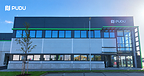
Located in Neuss, Germany, the new European headquarters brings together office operations, a product showroom, warehousing, training, sales, after-sales service and repair capabilities, all of which are now operational. The facility supports product demonstrations, customer engagement, distributor training and local service delivery, while providing a hub for coordinating regional business activities.

The headquarters complements Pudu Robotics’ existing European offices, partner network and warehousing infrastructure in the Netherlands and Germany. Together, these resources strengthen coordination across sales, deployment and after-sales support, providing a foundation for continued growth across the region.

Looking ahead, Pudu Robotics will continue to develop its local operating capabilities, deepen collaboration with regional partners and expand the application of its robotic solutions across industries, supporting customers as robotics becomes increasingly integrated into everyday operations.

“Europe is an important growth market for Pudu Robotics. As adoption expands, customers need more than reliable robotic solutions—they need local teams and service capabilities that can support deployment and ongoing operations over the long term. Our European headquarters in Neuss strengthens our ability to work closely with partners and customers across the region and support the next phase of our growth,” said Bella Sun, Vice President and General Manager for Europe at Pudu Robotics.

About Pudu Robotics

Pudu Robotics is a global commercial robotics leader dedicated to empowering easier work and better lives through AI and robotics, with a vision of building a global intelligent robotics infrastructure serving 10 billion people worldwide.

Pudu has pioneered a “One Brain, Multiple Embodiments” architecture spanning specialized, semi-humanoid, and humanoid robots. Pudu develops robotic solutions across commercial and home robotics, with a portfolio spanning service delivery, commercial cleaning, industrial delivery, general embodied AI, commercial grounds care, and consumer lawn care.

With over 130,000 robots shipped and a presence in more than 85 countries and regions, Pudu serves customers across diverse industries, including retail, hospitality, manufacturing, healthcare, real estate and property services, education, entertainment and sport, and public services.

View original content to download multimedia:https://www.prnewswire.com/news-releases/pudu-robotics-opens-european-headquarters-in-germany-to-support-continued-growth-across-the-region-302923686.html

SOURCE Pudu Robotics

Continue Reading

Technology

As AI Gets Smarter, Healthcare Education Must Get More Human

Published

on

By

WHITTIER, Calif., Oct. 30, 2026 /PRNewswire/ — As artificial intelligence becomes increasingly integrated into healthcare, the next generation of healthcare professionals will need more than technological proficiency. They will need stronger critical thinking, clinical judgment, and interpersonal skills to ensure that advances in technology translate into better care for patients, according to Tamara Rozhon, EdD, Provost of Southern California University of Health Sciences (SCU).

AI is already helping healthcare professionals analyze medical images, support clinical decisions, and advance research. The U.S. Food and Drug Administration maintains a list of AI-enabled medical devices authorized for marketing, while the World Health Organization identifies applications across clinical care, drug development, and health systems management.

As access to information expands, Rozhon says that educators must place greater emphasis on how students evaluate and apply it. Future healthcare professionals need to assess the evidence, recognize potential bias and error, consider ethical concerns, and determine whether an AI-generated finding makes sense for an individual patient.

“The best healthcare requires not just understanding patient data, but understanding patients: their individual circumstances, preferences, goals, aspirations, and all the factors that may be supporting or hindering their health and well-being,” Rozhon says.

For educators, this means designing learning experiences and assessments that require students to question and defend an answer and make sound decisions in the context of a real person. Clinical experiences must also strengthen listening, empathy, communication, judgment, and connection. These abilities become increasingly important as technology takes on more of the work of generating and synthesizing information.

“Perhaps the greatest challenge for health sciences education, then, is not keeping pace with artificial intelligence. It is developing the human intelligence required to use it well,” says Rozhon.

Read Rozhon’s full perspective: “As AI Gets Smarter, Healthcare Education Must Get More Human.”

About Southern California University of Health Sciences

Southern California University of Health Sciences (SCU) is one of the world’s only Integrative, Whole Health universities—teaching students to blend the best of conventional medicine with proven complementary approaches, and to treat the whole person (body, mind, and spirit). Founded in 1911, SCU has been challenging convention and pushing healthcare forward for more than 100 years. Today, the institution offers graduate, undergraduate, and certificate programs in a wide range of disciplines, including Chiropractic, Sports Medicine, Physical & Occupational Therapy, Genetic Counseling, Genetics & Genomics, Medical Science, Physician Assistant, Ayurveda, Acupuncture & Chinese Herbal Medicine, Clinical Psychology, Whole Health Leadership, and beyond. Learn more at scuhs.edu.

View original content to download multimedia:https://www.prnewswire.com/news-releases/as-ai-gets-smarter-healthcare-education-must-get-more-human-302924433.html

SOURCE Southern California University of Health Sciences

Continue Reading

Trending