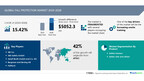
NEW YORK, Nov. 25, 2024 /PRNewswire/ — Report with the AI impact on market trends – The global fall protection market size is estimated to grow by USD 5.05 billion from 2024-2028, according to Technavio. The market is estimated to grow at a CAGR of almost 15.42% during the forecast period. Increasing onsite training is driving market growth, with a trend towards underpenetrated markets in developing countries. However, high inspection and maintenance poses a challenge.Key market players include 3M Co., ABS Safety GmbH, Adolf Wurth GmbH and Co. KG, Bergman and Beving AB, FallTech, French Creek Production Inc., Honeywell International Inc., KARAM group, Kee Safety Systems and Services India Pvt Ltd., Kennedy Wire Rope and Sling Co., Magid Glove and Safety Manufacturing Co. LLC, Mathews Mechanical, MSA Safety Inc., PETZL Distribution, Pure Safety Group Inc., Safe Approach Inc., Super Anchor Safety, Uviraj Group, Webb Rite Safety, and Werner Co..
Key insights into market evolution with AI-powered analysis. Explore trends, segmentation, and growth drivers- View Free Sample PDF
Fall Protection Market Scope
Report Coverage
Details
Base year
2023
Historic period
2018 – 2022
Forecast period
2024-2028
Growth momentum & CAGR
Accelerate at a CAGR of 15.42%
Market growth 2024-2028
USD 5052.3 million
Market structure
Fragmented
YoY growth 2022-2023 (%)
12.09
Regional analysis
North America, APAC, Europe, Middle East and Africa, and South America
Performing market contribution
APAC at 42%
Key countries
US, China, Germany, India, and United Arab Emirates
Key companies profiled
3M Co., ABS Safety GmbH, Adolf Wurth GmbH and Co. KG, Bergman and Beving AB, FallTech, French Creek Production Inc., Honeywell International Inc., KARAM group, Kee Safety Systems and Services India Pvt Ltd., Kennedy Wire Rope and Sling Co., Magid Glove and Safety Manufacturing Co. LLC, Mathews Mechanical, MSA Safety Inc., PETZL Distribution, Pure Safety Group Inc., Safe Approach Inc., Super Anchor Safety, Uviraj Group, Webb Rite Safety, and Werner Co.
Market Driver
The Fall Protection Market is experiencing significant growth due to increasing safety regulations and the need to prevent fall-related accidents in various industries. This market encompasses safety equipment such as harnesses, lanyards, anchors, and ergonomic solutions for worker safety. Construction activities, manufacturing, oil and gas, utilities, telecom, and wind energy sectors are major consumers of fall protection systems. Innovations in materials and design, sensor technologies, and telecommunications are driving the market forward. Reliable systems, personal protective equipment like body harnesses and ropes, and installed systems like tripods, ladders, and anchorage are essential for workplace safety. Injury risks are reduced through personal fall arrest systems, safety net systems, and rescue kits. Smart technologies and safety audits ensure compliance with worker safety standards and address occupational hazards in high-risk environments.
The fall protection market in emerging economies, particularly in Asia Pacific, the Middle East, and Africa, faces significant challenges due to the absence of strict workplace safety regulations and low awareness about the importance of fall protection equipment. This situation hinders market growth, as countries like India and China, which are expected to experience rapid industrial expansion during the forecast period, lack well-defined and stringent regulations for occupational safety. For instance, in India, while the 1948 Factories Act has been amended to mandate the use of PPE, its implementation at the enterprise level remains limited. Consequently, the fall protection market expansion in these regions may be slower than anticipated.
Request Sample of our comprehensive report now to stay ahead in the AI-driven market evolution!
Market Challenges
The Fall Protection Market faces several challenges in ensuring worker safety, particularly in high-risk industries like construction, manufacturing, oil and gas, utilities, telecom, and wind energy. Safety regulations mandate the use of reliable fall protection systems, including harnesses, lanyards, anchors, and anchorage points. Fall-related accidents remain a significant concern, making the need for innovative solutions more pressing. Ergonomic designs, sensor technologies, and telecommunications are key areas of focus for improving worker safety and reducing injury risks. Materials and design innovations continue to play a crucial role in creating effective and efficient fall protection systems. Employers must prioritize employee well-being and adhere to worker safety standards, investing in personal protective equipment such as body harnesses, ropes, tripods, ladders, and rescue kits. Smart technologies, including safety net systems and safety audits, are essential for identifying and mitigating occupational hazards in industrial sectors.Fall protection equipment, including safety harnesses, lanyards, self-retracting systems, and body belts, is subject to rigorous inspections and quality checks mandated by various regulatory bodies focusing on worker safety. The Personal Protective Equipment at Work Regulations 1992 outlines crucial aspects of fall protection equipment maintenance, repair, and replacement. Inspections are mandatory at all stages, from suppliers and manufacturers to installers and end-users. Vendors must adhere to best practices during manufacturing, which can increase costs. Fall protection equipment components, such as belts, rings, webbing, and tongue buckles, require regular inspections. Webbing and rope lanyards need protection from excessive heat, chemical damage due to solvents and paints, ultraviolet radiation, contaminants, corrosive materials, and moisture. Cleaning should only be done with commercial soap or detergent. The high maintenance requirements of fall protection equipment pose challenges for end-users due to numerous procedures and regulations that need to be followed.
Discover how AI is revolutionizing market trends- Get your access now!
Segment Overview
This fall protection market report extensively covers market segmentation by
Product 1.1 Safety harness1.2 Safety nets and othersEnd-user 2.1 Construction2.2 Energy and utilities2.3 Oil and gas2.4 Transportation2.5 OthersGeography 3.1 North America3.2 APAC3.3 Europe3.4 Middle East and Africa3.5 South America
1.1 Safety harness- Fall protection market is driven by the implementation of stringent worker safety regulations, such as those set by the Occupational Safety and Health Administration (OSHA). These regulations recommend the use of safety harnesses for work locations six feet or more above ground level. A safety harness is a type of personal protective equipment (PPE) that includes chest and full-body harnesses. The first premium comfort harness was introduced in 2001, designed with input from ergonomics experts, industrial designers, and mechanical engineers. This harness addressed the key needs of the wearer, such as ease of use, durability, and comfort. The market for safety harnesses will grow, particularly in Asia Pacific (APAC), where the construction and manufacturing industries are expanding rapidly. The mature markets of North America and Europe will exhibit steady growth due to existing safety regulations. The global fall protection market is expected to grow significantly during the forecast period, driven by the increasing demand for safety harnesses in various industries.
Download a Sample of our comprehensive report today to discover how AI-driven innovations are reshaping competitive dynamics
Research Analysis
The Fall Protection Market encompasses a range of safety solutions designed to prevent falls and ensure worker safety in various industries. Fall-related accidents continue to be a significant concern, particularly in construction activities, manufacturing, oil and gas, and other industrial sectors. Safety regulations mandate the use of safety equipment, including harnesses, lanyards, anchors, and personal protective equipment. Ergonomic solutions, such as body harnesses, are essential for ensuring comfort and effectiveness. Ropes, tripods, ladders, and anchorage systems provide anchorage points for anchoring safety equipment. Safety net systems, smart technologies, and safety audits are also integral to maintaining a safe work environment. Worker safety concerns and occupational hazards necessitate continuous innovation and improvement in fall protection solutions.
Market Research Overview
The Fall Protection Market encompasses a range of safety solutions designed to prevent falls and ensure worker safety in various industries. With increasing safety regulations and the rise in fall-related accidents, the demand for reliable fall protection systems. These systems include safety equipment such as harnesses, lanyards, anchors, and ergonomic solutions. Harnesses and lanyards are essential components of personal protective equipment, while anchors provide a secure connection to anchorage points. Construction activities, manufacturing, oil and gas, utilities, telecom, wind energy, and wind turbine installations are among the industrial sectors that heavily rely on fall protection systems. High-risk environments demand advanced solutions, including smart technologies, sensor systems, and telecommunications. Ergonomic design, materials innovation, and design innovation are key trends in the market, focusing on employee well-being and reducing injury risks. Fall protection systems consist of both soft goods (harnesses, lanyards, ropes) and hard goods (tripods, ladders, anchorage, anchor points). Installed systems, access systems, rescue kits, and safety net systems are also integral components of the market. Safety audits and compliance with worker safety standards are crucial for maintaining a safe workplace and reducing occupational hazards.
Table of Contents:
1 Executive Summary
2 Market Landscape
3 Market Sizing
4 Historic Market Size
5 Five Forces Analysis
6 Market Segmentation
ProductSafety HarnessSafety Nets And OthersEnd-userConstructionEnergy And UtilitiesOil And GasTransportationOthersGeographyNorth AmericaAPACEuropeMiddle East And AfricaSouth America
7 Customer Landscape
8 Geographic Landscape
9 Drivers, Challenges, and Trends
10 Company Landscape
11 Company Analysis
12 Appendix
About Technavio
Technavio is a leading global technology research and advisory company. Their research and analysis focuses on emerging market trends and provides actionable insights to help businesses identify market opportunities and develop effective strategies to optimize their market positions.
With over 500 specialized analysts, Technavio’s report library consists of more than 17,000 reports and counting, covering 800 technologies, spanning across 50 countries. Their client base consists of enterprises of all sizes, including more than 100 Fortune 500 companies. This growing client base relies on Technavio’s comprehensive coverage, extensive research, and actionable market insights to identify opportunities in existing and potential markets and assess their competitive positions within changing market scenarios.
Contacts
Technavio Research
Jesse Maida
Media & Marketing Executive
US: +1 844 364 1100
UK: +44 203 893 3200
Email: media@technavio.com
Website: www.technavio.com/
View original content to download multimedia:https://www.prnewswire.com/news-releases/fall-protection-market-to-expand-by-usd-5-05-billion-2024-2028-driven-by-growth-in-onsite-training-market-evolution-powered-by-ai—technavio-302314023.html
SOURCE Technavio










 Technology3 days ago

 Technology5 days ago

 Technology5 days ago

 Coin Market4 days ago

 Technology4 days ago

 Technology5 days ago

 Coin Market3 days ago

 Coin Market3 days ago