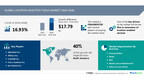
NEW YORK, Nov. 27, 2024 /PRNewswire/ — Report on how AI is redefining market landscape – The global location analytics tools market size is estimated to grow by USD 17.79 billion from 2024-2028, according to Technavio. The market is estimated to grow at a CAGR of 16.93% during the forecast period. Rise in awareness of location-enabled services is driving market growth, with a trend towards ai-based location analytics. However, stringent government regulations for collecting location-based data poses a challenge. Key market players include Alphabet Inc., Alteryx Inc., CartoDB Inc., Cisco Systems Inc., Esri Global Inc., Foursquare Labs Inc., Gravy Analytics Inc., InMarket Media LLC, International Business Machines Corp., Microsoft Corp., Oracle Corp., Pitney Bowes Inc., Precisely, Salesforce Inc., SAS Institute Inc., TomTom NV, Galigeo SAS, GeoMoby Pty. Ltd., Kinetica DB Inc., and Infillion.
Key insights into market evolution with AI-powered analysis. Explore trends, segmentation, and growth drivers- View Free Sample PDF
Location Analytics Tools Market Scope
Report Coverage
Details
Base year
2023
Historic period
2018 – 2022
Forecast period
2024-2028
Growth momentum & CAGR
Accelerate at a CAGR of 16.93%
Market growth 2024-2028
USD 17.79 billion
Market structure
Fragmented
YoY growth 2022-2023 (%)
15.7
Regional analysis
North America, Europe, APAC, Middle East and Africa, and South America
Performing market contribution
North America at 40%
Key countries
US, China, Japan, Germany, and UK
Key companies profiled
Alphabet Inc., Alteryx Inc., CartoDB Inc., Cisco Systems Inc., Esri Global Inc., Foursquare Labs Inc., Gravy Analytics Inc., InMarket Media LLC, International Business Machines Corp., Microsoft Corp., Oracle Corp., Pitney Bowes Inc., Precisely, Salesforce Inc., SAS Institute Inc., TomTom NV, Galigeo SAS, GeoMoby Pty. Ltd., Kinetica DB Inc., and Infillion
Market Driver
Location analytics tools are essential for businesses seeking to make data-driven decisions based on geographic, operational, and customer data. These tools help businesses address various challenges, such as resource allocation, customer behavior, efficiency improvements, digitalization, and decision-making. Geographic data, including spatial data and foot traffic patterns, plays a significant role in understanding customer experiences and advertising strategies. Businesses can leverage location analytics for asset management, risk mitigation, and real-time decision-making. Digitalization, IoT, AI, and machine learning are key trends driving the market. Geo privacy and data protection regulations are crucial considerations. Location analytics tools offer data visualization, thematic mapping, and spatial analysis, enabling businesses to gain valuable insights from their data. Deployment options include cloud and on-premises, with professional services and consulting available for deployment and integration. Applications span various industries, including retail, transportation, logistics, and healthcare. Key players in the market include Google LLC, offering reporting and visualization tools for indoor and outdoor analytics. Other trends include the integration of ETL, real-time location data from IoT systems, and personalized notifications for e-commerce applications.
Location analytics, a crucial component of Geographic Information Systems (GIS), assists businesses in interpreting and analyzing location data. This data is presented visually through software dashboards, offering enterprises transparency into their location-related operations. Real-time location analytics is increasingly important, enabling businesses to identify unforeseen circumstances or risks in their data and take prompt corrective measures. Various forms of location data visualization include war conflict zones, infrastructure usage, buildings in a city, and social media usage maps. By harnessing the power of location analytics, businesses can make informed decisions and optimize their processes effectively.
Request Sample of our comprehensive report now to stay ahead in the AI-driven market evolution!
Market Challenges
Location analytics tools help businesses make informed decisions by analyzing geographic, operational, and customer data. These tools address various business challenges, such as resource allocation, efficiency improvements, and customer behavior understanding. They provide real-time decision-making capabilities, digitalization, and data visualization through Business Intelligence (BI) tools and spatial data analysis. However, challenges include data accuracy, privacy concerns, geo privacy, sensitive data protection, IoT security, and data protection regulations. Location analytics tools use AI, machine learning, predictive analytics, and risk mitigation to address these challenges. They offer asset management, cloud computing, and scalable solutions for industries like retail, transportation, and logistics, e-commerce, and healthcare. Services include professional consulting, deployment and integration, and indoor and outdoor location analytics for shoppers, mobile positioning, and satellite-based GPS. Tools also cater to industries like manufacturing, healthcare, IT and telecommunications, and government and defense, providing personalized experiences, targeted marketing, and geocoding/reverse geocoding capabilities. Location analytics tools enable real-time decision-making, risk management, and data integration through ETL processes, reporting, and visualization, thematic mapping, and spatial analysis. They offer cloud and on-premises deployment options and cater to various industries, including transport and logistics, telecom, and tourism.Companies collecting and analyzing location data must adhere to stringent regulations and laws set by government authorities to ensure data privacy and legal usage. Compliance with both regional and global regulations is essential for collecting and utilizing location-based data across various regions. With the increasing availability of personal data and digitalization of enterprises, cybersecurity becomes a significant concern. Companies are responsible for controlling the distribution and use of customer location information to mitigate potential cyber threats. Adherence to these regulations and security measures is crucial for maintaining trust and transparency with customers.
Discover how AI is revolutionizing market trends- Get your access now!
Segment Overview
This location analytics tools market report extensively covers market segmentation by
End-user 1.1 Transportation1.2 Retail1.3 BFSI1.4 Media and entertainment1.5 Telecom and othersType 2.1 Outdoor location2.2 Indoor locationGeography 3.1 North America3.2 Europe3.3 APAC3.4 Middle East and Africa3.5 South America
1.1 Transportation- Transportation companies in the supply chain process face challenges in managing increasing material transportation needs, reducing costs, and adhering to customer service-level agreements. To address these issues, they adopt location analytics tools to optimize vehicle operations and route planning. These tools gather data on road conditions, weather updates, urban infrastructure, and route permissions, which are then analyzed in real-time to determine the most efficient route. By using location analytics, transportation companies can optimize logistics costs, enhance service levels, and gain better visibility into their operations. Benefits include streamlined transport operations, reduced operating costs, improved customer service, and efficient resource distribution during high demand. Companies like CartoDB Inc. Offer such tools to transportation firms, contributing to the market’s growth during the forecast period.
Download a Sample of our comprehensive report today to discover how AI-driven innovations are reshaping competitive dynamics
Research Analysis
The Location Analytics Tools market is a rapidly growing industry that leverages geographic data, operational data, and customer data to help businesses make informed decisions. Businesses face various challenges in understanding customer behavior and improving efficiency, which can be addressed through location analytics. Real-time location data from mobile positioning and satellite-based GPS, combined with data from medical equipment, retail centers, and IoT devices, can provide valuable insights. Cloud computing and big data technologies enable the processing and analysis of large volumes of data, while ML technologies, AI, and Wi-Fi location analytics enhance the accuracy and depth of insights. Geocoding and reverse geocoding are essential tools for converting addresses into geographic coordinates and vice versa, while thematic mapping helps visualize data in a more meaningful way. Overall, location analytics tools offer significant benefits for businesses looking to gain a competitive edge by making data-driven decisions.
Market Research Overview
Location analytics is the process of using geographic data in combination with operational and customer data to gain insights and make informed decisions. Businesses face various challenges in today’s digital world, including resource allocation, customer behavior, efficiency improvements, and risk mitigation. Location analytics tools help address these challenges by providing real-time decision-making capabilities, data visualization, and spatial analysis. Geographic data, such as foot traffic patterns, store product correlations, and geocoding, can be integrated with operational data and customer data to uncover valuable insights. Spatial data, including satellite-based GPS and IoT systems, can be used to analyze real-time location data for industries such as retail, transportation, and logistics. Data visualization and reporting tools enable businesses to gain insights from location data, while AI and machine learning technologies can be used for predictive analytics and risk management. Cloud computing and software-as-a-service (SaaS) solutions offer scalable, cost-effective options for deploying location analytics tools. However, data accuracy and privacy concerns are important considerations, as well as data protection regulations and security measures. Location analytics tools can be used for personalized experiences, targeted marketing, and urban planning, among other applications. The market for location analytics tools is growing rapidly, driven by the increasing availability of data and the need for real-time decision-making capabilities.
Table of Contents:
1 Executive Summary
2 Market Landscape
3 Market Sizing
4 Historic Market Size
5 Five Forces Analysis
6 Market Segmentation
End-userTransportationRetailBFSIMedia And EntertainmentTelecom And OthersTypeOutdoor LocationIndoor LocationGeographyNorth AmericaEuropeAPACMiddle East And AfricaSouth America
7 Customer Landscape
8 Geographic Landscape
9 Drivers, Challenges, and Trends
10 Company Landscape
11 Company Analysis
12 Appendix
About Technavio
Technavio is a leading global technology research and advisory company. Their research and analysis focuses on emerging market trends and provides actionable insights to help businesses identify market opportunities and develop effective strategies to optimize their market positions.
With over 500 specialized analysts, Technavio’s report library consists of more than 17,000 reports and counting, covering 800 technologies, spanning across 50 countries. Their client base consists of enterprises of all sizes, including more than 100 Fortune 500 companies. This growing client base relies on Technavio’s comprehensive coverage, extensive research, and actionable market insights to identify opportunities in existing and potential markets and assess their competitive positions within changing market scenarios.
Contacts
Technavio Research
Jesse Maida
Media & Marketing Executive
US: +1 844 364 1100
UK: +44 203 893 3200
Email: media@technavio.com
Website: www.technavio.com/
View original content to download multimedia:https://www.prnewswire.com/news-releases/location-analytics-tools-market-to-grow-by-usd-17-79-billion-from-2024-2028–driven-by-rising-awareness-of-location-enabled-services-and-ai-trends—technavio-302316637.html
SOURCE Technavio









 Technology4 days ago


 Coin Market5 days ago

 Near Videos4 days ago

 Technology3 days ago

 Technology5 days ago


 Technology5 days ago