Connect with us

Technology

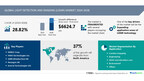
Light Detection and Ranging (LiDAR) Market to grow by USD 6.62 Billion from 2024-2028, expanded applications driving revenue, AI redefining trends – Technavio

Published

on

NEW YORK, Dec. 4, 2024 /PRNewswire/ — Report with market evolution powered by AI – The global light detection and ranging (LIDAR) market  size is estimated to grow by USD 6.62 billion from 2024-2028, according to Technavio. The market is estimated to grow at a CAGR of over 28.82%  during the forecast period. Expanding application areas of LiDAR technology is driving market growth, with a trend towards development of lidar sensors based on continuous-wave frequency modulation (CWFM) technology. However, high cost of lidar sensors  poses a challenge. Key market players include DENSO Corp., FARO Technologies Inc., GMR Infrastructure Ltd., Hexagon AB, Innoviz Technologies Ltd., LeddarTech Inc., Luminar Technologies Inc., Ouster Inc., Phoenix LiDAR Systems, Quanergy Systems Inc., RIEGL Laser Measurement Systems GmbH, Robert Bosch GmbH, RoboSense, SICK AG, SureStar, Teledyne Technologies Inc., Trimble Inc., Valeo SA, YellowScan, and Zephir Ltd..

AI-Powered Market Evolution Insights. Our comprehensive market report ready with the latest trends, growth opportunities, and strategic analysis- View Free Sample Report PDF

Forecast period

2024-2028

Base Year

2023

Historic Data

2017 – 2021

Segment Covered

Application (Corridor mapping, Engineering, ADAS and driverless cars, Environment, and Others), Product (Airborne LiDAR and Terrestrial LiDAR), and Geography (North America, Europe, APAC, Middle East and Africa, and South America)

Region Covered

North America, Europe, APAC, Middle East and Africa, and South America

Key companies profiled

DENSO Corp., FARO Technologies Inc., GMR Infrastructure Ltd., Hexagon AB, Innoviz Technologies Ltd., LeddarTech Inc., Luminar Technologies Inc., Ouster Inc., Phoenix LiDAR Systems, Quanergy Systems Inc., RIEGL Laser Measurement Systems GmbH, Robert Bosch GmbH, RoboSense, SICK AG, SureStar, Teledyne Technologies Inc., Trimble Inc., Valeo SA, YellowScan, and Zephir Ltd.

Key Market Trends Fueling Growth

The LiDAR market is experiencing significant growth due to increasing demand for 3D imagery and mapping applications. This technology, which uses laser scanner technology to create digital elevation models, is trending in various sectors including military and defense, civil engineering, city planning, environmental monitoring, and weather monitoring. Airborne and terrestrial LiDAR are popular choices for corridor mapping and topographical surveys. Innovations such as MEMS scanners and electromechanical systems are driving advancements in LiDAR technology. The technology is also being used in industries like oil and gas, energy, aerospace and defense, healthcare, construction, and smart infrastructure. Applications include collision avoidance systems, driver assistance systems, 4D technology, and 3D imaging. New sensors like PlusDrive and next-generation LiDAR are being developed for autonomous vehicles, unmanned aircraft systems, smart grids, and advanced geospatial solutions. Other emerging applications include urban planning, disaster response, infrastructure monitoring, robotics, aerial surveying, and biomass estimation. LiDAR technology is also used in geomatics, meteorological physics, archeology, geomorphology, coastal geospatial services, wildlife ecosystems, and seismology.

LiDAR (Light Detection and Ranging) market participants are focusing on enhancing the measurement technology of LiDAR sensors. Current LiDAR sensors employ a time-of-flight method to determine the time and distance taken by laser beams to hit targets and return. However, next-generation LiDAR sensors are under development, utilizing continuous-wave frequency-modulated (CWFM) technology. This advanced approach sends continuous laser beams towards targets, which are then split into two. One beam travels to the target and bounces back, while the other remains constant. The recombined beams’ frequency shift upon interaction with the target provides more precise distance measurements. This innovation could potentially improve LiDAR sensors’ accuracy and efficiency in various industries, such as autonomous vehicles and surveying. 

Insights on how AI is driving innovation, efficiency, and market growth- Request Sample!

Market Challenges

The Light Detection and Ranging (LiDAR) market is experiencing significant growth due to its application in various industries. Key sectors include 3D imagery and mapping for corridor mapping, topographical surveys, city planning, and environmental monitoring. LiDAR technology, which includes laser scanner technology and photogrammetry, is used in airborne and terrestrial applications. It’s crucial in military and defense, civil engineering, construction, energy, oil and gas, environmental sector, aerospace and defense, healthcare, and more. LiDAR is used for creating digital elevation models, 3D imaging, and 4D technology. It’s also employed in weather monitoring, oil sand monitoring, localization, collision avoidance systems, driver assistance systems, and smart infrastructure. New technologies like MEMS scanner, electromechanical system, and 2 next-generation sensors are driving innovation in LiDAR. Applications include autonomous vehicles, unmanned aircraft systems, smart grids, advanced geospatial solutions, urban planning, disaster response, infrastructure monitoring, robotics, aerial surveying, and more. LiDAR sensors, detectors, scanning mechanisms, cameras, radars, and aerial surveying services are essential components of this market. Short-range LiDAR is gaining popularity in smart mobility and biomass estimation.The high cost of LiDAR sensors remains a significant barrier to their widespread adoption in various industries. For instance, the Velodyne HDL-64 LiDAR sensor, which was priced at approximately USD75,000 in 2015, is a significant investment. However, Velodyne offers more affordable alternatives, such as their 32 and 16 laser LiDAR models, priced between USD7,000 and USD8,000. Despite recent cost reductions, the price point is still a challenge for mass adoption. According to industry data, LiDAR sensor costs are expected to decrease substantially due to mass production. This trend is supported by companies like Quanergy Systems Inc., further boosting the global LiDAR market’s growth potential.

Insights into how AI is reshaping industries and driving growth- Download a Sample Report

Segment Overview 

This light detection and ranging (lidar) market report extensively covers market segmentation by

Application 1.1 Corridor mapping1.2 Engineering1.3 ADAS and driverless cars1.4 Environment1.5 OthersProduct 2.1 Airborne LiDAR2.2 Terrestrial LiDARGeography 3.1 North America3.2 Europe3.3 APAC3.4 Middle East and Africa3.5 South America

1.1 Corridor mapping-  In the fields of corridor mapping and pipeline inspection, LiDAR technology has become an essential tool for businesses due to its cost-effectiveness and time efficiency. For instance, in corridor mapping, LiDAR is used for mapping highways, oil and gas pipelines, and railway lines, providing valuable data for planning, execution, and monitoring. In transmission line inspection, airborne LiDAR systems are increasingly adopted for mapping and inspecting electricity transmission lines, reducing the need for expensive and time-consuming manual inspections. Similarly, in oil and gas pipeline inspection, airborne LiDAR systems are used for mapping pipeline environments and detecting leaks. Companies like YellowScan and Leica Geosystems offer LiDAR solutions for corridor mapping, and the increasing demand for these solutions is driving the growth of the corridor mapping segment of the global LiDAR market. Utilities and pipeline operators are opting for LiDAR-based drone inspection services to ensure accurate mapping results and reduce the frequency of costly repairs.

Download complimentary Sample Report to gain insights into AI’s impact on market dynamics, emerging trends, and future opportunities- including forecast (2024-2028) and historic data (2017 – 2021) 

Research Analysis

The Light Detection and Ranging (LiDAR) market encompasses innovative technologies that utilize laser scanner systems to generate high-resolution 3D imagery, 3D mapping, and digital elevation models. LiDAR technology employs laser scanning in both airborne and terrestrial applications to capture precise data for various industries. The technology’s 4D capabilities enable the measurement of not only spatial dimensions but also temporal changes, making it an essential tool for advanced geospatial solutions. LiDAR systems come in various forms, including MEMS scanners and electromechanical systems, catering to diverse applications. This technology plays a crucial role in smart grids, urban planning, disaster response, environmental monitoring, smart city planning, and infrastructure monitoring. LiDAR’s ability to provide accurate and detailed information makes it an indispensable technology for industries seeking advanced solutions in geospatial data acquisition.

Market Research Overview

The Light Detection and Ranging (LiDAR) market encompasses technologies and applications that utilize laser scanning to create three-dimensional imagery, mapping, and digital elevation models. LiDAR technology is employed in various sectors, including topographical surveys, civil engineering, city planning, environmental monitoring, weather monitoring, oil sand monitoring, localization, and more. The technology is used in both airborne and terrestrial applications, with laser scanners being the primary tool for data acquisition. LiDAR is integral to corridor mapping, military and defense, aerospace and defense, healthcare, construction, energy, environmental sector, oil and gas, smart infrastructure, seismology, geomatics, meteorological physics, archeology, geomorphology, coastal geospatial services, wildlife ecosystems, and more. Applications include 3D imaging, collision avoidance systems, driver assistance systems, 4D technology, MEMS scanner, electromechanical systems, photogrammetry, and more. LiDAR technology is also used in autonomous vehicles, unmanned aircraft systems, smart grids, advanced geospatial solutions, urban planning, disaster response, smart city planning, infrastructure monitoring, robotics, aerial surveying, and various sensors, scanning mechanisms, cameras, radar, and aerial surveying services. Short-range LiDAR is used in smart mobility, biomass estimation, and other emerging applications.

Table of Contents:

1 Executive Summary
2 Market Landscape
3 Market Sizing
4 Historic Market Size
5 Five Forces Analysis
6 Market Segmentation

ApplicationCorridor MappingEngineeringADAS And Driverless CarsEnvironmentOthersProductAirborne LiDARTerrestrial LiDARGeographyNorth AmericaEuropeAPACMiddle East And AfricaSouth America

7 Customer Landscape
8 Geographic Landscape
9 Drivers, Challenges, and Trends
10 Company Landscape
11 Company Analysis
12 Appendix

About Technavio

Technavio is a leading global technology research and advisory company. Their research and analysis focuses on emerging market trends and provides actionable insights to help businesses identify market opportunities and develop effective strategies to optimize their market positions.

With over 500 specialized analysts, Technavio’s report library consists of more than 17,000 reports and counting, covering 800 technologies, spanning across 50 countries. Their client base consists of enterprises of all sizes, including more than 100 Fortune 500 companies. This growing client base relies on Technavio’s comprehensive coverage, extensive research, and actionable market insights to identify opportunities in existing and potential markets and assess their competitive positions within changing market scenarios.

Contacts

Technavio Research
Jesse Maida
Media & Marketing Executive
US: +1 844 364 1100
UK: +44 203 893 3200
Email: media@technavio.com
Website: www.technavio.com/

View original content to download multimedia:https://www.prnewswire.com/news-releases/light-detection-and-ranging-lidar-market-to-grow-by-usd-6-62-billion-from-2024-2028–expanded-applications-driving-revenue-ai-redefining-trends—technavio-302321013.html

SOURCE Technavio

Continue Reading
Click to comment

Leave a Reply

Your email address will not be published. Required fields are marked *

Technology

Cambium Networks Introduces High Density Wi-Fi 7 Solution for the Enterprise

Published

on

By

New tri-band, software-definable Wi-Fi 7 solution delivers precision directive coverage with AI optimization for exhibition halls, auditoriums, warehouses, and other high-density environments.

HOFFMAN ESTATES, Ill., July 22, 2026 /PRNewswire/ — Cambium Networks, a leading global provider of networking solutions, today announced a new Wi-Fi 7 high-density access point – the X7-56X – engineered to deliver high-performance wireless connectivity in the most demanding environments. Designed to meet the needs of large public venues, exhibition halls, busy public spaces, and educational campuses, the solution combines focused RF coverage, AI-driven optimization, and cloud-managed simplicity in a high-capacity platform.

The X7-56X extends Cambium Networks’ Wi-Fi 7 portfolio with a software-definable tri-band architecture featuring 60° x 60° directive antennas designed for precision coverage and reduced co-channel interference in congested RF environments. The platform supports up to 1,280 clients per access point and up to 17.9 Gbps aggregate wireless capacity across the three Wi-Fi spectrum bands.

“The X7-56X performed very well in our ticket scanning points that have high ceilings and see significant foot traffic volume,” said Jonathan West from the National Ice Centre in Nottingham, UK. “What makes this AP practical for a venue like ours is the integrated 60×60 degree antennas that eliminate separate antennas and cabling and can add significant cost, complexity, and footprint to every mount. Engineering all of that into one unit expedites installation and improves aesthetics as well. This form factor will extend to applications in our seating bowl as well.” 

“What excites me about the X7-56X is how well its directional approach works for some of our toughest spaces, such as auditoriums at capacity or the basketball arena on game night,” said Jeremy Petticrew, Network Engineer at University of Mary Hardin-Baylor. “Precisely controlling Wi-Fi coverage has always been the hard part, and having an AP designed specifically for that, inside a platform we already trust, is a real advantage as device counts keep climbing.”

The X7-56X integrates with Cambium’s ONE Network architecture comprised of Wi-Fi, switching, security, SD-WAN, wireless backhaul, and fiber – all managed through the cloud via cnMaestro™ X. This unified approach provides centralized visibility and control across the entire network infrastructure from a single source of truth.

The new solution provides a compelling Total Cost of Ownership (TCO) proposition by reducing the amount of equipment required in typical installations. These advantages are enabled by:

Directive antennas that focus Wi-Fi coverage only where needed – a spotlight approach vs. the floodlight type of inefficiencies of omni-directional antennas

Integrated Wi-Fi controller in every AP, eliminating the need for separate appliance or VM-based controller solutions

Software-defined radios that enable flexible deployment of the 5GHz and 6GHz Wi-Fi bands matched to environment needs, reducing the number of APs required

Key capabilities of the X7-56X include:

Tri-radio, tri-band Wi-Fi 7 architecture

4×4 MU-MIMO support with ten total spatial streams

60° x 60° directive antenna for precision coverage

Air Cleaner technology for high-density RF optimization

AI-based Assurance for improved operational efficiency and problem resolution

Software-definable radios supporting flexible 5 GHz and 6 GHz migration

Built-in IoT radio supporting BLE 5.1, Zigbee, Matter, and Thread

Simplified installation with the MarketApps Installer mobile-based app and flexible mounting options

Cloud-based management through cnMaestro™

“High-performance Wi-Fi requires more than just raw throughput,” said Bruce Miller, VP Enterprise Product Management at Cambium Networks. “Intelligent RF management, flexible deployment options, and simplified operations are key to support growing device counts, IoT proliferation, and AI-powered applications. The X7-56X was purpose-built for these challenges while at the same time delivering compelling economics for enterprise IT and managed service providers.”

“The X7-56X brings together several technologies that are particularly valuable in high-density environments,” said Kevin Tolly, Founder of The Tolly Group. “The directive antenna design, Wi-Fi 7 architecture, integrated IoT capabilities, and cloud-managed operation provide organizations with a practical approach to supporting growing connectivity requirements while maintaining operational simplicity.”

View the Tolly Group preview video of the X7-56X, showcasing the access point’s ultra-high-density design, Wi-Fi 7 capabilities, deployment flexibility, and performance advantages for demanding enterprise environments.

Cambium Networks’ directional Wi-Fi 7 innovation was recently highlighted by Wi-Fi NOW in an Expert Insights article by CEO and Chairman Claus Hetting.

Watch our webinar replay, “High-Performance Wi-Fi with New Wi-Fi 7 and 6 GHz Solutions.”

About Cambium Networks

Cambium Networks enables service providers, enterprises, industrial organizations, and governments to deliver exceptional digital experiences, and device connectivity, with compelling economics. Our ONE Network platform simplifies management of Cambium Networks’ wired and wireless broadband and network edge technologies. Our customers can focus more resources on managing their business rather than the network. We make connectivity that just works.

Media Contact

pr@cambiumnetworks.com

View original content to download multimedia:https://www.prnewswire.com/news-releases/cambium-networks-introduces-high-density-wi-fi-7-solution-for-the-enterprise-302832358.html

SOURCE Cambium Networks

Continue Reading

Technology

OCEAN Launches Portal, the First End-to-End Encrypted Pool Dashboard for Bitcoin Miners

Published

on

By

New customizable dashboard gives miners operation-wide tools without surrendering privacy or identity

MIAMI, July 22, 2026 /PRNewswire/ — Today OCEAN announced the launch of OCEAN Portal, a customizable, end-to-end encrypted dashboard that gives Bitcoin miners a complete view of their operation. PORTAL was unveiled on stage at Mining Disrupt 2026, the world’s largest Bitcoin mining expo and conference, held July 21-23 at the Miami Airport Convention Center, by OCEAN President Mark Artymko. PORTAL is available now, for free, to all miners on OCEAN at portal.ocean.xyz.

OCEAN was built permissionless from the ground up, a deliberate design choice that, like Bitcoin itself, gives miners unhindered access to their own information. Traditional pools organize miner data by storing it on their own servers. OCEAN Portal delivers that same organized, polished experience while keeping miners fully in control: a permissionless, encrypted view of your mining addresses with the look and feel of an enterprise-style dashboard. Miners can combine multiple Bitcoin addresses into a single view, organize addresses by site, and assign human-readable names to sites, workers, and teams. Portal includes site-specific statistics, worker insights, payout information in Bitcoin and fiat, robust reporting tools, and access controls that let operators share full dashboards with their teams or generate expiring read-only links for clients. No account or email is required. Miners sign in with a Bitcoin address and a password they create. The convenience of enterprise dashboards, with the security of OCEAN.

“PORTAL was built in direct response to miner feedback,” said Mark Artymko, President of OCEAN. “Some of our miners told us that a customizable dashboard was the only thing standing between their full stack of hashrate and the pool. OCEAN heard them, and built it.”

PORTAL is powered by Sub-space Locker, an application-independent encrypted storage and access-control system developed by OCEAN. Built on public-key cryptography, Sub-space Locker authenticates users, stores encrypted application data, and controls what each user can access. Encryption and decryption happen locally in the user’s browser, leaving OCEAN and other intermediaries unable to read the underlying data.

“Every mining pool dashboard on earth makes the same trade: your tooling for your identity,” said Jason Hughes, VP of Engineering at OCEAN. “PORTAL refuses that trade. Miners get pool-grade information in the most sovereign way possible. We couldn’t read their data even if we tried.”

Since launching in 2023, OCEAN has focused on returning sovereignty to Bitcoin miners through permissionless, non-custodial pooled mining, fully transparent and auditable TIDES payouts, and DATUM, which puts block template construction back in miners’ hands. PORTAL extends that mission from the pool to the mining operation itself.

OCEAN Portal is available now at portal.ocean.xyz.

About OCEAN

OCEAN is a Bitcoin mining pool built on miner sovereignty. Operated by Mummolin, Inc., OCEAN offers non-custodial payouts, transparent reward accounting, and DATUM, the only pool technology that lets individual miners construct their own block templates.

Media Contact Ian Northon media@ocean.xyz


View original content to download multimedia:https://www.prnewswire.com/news-releases/ocean-launches-portal-the-first-end-to-end-encrypted-pool-dashboard-for-bitcoin-miners-302831868.html

SOURCE Mummolin Inc

Continue Reading

Technology

PlayVS and Scouting America Announce Gaming Activation at the 2026 National Jamboree

Published

on

By

New immersive gaming hub will bring structured esports competition, casual play, and digital citizenship programming to Scouts at Summit Bechtel Reserve

LOS ANGELES, July 22, 2026 /PRNewswire/ — PlayVS, North America’s leading scholastic gaming platform, today announced a partnership with Scouting America to bring a state-of-the-art gaming activation to the 2026 National Jamboree, taking place July 22–31, 2026. One of Scouting America’s premier youth gatherings, the National Jamboree at Summit Bechtel Reserve in West Virginia, brings Scouts together from across the country for adventure, fellowship, skill-building, and shared experiences.

Running throughout the National Jamboree, the PlayVS Arena will offer a rotating schedule of competitive tournaments, leaderboard challenges, casual gaming, and hands-on technology experiences. Designed for Scouts of all experience levels, the activation promotes teamwork, digital citizenship, sportsmanship, and healthy competition while creating a welcoming space for Scouts to connect over a shared passion for gaming. The arena gives Scouts the opportunity to connect with friends, test their skills, and experience organized esports in an environment designed for participation, sportsmanship, and fun.

“At PlayVS, we believe gaming can be a powerful way for young people to build confidence, practice teamwork, and develop meaningful connections,” said Andrew Barnett, Partnership Lead. “Partnering with Scouting America allows us to bring that experience to one of the country’s most iconic youth gatherings and show how structured gaming can complement the values of leadership, fellowship, and skill-building that Scouting has championed for generations.”

The gaming activation will feature a high-tech mobile gaming trailer outfitted with gaming stations, virtual reality experiences, and a professional racing simulator. A dedicated event tent located alongside the trailer will expand the experience with additional console stations for free play, spectating, and community engagement throughout the Jamboree.

PlayVS aims to deliver a memorable gaming experience that brings together the excitement of play with the values of leadership, teamwork, and community.

About PlayVS

PlayVS is North America’s leading scholastic and collegiate gaming platform, helping students unlock the educational, social, and personal benefits of competitive gaming. The company brings together students, coaches, educators, and schools through structured, education-aligned competition across K–12 and college. PlayVS is the official esports partner of the NFHS Network, the Special Olympics, and state and regional organizations across the U.S. and Canada. To learn more, visit playvs.com.

Media Contact:
press@playvs.com

View original content to download multimedia:https://www.prnewswire.com/news-releases/playvs-and-scouting-america-announce-gaming-activation-at-the-2026-national-jamboree-302831072.html

SOURCE PlayVS

Continue Reading

Trending