Connect with us

Technology

Structural Health Monitoring Market to grow by USD 2.62 Billion from 2024-2028, driven by infrastructure safety needs and AI’s impact on market trends – Technavio

Published

on

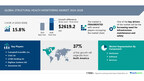
NEW YORK, Dec. 5, 2024 /PRNewswire/ — Report on how AI is redefining market landscape – The global structural health monitoring market size is estimated to grow by USD 2.62 billion from 2024-2028, according to Technavio. The market is estimated to grow at a CAGR of 15.8% during the forecast period. Increasing need for infrastructure maintenance and safety is driving market growth, with a trend towards advent of iot in structural health monitoring. However, rise in budgetary constraints poses a challenge. Key market players include Campbell Scientific Inc., CGG SA, COWI Holding AS, Digitexx Systems Ltd., Geosense Ltd., Hottinger Bruel and Kjaer GmbH, James Fisher and Sons Plc, Kinemetrics Inc., LiveHooah Technologies Pvt. Ltd., MachineSense LLC, Mistras Group Inc., National Instruments Corp., Nova Ventures Group Corp., Ramboll Group AS, RST Instruments Ltd., Sisgeo S.r.l., STRUCTURAL MONITORING SYSTEMS plc, Vinci, Xylem Inc., and Yokogawa Electric Corp..

AI-Powered Market Evolution Insights. Our comprehensive market report ready with the latest trends, growth opportunities, and strategic analysis- View Free Sample Report PDF

Forecast period

2024-2028

Base Year

2023

Historic Data

2018 – 2022

Segment Covered

Component (Hardware, Software, and Services), Connectivity (Wired and Wireless), and Geography (North America, Europe, Asia, and Rest of World (ROW))

Region Covered

North America, Europe, Asia, and Rest of World (ROW)

Key companies profiled

Campbell Scientific Inc., CGG SA, COWI Holding AS, Digitexx Systems Ltd., Geosense Ltd., Hottinger Bruel and Kjaer GmbH, James Fisher and Sons Plc, Kinemetrics Inc., LiveHooah Technologies Pvt. Ltd., MachineSense LLC, Mistras Group Inc., National Instruments Corp., Nova Ventures Group Corp., Ramboll Group AS, RST Instruments Ltd., Sisgeo S.r.l., STRUCTURAL MONITORING SYSTEMS plc, Vinci, Xylem Inc., and Yokogawa Electric Corp.

Key Market Trends Fueling Growth

The Structural Health Monitoring (SHM) market is experiencing significant growth, particularly in the infrastructure sector. SHM systems are becoming increasingly important for ensuring public safety and the sustainability of structures such as bridges, dams, buildings, and airframes. Civil engineers and construction companies are adopting SHM systems to monitor the condition of large machines, turbines, and other critical infrastructure. SHM systems use sensors, data acquisition, and analyzing tools to measure structural performance and assess damage in real-time. These systems are also being integrated into smart cities and are essential for predicting natural calamities and preventing economic and social complications. The SHM market includes players in various segments such as infrastructure development, aerospace, mining, energy, and defense. The need for SHM systems is driven by safety regulations, the aging of infrastructure, and the need for productivity growth. Some of the key trends in the SHM market include the use of wireless sensors, predictive solutions, and energy harvesting systems. Cost-effective constructions and the integration of distributed optic fibers are also gaining popularity. Despite the advantages of SHM systems, there are limitations, such as costs and the need for maintenance. However, the benefits of prior warnings and avoiding loss of lives and economic complications far outweigh the costs. In Europe and France, SHM systems are becoming essential for infrastructure projects, and the market is expected to grow significantly in the coming years. The dominance of the SHM industry is also being felt in Latin America, the Middle East, and other nations. Geokon, Acellent Technologies, and Sixense are some of the key players in the SHM systems market, offering hardware, software, and integration services. The market is expected to continue growing as more infrastructure projects are undertaken and the need for reliable and predictive solutions becomes increasingly important. 

The structural health monitoring market has experienced significant growth due to the integration of IoT and Industry 4.0 technologies. IoT networks, consisting of sensors, thermostats, and actuators, enable smart facilities management by collecting and evaluating data. This data leads to energy savings through predictive maintenance and lower operational costs. IoT also ensures timely maintenance, enhancing productivity and equipment longevity. Overall, these technological innovations have made structural health monitoring more efficient and cost-effective. 

Insights on how AI is driving innovation, efficiency, and market growth- Request Sample!

Market Challenges

The Structural Health Monitoring (SHM) market is witnessing significant growth in various sectors including infrastructure, aerospace, mining, and energy. The need for SHM systems is crucial for ensuring safety and sustainability of structures such as bridges, dams, buildings, and stadiums. However, challenges exist in standardizing SHM systems, cost-effectiveness, and integration with existing infrastructure. Civil engineers and construction companies are increasingly focusing on SHM systems for condition assessment and predictive maintenance of large machines, airframes, wind turbines, and turbines. The adoption of SHM systems is driven by the need for prior warnings during natural calamities and the impact of economic and social complications due to infrastructure failures. The SHM systems market includes sensors, data acquisition, transmission systems, analyzing tools, measuring amplifiers, software, and smart cities applications. The market is segmented into infrastructure projects, aerospace, mining, energy, and others. Governments and private players are investing in SHM technologies for safety regulations and productivity growth. The market is witnessing advancements in wireless real-time measurement, damage assessment, and predictive solutions. However, limitations include the high costs associated with SHM systems and the lack of standardization. The SHM market is expected to grow in Europe, France, Latin America, the Middle East, Mexico, South Africa, and other nations. Key players in the market include Accelent Technologies, Geokon, Sixense, and Geocomp Corporation. The market offers opportunities for sensor technology integration, power plant testing, and repair solutions.Small businesses in growing economies often face budget constraints, limiting their ability to invest in structural health monitoring services from reputable companies. This can lead to the procurement of subpar services, which in turn increases maintenance and operational costs and negatively impacts a company’s profitability. Additionally, rising labor costs pose another challenge to the structural health monitoring market’s growth during the forecast period. These factors can make it difficult for small organizations to effectively monitor and maintain the structural health of their assets, potentially leading to costly repairs or replacements in the future.

Insights into how AI is reshaping industries and driving growth- Download a Sample Report

Segment Overview

This structural health monitoring market report extensively covers market segmentation by

Component1.1 Hardware1.2 Software1.3 ServicesConnectivity2.1 Wired2.2 WirelessGeography3.1 North America3.2 Europe3.3 Asia3.4 Rest of World (ROW)

1.1 Hardware- The structural health monitoring market comprises various sectors, including hardware. Hardware in this context refers to the physical components and devices used to assess the structural health of infrastructure, buildings, bridges, dams, and civil engineering structures. This hardware segment is vital as it gathers data, measures various parameters, transmits signals, and processes information for monitoring purposes. Three significant hardware categories exist within the global structural health monitoring market: sensors, data acquisition systems (DAQ), and communication devices. Sensors are fundamental, capturing data on structural behavior such as strain, vibration, displacement, temperature, and humidity. Common sensors include accelerometers, strain gauges, temperature sensors, displacement transducers, and inclinometers. Data acquisition systems (DAQ) are responsible for collecting, digitizing, and processing data from sensors. They convert analog signals into digital data for further analysis. DAQ systems typically consist of analog-to-digital converters, signal conditioning modules, data loggers, and communication interfaces. Communication devices enable data transmission from the structural health monitoring system to a central monitoring station or cloud-based platform. These devices may utilize wired connections like Ethernet or fiber optic cables or wireless technologies such as Wi-Fi, Bluetooth, cellular networks, or satellite communication systems. In summary, the hardware segment of the global structural health monitoring market encompasses a broad array of components, technologies, and devices that collaborate to facilitate the monitoring, analysis, and maintenance of critical structures. Advancements in sensor technology, data processing capabilities, and communication systems have significantly boosted the effectiveness and growth of structural health monitoring solutions, driving the expansion of the hardware segment in the forecast period.

Download complimentary Sample Report to gain insights into AI’s impact on market dynamics, emerging trends, and future opportunities- including forecast (2024-2028) and historic data (2018 – 2022) 

Research Analysis

The Structural Health Monitoring (SHM) market encompasses sensors, monitoring systems, and technologies used to assess the condition and performance of infrastructure, including bridges, dams, buildings, stadiums, and large machines such as airframes and turbines. SHM focuses on ensuring the safety, reliability, and predictive maintenance of these structures by providing real-time measurement and damage assessment capabilities. Wireless sensors play a significant role in SHM systems, enabling cost-effective and efficient implementation in various segments, including energy infrastructure and smart cities. Advancements in SHM technologies have led to increased adoption and implementation, with a focus on preventing failures and ensuring public safety. Civil engineers and other stakeholders rely on SHM systems to optimize maintenance costs, enhance infrastructure investments, and improve overall performance and safety. Natural calamities have further the need for SHM systems to assess damage and facilitate quick response and recovery efforts.

Market Research Overview

The Structural Health Monitoring (SHM) market is witnessing significant growth in various sectors including infrastructure, aerospace, mining, defense, and energy. SHM systems are essential for ensuring the safety and sustainability of structures such as bridges, dams, buildings, stadiums, airframes, wind turbines, and large machines. These systems use sensors, data acquisition, transmission systems, analyzing tools, measuring amplifiers, software, and other hardware to monitor the health condition of structures in real-time. SHM systems play a crucial role in public safety, especially in the context of natural calamities and aging infrastructure. The need for SHM systems is increasingly recognized by governments, sports organizations, and industries worldwide. The market is driven by the need for predictive solutions to assess damage and improve reliability, productivity growth, and cost-effective constructions. SHM systems are also being integrated into smart cities and urbanization projects to ensure the safety and integrity of structures. The market is expected to grow significantly in the coming years due to advancements in sensor technology, wireless communication, and energy harvesting systems. However, there are also limitations to the adoption and implementation of SHM systems, including costs and the need for specialized inspection staff. The SHM market is segmented into various applications, including infrastructure projects, buildings and stadiums, vessels and platforms, airframes and wind turbines, large machines and equipments, and power plants. The market is dominated by players such as Geokon, Geocomp Corporation, and Acellent Technologies, among others. The market is expected to grow significantly in regions such as Europe, Asia Pacific, Latin America, Middle East, and Brazil.

Table of Contents:

1 Executive Summary
2 Market Landscape
3 Market Sizing
4 Historic Market Size
5 Five Forces Analysis
6 Market Segmentation

ComponentHardwareSoftwareServicesConnectivityWiredWirelessGeographyNorth AmericaEuropeAsiaRest Of World (ROW)

7 Customer Landscape
8 Geographic Landscape
9 Drivers, Challenges, and Trends
10 Company Landscape
11 Company Analysis
12 Appendix

About Technavio

Technavio is a leading global technology research and advisory company. Their research and analysis focuses on emerging market trends and provides actionable insights to help businesses identify market opportunities and develop effective strategies to optimize their market positions.

With over 500 specialized analysts, Technavio’s report library consists of more than 17,000 reports and counting, covering 800 technologies, spanning across 50 countries. Their client base consists of enterprises of all sizes, including more than 100 Fortune 500 companies. This growing client base relies on Technavio’s comprehensive coverage, extensive research, and actionable market insights to identify opportunities in existing and potential markets and assess their competitive positions within changing market scenarios.

Contacts

Technavio Research
Jesse Maida
Media & Marketing Executive
US: +1 844 364 1100
UK: +44 203 893 3200
Email: media@technavio.com
Website: www.technavio.com/

View original content to download multimedia:https://www.prnewswire.com/news-releases/structural-health-monitoring-market-to-grow-by-usd-2-62-billion-from-2024-2028–driven-by-infrastructure-safety-needs-and-ais-impact-on-market-trends—technavio-302322410.html

SOURCE Technavio

Continue Reading

Technology

NUH WINS GOLD AT IHF AWARDS 2026 FOR GREEN OPERATING THEATRE PROGRAMME

Published

on

By

 NUH won Gold and received an Honourable Mention for its sustainability efforts at the International Hospital Federation Awards 2026, alongside presentations of its green surgical initiatives, digital health and organisational improvement initiatives at the World Hospital Congress.

SINGAPORE, Oct. 21, 2026 /PRNewswire/ — The National University Hospital (NUH) has won the Gold Award (Low Carbon Healthcare) for its Green Operating Theatre programme at the International Hospital Federation (IHF) Awards 2026. The hospital also received an Honourable Mention (Hospital Sustainability Acceleration) for its system-wide approach to embedding sustainability across healthcare delivery and hospital operations.

The awards were presented at the 49th World Hospital Congress in Seoul, where NUH is also sharing other initiatives in environmental sustainability, digital health and organisational improvement.

Professor Aymeric Lim, Chief Executive Officer of NUH, said: “Healthcare must become more sustainable without compromising patient care. Our teams have shown that simple, practical changes on the ground, from the way we run our operating theatres to how we use resources, can make a real difference. This recognition belongs to the multi-disciplinary teams and partners who turned ideas into everyday practice, and who continue to improve how we care for our patients.”

Advancing low-carbon healthcare by reducing the environmental impact of surgical care

NUH’s Green Operating Theatre (OT) programme began with efforts to reduce the use of high-carbon anaesthetic gases. What started as a targeted decarbonisation initiative has since grown into a hospital-wide programme that brings together clinicians, nurses, operations teams and facilities staff to drive sustainability across surgical practices, resource use, waste management and energy management.

The programme has achieved a 99 per cent reduction in the use of desflurane, a high-carbon anaesthetic gas, and delivered annual energy savings of about 660,000 kWh by optimising operating theatre ventilation during non-operating hours.

Surgical teams redesigned instrument sets used for high-volume knee replacement procedures to better reflect routine requirements, reducing emissions by almost 10,000 kg CO2e annually while also cutting water use and sterilisation workload. Efforts have also been made to reduce unnecessary consumables and expand medical recycling streams.

Collectively, these initiatives have generated valuable insights that NUH has actively shared through inter-cluster platforms and collaborations, helping to inform the adoption of low-carbon practices across Singapore’s public healthcare system.

Embedding sustainability into everyday healthcare delivery

NUH received an Honourable Mention for its organisation-wide approach to embedding sustainability into hospital planning and operations.

Guided by the IHF Sustainability Accelerator Tool, NUH integrated sustainability into leadership oversight, strategic planning and everyday decision-making, strengthening efforts in Appropriate Value-based Care, virtual care, procurement, workforce engagement and environmental stewardship.

This system-wide approach to advancing a sustainable healthcare system has been recognised internationally. In 2025, NUH became the first hospital worldwide to receive the Joint Commission International-Geneva Sustainability Centre’s Healthcare Sustainability Certification. This year, it was the only hospital in Singapore to be accorded the highest 5-Leaf distinction in Newsweek-Statista’s World’s Greenest Hospitals index.

A new model of rehabilitation care

Recognised as one of the top three healthcare innovations selected for the International Hospital Federation’s i-to-i Innovation Hub Awards 2026, the NUH Virtual Rehabilitation Centre (VRC) is helping to extend rehabilitation beyond hospital walls.

Developed as a virtual-first rehabilitation ecosystem, the VRC combines personalised patient education, self-management tools, AI-enabled telerehabilitation, remote monitoring and digital rehabilitation pathways to support patients throughout their recovery journey. By enabling rehabilitation to continue beyond traditional clinic visits, the VRC improves access to care, strengthens patient participation in recovery and allows therapists to focus their attention on patients with more complex rehabilitation needs. The digital home exercise programme, for instance, supports around 2,000 patients and records about 21,000 logins each month, freeing up the equivalent of 66 physiotherapist workdays annually for direct patient care.

The innovation demonstrates how technology can be used not simply to digitise existing services, but to transform how rehabilitation is delivered at scale.

Helping doctors work smarter with electronic medical records

NUH also presented results from its Great Epic Transformation (GET) programme at the 49th World Hospital Congress in Seoul. The hospital-wide programme trained specialist doctors to personalise their Epic electronic medical record (EMR) workflows, using customised note templates, order sets and shortcuts to work more efficiently.

Nine months after training, participating doctors spent 10.2 per cent less time in the EMR each day, equivalent to more than 33 hours saved per doctor annually, while time spent placing orders fell by 26.5 per cent. Twelve of 13 efficiency measures improved across both medical and surgical specialties. Based on annual estimates, the overall efficiency gains are valued at more than S$91 million a year.

The programme is being extended to allied health professionals and pharmacists across NUHS, with a target of reaching more than 2,000 healthcare professionals by the end of 2026.

About the National University Hospital (NUH)­

The National University Hospital (NUH) is Singapore’s university hospital. While the hospital at Kent Ridge first received its patients on 24 June 1985, our legacy started from 1905, the date of the founding of what is today the NUS Yong Loo Lin School of Medicine. NUH is the principal teaching hospital of the medical school.

Our unique identity as a university hospital is a key attraction for healthcare professionals who aspire to do more than practise tertiary medical care. We offer an environment where research and teaching are an integral part of medicine, and continue to shape medicine and transform care for the community we care for.

We are an academic medical centre with over 1,200 beds, serving more than one million patients a year with over 50 medical, surgical and dental specialties. NUH is the only public and not-for-profit hospital in Singapore to provide trusted care for adults, women and children under one roof, including the only paediatric kidney and liver transplant programme in the country.

The NUH is a key member of the National University Health System (NUHS), one of three public healthcare clusters in Singapore. For more information, visit www.nuh.com.sg

Follow us on

Facebook | Instagram | LinkedIn | TikTok | YouTube


View original content to download multimedia:https://www.prnewswire.com/news-releases/nuh-wins-gold-at-ihf-awards-2026-for-green-operating-theatre-programme-302916198.html

SOURCE National University Hospital (NUH)

Continue Reading

Technology

NEXCOM NGFW platforms secure growing traffic across modern academic networks

Published

on

By

TAIPEI, Oct. 21, 2026 /PRNewswire/ — NEXCOM, a leading supplier of network appliances, is helping academic institutions strengthen network security as digital learning expands across cloud platforms, AI-powered tools, remote access, and connected campus services.

As educational environments become more distributed, academic networks must support growing traffic and diverse connections while protecting sensitive data and maintaining reliable access to learning resources. NEXCOM’s Next-Generation Firewall (NGFW) platforms provide a centralized security layer for inspecting and controlling traffic across campus and remote environments.

Learn more about securing digital learning environments in the joint case study.

Centralized Security for Digital Learning

On campus, NGFW platforms can inspect traffic between academic networks and external resources as students and faculty access learning platforms and web services. For remote users, secure VPN connectivity supports authorized access to internal resources while enabling centralized security policies.

“Every new digital service in education adds value for students and educators, but it also adds traffic, connections, and another layer of security responsibility,” says Allan Chiu, VP of Networking and Communication Solutions at NEXCOM. “The challenge is making sure security keeps pace without slowing down the learning experience. NEXCOM’s NGFW platforms provide the performance and scalability needed to secure modern, highly distributed academic networks.”

Scalable Platforms for Network Security

NEXCOM’s portfolio provides scalable platforms for firewall, edge security, secure remote access, and demanding network security workloads. Key platforms include:

NSA 7160R: A 2U high-performance security platform powered by dual Intel® Xeon® Scalable processors, with eight PCIe 5.0 expansion slots and throughput of up to 1.6 Tbps.FTA 5190: A compact 1U edge server powered by Intel Xeon 6 SoC technology, designed for reliable connectivity and security at the network edge.

About NEXCOM

Founded in 1992 and headquartered in Taipei, Taiwan, NEXCOM is shaping the future of AI-powered networking with its software-defined solutions. Through its Network and Communication Solutions (NCS) unit, NEXCOM delivers cutting-edge platforms for Cybersecurity, OT Security, SD-WAN, SASE, Load Balancing, 5G uCPE, edge AI, and more. NCS specializes in professional design and manufacturing services, enabling reliable and scalable network infrastructures for businesses of all sizes. With a focus on innovation, NEXCOM’s solutions empower customers worldwide to build resilient, high-performance networks tailored to the demands of tomorrow’s connectivity challenges.

View original content to download multimedia:https://www.prnewswire.com/news-releases/nexcom-ngfw-platforms-secure-growing-traffic-across-modern-academic-networks-302916203.html

SOURCE NEXCOM International Co., Ltd.

Continue Reading

Technology

Forrester’s 2027 B2B Go-To-Market Predictions: AI Agents Will Influence 75% Of B2B Purchase Decisions

Published

on

By

To remain competitive, providers must strengthen customer trust, substantiate value claims, and offer human expertise and guidance

SINGAPORE, Oct. 22, 2026 /PRNewswire/ — According to Forrester’s (Nasdaq: FORR) 2027 B2B go-to-market predictions, business buyers will increasingly deploy AI agents to handle tasks across the buying process, from supplier discovery and information gathering to contract-renewal analysis. While truly autonomous buying will remain concentrated in high-volume, low-risk, and repeatable purchases, the ubiquity of these agents will require providers to ensure that their systems and sellers can respond with speed, accuracy, and consistency.

Forrester’s B2B Predictions reports, covering topics including B2B go-to-market strategy, business buyers, and content and creative, offer forward-looking insights to help executives and their teams anticipate change, reduce uncertainty, and make confident decisions ahead of market shifts. Key highlights from the 2027 B2B go-to-market predictions include:

Buyers will double their human interactions to validate AI-generated recommendations. As AI becomes the primary interface for researching products and providers, buyers will encounter more AI-generated recommendations, synthetic content, automated outreach, and agent-mediated interactions. Since AI cannot fully judge service provider fit, feasibility, trust, or accountability, buyers will require conversations with provider teams and trusted third parties including analysts, customer references, and partners to confirm and validate buying decisions.Two-thirds of providers will lose deals because buyers cannot verify claims. Buyers already use AI-assisted search and analysis tools to gather information about products and vendors, synthesize provider claims, and fact check. As the reliance on these capabilities continue to advance, go-to-market teams will need to act fast to restructure content discovery for AI tools, including providing credible and consistent proof points that AI tools can index and validate.Most CMOs will cut programs or accept reduced capacity after overestimating AI gains. As pressure intensifies to reduce personnel costs with AI, marketing leaders will eliminate as many as 25% of roles in anticipation of productivity gains that fail to meet expectations. As a result, they will have to choose between cutting program budgets to restore capacity through rehiring, contractors, or agency support or accept reduced execution with a smaller team. In either case, lower campaign investment, weaker execution, or both will reduce marketing’s overall value contribution.

“In 2027, the defining challenge for B2B go-to-market leaders will be to make deliberate choices about what to automate and where human judgment still matters,” said Sharyn Leaver, chief research officer at Forrester. “As AI becomes ubiquitous across the buying process, B2B leaders that pair AI-driven speed and convenience with transparency, control, and trust will extract the most value from AI.”

Resources:

Download Forrester’s 2027 Predictions guide for B2B go-to-market.Register for Forrester’s webinar exploring the key trends reshaping B2B go-to-market strategies in 2027.Learn how to turn these predictions into action through Forrester’s global B2B events and research programs.

About Forrester
Forrester (Nasdaq: FORR) is one of the most influential research and advisory firms in the world. We empower leaders in technology, customer experience, digital, marketing, revenue, and product functions to make confident decisions in an AI-driven world and accelerate growth through customer obsession. Our unique research and continuous guidance model helps executives and their teams achieve their initiatives and outcomes faster and with confidence. To learn more, visit Forrester.com.

View original content to download multimedia:https://www.prnewswire.com/apac/news-releases/forresters-2027-b2b-go-to-market-predictions-ai-agents-will-influence-75-of-b2b-purchase-decisions-302915245.html

SOURCE Forrester

Continue Reading

Trending