Connect with us

Technology

Enterprise Data Storage Market to grow by USD 11.6 Billion (2024-2028), driven by increased cloud application adoption, Report with AI impact on trends – Technavio

Published

on

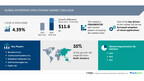
NEW YORK, Dec. 9, 2024 /PRNewswire/ — Report on how AI is redefining market landscape – The global enterprise data storage market  size is estimated to grow by USD 11.6 billion from 2024-2028, according to Technavio. The market is estimated to grow at a CAGR of  4.39%  during the forecast period. Increased adoption of cloud applications is driving market growth, with a trend towards software-defined storage. However, high operating expenses for vendors  poses a challenge. Key market players include Broadcom Inc., Commvault Systems Inc., DataDirect Networks Inc., Dell Technologies Inc., Fujitsu Ltd., Hewlett Packard Enterprise Co., Hitachi Ltd., Huawei Technologies Co. Ltd., Infinidat Ltd., Inspur Group, International Business Machines Corp., Lenovo Group Ltd., NetApp Inc., Nutanix Inc., Oracle Corp., Pure Storage Inc., Seagate Technology Holdings Plc, Veritas Technologies LLC, Western Digital Corp., and Zadara Inc..

AI-Powered Market Evolution Insights. Our comprehensive market report ready with the latest trends, growth opportunities, and strategic analysis- View Free Sample Report PDF

Forecast period

2024-2028

Base Year

2023

Historic Data

2018 – 2022

Segment Covered

Solution (SAN, NAS, and DAS), Type (Storage, Backup, and Others), and Geography (North America, Europe, APAC, South America, and Middle East and Africa)

Region Covered

North America, Europe, APAC, South America, and Middle East and Africa

Key companies profiled

Broadcom Inc., Commvault Systems Inc., DataDirect Networks Inc., Dell Technologies Inc., Fujitsu Ltd., Hewlett Packard Enterprise Co., Hitachi Ltd., Huawei Technologies Co. Ltd., Infinidat Ltd., Inspur Group, International Business Machines Corp., Lenovo Group Ltd., NetApp Inc., Nutanix Inc., Oracle Corp., Pure Storage Inc., Seagate Technology Holdings Plc, Veritas Technologies LLC, Western Digital Corp., and Zadara Inc.

Key Market Trends Fueling Growth

The Software-defined Storage (SDS) market in the enterprise data storage sector is experiencing significant growth due to its flexibility, scalability, and cost savings. SDS separates the control plane from the data plane, enabling organizations to manage storage resources across multiple hardware platforms using software. The market’s expansion is fueled by the exponential growth of data and the shift towards cloud computing. Traditional storage solutions are struggling to cope with increasing data volumes, while SDS offers a more efficient and agile alternative. Furthermore, SDS is compatible with various cloud platforms and supports the agility and scalability needed for cloud-based applications and services. The adoption of virtualization technologies is another factor driving SDS market growth, as it allows for greater flexibility in deploying virtual machines and optimizing virtualization environments. In summary, the SDS market is poised for continued growth during the forecast period, driven by the need for flexible, scalable, and cost-effective enterprise data storage solutions in the context of escalating data volumes and the transition to cloud computing. 

The Enterprise Data Storage Market is thriving with big businesses seeking reliable and scalable solutions for managing their digital data. Products and services in this market include hardware like Hard Disk Drives and Solid State Drives (SSDs), and software solutions such as Software-Defined Storage (SDS), Hyperconverged Infrastructures (HCI), and Cloud Storage Services. Trends include data accessibility, security, and the increasing use of Artificial Intelligence, Machine Learning, Predictive Analytics, and Natural Language Processing in corporate operations. Data placement, tiering, and cybersecurity are key concerns, with solutions like immutable snapshots, encryption, and ransomware detection becoming essential. The market caters to both on-premises data centers and cloud infrastructures, with cloud service providers offering reasonably priced, dependable solutions for startups and mid-sized businesses. Infrastructure configurations, edge computing deployments, hybrid cloud environments, and data-intensive applications are driving innovation in this specialist industry. Additionally, the Internet of Things, 5G networks, and digital transformation initiatives are creating new opportunities for growth. Mobile storage solutions and cloud-based storage services are also gaining popularity. 

Insights on how AI is driving innovation, efficiency, and market growth- Request Sample!

Market Challenges

•         The global enterprise data storage market faces substantial operating expenses for vendors due to various reasons. Significant Research and Development (R&D) costs are incurred to create innovative storage solutions and keep up with technological advancements. Vendors also need to maintain a large and intricate infrastructure, including data centers, servers, networking equipment, and software systems, which can be costly to build and maintain. Additionally, marketing and sales efforts require substantial investments to reach potential clients through advertising, industry events, and hiring sales teams. The competitive nature of the market compels vendors to differentiate their offerings, further increasing expenses. Consequently, designing and developing specific enterprise data storage solutions to cater to diverse end-user needs involves considerable investments in R&D and product development, acting as a potential growth barrier for the global enterprise data storage market.

•         Big enterprises face numerous challenges in managing their growing business-related information. The storage of digital data has become a critical aspect of IT infrastructure, with various storage mechanisms like storage systems, SAN, NAS, DAS, networked appliances, and storage drives. Durability and scalability are essential for these storage subsystems to handle large workloads and unstructured data. Redundancy, logical storage containers, and disaster recovery and backup restoration functions are crucial for data protection. Centralized remote support and administration simplify management. Big data analytics require scalable and distributed storage solutions. Challenges include cabling and connectivity for SAN and networking, operating platforms, and integration with AI, ML, and 5G communication infrastructure. Data security is paramount, especially for IT systems and telecommunication, healthcare, and manufacturing industries. Software manufacturers offer solutions for various storage needs, including hyper-converged storage and cloud storage. Agile and durable storage mechanisms are essential for handling the ever-evolving IT landscape.

Insights into how AI is reshaping industries and driving growth- Download a Sample Report

Segment Overview 

This enterprise data storage market report extensively covers market segmentation by

Solution 1.1 SAN1.2 NAS1.3 DASType 2.1 Storage2.2 Backup2.3 OthersGeography 3.1 North America3.2 Europe3.3 APAC3.4 South America3.5 Middle East and Africa

1.1 SAN-  A Storage Area Network (SAN) is a dedicated high-speed network that connects enterprise storage devices to multiple servers. It moves data from the common user network and organizes it into an independent, high-speed network, allowing each server to access storage devices and control their volumes. SANs are a type of Local Area Network (LAN) designed for handling large data volumes. They support data storage, retrieval, and replication using high-end servers and multiple disk arrays. Vendors like Dell Technologies, Hewlett Packard Enterprise, and IBM offer SAN solutions, including FC and iSCSI. SANs provide benefits such as storage virtualization, high-speed disk technologies, and dynamic failover protection. SANs improve storage management and fault tolerance, fueling the use of AI and real-time analytics for optimizing IT operations. SANs come in three types: Virtual SAN, Unified SAN, and Converged SAN. The advantages of SANs, including storage virtualization and high-speed disk technologies, are expected to drive the growth of the global enterprise storage market during the forecast period.

Download complimentary Sample Report to gain insights into AI’s impact on market dynamics, emerging trends, and future opportunities- including forecast (2024-2028) and historic data (2018 – 2022) 

Research Analysis

The Enterprise Data Storage Market encompasses various storage solutions designed to accommodate the vast amounts of digital data generated by big businesses. Conventional storage systems, such as storage disks and subsystems, continue to be essential for corporate operations. However, cloud computing services and cloud-based solutions are increasingly popular, offering fault-tolerant, accessible storage options as a centralized source for business information. Workloads are distributed across scalable systems, including SSDs and Software-Defined Storage (SDS), ensuring high availability and efficient data accessibility. Cabling and connectivity play a crucial role in ensuring seamless data transfer between storage components and operating platforms. Data protection is a top priority, with businesses implementing various measures to safeguard their digital assets in data centers and cloud infrastructures. The market is continually evolving to meet the demands of businesses, offering innovative solutions like HCI and distributed storage to address the complexities of managing and securing large volumes of data.

Market Research Overview

The Enterprise Data Storage Market encompasses a range of storage solutions designed to meet the demands of large businesses and organizations. These storage systems include conventional storage systems such as storage disks, storage area networks (SAN), network-attached storage (NAS), direct attached storage (DAS), digital storage, and networked appliances. Cloud computing services and cloud-based solutions have also gained popularity as accessible and centralized sources for data management and protection. Fault-tolerant storage mechanisms are essential for business information resilience, ensuring data availability and disaster recovery capabilities. Data management, data sharing functions, and data security are key considerations for these systems. Storage systems come in various forms, including redundant, logical, and storage containers. Software manufacturers provide various operating platforms, distributed storage, and hyper-converged storage solutions. SSDs, SDS, HCI, and other hardware offerings are also part of the market landscape. Big enterprises require scalable, durable, and agile storage systems to handle large workloads, big data analytics, and unstructured data. Data centers and cloud infrastructures are essential components of IT systems in various industries, including healthcare, manufacturing, IT and telecommunication, and AI/ML. The market offers a range of scalable, dependable, and reasonably priced solutions for businesses, catering to the needs of specialist industries and startups alike. Cloud service providers and storage medium manufacturers continue to innovate, offering new products and services to meet the evolving demands of the digital age.

Table of Contents:

1 Executive Summary
2 Market Landscape
3 Market Sizing
4 Historic Market Size
5 Five Forces Analysis
6 Market Segmentation

SolutionSANNASDASTypeStorageBackupOthersGeographyNorth AmericaEuropeAPACSouth AmericaMiddle East And Africa

7 Customer Landscape
8 Geographic Landscape
9 Drivers, Challenges, and Trends
10 Company Landscape
11 Company Analysis
12 Appendix

About Technavio

Technavio is a leading global technology research and advisory company. Their research and analysis focuses on emerging market trends and provides actionable insights to help businesses identify market opportunities and develop effective strategies to optimize their market positions.

With over 500 specialized analysts, Technavio’s report library consists of more than 17,000 reports and counting, covering 800 technologies, spanning across 50 countries. Their client base consists of enterprises of all sizes, including more than 100 Fortune 500 companies. This growing client base relies on Technavio’s comprehensive coverage, extensive research, and actionable market insights to identify opportunities in existing and potential markets and assess their competitive positions within changing market scenarios.

Contacts

Technavio Research
Jesse Maida
Media & Marketing Executive
US: +1 844 364 1100
UK: +44 203 893 3200
Email: media@technavio.com
Website: www.technavio.com/

View original content to download multimedia:https://www.prnewswire.com/news-releases/enterprise-data-storage-market-to-grow-by-usd-11-6-billion-2024-2028-driven-by-increased-cloud-application-adoption-report-with-ai-impact-on-trends—technavio-302325734.html

SOURCE Technavio

Continue Reading
Click to comment

Leave a Reply

Your email address will not be published. Required fields are marked *

Technology

Lianlian DigiTech Returns to Money20/20 Asia to Expand Partnerships, Share Industry Trends, and Explore AI-Enabled Global Financial Infrastructure

Published

on

By

BANGKOK, April 26, 2026 /PRNewswire/ — Lianlian DigiTech, a leading global provider of digital payment services, was once again invited to participate in Money20/20 Asia, one of the world’s most influential fintech gatherings, held in Bangkok, Thailand from April 21 to 23. At the event, the company presented its latest developments in cross-border payment infrastructure, technology innovation, and ecosystem collaboration, offering a comprehensive view of its work enhancing global cross-border payment capabilities.

During the conference, Lianlian DigiTech announced a strategic partnership with UK-based fintech company USI Money to further strengthen its global cross-border payment network, delivering more efficient and reliable fund flows for merchants worldwide. Shen Enguang, Co-President of Lianlian DigiTech; Mark Ma, Head of Global Banking Partnership at LianLian Global; and Bryan Jiang, General Manager Hong Kong of LianLian Global, attended the event and engaged with representatives from international financial institutions. They shared perspectives on fintech trends and global payment innovation, offering industry insight into the continued evolution of a more integrated and interoperable cross-border payments ecosystem.

Building a Borderless Payment Network with Global Partners Including USI Money

At the event, Lianlian DigiTech formalized a strategic collaboration with London-headquartered USI Money to further develop its global payment infrastructure.

The partnership will focus on cross-border remittance and foreign exchange services, combining both companies’ technological capabilities and resources to deliver a one-stop payment and collection solution for global businesses. The offering is built to be efficient, secure, and cost-effective, improving overall fund flow efficiency and streamlining foreign exchange execution.

Syed Bukhari, Group Chief Business and Operating Officer at USI Money, said: “Our partnership with Lianlian will strengthen our remittance capabilities, creating greater value for our customers through broader network coverage and improved transaction performance.”

Bryan Jiang, General Manager Hong Kong of LianLian Global, said: “By leveraging the complementary strengths of our ecosystem partners in technology and compliance, Lianlian will continue to scale its global payment network and improve transaction efficiency. We remain committed to enhancing financial connectivity across global financial markets and delivering more efficient and reliable cross-border payment solutions for our customers.”

Founded in 2009 and listed on the Main Board of the Hong Kong Stock Exchange in 2024 (2598.HK), Lianlian DigiTech is a China-based, globally focused digital payment company with increasingly integrated AI capabilities across its platform. Guided by its mission of “Connecting the world, Empowering global commerce,” the company focuses on developing a trusted and scalable financial infrastructure. As of the end of 2025, Lianlian DigiTech has built a cross-border payment network covering more than 100 countries and regions, serving over 10.4 million customers worldwide.

USI Money is a foreign exchange and international remittance service provider offering tailored cross-border financial solutions for businesses and individuals. With competitive real-time exchange rates and efficient execution as its core strengths, the company delivers fast, secure, and reliable global fund transfers.

In addition, Lianlian DigiTech co-hosted a networking session with Unlimit during the event, providing a forum for industry dialogue. The session brought together a broad group of fintech partners to explore collaborative models and help foster a more connected ecosystem.

Industry Roundtables: Unlocking Layered Collaboration in AI-Driven Cross-Border Payments and Advancing Financial Inclusion in Emerging Markets

At the same time, Mark Ma and Bryan Jiang were invited to the themed roundtable discussions, where they shared insights drawn from industry practice and outlined new approaches to aligning fintech innovation with the global financial system.

At the roundtable on “Fintech and Banks,” Mark Ma noted that the global payment system is rapidly shifting from isolated capabilities to a layered, collaborative model. Banks continue to serve as the foundational infrastructure, responsible for clearing networks and liquidity management. Fintech firms like Lianlian, meanwhile, build on top of this foundation to deliver application-layer services for businesses, transforming complex cross-border payment channels into more accessible solutions that support a wider range of practical business scenarios. He also emphasized fintech’s growing role in compliance and value creation. By embedding risk controls and verification processes into technology workflows, fintech companies can act as compliance intermediaries, improving efficiency while filtering risk and enabling banks to operate more effectively at scale. Meanwhile, insights derived from transaction data and business flows allow for more precise evaluation of small and medium-sized businesses, shifting capital allocation from experience-based decisions to data-driven approaches and improving access to financial services.

At the roundtable titled “Different Worlds, Shared Challenges: Bridging Emerging Markets,” Bryan Jiang pointed out that the core of financial inclusion is shifting from scale of coverage to practical usability in everyday financial activity. The ability to serve underserved segments such as small and micro merchants and overseas workers in a sustained and reliable manner ultimately depends on continuous improvements in product design and operational capabilities. Using emerging markets as an example, Jiang explained that small and medium-sized businesses in these regions often face challenges such as difficult account setup, complex cross-border collections, high foreign exchange costs, and multi-layered tax requirements. Many existing solutions still follow traditional business-focused models, resulting in cumbersome KYB processes and lengthy review cycles that are misaligned with the asset-light, high-frequency, fast-turnover nature of these businesses. In response, Lianlian has lowered barriers to fund flows by offering local collection accounts, optimizing foreign exchange mechanisms, and improving settlement efficiency. The company has also restructured account architecture, streamlined review processes, and enhanced fund visibility, creating a more seamless and intuitive user experience that better aligns financial services with its clients’ business operations and day-to-day activities.

As digital technologies increasingly integrate with the real economy, innovations in AI and blockchain are reshaping the foundations of global financial services. Lianlian DigiTech has long invested in AI capabilities, global compliance, and the growth of its international service network. Its broad licensing coverage, regulatory track record, localized service capabilities, and technical reliability have earned the trust of regulators, customers, and partners worldwide.

Looking ahead, Lianlian DigiTech will continue to build on its cross-border expertise and compliance experience to further develop its AI capabilities and deepen collaboration with global partners. The company aims to extend its role beyond payment network services into more integrated financial infrastructure solutions. Lianlian DigiTech remains committed to serving as a trusted platform for global financial transactions in an increasingly digital environment, enabling businesses and individuals worldwide to access faster, more efficient, and more seamless cross-border financial services.

View original content:https://www.prnewswire.com/apac/news-releases/lianlian-digitech-returns-to-money2020-asia-to-expand-partnerships-share-industry-trends-and-explore-ai-enabled-global-financial-infrastructure-302753667.html

SOURCE LianLian Global

Continue Reading

Technology

The Building & Furniture Category Highlights Sustainable and Human‑Centric Design at the 139th Canton Fair

Published

on

By

GUANGZHOU, China, April 26, 2026 /PRNewswire/ — Phase 2 of the 139th Canton Fair has seen the Building & Furniture category emphasize green Infrastructure and human-centric design.

A major highlight of the building and decorative materials section is the introduction of photovoltaic marble-textured cladding. This innovative surfacing material bridges the gap between high-end aesthetics and renewable energy. Unlike traditional solar panels that rely on glass, this non-opaque cladding uses precise microscopic structures to guide light to internal PV cells.

This technology offers 60% higher efficiency than traditional transparent solar systems while reducing carbon emissions by over 50%. Its ability to reproduce stone, wood, or brick‑like 3D textures allows architects to integrate power generation into a wide range of building styles without the industrial appearance of traditional solar panels.

Indoor environments are also becoming smarter and safer. Manufacturers are showcasing high-efficiency antibacterial surfacing, utilizing visible light catalysis to provide 24-hour protection against mold and bacteria. These advanced decorative papers and panels are becoming the new standard for high-end interior decoration, prioritizing long-term hygiene in residential and commercial spaces.

The sanitary ware sector is increasingly focused on the aging global population and those with limited mobility. A standout innovation is the electric lift-and-rotate shower chair. Designed for the dry-wet separation bathroom layout, it allows users to sit in a dry area and be safely rotated and lifted into the shower via remote control. This waterproof, low-voltage system provides dignity and independence for the elderly while reducing the physical strain on caregivers.

Hygiene and ease of maintenance have also seen a breakthrough with wall-mounted toilets. By moving the lid connection to the tank wall and adopting a mortise‑and‑tenon structure, the design eliminates the hard‑to‑clean areas where bacteria typically accumulate. Many of these units also incorporate ergonomic grab bars directly into the frame, blending safety with a minimalist aesthetic.

In the sports and leisure industry, the shift toward sustainability is seen in non-infill synthetic turf. This next-generation football grass eliminates the need for rubber granules or sand, providing a natural touch and superior shock absorption while significantly reducing maintenance costs and microplastic pollution.

All these innovations demonstrate how the Building & Furniture sector is advancing toward greener materials, smarter functionality, and more human‑centered design, setting new benchmarks for the future of living spaces.

For pre-registration, please click: https://buyer.cantonfair.org.cn/register/buyer/email?source_type=16

Photo – https://mma.prnewswire.com/media/2965701/Image1.jpg

View original content:https://www.prnewswire.co.uk/news-releases/the-building–furniture-category-highlights-sustainable-and-humancentric-design-at-the-139th-canton-fair-302753654.html

Continue Reading

Technology

Nexteer’s Global First Steer-by-Wire Goes into Production

Published

on

By

BEIJING, April 26, 2026 /PRNewswire/ — Nexteer Automotive helped a leading Chinese new energy vehicle (NEV) manufacturer bring the world’s first production passenger vehicle with a full drive‑by‑wire chassis to market. The vehicle features Nexteer’s steer‑by‑wire (SbW) system as a key enabler.

The SbW featured in this vehicle marks Nexteer’s first SbW system in mass production, representing a major step forward for the technology — moving from development and validation to full-scale production. Certified in late 2025, this system achieved the world’s first ASIL D functional safety approval from DAkkS (German Accreditation Body) through close collaboration with the OEM. This certification reflects global top-tier performance in fault diagnosis, redundancy, and safety monitoring. Key features include:

Multi-layered redundancy design: Dual controllers, dual power supplies, multiple communication links, and dual actuation paths — achieving redundancy at system, hardware, and software levels. This ensures that in the event of a single fault, the backup path takes over within milliseconds with no loss of steering function.Full‑scenario functional safety mechanism: Multi‑level monitoring and fault handling strategies covering sensors, controllers, actuators, and communication links.Variable steering ratio: Automatically adjusts steering angle and effort based on vehicle speed and driving mode, balancing agility and comfort.Intuitive road‑feel simulation technology: Software‑defined steering feedback delivers a more responsive and precise driving experience, adaptable to a wide range of driving scenarios.Open interface for autonomous driving: As a key actuation layer for ADAS and autonomous driving systems, it provides real‑time, precise control capabilities, supporting the development of intelligent transportation systems.

Steer-by-Wire: Electronic Signals Replace Mechanical Links, Flexible Configurations for Diverse Needs

By decoupling the mechanical link between the hand wheel and the road wheels, steer-by-wire replaces conventional mechanical connections with electronic signals and actuators — and is quickly becoming a foundational technology for next-generation intelligent chassis and autonomous driving platforms. As a motion control technology company with 120 years of engineering heritage, Nexteer offers a flexible, off-the-shelf portfolio of steering feel simulators and road wheel actuators. This modular approach allows us to meet the diverse needs of different vehicle models and driving scenarios efficiently and cost-effectively.

From Steering to Braking: Expanding Full-Stack Motion Control Capabilities

Building on its deep expertise in steering systems, Nexteer has expanded into braking with its Brake-by-Wire solution, the Electro-Mechanical Brake (EMB). EMB has completed full development and rigorous validation and is ready for mass production. Together with SbW, Brake-by-Wire (EMB), Rear-Wheel Steering, and the MotionIQ™ Software Suite make up Nexteer’s broader Motion-by-Wire™ portfolio.

With Nexteer, OEMs get more than steer-by-wire and brake-by-wire components: they get a complete, proven, production-ready and cost-effective drive-by-wire chassis motion control solution that’s shaping the future of the software-defined chassis and enabling faster development, lower costs and safter, smarter and more exciting driving experiences.

During Auto China 2026, we cordially invite you to visit Nexteer at Booth W1B03, Hall W1, China International Exhibition Center (Shunyi) in Beijing, to experience firsthand the breakthrough innovations of steer-by-wire and Motion-by-Wire™ technologies.

ABOUT NEXTEER AUTOMOTIVE

Nexteer Automotive (HK 1316) is a global leading motion control technology company accelerating mobility to be safe, green and exciting. Our innovative portfolio supports Motion-by-Wire™ chassis control, including electric and hydraulic power steering systems, steer-by-wire and rear-wheel steering systems, steering columns and intermediate shafts, driveline systems, software solutions and brake-by-wire. Celebrating 120 years of automotive innovation in 2026, Nexteer builds on a strong legacy of engineering excellence while continuing to shape the future of mobility. The company solves motion control challenges across all megatrends – including electrification, software/connectivity, ADAS/automated driving and shared mobility – for global and domestic OEMs around the world including BMW, Ford, GM, RNM, Stellantis, Toyota and VW, as well as automakers in India and China including BYD, Xiaomi, ChangAn, Li Auto, Chery, Great Wall, Geely, Xpeng and others. www.nexteer.com  

Links to Nexteer Media Center

Logo – https://mma.prnewswire.com/media/2368187/5937537/nexteer_Logo.jpg

View original content:https://www.prnewswire.com/in/news-releases/nexteers-global-first-steer-by-wire-goes-into-production-302753641.html

Continue Reading

Trending