Technology
Intraoral Scanners Market to Grow by USD 915.75 Million (2024-2028), Driven by Enhanced Accuracy, Productivity, and AI-Driven Market Transformation – Technavio
Published
2 years agoon
By
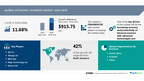
NEW YORK, Dec. 11, 2024 /PRNewswire/ — Report with the AI impact on market trends – The global intraoral scanners market size is estimated to grow by USD 915.75 million from 2024-2028, according to Technavio. The market is estimated to grow at a CAGR of almost 11.68% during the forecast period. Increasing accuracy and productivity of intraoral scanners with advanced technologies and features is driving market growth, with a trend towards increasing prevalence of dental conditions using 3d dental scanners as advanced methods. However, high-cost burden poses a challenge. Key market players include 3M Co., 3Shape AS, 8853 Spa, Align Technology Inc., densys Ltd., Denterprise International Inc., Dentsply Sirona Inc., Durr Dental SE, Envista Holdings Corp., GC Corp., Glidewell, Guangdong Launca Medical Device Technology Co. Ltd., Henry Schein Inc., Institut Straumann AG, Intelliscan 3D, Midmark Corp., Owandy Radiology, Planmeca Oy, Shining 3D Tech Co. Ltd., Vatech Co. Ltd, Medit Corp.
Key insights into market evolution with AI-powered analysis. Explore trends, segmentation, and growth drivers- View Free Sample PDF
Intraoral Scanners Market Scope
Report Coverage
Details
Base year
2023
Historic period
2018 – 2022
Forecast period
2024-2028
Growth momentum & CAGR
Accelerate at a CAGR of 11.68%
Market growth 2024-2028
USD 915.75 million
Market structure
Fragmented
YoY growth 2022-2023 (%)
10.6
Regional analysis
North America, Europe, Asia, and Rest of World (ROW)
Performing market contribution
North America at 42%
Key countries
US, Canada, Germany, UK, China, Japan, the Middle East, Australia, New Zealand, and India
Key companies profiled
3M Co., 3Shape AS, 8853 Spa, Align Technology Inc., densys Ltd., Denterprise International Inc., Dentsply Sirona Inc., Durr Dental SE, Envista Holdings Corp., GC Corp., Glidewell, Guangdong Launca Medical Device Technology Co. Ltd., Henry Schein Inc., Institut Straumann AG, Intelliscan 3D, Midmark Corp., Owandy Radiology, Planmeca Oy, Shining 3D Tech Co. Ltd., Vatech Co. Ltd and Medit Corp..
Market Driver
Intraoral scanners (IOS), also known as 3D scanners, are increasingly popular in dentistry due to their ability to create digital impressions of dental arches. IOS use imaging sensors and scanning software to generate point clouds and 3D surface models of teeth. This technology benefits orthodontists in diagnosing and treating conditions like edentulism, tooth loss, periodontal disease, dental caries, and gum issues, which are prevalent among the geriatric population and those with unhealthy lifestyles. Skilled professionals, including dentists and dental technicians, use IOS for various dental procedures, such as clear aligners, same-day dentistry, and dental implants. Brands like Cadent iTero, CEREC, E4D, TRIOS, CS, and I Series dominate the market. Hospitals and dental clinics invest in these systems for their advanced capabilities and opportunities for dental tourism. However, the high cost of IOS is a challenge for insurance providers and middle-class populations with lower income levels and disposable incomes. The dental disease burden, especially in emerging countries, presents an opportunity for growth. Dental practices and orthodontic laboratories are end users of these systems, contributing significantly to dental expenditure and patient population growth.
Intraoral scanners, specifically 3D dental scanners, are revolutionizing the diagnostic process in dentistry. These advanced tools are increasingly being adopted for diagnosing dental and orthodontic conditions. The global prevalence of such conditions is on the rise, leading to a demand for diagnostic imaging products like 3D dental scanners. These scanners are utilized extensively in various dental fields, including orthodontics, endodontics, oral surgery, periodontics, and implant treatment planning. In the US alone, over 63% of adults aged 18 and above had a dental visit in 2020. This growing need for dental care is fueling the expansion of the global intraoral scanners market.
Request Sample of our comprehensive report now to stay ahead in the AI-driven market evolution!
Market Challenges
Intraoral scanners (IOS), a type of 3D scanner used in dentistry, have revolutionized dental procedures by digitizing dental arches, eliminating the need for traditional impressions. IOS market growth is driven by the increasing prevalence of dental diseases such as periodontal disease, dental caries, edentulism, and tooth loss, particularly among the geriatric population and those with unhealthy lifestyles. However, challenges include the high cost of intraoral scanner systems, limited reimbursements from insurance providers, and the need for skilled professionals to operate these technologically advanced solutions. Brand segmentation includes Cadent iTero, CEREC, E4D, TRIOS, CS, and I Series. End users include hospitals, dental clinics, orthodontists, and dental practices. Opportunities exist in emerging countries with large patient populations and increasing dental disease burden. Clear aligners and same-day dentistry are gaining popularity, driving demand for IOS in orthodontics and dental implants. Middle-class populations in developing countries with rising income levels and disposable incomes represent a significant market opportunity. Dental expenditure is expected to increase, making IOS an essential investment for dental practices.Intraoral scanners represent innovative technology in the dental industry, enabling more accurate and efficient dental treatments. These devices scan the oral anatomy to provide better options for prostheses or oral supporting structures. However, the high cost of these scanners and the additional expenses for the scanning procedure can be a barrier for many patients. Unfortunately, dental insurance often does not cover diagnostic procedures for dental conditions. This, coupled with the fact that some American families cannot afford dental care, may result in delayed or skipped dental visits. Despite these challenges, the use of intraoral scanners offers significant benefits for improving oral health and treating various dental issues.
Discover how AI is revolutionizing market trends- Get your access now!
Segment Overview
This intraoral scanners market report extensively covers market segmentation by
End-user1.1 Dental clinics1.2 Hospitals1.3 OthersType2.1 Powder free2.2 Powder basedGeography3.1 North America3.2 Europe3.3 Asia3.4 Rest of World (ROW)ModalityApplications
1.1 Dental clinics- Dental clinics have become a significant contributor to the global intraoral scanners market due to their collaboration with insurance companies for complete dental coverage and increasing numbers. The demand for personalized care and modern IT solutions in dental clinics fuels market growth. Advanced imaging technologies enable customized therapeutic products, such as dental aligners, with minimal manual operation. Mobile dental clinics, like MobiDent, offer cost-effective treatment and are expanding their reach. MobiDent’s portable dental chair and partnerships with corporations and hospitals increase revenue. These factors make dental clinics the largest market segment, with mobile dental clinics driving growth in the intraoral scanners market.
Download a Sample of our comprehensive report today to discover how AI-driven innovations are reshaping competitive dynamics
Research Analysis
Intraoral scanners (IOS), also known as 3D dental scanners, are advanced technological devices used in dentistry to digitally capture the shape and structure of dental arches. These scanners utilize imaging sensors and scanning software to create point clouds and generate precise 3D surface models of teeth and gums. IOS have revolutionized the dental industry, enabling dentists and orthodontists to diagnose and treat various oral health disorders such as edentulism, tooth loss, periodontal disease, dental caries, and unhealthy lifestyle-induced issues. The aging population and the rising prevalence of oral health disorders further fuel the market growth. Skilled professionals use IOS from brands like Cadent iTero, CEREC, E4D, TRIOS, CS, and I Series to cater to the end users, including hospitals and dental clinics, with high-quality, efficient, and accurate dental solutions.
Market Research Overview
Intraoral scanners (IOS), also known as 3D scanners, are technologically advanced solutions revolutionizing dentistry by digitizing dental arches, replacing traditional impression methods. IOS uses imaging sensors and scanning software to create point clouds and 3D surface models of dental structures. Orthodontists, dentists, and skilled professionals use these scanners for various dental procedures, including edentulism, tooth loss, gum issues, periodontal disease, dental caries, and oral health disorders. The geriatric population, middle-class population, and unhealthy lifestyle choices contribute to the increasing demand for IOS. Dental practices, hospitals, and dental clinics are significant end-users, while clear aligners, same-day dentistry, dental implants, and dental tourism are growing applications. However, high cost and insurance reimbursements are challenges. IOS market share includes brands like Cadent iTero, CEREC, E4D, TRIOS, CS, I Series, and others. The market is expected to grow due to the opportunity presented by the aging population, dental disease burden, and increasing dental expenditure.
Table of Contents:
1 Executive Summary
2 Market Landscape
3 Market Sizing
4 Historic Market Size
5 Five Forces Analysis
6 Market Segmentation
End-userDental ClinicsHospitalsOthersTypePowder FreePowder BasedGeographyNorth AmericaEuropeAsiaRest Of World (ROW)ModalityApplication
7 Customer Landscape
8 Geographic Landscape
9 Drivers, Challenges, and Trends
10 Company Landscape
11 Company Analysis
12 Appendix
About Technavio
Technavio is a leading global technology research and advisory company. Their research and analysis focuses on emerging market trends and provides actionable insights to help businesses identify market opportunities and develop effective strategies to optimize their market positions.
With over 500 specialized analysts, Technavio’s report library consists of more than 17,000 reports and counting, covering 800 technologies, spanning across 50 countries. Their client base consists of enterprises of all sizes, including more than 100 Fortune 500 companies. This growing client base relies on Technavio’s comprehensive coverage, extensive research, and actionable market insights to identify opportunities in existing and potential markets and assess their competitive positions within changing market scenarios.
Contacts
Technavio Research
Jesse Maida
Media & Marketing Executive
US: +1 844 364 1100
UK: +44 203 893 3200
Email: media@technavio.com
Website: www.technavio.com/
View original content to download multimedia:https://www.prnewswire.com/news-releases/intraoral-scanners-market-to-grow-by-usd-915-75-million-2024-2028-driven-by-enhanced-accuracy-productivity-and-ai-driven-market-transformation—technavio-302328020.html
SOURCE Technavio
You may like
Technology
Towards Buddha Co., Ltd. and ICP DAS Showcase iTLC Intelligent Traffic Control Solutions at APTA 2026 in Chicago
Published
35 minutes agoon
October 31, 2026By
Advancing smart intersection technologies and expanding international market opportunities through strategic collaboration
CHICAGO, Oct. 31, 2026 /PRNewswire/ — Towards Buddha Co., Ltd., an overseas distributor of the iTLC Intelligent Traffic Control System, joined its technology partner ICP DAS at APTA 2026 TRANSform & EXPO in Chicago, USA, to showcase the iTLC-9000 Series and its applications in intelligent traffic management.
The exhibition highlighted innovative traffic control technologies designed to support reliable, secure, and integrated smart intersection operations, while providing opportunities to connect with international transportation professionals and explore emerging market needs.
Innovative Traffic Control Solutions
Under the theme “Innovative Traffic Control System,” the exhibition featured the iTLC-9000 Series, highlighting four key capabilities: modular and redundant design, secure networking, traffic signal integration, and active alert systems.
These technologies are designed to support system reliability, communication security, and efficient traffic infrastructure management, addressing the evolving requirements of modern intelligent transportation systems.
As cities worldwide continue to modernize transportation infrastructure, integrated and adaptable traffic control solutions are becoming increasingly important for smart intersection development.
Strengthening International Market Connections
As an overseas distributor of iTLC solutions, Towards Buddha Co., Ltd. plays an important role in connecting traffic control technologies with international markets.
During APTA 2026, Towards Buddha Co., Ltd. and ICP DAS engaged with transportation professionals, system integrators, and industry representatives to introduce iTLC technologies, exchange industry insights, and explore potential business opportunities.
“APTA 2026 provided a valuable platform to connect with the global transportation industry,” said a representative of Towards Buddha Co., Ltd. “Together with ICP DAS, we look forward to expanding international awareness of iTLC solutions and developing new opportunities in intelligent traffic control.”
Looking Ahead
Building on its participation at APTA 2026, Towards Buddha Co., Ltd. will continue collaborating with ICP DAS to promote iTLC solutions, strengthen international partnerships, and explore new opportunities in the global intelligent transportation market.
About Towards Buddha Co., Ltd.
Towards Buddha Co., Ltd. is an overseas distributor of the iTLC Intelligent Traffic Control System, focused on international market development and connecting advanced traffic control technologies with transportation industry needs.
Media Contact
Towards Buddha Co., Ltd.
Contact: Michael Chen
Email: Towardsbuddhaincorporation@gmail.com
Website: https://www.towardsbuddha.com
SOURCE Towards Buddha Co., Ltd.
Technology
Chandigarh University Commemorates ‘Father of Fibre Optics’ Dr. Narinder Singh Kapany’s 100th Birth Anniversary with India’s First Research Chair in His Name; announces annual Grant of ₹1 Crore for Scientific Research
Published
2 hours agoon
October 31, 2026By
Chandigarh University Confers ‘Narinder Singh Kapany Lifetime Achievement Award for Excellence in Physics’ on Dr Ajoy Ghatak, Prof Emeritus IIT Delhi for Contributions to Fibre Optics & Photonics
CHANDIGARH, India, Oct. 31, 2026 /PRNewswire/ — Chandigarh: To mark the 100th birth anniversary of Dr. Narinder Singh Kapany, the legendary Indian scientist widely known as the ‘Father of Fibre Optics’ whose groundbreaking research in optical fibre technology transformed global telecommunications and laid the foundation for today’s digital revolution, Chandigarh University has announced the establishment of India’s first ‘Dr. Narinder Singh Kapany Research Chair for Excellence in Sciences and Innovation’, along with an annual research grant of ₹1 crore to advance scientific research and innovation.
In a pioneering initiative, Chandigarh University has announced India’s first-ever Research Chair established in the name of Dr. Narinder Singh Kapany, recognizing his unparalleled contribution to science and technology. With no other research chair dedicated to Dr. Kapany currently established in India, this initiative marks a significant institutional tribute to the legendary scientist and seeks to carry forward his legacy through sustained investment in scientific research, innovation and the nurturing of young scientific talent. The Research Chair will provide mentorship, guidance and research support to budding scientists, enabling them to pursue innovative ideas, undertake advanced research and translate scientific discoveries into impactful technologies.
Prominent among those who graced the centenary celebrations of Dr. Narinder Singh Kapany at Chandigarh University campus were Prof. (Dr.) Samir K. Mondal Scientist-G, Optics & Photonics Instrumentation CSIR-CSIO, Chandigarh as Chief Guest, Prof. (Dr.) Aaron Danner, National University of Singapore as Guest of Honour, Eminent Researcher Dr Ajoy Ghatak, Prof. Emeritus, IIT Delhi (virtually) and Dr. Satbir Singh Sehgal Vice-Chancellor Chandigarh University among other dignitaries.
Speaking on the occasion Prof. (Dr.) Samir K. Mondal Scientist-G, Optics & Photonics Instrumentation CSIR-CSIO, Chandigarh said, “Professor Kapani’s contribution to optical science began with his pioneering work on thin, flexible glass fibres, through which he demonstrated for the first time that images could be transmitted from one end to another using bundles of optical fibres. Professor Kapani developed thin, flexible glass fibres and successfully transmitting images through them, laying the foundation for modern fibre optics. He also coined the term ‘optical fibre’ and developed the fibre scope, which later evolved into applications such as endoscopy. His work demonstrated that optical fibres could carry information, opening possibilities beyond image transmission, including voice and data communication.”
Prof Mondal added, “There is also an important question of recognition for Indian scientists. Scientific contributions do not always receive the recognition they deserve and the Nobel Prize is a complex matter. I gave the example of S.N. Bose, whose work has had a lasting influence on physics and is associated with several Nobel Prize-winning developments, despite him never receiving the Nobel Prize himself. Similarly, Professor Kapani’s contribution to optical fibre technology deserves to be remembered and carried forward. We represent one-sixth of the world’s population and taking forward the scientific legacy of such visionaries is no less significant than receiving a Nobel Prize. We must encourage our young researchers to build upon their work and explore new frontiers of science and technology.”
Prof. (Dr.) Aaron Danner National University of Singapore said, “Dr. Narinder Singh Kapany’s pioneering work demonstrated how light could be guided through thin glass fibres using the principle of total internal reflection, overcoming the limitations of metallic transmission. His work on fibre bundles, image transmission and endoscopy opened new possibilities in imaging and optical science. Today, the same fundamental technology that Dr. Kapany started with glass fibres is being used on silicon and lithium niobate wafers to develop advanced photonic devices and achieve increasingly higher communication speeds. While modern research is addressing new engineering challenges in laser sources, optical modulators and high-speed data transmission, it continues to build on those early contributions. We may see Dr. Kapany as a great Indian or Punjabi scientist, but I also see him as a great American scientist. Great science and great scientists are global and their contributions ultimately benefit all of humanity.”
Eminent Researcher Dr Ajoy Ghatak, Prof. Emeritus, IIT Delhi said, “It is indeed a great honour to receive this award in the name of Dr. Narinder Singh Kapany, one of the pioneers of fibre optics. His early work on cladded optical fibres and image transmission through fibre bundles laid the foundation for medical endoscopy. The development of low-loss optical fibres has since revolutionised communication through their tremendous information-carrying capacity, enabling global connectivity and video communication. The establishment of the Dr. Narinder Singh Kapany Research Chair by Chandigarh University is a commendable initiative to advance his scientific legacy and inspire future generations of researchers. This recognition is also a tribute to Dr. Kapany’s remarkable contributions to science.”
Dr. Satbir Singh Sehgal Vice-Chancellor Chandigarh University said, “Dr. Narinder Singh Kapany brought immense pride to India and Punjab through his pioneering research in optical fibre technology, which made high-speed internet and modern digital communication possible. Technologies such as artificial intelligence, data centres and seamless global connectivity rely on the foundations of optical fibre technology. His contribution helped usher humanity into the digital era and accelerated technological progress worldwide. The establishment of India’s first Dr. Narinder Singh Kapany Research Chair, along with its annual grant and prestigious awards, reflects Chandigarh University’s commitment to advancing his scientific legacy, recognising excellence and inspiring the next generation of Indian researchers.”
The Research Chair will provide an annual research grant of ₹1 crore to promote scientific excellence through three dedicated awards: the Narinder Singh Kapany Award for Excellence in Physics, ‘CU Physics Excellence Awards for Best Research Publication’ and ‘CU Physics Excellence Awards for Best Patent’.”
The first edition of these awards was conferred during the birth centenary celebration, with Eminent Researcher Dr Ajoy Ghatak, Prof. Emeritus, IIT Delhi receiving the Narinder Singh Kapany Lifetime Achievement Award for Excellence in Physics. Professor Ajoy K. Ghatak is an internationally acclaimed physicist whose seminal contributions to fibre optics, integrated optics and photonics have advanced the understanding and applications of light. Through pioneering research, influential publications and acclaimed textbooks, Professor Ghatak has advanced fibre optics and photonics, carrying forward Dr Narinder Singh Kapany’s scientific legacy while inspiring generations of physicists.
On this occasion, five ‘CU Physics Excellence Awards for Best Patent’ were presented to five best patents by Dr. Ritu Gupta and Dr. Sandeep Kaur for their ‘Multi-functional Optical Antenna System for Parallel FSO-VLC Communication and Nano-biosignal Monitoring’; Shonak Bansal and Anupama for a ‘Self-powered Real-time Health Monitoring System using Nanowire Photodetectors’, Aditya Bhatnagar and Dr. Sanjeev Saini for ‘Multifunctional Organic-Inorganic Hybrid Luminescent Nanomaterials and a Method for Their Preparation’, Mahima Purohit and Dr. Ruchi Bharti for a ‘Biodegradable, Water-resistant Smart Packaging Film for Fluorescence-based Detection of Food Spoilage’ and Ashit Tripathi, Sachitanand Singh, Iqra Jamal Khan, Sanskruti Singh, Alok Gautam, Mahak received the award for a ‘Handheld Wireless OCT and Fundus Imaging Device’.
‘CU Physics Excellence Awards for Best Research Publication’ were conferred on eight faculty members and students. Ravikant from department of physics was conferrred upon for ‘CU Excellence Award for Research’ for his publication titled Nitrogen doped zinc oxide to enhance dielectric characteristics of reduced graphene oxide (rGO) derived nanocomposites in composites communivations. Apart from him the other awardees were Shivani Singla (Physics Department) for “Optimising the Neodymium Concentration in Sodium Borate Glass for Enhanced Photoluminescent and Mechanical Behaviour” in Ceramics International (Q1); Sumit Bhardwaj (Physics Department) for “Structural, Optical and Photocatalytic Properties of Ce-Doped Ni-Zn Ferrite Nanoparticles”, in Ceramics International (Q1); Ruby Priya (Department of Physics) for “Deconvoluting Capacitive and Diffusive Contributions in Cu-Doped SnO₂ Nanoparticles for Enhanced Double-Layer Capacitance and Oxygen Evolution Reaction in Materials Today Communications (Q1); Akhil Saxena, (Chemistry) for “Mechanistic Elucidation of Persicaria maculosa Gray Extract as a Corrosion Inhibitor: Adsorption, Electrochemical Behavior, and DFT Validation”, published in South African Journal of Chemical Engineering; Harvinder Singh Sohal (Chemistry deoartment), for “Synergistic Adsorptive-Photocatalytic Degradation of Tartrazine Using Mn-Modified Fe₃O₄/Lignocellulose Magnetic Nanocomposites”, published in International Journal of Biological Macromolecules (Q1); Surjeet Chahal, for “Surface Plasmon Resonance Sensor for Dopamine Detection Based on CeO₂ Nanorod and ZnO Nanosheet” in Journal of Materials Science: Materials in Electronics (Q2) and Dr. Sanjeev Kumar from Department of Physics, for “1 Monolinoleoylglycerol and 3,4-Dihydroxymandelic Acids-Mediated ZnO for Antibiotic Degradation and Anticancer Activity”, published in Journal of Environmental Chemical Engineering (Q1).
During the birth centenary celebrations, a message shared by Kiran Kaur Kapany, the daughter of Dr Narinder Kapany was also read out where she said that her father’s journey from a small town in Punjab to transforming the world through fibre optics shows that a big idea can start anywhere. “To students, stay curious, ask questions and be proud of who you are. My heartfelt gratitude to Chandigarh University for honouring my father and family,” added Kapany.
Under the Best Patent Excellence Award for research publication and best patent, the five best patents granted each year will be selected for research grants to support product development and the conversion of patented innovations into practical applications. Similarly, the Best Research Paper Award will recognise the top 10 research publications annually by Chandigarh University students and faculty members in high-impact Q1 and Q2 journals, based on their quality, originality and research impact.
About Chandigarh University
Chandigarh University is a NAAC A+ Grade University and QS World Ranked University. This autonomous educational institution is approved by UGC and is located near Chandigarh in the state of Punjab. It is the youngest university in India and the only private university in Punjab to be honoured with A+ Grade by NAAC (National Assessment and Accreditation Council). CU offers more than 109 UG and PG programs in the field of engineering, management, pharmacy, law, architecture, journalism, animation, hotel management, commerce, and others. It has been awarded as The University with Best Placements by WCRC.
Website address: https://www.cuchd.in/
View original content to download multimedia:https://www.prnewswire.com/in/news-releases/chandigarh-university-commemorates-father-of-fibre-optics-dr-narinder-singh-kapanys-100th-birth-anniversary-with-indias-first-research-chair-in-his-name-announces-annual-grant-of-1-crore-for-scientific-research-302925572.html
Towards Buddha Co., Ltd. and ICP DAS Showcase iTLC Intelligent Traffic Control Solutions at APTA 2026 in Chicago
Chandigarh University Commemorates ‘Father of Fibre Optics’ Dr. Narinder Singh Kapany’s 100th Birth Anniversary with India’s First Research Chair in His Name; announces annual Grant of ₹1 Crore for Scientific Research
Send Rakhi to UK swiftly with UK Gifts Portal
Whiteboard Series with NEAR | Ep: 45 Joel Thorstensson from ceramic.network
Nullmax and Renesas Forge Strategic Partnership to Deliver Competitive ADAS Solutions for the Global Market
Why You Should Build on #NEAR – Co-founder Illia Polosukhin at CV Labs
Whiteboard Series with NEAR | Ep: 45 Joel Thorstensson from ceramic.network
NEAR End of Year Town Hall 2021: The Open Web World, MetaBUILD 2 Hackathon and 2021 recap
Trending
-
Technology5 days agoTrueLoyal® Appoints Erica Thompson as Head of Loyalty
-
Technology4 days agoSPS Releases New Report on Turning Workplace Data and AI into a Competitive Advantage
-
Coin Market4 days agoBitcoin ETFs claw back $110M after $774M exit
-
Technology4 days agoAgile Robots Launches Agile ONE SN Humanoid at NVIDIA GTC Berlin and Pilots Humanoids with Audi
-
Technology5 days agoPerhaps Agency Expands Network Relationships for Emerging Brands
-
Technology4 days agoECOVACS WINBOT W3 OMNI Named to TIME’s Best Inventions of 2026
-
Technology5 days agoSoftwareOne named a Leader in the 2026 Gartner® Magic Quadrant™ for SAM Managed Services
-
Technology5 days agoPopTake joins Stamina Group’s media network through strategic partnership with View the VIBE