Connect with us

Technology

Higher Education Benchmark Report from Info-Tech Research Group Reveals Strategic Gaps and Opportunities for IT Transformation

Published

on

Info-Tech Research Group’s newly published higher education IT benchmark report details key gaps in stakeholder satisfaction, innovation leadership, and staffing while outlining strategies to elevate IT as a driver of institutional growth over the coming year.

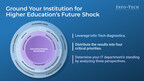
TORONTO, Dec. 16, 2024 /CNW/ – Higher education IT departments are under increasing pressure to evolve from operational support teams to transformative agents of change. According to a new IT benchmark report from global research and advisory firm Info-Tech Research Group, titled Ground Your Institution for Higher Education’s Future Shock, IT departments must address critical challenges in stakeholder alignment, resource optimization, and innovation readiness to meet the demands of a rapidly changing technological landscape.

Based on data from five of Info-Tech’s IT diagnostics, the report offers a comprehensive assessment of the current state of higher education IT, identifying areas for immediate improvement and providing actionable strategies and recommendations for transformation.

“Higher education IT departments have demonstrated their ability to deliver essential services reliably, but the expectations of institutional leaders and stakeholders are shifting rapidly,” says Mark Maby, principal research director at Info-Tech Research Group. “To succeed in this changing environment, IT leaders must foster a culture of innovation, address staffing shortages, and prioritize strategic alignment with institutional goals. The insights in this report provide a roadmap for IT departments to transform and thrive in higher education’s future.”

The firm’s research findings emphasize the urgency for IT leaders to align with institutional goals by addressing critical gaps in areas such as data quality, security posture, and talent management. With mounting pressures to innovate and manage costs effectively, Info-Tech encourages IT leaders in the higher education sector to adopt robust enterprise architecture, embrace data-driven decision-making, and strengthen strategies for workforce development. These steps will enhance operational efficiency, support digital transformation, and position IT departments as catalysts for institutional success.

Key Findings from Info-Tech’s Higher Education IT Benchmark Report

Info-Tech’s report highlights the evolving role of IT in higher education and offers actionable strategies to address pressing challenges and seize opportunities for strategic growth:

Challenges Facing Higher Education IT

Bridging the Satisfaction Gap: While the median stakeholder satisfaction score is 7.7 out of 10, Info-Tech reports that only 9.9% of institutions achieve high satisfaction levels. This gap underscores the need for IT to transition from operational reliability to strategic partnership.Improving Cost Optimization: With 58% of IT departments underprepared to manage rising operational costs, institutions must adopt robust strategies to balance financial sustainability with technological advancements.

Cultivating Innovation: Many IT departments are categorized as “Trusted Operators,” capable of delivering services but falling short in innovation leadership. This lack of focus hinders the adoption of transformative technologies like AI and limits IT’s potential to drive institutional progress.

Addressing Staffing Challenges: The IT staff-to-employee ratio has declined sharply from 2.1% to 1.3% year-over-year, signaling a resource crisis that could jeopardize the management of complex systems and digital transformation initiatives.

Bolstering Foundational Capabilities: A lack of focus on enterprise architecture, project management, and data governance undermines institutions’ ability to execute large-scale IT projects, such as ERP implementations, and optimize costs.

Reinforcing IT Security Posture: Institutions often express satisfaction with IT security, but this perception drops significantly after incidents, underscoring the need for proactive security assessments and robust controls.

Opportunities for IT Transformation in Higher Education

Elevating IT’s Strategic Role: IT departments must prioritize agility, innovation, and alignment with institutional goals to meet stakeholder expectations for transformation.

Investing in Talent Management: Addressing staffing shortages requires strategic investment in talent acquisition, retention, and professional development to empower IT teams and foster growth.

Embracing Data-Driven Decision-Making: Improving data quality and governance is essential for successful AI adoption and other strategic initiatives and lays the foundation for informed decision-making.

Building Stronger Foundational Capabilities: Enhancing enterprise architecture, project management, and vendor partnerships can ensure smoother implementation of complex IT initiatives and align IT efforts with long-term institutional objectives.

As higher education institutions confront rapid technological advancements and shifting stakeholder expectations, IT departments face both significant challenges and transformative opportunities. Info-Tech advises that by addressing gaps in innovation, staffing, and foundational capabilities, as well as aligning their efforts with institutional priorities, IT leaders can redefine their role from operational support to strategic enabler. Info-Tech’s recently published report offers critical insights and actionable strategies to help IT departments drive meaningful change, foster resilience, and contribute to the long-term success of their institutions.

For exclusive commentary or to schedule an interview or podcast appearance with Mark Maby, an expert in the educational sector, and to access the complete Ground Your Institution for Higher Education’s Future Shock blueprint, please contact pr@infotech.com.

About Info-Tech Research Group
Info-Tech Research Group is one of the world’s leading research and advisory firms, proudly serving over 30,000 IT and HR professionals. The company produces unbiased, highly relevant research and provides advisory services to help leaders make strategic, timely, and well-informed decisions. For nearly 30 years, Info-Tech has partnered closely with teams to provide them with everything they need, from actionable tools to analyst guidance, ensuring they deliver measurable results for their organizations.

To learn more about Info-Tech’s divisions, visit McLean & Company for HR research and advisory services and SoftwareReviews for software buying insights.

Media professionals can register for unrestricted access to research across IT, HR, and software and hundreds of industry analysts through the firm’s Media Insiders program. To gain access, contact pr@infotech.com.

For information about Info-Tech Research Group or to access the latest research, visit infotech.com and connect via LinkedIn and X.

View original content to download multimedia:https://www.prnewswire.com/news-releases/higher-education-benchmark-report-from-info-tech-research-group-reveals-strategic-gaps-and-opportunities-for-it-transformation-302332706.html

SOURCE Info-Tech Research Group

Continue Reading
Click to comment

Leave a Reply

Your email address will not be published. Required fields are marked *

Technology

Chef Robotics Physical AI Models Can Now Automate Baked Goods Packing

Published

on

By

SAN FRANCISCO, April 29, 2026 /PRNewswire/ — Chef Robotics, a leader in physical AI for the food industry, today announced that Chef robots can now automate tray assembly for baked goods packing. The application places baked products, such as burger buns, chocolate chip cookies, biscotti, butter cookies, biscuits, fortune cookies, granola bars, rusks, and shortbreads into trays and packaging containers before sealing.

Watch Chef robots in action.

Baked goods packing has historically been difficult to automate for high-mix production. Each item behaves differently on the production line—a granola bar compresses under the wrong grip, while a biscotti or rusk can crack if placed at the wrong angle. Surface textures range from glazed and smooth to crumbly and irregular, and strict presentation requirements leave little room for error. This variability has made it challenging for automation systems to reliably handle baked goods at production speeds, leaving food manufacturers dependent on manual labor and traditional bakery equipment.

To address this, Chef built its baked goods packing application on its existing piece-picking capability, which uses Chef’s AI-powered computer vision and physical AI models trained across diverse real-world production environments. This allows Chef robots to assess each item’s position, shape, and orientation in real time and determine how to pick the items from the pan and place them quickly and precisely without damaging them.

The baked goods packing application supports four distinct placement capabilities.

First, Chef’s vision system detects the angle at which each item sits in the pan and reorients it after picking, placing it on the tray at the exact angle required, regardless of its original position, enabling retail-ready presentation for SKUs that require precise angular placement.

Second, Chef robots can place multiple baked goods into the same packaging container in a single automated pass, completing full tray assembly without manual intervention.

Third, for packaging containers with multiple small compartments, Chef robots can precisely place items into each designated section, including multiple items in the same compartment, using Chef’s AI vision model to detect compartment positions and orientations in real time.

Fourth, Chef’s vision system identifies the exact center of each tray and places every item at a predefined offset from that center, ensuring a uniform, consistent arrangement across every pack regardless of how trays arrive on the conveyor.

For food manufacturers evaluating bakery systems and baked goods packaging automation, the application offers higher throughput, reduced labor dependency, and consistent presentation across shifts. The capability runs on Chef’s existing robotic hardware and software, allowing manufacturers to deploy it without requiring any changes to their production lines.

Chef’s baked goods packing application is available in the U.S., Canada, Germany, and the UK and is included as part of Chef’s robotics-as-a-service (RaaS) pricing model.

About Chef Robotics
Chef is the first company to have commercialized a scalable AI-driven food robotics solution. With over 104 million servings made in production, Chef leverages ChefOS, an AI platform for food manipulation, to offer a Robotics-as-a-Service solution that helps industry-leading food companies increase production volume and meet demand. Headquartered in San Francisco, CA, Chef aims to empower humans to do what humans do best by accelerating the advent of intelligent machines. Visit https://chefrobotics.ai to learn more.

View original content:https://www.prnewswire.com/news-releases/chef-robotics-physical-ai-models-can-now-automate-baked-goods-packing-302756923.html

SOURCE Chef Robotics

Continue Reading

Technology

Chef Robotics Physical AI Models Can Now Automate Baked Goods Packing

Published

on

By

SAN FRANCISCO, April 29, 2026 /PRNewswire/ — Chef Robotics, a leader in physical AI for the food industry, today announced that Chef robots can now automate tray assembly for baked goods packing. The application places baked products, such as burger buns, chocolate chip cookies, biscotti, butter cookies, biscuits, fortune cookies, granola bars, rusks, and shortbreads into trays and packaging containers before sealing.

Watch Chef robots in action.

Baked goods packing has historically been difficult to automate for high-mix production. Each item behaves differently on the production line—a granola bar compresses under the wrong grip, while a biscotti or rusk can crack if placed at the wrong angle. Surface textures range from glazed and smooth to crumbly and irregular, and strict presentation requirements leave little room for error. This variability has made it challenging for automation systems to reliably handle baked goods at production speeds, leaving food manufacturers dependent on manual labor and traditional bakery equipment.

To address this, Chef built its baked goods packing application on its existing piece-picking capability, which uses Chef’s AI-powered computer vision and physical AI models trained across diverse real-world production environments. This allows Chef robots to assess each item’s position, shape, and orientation in real time and determine how to pick the items from the pan and place them quickly and precisely without damaging them.

The baked goods packing application supports four distinct placement capabilities.

First, Chef’s vision system detects the angle at which each item sits in the pan and reorients it after picking, placing it on the tray at the exact angle required, regardless of its original position, enabling retail-ready presentation for SKUs that require precise angular placement.

Second, Chef robots can place multiple baked goods into the same packaging container in a single automated pass, completing full tray assembly without manual intervention.

Third, for packaging containers with multiple small compartments, Chef robots can precisely place items into each designated section, including multiple items in the same compartment, using Chef’s AI vision model to detect compartment positions and orientations in real time.

Fourth, Chef’s vision system identifies the exact center of each tray and places every item at a predefined offset from that center, ensuring a uniform, consistent arrangement across every pack regardless of how trays arrive on the conveyor.

For food manufacturers evaluating bakery systems and baked goods packaging automation, the application offers higher throughput, reduced labor dependency, and consistent presentation across shifts. The capability runs on Chef’s existing robotic hardware and software, allowing manufacturers to deploy it without requiring any changes to their production lines.

Chef’s baked goods packing application is available in the U.S., Canada, Germany, and the UK and is included as part of Chef’s robotics-as-a-service (RaaS) pricing model.

About Chef Robotics
Chef is the first company to have commercialized a scalable AI-driven food robotics solution. With over 104 million servings made in production, Chef leverages ChefOS, an AI platform for food manipulation, to offer a Robotics-as-a-Service solution that helps industry-leading food companies increase production volume and meet demand. Headquartered in San Francisco, CA, Chef aims to empower humans to do what humans do best by accelerating the advent of intelligent machines. Visit https://chefrobotics.ai to learn more.

View original content:https://www.prnewswire.com/news-releases/chef-robotics-physical-ai-models-can-now-automate-baked-goods-packing-302756923.html

SOURCE Chef Robotics

Continue Reading

Technology

Air Products to Expand Industrial Gas Supply for Samsung Electronics’ Next-Generation Semiconductor Fab in South Korea

Published

on

By

New investment underscores the company’s long-term commitment to Korea and its leading role in the global semiconductor industry 

LEHIGH VALLEY, Pa., April 29, 2026 /PRNewswire/ — Air Products (NYSE:APD), a world-leading industrial gases company and serving Samsung globally, today announced it has been selected by Samsung to supply industrial gases for its new advanced semiconductor fab in Pyeongtaek, Gyeonggi Province, South Korea.

Under the agreement, Air Products will build, own and operate multiple state-of-the-art production facilities and a bulk specialty gas supply system to supply nitrogen, oxygen, argon, and hydrogen for Samsung’s new semiconductor fab. The new facilities are expected to come onstream in multiple phases from 2028 through 2030.

Air Products has a long track record of executing multiple phase expansions in Pyeongtaek to support Samsung’s growing manufacturing needs. This latest project represents Air Products’ largest investment to date in the semiconductor industry and will establish Pyeongtaek as the company’s single largest operations site globally supporting the electronics industry. 

“Air Products is honored to be selected once again by Samsung and to have their continued confidence as a trusted partner supporting their strategic growth plans,” said SR Kim, President, Air Products Korea. “This significant investment reinforces Air Products’ role as a leading global supplier to the semiconductor industry and underscores our long-standing commitment to supporting our strategic customers with safety, reliability, efficiency and excellent service.”

Air Products has served the global electronics industry for more than 40 years, supplying industrial gases safely and reliably to many of the world’s leading technology companies. The company has operated in Korea for more than 50 years and has established a strong position in electronics and manufacturing sectors.

About Air Products

Air Products (NYSE: APD) is a world-leading industrial gases company in operation for over 85 years focused on serving energy, environmental, and emerging markets and generating a cleaner future. The Company supplies essential industrial gases, related equipment and applications expertise to customers in dozens of industries, including refining, chemicals, metals, electronics, manufacturing, medical and food. As the leading global supplier of hydrogen, Air Products also develops, engineers, builds, owns and operates some of the world’s largest clean hydrogen projects, supporting the transition to low- and zero-carbon energy in the industrial and heavy-duty transportation sectors. Through its sale of equipment businesses, the Company also provides turbomachinery, membrane systems and cryogenic containers globally.

Air Products had fiscal 2025 sales of $12 billion from operations in approximately 50 countries. For more information, visit airproducts.com or follow us on LinkedInXFacebook or Instagram.

This release contains “forward-looking statements” within the safe harbor provisions of the Private Securities Litigation Reform Act of 1995. These forward-looking statements are based on management’s expectations and assumptions as of the date of this release and are not guarantees of future performance. While forward-looking statements are made in good faith and based on assumptions, expectations and projections that management believes are reasonable based on currently available information, actual performance and financial results may differ materially from projections and estimates expressed in the forward-looking statements because of many factors, including the risk factors described in our Annual Report on Form 10-K for the fiscal year ended September 30, 2025 and other factors disclosed in our filings with the Securities and Exchange Commission. Except as required by law, we disclaim any obligation or undertaking to update or revise any forward-looking statements contained herein to reflect any change in the assumptions, beliefs or expectations or any change in events, conditions or circumstances upon which any such forward-looking statements are based.

View original content to download multimedia:https://www.prnewswire.com/news-releases/air-products-to-expand-industrial-gas-supply-for-samsung-electronics-next-generation-semiconductor-fab-in-south-korea-302757497.html

SOURCE Air Products

Continue Reading

Trending