Connect with us

Technology

French antitrust proceedings concluded

Published

on

STOCKHOLM, Dec. 19, 2024 /PRNewswire/ — The French Competition Authority (FCA) has completed the previously communicated second investigation regarding alleged breaches of antitrust rules in France by Electrolux Group and various other parties within the home appliance sector during 2009 to 2014.

The FCA has decided on a fine of EUR 44.5m, which is covered by the provision set by Electrolux Group and reported as a non-recurring item in the second quarter of 2023. This decision follows a settlement that was reached in 2023 between the FCA and Electrolux Group.

For further information, please contact Electrolux Press Hotline, +46 8 657 65 07.

This information was brought to you by Cision http://news.cision.com

https://news.cision.com/electrolux-group/r/french-antitrust-proceedings-concluded,c4084732

The following files are available for download:

https://mb.cision.com/Main/1853/4084732/3182902.pdf

241219 Press release – French antitrust proceedings concluded final ENG


View original content:https://www.prnewswire.co.uk/news-releases/french-antitrust-proceedings-concluded-302335955.html

Continue Reading

Technology

CUJO AI Takes Residential Proxy Detection Inside the Home

Published

on

By

New capability identifies the device hosting proxy activity inside a subscriber’s home, classifies what that activity is, and gives operators a path from detection to remediation.

LOS ANGELES, Sept. 30, 2026 /PRNewswire/ — CUJO AI, the global leader in network intelligence and cybersecurity solutions for network service providers (NSPs), today introduced a new capability that detects the specific device in a subscriber’s home network that is being used as a residential proxy. The capability pairs that device-level findings with activity classification (such as ad fraud or malware) with remediation guidance and real-time notifications, giving operators a complete path from detection to resolution for the first time.

Residential proxy networks quietly resell home internet connections to third parties, routing anonymous traffic through real subscriber IP addresses, usually without the subscriber’s knowledge. Compromised devices, bundled SDKs in free apps, and “get paid for your bandwidth” schemes are the most common ways a household device ends up enrolled. Until now, operators could at best flag a suspicious IP address; they had no way to say which device was compromised, quietly monetized, or actively taking orders from someone else.

CUJO AI’s new capability closes that gap. Running at the home gateway, it identifies which subscriber network is hosting proxy activity and pinpoints the specific device inside the home generating it, along with clear, device-specific remediation steps and real-time alerts so operators can act before the damage compounds.

“CUJO AI can tell the operator which device in which home is the source and what to do about it. That’s the difference between an alert and an answer,” said Chris Turner, Chief Product Officer, CUJO AI.

For operators, the capability turns an invisible cost center into a manageable one: reclaiming bandwidth consumed by third-party traffic, protecting IP reputation, and giving frontline support a real root cause for slowdown complaints instead of a shrug. For subscribers, the specificity changes the nature of the conversation. Instead of a warning letter or account suspension, an operator can reach out with something genuinely useful: a device has been identified, here is how to fix it. Handled that way, an incident that would otherwise feel like a penalty becomes a demonstration of the operator looking out for its customers.

“Customers are often unaware that residential proxy activity is happening on their home network. Every one of these findings gives a network service provider an opportunity to have a helpful conversation with a customer instead of a difficult one. Delivered well, this isn’t about enforcement, it’s a moment when subscribers see that their provider is actively looking out for them,” said Steven Offerein, Vice President, Device and Protection Services at CUJO AI.

The capability is being introduced to CUJO AI’s operator partners now, with coverage and remediation guidance expanding as the program scales.

About CUJO AI

CUJO AI enables service providers to understand, serve, and protect consumers with advanced cybersecurity and granular network and device intelligence. The CUJO AI Intelligence platform – built on 72,000 device models and deployed across 63 million homes – gives service providers deep, continuous visibility into every connected device and network behavior from day one. CUJO AI Services delivers active security, digital parenting, and scam protection for service providers ready to monetize that intelligence with subscriber-facing products. Advanced AI algorithms help NSPs uncover previously unavailable insights to raise the bar for customer experience and retention with new value propositions and improved operations. Fully compliant with all privacy regulations, CUJO AI is trusted by the world’s largest broadband operators, including Comcast, Charter Communications, T-Mobile, Deutsche Telekom, TELUS, Sky Italia, Sky UK, Rogers, Cox, Shaw, Videotron, BT and EE.

For more information, visit www.cujo.com.

viktorija@cujo.com

View original content to download multimedia:https://www.prnewswire.com/news-releases/cujo-ai-takes-residential-proxy-detection-inside-the-home-302891529.html

SOURCE CUJO AI

Continue Reading

Technology

LI-S ENERGY BATTERY POWERS NEAR TWO HOUR ENDURANCE FLIGHT OF EATP PEGASUS DRONE

Published

on

By

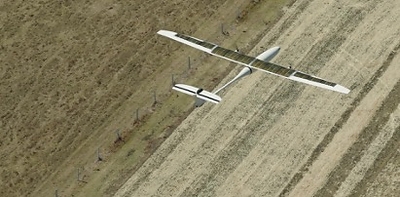
The Pegasus long endurance drone, developed by Li-S Energy, V-TOL Aerospace and Halocell Energy, completes a successful series of test flights over Queensland

Key Highlights:

The EATP Pegasus long endurance drone completed several successful test flights in Queensland, culminating in an endurance flight of almost 2 hours covering more than 75 kilometres, on a single Li-S Energy battery pack.The endurance flight met expected flight performance and landed safely with battery capacity to spare.On a same cell weight basis, the Li-S Energy cells delivered 80% more range and flight time than would have been achieved by an equivalent high-performance professional lithium polymer UAV battery pack #The Pegasus drone comprises V-TOL Aerospace’s airframe, Li-S Energy’s lithium sulfur battery system, and Halocell Energy’s perovskite solar array.Designed to accommodate two Li-S Energy battery packs, in due course Pegasus is expected to deliver flight durations of 5-8 hours, and 250 kilometres, ideal for long endurance mapping, surveillance, and agricultural, utilities and environmental monitoring missions.Demand for drones is growing exponentially across commercial and defence markets, with proposed US and Australian government investment in drone and counter-drone technologies now exceeding A$100 billion[1].Following this success, the collaboration partners intend to assess further commercial development, targeting future platform sales.See a one-minute video of the flight here: https://lis.plus/EATP

BRISBANE, Australia, Sept. 30, 2026 /PRNewswire/ — Li-S Energy Limited (ASX: LIS) (“Li-S Energy”, “LIS” or “the Company”) is pleased to announce that Pegasus, the long endurance drone developed under the Emerging Aviation Technology Partnership (EATP) programme, has completed a series of successful test flights in Queensland, culminating in endurance flight of almost 2 hours, powered by a single Li-S Energy lithium sulfur battery pack.

The twin motor, five-metre wingspan Pegasus was designed and built from the ground up through the collaboration of three innovative Australian companies. It combines an airframe and power systems designed and developed by V-TOL Aerospace (V-TOL), the 382 Wh lithium sulfur battery packs and battery management system designed and built by Li-S Energy, and a perovskite solar cell array fabricated by Halocell Energy (Halocell).

As announced in June 2024, the project is supported by a grant of just over $1.35 million from the Commonwealth Government under the EATP programme, matched by the collaboration partners. The collaboration is targeting the development of a family of long endurance surveillance drones powered by Li-S Energy batteries. This flight marks the culmination of the EATP project and the successful completion of its practical development and flight test work.

Milestone flight testing

The flight test programme comprised several flights, culminating in an endurance flight of almost 2 hours on a single Li-S Energy battery pack. The aircraft met its expected flight performance throughout and landed safely with battery capacity to spare.

The Li-S Energy battery system enabled sustained cruise flight of more than 75 kilometres, with the Company’s battery management system integrated with V-TOL’s power management system controlling the battery power for the twin motors and control systems, while being capable of simultaneously managing the feed-in from the solar array.

The Pegasus was designed to accommodate two Li-S Energy battery packs, and with the latest improvements to Halocell’s solar array performance beyond those fitted to the current airframe, we expect the platform to be capable of flight missions of five to eight hours and 250 kilometres, ideal for long endurance mapping and surveillance, and for agricultural, utilities and environmental monitoring missions.

The flight data will now be analysed by the partners to characterise platform performance and inform the assessment of the platform’s commercial potential.

Toward commercial development

Demand for long endurance uncrewed aircraft continues to grow rapidly across commercial and defence markets, and both endurance and sovereign supply are decisive competitive strengths. With their integrated technologies now proven in flight, the collaboration partners intend to capitalise on this market potential.

Li-S Energy filed two patent applications to protect innovative developments during the project relating to the battery management system and battery pack design.

Quotes

Dr Lee Finniear, Chief Executive Officer and Managing Director of Li-S Energy, said:

“With the exponential growth of drones and uncrewed systems in both commercial and military applications, flight endurance and sovereign capability are critical to Australia’s future in this sector. Today, with our partners, we have shown what Australian innovation and collaboration is capable of. The EATP Pegasus drone is the result of two years of work by the teams from V-TOL Aerospace, Halocell and Li-S Energy, proving that Australia has the sovereign capability and the unique technology to be leaders in this field.”

Mark Xavier, Managing Director and Chief Executive Officer of V-TOL Aerospace, said:

“The Pegasus flew exactly as our team designed it to. Our airframe and power systems performed faultlessly throughout the flight, and pairing them with Li-S Energy’s new lightweight pouch cell battery system gives the platform an endurance advantage operators will immediately recognise. I am proud of what our engineers have delivered, and our focus now turns to the pathway from successful trials to commercial platform sales.”

Paul Moonie, Founder and Chief Executive Officer of Halocell Energy, said:

“Seeing our ultra-lightweight perovskite cells take to the air on the Pegasus is a proud moment for the Halocell Energy team, whose skill in fabricating flexible solar modules for such a demanding application has been outstanding. Each flight builds the data and experience we need as we continue to develop higher output modules for aerospace applications, and we are delighted to stand alongside Li-S Energy and V-TOL Aerospace in an all-Australian collaboration delivering this platform.”

The companies acknowledge the support of the Commonwealth Government through the EATP programme as instrumental in bringing the project to this success.

The Company will keep the market informed of material developments in accordance with its continuous disclosure obligations.

This announcement has been authorised by the Board.

About Li-S Energy:

Li-S Energy Limited (ASX: LIS) is an Australian developer of next-generation lithium sulfur battery cells that offer around twice the energy density of conventional lithium-ion. Using proprietary IP and advanced nanomaterials including boron nitride nanotubes (BNNTs) and Li-Nanomesh™, it builds lighter, more efficient energy storage for defence, drones and aviation, where weight is critical. www.lis.energy

About V-TOL Aerospace:

V-TOL Aerospace is a Brisbane-based Australian aerospace company specialising in the design, manufacture and operation of unmanned aircraft systems and intelligent robotic technologies for commercial, government and defence applications. Visit: www.v-tol.com

About Halocell Energy:

Halocell Energy is an Australian solar technology company producing next-generation perovskite solar cells using an advanced roll-to-roll manufacturing process at its facility in Wagga Wagga, New South Wales. Visit: www.halocell.energy

# Cell level comparison based on the 1.1 kg of lithium-sulfur power cells (382 Wh) flown in the endurance flight. Reference: Tattu 16000 mAh 6S lithium polymer battery (355 Wh, approximately 1.85 kg, around 192 Wh/kg), one of the most widely used commercial batteries for large professional UAVs. Excludes weight of pack housing and BMS in each case and assumes flight time scales linearly with cell energy.

 [1] Li-S Energy 2026 Annual Report – Managing Directors Report


View original content to download multimedia:https://www.prnewswire.com/news-releases/li-s-energy-battery-powers-near-two-hour-endurance-flight-of-eatp-pegasus-drone-302894228.html

SOURCE Li-S Energy Limited

Continue Reading

Technology

Servier Adopts Veeva OpenData Globally to Scale AI

Published

on

By

 Establishing an AI-ready data foundation in more than 80 countries

PLEASANTON, Calif., Sept. 30, 2026 /PRNewswire/ — Veeva Systems (NYSE: VEEV) today announced that Servier is standardizing customer reference data across more than 80 countries with Veeva OpenData. Building on its global success with Veeva Link Key People, a leading French pharmaceutical company governed by a Foundation, is harmonizing customer reference data and creating a unified foundation to scale AI.

“By centralizing our customer reference data through Veeva OpenData, we aren’t just improving our current processes, we are building the global, AI-ready data foundation that will redefine how we work,” said Liam Hanrahan, director of world operations excellence at Servier. “A globally unified semantic layer and Veeva Link connectivity gives our affiliates the high-quality insights to reach the right HCPs in each market, driving efficiency to scale AI globally.”

With OpenData and Link Key People, Servier equips its global commercial and medical teams with connected data, driving faster insights and quicker action across the organization.

“The industry fails to scale 89% of AI initiatives due to data challenges,” said Kilian Weiss, president, Link and OpenData at Veeva. “Servier demonstrates strong industry leadership by addressing this with a standard data-first approach to AI across all regions. With OpenData as the basis for its harmonized global data foundation, Servier can scale more effective, AI-driven commercial execution.”

Veeva OpenData is part of Veeva Data Cloud, which includes Veeva Link and Veeva Compass. OpenData unifies customer reference data globally, replaces fragmented silos, and drives the consistency required for scaling advanced analytics and AI.

About Veeva Systems
Veeva delivers the industry cloud for life sciences with applications, agents, data, and consulting. Committed to innovation, product excellence, and customer success, Veeva serves more than 1,500 customers, ranging from the world’s largest pharmaceutical companies to emerging biotechs. As a Public Benefit Corporation, Veeva is committed to balancing the interests of all stakeholders, including customers, employees, shareholders, and the industries it serves. For more information, visit veeva.com.

Veeva Forward-Looking Statements
This release contains forward-looking statements regarding Veeva’s products and services and the expected results or benefits from use of our products and services. These statements are based on our current expectations. Actual results could differ materially from those provided in this release and we have no obligation to update such statements. There are numerous risks that have the potential to negatively impact our results, including the risks and uncertainties disclosed in our filing on Form 10-Q for the fiscal year ended July 31, 2026, which you can find here (a summary of risks which may impact our business can be found on pages 33 and 34), and in our subsequent SEC filings, which you can access at sec.gov.

Contact:
Alison Borris
Veeva Systems
alison.borris@veeva.com


View original content to download multimedia:https://www.prnewswire.com/news-releases/servier-adopts-veeva-opendata-globally-to-scale-ai-302893844.html

SOURCE Veeva Systems

Continue Reading

Trending