Connect with us

Technology

CNC Vertical Machining Centers Market to Grow by USD 1.09 Billion (2025-2029), Driven by Demand for CNC Tools and AI-Powered Market Evolution – Technavio

Published

on

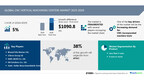
NEW YORK, Jan. 7, 2025 /PRNewswire/ — Report on how AI is driving market transformation – The global CNC vertical machining centers market size is estimated to grow by USD 1.09 billion from 2025-2029, according to Technavio. The market is estimated to grow at a CAGR of almost 5% during the forecast period. Increasing demand for cnc-incorporated machine tools is driving market growth, with a trend towards emergence of autonomous and electric cars. However, availability of horizontal machining centers and refurbished vertical machining centers poses a challenge. Key market players include Bharat Fritz Werner Ltd., Chiron Group SE, DMG MORI Co. Ltd., DN Solutions Co. Ltd., Gebr. Heller Maschinenfabrik GmbH, GF Machining Solutions AG, Haas Automation Inc., Hurco Companies Inc., Jyoti CNC Automation Ltd., Komatsu Ltd., Makino Milling Machine Co. Ltd., Maschinenfabrik Berthold Hermle AG, Maxmill Machinery Co. Ltd., Micromatic Machine Tools Pvt. Ltd., Mitsubishi Electric Corp., Okuma Corp, SCM GROUP Spa, Shandong Luzhong Machine Tool Co. Ltd., Shenyang Yiji Machine Tool Sales Co. Ltd., and Yamazaki Mazak Corp..

Key insights into market evolution with AI-powered analysis. Explore trends, segmentation, and growth drivers- View Free Sample PDF

CNC Vertical Machining Centers Market Scope

Report Coverage

Details

Base year

2024

Historic period

2019 – 2023

Forecast period

2025-2029

Growth momentum & CAGR

Accelerate at a CAGR of 5%

Market growth 2025-2029

USD 1090.8 million

Market structure

Fragmented

YoY growth 2022-2023 (%)

4.8

Regional analysis

APAC, Europe, North America, South America, and Middle East and Africa

Performing market contribution

APAC at 38%

Key countries

US, China, Germany, Japan, Canada, Italy, India, South Korea, UK, and France

Key companies profiled

Bharat Fritz Werner Ltd., Chiron Group SE, DMG MORI Co. Ltd., DN Solutions Co. Ltd., Gebr. Heller Maschinenfabrik GmbH, GF Machining Solutions AG, Haas Automation Inc., Hurco Companies Inc., Jyoti CNC Automation Ltd., Komatsu Ltd., Makino Milling Machine Co. Ltd., Maschinenfabrik Berthold Hermle AG, Maxmill Machinery Co. Ltd., Micromatic Machine Tools Pvt. Ltd., Mitsubishi Electric Corp., Okuma Corp, SCM GROUP Spa, Shandong Luzhong Machine Tool Co. Ltd., Shenyang Yiji Machine Tool Sales Co. Ltd., and Yamazaki Mazak Corp.

Market Driver

The CNC vertical machining centers market is experiencing significant growth due to increased demand for metal components in various industries. Hard metals, steel, and aluminum are popular materials in manufacturing, particularly for complex jobs and industrial processes. Templates and cams are essential tools for CNC machining, enabling efficient manufacturing of metal components. Vertical machining centers are ideal for manufacturing molds, die cavities, engine propellers, and impellers. Advanced CNC controls, high-speed spindles, and automatic tool changers enhance production capacity and efficiency. Giant manufacturing countries lead the market, with trends towards automation technologies such as collaborative robots and lights-out production. The manufacturing industry segment is a major consumer, with the electrical industry, automotive, and aerospace sectors driving demand. Raw materials like steel, carbon, and electricity costs impact CNC machining capacity. CNC machining centers are used for milling, drilling, and cutting various workpieces, including metals and wood. The market for CNC machining centers is expanding, with applications in the industrial automation market, electronic products, semiconductors, and consumer electronics. Horizontal machining centers and CNC milling machines are alternative solutions, with 3-axis and advanced tool axes offering flexibility for milling and rotary cutting. The market for CNC machining centers is expected to grow, driven by the increasing demand for automation and the need for high-precision components. 

The global shift towards electric vehicles (EVs) is significantly impacting the CNC vertical machining centers market. With the elimination of traditional internal combustion engine (ICE) components like exhaust systems, pistons, valves, crankshafts, engine blocks, and exhaust headers, the demand for machined parts is decreasing. This reduction in demand may lead to market contraction, potentially affecting numerous vendors in this complex industry. Simultaneously, the automotive sector’s growing focus on autonomous vehicles presents new opportunities for innovation and growth in manufacturing processes. 

Request Sample of our comprehensive report now to stay ahead in the AI-driven market evolution!

Market Challenges

The CNC vertical machining centers market faces several challenges in manufacturing metal components for various industries. Hard metals and steel require high CNC machining capacity and advanced controls for efficient production. Aluminum, used in flat works and manufacturing molds and die cavities, presents challenges due to its heat sensitivity. Manufacturing complex jobs in hard metals, steel, and aluminum for industries like aerospace, automotive, and heavy machinery requires vertical machining centers with high-speed spindles and automatic tool changers. The cost of raw materials, such as steel and carbon, as well as electricity, impacts the profitability of CNC machining centers. The manufacturing industry segment seeks automation technologies like collaborative robots and lights-out production for increased efficiency. In contrast, horizontal machining centers cater to industries producing large components, such as engine propellers and impellers. The industrial automation market’s growth in sectors like the electrical industry, electronic products, semiconductors, and consumer electronics drives the demand for CNC machining centers. CNC milling machines, with their tool axes, are essential for milling and cutting workpieces made of metal, wood, and other raw materials. The use of CAM software and rotary cutters enhances the productivity of CNC machining centers. Ferrous and non-ferrous metals, including metals used in industrial processes, present unique challenges for CNC machining centers. Overall, the CNC machining centers market must adapt to these challenges to remain competitive in the evolving manufacturing landscape.The CNC vertical machining center market in mature industries of the US and Europe is facing challenges due to rising labor costs and stringent emission norms, leading to the closure of several manufacturing operations. This surplus of used equipment has increased the availability of refurbished CNC vertical machining centers in the market, making it a cost-effective option for industries in developing countries like China, India, and Singapore. However, the affordability of refurbished machines may hinder the demand for new CNC vertical machining centers. Additionally, CNC horizontal machining centers can serve as viable alternatives, adding complexity to the market dynamics.

Discover how AI is revolutionizing market trends- Get your access now!

Segment Overview 

This cnc vertical machining centers market report extensively covers market segmentation by  

Product 1.1 Less than 5-axis1.2 5-axis or moreEnd-user 2.1 Automotive2.2 Aerospace2.3 Metal fabrication2.4 OthersGeography 3.1 APAC3.2 Europe3.3 North America3.4 South America3.5 Middle East and Africa

1.1 Less than 5-axis-  CNC vertical machining centers come in three variants: 2.5-axis, 3-axis, and 4-axis. In 2.5-axis machines, only two axes can rotate simultaneously. In contrast, 3-axis and 4-axis models enable the cutting tool to move around three axes (X, Y, and Z) and a rotating X-axis, respectively. While 2.5-axis machines are mostly outdated, 4-axis models have gained popularity. However, 5-axis CNC vertical machining centers lead the market due to their extensive capabilities. For simple metal designs like gear cutting, 3-axis and 4-axis machines are preferred due to their affordability. The adoption of 3+2 CNC vertical machining centers is increasing, offering a cost-effective way to upgrade capabilities. SMEs and start-ups, constrained by budgets, will continue to drive demand for 3-axis CNC vertical machining centers, fueling market growth.

Download a Sample of our comprehensive report today to discover how AI-driven innovations are reshaping competitive dynamics

Research Analysis

CNC Vertical Machining Centers (VMCs) are essential machines in the manufacturing industry for producing metal components from hard metals, steel, aluminum, and various ferrous and non-ferrous metals. VMCs utilize Computer Numerical Control (CNC) technology, including templates, cams, and rotary devices, to precisely machine parts along the spindle axis. These machines are widely used in the manufacturing industry segment for producing complex components in large quantities. CNC VMCs can be integrated with collaborative robots for lights-out production and CAM software for optimized tool path planning. Rotary cutters and milling machines are common types of VMCs used for cutting and milling materials like wood, steel, and electrical industry components. The tool axes in VMCs can be configured to accommodate various cutting tools, enabling the production of intricate parts for diverse industries, including automotive, aerospace, and industrial automation market.

Market Research Overview

CNC Vertical Machining Centers (VMCs) are essential machines used in manufacturing industry for producing metal components from hard metals, steel, and aluminum. VMCs utilize Computer Numerical Control (CNC) technology, templates, cams, and rotary devices to machine complex jobs on flat works, molds, die cavities, engine propellers, and impellers. Industrial processes, including manufacturing activities in giant manufacturing countries, increasingly rely on VMCs for their high precision and efficiency. VMCs can be distinguished from Horizontal Machining Centers (HMCs) by their vertical spindle axis. Advanced CNC controls, high-speed spindles, automatic tool changers, and automation technologies such as collaborative robots enable lights-out production. CNC machining capacity is influenced by raw material costs, including steel, carbon, and electricity, as well as the manufacturing industry segment. CNC machining centers are used in various industries, including electrical, automotive, aerospace, and consumer electronics, to produce parts for semiconductors, printed circuit boards, heat sinks, and more. Milling, rotary cutters, and milling machines are common applications for VMCs, which can machine metal, wood, and other materials using tool axes.

Table of Contents:

1 Executive Summary
2 Market Landscape
3 Market Sizing
4 Historic Market Size
5 Five Forces Analysis
6 Market Segmentation

ProductLess Than 5-axis5-axis Or MoreEnd-userAutomotiveAerospaceMetal FabricationOthersGeographyAPACEuropeNorth AmericaSouth AmericaMiddle East And Africa

7 Customer Landscape
8 Geographic Landscape
9 Drivers, Challenges, and Trends
10 Company Landscape
11 Company Analysis
12 Appendix

About Technavio

Technavio is a leading global technology research and advisory company. Their research and analysis focuses on emerging market trends and provides actionable insights to help businesses identify market opportunities and develop effective strategies to optimize their market positions.

With over 500 specialized analysts, Technavio’s report library consists of more than 17,000 reports and counting, covering 800 technologies, spanning across 50 countries. Their client base consists of enterprises of all sizes, including more than 100 Fortune 500 companies. This growing client base relies on Technavio’s comprehensive coverage, extensive research, and actionable market insights to identify opportunities in existing and potential markets and assess their competitive positions within changing market scenarios.

Contacts

Technavio Research
Jesse Maida
Media & Marketing Executive
US: +1 844 364 1100
UK: +44 203 893 3200
Email: media@technavio.com
Website: www.technavio.com/

View original content to download multimedia:https://www.prnewswire.com/news-releases/cnc-vertical-machining-centers-market-to-grow-by-usd-1-09-billion-2025-2029-driven-by-demand-for-cnc-tools-and-ai-powered-market-evolution—technavio-302342991.html

SOURCE Technavio

Continue Reading
Click to comment

Leave a Reply

Your email address will not be published. Required fields are marked *

Technology

Meridian Singapore Immigration Launches New Website to Simplify the PR Application Journey for Foreigners in Singapore

Published

on

By

New online platform provides clear, structured guidance for Employment Pass and S Pass holders navigating Singapore’s residency and Permanent Residency pathways

SINGAPORE, April 30, 2026 /PRNewswire/ — Meridian Singapore Immigration Pte. Ltd. has officially launched its new website at meridianimmigration.sg, a resource built specifically for foreigners living and working in Singapore who are exploring Permanent Residency or long-term residency options.

The platform arrives at a time when Singapore’s expatriate and foreign professional community is growing rapidly, yet many EP and S Pass holders report struggling to find clear, reliable information on the PR application process. Singapore’s immigration framework is among the most structured in Southeast Asia, with eligibility criteria, documentation requirements, and submission windows that change frequently. For individuals navigating this process without professional guidance, the stakes are high and the margin for error is narrow.

Meridian’s website was built to address that gap directly. The platform offers detailed explanations of available immigration pathways, structured consultation options, and educational resources developed by the firm’s team of immigration specialists. Rather than presenting a services catalogue, the site walks users through the considerations relevant to their specific situation, whether they hold an Employment Pass, S Pass, or are planning for their family’s long-term residency in Singapore.

“We built this platform because we saw how overwhelming and confusing the immigration process can be for people who genuinely want to build their lives here,” said a spokesperson for Meridian Singapore Immigration. “Our goal is to be the trusted partner that walks them through every step with clarity and integrity.”

Singapore’s continued attractiveness as a regional hub for multinational corporations, financial institutions, and technology firms means the pipeline of foreigners seeking long-term residency options remains substantial. At the same time, the ICA’s PR application framework has grown more nuanced, with factors such as economic contributions, family ties, and community integration weighed during assessment. Applicants who proceed without a clear understanding of these criteria often submit applications that are either premature or structurally incomplete.

Meridian’s approach centres on preparation and transparency, helping applicants understand where they stand before they apply and what supporting documentation strengthens their case.

Meridian Singapore Immigration Pte. Ltd. is a professional immigration consultancy dedicated to guiding individuals and families through Singapore’s immigration process. Specialising in Permanent Residency (PR) applications, residency pathways, and compliance support, Meridian offers clear, structured solutions tailored to each client’s unique circumstances. Founded on the values of Guidance, Integrity, and Success, Meridian is committed to making immigration simple, transparent, and accessible for everyone. For more information, visit meridianimmigration.sg or contact info@meridianimmigration.sg / +65 8873 1113.


View original content:https://www.prnewswire.com/apac/news-releases/meridian-singapore-immigration-launches-new-website-to-simplify-the-pr-application-journey-for-foreigners-in-singapore-302757392.html

SOURCE Meridian Singapore Immigration Pte. Ltd.

Continue Reading

Technology

Socomec, Daitron team up to meet Japan’s growing power demands

Published

on

By

TOKYO, April 30, 2026 /PRNewswire/ — Socomec, a century-old electrical group specialising in mission-critical energy, and Japan’s Daitron, an electronics components distributor, have signed a partnership to deliver power conversion solutions and service backup power and electrical-switching systems across Japan.

The deal combines Socomec’s equipment with Daitron’s on-the-ground engineering team, which has more than 74 years of experience in the Japanese market. The two companies will handle everything from project delivery to ongoing maintenance and spare parts.

The partnership covers three product areas: uninterruptible power supplies (UPS), which keep facilities running during outages; power conversion systems, which ensure the availability and continuity of high-quality energy; and static transfer switches, which automatically reroute power loads between sources without interruption.

Beyond equipment sales, the agreement includes training, spare parts, long-term service contracts and a full range of expert services covering prevention, measurement and analysis, consultancy, deployment and optimisation. Socomec will provide product and technical training to Daitron’s team, while Daitron handles installation, servicing and day-to-day client support in Japan.

The target market spans data centres, semiconductor plants, industrial facilities, hospitals and green buildings, all areas where even brief power interruptions can prove costly. Data center demand in particular is surging, driven by the rapid expansion of artificial intelligence infrastructure, with colocation and enterprise facilities among the primary targets.

“Daitron knows the Japanese market inside and out. They have the people, the relationships, and the hands-on experience, and we bring the technology to match,” said Socomec Asia-Pacific CEO O’Niel Dissanayake. “It’s a natural fit, and together we can offer something neither company could deliver alone.”

“Japan’s data centres, chip factories and industrial plants all require power systems they can count on,” said Masaharu Kato, corporate officer of Daitron. “Socomec’s technology is exactly what these customers need, and our job is to make sure it’s installed, maintained and supported properly. That’s what we do best.”

The partnership comes as Japan faces a step change in power demand. Electricity consumption is expected to grow 5.3% over the next decade, driven by data centres and semiconductor factories, according to the country’s grid operator. Industrial energy demand alone is forecast to rise 18.3% over the same period.

That growth is creating strong demand for reliable power infrastructure. Data centres, for example, run around the clock and cannot afford downtime, making backup power and efficient energy management essential. Socomec’s systems are designed to reduce power consumption without sacrificing reliability, a balance that is becoming increasingly important as operators look to manage both costs and environmental commitments.

Both companies say project planning and bids are already underway, with a long-term goal of expanding the partnership’s reach across Japan as demand grows.

About Daitron

Daitron Co., Ltd. is a Japanese engineering and trading company founded in 1952 and headquartered in Osaka. Listed on the Tokyo Stock Exchange (TYO: 7609), Daitron sells and manufactures electronic components, semiconductor processing equipment and power supply systems. The company has more than seven decades of experience serving Japan’s electronics and manufacturing industries.

SOCOMEC: When energy matters

Founded in 1922, SOCOMEC is an independent industrial group of more than 4,800 experts spread across the world in 30 subsidiaries. Our vocation: design, manufacture and sale of electrical equipment, with a strong expertize in critical power applications. In 2025, SOCOMEC achieved a turnover of 997 million euros (not yet audited).

View original content to download multimedia:https://www.prnewswire.com/apac/news-releases/socomec-daitron-team-up-to-meet-japans-growing-power-demands-302755570.html

SOURCE Socomec

Continue Reading

Technology

Multi-Destination Travel Surges Across Asia-Pacific This Labour Day, Trip.com Group Data Shows

Published

on

By

Multi-city travel across Asia-Pacific grew 35% year-on-yearMulti-city travel outpaces single-destination growth by more than 2xSoutheast Asia sees strong double-digit growth, with Thailand up to 52% YoY

SINGAPORE, April 29, 2026 /CNW/ — Multi-city travel across Asia-Pacific grew 35% year-on-year this Labour Day period, according to data from Trip.com Group. Several Asia-Pacific markets including Japan, South Korea, parts of Southeast Asia and Mainland China celebrate Labour Day, driving strong cross-border and domestic travel flows across the region.

Over 30% of international trips now span multiple destinations, highlighting a continued shift towards more complex, itinerary-led travel. This shift reflects a growing preference to maximise time and value with multiple destinations within a single trip rather than a single location.

Multi-destination trips become a defining travel pattern

While single-destination travel continues to account for most bookings, growth is increasingly driven by more complex itineraries. Multi-destination bookings are growing at more than twice the pace of single-destination travel, reflecting stronger demand for flexibility and deeper exploration.

Travellers are increasingly structuring trips across multiple cities to maximise both time and value, with popular combinations including:

Tokyo – Osaka – Kyoto (Japan)Seoul – Busan (South Korea)Bangkok – Phuket (Thailand)

These itineraries reflect a growing preference for multi-stop journeys that blend urban experiences with leisure destinations.

Southeast Asia sees fast growth in multi-destination travel 

Across Southeast Asia, demand for multi-destination travel is rising steadily, with strong growth across key markets of Thailand: 52%, Malaysia: 40%, and Singapore: 17%, according to Trip.com Group data.

Top outbound destinations across Southeast Asian markets include Japan (Tokyo, Osaka), South Korea (Seoul), China (Shanghai, Beijing), Thailand (Bangkok), Indonesia (Bali).

In other parts of Asia such as Hong Kong SAR, multi-destination travel also grew by over 50% year-on-year, highlighting growing preference for more complex itineraries over traditional single-destination trips, particularly in well-connected urban markets.

In Mainland China, domestic travel remains a strong base, while overseas journeys are increasingly shaped by multi-destination itineraries, with over 40% of outbound trips spanning multiple destinations and continuing to grow.

This suggests that travellers in this region are increasingly combining multiple cities within a single trip, supported by strong regional connectivity.

Japan’s domestic travel momentum on the rise

Japan is also seeing shifts in domestic travel behaviour, even as outbound demand continues to grow.

In Japan, domestic travel is growing rapidly, indicating rising interest in travelling within the country, accounting for one-quarter of all flight bookings, and to cities such as Tokyo, Sapporo and Okinawa.

Intra-Asia travel dominates Labour Day demand

The Labour Day holiday period continues to be driven by regional travel within Asia-Pacific, with travellers favouring destinations that offer ease of access, diverse experiences, and flexible itineraries.

The Group’s data highlights the continued strength of short-haul travel, supported by strong connectivity and shorter flight durations.

More broadly, the way people travel across Asia-Pacific is evolving. Travellers taking a more deliberate approach to how they plan their trips. While cross-border journeys are increasingly shaped by multi-city itineraries, domestic travel remains a strong and steady part of the landscape. Together, these patterns point to a more flexible and value-conscious mindset, as travellers look to make the most of both time and budget.

About Trip.com Group

Trip.com Group is a leading global travel service provider comprising of Trip.com, Ctrip, Skyscanner, and Qunar. Across its platforms, Trip.com Group helps travellers around the world make informed and cost-effective bookings for travel products and services and enables partners to connect their offerings with users through the aggregation of comprehensive travel-related content and resources, and an advanced transaction platform consisting of apps, websites and 24/7 customer service centres. Founded in 1999 and listed on NASDAQ in 2003 and HKEX in 2021, Trip.com Group has become one of the best-known travel groups in the world, with the mission “to pursue the perfect trip for a better world”. Find out more about Trip.com Group here: group.trip.com.

Follow us on: X, Facebook, LinkedIn, and YouTube.

View original content to download multimedia:https://www.prnewswire.com/news-releases/multi-destination-travel-surges-across-asia-pacific-this-labour-day-tripcom-group-data-shows-302756711.html

SOURCE Trip.com Group

Continue Reading

Trending