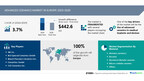
NEW YORK, Jan. 13, 2025 /PRNewswire/ — Report with the AI impact on market trends – The advanced ceramics market in europe size is estimated to grow by USD 442.6 million from 2025-2029, according to Technavio. The market is estimated to grow at a CAGR of 3.7% during the forecast period. Use of advanced ceramics in medical implants and devices is driving market growth, with a trend towards high customization requirement for end-use application. However, high cost compared with metals and alloys poses a challenge. Key market players include 3M Co., BCE Special Ceramics GmbH, Blasch Precision Ceramics Inc., CeramTec GmbH, COI Ceramics Inc., Compagnie de Saint-Gobain SA, CoorsTek Inc., Corning Inc., Dyson Technical Ceramics Ltd., Elan Technology Inc., Kyocera Corp., McDanel Advanced Ceramic Technologies LLC, Momentive Performance Materials Inc., Morgan Advanced Materials Plc, Nishimura Advanced Ceramics Co. Ltd., OC Oerlikon Corp. AG, Ortech Advanced Ceramics, Paul Rauschert GmbH and Co. KG, Superior Technical Ceramics, and Vesuvius Plc, Murata Manufacturing Co Ltd, AGC Inc.
Key insights into market evolution with AI-powered analysis. Explore trends, segmentation, and growth drivers- View Free Sample PDF
Advanced Ceramics Market In Europe Scope
Report Coverage
Details
Base year
2024
Historic period
–
Forecast period
2025-2029
Growth momentum & CAGR
Accelerate at a CAGR of 3.7%
Market growth 2025-2029
USD 442.6 million
Market structure
Fragmented
YoY growth 2022-2023 (%)
3.5
Regional analysis
Europe
Performing market contribution
Europe at 100%
Key countries
Germany, Italy, UK, France, and Rest of Europe
Key companies profiled
3M Co., BCE Special Ceramics GmbH, Blasch Precision Ceramics Inc., CeramTec GmbH, COI Ceramics Inc., Compagnie de Saint-Gobain SA, CoorsTek Inc., Corning Inc., Dyson Technical Ceramics Ltd., Elan Technology Inc., Kyocera Corp., McDanel Advanced Ceramic Technologies LLC, Momentive Performance Materials Inc., Morgan Advanced Materials Plc, Nishimura Advanced Ceramics Co. Ltd., OC Oerlikon Corp. AG, Ortech Advanced Ceramics, Paul Rauschert GmbH and Co. KG, Superior Technical Ceramics, Vesuvius Plc, Murata Manufacturing Co Ltd, AGC Inc.
Market Driver
Advanced ceramics are innovative materials gaining significant attention in various industries due to their unique properties. These include high temperature resistance, chemical stability, and non-toxicity. Trends in energy costs drive the use of advanced ceramics in energy and power applications such as piezoelectric ceramics in renewable energy systems and high-temperature ceramics in gas turbines. Space exploration and lightweight materials are also key areas, with advanced ceramics used in engine parts, heat shields, and insulation. The electronics sector benefits from advanced ceramics in dielectric resonators, capacitor ceramics, and high-voltage semiconductor parts. Technical ceramics find applications in medical devices like dental implants, pacemakers, and bioceramics. Sustainability is a major focus, with advanced ceramics used in carbon monoxide filters, ceramic matrials in 3D printing, and nanoceramic particles in catalysts. Innovation continues in the form of nanocomposites, piezoceramics, and high-tech ceramics for use in EVs, electronics, and military applications. Environmental rules push the use of advanced ceramics in ceramic filters and ceramic matrials in furnace tubes. The future of advanced ceramics lies in technological advancements, including improvements in efficiency, speeds, and biocompatibility.
Advanced ceramics are in high demand among Original Equipment Manufacturers (OEMs) in certain industries due to their unique properties. However, producing customized technical ceramics components for OEMs can be costly and time-consuming. Instead of mass-producing simple shapes, market players focus on manufacturing technical ceramics according to the specific requirements of OEMs. This customized production involves additional efforts during the molding and formulation stages. For instance, technical ceramics disc brakes are not commonly used in mid-range cars due to the lower demand for high-performance brakes and the higher cost associated with these brakes.
Request Sample of our comprehensive report now to stay ahead in the AI-driven market evolution!
Market Challenges
Advanced ceramics market is experiencing significant growth due to their unique properties, including high temperature resistance, chemical stability, and non-toxicity. However, energy costs are a challenge for the production of advanced ceramics, particularly those used in space exploration and high-tech ceramics. Lightweight materials, such as titanate and alumina, are in demand for use in EVs and the electronics sector. Magnetic properties are crucial for applications in electrical equipment and military aviation. Technical ceramics, including dielectric resonators and piezoceramics, are essential in wireless communication and medical devices. Sustainability is a key consideration, with nanocomposites and 3D printing offering innovative solutions. Regulations on environmental rules and biocompatibility are driving demand for advanced ceramics in medical devices, such as dental implants, pacemakers, and joint implantation. The automotive industry is also adopting advanced ceramics for engine parts and wear parts. Overall, technological advancements and the need for efficiency and speeds are driving the growth of the advanced ceramics market.The advanced ceramics market is witnessing intense competition in various end-user industries, including defense, power and energy, aerospace, medical, and electronics. This competition arises from the expansion of the chemical industry and Europe’s consistent economic growth. In this cutthroat business environment, commercial factors play a crucial role in decision-making. The primary commercial considerations are capital cost and operating cost. Technical ceramics enhance aircraft design and efficiency but can increase production expenses. For instance, silicon carbide costs USD36 per kg, nickel alloy USD6.1 per kg, and lead USD1 per kg. As a professional, these commercial aspects significantly influence my analysis of the advanced ceramics market.
Discover how AI is revolutionizing market trends- Get your access now!
Segment Overview
This advanced ceramics market in Europe report extensively covers market segmentation by
Material 1.1 Alumina ceramics1.2 Zirconia1.3 Aluminum titanate ceramic1.4 Silicon carbide ceramic1.5 OthersGeography 2.1 EuropeApplicationProductEnd use
1.1 Alumina ceramics- Alumina, or aluminum oxide, is a widely used ceramic material known for its electrical and mechanical properties. With purity levels ranging from 85% to 99.9%, alumina ceramics can be tailored to meet specific end-user requirements. Processing methods such as slip casting, extrusion, and injection molding allow for various shapes and sizes. Alumina ceramics are used extensively in the electronics industry for substrates, resistor cores, and heavy-duty forming tools. In textile engineering, they serve as heat sinks and protection tubes. For wear protection and ballistics, they are used in tiles and seal and regulator discs for water taps and valves. Alumina ceramics are also used in capacitors, insulators, resistors, sealing refractory parts, furnace and thermocouple protection tubes, wear pads, laboratory equipment, foundry shapes, cutting tools and abrasive powders, ballistic armors, and bio-ceramic parts for dental and orthopedic surgeries. The European alumina ceramics market is expected to grow due to increasing demand from the automotive sector for metal fabricated components. Alumina ceramics offer excellent abrasion, chemical, and high-temperature resistance, making them ideal for applications requiring strong wear resistance and low electric loss.
Download a Sample of our comprehensive report today to discover how AI-driven innovations are reshaping competitive dynamics
Research Analysis
The advanced ceramics market is experiencing significant growth due to the increasing demand for high-performance materials in various industries. Ceramic industry trends include the development of new manufacturing processes, such as nanotechnology and 3D printing, which reduce production costs and improve distribution channels. High-performance ceramics are being used in a wide range of applications, including thermal conductivity in electronics, ceramic composites in aerospace, and optical properties in telecommunications. The rise of electric vehicles is driving demand for lightweight and durable ceramic components. Ceramic engineering and design are also crucial for creating innovative solutions in fields like biomedical engineering and biomedical materials. Ceramic properties, such as corrosion resistance and abrasion resistance, make them ideal for harsh environments. Ceramic recycling and the use of green alternatives are essential for sustainability. Ceramic synthesis, characterization, and standards are crucial for ensuring quality and consistency in the production of ceramic materials. Bioceramics and bioactive ceramics are revolutionizing biomedical science and technology by providing biocompatible implants and devices for knee surgeries, orthopedic implants, and medical implants. Ceramic coatings offer protection against wear and tear, while ceramic membranes are used for filtration and separation processes. Ceramic science continues to evolve, with ongoing research in tissue engineering, biomedical applications, and ceramic technology.
Market Research Overview
Advanced ceramics are a type of inorganic, non-metallic materials with unique properties, including high temperature resistance, chemical stability, and excellent mechanical strength. They find applications in various industries due to their superior performance and functionality. Energy costs are a significant factor driving the advanced ceramics market, with their use in energy and power applications such as piezoelectric ceramics in renewable energy systems, and high-temperature ceramics in gas turbines and engine parts. Space exploration is another key sector for advanced ceramics, with their use in lightweight materials for spacecraft and high-temperature resistance for engine components. The electronics sector is a major consumer of advanced ceramics, with their use in dielectric resonators, capacitor ceramics, and high-voltage semiconductor parts. The magnetic properties of ferrite and other ceramics are also crucial in the electronics industry. Technical ceramics, including alumina, zirconia, silicon carbide, and titanate, are used in various industries, including automotive, aerospace, medical, and industrial, due to their high strength, chemical resistance, and other desirable properties. Advanced ceramics are also used in environmental applications, such as ceramic filters for air and water purification, and in the production of nanoceramic particles for use in catalysts and other applications. In the medical field, advanced ceramics are used in dental implants, pacemakers, and bioceramics for joint implantation and other medical devices. The use of nanotechnology in advanced ceramics has led to the development of innovative materials with improved properties, such as nanocomposites and 3D printed ceramics. Technological advancements in advanced ceramics continue to drive innovation, with applications in areas such as energy storage, wireless communication, and high-tech ceramics for use in electronics and other industries. The growing demand for sustainable materials and environmental rules is also driving the development of advanced ceramics with improved efficiency, lower carbon footprint, and reduced greenhouse gas emissions. Advanced ceramics are used in various industries, including the automotive sector for engine parts, bearings, and cutting tools, and in the aerospace industry for armor and high-tech ceramics for engine components. They are also used in the production of fine ceramics for consumer appliances and in the manufacturing of ceramic matri for circuit carriers and furnace tubes. The use of advanced ceramics in the electrical equipment industry is increasing due to their excellent electrical properties, including high dielectric constant, high permittivity, and high thermal conductivity. They are used in the production of ceramic filters, piezoelectric ceramics, and other electrical components. The military aviation industry uses advanced ceramics for their high-temperature resistance, chemical resistance, and other desirable properties. They are used in the production of armor, engine parts, and other high-performance components. Advanced ceramics are also used in the production of photovoltaic systems, wind turbines, and other renewable energy systems, due to their excellent thermal properties and high efficiency. They are also used in the production of high-tech ceramics for use in general aviation and commercial aviation. In summary, advanced ceramics are a versatile and essential class of materials with a wide range of applications in various industries, including energy and power, space exploration, electronics, medical, automotive, aerospace, and environmental applications. Their unique properties, including high temperature resistance, chemical stability, and excellent mechanical strength, make them an ideal choice for demanding applications where traditional materials fall short. The continued development of advanced ceramics through technological innovations and the integration of nanotechnology is expected to drive their growth and expand their applications in the future.
Table of Contents:
1 Executive Summary
2 Market Landscape
3 Market Sizing
4 Historic Market Size
5 Five Forces Analysis
6 Market Segmentation
MaterialAlumina CeramicsZirconiaAluminum Titanate CeramicSilicon Carbide CeramicOthersGeographyEurope
7 Customer Landscape
8 Geographic Landscape
9 Drivers, Challenges, and Trends
10 Company Landscape
11 Company Analysis
12 Appendix
About Technavio
Technavio is a leading global technology research and advisory company. Their research and analysis focuses on emerging market trends and provides actionable insights to help businesses identify market opportunities and develop effective strategies to optimize their market positions.
With over 500 specialized analysts, Technavio’s report library consists of more than 17,000 reports and counting, covering 800 technologies, spanning across 50 countries. Their client base consists of enterprises of all sizes, including more than 100 Fortune 500 companies. This growing client base relies on Technavio’s comprehensive coverage, extensive research, and actionable market insights to identify opportunities in existing and potential markets and assess their competitive positions within changing market scenarios.
Contacts
Technavio Research
Jesse Maida
Media & Marketing Executive
US: +1 844 364 1100
UK: +44 203 893 3200
Email: media@technavio.com
Website: www.technavio.com/
View original content to download multimedia:https://www.prnewswire.com/news-releases/advanced-ceramics-market-in-europe-to-grow-by-usd-442-6-million-from-2025-2029–driven-by-use-in-medical-implants-and-ai-driven-market-transformation—technavio-302347984.html
SOURCE Technavio










 Technology4 days ago
 Coin Market5 days ago
 Coin Market4 days ago
 Technology4 days ago
 Technology4 days ago
 Technology4 days ago