Connect with us

Technology

Virtual Reality (VR) Market to Grow by USD 133.17 Billion (2025-2029), Advancements in VR Technologies Drive Revenue, Report on AI-Powered Evolution – Technavio

Published

on

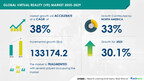
NEW YORK, Jan. 22, 2025 /PRNewswire/ — Report on how AI is driving market transformation – The global virtual reality (VR) market  size is estimated to grow by USD 133.17 billion from 2025-2029, according to Technavio. The market is estimated to grow at a CAGR of  38%  during the forecast period. Recent developments in virtual reality technologies is driving market growth, with a trend towards integration of AI and ML with virtual reality technology. However, high cost of hardware  poses a challenge. Key market players include 3D Systems Corp., Acer Inc., Advanced Micro Devices Inc., Alphabet Inc., Apple Inc., Baidu Inc., DPVR, FOVE Inc., HTC Corp., Lenovo Group Ltd., Meta Platforms Inc., Microsoft Corp, Osso VR Inc., Pico Technology Ltd., Samsung Electronics Co. Ltd., Sony Group Corp., Unity Technologies Inc., Valve Corp., Varjo Technologies Oy, and Virtuix Inc..

AI-Powered Market Evolution Insights. Our comprehensive market report ready with the latest trends, growth opportunities, and strategic analysis- View Free Sample Report PDF

Forecast period

2025-2029

Base Year

2024

Historic Data

2019 – 2023

Segment Covered

End-user (Enterprise and Consumer), Component (Hardware and Software), Geography (North America, APAC, Europe, Middle East and Africa, and South America), Device, and Technology.

Region Covered

North America, APAC, Europe, Middle East and Africa, and South America

Key companies profiled

3D Systems Corp., Acer Inc., Advanced Micro Devices Inc., Alphabet Inc., Apple Inc., Baidu Inc., DPVR, FOVE Inc., HTC Corp., Lenovo Group Ltd., Meta Platforms Inc., Microsoft Corp, Osso VR Inc., Pico Technology Ltd., Samsung Electronics Co. Ltd., Sony Group Corp., Unity Technologies Inc., Valve Corp., Varjo Technologies Oy, and Virtuix Inc.

Key Market Trends Fueling Growth

The Virtual Reality (VR) market is experiencing significant growth, particularly in sectors like architecture and planning. The segment and commercial sector are also seeing increased adoption. VR technology, including VR headsets, glasses, gloves, and bodysuits, is revolutionizing instructional training for pilots, defense personnel, technicians, and more. Mental health issues are being addressed through virtual platforms, while organizations are using VR for meetings, policies, and strategies. Event organizers are leveraging VR for live virtual entertainment and virtual theme parks. The hardware segment, including VR simulators and VR arcades, is booming. Healthcare, gaming, automotive, entertainment, and education are key industries embracing VR technology. The coronavirus outbreak and pandemic crisis have accelerated the adoption of VR for remote work and social interaction. AI applications, 3D virtual worlds, and the Metaverse are future trends. VR content creation, virtual tours, simulation training, virtual classrooms, and VR fitness are also gaining popularity. Companies like PlayStation and Xbox are leading the way in VR gaming. Augmented reality (AR) and VR are complementing each other, with VR providing a more experience. REAL System, VR therapy, VR collaboration tools, and VR storytelling are emerging areas of interest. 

Virtual reality (VR) technology is being transformed by the integration of artificial intelligence (AI) and machine learning (ML). This fusion is generating distinctive user experiences in sectors like healthcare, education, gaming, and simulation. In healthcare, AI and ML algorithms analyze medical data for precise diagnoses and treatment plans. When merged with VR, these technologies create simulations for medical training, enabling professionals to practice complex procedures realistically. For instance, AI and ML-powered surgical simulations in VR offer surgeons valuable practice, boosting patient safety and care. 

Insights on how AI is driving innovation, efficiency, and market growth- Request Sample!

Market Challenges

•         The Virtual Reality (VR) market is experiencing significant growth in various sectors, including architecture and planning, where VR technology is used for designing and visualizing projects. However, the market faces challenges in the segment due to the high cost of VR hardware like headsets, glasses, gloves, and bodysuits. In the commercial segment, software development is a key challenge, as creating engaging and realistic VR experiences requires advanced programming skills. The hardware segment, including VR headsets and glasses, is a major investment for organizations. In the healthcare sector, VR technology is used for instructional training, mental health issues treatment, and simulation training for pilots, defense personnel, and technicians. Policies and strategies for implementing VR technology in organizations are also crucial. The VR market is not limited to gaming and entertainment but also includes virtual platforms for meetings, events, and virtual theme parks. The coronavirus outbreak and pandemic crisis have accelerated the adoption of live virtual entertainment, VR simulators, and virtual tours. The future of VR includes AI applications, the Metaverse, and collaboration tools. Companies like PlayStation and Xbox are leading the way in VR hardware, while AR and VR content creation, virtual classrooms, VR arcades, VR fitness, VR therapy, and VR storytelling are growing segments. REAL System, PropVR, and 3D virtual world are some of the innovative VR solutions.

•         The global virtual reality (VR) market faces a significant challenge due to the high cost of hardware. This financial barrier limits both consumer and enterprise adoption, hindering market expansion. For individuals, the expense of acquiring VR headsets, high-performance computers, and related peripherals is prohibitive. The substantial investment required for a high-quality VR experience deters many potential users. For instance, premium headsets like Meta Quest 2 and HTC Vive cost around USD399 to USD599. This financial hurdle poses a challenge to the widespread adoption of virtual reality technologies across various industries.

Insights into how AI is reshaping industries and driving growth- Download a Sample Report

Segment Overview 

This virtual reality (VR) market report extensively covers market segmentation by

End-user 1.1 Enterprise1.2 ConsumerComponent 2.1 Hardware2.2 SoftwareGeography 3.1 North America3.2 APAC3.3 Europe3.4 Middle East and Africa3.5 South AmericaDeviceTechnology

1.1 Enterprise-  Virtual reality (VR) is a computer-generated environment presented to users through headsets, creating an experience. Technological advancements in VR hardware are driving its adoption in industries like gaming, entertainment, retail, sports, travel, and healthcare. In healthcare, VR is used for disease diagnosis in universities. However, the rise of augmented reality (AR) technology may hinder VR growth. The COVID-19 pandemic increased demand for remote work and OTT platforms, leading to the adoption of 5G for enhanced communication and virtual reality applications. These applications require faster network response times. Additionally, the increasing demand for digital solutions among enterprises for online shopping and virtual experiences will fuel VR market growth.

Download complimentary Sample Report to gain insights into AI’s impact on market dynamics, emerging trends, and future opportunities- including forecast (2025-2029) and historic data (2019 – 2023) 

Research Analysis

Virtual Reality (VR) technology is revolutionizing various industries by providing experiences through VR headsets. In healthcare, VR is used for therapy and training, benefiting patients and professionals alike. In gaming and entertainment, VR glasses transport users to 3D virtual worlds, offering unprecedented immersion. VR gloves and bodysuits add an extra layer of realism, allowing for more interactive experiences. Instructional training in industries like defense and tech is enhanced through VR simulations. The hardware segment includes VR platforms, while the software segment offers AI applications and the Metaverse. Automotive companies use VR for design and engineering, while PropVR enables property virtual tours. VR content creation tools and VR arcades cater to the entertainment industry. VR fitness and therapy provide new avenues for health and wellness. Virtual classrooms and simulation training offer flexible and interactive learning experiences. Augmented reality (AR) complements VR, merging digital and physical worlds.

Market Research Overview

The Virtual Reality (VR) market is revolutionizing various industries, including Architecture and Planning, by enabling 3D visualizations of buildings and cityscapes. The segment, which includes 3D modeling and virtual tours, is also gaining traction. In the Commercial segment, VR technology is being used for instructional training in sectors like aviation, defense, and healthcare. VR hardware includes VR headsets, glasses, gloves, and bodysuits, which enhance the user experience. VR simulators and virtual theme parks offer entertainment, while VR collaboration tools facilitate remote meetings and events. Policies and strategies are being developed to integrate VR technology in organizations, especially during the coronavirus outbreak and pandemic crisis. VR applications extend to healthcare, gaming, automotive, and entertainment industries, with AI and Metaverse adding new dimensions. Companies are also exploring VR technology in virtual platforms for live virtual entertainment and VR fitness and therapy. VR content creation and VR arcades are emerging businesses, while VR storytelling offers new ways to engage audiences. AR and VR technology are complementary, with AR providing context to the VR experience.

Table of Contents:

1 Executive Summary
2 Market Landscape
3 Market Sizing
4 Historic Market Size
5 Five Forces Analysis
6 Market Segmentation

End-userEnterpriseConsumerComponentHardwareSoftwareGeographyNorth AmericaAPACEuropeMiddle East And AfricaSouth AmericaDeviceTechnology

7 Customer Landscape
8 Geographic Landscape
9 Drivers, Challenges, and Trends
10 Company Landscape
11 Company Analysis
12 Appendix

About Technavio

Technavio is a leading global technology research and advisory company. Their research and analysis focuses on emerging market trends and provides actionable insights to help businesses identify market opportunities and develop effective strategies to optimize their market positions.

With over 500 specialized analysts, Technavio’s report library consists of more than 17,000 reports and counting, covering 800 technologies, spanning across 50 countries. Their client base consists of enterprises of all sizes, including more than 100 Fortune 500 companies. This growing client base relies on Technavio’s comprehensive coverage, extensive research, and actionable market insights to identify opportunities in existing and potential markets and assess their competitive positions within changing market scenarios.

Contacts

Technavio Research
Jesse Maida
Media & Marketing Executive
US: +1 844 364 1100
UK: +44 203 893 3200
Email: media@technavio.com
Website: www.technavio.com/

View original content to download multimedia:https://www.prnewswire.com/news-releases/virtual-reality-vr-market-to-grow-by-usd-133-17-billion-2025-2029-advancements-in-vr-technologies-drive-revenue-report-on-ai-powered-evolution—technavio-302355906.html

SOURCE Technavio

Continue Reading
Click to comment

Leave a Reply

Your email address will not be published. Required fields are marked *

Technology

ZKH Group Limited to Announce First Quarter 2026 Financial Results on Thursday, May 21, 2026

Published

on

By

SHANGHAI, May 7, 2026 /PRNewswire/ — ZKH Group Limited (“ZKH” or the “Company”) (NYSE: ZKH), a leading maintenance, repair and operations (“MRO”) procurement service platform in China, today announced that it will release its unaudited financial results for the first quarter 2026, on Thursday, May 21, 2026, before the open of the U.S. markets.

The Company’s management will hold an earnings conference call on Thursday, May 21, 2026 at 7:00 A.M. U.S. Eastern Time (7:00 P.M. Beijing/Hong Kong Time) to discuss the financial results. Listeners may access the call by dialing the following numbers:

United States (toll free):

+1-888-317-6003

International:

+1-412-317-6061

Mainland China (toll free):

400-120-6115

Hong Kong (toll free):

800-963-976

Hong Kong:

+852-5808-1995

Access Code:

2335796

A replay of the conference call will be accessible by phone one hour after the conclusion of the live call at the following numbers, until May 28, 2026:

United States:

+1-855-669-9658

International:

+1-412-317-0088

Replay Access Code:

6840038

A live and archived webcast of the conference call will also be available on the Company’s investor relations website at https://ir.zkh.com.

About ZKH Group Limited

ZKH Group Limited (NYSE: ZKH) is a leading MRO procurement service platform in China, underpinned by robust supply chain capabilities and dedicated to serving customers globally through a product-led, agentic AI-driven approach. Through its primary online platforms, the ZKH platform, the GBB platform and the Northsky platform, along with innovative technology and extensive industry expertise, the Company provides bespoke MRO procurement solutions to a diverse and loyal customer base. These solutions encompass hyper-personalized product curation from a comprehensive selection of quality products at competitive prices. Additionally, the Company ensures timely and reliable product delivery through professional fulfillment services. By focusing on reducing procurement costs and addressing management efficiency challenges, ZKH is transforming the opaque MRO procurement process and empowering all stakeholders across the value chain.

For more information, please visit: https://ir.zkh.com.

For investor and media inquiries, please contact:

ZKH Group Limited
IR Department
E-mail: IR@zkh.com

Christensen Advisory
Email: zkh@christensencomms.com

View original content:https://www.prnewswire.com/news-releases/zkh-group-limited-to-announce-first-quarter-2026-financial-results-on-thursday-may-21-2026-302765384.html

SOURCE ZKH Group Limited

Continue Reading

Technology

Goldman Sachs, J.P. Morgan, TD Securities, Morgan Stanley, and Bank of America Join LTX in Bid to Unlock Greater Liquidity in Corporate Bonds

Published

on

By

Broadridge-backed LTX to add Representatives from J.P. Morgan and TD Securities to its Board of Directors

NEW YORK, May 7, 2026 /PRNewswire/ — LTX, an AI-powered corporate bond e-trading venue backed by global Fintech leader, Broadridge Financial Solutions, Inc. (NYSE:BR), today announced that Goldman Sachs, J.P. Morgan, TD Securities (through its subsidiary, TD Financial Products LLC), Morgan Stanley, and Bank of America have joined LTX as fully integrated liquidity providers. This major milestone underscores the participants’ commitment to serving buy-side clients by delivering increased choice and improving liquidity in fixed income markets. J.P. Morgan and TD Securities will each appoint a representative to LTX’s Board of Directors.

The AI-powered LTX corporate bond e-trading platform offers investors access to a suite of innovative trading tools including the award-winning BondGPTSM solution. These leading dealers will provide investment grade and high yield bond liquidity on the platform, joining 40+ liquidity providers and 100+ buy-side investors already on LTX.

Patrick Whelan, Global Head of FICC Digital Markets at JP Morgan, said, “In a competitive market, we’re committed to supporting new entrants and fostering greater competition in the US credit multi-dealer platform landscape. Our collaboration with LTX leverages innovative technology to broaden investor access, enhance liquidity, and streamline execution—empowering clients with more choice and driving industry advancement.”

“We’ve been impressed by LTX’s commitment to deliver innovative execution and artificial intelligence solutions to both sell-side and buy-side participants,” said Marty Mannion, Co-Head of TD Financial Products.  “We are excited to enter into this strategic partnership and accelerate these efforts to drive greater efficiencies in the corporate bond market.”

“We are excited to welcome these five leading dealers as fully integrated liquidity providers and look forward to working with them to drive increased liquidity and execution in the fixed income marketplace,” said Chris Perry, President of Broadridge. “Broadridge’s commitment to helping our clients innovate and grow through cost effective technology solutions is further reinforced by the inclusion of these premier institutions. I’m also excited to welcome J.P. Morgan and TD Bank to the Board of LTX.”

“We’re thrilled to be working with Goldman Sachs, J.P. Morgan, TD Securities, Morgan Stanley, and Bank of America as liquidity providers on LTX,” said Jim Kwiatkowski, CEO of LTX. “The combination of LTX’s innovative trading tools and AI-powered workflows with the deep liquidity and market expertise of these leading institutions positions us to help transform corporate bond trading. Together, we are unlocking liquidity, optimizing efficiency, and helping drive down trading costs for the market. It’s an exciting time for LTX, for our growing list of buyside clients, and for the future of corporate bond trading.”

Backed by Broadridge, LTX was created to address corporate bond market challenges that have slowed the growth in adoption of electronic trading compared to other markets by offering certain benefits. These include facilitating essential dealer-client relationships, lower trading and data costs, and better e-trading options for large sized trades. Partnering with some of the leading market participants, LTX is uniquely positioned to address these industry pain points by using patented AI and execution protocols to deliver improved liquidity at a lower cost, while facilitating relationships between dealers and buy-side clients through direct, fully disclosed trading. The addition of these liquidity providers underscores LTX’s position as a dynamic marketplace for buy- and sell-side corporate bond market participants.

LTX’s latest  innovation, BondGPT Intelligence, brings GenAI-powered insights directly into investing and trading workflows, anticipating traders’ needs and helping them identify opportunities and execute trades more efficiently. Using patented technology for the methods and systems behind BondGPT including the large language model (LLM) orchestration of machine learning agents, these milestones build on LTX’s legacy of harnessing innovation to further electronify the corporate bond market and reinforce Broadridge’s commitment to advancing intelligent trading solutions.

About LTX
LTX is an electronic trading platform that enables corporate bond market participants to trade smarter, combining powerful, patented artificial intelligence with innovative e-trading protocols to improve liquidity, efficiency, and execution. The Liquidity Cloud is LTX’s secure network of actionable disclosed sell-side axes and anonymous buy-side indications of interest (IOIs). LTX leverages Broadridge Business Process Outsourcing, LLC as its broker dealer.

For more information about LTX, please visit www.ltxtrading.com.

About Broadridge
Broadridge Financial Solutions (NYSE: BR) is a global technology leader with trusted expertise and transformative technology, helping clients and the financial services industry operate, innovate, and grow. We power investing, governance, and communications for our clients – driving operational resiliency, elevating business performance, and transforming investor experiences.

Our technology and operations platforms process and generate over 7 billion communications annually and underpin the daily average trading of over $15 trillion in tokenized and traditional securities globally. A certified Great Place to Work®, Broadridge is part of the S&P 500® Index, employing over 15,000 associates in 21 countries.

For more information about us, please visit www.broadridge.com 

Broadridge Contacts:

Investors:
broadridgeir@broadridge.com           
Media:
Gregg.Rosenberg@broadridge.com 


View original content to download multimedia:https://www.prnewswire.com/news-releases/goldman-sachs-jp-morgan-td-securities-morgan-stanley-and-bank-of-america-join-ltx-in-bid-to-unlock-greater-liquidity-in-corporate-bonds-302764983.html

SOURCE Broadridge Financial Solutions, Inc.

Continue Reading

Technology

Electric Era Teams with WEX to Drive Customers and Revenue to Retail-Based Charging Locations

Published

on

By

SEATTLE, May 7, 2026 /PRNewswire/ — Electric Era, America’s leading retail-first EV charging company, today announced the addition of WEX® fleet payment processing services to their retail-based EV fast charging systems across the U.S.

Adding WEX fleet cards as a payment option underscores Electric Era’s unique strategy to design DC fast charging systems that function as marketing platforms for retailers to draw-in customers to grow sales revenues. With WEX, Electric Era’s chargers are available to WEX Fleet EV drivers to use at prominent fuel retailers in the Skycharger Network, Plaid Pantry and Space Age locations, and will be rolling out across Electric Era stations at Love’s Travel Stops, Giant Eagle and more soon.

“Our vision is to make EV charging as ubiquitous as traditional petroleum fueling with equally dependable charging stations located in safe, accessible locations to drive traffic and revenues to retail and food establishments,” said Quincy Lee, Electric Era CEO and founder. “By adding WEX, we’re creating new opportunities to drive even more store traffic to our retail customers, while simplifying payment processing for EV drivers and fleet operators.”

With the addition of WEX, commercial EV drivers will be able to use their WEX EV RFID or WEX DriverDash® mobile app to charge at Electric Era EV charging sites, and utilize WEX’s proprietary payment network to process payments, while simultaneously capturing charging data, driver ID, locations and vehicle mileage. This allows fleet managers to simplify billing, controls and expense tracking for both their electric-powered and internal combustion engine (ICE) fleet vehicles simultaneously.

“We’re focused on making mixed-energy fleet management seamless for fleet operators, and this is an important step toward making that happen,” said Sarah Booth, senior director, WEX Connected Fleet. “This collaboration with Electric Era adds reliable, retail adjacent EV fast charging to our growing network and will help our customers efficiently manage both electric and traditional fueled vehicles within a single account.”

Simple and easy to use, Electric Era’s EV chargers are available to all EV drivers and do not require special apps or accounts to use them. Simply tap a valid credit, debit or – and now a WEX RFID card – to pay for charging. EV fleet drivers can also pay via the WEX DriverDash mobile app.

A Retail-First EV Charging Platform
Founded by a SpaceX engineer, Electric Era reimagines high-power EV charging systems from the ground up to break down the barriers to rapid deployment of highly reliable DC fast charging systems. To make level-3 DC fast charging a profitable, market-driven solution, Electric Era designed their chargers specific for retail businesses to leverage retail adjacency and utilize the charging kiosks as an extension of company brand and retail space.

Electric Era’s patented battery-backed power architecture and energy management system enables their chargers to be installed as fast as 60-days, while delivering 400 kW max charge output with 99.8% per-port reliability – the new industry standard.

To help convenience stores and fuel retailers leverage the unique revenue-driving opportunities of DC fast charging systems, Electric Era provides complete start-to-finish, turn-key installations of their retailer-branded chargers – including successfully coordinating grant funding that reduces upfront CapEx costs to de-risk deployments and generate faster ROI.

About Electric Era
Electric Era is the only full-service EV charging solutions provider focused on the rapid deployment of highly reliable Level-3 DCFC systems at retail locations to grow and extend their retail space. Electric Era’s patented battery-backed charging architecture and bespoke, retail-first charging solutions deliver industry-leading power and reliability in a package that dramatically reduces installation time and energy costs.

For more information and the latest Electric Era updates, go to electricera.tech or follow us on
X: @ElectricEraTech LinkedIn: Electric-Era Facbook: ElectricEraTechnologies and YouTube: electricera.tech

SIDEBAR

HED: Electric Era + WEX® Opening Doors to Fleet Productivity and Retail Opportunities

As transportation-centric businesses accelerate EV adoption to reduce carbon emissions and lower operating costs, the Electric Era + WEX alliance enables fleet operators to:

Simplify company/driver-specific dashboards to simultaneously track both petro-fuel and electric charging platformsTrack EV specific expenses as a line item in familiar report formats – with similar levels of oversight and control as petroleum refuelingAllow retailers to gain access to WEX’s customer base to help attract new customers and increase store traffic for additional retail revenuesOpens the door to future QSR/fuel retailer loyalty program offerings via Electric Era’s EV charging systemsFurther strengthens Electric Era’s retail-first EV charging systems for retail and QSR/refueling locations and leader in public/private funded installations

View original content to download multimedia:https://www.prnewswire.com/news-releases/electric-era-teams-with-wex-to-drive-customers-and-revenue-to-retail-based-charging-locations-302764939.html

SOURCE Electric Era

Continue Reading

Trending