Connect with us

Technology

Unified Endpoint Management (UEM) Market to grow by USD 111.62 Billion (2025-2029), Driven by Demand for Integrated Solutions, Report on AI Trends – Technavio

Published

on

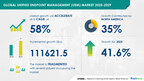
NEW YORK, Jan. 22, 2025 /PRNewswire/ — Report on how AI is redefining market landscape – The global unified endpoint management (UEM) market size is estimated to grow by USD 111.6 billion from 2025-2029, according to Technavio. The market is estimated to grow at a CAGR of almost 58%  during the forecast period. Need for integrated uem solutions to manage traditional and non-traditional endpoints is driving market growth, with a trend towards increasing use of iot devices. However, availability of open-source UEM solutions  poses a challenge. Key market players include 42Gears Mobility Systems Pvt. Ltd., BlackBerry Ltd., Broadcom Inc., Cisco Systems Inc., Cloud Software Group Inc., Dell Technologies Inc., International Business Machines Corp., Ivanti Software Inc., JAMF HOLDING CORP., Matrix42 GmbH, Microsoft Corp, Mitsogo Inc., Open Text Corporation, ProMobi Technologies Pvt. Ltd., Snow Software, Sophos Ltd., SOTI Inc., Syxsense Inc., VMware Inc., and Zoho Corp. Pvt. Ltd..

Key insights into market evolution with AI-powered analysis. Explore trends, segmentation, and growth drivers- View Free Sample PDF

Unified Endpoint Management (UEM) Market Scope

Report Coverage

Details

Base year

2024

Historic period

2019 – 2023

Forecast period

2025-2029

Growth momentum & CAGR

Accelerate at a CAGR of 58%

Market growth 2025-2029

USD 111.62 billion

Market structure

Fragmented

YoY growth 2022-2023 (%)

41.6

Regional analysis

North America, APAC, Europe, South America, and Middle East and Africa

Performing market contribution

North America at 35%

Key countries

US, China, UK, Germany, Japan, Canada, India, France, Italy, and Brazil

Key companies profiled

42Gears Mobility Systems Pvt. Ltd., BlackBerry Ltd., Broadcom Inc., Cisco Systems Inc., Cloud Software Group Inc., Dell Technologies Inc., International Business Machines Corp., Ivanti Software Inc., JAMF HOLDING CORP., Matrix42 GmbH, Microsoft Corp, Mitsogo Inc., Open Text Corporation, ProMobi Technologies Pvt. Ltd., Snow Software, Sophos Ltd., SOTI Inc., Syxsense Inc., VMware Inc., and Zoho Corp. Pvt. Ltd.

Market Driver

The Internet of Things (IoT) market is experiencing significant growth with an estimated 21 billion devices expected to be connected by 2023. IoT enables machine-to-machine communication, allowing devices to exchange and act upon information without human intervention. This data can be analyzed to optimize services, products, and operations. The Industrial Internet of Things (IIoT) is a key driver of this growth, with components such as servers, workstations, and other devices connected to a network, including wearable fitness devices, industrial control systems, automotive telematics units, or drone units. As enterprises adopt more IoT devices, the need for endpoint management solutions such as Unified Endpoint Management (UEM), Endpoint Detection and Response (EDR), and others becomes essential. Vendors like 42Gears offer software modules to integrate IoT endpoints into UEM, while BlackBerry recently introduced BlackBerry UEM at the edge and BlackBerry UEM for IoT to help enterprises secure and manage their IoT devices. The growing demand for IoT devices and the need for next-generation endpoint management and security solutions are expected to drive the growth of the global UEM market during the forecast period. 

Unified Endpoint Management (UEM) is a business solution that helps large enterprises manage and secure various computing systems, including laptops, tablets, mobile phones, and IoT devices, running on different OS systems such as Windows 10, ChromeOS, and more. UEM supports advanced endpoint models and personal devices, ensuring a consistent operating environment for enterprise employees. With UEM, businesses can manage multiple configurations, provide endpoint protection, access management, and data security for their IT assets. UEM market trends include support for emerging technologies like IoT devices, consulting services, managed services, and support services. Pulseway, VMware, and AirWatch are key software platforms in this market. UEM enables remote work, improves employee productivity, and secures data in data centers. Traditional endpoints like PCs, smartphones, POS devices, and smart wearables are also covered. 

Request Sample of our comprehensive report now to stay ahead in the AI-driven market evolution!

 Market Challenges

•         The global unified endpoint management (UEM) market faces a significant challenge from the availability of open-source UEM solutions. These solutions, developed and offered for free by organizations or developer communities, have gained popularity due to the high cost of proprietary software. Open-source UEM solutions, such as OSSEC, ClamAV, and JumpCloud, offer cost-effective alternatives. However, they often lack advanced features and provide limited functionalities. For instance, OSSEC focuses on checking intrusions, while JumpCloud enables secure management of endpoints. While open-source solutions can save costs for organizations with low IT budgets, they may hinder the growth of the UEM market during the forecast period. For example, Grab Holdings Inc., a Singapore-based transportation company, chose JumpCloud to manage and secure their endpoints across multiple office locations.

•         Unified Endpoint Management (UEM) has become essential for large enterprises to manage the increasing number of endpoint devices, including PCs, smartphones, POS devices, smart wearables, and IoT devices. Employees use various operating environments and multiple configurations, making device management and access management complex. UEM solutions help IT departments ensure endpoint protection, data security, and data protection. With the rise of remote work and mobile banking, UEM becomes crucial for employee productivity and satisfaction. UEM platforms like Pulseway, VMware AirWatch, Workspace ONE, Windows, Android, Chromebooks, Microsoft Intune, and MobileIron offer primary exploratory and secondary desk services, managed services, and support services. These solutions enable IT departments to manage traditional endpoints and emerging technologies, such as mobile devices and network components, from a single console. However, challenges remain, such as managing various operating systems, ensuring data protection and data security in data centers, and integrating UEM with other software platforms. Consulting services can help enterprises navigate these challenges and optimize their UEM solutions.

Discover how AI is revolutionizing market trends- Get your access now!

Segment Overview 

This unified endpoint management (uem) market report extensively covers market segmentation by  

Component 1.1 Solutions1.2 ServicesDeployment 2.1 Cloud2.2 On-premises2.3 HybridGeography 3.1 North America3.2 APAC3.3 Europe3.4 South America3.5 Middle East and Africa

1.1 Solutions-  Unified Endpoint Management (UEM) solutions are software platforms that help businesses manage and secure their diverse endpoints from a centralized console. These solutions offer features for streamlined endpoint management, enhanced security, and improved IT efficiency. Key features include device enrollment and provisioning for seamless onboarding of new devices, and configuration management for centralized control of settings, policies, and configurations. UEM solutions also provide essential security features like data encryption, access controls, antivirus management, and patch management. Microsoft UEM, which includes Microsoft Intune, offers end-to-end device management solutions, enabling IT administrators to manage multiple endpoint types from a single console, with features such as device enrollment, application management, security policies enforcement, and endpoint analytics. The increasing adoption of UEM solutions will fuel market growth during the forecast period.

Download a Sample of our comprehensive report today to discover how AI-driven innovations are reshaping competitive dynamics

Research Analysis

Unified Endpoint Management (UEM) is a modern approach to IT management that enables organizations to secure, manage, and support various computing systems, including laptops, tablets, mobile phones, and even IoT devices, from a single platform. This solution caters to various verticals such as healthcare, education, finance, and retail, among others, by providing IT asset management, advanced endpoint models, and hardware requirements tailored to each device type. UEM supports multiple OS systems, including Windows 10 and ChromeOS, ensuring seamless management and compatibility. With the increasing shift towards remote work, UEM solutions have become essential for ensuring employee productivity and data protection. They offer data security features such as encryption, access controls, and remote wipe capabilities to safeguard sensitive information. UEM solutions are not limited to traditional endpoints like desktops and laptops but also extend to advanced endpoints like POS devices, smart wearables, and mobile banking applications. By integrating UEM into IT departments’ workflows, organizations can effectively manage their mobile devices and ensure user satisfaction. Solutions like Pulseway, VMware, AirWatch, and others offer primary and secondary desktop capabilities, making them versatile and adaptable to businesses’ evolving needs.

Market Research Overview

Unified Endpoint Management (UEM) is a modern approach to IT asset management that enables organizations to manage and secure computing systems, including laptops, tablets, mobile phones, and IoT devices, from a single platform. UEM caters to various verticals, including large enterprises, healthcare, education, and finance, among others. The operating environment for UEM supports multiple configurations, including Windows 10, ChromeOS, and various mobile operating systems like Android and iOS. UEM solutions provide advanced endpoint protection, access management, and data security for personal devices used by enterprise employees. UEM also offers consulting, managed, and support services, as well as network components and software platforms like Pulseway, VMware, AirWatch, Workspace ONE, Windows, and Microsoft Intune. UEM is essential for managing emerging technologies such as mobile banking and smart wearables, ensuring employee productivity, and maintaining satisfaction with remote work. Traditional endpoints like PCs, smartphones, POS devices, and smart wearables are all within the scope of UEM.

Table of Contents:

1 Executive Summary
2 Market Landscape
3 Market Sizing
4 Historic Market Size
5 Five Forces Analysis
6 Market Segmentation

ComponentSolutionsServicesDeploymentCloudOn-premisesHybridGeographyNorth AmericaAPACEuropeSouth AmericaMiddle East And Africa

7 Customer Landscape
8 Geographic Landscape
9 Drivers, Challenges, and Trends
10 Company Landscape
11 Company Analysis
12 Appendix

About Technavio

Technavio is a leading global technology research and advisory company. Their research and analysis focuses on emerging market trends and provides actionable insights to help businesses identify market opportunities and develop effective strategies to optimize their market positions.

With over 500 specialized analysts, Technavio’s report library consists of more than 17,000 reports and counting, covering 800 technologies, spanning across 50 countries. Their client base consists of enterprises of all sizes, including more than 100 Fortune 500 companies. This growing client base relies on Technavio’s comprehensive coverage, extensive research, and actionable market insights to identify opportunities in existing and potential markets and assess their competitive positions within changing market scenarios.

Contacts

Technavio Research
Jesse Maida
Media & Marketing Executive
US: +1 844 364 1100
UK: +44 203 893 3200
Email: media@technavio.com
Website: www.technavio.com/

View original content to download multimedia:https://www.prnewswire.com/news-releases/unified-endpoint-management-uem-market-to-grow-by-usd-111-62-billion-2025-2029-driven-by-demand-for-integrated-solutions-report-on-ai-trends—technavio-302356028.html

SOURCE Technavio

Continue Reading
Click to comment

Leave a Reply

Your email address will not be published. Required fields are marked *

Technology

Galaxy Digital Inc. Announces Pricing of $3.507 Billion of Senior Secured Notes

Published

on

By

NEW YORK, July 23, 2026 /PRNewswire/ — Galaxy Digital Inc. (NASDAQ: GLXY) (“Galaxy” or the “Company”), a global leader in digital assets and data center infrastructure, today announced that its indirect wholly owned subsidiary, Galaxy Helios Data Centers II LLC (the “Issuer”), has priced a $3.507 billion private offering (the “Offering”) of 9.875% senior secured notes due 2031 (the “Notes”). The Offering is expected to close on July 28, 2026, subject to market and other conditions.

The Issuer intends to use the net proceeds from the Offering to finance a portion of the development and construction of two buildings containing eight data halls with a combined total of 400 megawatts (“MW”) of utility capacity and 260 MW of critical IT capacity (the “Project”) to be built on an approximately 260-acre property in Dickens County, Texas and to fund debt service reserves.

The Notes will bear interest at a rate of 9.875% per annum payable semi-annually in cash in arrears on February 1 and August 1 of each year, beginning on February 1, 2027 and will mature on August 1, 2031. The Notes will amortize at a rate of 4.00% per annum of the original principal amount subject to adjustment, with amortization payments payable semi-annually with the first payment date to occur at least ten months after the completion of the Project.

The Notes will be fully and unconditionally guaranteed by Galaxy Helios II LLC, a wholly owned direct subsidiary of the Issuer (the “Guarantor”), and will constitute the senior secured obligations of the Issuer and the Guarantor. The Notes and related note guarantee will be secured by first-priority liens on (i) substantially all assets of the Issuer and the Guarantor, other than certain excluded property and (ii) all equity interests of the Issuer held by the direct parent company of the Issuer.

The Offering is subject to market and other conditions, and there can be no assurance as to whether, when or on what terms the Offering may be completed.

The Notes have not been registered under the Securities Act or the securities laws of any other jurisdiction, and the Notes may not be offered or sold in the United States absent registration or an applicable exemption from registration under the Securities Act and any applicable state securities laws. The Notes will be offered only to persons reasonably believed to be qualified institutional buyers under Rule 144A under the Securities Act and outside the United States to non-U.S. persons in reliance on Regulation S under the Securities Act.

This press release shall not constitute an offer to sell, or a solicitation of an offer to buy the Notes, nor shall there be any sale of the Notes in any state or jurisdiction in which such an offer, solicitation or sale would be unlawful prior to registration or qualification under the securities laws of any such state or jurisdiction.

About Galaxy

Galaxy Digital Inc. (Nasdaq: GLXY) is a global leader in digital assets and data center infrastructure, delivering solutions that accelerate progress in finance and artificial intelligence. Our digital assets platform offers institutional access to trading, advisory, asset management, staking, self-custody, and tokenization technology. In addition, we develop and operate cutting-edge data center infrastructure to power AI and HPC workloads. Our 1.63 GW Helios campus in Texas positions Galaxy among the largest and fastest-growing data center developers in North America. The Company is headquartered in New York City, with offices across North America, Europe, the Middle East, and Asia.

Forward Looking Statements

This press release includes forward-looking statements, including statements relating to the completion, size and timing of the Offering, the terms of the Notes and the intended use of proceeds. The Company intends such forward-looking statements to be covered by the safe harbor provisions for forward-looking statements contained in the Private Securities Litigation Reform Act of 1995 and includes this statement for purposes of complying with these safe harbor provisions. Forward-looking statements represent the Company’s current expectations regarding future events and are subject to known and unknown risks and uncertainties that could cause actual results to differ materially from those implied by the forward-looking statements. Among those risks and uncertainties are market conditions, including market interest rates, the satisfaction of the closing conditions related to the Offering and risks relating to the Company’s business, including those described in periodic reports that the Company files from time to time with the SEC. The Issuer may not consummate the proposed Offering described in this press release and, if the proposed Offering is consummated, cannot provide any assurances regarding the final terms of the Offering or the Notes or its ability to effectively apply the net proceeds as described above. The forward-looking statements included in this press release speak only as of the date of this press release, and the Company does not undertake to update the statements included in this press release for subsequent developments, whether as a result of new information, future events, or otherwise, except as may be required by law.

View original content to download multimedia:https://www.prnewswire.com/news-releases/galaxy-digital-inc-announces-pricing-of-3-507-billion-of-senior-secured-notes-302833899.html

SOURCE Galaxy Digital Inc.

Continue Reading

Technology

The Finish Line that Changed China: Retracing the Long March to Yan’an

Published

on

By

BEIJING, July 23, 2026 /PRNewswire/ — A news report from China.org.cn on the Long March, and what it means for China today:


Every journey has a destination.

But some destinations become the beginning of something even greater.

This is Yan’an.

Over 90 years ago, an army of soldiers embarked from Yudu, Jiangxi Province, on a journey that would go down in history.

They crossed snow-capped mountains, vast grasslands and raging rivers, eventually arriving in northern Shaanxi.

Across this grueling 12,500-kilometer journey, they wrote a magnificent epic in human history with willpower and courage.

Here, their Long March came to a victorious end. But a new chapter of history was only beginning.

In Yan’an, the Red Army found time to recover and rebuild, and the Central Committee of the Communist Party of China regrouped, gathering strength for the next chapter.

Here, new ideas were debated, new strategies were shaped, and a vision for China’s future gradually took form.

Today, while preserving its revolutionary legacy, Yan’an has grown into a vibrant, modern city — with a greener environment, thriving industries and happier lives for its people.

Nearly 90 years ago, American journalist Edgar Snow came to northern Shaanxi, seeking to uncover a story that few outside China knew. He later chronicled it in his book “Red Star Over China,” which carried the story of the Long March to the world.

Today, people from around the world are once again retracing those steps.

As part of China International Communications Group (CICG)’s “Together on the Long March” international communication project, participants have spent more than a month retracing the route across six key regions.

From Jiangxi to Shaanxi, they followed the Red Army’s journey and witnessed the remarkable changes that have taken place along the way.

I asked them one simple question: What does this journey mean to you?

Zhavier Harris, marketing and communications manager at the Springfield Urban League, said conversations with local residents and descendants of the Red Army made history feel far more immediate than he had expected.

He said history isn’t as distant as we often think. “We’re only one or two generations from these great sacrifices that led to the development and the greatness that we see from the Communist Party of China and China as a whole.”

David Ferguson, honorary chief English editor at Foreign Languages Press under CICG and a recipient of the 2021 Chinese Government Friendship Award, said the journey deepened his understanding of the Long March.

He said the journey helped him understand not only the historical facts, but also what the Red Army endured. “If you see the Long March merely as a military campaign, it ended in Yan’an. But as a spirit, it has never truly come to an end.”

We came to retrace history. We leave with something more: a deeper understanding of China’s past, a clearer view of its present, and perhaps a greater appreciation for the stories that connect us across cultures.

Edgar Snow called the Long March “an Odyssey unequalled in modern times.” He believed that what sustained it was a flame — consisting of an undimmed ardor, an undying hope and an amazing revolutionary optimism.

Ninety years later, that flame still burns.

Passed down through generations, the spirit of the Long March continues to light China’s path forward.

And as it crosses borders and cultures, it offers the world a glimpse of a nation defined by resilience, perseverance and an enduring drive to move forward.

China Mosaic
http://www.china.org.cn/video/node_7230027.htm 

The Finish Line that Changed China: Retracing the Long March to Yan’an
http://www.china.org.cn/video/2026-07/23/content_118614941.shtml

View original content to download multimedia:https://www.prnewswire.com/news-releases/the-finish-line-that-changed-china-retracing-the-long-march-to-yanan-302833900.html

SOURCE China.org.cn

Continue Reading

Technology

Visa and Lianlian Advance Trusted B2B Agentic Commerce Through LoopXPay’s First Live B2B Agentic Transaction

Published

on

By

First live B2B agentic transaction in Greater China highlights how AI-enabled commerce can help SMBs streamline purchasing and payments, supported by Visa’s Agentic Directory for trusted AI agent interactions

SINGAPORE, July 24, 2026 /PRNewswire/ — Visa (NYSE: V), a global leader in digital payments, and Lianlian DigiTech Co., Ltd. (“Lianlian”), an AI-native global financial infrastructure provider, today announced the first live B2B agentic transaction completed using LoopXPay, Lianlian’s AI agent. 

Small and medium sized businesses (SMBs) often lack dedicated procurement teams and spend valuable time sourcing, purchasing and making payments themselves. In the transaction, the LoopXPay agent was used to source a product sample from a supplier and complete the purchase in a single workflow. The agent identified the purchasing requirement, recommended suitable suppliers, compared options, placed the order and securely executed the payment within a single workflow, while operating within pre-defined spending controls and approval parameters.

The milestone highlights how AI-powered commerce experiences can help SMBs simplify purchasing and payment activities while maintaining appropriate controls and oversight. By enabling AI agents to operate within pre-defined spending parameters and approval controls, businesses can reduce manual effort while retaining visibility into commercial decision-making.

As AI agents become more involved in purchasing and payment activities, businesses will require confidence that transactions are being executed by verified participants, within approved parameters and with appropriate oversight. Capabilities aligned with Visa’s Trusted Agent Protocol can help provide the identity, transparency and controls needed to support these interactions.

As part of the collaboration, LoopXPay has been registered in Visa’s Agentic Directory, enabling participating businesses and merchants to identify verified AI agents within the ecosystem. Supporting the implementation of Visa’s Trusted Agent Protocol, the Agentic Directory helps provide greater transparency into agent-driven interactions and confidence that participating agents have met Visa’s requirements.

“AI-powered commerce experiences can help businesses simplify purchasing and payments while maintaining the controls and oversight they require,” said Darren Parslow, Global Head, Visa Commercial Solutions, Visa. “For SMBs, that means less complexity in managing day-to-day commercial activities and more time focused on growth. As businesses increasingly look to embed intelligence into purchasing and payment experiences, trust will become a critical enabler of adoption. Through our collaboration with Lianlian, we are helping advance the trusted foundations that businesses will need to participate in this next era of commerce with confidence.”

Building on this milestone, Visa and Lianlian are exploring how AI agents can support a broader range of commercial activities, including procurement, digital advertising optimisation and B2B platform payments, helping advance trusted commerce through greater efficiency, transparency and control.

Zhang Zhengyu, Founder, Chairman of the Board and CEO, Lianlian DigiTech, said, “AI is reshaping the entire commercial value chain, where a growing number of business activities will be autonomously executed by AI agents, with payments serving as the critical infrastructure connecting them to global commerce. Leveraging its experience in global cross-border payments, compliance, as well as payment network, LianLian is actively building AI-native financial infrastructure, delivering an integrated suite of capabilities for the Agent Economy, spanning identity verification, transaction authorisation, intelligent payment, and global fund settlement. Through this collaboration with Visa, we aim to combine Lianlian’s AI-native capabilities with Visa’s trusted global network and commercial payment expertise to help businesses transact more securely, intelligently and efficiently in an increasingly agent-driven commerce environment.”

About Visa

Visa (NYSE: V) is a world leader in digital payments, facilitating transactions between consumers, sellers, financial institutions and government entities across more than 200 countries and territories. Our mission is to connect the world through the most innovative, convenient, reliable and secure payments network, enabling individuals, businesses and economies to thrive. We believe that economies that include everyone everywhere, uplift everyone everywhere and see access as foundational to the future of money movement. Learn more at Visa.com.

About Lianlian

Lianlian DigiTech Co., Ltd. (“Lianlian DigiTech” or “Lianlian”) was founded in 2009 and listed on the Main Board of the Hong Kong Stock Exchange in 2024 (stock code: 2598.HK). As China’s leading global provider of digital and intelligent payment services, Lianlian adheres to its mission of “Connecting the world, empowering global commerce” and pursues an “AI-Native + Globalization” strategy. The Company is committed to building a trusted global intelligent financial infrastructure, enabling seamless connectivity between Chinese enterprises and global businesses.  As of now, Lianlian has established a global licensing portfolio comprising 68 payment licenses and related qualifications, and holds a VATP license issued by the Hong Kong SFC. It supports services in more than 200 countries and regions and enables transaction settlement in over 140 currencies, connecting over 180 global e-commerce platforms and serving a cumulative total of over 13.3 million customers. Learn more at www.lianlian.com.

View original content to download multimedia:https://www.prnewswire.com/apac/news-releases/visa-and-lianlian-advance-trusted-b2b-agentic-commerce-through-loopxpays-first-live-b2b-agentic-transaction-302833916.html

SOURCE Visa Worldwide Pte. Limited

Continue Reading

Trending