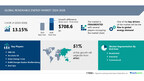
NEW YORK, Jan. 29, 2025 /PRNewswire/ — Report with market evolution powered by AI – The global renewable energy market size is estimated to grow by USD 708.6 billion from 2024-2028, according to Technavio. The market is estimated to grow at a CAGR of 13.15% during the forecast period. Rise in global energy demand is driving market growth, with a trend towards rising popularity of clean energy technologies However, competition from alternative energy sources poses a challenge. Key market players include ABB Ltd., Acciona SA, Duke Energy Corp., EnBW Energie Baden Wurttemberg AG, Enel Spa, ENERCON GmbH, General Electric Co., Goldwind Australia, Innergex Renewable Energy Inc., Invenergy, Nextera Energy Inc., Schneider Electric SE, Siemens AG, Sinovel Wind Group Co. Ltd., Sunrun Inc., Suzlon Energy Ltd., Tata Power Co. Ltd., Vattenfall AB, Vestas Wind Systems AS, and Xcel Energy Inc..
Key insights into market evolution with AI-powered analysis. Explore trends, segmentation, and growth drivers- View Free Sample PDF
Renewable Energy Market Scope
Report Coverage
Details
Base year
2023
Historic period
2018 – 2022
Forecast period
2024-2028
Growth momentum & CAGR
Accelerate at a CAGR of 13.15%
Market growth 2024-2028
USD 708.6 billion
Market structure
Fragmented
YoY growth 2022-2023 (%)
12.34
Regional analysis
APAC, Europe, North America, South America, and Middle East and Africa
Performing market contribution
APAC at 51%
Key countries
China, US, Germany, India, and Japan
Key companies profiled
ABB Ltd., Acciona SA, Duke Energy Corp., EnBW Energie Baden Wurttemberg AG, Enel Spa, ENERCON GmbH, General Electric Co., Goldwind Australia, Innergex Renewable Energy Inc., Invenergy, Nextera Energy Inc., Schneider Electric SE, Siemens AG, Sinovel Wind Group Co. Ltd., Sunrun Inc., Suzlon Energy Ltd., Tata Power Co. Ltd., Vattenfall AB, Vestas Wind Systems AS, and Xcel Energy Inc.
Market Driver
Renewable energy markets are experiencing significant trends in 2023. Energy security is a top priority, with interest rates and investment costs influencing the decision-making process for utility-scale systems like solar PV and wind energy. Solar PV capacity is booming, with both utility-scale and small distributed systems gaining traction. Electricity prices are on the rise due to the global energy crisis, making renewables increasingly competitive. Policy makers are implementing new policies and incentives to accelerate renewables construction and grid connection. In the residential segment, solar energy and small distributed systems are popular, while commercial systems are also seeing growth. Wind energy, including onshore and offshore wind, is a key player in the renewables market. Hydropower, bioenergy, and geothermal energy are also important contributors. Module prices are decreasing, making renewables more affordable. Environmental concerns, including carbon footprint and ESG considerations, are driving demand for renewables. Battery storage systems are also gaining popularity to ensure energy security and manage intermittency. Major players in the market include Acciona, Enel Spa, Innergex, Invenergy, Sol Customer Solutions, Engie, and others. Off-grid energy and electrification are also trending, with smart cities and heating applications driving demand. Regulatory reforms and subsidies are essential for the continued growth of renewables. Nuclear power and fossil fuels face increasing competition, with renewables offering a more sustainable and cost-effective solution. Climate change and carbon dioxide (CO2) emissions are major concerns, making renewables a crucial part of the energy mix. Ocean power and wind turbines are emerging technologies with great potential.
The global electricity demand has experienced substantial growth due to urbanization and industrialization, particularly in countries like China and India. This trend has led to a significant increase in the use of fossil fuels, such as coal and natural gas, for power generation. Consequently, CO2 emissions from electricity and heat production reached over 42% of the global total in 2022. These emissions primarily stem from the combustion of these fuels. To address this issue, businesses are increasingly investing in renewable energy sources, such as wind, solar, and hydroelectric power, to reduce reliance on fossil fuels and decrease greenhouse gas emissions.
Request Sample of our comprehensive report now to stay ahead in the AI-driven market evolution!
Market Challenges
• The renewable energy market faces several challenges in ensuring energy security and affordability. High interest rates and investment costs are hindering the expansion of renewable energy capacity, particularly in utility-scale systems such as solar PV and wind energy. Policy makers are working to address these challenges through incentives and regulatory reforms, but the global energy crisis and undersubscription of auctions are causing delays in policy implementation. Environmental conditions and ESG concerns are also impacting the market, with a focus on reducing carbon footprint and greenhouse gas emissions. Renewable energy sources like solar, wind, hydro, bioenergy, and geothermal are gaining popularity, but challenges remain in grid connection, construction, and permitting. Major players in the market include Acciona, Enel Spa, Innergex, Invenergy, Sol Customer Solutions, Engie, and others. The residential and commercial segments are growing, with a shift towards distributed solar PV and off-grid energy. Battery storage systems and electrification are key trends, with smart cities and heating applications driving demand. However, the market is not without its rebound challenges. Fossil fuels remain a significant competitor, and policy changes and legislation can impact renewable energy additions. Carbon dioxide (CO2) emissions from traditional power sources continue to be a concern, with nuclear power and battery storage systems offering potential solutions. Innovations in wind energy, with advancements in wind turbines and offshore wind energy, are helping to address some of these challenges. Ocean power and geothermal energy are also emerging as promising sources of renewable energy. Overall, the renewable energy market is evolving rapidly, with a focus on affordability, sustainability, and innovation.
• Renewable energy sources, such as wind, solar, and hydro, have seen significant growth in adoption. However, fossil fuels, including coal, natural gas, and oil, continue to dominate the global energy market. In 2022, coal accounted for over 38%, natural gas for 23%, and oil for 3% of total electricity generation, according to the International Energy Agency. Advanced coal technologies, like supercritical and ultra-supercritical coal-fired power plants, have extended the life of coal-powered generation. Some countries still rely on fossil fuels due to their abundance and established infrastructure.
Discover how AI is revolutionizing market trends- Get your access now!
Segment Overview
This renewable energy market report extensively covers market segmentation by
End-user 1.1 Residential1.2 Industrial1.3 CommercialType 2.1 Hydropower2.2 Solar2.3 Wind2.4 OthersGeography 3.1 APAC3.2 Europe3.3 North America3.4 South America3.5 Middle East and Africa
1.1 Residential- The residential sector is a significant energy consumer globally, leading to energy inefficiency and negative environmental impacts. These impacts include air pollution, the greenhouse effect, and the urban heat island effect, which can harm human health and social and economic development. To address these challenges, the shift towards clean energy is essential. Solar energy, harnessed through natural processes like conduction, convection, and radiation, is a major renewable energy source for the residential segment. Additionally, wind energy, an environmentally friendly and clean energy source, is gaining importance. Government initiatives, favorable incentives, and a focus on 100% electrification are driving the growth of the renewable energy market in the residential sector. Solar and wind energy are expected to play a crucial role in meeting the rising energy demand from this sector while preserving limited resources for future generations.
Download a Sample of our comprehensive report today to discover how AI-driven innovations are reshaping competitive dynamics
Research Analysis
The renewable energy market is experiencing significant growth as interest in energy security and reducing carbon footprint increases in the face of the global energy crisis. Solar PV capacity continues to expand, with utility-scale systems leading the way, while small distributed systems gain popularity in the residential segment. Hydroelectric power, Solar, Wind, Geothermal, and even emerging technologies like Ocean power are contributing to the shift away from Fossil fuels. However, investment costs and electricity prices remain key considerations for policy makers. Environment conditions and policy frameworks play a crucial role in the adoption of renewable energy. Battery storage systems are becoming increasingly important for managing the intermittency of Solar and Wind energy. The carbon footprint of traditional power generation methods is driving the demand for cleaner alternatives, with Wind turbines and Generators at the forefront of the transition. Offshore and Onshore Wind energy, as well as Carbon dioxide (CO2) and Greenhouse gas emissions reductions, are major focuses in the renewable energy sector.
Market Research Overview
The renewable energy market is experiencing significant growth as energy security concerns rise in the context of the global energy crisis. Solar PV capacity continues to expand, with utility-scale systems leading the way, while small distributed systems gain popularity in the residential and commercial segments. Wind energy, including onshore and offshore wind, is also a major contributor, with wind energy additions outpacing fossil fuels in some regions. Electricity prices, influenced by interest rates and investment costs, are driving the shift towards renewables. Policy makers are implementing policies and incentives to accelerate the transition, including legislation, permitting reforms, and subsidies. Renewable energy sources, such as solar, wind, hydro, bioenergy, and geothermal, are reducing greenhouse gas emissions and addressing climate change concerns. Battery storage systems are becoming increasingly important for grid stability and integrating renewable energy into the grid. ESG concerns are also driving demand for renewables, with companies like Acciona, Enel Spa, Innergex, Invenergy, Sol Customer Solutions, Engie, and others leading the way. Off-grid energy and electrification are also gaining attention, with smart cities and heating applications being key areas of focus. Environmental conditions, carbon footprint, and regulatory reforms are shaping the renewable energy landscape. Renewables, including PV-utility and PV-distributed, are becoming cost-competitive with fossil fuels, even without subsidies. However, challenges such as undersubscription of auctions, permitting delays, and legislation can impact the growth of the renewable energy market. Carbon dioxide (CO2) emissions from fossil fuels are a major concern, with renewables offering a sustainable alternative. Nuclear power is also a low-carbon option, but faces challenges related to safety and public perception. Ocean power and geothermal energy are emerging renewable sources with significant potential. Wind turbines and generators are key components of the renewable energy industry, with offshore wind energy and onshore wind energy being major areas of investment. Wind energy additions are expected to continue to outpace fossil fuels, with wind turbine manufacturers and developers leading the way. In summary, the renewable energy market is experiencing significant growth, driven by energy security concerns, electricity prices, and environmental concerns. Policy implementation, investment trends, and technological advancements are shaping the future of the renewable energy industry.
Table of Contents:
1 Executive Summary
2 Market Landscape
3 Market Sizing
4 Historic Market Size
5 Five Forces Analysis
6 Market Segmentation
End-userResidentialIndustrialCommercialTypeHydropowerSolarWindOthersGeographyAPACEuropeNorth AmericaSouth AmericaMiddle East And Africa
7 Customer Landscape
8 Geographic Landscape
9 Drivers, Challenges, and Trends
10 Company Landscape
11 Company Analysis
12 Appendix
About Technavio
Technavio is a leading global technology research and advisory company. Their research and analysis focuses on emerging market trends and provides actionable insights to help businesses identify market opportunities and develop effective strategies to optimize their market positions.
With over 500 specialized analysts, Technavio’s report library consists of more than 17,000 reports and counting, covering 800 technologies, spanning across 50 countries. Their client base consists of enterprises of all sizes, including more than 100 Fortune 500 companies. This growing client base relies on Technavio’s comprehensive coverage, extensive research, and actionable market insights to identify opportunities in existing and potential markets and assess their competitive positions within changing market scenarios.
Contacts
Technavio Research
Jesse Maida
Media & Marketing Executive
US: +1 844 364 1100
UK: +44 203 893 3200
Email: media@technavio.com
Website: www.technavio.com/
View original content to download multimedia:https://www.prnewswire.com/news-releases/renewable-energy-market-to-grow-by-usd-708-6-billion-2024-2028-driven-by-rising-global-energy-demand-report-with-the-ai-impact-on-market-trends—technavio-302363183.html
SOURCE Technavio










 Coin Market5 days ago
 Technology5 days ago
 Coin Market5 days ago
 Technology5 days ago
 Coin Market5 days ago
 Coin Market5 days ago
 Technology5 days ago
 Technology5 days ago