Connect with us

Technology

Virtual Reality (VR) Gaming Market to Grow by USD 34.94 Billion (2025-2029), Rising VR Adoption in Home Entertainment Boosts Market, Report on AI Redefining Market Landscape – Technavio

Published

on

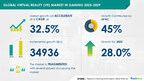
NEW YORK, Jan. 31, 2025 /PRNewswire/ — Report with market evolution powered by AI – The global virtual reality (VR) market in gaming size is estimated to grow by USD 34.94 billion from 2025-2029, according to Technavio. The market is estimated to grow at a CAGR of almost 32.5% during the forecast period. Increasing adoption of vr in interactive Home entertainment industry is driving market growth, with a trend towards growing popularity of 360-degree content. However, privacy concerns over gamers information poses a challenge. Key market players include Advanced Micro Devices Inc., Alphabet Inc., bHaptics Inc., Carl Zeiss AG, Electronic Arts Inc., Fallen Planet Studios Ltd, HTC Corp., Magic Leap Inc., Meta Platforms Inc., Microsoft Corp., Nintendo Co. Ltd., NVIDIA Corp., Qualcomm Inc., Razer Inc., Samsung Electronics Co. Ltd., Sony Group Corp., Ubisoft Entertainment SA, Unity Technologies Inc., Virtuix Inc., and Wookey Technologies Inc..

Key insights into market evolution with AI-powered analysis. Explore trends, segmentation, and growth drivers- View Free Sample PDF

Virtual Reality (VR) Market In Gaming Scope

Report Coverage

Details

Base year

2024

Historic period

2019 – 2023

Forecast period

2025-2029

Growth momentum & CAGR

Accelerate at a CAGR of 32.5%

Market growth 2025-2029

USD 34936 million

Market structure

Fragmented

YoY growth 2022-2023 (%)

28.0

Regional analysis

APAC, North America, Europe, Middle East and Africa, and South America

Performing market contribution

APAC at 45%

Key countries

US, China, Canada, Japan, Germany, UK, India, South Korea, France, and Italy

Key companies profiled

Advanced Micro Devices Inc., Alphabet Inc., bHaptics Inc., Carl Zeiss AG, Electronic Arts Inc., Fallen Planet Studios Ltd, HTC Corp., Magic Leap Inc., Meta Platforms Inc., Microsoft Corp., Nintendo Co. Ltd., NVIDIA Corp., Qualcomm Inc., Razer Inc., Samsung Electronics Co. Ltd., Sony Group Corp., Ubisoft Entertainment SA, Unity Technologies Inc., Virtuix Inc., and Wookey Technologies Inc.

Market Driver

The Virtual Reality (VR) market in gaming has seen a significant shift in the wake of the worldwide economy’s downturn due to the lockdown. Pre-pandemic levels of sales have declined, but the introduction of advanced gaming consoles like PlayStation VR2 and new hardware like 5G technology offer promising growth opportunities. The gaming industry is investing heavily in technology, with manufacturers ramping up production of devices such as VR headsets, bodysuits, and gloves. However, concerns around adverse health effects like locomotion sickness and mental health are emerging. Companies like Huawei Technologies, Sony Corporation, and Microsoft are leading the charge in VR technology, with competitors including Oculus Rift, PlayStation VR, and Samsung Gear VR. The hardware segment, including optical gaming devices and RAM, is crucial, while software and content remain key drivers. The VR market is not just limited to consoles and PCs; mobile devices like smartphones are also gaining traction with cloud gaming technology. VR accessories, such as VR headsets and motion tracking devices, are essential for an optimal VR experience. Companies like HTC Vive, Meta, Plink, Samsung Gear, Google Daydream, and Oculus VR are leading the way in content creation tools and 3D environment development. Entrepreneurs and investors are also showing interest in VR technology, with startups like Teslasuit and NewGenApps pushing the boundaries of interactive graphics and 3D effects. Overall, the VR market is expected to grow as technology advances and content becomes more diverse and accessible. 

The global Virtual Reality (VR) content market has seen significant advancements with the creation of 3D, 4D, and 5D content. In 2020, VR emerged as a major platform for gaming, marking a transformation in the digital world. Notable companies like Facebook, Sony, and HTC have introduced VR devices, such as the Oculus Quest 2 by Facebook in September 2020. This technology’s integration into gaming is revolutionizing the industry and setting new standards for experiences. 

Request Sample of our comprehensive report now to stay ahead in the AI-driven market evolution!

Market Challenges

The Virtual Reality (VR) market in gaming has faced challenges in recent times. Pre-pandemic levels of sales have not been reached due to various factors like the worldwide economy and lockdowns. The introduction of advanced gaming consoles like PlayStation VR2 and new hardware like 5G technology and optical gaming devices presents opportunities. However, there are concerns over adverse health effects such as locomotion sickness and mental health. Manufacturing units are ramping up to meet demand for VR devices, including headsets, bodysuits, and gloves from brands like HTC Vive, Oculus Rift, PlayStation VR, and Samsung Gear VR. The software segment, with companies like Meta, Plink, and HTC Viveport, is investing in technology and content creation tools. Investors and entrepreneurs are backing startups like Teslasuit, providing funding for VR accessories and interactive graphics. Huawei Technologies and other tech giants are entering the market with their own VR headsets. The gaming industry is seeing a shift towards cloud gaming technology and VR content on mobile, console/PC, standalone, and VR technology. According to Comscore MMX, VR technology usage has increased, with popular games on NewGenApps offering 3D environments and interactive graphics. The VR market is expected to grow, with companies like Sony Corporation and Microsoft leading the way in the gaming console segment, and the hardware and PC/desktop segments also showing promise. RAM and smartphone segments are also expected to play a role in the growth of VR technology.The cost of virtual reality (VR) hardware is a significant barrier to the growth of the global VR market in gaming. The high price of VR headsets, such as Meta Quest 2 and HTC Vive, which can range from USD399 to USD599, and the requirement for high-performance computers and peripherals, limit the accessibility and usage of VR technology in various industries. This financial hurdle presents challenges for both consumers and enterprises, hindering market expansion and adoption. The substantial investment needed for a high-quality VR experience may deter potential users, making it essential for the industry to explore more affordable solutions to increase market penetration.

Discover how AI is revolutionizing market trends- Get your access now!

Segment Overview 

This virtual reality (vr) market in gaming report extensively covers market segmentation by

ApplicationPCsConsolesMobile DevicesComponentHardwareSoftwareGeographyAPACNorth AmericaEuropeMiddle East And AfricaSouth America

1.1 PCs- The global virtual reality (VR) market in gaming is anticipated to experience growth due to the launch of console-specific VR headsets, such as Sony’s next-generation headset for the PlayStation 5. These headsets offer improved features, like a wider field of view and new controllers. Game developers are creating exclusive VR content with unique storylines to complement the hardware. However, the high price range of these headsets, between USD500 and USD900, may deter some consumers from investing in them. Despite this challenge, an increasing number of developers are expected to release VR-specific games during the forecast period.

Download a Sample of our comprehensive report today to discover how AI-driven innovations are reshaping competitive dynamics

Research Analysis

Pre-pandemic levels, the Virtual Reality (VR) market in gaming was on an upward trajectory, driven by advancements in 5G technology and the release of new devices like PlayStation VR2. However, the worldwide economy’s downturn due to the lockdown led to a sales decline. Manufacturing units struggled to keep up with demand for VR accessories, such as headsets, bodysuits, and gloves from major players like HTC Vive. Game designers and investors continued to push boundaries with interactive graphics, 3D effects, and NewGenApps in a 3D environment. HTC Vive and Meta, among others, introduced innovative VR headsets, while 3Dinsider reported in interest for VR accessories. With the rollout of 5G and the continued development of motion tracking and haptic feedback technology, the future of VR gaming looks promising. Plink, a new player in the market, is set to disrupt the industry with its unique approach to VR gaming.

Market Research Overview

Pre-pandemic levels, the Virtual Reality (VR) market in gaming was on an upward trajectory, with 5G technology poised to revolutionize the industry. The introduction of advanced gaming consoles like PlayStation VR2 and optical gaming devices brought technology investments, fueling content creation tools and devices. However, the worldwide economy’s sales decline due to the lockdown led to a setback. Hardware and software companies, including Huawei Technologies, invested heavily in VR technology, developing VR accessories such as headsets, bodysuits, and gloves. The gaming industry saw in interest in VR, with investors and entrepreneurs backing new ventures. However, adverse health effects like locomotion sickness and mental health concerns emerged as challenges. VR technology evolved, with NewGenApps offering 3D environments and interactive graphics. VR headsets from companies like HTC Vive, Meta, Plink, Samsung Gear, Google Daydream, and Oculus RV continued to dominate the market. The gaming console segment, led by Sony Corporation and Microsoft, saw competition from the PC/desktop segment, with RAM and smartphone segments also joining the fray. The hardware segment continued to innovate, with standalone VR devices gaining popularity. The VR market in gaming is expected to grow further with the rollout of 5G technologies, offering faster download speeds and lower latency. The future of VR gaming is bright, with game designers and content creators continually pushing the boundaries of what’s possible in virtual reality.

Table of Contents:

1 Executive Summary
2 Market Landscape
3 Market Sizing
4 Historic Market Size
5 Five Forces Analysis
6 Market Segmentation

ApplicationPCsConsolesMobile DevicesComponentHardwareSoftwareGeographyAPACNorth AmericaEuropeMiddle East And AfricaSouth America

7 Customer Landscape
8 Geographic Landscape
9 Drivers, Challenges, and Trends
10 Company Landscape
11 Company Analysis
12 Appendix

About Technavio

Technavio is a leading global technology research and advisory company. Their research and analysis focuses on emerging market trends and provides actionable insights to help businesses identify market opportunities and develop effective strategies to optimize their market positions.

With over 500 specialized analysts, Technavio’s report library consists of more than 17,000 reports and counting, covering 800 technologies, spanning across 50 countries. Their client base consists of enterprises of all sizes, including more than 100 Fortune 500 companies. This growing client base relies on Technavio’s comprehensive coverage, extensive research, and actionable market insights to identify opportunities in existing and potential markets and assess their competitive positions within changing market scenarios.

Contacts

Technavio Research
Jesse Maida
Media & Marketing Executive
US: +1 844 364 1100
UK: +44 203 893 3200
Email: media@technavio.com
Website: www.technavio.com/

View original content to download multimedia:https://www.prnewswire.com/news-releases/virtual-reality-vr-gaming-market-to-grow-by-usd-34-94-billion-2025-2029-rising-vr-adoption-in-home-entertainment-boosts-market-report-on-ai-redefining-market-landscape—technavio-302365292.html

SOURCE Technavio

Continue Reading
Click to comment

Leave a Reply

Your email address will not be published. Required fields are marked *

Technology

Bloomberg Introduces Spread-to-Benchmark Quoting for EUR and GBP Portfolio Trading Baskets

Published

on

By

LONDON, June 2, 2026 /PRNewswire/ — Bloomberg today announced the launch of Spread-to-Benchmark quoting and trading for Euro (EUR) and Sterling (GBP) denominated portfolio trades through its Portfolio Trading Basket Builder (PTBB). The new functionality expands the range of quoting protocols available for European credit portfolio trading and reflects growing client demand for spread-based execution workflows, alongside increased dealer support for the convention across EUR and GBP markets.

Spread-to-Benchmark quoting is a well-established protocol for USD credit portfolio trades and is used by market participants to evaluate and execute portfolio trades. By extending this workflow to EUR and GBP portfolio trades, Bloomberg enables clients and dealers to transact using a familiar spread-based methodology across additional credit markets. 

The introduction of Spread-to-Benchmark quoting for EUR and GBP baskets reflects increased client interest in evaluating portfolio trades through a spread-based lens and the growing adoption of spread-based execution workflows in European credit markets. The workflow provides market participants with an additional framework for assessing the relationship between credit spread risk and underlying government bond yields when pricing and executing portfolio trades. 

Additional Workflow Flexibility 
The workflow complements Bloomberg’s existing portfolio trading capabilities, which support the full range of market-standard quoting conventions, including Price, Yield, Spread-to-Benchmark and Spread based workflows that reference Bloomberg’s evaluated pricing service (BVAL). This gives clients flexibility to compare and execute portfolio trades using the quoting methodology that best aligns with their investment objectives, execution preferences and internal risk management processes. 

“European credit clients continue to look for execution workflows that reflect how they evaluate risk and monitor portfolio trading outcomes,” said Harry Street, Global Head of Credit and Equities Trading Product at Bloomberg. “By expanding dealer support for Spread-to-Benchmark quoting for EUR and GBP baskets, Bloomberg is broadening the range of workflow options available to clients trading European credit portfolios.” 

“Portfolio trading workflows in fixed income continue to become more sophisticated as institutional investors look for ways to evaluate execution quality in changing market conditions,” said Kevin McPartland, Head of Market Structure & Technology Research at Crisil Coalition Greenwich. “Spread-based quoting helps market participants more clearly distinguish between the impacts of credit spread and underlying rates movements when determining how best to execute a portfolio trade.” 

Bloomberg’s Electronic Markets solutions are used by leading financial institutions to trade efficiently in over 175 markets around the world. More than 9,000 client firms use Bloomberg Electronic Markets to access industry-leading depth and breadth of liquidity across asset classes from over 800 dealers globally. Bloomberg Electronic Markets provides market participants with comprehensive solutions across the trading lifecycle, including robust price transparency, analytics, automation and execution, powered by Bloomberg’s high-quality, multi-asset class data and tools.

About Bloomberg
Bloomberg is a global leader in business and financial information, delivering trusted data, news, and insights that bring transparency, efficiency, and fairness to markets. The company helps connect influential communities across the global financial ecosystem via reliable technology solutions that enable our customers to make more informed decisions and foster better collaboration. For more information, visit Bloomberg.com/company or request a demo.

View original content to download multimedia:https://www.prnewswire.com/news-releases/bloomberg-introduces-spread-to-benchmark-quoting-for-eur-and-gbp-portfolio-trading-baskets-302787922.html

SOURCE Bloomberg L.P.

Continue Reading

Technology

Dr. Sunho Kang, a senior battery-technology executive with leadership experience at major global battery and EV manufacturers, joins TeraWatt Technology as Head of Product and Technology

Published

on

By

SAN FRANCISCO, June 2, 2026 /PRNewswire/ — TeraWatt Technology Inc. (Headquartered in California, USA) is pleased to announce that Dr. Sunho Kang has joined the company as Head of Product and Technology.

Dr. Kang is a globally recognized battery-technology executive with more than 25 years of leadership experience spanning the United States, Asia, and Europe, and a distinguished track record of advancing innovations from laboratory research through gigafactory-scale production. He has held senior executive positions at world-leading organizations including Samsung SDI, Apple, and Volkswagen Group of America, and brings deep expertise in lithium-ion battery materials, cell engineering, and product industrialization across a broad range of applications, including electric vehicles and energy storage systems.

At TeraWatt, Dr. Kang will lead global product development and the commercialization of TeraWatt’s battery technology platform, aiming to accelerate the delivery of TeraWatt’s competitive products as well as the technology and commercialization roadmap including manufacturing scale-up.

Dr. Kang commented:

“I am thrilled to join TeraWatt Technology as Head of Product and Technology. TeraWatt’s innovative battery platform presents a tremendous opportunity to push the boundaries of lithium-ion technology, and I look forward to working with the team to accelerate product development and commercialization to deliver meaningful impact.”

TeraWatt Technology founder CEO Ken Ogata, Ph.D. commented:

“We are thrilled to welcome Dr. Kang as our Head of Product and Technology. His deep expertise in battery materials, cell engineering, and productization will be instrumental in accelerating TeraWatt’s product roadmap and technology leadership. Together with Dr. Kang, we will continue to drive our mission forward.”

About TeraWatt Technology Inc.
TeraWatt Technology Inc. is a California-based company that produces lightweight, high-power, and safe next-generation lithium-ion batteries.

Company Overview
Name: TeraWatt Technology Inc.
Representative: Co-founder and CEO Ken Ogata
Headquarters: 28 Geary St, Suite 650, San Francisco, CA 94108, United States
Founded: January 2020
Established: December 2019
URL: https://www.terawatt-technology.com/


View original content:https://www.prnewswire.com/news-releases/dr-sunho-kang-a-senior-battery-technology-executive-with-leadership-experience-at-major-global-battery-and-ev-manufacturers-joins-terawatt-technology-as-head-of-product-and-technology-302786854.html

SOURCE TeraWatt Technology Inc.

Continue Reading

Technology

Tencent Cloud and Soniox Announce Strategic Partnership: Combining Advanced Speech-to-Text (STT) Technology with Global Real-Time Infrastructure

Published

on

By

HONG KONG, June 2, 2026 /PRNewswire/ — Tencent Cloud, the cloud business of global technology company Tencent, today announced a strategic partnership with Soniox, a San Francisco-based speech AI company that specializes in developing high-accuracy, low-latency speech AI solutions. The collaboration integrates Soniox’s speech-to-text (STT) technology with Tencent Cloud’s Real-Time Communication (TRTC) enterprise-grade global infrastructure, enabling enterprises to build and deploy multilingual voice AI applications across 200+ countries and regions.

Elevating Enterprise Voice AI at a Global Scale

In enterprise voice AI deployments, latency directly affects user experience and application reliability. The integration of Soniox’s high-accuracy, low-latency STT with TRTC’s global transmission infrastructure reduces latency across the entire pipeline, creating a comprehensive end-to-end solution for enterprises deploying conversational AI applications worldwide.    

Soniox is the voice platform for every language. Unlike legacy speech AI, which was built primarily for English-speakers, Soniox delivers native-speaker accuracy across 60+ languages. Its technology can handle mid-sentence language switching — a user can switch between English and Chinese in a single utterance, and Soniox will capture every word with complete accuracy. All of this works through a single API that works for both speech-to-text and text-to-speech.

By integrating TRTC, the partnership leverages an enterprise-grade real-time communication backbone featuring more than 3,200 global nodes, sub-300 ms worldwide latency, and advanced capabilities such as AI noise suppression and weak-network resilience. These capabilities enable conversational AI applications to operate reliably across diverse network environments, including regions such as Southeast Asia and Africa.

With the roll out of this partnership, developers can integrate the Soniox STT API directly within the Tencent Cloud console. Whether targeting English-speaking markets or supporting languages such as Arabic, Hindi, and Malay, enterprises can build global voice applications — including intelligent customer service, voice assistants, real-time translation, and meeting transcription — to address the demands of expansion into emerging markets and multilingual scenarios.

Wison Xie, Head of Product at Tencent RTC, stated: “Tencent RTC has always been committed to providing reliable real-time communication infrastructure for global enterprises. Our partnership with Soniox brings together our strengths in enterprise-grade audio transmission and Soniox’s advanced speech recognition technology. Together, we are making it easier for businesses to deploy accurate, low-latency voice AI applications across any language and any market.”

Klemen Simonic, CEO at Soniox Inc., stated “At Soniox, our mission is to help businesses understand every word, in any language, with native speaker accuracy and exceptional speed. Partnering with Tencent Cloud combines our speech AI with world-class real-time infrastructure, enabling enterprises to build voice AI experiences that scale globally with low latency and reliability.”

About Tencent Cloud:

Tencent Cloud, one of the world’s leading cloud companies, is committed to creating innovative solutions to resolve real-world issues and enabling digital transformation for smart industries. Through our extensive global infrastructure, Tencent Cloud provides businesses across the globe with stable and secure industry-leading cloud products and services, leveraging technological advancements such as cloud computing, Big Data analytics, AI, IoT, and network security. It is our constant mission to meet the needs of industries across the board, including the fields of gaming, media and entertainment, finance, healthcare, property, retail, travel, and transportation.

About Tencent RTC:

Tencent RTC provides real-time communication solutions, including audio/video calling, live streaming, and in-game voice. With enterprise-grade security, AI-powered enhancements, and a global network of over 3,200 nodes, Tencent RTC powers mission-critical communication for customers worldwide.

About Soniox:

Soniox is a next-generation voice AI company bringing about the end of English-first speech AI. Most people on the planet did not grow up speaking English and often mix languages mid-sentence; and yet legacy speech AI was built for just English. Soniox is different: native-speaker accuracy across 60+ languages, true mid-sentence language switching, and flawless alphanumeric recognition that legacy providers still can’t match. For developers building global apps, Soniox is the only option. Try it for yourself at soniox.com.

View original content to download multimedia:https://www.prnewswire.com/apac/news-releases/tencent-cloud-and-soniox-announce-strategic-partnership-combining-advanced-speech-to-text-stt-technology-with-global-real-time-infrastructure-302786832.html

SOURCE Tencent Cloud

Continue Reading

Trending