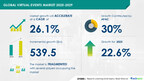
NEW YORK, Jan. 31, 2025 /PRNewswire/ — Report on how AI is driving market transformation – The global virtual events market size is estimated to grow by USD 539.5 million from 2025-2029, according to Technavio. The market is estimated to grow at a CAGR of 26.1% during the forecast period. Rise in number of corporate events is driving market growth, with a trend towards growing popularity of virtual events in education. However, emerging threat from open-source virtual events solutions poses a challenge. Key market players include 8×8 Inc., Active Network LLC, Adobe Inc., ALE International, Atlassian Corp Plc, Avaya LLC, Aventri Inc., Bizzabo, Cadence Design Systems Inc., Cisco Systems Inc., Cvent Holding Corp., EventX Ltd., Huawei Technologies Co. Ltd., Hubb, International Business Machines Corp., Microsoft Corp., Mitel Networks Corp., Toshiba Corp., Ungerboeck, and Zoom Video Communications Inc..
Key insights into market evolution with AI-powered analysis. Explore trends, segmentation, and growth drivers- View Free Sample PDF
Virtual Events Market Scope
Report Coverage
Details
Base year
2024
Historic period
2019 – 2023
Forecast period
2025-2029
Growth momentum & CAGR
Accelerate at a CAGR of 26.1%
Market growth 2025-2029
USD 539.5 million
Market structure
Fragmented
YoY growth 2022-2023 (%)
22.6
Regional analysis
North America, APAC, Europe, Middle East and Africa, and South America
Performing market contribution
APAC at 30%
Key countries
US, China, Germany, Japan, Canada, India, UK, France, Italy, and Brazil
Key companies profiled
8×8 Inc., Active Network LLC, Adobe Inc., ALE International, Atlassian Corp Plc, Avaya LLC, Aventri Inc., Bizzabo, Cadence Design Systems Inc., Cisco Systems Inc., Cvent Holding Corp., EventX Ltd., Huawei Technologies Co. Ltd., Hubb, International Business Machines Corp., Microsoft Corp., Mitel Networks Corp., Toshiba Corp., Ungerboeck, and Zoom Video Communications Inc.
Market Driver
The virtual events industry has seen a significant due to lockdowns and the impact of coronavirus. Retail & e-commerce, healthcare, manufacturing, construction, academic institutions, and various sectors are adopting digitally simulated events for sales meetings, job fairs, summits, audio/video conferences, exhibitions, and trade shows. Modern technologies like artificial intelligence (AI), augmented reality (AR), and virtual reality (VR) are driving the trend. Virtual conferences offer networking solutions, hospitality, and collaboration tools for employees and resources. However, challenges include cyberattacks, connectivity network issues, regulations, and compatibility problems. Stable internet connections, streaming platforms, and collaboration tools are essential for successful virtual events. Technological advances like real-time data analytics, on-demand content, interactive virtual environments, and session popularity help make data-driven decisions. The success of events depends on attendee engagement, timing, accessibility, and experience. Virtual simulation platforms offer a cost-effective and accessible solution for global audiences, customers, and partners. Despite challenges, virtual events are here to stay, shaping the future of business proceedings and workflow.
Virtual events in the education sector are gaining popularity as an effective and cost-efficient means of learning. Traditional educational institutions are incorporating virtual classrooms to offer flexibility in studying, allowing students to attend sessions from anywhere at any time. These sessions, led by qualified educators, provide cost savings and expanded access to knowledge. Virtual events also incorporate game dynamics to maintain student interest and develop essential skills like time management. Conferencing tools facilitate improved interactions between students and faculty, while social media integration enhances networking opportunities.
Request Sample of our comprehensive report now to stay ahead in the AI-driven market evolution!
Market Challenges
The virtual events industry has seen a significant due to lockdowns and the impact of coronavirus. Retail & e-commerce, healthcare, manufacturing, construction, academic institutions, and various other sectors have turned to digitally simulated events for business proceedings. Sales meetings, job fairs, summits, audio/video conferences, exhibitions, and trade shows are now being held virtually. However, challenges persist. Connectivity network issues, cyberattacks, regulations, and compatibility problems are major factors affecting virtual events. Employees and resources require stable internet connections and streaming platforms for effective workflow. Technological advances, such as artificial intelligence (AI), augmented reality (AR), and virtual reality (VR), offer interactive virtual environments for networking and collaboration. Time and accessibility are crucial for virtual events, with on-demand content and presentations providing flexibility. Future events will depend on real-time information, data analytics, attendee engagement, and successful outcomes. Event strategies must consider these challenges and leverage modern technologies for successful virtual events.Open-source virtual events present a significant competition for commercial enterprise virtual solutions. These software can be downloaded and utilized on various platforms, making them an attractive option for micro and small-scale enterprises and individual users. The high purchasing and licensing costs of proprietary virtual events often deter these entities from opting for commercial solutions. Open-source virtual events offer common features comparable to proprietary ones, making them a viable choice for small-scale events. Their availability on the internet, free of cost, adds to their appeal. This trend poses a challenge for vendors providing proprietary virtual event management as a service.
Discover how AI is revolutionizing market trends- Get your access now!
Segment Overview
This virtual events market report extensively covers market segmentation by
ApplicationUC And C And VCWeb ConferencingTypeWebinarConferenceVirtual Expo Fairs And FestivalsEntertainmentGeographyNorth AmericaAPACEuropeMiddle East And AfricaSouth America
1.1 UC and C and VC- Unified communications and collaboration (UC and C) is a business technique that optimizes processes by integrating real-time and non-real-time communications. Real-time communication includes online chatting, instant messaging, video conferencing, telephony, speech recognition, and call control. Non-real-time communication includes voicemail, email, unified messaging, SMS, and fax. UC and C facilitates communication using different modes, media, and devices anywhere and anytime, leading to improved productivity, enhanced communication among employees globally, increased collaboration tools usage, better business process optimization, faster decision-making, and increased employee availability. The virtual events market is witnessing a shift towards video and web conferencing solutions over audio conferencing due to consumer preference. Video conferencing allows real-time two-way communication across geographies and provides full-motion video images and high-quality audio. SMBs are adopting SaaS-based models due to their affordability, and vendors are offering local language support to cater to this segment. UC and C is popular among businesses as it enables real-time collaboration and communication among disparate teams, and the integration of rich video, web, and audio conferencing creates a connected workspace. The market is expected to grow rapidly due to the increasing adoption by SMEs and the BYOD policy trend. SMEs adopt virtual client computing solutions to accelerate processes and virtualize applications and desktops to reduce costs and improve efficiency.
Download a Sample of our comprehensive report today to discover how AI-driven innovations are reshaping competitive dynamics
Research Analysis
The Virtual Events Market has experienced exponential growth in the wake of the global health crisis, with Retail & e-commerce, Healthcare, Manufacturing, Construction, Academic institutions, and various industries adopting digitally simulated events as a viable alternative to traditional in-person gatherings. Sales meetings, job fairs, summits, exhibitions, and trade shows have all transitioned to virtual platforms, enabling businesses to continue their proceedings despite WFH policies and lockdowns. Modern technologies like virtual conference solutions, networking platforms, and AI-powered connectivity networks have become essential resources for employees and businesses to engage, collaborate, and innovate. However, cybersecurity concerns and connectivity issues remain challenges to be addressed in this rapidly evolving landscape. Morressier, a leading virtual conference platform, offers advanced networking solutions and a user-friendly interface to facilitate productive and engaging virtual events.
Market Research Overview
The Virtual Events Market has experienced significant growth due to the global shift towards digitally simulated events in various sectors including Retail & e-commerce, Healthcare, Manufacturing, Construction, Academic institutions, and the Virtual events industry itself. With the impact of lockdowns and the Coronavirus pandemic, sales meetings, job fairs, summits, audio/video conferences, exhibitions, and trade shows have all moved online. Modern technologies like artificial intelligence (AI), augmented reality (AR), and virtual reality (VR) have become major factors in creating interactive virtual environments. However, challenges such as connectivity problems, bandwidth limitations, software glitches, and compatibility issues can affect the success of events. Regulations, cyberattacks, and restrictions on the movement of people also pose challenges. Employees and resources must adapt to business proceedings in a workflow that integrates modern technologies with physically organized events. Networking solutions, collaboration tools, streaming platforms, and online communication have become essential for remote workforces and global audiences. The future of events lies in data-driven decisions based on attendee engagement, session popularity, lead generation, and real-time information. Event strategies must consider timing, accessibility, and the experience of customers and partners, whether they are at home or in offices, and the impact of travel and work on event attendance. Technological advances continue to shape the virtual events landscape, with video conferencing platforms and on-demand content becoming increasingly popular.
Table of Contents:
1 Executive Summary
2 Market Landscape
3 Market Sizing
4 Historic Market Size
5 Five Forces Analysis
6 Market Segmentation
ApplicationUC And C And VCWeb ConferencingTypeWebinarConferenceVirtual Expo Fairs And FestivalsEntertainmentGeographyNorth AmericaAPACEuropeMiddle East And AfricaSouth America
7 Customer Landscape
8 Geographic Landscape
9 Drivers, Challenges, and Trends
10 Company Landscape
11 Company Analysis
12 Appendix
About Technavio
Technavio is a leading global technology research and advisory company. Their research and analysis focuses on emerging market trends and provides actionable insights to help businesses identify market opportunities and develop effective strategies to optimize their market positions.
With over 500 specialized analysts, Technavio’s report library consists of more than 17,000 reports and counting, covering 800 technologies, spanning across 50 countries. Their client base consists of enterprises of all sizes, including more than 100 Fortune 500 companies. This growing client base relies on Technavio’s comprehensive coverage, extensive research, and actionable market insights to identify opportunities in existing and potential markets and assess their competitive positions within changing market scenarios.
Contacts
Technavio Research
Jesse Maida
Media & Marketing Executive
US: +1 844 364 1100
UK: +44 203 893 3200
Email: media@technavio.com
Website: www.technavio.com/
View original content to download multimedia:https://www.prnewswire.com/news-releases/virtual-events-market-to-grow-by-usd-539-5-million-2025-2029-rising-corporate-events-boosting-growth-ai-driving-market-evolution—technavio-302365345.html
SOURCE Technavio









 Coin Market4 days ago
 Technology4 days ago
 Coin Market5 days ago
 Technology4 days ago
 Technology5 days ago
 Technology4 days ago