Connect with us

Technology

Major new ETC report presents complete picture of global buildings sector emissions and pathways to decarbonisation

Published

on

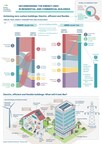
LONDON, Feb. 4, 2025 /PRNewswire/ — The latest report from the Energy Transitions Commission, Achieving Zero-Carbon Buildings: Electric, Efficient and Flexible, draws a complete picture of the buildings sector’s emissions and energy use and describes how a combination of electric, efficient and flexible solutions can decarbonise buildings, improve standards of living, and reduce energy bills if supported by ambitious policy.

The global buildings sector currently contributes a third of greenhouse gas emissions (12.3 GtCO2 in 2022).[1] This comes from the use of fossil fuels for heating, cooling, cooking, lighting, powering appliances, and constructing residential and commercial buildings.

There is not a one-size-fits-all solution for decarbonisation, as different solutions work for different building types, countries, and climates, but three key priorities stand out for creating a zero-carbon dioxide emissions buildings sector:

Electrification replacing fossil fuels: Decarbonising heating and cooking is essential. Currently, gas and oil heating accounts for 8% of global emissions, or 3 GtCO2. Switching from fossil-based heating and cooking to cost-effective electric and efficient technologies, such as heat pumps and electric hobs, is crucial and must be accompanied by the continued decarbonisation of electricity generation. By 2050, 80% of the energy used in buildings could be electricity; this would bring annual emissions from building use close to zero if electricity supply is decarbonised by then.Dramatically improving energy efficiency: Rising use of air conditioners and the electrification of heating and cooking would result in electricity demand for buildings almost tripling, from 12,800 TWh to around 35,000 TWh by 2050 if energy efficiency is not simultaneously increased. But this could be reduced to around 18,500 TWh via a combination of:
– Improvements in the technical efficiency of heat pumps, air conditioners, and other appliances.
– Improvements in the energy efficiency of both new and existing buildings, considering a range of so-called “passive heating and cooling” building design techniques, such as insulation and painting roofs white in hot countries.
– Smart building management systems and consumer choices which avoid wasteful use of heating or cooling.

These improvements, together with the deployment of building-level batteries and other energy storage, smart building control systems, and rooftop solar generation are particularly important for reducing the growth of peak electricity demand, which is a crucial driver of electricity system costs.Constructing efficient and low-carbon buildings: Constructing new buildings accounts for 7% of global emissions a year, or 2.5 GtCO2. Global floor area (area covered by buildings) is set to expand by 55% by 2050 (or 140 billion m2, which is almost 150 times the size of Hong Kong), predominantly in Asia, Africa and South America. If the average carbon intensity of construction remains unchanged, this expansion would result in a cumulative 75 GtCO2 emissions between now and 2050.[2] These cumulative emissions could be reduced to around 30 GtCO2 via a combination of:
– Decarbonising the production of steel, cement, concrete, and other building materials.
– Using fewer materials in building construction via lightweight design and modular construction or using less carbon-intensive materials such as timber.
– Better utilising existing buildings via extended building lifetimes and shared working spaces.

“Decarbonising the buildings sector is a story of many transitions. It’s vital for our climate goals and it’s an opportunity to improve living standards and reduce energy costs. Electric heating and cooking technologies will significantly improve air quality and have lower running costs than gas heating and traditional use of biomass. Cooling is essential to quality of life, especially as global warming intensifies due to man-made emissions. It is possible to achieve zero-emissions, efficient, and flexible homes with low-carbon building design techniques and technology that runs on clean electricity.” said Adair Turner, Chair of the Energy Transitions Commission.

However, implementing some of the decarbonisation options for buildings poses more complex challenges than faced in other sectors of the economy, for instance:

For existing buildings, residential and commercial building owners can choose from many different low-carbon technologies and options to improve the energy efficiency of their homes, some of which can be disruptive and involve high upfront costs (e.g., roof or wall insulation, new windows, higher-efficiency heating and ventilation systems). The availability and cost of finance vary greatly between low and high-income households and across countries. Government policies must therefore combine clear targets to ban the sale of fossil-fuel boilers and cookers, with financial support for low-income families, as well as external finance (e.g., from multilateral development banks) to lower-income countries.  For new construction, specific optimal solutions vary by country, regional climate, and building type, and there are sometimes trade-offs to be struck between designing to minimise construction emissions versus in-use operational emissions. In addition, construction sectors often entail complex value chains of subcontracting and a large role for small and medium enterprises. Careful design and implementation of building design and construction codes, learning from international experience but tailored to specific circumstances is therefore vital.

“Unless we can radically decarbonise buildings we will fail to keep global warming under 1.5°C outlined in the Paris Accord. To do that we need to make changes all the way through the design, delivery and operation of buildings – from electrification of heating and passive cooling, to reducing embodied carbon emissions for new buildings and refurbishments.” said Stephen Hill, Sustainability and Building Performance Expert at Arup. “This will require collaboration right across sector, between governments, industry bodies and private companies. We need to be ambitious, but if we get it right we can cut carbon, generate value for our economy and improve people’s quality of life through action like improving living conditions and reducing fuel poverty.”

Given the complexity of the buildings sector decarbonisation challenge, the report sets out a detailed analysis of 7 different, though overlapping, challenges. Summaries of the nature of the problem, clean technologies, and actions required can be accessed via the links below:

Topic

Key audience

The heating decarbonisation challenge (focus on Northern latitude countries) 
How electric heating and cost-effective insulation can displace fossil fuels.

Policymakers, residential households, energy and technology companies,
financial institutions

Increasing access to affordable cooling Managing rising demand in a warming
climate with a combination of passive cooling and efficient air conditioning

Policymakers, residential and commercial building owners

Improving access to clean cooking Eliminating the traditional use of biomass in
low-income countries and shifting to electric cooking solutions globally.

Policymakers, residential homeowners

Efficient lighting and appliances Improving the energy efficiency of lighting and
appliances in residential and commercial buildings.

Commercial building owners, technology companies

Decarbonising commercial buildings Creating strong market demand signals
for low-carbon, efficient, and flexible buildings.

Policymakers, financial institutions, building owners, commercial
businesses

Buildings within a clean energy system Managing total and peak electricity
demand from buildings via efficiency and flexibility.

Policymakers, energy companies and network operators

The new build opportunity Decarbonising steel and cement, combined with
better building techniques  

Policymakers, developers, construction companies, financial institutions


“Buildings are responsible for one-third of the world’s carbon emissions. Harnessing the power of electrification, on-site generation, digital controls, IoT, big data and digital twins can make a net zero-carbon future in our built environment possible. Incorporating these technologies into new constructions or retrofitting existing buildings benefits the planet as well as the safety, resilience, and comfort of our buildings.” said Jean-Pascal Tricoire, Chairman of Schneider Electric.

“WorldGBC mobilises a global network towards the just transition of the built environment for people and planet. We are proud to support this ETC report. It is a timely reminder of the connection between buildings and the energy system. The two are intrinsically linked – we cannot decarbonise one without the other.” said Cristina Gamboa, CEO of World Green Building Council (WorldGBC).

“A comprehensive, informative and crucial contribution to advance climate action, this ETC report on building decarbonization provides a holistic and pragmatic view of how the building sector can transition to a low-carbon future. A must-read for policymakers and industry leaders alike, the report’s regional approach ensures tailored solutions and valuable insights from best practice to turn ambition into action.” said Roxanna Slavcheva, Global Lead for Built Environment at World Resources Institute (WRI).

Achieving Zero-Carbon Buildings: Electric, Efficient and Flexible has been developed in collaboration with ETC members from across industry, financial institutions, and civil society. The ETC is a global coalition of leaders from across the energy landscape committed to achieving net-zero emissions by mid-century whose members include Arup, bp, HSBC, Iberdrola, National Grid, Octopus Energy, Petronas, Saint Gobain, Schneider Electric, Shell, SSE, Rabobank, Vattenfall, We Mean Business, and World Resources Institute. This report constitutes a collective view of the ETC, however, it should not be taken as members agreeing with every finding or recommendation.

Download the report: https://www.energy-transitions.org/publications/achieving-zero-carbon-buildings 

For further information on the ETC please visit: https://www.energy-transitions.org

[1] IEA (2023), Buildings, available at www.iea.org/energy-system/buildings.
[2] Forster et al. (2024), Indicators of Global Climate Change 2023: annual update of key indicators of the state of the climate system and human influence.

Infographic – https://mma.prnewswire.com/media/2611335/Energy_Transitions_Commission_Infographic.jpg
Logo – https://mma.prnewswire.com/media/1935158/5147020/Energy_Transitions_Commission_Logo.jpg


View original content:https://www.prnewswire.co.uk/news-releases/major-new-etc-report-presents-complete-picture-of-global-buildings-sector-emissions-and-pathways-to-decarbonisation-302366585.html

Continue Reading
Click to comment

Leave a Reply

Your email address will not be published. Required fields are marked *

Technology

Cyber Enviro-Tech Positions AirPower Technology Agreement to Support U.S. Energy Independence Following April 2026 Presidential Actions

Published

on

By

SCOTTSDALE, Ariz., April 21, 2026 /PRNewswire/ — Cyber Enviro-Tech, Inc. (OTCQB: CETI), an environmental technology company advancing water treatment and clean energy solutions, today highlighted the strategic alignment of its AirPower compressed air energy platform with the April 20, 2026 Presidential Actions focused on strengthening U.S. energy infrastructure, enhancing grid resilience, and reducing long-term reliance on traditional fossil fuels.

The Presidential Actions announced yesterday, as outlined by the White House (https://www.whitehouse.gov/news/), underscore the growing national focus on modernizing energy infrastructure, improving grid reliability, and expanding access to scalable, domestically deployable energy solutions capable of supporting both grid-connected and off-grid environments.

Building on its recently announced exclusive manufacturing and distribution agreement with AirPower USA, CETI is expanding its focus on scalable energy infrastructure solutions designed to support both domestic and international markets where reliability, cost efficiency, and sustainability are critical.

AirPower’s patented compressed air technology provides a zero-emission energy generation and storage solution designed to address these evolving energy priorities through mechanically driven systems that reduce dependence on traditional fuels and complex battery supply chains.

AirPower systems are designed to:

Deliver zero-emission power generationProvide long-duration energy storage without battery degradationReduce dependence on critical minerals and battery supply chainsOperate in remote, off-grid, and infrastructure-constrained environmentsSupport industrial, municipal, and energy infrastructure applications

Aligned Leadership Perspective
“These policy priorities reinforce the accelerating shift toward resilient, distributed, and diversified energy systems,” said Kim D. Southworth, Co-Founder and Chief Executive Officer of Cyber Enviro-Tech. “We believe our AirPower platform is well aligned with these trends and positions CETI to participate in emerging opportunities tied to infrastructure modernization, grid stability, and long-term energy transition.”

“Compressed air energy systems offer a practical and scalable pathway to deliver clean, reliable energy across a wide range of applications,” said Brianna Stoecklein, Chief Executive Officer of AirPower USA. “As energy policy and infrastructure priorities increasingly focus on resilience, independence, and long-duration storage, we believe AirPower’s technology is well positioned to support critical infrastructure applications and emerging deployment opportunities as demand for reliable, scalable energy solutions continues to accelerate.”

Expanding Energy Infrastructure Opportunity
CETI’s integration of AirPower technology represents a strategic expansion of its environmental platform into energy infrastructure applications, particularly where reliable power is essential to water treatment, industrial remediation, and critical operations.

The Company has begun advancing a pipeline of commercial opportunities, including a previously announced early-stage inquiry representing a potential $200 million deployment opportunity in Africa. CETI continues to evaluate additional opportunities across regions and sectors where energy access, infrastructure resilience, and cost efficiency are key drivers.
CETI is currently engaged in discussions with industry participants, infrastructure developers, and potential partners to evaluate deployment opportunities for AirPower systems across applications including:

Grid support and peak load managementRemote and off-grid power generationIndustrial and municipal infrastructureEnergy support for water treatment and environmental systems

Positioned for Long-Term Energy Transition Trends
As both policy direction and market demand increasingly emphasize energy independence, resilience, and sustainability, CETI believes compressed air energy systems may serve as a complementary solution within a diversified energy mix, particularly in applications where traditional electrification or battery storage may be limited.
The Company believes its combined environmental and energy platform positions CETI to pursue opportunities aligned with long-term trends in infrastructure investment, distributed energy deployment, and sustainable industrial operations.

Advancing Toward Commercial Execution
CETI’s recent strategic initiatives—including its AirPower licensing agreement, leadership expansion, and growing project pipeline—reflect the Company’s continued transition toward execution-focused operations and revenue-oriented opportunities.
“We are focused on advancing opportunities that have the potential to translate into commercial activity,” Southworth added. “Our objective is to align CETI’s platform with areas of increasing demand while maintaining a disciplined approach to execution and growth.”

About Cyber Enviro-Tech, Inc. (OTCQB: CETI)
Cyber Enviro-Tech, Inc. (CETI) is an environmental technology company focused on sustainable solutions across water treatment, remediation, and emerging energy systems. The Company develops and deploys technologies designed to address industrial wastewater, hazardous waste, and environmental sustainability challenges across global markets.

About AirPower USA
AirPower USA develops patented compressed air energy storage and power generation systems designed to deliver clean, efficient, and scalable energy solutions for industrial, municipal, and off-grid applications.

Forward-Looking Statements
This press release contains forward-looking statements regarding technology deployment, project development, commercial opportunities, and business strategy. These statements involve risks and uncertainties, including the ability to convert opportunities into revenue, technical performance, regulatory requirements, customer adoption, and market conditions. Actual results may differ materially. CETI undertakes no obligation to update forward-looking statements except as required by law.

Contact:
Winston McKellar
Director of IR / PR
Cyber Enviro-Tech, Inc.
6991 E. Camelback Rd., Suite D-300
Scottsdale, AZ 85251
Phone: 866.687.6856
Website: www.cyberenviro.tech

View original content to download multimedia:https://www.prnewswire.com/news-releases/cyber-enviro-tech-positions-airpower-technology-agreement-to-support-us-energy-independence-following-april-2026-presidential-actions-302749051.html

SOURCE Cyber Enviro-Tech

Continue Reading

Technology

Ellucian Announces 2026 Experience Idol Winners Celebrating Innovation and Excellence in Higher Education

Published

on

By

Key Highlights:

Six winners — three higher education institutions and three partners — recognized for innovative use of the Ellucian Platform capabilities to solve real campus challenges.Institutional winners receive a Student Experience Scholarship, professional services support and design consultation to accelerate continued innovation.Submissions highlighted creative use of capabilities including central workspace, business process automation, low-code integrations, and AI-driven experiences.

RESTON, Va., April 21, 2026 /PRNewswire/ — Ellucian, the leading higher education technology solutions provider, announced the 2026 Experience Idol winners on the mainstage at Ellucian Live, the industry’s premier global technology conference. Experience Idol is an annual program celebrating institutions and partner organizations using the Ellucian Platform and SaaS-native capabilities to deliver innovative, data-driven experiences that improve outcomes for students, faculty, and staff across the higher education lifecycle.

Advancing Innovation Across the Student Experience

“As we look across this year’s Experience Idol submissions, what stands out is not just creativity. It is how institutions and partners are applying Ellucian technology in practical, meaningful ways to improve the day-to-day experience across campus,” said Mike Wulff, Chief Product and Technology Officer, Ellucian. “These innovations show what becomes possible when data, automation, and intuitive experiences come together in ways that are built for how higher education actually works. From bringing clarity to complex workflows and enabling earlier, more targeted student support, to reducing friction for faculty and staff through more unified experiences, this year’s winners are setting a new standard for efficiency, impact, and better outcomes across higher education.”

Recognizing Innovation in Action

The Experience Idol program invites institutions and partners to design and deliver impactful solutions using capabilities within the Ellucian Platform, including central workspace, reporting & analytics, workflow automation, low-code integrations, and AI-powered experiences. Finalists are selected based on creativity, measurable impact, and effective use of platform capabilities to improve outcomes for students, faculty, and staff.

The 2026 Experience Idol higher education institution winners include:

Best Use of AI: recognizing innovative applications of AI-powered capabilities to deliver meaningful outcomes.

Anne Arundel Community College

Anne Arundel Community College used Ellucian’s business process automation and the AI Writing Assistant to improve its faculty contract workflow. The AI supports staff by generating precise, role-specific instructions and consistent email communications, reducing ambiguity and accelerating approvals. By improving clarity at each step, the institution minimizes errors, reduces delays, and enhances transparency across departments. This approach modernizes a high-volume, high-risk process while maintaining human oversight, resulting in a more efficient and trustworthy experience for faculty and administrators alike.

Best Use Case: highlighting impactful solutions that address key institutional challenges.

University of the Fraser Valley

The University of the Fraser Valley implemented a centralized emergency communication system within Ellucian’s central workspace to deliver fast, consistent messaging across multiple channels. Replacing a fragmented approach that required updates in several systems, the new solution enables staff to create a single message and distribute it simultaneously via email, SMS, workspace notifications, and more. A unified dashboard provides full visibility into active and past alerts, improving response time and coordination during critical events. This approach enhances trust, reduces confusion, and ensures students and staff receive timely, reliable information when it matters most.

Best Overall Dashboard: showcasing intuitive, persona-driven experiences within the central workspace.

Jacksonville University

Jacksonville University transformed its campus portal by replacing a fragmented SharePoint experience with a unified, mobile-friendly dashboard built within Ellucian’s central workspace. By introducing a consistent design system across 24 cards, the university created a cohesive, branded interface that makes it easy for students, faculty, and staff to find critical resources. Features like centralized financial aid information, one-tap campus security access, and a powerful search function for important forms significantly reduced help desk calls. The result is a streamlined, intuitive experience that improves usability and reinforces a stronger institutional identity.

Institutional winners received a Student Experience Scholarship, an Ellucian professional services package to support continued innovation, and a design session with Ellucian’s User Experience team.

The 2026 Experience Idol partner winners include:

Best in Extensibility: honoring solutions that demonstrate seamless integration through APIs, data pipelines, and platform interoperability.

ESM Solutions

ESM Solutions delivers a personalized procurement experience through purchase cards in Ellucian’s central workspace that brings purchasing, approvals, and budget insights together in a single interface. By integrating seamlessly with Ellucian systems, the solution provides real-time visibility into spending and ensures compliance through built-in validations and workflows. Users can manage transactions, track progress, and make informed decisions from one dashboard, reducing complexity and improving efficiency across finance and procurement teams.

Best Student Impact: celebrating solutions that deliver measurable improvements to the student experience.

Entrinsik

Entrinsik’s AI-powered card created for Ellucian’s central workspace delivers a personalized, conversational interface that enables students to access real-time information and take action directly from their dashboard. By leveraging low-code integrations and multiple system integrations, the assistant can surface holds, financial data, and academic information while allowing secure updates with user approval. This solution meets students where they are, providing immediate, context-aware support that improves engagement, reduces friction, and helps remove barriers to student success.

Student Wellness Challenge: recognizing innovative, data-informed approaches to addressing student wellness.

Ferrilli

Ferrilli’s Stress and Wellness card provides students with immediate access to mental health resources and proactive support directly within Ellucian’s central workspace. Features include guided stress-relief exercises, centralized resource hubs, and a “Stressed About Class” workflow that connects students with instructors and escalates concerns if needed. Built using Ellucian’s low-code integrations and business process automation, the solution ensures timely intervention and creates a structured support system that helps students feel seen, supported, and connected.

To learn more about Ellucian solutions, visit: https://www.ellucian.com/

WHAT IS ELLUCIAN
Ellucian powers innovation for higher education, partnering with approximately 3,000 customers across 50 countries, serving more than 21 million students. Ellucian’s AI-powered platform, trained on the richest dataset available in higher education, drives efficiency, personalized experiences, and strengthened engagement for all students, faculty and staff. Fueled by decades of experience with a singular focus on the unique needs of learning institutions, the Ellucian platform features best-in-class SaaS capabilities and delivers insights needed now and into the future. These solutions and services span the entire student lifecycle, including data-rich tools for student recruitment, enrolment, and retention to workforce analytics, fundraising, and alumni engagement. Ellucian’s innovative solutions, vast ecosystem of partners and user community of more than 45,000 provides best practices leading to greater institutional success and achieving better student outcomes.

Media Contacts
Greg Giangrande, Chief Marketing Officer
Greg.Giangrande@Ellucian.com

Jess Weston, Manager, Communications
Jess.Weston@Ellucian.com

View original content to download multimedia:https://www.prnewswire.com/news-releases/ellucian-announces-2026-experience-idol-winners-celebrating-innovation-and-excellence-in-higher-education-302747993.html

SOURCE Ellucian

Continue Reading

Technology

PaleBlueDot AI Launches PBD TokenRouter, a Unified Platform for Accessing AI Models

Published

on

By

Company also unveils premium credit program for builders, startups, and enterprises to accelerate growth

PALO ALTO, Calif., April 21, 2026 /PRNewswire/ — PaleBlueDot AI today announced the launch of PBD TokenRouter at tokenrouter.com, a new platform designed to make it easier and more affordable for organizations of every size to access and manage artificial intelligence models.

Built for business use from day one, PBD TokenRouter serves the full spectrum of builders in the AI era: builders, startups, and enterprises running mission-critical AI workloads. The platform provides a comprehensive, business-to-business solution that centralizes control over AI resources for teams scaling adoption while maintaining operational and cost discipline.

Leveraging the company’s Token Factory model and existing compute infrastructure, PBD TokenRouter expands into a full-stack intelligence solution that combines proprietary token production with an ecosystem-driven go-to-market approach. Through a single integration point, PBD TokenRouter consolidates frontier providers into a single API layer that powers any AI application with all token usage managed in one place.

“Our goal is simple: to deliver faster, better, and cheaper access to intelligence infrastructure for everyone,” said Stephen Watts, CEO of PaleBlueDot AI. “Builders shouldn’t have to re-architect their stack every time a model provider goes down or a better model ships. PBD TokenRouter handles orchestration, failover, and access management, so that builders, startups, and enterprises can focus on what they’re actually building.”

Unified AI Access with Enterprise-Grade Governance

PBD TokenRouter is designed to help organizations control and optimize AI spend while ensuring consistent performance by eliminating the need for individual account registrations, replacing fragmented workflows with streamlined administration across internal teams and projects to consolidate oversight of AI usage and costs.

Key capabilities include:

Smart Token Routing: A proprietary skill that analyzes each request and routes it to the model best suited for the task, optimizing performance and cost automatically.Multi-Channel Automatic Failover: PBD TokenRouter maintains connections across multiple upstream providers, direct model access, and PBD’s self-hosted inference cloud, enabling 99.95% uptime when any route degrades.Real-Time Cost Governance: Automated budget enforcement operates at the member, team, and department level across the full request lifecycle, replacing manual reconciliation with programmatic spend controls.Smart Caching: Intelligent request deduplication and result reuse reduce unnecessary token consumption without requiring application-level changes.

PaleBlueDot AI also unveiled its Premium Token Credit Program, which selects 100 builders, startups, and enterprises each month to receive free inference credits. The program is designed to connect PBD TokenRouter with developers, founders, and teams driving the most meaningful work in AI today. As part of the program, PBD TokenRouter will host and sponsor global hackathons, partner with organizations around the world on events and programs, and support broader AI research initiatives.

PBD TokenRouter is available now at tokenrouter.com.

Contact:
palebluedotAI@fgsglobal.com

View original content to download multimedia:https://www.prnewswire.com/news-releases/palebluedot-ai-launches-pbd-tokenrouter-a-unified-platform-for-accessing-ai-models-302749017.html

SOURCE PaleBlueDot AI

Continue Reading

Trending