Connect with us

Technology

Solar Energy Market in Canada to Grow by USD 2.25 Billion from 2025-2029, Government Support for Solar Technology Boosting Growth, AI’s Impact on Transformation – Technavio

Published

on

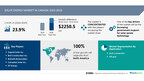
NEW YORK, Feb. 5, 2025 /PRNewswire/ — Report with market evolution powered by AI – The solar energy market in canada size is estimated to grow by USD 2.25 billion from 2025-2029, according to Technavio. The market is estimated to grow at a CAGR of  23.9%  during the forecast period. Increasing government support for solar power technology is driving market growth, with a trend towards growing adoption of pay-as-you-go (payg) model. However, competition from alternative energy sources  poses a challenge. Key market players include Azgard Solar Inc., Bird Construction Inc., BluEarth Renewables, Canadian Solar Inc., DP Energy, Gorkon Industries, Great Canadian Solar Ltd., Greengate Power Corp., HELIENE Inc., miEnergy Inc., PureSky Community Solar Inc., Quadra Power Inc., and VCT Group Inc..

Key insights into market evolution with AI-powered analysis. Explore trends, segmentation, and growth drivers- View Free Sample PDF

Solar Energy Market In Canada Scope

Report Coverage

Details

Base year

2024

Historic period

2019 – 2022

Forecast period

2025-2029

Growth momentum & CAGR

Accelerate at a CAGR of 23.9%

Market growth 2025-2029

USD 2250.5 million

Market structure

Concentrated

YoY growth 2022-2023 (%)

20.1

Regional analysis

Canada

Performing market contribution

North America at 100%

Key countries

Canada

Key companies profiled

Azgard Solar Inc., Bird Construction Inc., BluEarth Renewables, Canadian Solar Inc., DP Energy, Gorkon Industries, Great Canadian Solar Ltd., Greengate Power Corp., HELIENE Inc., miEnergy Inc., PureSky Community Solar Inc., Quadra Power Inc., and VCT Group Inc.

Market Driver

Solar energy is a rapidly growing sector in Canada’s energy market, with renewables, including hydro, wind power, and solar, accounting for over 80% of new electricity capacity additions in 2020. The solar industry is gaining momentum as the world moves towards net-zero emissions and the Paris Agreement. Solar energy harnesses the power of the sun through photovoltaic cells, converting radiation into electricity. The market is witnessing a shift from traditional fossil fuels like coal to cleaner, low-cost energy generation. BP’s latest report predicts solar energy will overtake hydro as the largest renewable energy source by 2025. Solar energy is not just about electricity but also heating, making it a versatile solution for both rural and urban communities. The Canadian solar market faces challenges such as access to electricity in remote areas, where diesel generators are commonly used. However, solar energy offers self-sufficiency and reduces environmental pollution and carbon footprint. The solar industry requires technical expertise, trained personnel for installation, maintenance, and operation. Government subsidies and grid connections are crucial for the growth of this sector. Solar technology continues to evolve, with advancements in monocrystalline, polycrystalline, cadmium telluride, and amorphous silicon cells. Energy storage devices and power conversion technologies improve efficiency and ensure a consistent power supply. The solar industry’s future lies in its ability to adapt to the evolving energy landscape, including the growing demand for EV charging infrastructure. 

Over the past decade, the demand for improving energy access has been a significant focus across Canada. The decreasing costs of decentralized renewable technologies, such as solar photovoltaic (PV) and energy storage, have made off-grid technologies more affordable. However, the high upfront costs of building and financing renewable-based mini-grids have been a barrier for households. To address this issue, a new business model called Pay-As-You-Go (PAYG) has emerged. Under this model, customers make a small initial payment and follow up with predetermined installments, typically made via mobile phones. If a customer fails to make a payment or is overdue, the system is designed to be disabled. This innovative financing solution has the potential to accelerate the adoption of solar systems in Canada, particularly for off-grid and under-served communities. 

Request Sample of our comprehensive report now to stay ahead in the AI-driven market evolution!

 Market Challenges

•         The Solar Energy Market in Canada faces challenges from fossil fuels, hydro, and wind power generation as traditional energy sources. The shift towards Net-Zero Emissions and the Paris Agreement pushes for more Renewable Energy Sources. Solar energy, derived from the Sun, is a promising solution for electricity and heat generation. However, radiation levels and climate change pose challenges. Solar energy’s efficiency can be improved through Photovoltaic cells, including monocrystalline, polycrystalline, cadmium telluride, and amorphous silicon cells. BP reports that solar energy will be the cheapest energy source by 2025. Challenges include installation, storage, and power conversion devices. Coal, hydro, and diesel generators contribute to greenhouse gas emissions, environmental pollution, and population growth’s carbon footprint. Government subsidies and access to electricity are crucial for rural communities. Grid connections, technical expertise, trained personnel, maintenance, and operation require investment. Self-sufficiency through solar energy technology is a goal, but EV charging infrastructure and end-use efficiency must also be considered.

•         The solar energy market in Canada has seen significant growth, yet fossil fuels continue to dominate the country’s energy production and consumption. According to the International Energy Agency (IEA), over 80% of Canada’s energy comes from conventional sources like oil, coal, and natural gas. Establishing renewable energy farms for solar power generation involves substantial costs, and the power output from these sources is not yet equivalent to that of fossil fuels.

Discover how AI is revolutionizing market trends- Get your access now!

Segment Overview 

This solar energy market in Canada report extensively covers market segmentation by  

ApplicationGrid-connectedOff-gridEnd-userUtilityRooftopTechnologyPhotovoltaic SystemsConcentrated Solar Power SystemsGeographyNorth America

1.1 Grid-connected-  The grid-connected segment of Canada’s solar energy market is projected to dominate the industry in 2024, driven by the increasing adoption of renewable energy sources, electric mobility, and digitalization of the grid. Grid-connected solar PV systems directly supply solar energy to buildings without energy storage systems, with surplus energy fed back to the grid and shortfalls imported. Cost reductions in solar PV systems make them a cost-effective electricity solution. The Canadian government’s energy policies support solar PV installation in residential homes and businesses, with plans to add 2 GW of renewable energy, including solar, to the grid by 2030. These factors will significantly fuel the growth of the grid-connected segment of the solar energy market in Canada.

Download a Sample of our comprehensive report today to discover how AI-driven innovations are reshaping competitive dynamics

Research Analysis

Solar energy is a renewable and clean source of electricity that harnesses the power of the sun through photovoltaic cells. It is becoming an increasingly popular alternative to traditional fossil fuel-based energy sources due to its environmental benefits and potential for low-cost energy generation. Solar energy is a key component of the transition to renewable energy sources and net-zero emissions, as outlined in the Paris Agreement and the global effort to combat climate change. The solar energy market in Canada is growing, with advancements in technology leading to more efficient solar panels and the integration of energy storage devices and power conversion devices. However, the transition to solar energy also presents challenges, such as the need for technical expertise and trained personnel for installation, maintenance, and operation. Access to electricity, particularly in rural communities, is a significant issue in Canada. Solar energy offers a solution, with the potential to provide power to remote areas through the use of solar panels and battery storage. However, the initial cost of installation and grid connections can be a barrier. Government subsidies and incentives can help make solar energy more accessible and affordable for Canadians. The use of solar energy also reduces greenhouse gas emissions and decreases environmental pollution, making it an attractive option for those looking to reduce their carbon footprint. Despite these benefits, solar energy still faces competition from traditional energy sources such as coal and diesel generators. However, as the technology continues to advance and the cost of solar energy continues to decrease, it is poised to become a major player in Canada’s energy market.

Market Research Overview

Solar energy is a renewable energy source that harnesses the power of the sun using photovoltaic cells to generate electricity and provide heat. Canada, with its abundant sunlight and commitment to net-zero emissions, is an ideal market for solar energy. Solar energy production does not emit greenhouse gases, making it an environmentally friendly alternative to fossil fuels, hydro, and other traditional energy sources. The solar industry in Canada is growing, driven by the need to reduce carbon footprint, access to electricity in rural communities, and the increasing popularity of electric vehicles (EVs). Solar energy can be generated using various technologies such as monocrystalline, polycrystalline, cadmium telluride, and amorphous silicon cells. The installation, operation, and maintenance of solar energy systems require technical expertise, trained personnel, and access to grid connections. Energy storage devices and power conversion devices are essential for maximizing the efficiency of solar energy systems. The Canadian government offers subsidies to encourage the adoption of renewable energy sources and reduce reliance on coal and diesel generators. The solar industry also offers opportunities for self-sufficiency and reducing environmental pollution. The Paris Agreement and the global focus on climate change further highlight the importance of solar energy in the transition to a low-carbon economy.

Table of Contents:

1 Executive Summary
2 Market Landscape
3 Market Sizing
4 Historic Market Size
5 Five Forces Analysis
6 Market Segmentation

ApplicationGrid-connectedOff-gridEnd-userUtilityRooftopTechnologyPhotovoltaic SystemsConcentrated Solar Power SystemsGeographyNorth America

7 Customer Landscape
8 Geographic Landscape
9 Drivers, Challenges, and Trends
10 Company Landscape
11 Company Analysis
12 Appendix

About Technavio

Technavio is a leading global technology research and advisory company. Their research and analysis focuses on emerging market trends and provides actionable insights to help businesses identify market opportunities and develop effective strategies to optimize their market positions.

With over 500 specialized analysts, Technavio’s report library consists of more than 17,000 reports and counting, covering 800 technologies, spanning across 50 countries. Their client base consists of enterprises of all sizes, including more than 100 Fortune 500 companies. This growing client base relies on Technavio’s comprehensive coverage, extensive research, and actionable market insights to identify opportunities in existing and potential markets and assess their competitive positions within changing market scenarios.

Contacts

Technavio Research
Jesse Maida
Media & Marketing Executive
US: +1 844 364 1100
UK: +44 203 893 3200
Email: media@technavio.com
Website: www.technavio.com/

View original content to download multimedia:https://www.prnewswire.com/news-releases/solar-energy-market-in-canada-to-grow-by-usd-2-25-billion-from-2025-2029–government-support-for-solar-technology-boosting-growth-ais-impact-on-transformation—technavio-302368256.html

SOURCE Technavio

Continue Reading
Click to comment

Leave a Reply

Your email address will not be published. Required fields are marked *

Technology

Swiss Hill Advisors Celebrates More Than a Decade as a Specialized Force in Alternative Investment Advisory

Published

on

By

Boutique placement agent has built a distinctive practice at the intersection of specialty finance, private credit, and emerging manager development

NEW YORK, July 20, 2026 /PRNewswire/ — Swiss Hill Advisors, a boutique placement agent and advisory firm, marks more than ten years of operations, having built a reputation as one of the alternative investment industry’s most trusted advisors at the intersection of specialty finance, private credit, and emerging manager development.

This milestone is an opportunity to recognize that Swiss Hill Advisors has quietly been an active and consequential participant in some of the market’s more complex capital formation and direct investment activity throughout its history. It was built around a premise that executing successful direct investment transactions is often the most effective pathway to building the credibility and track record necessary for a successful institutional fundraise. While many placement agents focus exclusively on fund marketing, Swiss Hill Advisors has consistently worked across both direct deal execution and broader capital formation mandates.

Swiss Hill Advisors formed the majority of its practice around specialty finance, a segment of the alternative investment market characterized by structural complexity, niche underwriting expertise, and high barriers to entry. Specialty finance encompasses areas including asset-backed funding, equipment finance, residential transition loans (“RTLs”), insurance-linked strategies, and other credit-adjacent structures that require deep sector knowledge to evaluate and market effectively. Swiss Hill Advisors has developed particular expertise in helping managers articulate their strategies to institutional audiences in ways that are accurate, compelling, and compliant. Beyond private credit, the firm has worked with managers across a broader range of alternative strategies, including equity-focused and activist investment approaches.

Swiss Hill Advisors was founded by two professionals, Founding Partner Richard Lieberman and Co-Founder and Partner Jeff Mettel, whose backgrounds span the full arc of the alternative investment industry, from institutional investment banking and prime brokerage to fund marketing and allocator relationships.

Lieberman began his career at Bear Stearns Asset Management and later Ramius where he received direct exposure to how sophisticated institutional capital is allocated, managed, and communicated across market cycles. He subsequently became the founding head of marketing at Atalaya Capital Management, a New York-based alternative credit and specialty finance manager, where he helped build the firm’s institutional investor base from the ground up. His work during that period helped establish Atalaya as a credible institutional manager at a time when private credit was still a nascent and poorly understood asset class. Lieberman is widely regarded as one of the early practitioners of institutional private credit marketing, having developed outreach and investor communications frameworks for drawdown-format credit funds at a time when few such vehicles existed.

Mettel brings a complementary background spanning investment banking, institutional hedge fund allocation, and prime brokerage capital introductions. Earlier in his career, Mettel worked as an investment banker, advising on complex structured finance transactions across a range of industries and capital structures. He subsequently moved to the buy side as a hedge fund allocator, joining Muirfield Capital Management at its founding. Muirfield grew to over $1.25 billion in assets under management, and Mettel led the firm’s investment team, evaluating and allocating to managers across credit, equity, and multi-strategy platforms. That experience gave him direct insight into the due diligence process and decision-making frameworks of sophisticated institutional investors.

Most notably, Mettel led Capital Introductions for BNP Paribas Americas, the North American prime brokerage capital introductions business of one of the world’s largest financial institutions. In that role, he was responsible for connecting hedge fund managers with institutional allocators across pensions, endowments, family offices, and sovereign wealth funds, building deep and durable relationships on both sides of the capital formation equation.

Together, Lieberman and Mettel bring a combination of capabilities that is rare in the placement agent landscape, including deep expertise in complex credit and specialty finance structures, direct experience on both the buy side and sell side, established relationships across the institutional allocator community, and a practical, execution-oriented philosophy built around the belief that credibility is earned through results, not marketing.

Perhaps the most deliberate aspect of Swiss Hill Advisors’ approach is what the firm chooses not to do. In an industry where visibility and brand recognition are often treated as proxies for credibility, the firm has consistently resisted the impulse to seek the spotlight. Swiss Hill Advisors sees its role as setting the stage, building the narrative, structuring the opportunity, and opening the right doors, so that when a manager steps in front of an institutional audience, everything is in place for them to succeed on their own terms. That orientation defines how Swiss Hill Advisors has operated throughout its history and how it intends to operate going forward.

About Swiss Hill Advisors
Swiss Hill Advisors was founded in 2015 and specializes in the placement of alternative investments, co-investments, and sponsored and non-sponsored direct investment opportunities to institutional investors. Investments focus primarily on niche, non-correlated opportunities and private credit. The team has a vast network and experience raising assets from endowments, foundations, pensions, family offices, RIA’s and consultants. Its approach is based on identifying and evaluating high quality managers with firmly established investment philosophies, processes and competitive advantages.

Media Contact
Matt Bono
JConnelly
mbono@jconnelly.com
973-590-9110

View original content to download multimedia:https://www.prnewswire.com/news-releases/swiss-hill-advisors-celebrates-more-than-a-decade-as-a-specialized-force-in-alternative-investment-advisory-302829787.html

SOURCE Swiss Hill Advisors

Continue Reading

Technology

The World Cup’s winning lineup: pizza with fried bites to share, beer and wine in the fridge, and the busiest minute in delivery history

Published

on

By

Deliverect, the AI-driven restaurant technology company that has powered more than 1.5 billion orders to date, recorded the busiest minute in its history just before kickoff in the Argentina vs Spain final

NEW YORK, July 20, 2026 /PRNewswire/ — The World Cup has crowned Spain as the new rulers of world football. It has also confirmed food delivery as a cultural ritual of our time. Analysis of millions of delivery orders throughout the tournament, carried out by Deliverect, the global technology company behind nearly all of the world’s biggest fast food chains, reveals a phenomenon of historic proportions: matches that lifted orders by up to 25% in some of the world’s biggest delivery markets during the US-hosted World Cup, baskets that grew round after round, and one undisputed winner at the table, pizza.

The night every record fell

The story of Sunday night reads like a match report in itself. At 20:28, with the lineups confirmed and millions of fans heading for the sofa, a platform that has processed more than 1.5 billion orders over its history registered the busiest minute it has ever seen: for those sixty seconds, orders flowed in at more than three times the platform’s average pace for 2026, a 209% surge above a normal minute of the year. No rainy Friday night and no New Year’s Eve had ever come close.

The record minute was not the only landmark. The final also produced the biggest baskets of the entire tournament: in the host market of the winning side, the average order during the match was 17% larger than on a normal Sunday. Fans did not order more often; they ordered bigger, because each order fed a gathering rather than a person. The final was not improvised. It was planned, friends were summoned, and the table was full before the anthems.

Pizza and bites to share, the kings of the World Cup

A month of match nights did not just lift orders; it reshaped them, and two patterns deepened round after round.

The first: the baskets kept growing. In the group stage, England’s matches nudged the average order up by low single digits. By the semifinals, in-match baskets were running 7% larger in the UK and 16% larger in Spain. By the final, they peaked at 17%: over five weeks, the World Cup turned the individual dinner order into a group order, and it never went back.

The second: the stock-up ritual took hold. Across every market and every round, the hour before kickoff became the busiest of the night: up 17% at England’s opening match, 53% before Spain’s semifinal and 30% before the final, the exact window of the record minute. At England’s semifinal alone, that pre-kickoff hour brought in almost 8,000 extra orders, a 35% jump on a normal evening. And what went into those orders tells its own story: combinations of beer and wine nearly doubled, beer with snacks grew 94%, and the tournament’s signature pairing, pizza with fried bites to share, rose 95% to more than 1,200 orders in a single match night. Fans stocked the fridge like managers naming a squad, and restaurants felt it in the till: England’s three matches alone generated nearly £1 million in extra takeaway revenue.

Underneath those patterns sits a deeper change in the relationship between football and food. On match nights, the ordinary dinner disappears, replaced by a format that is shared, informal and eaten without cutlery.

Beer deliveries rose between 59% and 80% on England’s football nights, cider grew 43%, and Spain turned every match into a tapas table: dips and sauces jumped 88% during the semifinal and another 49% on final night, alongside pantry items up 32%, while single serve formats such as soft drinks and burgers went backwards.

The mirror image is just as telling. As finger food surged, knife and fork dining collapsed on match nights: pasta fell by as much as 17%, sushi dropped 36% in France, hot sandwiches slid 18% in the UK, and even the burger, the perennial king of delivery, retreated on England’s football nights. A match does not add a meal to the day. It replaces the way an entire country eats dinner.

The lift, meanwhile, reached almost everyone. On England’s Ghana match day, every one of the UK’s ten biggest delivery chains recorded more orders than normal, and on Spain’s semifinal day not a single major food category declined: football raised everything on the menu at once.

The tournament’s winner at the table

If the tournament had a winner at the table, it was pizza, and its victory came with its own escalation curve. In the UK, pizza orders during England’s matches climbed from 63% above normal at the opening game against Croatia, to 68% against Ghana, to 79% at the semifinal, while France matched the pattern at 74% during its own semifinal,  with specialty varieties more than doubling on the biggest nights. In real terms, Britain alone ordered close to 34,000 extra pizzas across England’s three match nights, 13,000 of them during the semifinal itself, roughly 55 extra pizzas every minute of the match window. No other dish came close to matching that consistency across markets and rounds.

There is also proof that pizza’s reign is structural rather than a quirk of the calendar: the contrast with ice cream. On the warm June evening of England vs Ghana, ice cream soared 43%; on the July semifinal night, it fell 17%. The match night treat follows the thermometer. Pizza does not. It is the one constant of every football night, in every country.

“For ninety minutes the world stopped, but restaurants did not. What we saw during this World Cup goes beyond a record: ordering food has become part of how the world gathers to watch football, as much a part of the ritual as the shirt or the anthem,” said Zhong Xu, CEO of Deliverect.

Methodology

The analysis compares each match day with the average of the four most recent same weekdays in each market, in local time. The match window runs from one hour before kickoff to three hours after. All figures are anonymous aggregates across many restaurants and were independently verified against order level data; no individual client is identified.

About Deliverect

Deliverect is a global restaurant technology company that connects digital ordering channels directly to in-store operations, serving more than 80,000 restaurant locations worldwide. With an API-first platform and over 1,000 certified integrations, Deliverect streamlines digital ordering across carryout, delivery, catering, and in-store fulfillment. It is the only digital ordering platform to have earned DoorDash’s Excellent integration rating. By leveraging AI-driven innovation, Deliverect empowers restaurants to anticipate demand, recover lost revenue, and grow smarter at scale. The company processes 30 million API calls daily, has powered 1.5+ billion orders to date, and is trusted by many of the world’s largest and most innovative restaurant brands. To learn more, visit deliverect.com.

Press contact

Oier Fano Dadebat, Content Marketing Manager, PR & Communications, oier.fano@deliverect.com

View original content to download multimedia:https://www.prnewswire.co.uk/news-releases/the-world-cups-winning-lineup-pizza-with-fried-bites-to-share-beer-and-wine-in-the-fridge-and-the-busiest-minute-in-delivery-history-302829786.html

Continue Reading

Technology

Motorola Brings the First-Ever razr Wheel to Lollapalooza 2026

Published

on

By

Motorola, in partnership with Live Nation, invites festivalgoers to rise above the music and experience Chicago’s skyline like never before during Lollapalooza 2026.

CHICAGO, July 20, 2026 /PRNewswire/ — Motorola is taking Lollapalooza to new heights with the debut of the razr Wheel, a first-of-its-kind branded Ferris wheel arriving in the heart of Grant Park during this year’s festival. In partnership with Live Nation, Motorola will bring an unforgettable new attraction to one of the world’s most iconic music festivals, inviting fans to experience the brand’s hometown from a whole new perspective.

Located at the center of the festival grounds, the razr Wheel will give Lollapalooza attendees the opportunity to step away from the crowds, take in sweeping views of the Chicago skyline, and capture memorable moments with friends high above the festival. Inspired by the spirit of motorola razr –  a device built around self-expression, creativity, and connection – the attraction celebrates the moments that are worth flipping for.

The first-ever razr Wheel reflects the brand’s commitment to extend beyond technology and into the cultural moments people care about most. By bringing together entertainment, innovation and community, Motorola continues to inspire people to connect, create and share experiences in new ways.

Throughout Lollapalooza weekend, festival attendees can visit the razr Wheel for complimentary rides and take in panoramic views of the festival grounds and Chicago skyline. Fans can share their experience using #MakeItIconic and follow Motorola on Instagram, TikTok, and Snapchat for additional content and behind-the-scenes moments from the festival.

In celebration of Lollapalooza as a cultural staple, the company is giving fans the chance to attend the festival in VIP style through a sweepstakes offering two winners the opportunity to each receive two one-day VIP tickets to Lollapalooza, along with a 2026 motorola razr device. Enter now for a chance to win, and see here for official sweepstakes details and entry information.

With Lollapalooza welcoming hundreds of thousands of music fans to Chicago each summer, the razr Wheel will serve as a must-see destination within the festival – creating a memorable experience for attendees and a new way to celebrate the city, the culture and the moments that bring people together.

For more information about Motorola and its latest innovations, visit www.motorola.com.

Gianna Lapasso; lapassog@motorola.com

View original content to download multimedia:https://www.prnewswire.com/news-releases/motorola-brings-the-first-ever-razr-wheel-to-lollapalooza-2026-302829790.html

SOURCE Motorola Mobility, Inc

Continue Reading

Trending