Connect with us

Technology

Education Apps Market to Grow by USD 6.08 Billion (2025-2029), Boosted by Government Initiatives for Digital Learning, AI Impact on Market Trends – Technavio

Published

on

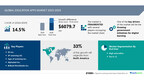
NEW YORK, Feb. 6, 2025 /PRNewswire/ — Report on how AI is redefining market landscape – The global education apps market size is estimated to grow by USD 6.08 billion from 2025-2029, according to Technavio. The market is estimated to grow at a CAGR of 14.5% during the forecast period. Growing government initiatives for digital learning is driving market growth, with a trend towards growing focus on wearable technology. However, concerns related to data security and privacy in education apps poses a challenge. Key market players include 2U Inc., 3P Learning Ltd., Age of Learning Inc., Alphabet Inc., Brilliant Worldwide Inc., Chegg Inc., Coursera Inc., Duolingo Inc., Epic Creations Inc., Hologo World Inc., IXL Learning Inc., Khan Academy Inc., Lumos Labs Inc., Memrise Ltd., Microsoft Corp, Quizlet Inc., Sololearn Inc., Udemy Inc., UMU Technology CO. LTD., and WizIQ Inc..

Key insights into market evolution with AI-powered analysis. Explore trends, segmentation, and growth drivers- View Free Sample PDF

Education Apps Market Scope

Report Coverage

Details

Base year

2024

Historic period

2019 – 2023

Forecast period

2025-2029

Growth momentum & CAGR

Accelerate at a CAGR of 14.5%

Market growth 2025-2029

USD 6079.7 million

Market structure

Fragmented

YoY growth 2022-2023 (%)

12.4

Regional analysis

North America, Europe, APAC, South America, and Middle East and Africa

Performing market contribution

North America at 33%

Key countries

US, China, UK, Germany, India, Canada, France, Japan, Brazil, and Italy

Key companies profiled

2U Inc., 3P Learning Ltd., Age of Learning Inc., Alphabet Inc., Brilliant Worldwide Inc., Chegg Inc., Coursera Inc., Duolingo Inc., Epic Creations Inc., Hologo World Inc., IXL Learning Inc., Khan Academy Inc., Lumos Labs Inc., Memrise Ltd., Microsoft Corp, Quizlet Inc., Sololearn Inc., Udemy Inc., UMU Technology CO. LTD., and WizIQ Inc.

Market Driver

The education apps market is thriving with trends like AI chatbots, e-games, blended learning, personalized learning, and gamification. Science, social studies, STEM subjects, language arts, and even arts are now being taught through adaptive learning apps. AI and machine learning are driving the development of cutting-edge technology in education software. Higher education, K-12, corporate training, and test preparation are major sectors benefiting from e-learning. Flexibility and accessibility are key consumer preferences, making cloud-based and mobile devices essential. However, data privacy concerns and limited internet accessibility are challenges. Established players dominate, but innovative startups offer unique features and user engagement through social learning environments. Education apps cater to various subjects and levels, providing flexible learning options and progress tracking. Smartphone penetration continues to drive growth in the digital education space. 

Wearable technology significantly contributes to the education industry by enhancing student engagement and boosting learning focus. These devices facilitate communication between teachers and students, enabling the sharing of ideas, implementing processes, and exchanging feedback. Wearable smart devices, such as smartwatches and glasses, allow users to download and use educational apps to learn various subjects. The availability of audio and video files for offline viewing and cloud storage increases the appeal of these devices for education. Furthermore, wearable devices’ compatibility with smartphones and other electronic gadgets broadens their reach in the global education apps market. 

Request Sample of our comprehensive report now to stay ahead in the AI-driven market evolution!

Market Challenges

The education apps market is witnessing significant growth with the integration of AI chatbots, e-games, blended learning, personalized learning, and gamification. These technologies cater to various subjects like science, social studies, STEM, language arts, and more. Adaptive learning apps using machine learning and AI are popular in K-12, higher education, and corporate training. Gamification and social learning environments enhance user engagement. Flexibility and accessibility are key benefits, with cloud-based and mobile devices enabling learning on-the-go. However, data privacy concerns and market saturation pose challenges. Established players offer unique features, but innovative startups continue to disrupt the digital education space with cutting-edge technology. Limited internet accessibility remains a concern, especially in rural areas. Progress tracking and test preparation apps are in demand, along with tutoring and language learning apps. The market is diverse, catering to consumer preferences, upskilling, and remote learning needs. Despite challenges, the future of education apps looks promising with advances in technology and the flexibility they offer.The education apps market faces substantial hurdles due to data security and privacy concerns. These apps collect and store sensitive student information, such as personal details, academic records, and usage patterns. This data is valuable to cybercriminals, increasing the risk of data breaches and unauthorized access. Instances of privacy violations can damage user trust and lead to legal repercussions for developers and educational institutions. Additionally, the regulatory landscape for data protection differs globally, adding complexity to compliance requirements. Education app developers must prioritize data security measures and adhere to various data protection regulations to mitigate risks and maintain user trust.

Discover how AI is revolutionizing market trends- Get your access now!

Segment Overview 

This education apps market report extensively covers market segmentation by

End-userHigh EducationPre K-12ProductWeb-basedMobile-basedGeographyNorth AmericaEuropeAPACSouth AmericaMiddle East And AfricaApp TypeLearning Management Systems (LMS)Adaptive Learning AppsEducational GamesAssessment And GradingDelivery ModeSaaS (Software As A Service)On-PremiseCloud-BasedTarget AudienceStudentsTeachersParentsAdministrators

1.1 High education- The higher education segment, valued at USD 1.72 billion in 2019, is led by key players like Coursera, known for its online courses and degree programs, and Microsoft, which offers professional certificates and courses from top global universities. These companies are driving innovation by integrating advanced technologies such as artificial intelligence, data analytics, and virtual reality to enhance the learning experience. With rising smartphone penetration and limited internet access, educational apps have become crucial tools for students, further saturating the market. Features like progress tracking and personalized learning are making these apps indispensable, fueling the segment’s growth during the forecast period.

Download a Sample of our comprehensive report today to discover how AI-driven innovations are reshaping competitive dynamics

Research Analysis

The Education Apps Market is a dynamic and innovative sector, focused on delivering inclusive learning opportunities to students worldwide. It encompasses various trends such as teacher training, flipped classroom, global education, microlearning, and digital textbooks. Personalized learning platforms, educational videos, and virtual reality learning offer and interactive experiences. Educational equity is a priority, with remote learning tools and open educational resources ensuring access to quality education for all. Data-driven learning and learning analytics help track student progress and improve student success. Edtech startups bring innovation, while online courses and curriculum development cater to diverse learning needs. Virtual learning environments, online tutoring services, and learning management systems streamline education delivery. Educational podcasts and future-focused learning analytics tools enhance the learning experience. The market continues to evolve, shaping the future of education.

Market Research Overview

The Education Apps Market is experiencing significant growth as technology advances and consumer preferences shift towards flexible, personalized learning solutions. AI chatbots, e-games, and gamification are transforming the learning experience, making education more engaging and effective. Blended learning and adaptive learning apps are revolutionizing K-12 and higher education, allowing for personalized instruction and progress tracking. STEM subjects, language arts, and social studies are popular areas of focus, with machine learning and AI enabling adaptive content delivery. Cloud-based, mobile-friendly education apps offer flexibility and accessibility, making learning possible anytime, anywhere. Upskilling and corporate training are also benefiting from this trend, with language learning apps and test preparation tools leading the way. However, data privacy concerns and limited internet accessibility remain challenges. Established players and innovative startups alike are investing in cutting-edge technology to meet consumer demands, offering unique features and social learning environments. The digital education space is constantly evolving, with remote learning and flexible education options becoming increasingly important.

Table of Contents:

1 Executive Summary
2 Market Landscape
3 Market Sizing
4 Historic Market Size
5 Five Forces Analysis
6 Market Segmentation

End-userHigh EducationPre K-12ProductWeb-basedMobile-basedGeographyNorth AmericaEuropeAPACSouth AmericaMiddle East And AfricaApp TypeLearning Management Systems (LMS)Adaptive Learning AppsEducational GamesAssessment And GradingDelivery ModeSaaS (Software As A Service)On-PremiseCloud-BasedTarget AudienceStudentsTeachersParentsAdministrators

7 Customer Landscape
8 Geographic Landscape
9 Drivers, Challenges, and Trends
10 Company Landscape
11 Company Analysis
12 Appendix

About Technavio

Technavio is a leading global technology research and advisory company. Their research and analysis focuses on emerging market trends and provides actionable insights to help businesses identify market opportunities and develop effective strategies to optimize their market positions.

With over 500 specialized analysts, Technavio’s report library consists of more than 17,000 reports and counting, covering 800 technologies, spanning across 50 countries. Their client base consists of enterprises of all sizes, including more than 100 Fortune 500 companies. This growing client base relies on Technavio’s comprehensive coverage, extensive research, and actionable market insights to identify opportunities in existing and potential markets and assess their competitive positions within changing market scenarios.

Contacts

Technavio Research
Jesse Maida
Media & Marketing Executive
US: +1 844 364 1100
UK: +44 203 893 3200
Email: media@technavio.com
Website: www.technavio.com/

View original content to download multimedia:https://www.prnewswire.com/news-releases/education-apps-market-to-grow-by-usd-6-08-billion-2025-2029-boosted-by-government-initiatives-for-digital-learning-ai-impact-on-market-trends—technavio-302370191.html

SOURCE Technavio

Continue Reading

Technology

Trimble for Government Achieves ‘Initial Implementation’ Status for FedRAMP Class C (Moderate) Certification

Published

on

By

Milestone accelerates secure cloud adoption for federal, state and local entities managing infrastructure, spatial data and capital assets 

WESTMINSTER, Colo., Oct. 20, 2026 /PRNewswire/ — Trimble today announced that Trimble for Government is listed as ‘Initial Implementation’ status for Federal Risk and Authorization Management Program (FedRAMP®) Class C (Moderate) certification and is now listed on the FedRAMP Marketplace. In conjunction with seeking FedRAMP certification, Trimble is also pursuing GovRAMP authorization to support state, local and education (SLED) customers with reciprocal cybersecurity compliance standards.

This dual milestone marks a critical step forward in delivering a software as a service (SaaS) cloud environment built within a secure Government Community Cloud. Designed specifically for U.S. Federal Government departments, state and local agencies, and defense and civilian contractors, Trimble for Government provides a unified ecosystem for managing infrastructure, spatial data, capital projects, permitting and facility assets across their entire lifecycle.

Achieving FedRAMP Class C (Moderate) and GovRAMP alignment will enable public sector entities and Department of Defense (DoD) contractors to comply with stringent security mandates — including Cybersecurity Maturity Model Certification (CMMC) alignment — while modernizing digital engineering and asset management.

“Federal, state and local agencies face the dual challenge of modernizing critical infrastructure while maintaining uncompromising cybersecurity standards,” said Mark Schwartz, group president, AECO at Trimble. “Achieving ‘Initial Assessment’ status reflects our commitment to delivering mission-critical spatial, capital project and asset management capabilities inside a secure, audit-ready cloud boundary across all levels of government.”

Integrated cloud solutions built for government operations

The in-scope environment brings together Trimble’s proven field execution, asset, project and permitting software into four modular packages designed to support specific public sector outcomes:

Trimble® Field Collaboration: Delivers field data services using foundational spatial database infrastructure and GIS integration to support high-security field operations, map assets, and enable seamless field-to-cloud workflows across Trimble’s core Field Systems portfolio.Trimble Project Management powered by Trimble ProjectSight® software: Connects design-to-build workflows in the field, providing precision data layout, project tracking, collaboration and quality assurance across construction projects.Trimble Asset Management powered by Trimble Unity™ Maintain software: Serves as a centralized facilities data core for federal, state, and local government agencies, military installations, and public infrastructure — such as public buildings, utilities, and transportation networks — to optimize maintenance and long-term capital planning.Trimble Permit Management powered by Trimble Unity Permit software: Streamlines end-to-end management of permitting, licensing, land use and infrastructure rights-of-way in a fully compliant cloud environment.

The unifying in-scope element across all four packages is the Trimble Connect® platform, providing collaboration and a common data environment (CDE) across the Trimble for Government platform.

With assessment processes underway, Trimble continues to advance toward full FedRAMP and GovRAMP authorizations to ensure public sector customers can innovate with confidence.

About Trimble
Trimble is a global technology company that connects the physical and digital worlds, transforming the ways work gets done. With relentless innovation in precise positioning, modeling and data analytics, Trimble enables essential industries including construction, geospatial and transportation. Whether it’s helping customers build and maintain infrastructure, design and construct buildings, optimize global supply chains or map the world, Trimble is at the forefront, driving productivity and progress. For more information about Trimble, visit: www.trimble.com.

GTRMB

View original content to download multimedia:https://www.prnewswire.com/news-releases/trimble-for-government-achieves-initial-implementation-status-for-fedramp-class-c-moderate-certification-302913499.html

SOURCE Trimble

Continue Reading

Technology

Delta Development Team and The Good Drone Company Awarded U.S. Army Contract for Aerial Blood Delivery

Published

on

By

TUCSON, Ariz., Oct. 20, 2026 /PRNewswire/ — Delta Development Team (DDT), a leader in prehospital blood storage and cold chain technology, and The Good Drone Company (GDC) have been awarded a U.S. Army contract to develop a drone-based blood delivery capability for the Army Blood Link (ABL) program.

The program is part of the broader Armed Services Blood Program (ASBP), which supplies blood products to U.S. military forces worldwide. Army Blood Link is designed to support battlefield medical logistics through rapid, temperature-controlled delivery of lifesaving blood products to the field, providing an additional resupply option when traditional ground transportation is unavailable, delayed, or unsafe. Under the contract, The Good Drone Company will provide two U.S.-built prototypes of its hybrid vertical takeoff and landing (VTOL) cargo drone, each designed to transport up to six units of blood, while DDT will provide the temperature-controlled storage capability through its Delta ICE 2L Smart Blood Cooler.

The companies are combining commercial off-the-shelf (COTS) technologies to create a U.S.-sourced aerial blood delivery system capable of transporting blood directly to the point of need.

To meet ABL program requirements, DDT will supply six Delta ICE 2L Smart Blood Coolers, each designed to maintain two units of blood within the required temperature range for three hours of aerial delivery in high-humidity environments with ambient temperatures ranging from 15°F to 120°F. Built-in temperature monitoring and data recording, along with Bluetooth and cellular connectivity, support cold-chain oversight and blood accountability. The program extends DDT’s blood storage and monitoring capabilities into aerial delivery.

“Getting blood to the point of need is only part of the challenge. It must also remain within the required temperature range throughout the journey,” said Montgomery Leija, CEO of Delta Development Team. “This program brings DDT’s experience in blood storage and cold chain management into a new operational environment, taking the blood supply chain from the ground to the air.”

The prototype system is designed to deliver blood within 10 meters of a designated target during both day and night operations. It will feature a communications range of up to 30 miles and semi-autonomous waypoint navigation. It is intended for single-person operation with minimal training and is built on GDC’s existing commercial cargo drone technology to accelerate development and fielding while meeting U.S.-sourcing requirements.

“We have seen strong interest in middle-mile drones in emerging markets for some time, from both public and private sector customers spanning healthcare to third-party logistics,” said Jake Vander Ploeg, CEO of The Good Drone Company. “This program is a great example of how the military is adopting commercial technology like our cargo drones to quickly test new ideas in the field without starting a full aircraft development program.”

The collaboration combines GDC’s expertise in commercial drone platforms and aerial delivery with DDT’s temperature-controlled blood storage and transport capabilities to support:

Rapid resupply: Delivering blood when conventional ground transportation is unavailable or unsafe.Cold chain protection: Maintaining required blood temperatures during aerial transport.U.S.-sourced capability: Supporting domestic defense supply chain objectives.Accelerated development: Combining GDC’s existing commercial cargo drone technology with DDT’s established blood storage solutions.

The ABL effort addresses the challenge of delivering critical medical supplies in contested and austere environments. When terrain, damaged infrastructure, or tactical conditions prevent conventional resupply, aerial delivery combined with temperature-controlled storage can expand options for getting lifesaving blood products to service members when and where they are needed.

About Delta Development Team

Delta Development Team (DDT) is a U.S.-based medical technology company headquartered in Tucson, Arizona, specializing in blood storage, transport, monitoring, and logistics solutions for military and prehospital environments. DDT develops technology designed to keep blood available, traceable, and mission-ready from the blood bank to the point of injury. Its portfolio includes the APRU 6L, Delta ICE 2L, TBS 40L, and BloodCOMM® blood management platform.

Media Contact: info@deltadevteam.com | www.deltadevteam.com

About The Good Drone Company

The Good Drone Company (GDC) is an aerospace company headquartered in Tempe, Arizona, that designs and builds autonomous hybrid VTOL cargo drones for middle-mile logistics. GDC’s aircraft take off and land vertically without a runway, carry up to 55 lb (25 kg) of payload, and fly more than 300 miles (500 km) at speeds up to 93 mph (150 km/h). GDC is deploying in Kenya to close the middle-mile transportation gap for public and private sector customers, working closely with its local partner ThatcherX and the Kenyan government to change how goods move around the country.

Media Contact: info@thegooddronecompany.com | www.thegooddronecompany.com

View original content to download multimedia:https://www.prnewswire.com/news-releases/delta-development-team-and-the-good-drone-company-awarded-us-army-contract-for-aerial-blood-delivery-302913294.html

SOURCE Delta Development Team

Continue Reading

Trending