Technology
AI Virtual Assistants Revolutionizing Industries | Market Set for 16.5% CAGR Growth – Valuates Reports
Published
2 years agoon
By
BANGALORE, India, March 17, 2025 /PRNewswire/ — AI Virtual Assistants Market is Segmented by Type (Text Interaction, Voice Interaction), by Application (Education Industry, Financial Industry, Medical Industry).
The Global Market for AI Virtual Assistants was estimated to be worth USD 720 Million in 2023 and is forecast to a readjusted size of USD 2450.1 Million by 2030 with a CAGR of 16.5% during the forecast period 2024-2030.
Claim Your Free Report: https://reports.valuates.com/request/sample/QYRE-Auto-35X10238/Global_AI_Virtual_Assistants_Market
Major Factors Driving the Growth of AI Virtual Assistants Market:
The AI Virtual Assistants Market continues to expand at a remarkable pace, reflecting evolving user expectations and the rising importance of digital transformation. Virtual assistants increasingly adopt advanced natural language understanding, deep learning algorithms, and data analytics to deliver personalized services. This growth is reinforced by strategic collaborations among tech giants, startups, and industry leaders seeking to gain a competitive edge. Moreover, widespread integration into devices and cloud-based platforms adds convenience and accessibility, making AI-driven interactions a staple in everyday life. As solution providers invest in improvements that enhance conversation fluency, accuracy, and security, AI assistants find broader applications across healthcare, finance, retail, and beyond. Overall, the market trajectory remains robust, driven by ongoing innovations and persistent consumer demand.
Unlock Insights: View Full Report Now! https://reports.valuates.com/market-reports/QYRE-Auto-35X10238/global-ai-virtual-assistants
TRENDS INFLUENCING THE GROWTH OF THE AI VIRTUAL ASSISTANTS MARKET:
Voice interaction capabilities play a vital role in propelling the AI Virtual Assistants Market by offering users a more natural and convenient communication channel. With advancements in speech recognition and processing, virtual assistants can accurately interpret commands, respond in real time, and learn from user habits. This personalized approach enhances customer experiences, encouraging more frequent usage in both consumer and enterprise settings. Additionally, voice interaction is increasingly integrated into smart home devices, smartphones, and automotive infotainment systems, accelerating widespread adoption. By reducing the reliance on manual input, voice-driven AI solutions save time, streamline tasks, and improve accessibility for differently abled users. As a result, voice-based AI interfaces serve as a major catalyst for market expansion.
Text interaction remains a significant contributor to the growth of the AI Virtual Assistants Market due to its flexibility and familiarity. Many users prefer typing messages or queries instead of speaking, especially in professional or quieter environments. Advanced natural language processing models allow virtual assistants to interpret text-based inputs accurately, facilitating instant responses or recommendations. This interactive method can be embedded within messaging apps, websites, or collaborative platforms, extending its reach and accessibility. By catering to varied linguistic preferences, text-based virtual assistants break down communication barriers and deliver personalized support. Moreover, continuous improvements in sentiment analysis and context understanding ensure more meaningful replies, further boosting user satisfaction. Consequently, text interaction solutions foster robust market expansion worldwide.
The healthcare industry drives the AI Virtual Assistants Market by deploying smart tools that enhance patient care, streamline administrative workflows, and facilitate data management. Virtual assistants equipped with medical expertise help schedule appointments, remind patients of medication regimens, and answer basic health-related queries. By automating these tasks, healthcare professionals can focus on more critical aspects of patient treatment. Additionally, AI-powered assistants offer chat-based triage, directing individuals to suitable care options or emergency services when required. Their capacity to analyze electronic health records accelerates data retrieval, enabling faster diagnostics. With patient-centered care at the forefront, healthcare organizations increasingly adopt AI assistants to reduce costs, minimize errors, and improve patient outcomes, bolstering the market’s growth trajectory.
Consumers today expect interactions tailored to their specific preferences and behaviors, and this need fuels the expansion of the AI Virtual Assistants Market. By analyzing user data, AI-based systems deliver customized recommendations, relevant updates, and proactive insights that cater to individual interests. Such experiences foster deeper engagement and brand loyalty, motivating businesses to invest in personalization technologies. Virtual assistants leverage machine learning algorithms to predict user requirements, streamline daily routines, and offer context-aware solutions. This approach not only saves time but also enhances satisfaction levels, boosting the likelihood of repeat usage. As personalization becomes a competitive differentiator across industries, AI virtual assistants stand out as indispensable tools, continually attracting fresh investments and accelerating market growth.
A strong emphasis on customer engagement propels the AI Virtual Assistants Market as businesses look for innovative ways to communicate with and support their audiences. Virtual assistants deliver quick, round-the-clock responses that foster higher levels of satisfaction, particularly for users seeking immediate problem resolution. Companies utilize chatbots and voice-driven assistants to guide customers through purchases, troubleshoot product issues, or gather feedback without the need for direct human intervention. This seamless integration not only cuts operational costs but also promotes consistent, high-quality service experiences. Furthermore, AI capabilities interpret user sentiments and intent, enabling continuous improvements in interaction strategies. As organizations recognize the importance of sustained customer relationships, AI virtual assistants become central to competitive advantage and revenue growth.
Claim Yours Now! https://reports.valuates.com/api/directpaytoken?rcode=QYRE-Auto-35X10238&lic=single-user
AI VIRTUAL ASSISTANTS MARKET SHARE:
Regional trends in the AI Virtual Assistants Market show strong adoption in developed areas such as North America and Europe, driven by high internet penetration, advanced digital infrastructures, and tech-savvy consumer bases. Asia-Pacific also exhibits significant momentum due to the rapid expansion of smartphone use, e-commerce platforms, and rising investments in AI research. In emerging markets, the growing popularity of virtual assistants is further supported by cost-effective devices and localized language processing capabilities. Companies aiming to capture untapped opportunities emphasize region-specific innovations, including cultural adaptation and partnerships with local service providers. As these tailored solutions gain traction, each region experiences unique growth trajectories, highlighting the global potential for AI virtual assistants across diverse economic and technological landscapes.
Key Companies:
AppleGOOGLE INCSAMSUNGAmazonHuaweiXiaomiAlibabaMicrosoftAudioburst
Purchase Regional Report: https://reports.valuates.com/market-reports/QYRE-Auto-35X10238/global-ai-virtual-assistants/5
SUBSCRIPTION
We have introduced a tailor-made subscription for our customers. Please leave a note in the Comment Section to know about our subscription plans.
DISCOVER MORE INSIGHTS: EXPLORE SIMILAR REPORTS!
– Intelligent Virtual Assistants Software Market
– Virtual Assistant market size is expected to reach USD 8613.5 Million by 2029, growing at a CAGR of 22.3% from 2023 to 2029.
– Health Intelligent Virtual Assistant Market
– Text-based Intelligent Virtual Assistant Market
– Intelligent Virtual Assistant Software market is projected to grow from USD 3708.8 Million in 2024 to USD 9636.3 Million by 2030, at a Compound Annual Growth Rate (CAGR) of 17.3% during the forecast period.
– Intelligent Virtual Assistant (IVA) Based Insurance Market
– Healthcare Intelligent Virtual Assistant Market
– Virtual Shopping Assistant market was valued at USD 581.5 Million in 2023 and is anticipated to reach USD 1578 Million by 2030, witnessing a CAGR of 16.7% during the forecast period 2024-2030.
– Intelligent Personal Assistant Software Market
– Intelligent Digital Voice Assistant market was valued at USD 2480 Million in 2023 and is anticipated to reach USD 9239.4 Million by 2030, witnessing a CAGR of 24.4% during the forecast period 2024-2030.
– Intelligent Personal Assistant (IPA) Solution Market was estimated to be worth USD 477 Million in 2023 and is forecast to a readjusted size of USD 798.8 Million by 2030 with a CAGR of 7.6% during the forecast period 2024-2030
DISCOVER OUR VISION: VISIT ABOUT US!
Valuates offers in-depth market insights into various industries. Our extensive report repository is constantly updated to meet your changing industry analysis needs.
Our team of market analysts can help you select the best report covering your industry. We understand your niche region-specific requirements and that’s why we offer customization of reports. With our customization in place, you can request for any particular information from a report that meets your market analysis needs.
To achieve a consistent view of the market, data is gathered from various primary and secondary sources, at each step, data triangulation methodologies are applied to reduce deviance and find a consistent view of the market. Each sample we share contains a detailed research methodology employed to generate the report. Please also reach our sales team to get the complete list of our data sources.
GET A FREE QUOTE
Valuates Reports
sales@valuates.com
For U.S. Toll-Free Call 1-(315)-215-3225
WhatsApp: +91-9945648335
Website: https://reports.valuates.com
Blog: https://valuatestrends.blogspot.com/
Pinterest: https://in.pinterest.com/valuatesreports/
Twitter: https://twitter.com/valuatesreports
Facebook: https://www.facebook.com/valuatesreports/
YouTube: https://www.youtube.com/@valuatesreports6753
https://www.facebook.com/valuateskorean
https://www.facebook.com/valuatesspanish
https://www.facebook.com/valuatesjapanese
https://valuatesreportspanish.blogspot.com/
https://valuateskorean.blogspot.com/
https://valuatesgerman.blogspot.com/
https://valuatesreportjapanese.blogspot.com/
Logo – https://mma.prnewswire.com/media/1082232/5219512/Valuates_Reports_Logo.jpg
View original content:https://www.prnewswire.co.uk/news-releases/ai-virtual-assistants-revolutionizing-industries–market-set-for-16-5-cagr-growth—valuates-reports-302403369.html
You may like
Technology
Asia Pacific accounts for a third of the world’s fraud networks as identity fraud grows more complex: Sumsub
Published
12 minutes agoon
November 18, 2026By
The Sumsub Identity Fraud Report finds that one in three fraud network connections in the region emerge only after users pass identity checks, pointing to verified accounts being sold or handed over to fraudsters after onboarding.
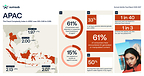
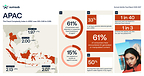
SINGAPORE, Nov. 18, 2026 /PRNewswire/ — Sumsub, the first AI-powered trust infrastructure, has released its Identity Fraud Report 2026-2027*. Now in its sixth edition, the report finds that Asia Pacific (APAC) accounted for a third (33%) of all fraud networks detected globally, more than any other region, and recorded close to a million confirmed fraud attempts, the highest of the six regions.
Fraud networks are coordinated groups of linked identities, accounts and devices run by organized fraudsters. Across APAC, around 1 in 40 approved people (2.4%) are linked to a detected fraud network, and around one-third of these links appear only after they have successfully passed identity verification. This suggests many legitimately verified accounts are later sold or handed over to fraudsters, often for use as money mules: accounts that receive and move stolen funds on a fraudster’s behalf.
Increasingly sophisticated tactics have led Sumsub to the creation of Sumsub’s new Fraud Complexity Index (FCI), which scores each confirmed case on the tooling, coordination and number of techniques behind it. This year, the report finds that the FCI rose from 2.1 to 2.2 globally.
Key APAC findings from the report include:
APAC hotspots for fraud networks: The Philippines recorded the largest number of networks in the region (17% of APAC networks), closely followed by India, while the largest single network was detected in Thailand, with 3,018 linked users.Fraud is becoming more complex: APAC’s FCI rose 14% to 2.09. Hong Kong’s FCI rose 7% to 1.97. APAC businesses also reported fraudster-operated AI agents (11%) more often than any other region.AI agents are adding new exposure: 61% of APAC businesses have detected or suspected fraud involving an AI agent, among the highest levels of any region. APAC businesses lead on limiting agent permissions and on suspending or revoking access, but these controls remain limited: only 15% can suspend or revoke an agent’s access, and 40% verify the human that authorizes one.Deepfake activity is spreading even where overall fraud is declining: Deepfakes rose sharply in Pakistan (+217%), the Philippines (+125%), India (+103%) and Hong Kong (+72%). In Indonesia, the overall fraud rate fell 64% while deepfakes increased 69%.APAC consumers are the most exposed to AI-generated content: 61% of APAC consumers have encountered AI-generated or manipulated content, the highest share of any region. Among those who experienced a fraud attempt, 44% said AI-generated content played a part.Singapore sees fewer, but more complex, attacks: Singapore’s fraud rate fell 36% year-on-year to 1.0%, while its FCI rose 9% to 2.13, above the APAC average. Deepfakes in Singapore fell 37%.Japan has the region’s highest and fastest-growing fraud rate: Japan’s fraud rate rose 219% year-on-year to 5.1%, the highest in APAC.Legitimate AI agents are being turned against businesses: Globally, among businesses that detected or suspected AI-agent fraud, 49% saw a legitimate agent manipulated by malicious instructions, and 30% saw an agent initiate a purchase, payment or transfer.
Verified accounts become building blocks for fraud networks
A single fraudulent account rarely tells the whole story. Fraud networks become visible through shared devices, contact details, payment instruments and document templates that an account-by-account review cannot show. Some of these links appear only after onboarding, as legitimately verified accounts are sold, compromised or otherwise repurposed. Passing KYC confirms an identity at a single point in time, but does not guarantee how an account will be used afterwards.
Businesses recognize the challenge, but few are equipped for it. 29% of APAC businesses say larger linked networks are making fraud harder to detect, the highest share of any region, yet only 25% use fraud network analysis.
In Southeast Asia, organized scam compounds have become highly mobile, relocating sites and reusing the same infrastructure when authorities intervene. Their human cost is significant: by April, Nepal reported that 612 of its citizens had been rescued from online scam centers across Southeast Asia and repatriated.
The impact is felt on both sides of the transaction. Among APAC businesses that experienced fraud, impersonation of a business, employee or supplier was the most commonly reported form of external fraud (42%), the highest of any region, followed by scam-induced payments (40%). Among APAC consumers, 79% experienced fraud in the past 12 months. Half of victims lost money, and 51% of those recovered none of it.
“A scam network is designed to look like a thousand ordinary people doing ordinary things. Every account is verified, and every document is real, because the person holding it was recruited, paid, or coerced into opening it, so nothing trips a wire on its own,” said Erin West, anti-scam advocate, former Deputy District Attorney and founder of Operation Shamrock, who has investigated scam compounds in Cambodia and Thailand. “Look past the person in front of you to the people behind them. The networks already cooperate beautifully with one another, and it’s time we caught up.”
Fraud grows more complex as it shifts across the region
While fraud rates fell in four of six regions globally, the FCI rose in all six. In APAC, it rose 14%, from 1.83 to 2.09.
Rather than rising everywhere at once, fraud is shifting between APAC markets and techniques. Japan’s fraud rate rose 219%, while Singapore’s fraud rate fell 36%, but its FCI rose 9%, above the regional average. In Hong Kong, fraud rate edged up 5% as deepfakes there rose 72%. APAC also leads all regions in the share of businesses saying deepfakes (31%) and synthetic identities (26%) are making fraud harder to detect while QR-code redirection (18%) and device or location manipulation (14%) were also reported more often than anywhere else.
The region also has strong foundations to respond. APAC leads every other region in digital identity wallet adoption: 50% of consumers have used a government digital identity wallet, and 65% say they would be comfortable using one. Banks and financial services remain the most trusted online category, with 74% of APAC consumers reporting high or full trust.
“Fraud in APAC isn’t rising everywhere at once. It is shifting between markets, techniques and stages of the customer lifecycle,” said Penny Chai, Vice President, APAC at Sumsub. “The region is home to some of the world’s most mature digital economies, alongside markets where digital services and organized scam operations are expanding quickly. Those markets are deeply connected, and fraud networks move easily between them. But APAC also has the tools to respond, from progressive regulation to world-leading digital identity adoption and high consumer trust in financial services. The task now is to use them together, so that trust doesn’t end at onboarding.”
Regulators and industry move towards collective action
Regulators across the region are shifting responsibility for scam payments and mule accounts towards the institutions that send, receive or facilitate them, and building new ways to share fraud intelligence. In Singapore, the Protection from Scams Act and the Scams (Countermeasures) and Other Matters Act 2026 give authorities new powers to protect people at risk of being scammed and to disrupt accounts and services linked to scams, while the National Scams List supports the exchange of information on suspicious scam accounts. Hong Kong has created a legally protected mechanism for banks to share information, and Thailand has embedded mule-account controls across banks, payment businesses and crypto operators.
The same collective approach is needed as AI agents take on more tasks. Launched in September, the Sumsub Agentic AI Council brings together cross-sector experts across APAC to develop practical guardrails for AI agents, including agent identity, delegated authority and accountability.
To explore the Sumsub Identity Fraud Report 2026-2027 in full, please download it here: http://sumsub.com/identity-fraud-report-2026/
About Sumsub
Sumsub is the first AI-powered trust infrastructure for compliance operations at scale. It connects identity and business verification, fraud prevention, transaction monitoring, and risk workflows, helping teams reduce manual work and enter new markets.
Trusted by over 4,000 clients across financial services, crypto, mobility, trading, marketplaces, education, and iGaming, including Bybit, Bitpanda, Wirex, Avis, Vodafone, Duolingo, and Kaizen Gaming.
*Methodology
The Sumsub Identity Fraud Report 2026-2027 analyzes more than 5.8 million fraud samples from Sumsub’s internal identity verification and user activity data, comparing 2025 and 2026 across multiple regions and industries. To ensure statistical reliability, only jurisdictions with more than 15,000 verification attempts during the reporting period were included. A network connection refers to a link between an applicant and a detected fraud network at any point in the applicant lifecycle, and is a risk signal rather than proof that the applicant is fraudulent.
The report also draws on Sumsub’s Fraud Exposure Survey 2026, conducted in August 2026 among more than 1,400 fraud and risk professionals and more than 1,500 end users across 21 markets, including Hong Kong, Indonesia, the Philippines, Singapore and Thailand in APAC.
View original content to download multimedia:https://www.prnewswire.com/apac/news-releases/asia-pacific-accounts-for-a-third-of-the-worlds-fraud-networks-as-identity-fraud-grows-more-complex-sumsub-302942447.html
SOURCE Sumsub
Technology
Archbridge Capital Partners Appoints Mark Jones as Chief Executive Officer
Published
12 minutes agoon
November 18, 2026By
Former Wells Fargo Global Head of FX and Co-Head of Macro to lead the firm’s next phase of growth and international expansion
HONG KONG, Nov. 18, 2026 /PRNewswire/ — Archbridge Capital Partners (“Archbridge”), a Hong Kong-based alternative fixed income investment manager focused on private credit, today announced the appointment of Mark Jones as Chief Executive Officer and Managing Partner, effective immediately. The newly created role reflects the firm’s ambition to institutionalise its platform and expand internationally. Jones joins Anthony Leung, Chief Investment Officer, and Jenny Wong, Chief Operating Officer, in the firm’s senior leadership.
Established in 2020, Archbridge has focused on private credit since 2023, expanding its investment offerings during that period. The firm now invests predominantly in secured, short-dated private credit across Asia Pacific, with a focus on disciplined underwriting and regular income distributions, an approach that has resonated with family offices in the region.
Jones brings 28 years of global financial markets experience across London, Hong Kong and New York. He previously served as Global Head of Foreign Exchange and Global Co-Head of Macro at Wells Fargo, where he was a member of the bank’s Management Committee. Earlier, he was Head of Wells Fargo Securities Asia and a Managing Director at UBS, leading FICC Distribution across EMEA and Asia Pacific. Before joining Archbridge, he advised private credit funds and alternative asset managers through Kingswood Capital Solutions and was a Venture Partner at Volution, a UK venture capital firm investing in high-growth fintech and AI companies.
As CEO, Jones will lead Archbridge’s global strategy and international expansion, with a focus on building out the firm, strategic partnerships and technology-led innovation across the investment platform. He will work closely with the firm’s investment and operating leadership.
“Mark has led fixed income businesses at the highest level across three continents,” said Anthony Leung, Chief Investment Officer. “His appointment is consistent with our ambition to significantly broaden both our investor and borrower client base.”
“Archbridge is built on strong relationships and disciplined execution,” said Jenny Wong, Chief Operating Officer. “Mark will help us scale internationally while strengthening our institutional capabilities.”
“Over 25 years in global banking, I have seen the evolving financing needs of businesses across Asia Pacific and the growing opportunity for specialist credit managers,” said Mark Jones, Chief Executive Officer. “Archbridge is well positioned to meet that demand by combining rigorous credit underwriting with enduring investor relationships through an institutional-grade platform.”
ABOUT ARCHBRIDGE CAPITAL PARTNERS
Established in 2020, Archbridge Capital Partners is a Hong Kong-based alternative fixed income investment manager focused on private credit. The firm seeks attractive risk-adjusted returns through disciplined credit underwriting, active portfolio management and capital preservation. Archbridge Capital Partners Limited is licensed by the Hong Kong Securities and Futures Commission for Type 4 (Advising on Securities) and Type 9 (Asset Management) regulated activities. archbridgecap.com
View original content to download multimedia:https://www.prnewswire.com/apac/news-releases/archbridge-capital-partners-appoints-mark-jones-as-chief-executive-officer-302943079.html
SOURCE Archbridge Capital Partners
Asia Pacific accounts for a third of the world’s fraud networks as identity fraud grows more complex: Sumsub
Archbridge Capital Partners Appoints Mark Jones as Chief Executive Officer
Send Rakhi to UK swiftly with UK Gifts Portal
Whiteboard Series with NEAR | Ep: 45 Joel Thorstensson from ceramic.network
Nullmax and Renesas Forge Strategic Partnership to Deliver Competitive ADAS Solutions for the Global Market
Why You Should Build on #NEAR – Co-founder Illia Polosukhin at CV Labs
Whiteboard Series with NEAR | Ep: 45 Joel Thorstensson from ceramic.network
NEAR End of Year Town Hall 2021: The Open Web World, MetaBUILD 2 Hackathon and 2021 recap
Trending
-
Technology5 days agoDomoAI Launches InkoAI Agent – One Sentence to Ready-to-Post Video
-
Coin Market5 days agoDOJ moves to seize $1.2B from Binance hack, disrupts FaceStealer scam
-
Near Videos4 days agoIllia Polosukhin on NEAR as encrypted Ethereum
-
Technology4 days agoInnovative Immunology Biotech Windward Bio Lists on Nasdaq
-
Technology3 days agoThe First Cartridge-Free Smart Waterless Diffuser Is Here. What Would You Fill It With?
-
Near Videos3 days agoBuilders of NEAR: Illia Polosukhin on knowing what your AI agent is running
-
Coin Market4 days agoMicrosoft confirms global outage resolved, rules out cyberattack
-
Coin Market4 days agoMegaETH parent cuts 20% of staff amid restructuring, AI push