Connect with us

Technology

BTQ Technologies’ QSSN Selected as Core Security Infrastructure for South Korea’s First Bank-Led KRW Stablecoin Proof-of-Concept

Published

on

BTQ provides strategic advisory support and QSSN as core PQC security infrastructure for the iM Bank initiative on the Kaia mainnet, advancing post-quantum migration across global financial infrastructure

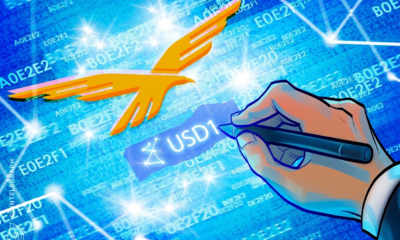
BTQ has been selected as the core post-quantum cryptography security technology provider for South Korea’s first bank-led KRW stablecoin proof-of-concept, delivering its Quantum Secure Stablecoin Settlement Network (“QSSN”) for the initiative.
 BTQ is providing strategic advisory support and helping coordinate implementation across the partnership with iM Bank and Finger, supporting the integration of post-quantum protections into regulated digital money infrastructure.
 Built on the Kaia mainnet, the proof-of-concept is connected to the blockchain ecosystems originally developed by Kakao and LINE, linking the initiative to two of the largest messaging and digital platform ecosystems in Korea and Japan.

VANCOUVER, BC, May 6, 2026 /PRNewswire/ – BTQ Technologies Corp. (“BTQ” or the “Company”) (Nasdaq: BTQ) (CBOE CA: BTQ), a global quantum technology company focused on securing mission-critical networks, today announced that it it has been selected as the core PQC security technology provider through its Quantum Secure Stablecoin Settlement Network (“QSSN”) in a proof-of-concept with its Korean strategic partner, Finger Inc. (“Finger”), and iM Bank, a leading Korean commercial bank, for South Korea’s first bank-led Korean won stablecoin infrastructure incorporating post-quantum cryptography (“PQC”).

The proof-of-concept represents more than a technical pilot. It marks an important step in bringing next-generation quantum security into banking infrastructure within Korea’s regulated financial system. In addition to providing QSSN as the core PQC security framework, BTQ is contributing consulting and strategic coordination across the three-way partnership, helping align the project’s security architecture, implementation approach, and long-term post-quantum migration objectives.

“Post-quantum migration requires more than a cryptographic upgrade. It requires coordination across infrastructure, implementation, and institutional stakeholders,” said Olivier Roussy Newton, Chief Executive Officer of BTQ Technologies. “In this initiative, BTQ is providing both strategic advisory support and QSSN as the post-quantum security architecture, while helping lead coordination across the three-way partnership. We believe this proof-of-concept demonstrates how financial institutions can begin integrating quantum-resilient protections into digital money systems in a practical and operationally viable way.”

South Korea’s First Bank-Led PQC Stablecoin Infrastructure Initiative

BTQ is working alongside iM Bank and Finger on a three-way initiative to validate the issuance and distribution infrastructure for a Korean won stablecoin. In addition to supplying QSSN as the PQC security layer, BTQ is providing consulting support and helping to guide coordination across the partnership as the parties evaluate how to integrate post-quantum protections into bank-led digital asset infrastructure.

The proof-of-concept will validate several key components, including real-time reconciliation between bank reserves and blockchain-issued supply, a global-standard smart contract architecture, connectivity to global infrastructure for overseas distribution, and the integration of a PQC-based dual-signature security structure. By applying BTQ’s PQC signature architecture alongside the existing ECDSA cryptographic framework, the system is designed to preserve operational continuity for financial institutions while proactively addressing future quantum computing threats.

Built on Kaia Mainnet

A notable feature of the proof-of-concept is that it will be implemented on the Kaia mainnet, one of Korea’s leading Layer 1 blockchain networks. Kaia was created through the merger of Klaytn, the blockchain originally developed by Kakao, and Finschia, the blockchain associated with LINE. Kakao and LINE sit at the center of two of the largest messaging and digital platform ecosystems in Korea and Japan, respectively, making Kaia a significant piece of regional digital infrastructure.

Klaytn previously participated in the Bank of Korea’s CBDC pilot ecosystem, and the Bank of Korea has continued to advance CBDC testing through initiatives such as Project Hangang.

By combining BTQ’s PQC technology with blockchain infrastructure tied to the Kakao and LINE ecosystems, the proof-of-concept is intended to establish a model that aligns institutional-grade security, blockchain scalability, and evolving regulatory requirements for digital money infrastructure.

QSSN as the Security Layer

The PQC security foundation for the initiative is BTQ’s Quantum Secure Stablecoin Settlement Network, or QSSN, a quantum-secure network architecture designed for stablecoin, tokenized deposit, payment, and digital asset infrastructure. QSSN is designed to protect critical issuer functions, including stablecoin issuance, burning, transfer authority, upgrade control, and administrative permissions, by integrating PQC-based signatures while maintaining existing user experience and operational workflows.

BTQ has previously announced that QSSN was highlighted in the U.S. Post-Quantum Financial Infrastructure Framework (“PQFIF”) as a model architecture for post-quantum digital money infrastructure. The Company has also positioned QSSN as a standards-oriented initiative advanced through QuINSA and aligned with emerging post-quantum financial infrastructure requirements.

Addressing the Harvest-Now, Decrypt-Later Risk

The timing of the proof-of-concept reflects the growing urgency surrounding the “Harvest-Now, Decrypt-Later” risk, in which attackers may collect encrypted financial data today and decrypt it later once sufficiently advanced quantum capabilities emerge. Global institutions are already accelerating post-quantum migration. The U.S. National Institute of Standards and Technology (“NIST”) has finalized its first set of post-quantum cryptography standards, including ML-DSA, ML-KEM, and SLH-DSA, while major technology companies and financial institutions continue to define their own post-quantum transition timelines.

BTQ’s QSSN addresses this challenge through a dual-signature design that allows existing ECDSA-based infrastructure to operate in parallel with NIST-aligned PQC signatures such as ML-DSA. This approach enables banks and payment infrastructure providers to begin a phased transition toward quantum-safe security without disrupting existing systems.

Expanding BTQ’s Korean Ecosystem

BTQ continues to expand its Korean ecosystem across digital assets, payments, banking infrastructure, and hardware-based security. In October 2025, BTQ announced that Finger had joined Danal as an early participant in BTQ’s QSSN pilot program, with the initiative expected to progress from proof-of-concept toward commercialization under QuINSA-aligned guidelines and broader industry frameworks such as PQFIF.

The commencement of the iM Bank proof-of-concept represents an important commercial signal for BTQ, indicating that demand for post-quantum migration among Korean financial institutions is beginning to move from policy discussion toward infrastructure-level implementation. As Korea advances both quantum technology policy and stablecoin-related regulatory discussions, BTQ believes QSSN is well positioned at the intersection of regulated finance, digital asset infrastructure, and post-quantum security.

About iM Bank
iM Bank is a South Korean commercial bank and a subsidiary of DGB Financial Group. Headquartered in Daegu, iM Bank presents itself as a financial companion for customers and traces its roots to Daegu Bank, which was established in 1967 as Korea’s first regional bank. For more information, please visit https://www.imbank.co.kr/

About Finger Inc. Group
Finger supplies and develops financial IT solutions to provide optimized money management strategies for employees and corporate customers. Providing “Smartphone Financial Services”, “Corporate Cash Management Services” for businesses, “Private Wealth Management Services” for private consumers.

Since the year 2000, Finger has accumulated a number of awards and patents regarding its businesses. Based on its Mobile Enterprise Application Platform(MEAP) Orchestra and its funds management system using screen-scrapping technologies, Finger was the first company in Korea to deliver a smartphone banking banking-service. For more information, please visit http://www.finger.co.kr/

About BTQ
BTQ Technologies Corp. (Nasdaq: BTQ | Cboe CA: BTQ) is a quantum technology company focused on accelerating the transition from classical networks to the quantum internet. Backed by a broad patent portfolio and deep technical expertise, BTQ is advancing a full-stack, neutral-atom quantum computing platform spanning hardware, middleware, and post-quantum security solutions for finance, telecommunications, logistics, life sciences, and defense.

Connect with BTQ: Website | LinkedIn | X/Twitter

ON BEHALF OF THE BOARD OF DIRECTORS
Olivier Roussy Newton
CEO, Chairman
Neither Cboe Canada nor its Regulation Services Provider accepts responsibility for the adequacy or accuracy of this release.

Forward Looking Information

Certain statements herein contain forward-looking statements and forward-looking information within the meaning of applicable securities laws. Such forward-looking statements or information include but are not limited to statements or information with respect to the business plans of the Company, including with respect to its research partnerships, and anticipated markets in which the Company may be listing its common shares. Forward-looking statements or information often can be identified by the use of words such as “anticipate”, “intend”, “expect”, “plan” or “may” and the variations of these words are intended to identify forward-looking statements and information.

The Company has made numerous assumptions including among other things, assumptions about general business and economic conditions, the development of post-quantum algorithms and quantum vulnerabilities, and the quantum computing industry generally. The foregoing list of assumptions is not exhaustive.

Although management of the Company believes that the assumptions made and the expectations represented by such statements or information are reasonable, there can be no assurance that forward-looking statements or information herein will prove to be accurate. Forward-looking statements and information are based on assumptions and involve known and unknown risks which may cause actual results to be materially different from any future results, expressed or implied, by such forward-looking statements or information. These factors include risks relating to: the availability of financing for the Company; business and economic conditions in the post-quantum and encryption computing industries generally; the speculative nature of the Company’s research and development programs; the supply and demand for labour and technological post-quantum and encryption technology; unanticipated events related to regulatory and licensing matters and environmental matters; changes in general economic conditions or conditions in the financial markets; changes in laws (including regulations respecting blockchains); risks related to the direct and indirect impact of COVID-19 including, but not limited to, its impact on general economic conditions, the ability to obtain financing as required, and causing potential delays to research and development activities; and other risk factors as detailed from time to time. The Company does not undertake to update any forward-looking information, except in accordance with applicable securities laws.

View original content to download multimedia:https://www.prnewswire.com/news-releases/btq-technologies-qssn-selected-as-core-security-infrastructure-for-south-koreas-first-bank-led-krw-stablecoin-proof-of-concept-302763840.html

SOURCE BTQ Technologies Corp.

Continue Reading
Click to comment

Leave a Reply

Your email address will not be published. Required fields are marked *

Technology

Geneva retains top spot in Arcadis’ 2026 global construction cost rankings as clients seek greater control over delivery certainty

Published

on

By

New global ranking shows that in complex buildings markets, the ability to assure cost, schedule and delivery confidence is becoming a source of competitive advantage

AMSTERDAM, July 13, 2026 /PRNewswire/ — Arcadis (EURONEXT: ARCAD), the world’s leading company delivering data-driven sustainable design, engineering, and consultancy solutions for natural and built assets, today announced that Geneva remains the world’s most expensive city in which to build, ahead of London and Zurich, according to its 2026 International Construction Cost Index.

The annual index, which compares construction costs across 100 major cities, shows that the world’s highest-cost construction markets remain concentrated in mature, complex cities with deep demand and constrained delivery capacity. Geneva ranks first globally, followed by London, Zurich, Munich and Copenhagen. New York City, San Francisco, Dublin, Bristol and Philadelphia complete the global top ten.

While the top of the ranking remains broadly consistent, the wider market context has shifted. Global construction markets are moving from inflation-led uncertainty into a more selective phase of investment, where capital is being deployed more carefully rather than demand simply slowing. For buildings clients, capital is increasingly favouring complex, high-performing assets that support long-term growth — including modern workplaces, healthcare facilities, laboratories, data centres, advanced manufacturing facilities and other highly serviced buildings that underpin digital and energy transition. But higher financing costs, energy volatility, tariff uncertainty and supply-chain constraints are putting greater pressure on project viability and increasing the value of early cost intelligence, scenario planning, procurement strategy and disciplined programme delivery.

In higher-cost markets, early cost planning can help protect value and secure scarce supply-chain capacity. In lower-cost markets, clients still need to test market readiness, infrastructure availability and delivery resilience before committing capital.

Edel Christie, Global President – Places, Arcadis, said: “Construction cost is no longer just a measure of price, and Arcadis’ International Construction Cost Index is no longer simply a guide to where construction is most or least expensive. It shows where cost, capacity, delivery risk and investment confidence are converging. That matters because cost is not the same as deliverability: projects should be designed, procured and planned around real-world conditions and the local realities that shape delivery.

“The need to build has not gone away. Cities still need homes, infrastructure, resilient energy systems, modern workplaces and digital infrastructure to support the next generation of economic growth. The opportunity is clear, but investment will flow to places and programmes where delivery is credible, viable and achievable — not just cheap to build.”

This is particularly evident in highly serviced assets such as data centres, where power availability, successful sourcing of long lead-in equipment, supply-chain capacity and speed-to-market are now more important to investment decisions than local construction costs.

The index also highlights the breadth of cost variation across global construction markets. While high-cost locations are concentrated in Europe, the UK and North America, some of the lowest-cost locations are found across Asia, Africa and Latin America. Bengaluru ranks as the least expensive city in the index, followed by Buenos Aires, Delhi, Mumbai and Ho Chi Minh City.

The important distinction is that lower headline costs do not translate into easier or more reliable delivery. Market readiness, grid capacity, permitting, supply-chain depth, skills availability and access to specialist contractors are increasingly decisive in determining whether projects can move from planning to construction.

Todd Burns, Global Service Executive for Program Management, Arcadis, said: “In today’s market, upfront cost is no longer the sole focus. The bigger questions are now about how quickly a project can generate revenue, how efficiently capital can be deployed and how confidently it can be delivered as market conditions change.

“That requires cost, schedule, procurement and risk decisions to be brought together much earlier, so clients can test trade-offs before they become expensive to change. Done well, that helps protect viability, secure the right market capacity and move more quickly from investment case to revenue.”

Top ten most expensive cities to build in, 2026

GenevaLondonZurichMunichCopenhagenNew York CitySan FranciscoDublinBristolPhiladelphia

The full Arcadis International Construction Cost Index 2026 report is available to read and download here.

ABOUT ARCADIS ICC 
The Arcadis International Construction Cost Index compares the relative cost of construction across 100 global cities. The index is based on a survey of construction costs, review of market conditions and the professional judgement of Arcadis’ global team of experts. Costs are indexed against Amsterdam, which is set at 100.

The index is designed to compare the relative costs of delivering the same building functions in different cities. It excludes land, demolition, external works and services, risk allowances, professional fees and local sales taxes. It does not account for purchasing power parity.

ABOUT ARCADIS
Arcadis is the world’s leading company delivering data-driven sustainable design, engineering, and consultancy solutions for natural and built assets. We are around 34,000 architects, data analysts, designers, engineers, project planners, water management and sustainability experts, all driven by our passion for improving quality of life. As part of our commitment to accelerating a planet positive future, we work with our clients to make sustainable project choices, combining digital and human innovation, and embracing future-focused skills across the environment, energy and water, buildings, transport, and infrastructure sectors. We operate in over 30 countries, and reported €4.9 billion in gross revenues for 2025. www.arcadis.com

View original content to download multimedia:https://www.prnewswire.com/news-releases/geneva-retains-top-spot-in-arcadis-2026-global-construction-cost-rankings-as-clients-seek-greater-control-over-delivery-certainty-302822760.html

SOURCE Arcadis

Continue Reading

Technology

Climate and Net Zero Energy Debate Challenge issued by Friends of Science Society to UN Group by Same Name

Published

on

By

CALGARY, Alberta, July 13, 2026 /PRNewswire/ — As the Friends of Science Society celebrates its 24ᵗʰ year of operation, they issue a debate challenge on climate and Net Zero targets, to the upstart UN “Friends of Science” group, described in this June 17, 2026, report by Inside Climate News on the Bonn Climate Conference.

Friends of Science Society’s climate intelligence partner, Clintel, issued a call for debate back in 2019 when Greta Thunberg’s famous “How Dare You” speech triggered a global movement based on an assumed climate emergency. The Friends of Science Society’s video read-out of Clintel’s letter to UN Sec. Gen. Antonio Guterres went viral, with over 700,000 views, before @facebook started blocking it. Clintel’s new president is former Czech president, Vaclav Klaus, author of “Blue Planet in Green Shackles,” among other books and papers.

Friends of Science Society and Clintel’s global network of over 2,000 scientists and scholars look forward to opportunities to engage in open, civil debate with the UN upstart “Friends of Science.” As reported by Politico, Clintel signatory Dr. Matthew Wielicki will lead the next US National Climate Assessment.

Clintel’s German Ambassador, Prof. Fritz Vahrenholt, speaks frankly about the problems with Net Zero targets and climate change in the re-released award-winning documentary by Canadian Mathew Embry. The film is titled, “Global Warning,” and is now free to view on YouTube. Embry follows famous climate activist Catherine Abreu to the 2019 Bonn Climate Conference, showing how activists have personal access to Canadian climate negotiators.

Prime Minister Carney frequently repeats that “Canada has what the world wants” and the recent G7 Statement reflects that interest. Alberta’s Premier Smith says the federal government has “9 Bad Laws” that must be repealed in order to drive investment and get oil and gas products to world markets. Premier Smith, then a radio talk show host, is also prominently featured in Embry’s “Global Warning” which was filmed during an oil and real estate market crash in Alberta.

While energy mavens at Doomberg believe that Carney is turning away from his climate obsession, Robert Lyman’s new report shows that “a leopard does not change its spots.” Lyman is in favor of reform for approving major projects, but he lays out the challenges in this submission to the government.

Friends of Science Society says that “Canada is Caught in a Green Spider Web.”

Embry’s film contrasts the ideology of climate activists with down-to-earth scientific commentary by Prof. Vahrenholt. Vahrenholt was once an industry leader and proponent of major wind farm operations. In “Global Warning”, Vahrenholt, an environmentalist now, expresses his deep concern that wind farms are wiping out rare birds and bats, driving energy poverty and deindustrialization in Germany. Vahrenholt is the co-author of a number of peer-reviewed papers and books that explore how the Sun drives climate change.

Embry brings Abreu face-to-face with Canada’s Dr. Ian Clark, as in this 2020 interview clip for Friends of Science Society. But Abreu is unmoved by Clark’s scientific explanation that there is no climate crisis and carbon dioxide from human industry is not the driving force in climate change.

Global fear of a climate emergency stemmed from the misuse of a climate scenario known as RCP 8.5 (SSP5-8.5) which the official climate modelling community has now abandoned, deeming it to be ‘implausible.’ The website “TheyKnew.com” reports that, “For over a decade, a single extreme climate scenario — RCP8.5 — powered nearly every alarming headline, regulation, lawsuit, and school curriculum on climate change. Scientists flagged it as unrealistic as early as 2017. The institutions that kept using it knew.”

The demand for “climate action” is now unnecessary as the imaginary climate emergency is over. Friends of Science Society took some 300 Mayors and councillors in Canada to task for their “Elbows Up for Climate” demands in this report challenging their “climate madness” and video. The “climate mayors” method of financing these extraordinary “Elbows Up” demands? A windfall tax on Big Oil.

Electrify Now” – the latest thing from the EU, Canada and other nations, is doomed to fail due as outlined in this Friends of Science Society video.

What are Climate Policies Costing Canada?“- some $476 billion on climate action (2020-2030). Since the phantom climate emergency is over, those borrowed billions should be redirected to more pragmatic concerns, or better yet not spent at all.

About
Friends of Science Society is an independent group of earth, atmospheric and solar scientists, engineers, and citizens that is celebrating its 24th year of offering climate science insights. After a thorough review of a broad spectrum of literature on climate change, Friends of Science Society has concluded that the sun is the main driver of climate change, not carbon dioxide (CO2).

Friends of Science Society
PO Box 61172 RPO Kensington
Calgary AB T2N 4S6
Canada
Toll-free Telephone: 1-888-789-9597
Web: friendsofscience.org 
E-mail: contact@friendsofscience.org 
Web: climatechange101.ca

View original content to download multimedia:https://www.prnewswire.com/news-releases/climate-and-net-zero-energy-debate-challenge-issued-by-friends-of-science-society-to-un-group-by-same-name-302823381.html

SOURCE Friends of Science Society

Continue Reading

Technology

Sungrow and TÜV Rheinland Redefine Industry Rule: World’s First Inverter Long-Term Reliability Corporate Standards Released

Published

on

By

MUNICH, July 13, 2026 /PRNewswire/ — During the Intersolar Europe 2026 exhibition, Sungrow and TÜV Rheinland jointly launched the world’s first quantitative long-term reliability standards for PV inverters, including 2 PfG 3325 Reliability test qualification for IGBT modules in photovoltaic power systems and power electronic converter systems and 2 PfG 3328 – Part 2 Specifications for Reliability Testing and Assessment of Power Electronic Products – Part 2: Power Conversion Equipment (PCE).

Sungrow’s SG510HX string inverter and its IGBT modules were among the first products certified under the two standards, providing early validation of the framework in practical applications.

Meeting the Demands of Modern PV Plants

As PV power plants continue to expand into increasingly demanding environments such as deserts, offshore locations, and high-altitude regions, ensuring inverter reliability over 25 years of operation has become increasingly important for project owners and investors. However, existing reliability qualification methodologies were not originally designed to fully capture the increasingly diverse and demanding operating conditions of modern PV plants, creating a gap between laboratory qualification and long-term field performance.

To address this challenge, Sungrow and TÜV Rheinland have developed a comprehensive reliability evaluation framework that enables a more scientific, quantitative, and traceable assessment of inverter lifetime performance.

From Systems to Components: A Unified Reliability Validation Framework

Facing the shortcomings of traditional standards, the dual framework establishes a robust, quantifiable reliability methodology spanning the entire “system-component” validation continuum.

2 PfG 3325 (IGBT Reliability Test Standard) is a component-level standard, addressing the failure mechanisms and lifetime models of power semiconductors under stresses such as thermal cycling and power cycling. 2 PfG 3328 – Part 2 is a system-level reliability verification standard, focusing on the performance degradation and lifetime assessment of PV inverter complete machines under complex environmental stresses, with core emphasis on verifying the product’s environmental adaptability within the designed service life.

Together, the standards establish a system-to-component validation chain: 2 PfG 3325 provides a quantitative data basis for inverter -level reliability modeling and supplier evaluation, while 2 PfG 3328 – Part 2 defines a unified inverter -level validation framework with testable and traceable criteria.

New Standards Upgraded for Complex Scenarios

Addressing the issue of insufficient coverage in traditional standard scenarios, the standards added several enhanced test items designed for complex operating conditions.

At the system level, 2 PfG 3328 – Part 2 covers long-term durability, environmental adaptability, and grid-connected operation under diverse operating conditions, with additional requirements such as 4,000-hour accelerated aging tests and continuous low- and high-voltage ride-through verification.At the IGBT level, 2 PfG 3325 strengthens conventional qualification methods by extending HTGB testing to 168 hours at 1.1 × VGES and introducing an additional 500 temperature cycles under mechanical loading conditions beyond the standard 2,000-cycle thermal cycling requirement.

The standards significantly strengthen reliability verification by expanding test coverage for complex operating scenarios.

Quantifiable Lifetime Assessment

To improve the quantitative assessment of long-term field reliability, the standards establish data-driven lifetime models based on extensive field performance data from PV power plants. The standards also draw on automotive components’ reliability testing and quality verification standards such as VW 80000 and GMW 3172, adopting more stringent test approaches to evaluate long-term stability under complex operating conditions.

“The two standards establish a structured and verifiable framework for long-term inverter reliability evaluation, offering valuable references for manufacturers, investors, and insurers in assessing lifecycle performance,” said Thomas Haupt, Vice President of Solar & Commercial Products, European Region of TÜV Rheinland Group.

Why Sungrow

As the pioneering architect of these standards, Sungrow leveraged its 29 years of expertise in power electronics together with extensive global project experience and operational insights across diverse climates and applications. Steering the reliability evaluation of PV inverters away from subjective empirical deductions toward a scientifically quantifiable, verifiable, and traceable future.

Photo – https://mma.prnewswire.com/media/3005616/111.jpg
Logo – https://mma.prnewswire.com/media/1344575/Logo.jpg

View original content:https://www.prnewswire.co.uk/news-releases/sungrow-and-tuv-rheinland-redefine-industry-rule-worlds-first-inverter-long-term-reliability-corporate-standards-released-302823493.html

Continue Reading

Trending