As launch cycles accelerate, many organizations are moving ahead without the buyer insight, competitive differentiation, and internal readiness needed to turn product investment into revenue. Info-Tech Research Group’s newly published blueprint, Build a More Effective Go-to-Market Strategy, outlines a three-phase methodology to help marketing, product, sales, and customer success leaders align around market truth, validate value propositions, and build launch plans that improve commercial outcomes.
ARLINGTON, Va., June 5, 2026 /PRNewswire/ – Organizations are under increasing pressure to launch products faster, enter new markets, and demonstrate measurable revenue impact. However, many continue to build go-to-market (GTM) strategies around internal assumptions rather than validated buyer needs, competitive insight, and launch readiness. According to Info-Tech Research Group, weak GTM discipline can contribute to unclear product opportunities, missed launch revenue targets, slowing buyer adoption, and reduced executive support for future product investment.
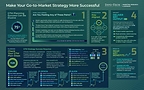
To help organizations address these challenges, the global research and advisory firm has published its blueprint, Build a More Effective Go-to-Market Strategy. The resource provides a structured methodology for marketing, product, sales, customer success, and revenue operations leaders to align stakeholders, validate market opportunity, define differentiated offers, and build launch plans that connect execution to revenue targets.
Info-Tech’s research emphasizes that an effective GTM strategy is not just a marketing exercise. It is a cross-functional business capability that aligns teams around a shared understanding of who the buyer is, what problems matter most, how the solution delivers value, and what must be in place before launch. Without that alignment, teams risk investing in products, campaigns, and sales motions that do not reflect buyer priorities or market realities.
“A go-to-market strategy cannot be treated as the final layer of messaging before launch,” says Emily Wright, senior research analyst at Info-Tech Research Group. “The strongest GTM strategies are built early, with real buyer insight, competitive understanding, and cross-functional accountability. When teams align around market truth before they build and launch, they improve their ability to focus resources on the opportunities most likely to generate revenue.”
Key Challenges That Undermine Go-to-Market Success
Info-Tech’s blueprint identifies several common obstacles that prevent organizations from realizing the full value of product launches and growth initiatives. These challenges include:
Unclear product market opportunity, leading to weak business cases and poor investment decisions.Poorly defined and prioritized buyer personas, making it difficult for teams to understand buyer needs, pain points, and decision criteria.Incomplete competitive analysis that fails to identify the areas where the offering is truly differentiated.Assumptions about the buyer journey, including how buyers prefer to research, evaluate, and engage with vendors.Business cases built around feature delivery rather than customer value, commercial viability, and revenue goals.Limited readiness across marketing, sales, and customer success, resulting in inconsistent messaging, weak enablement, and missed launch execution milestones.
The firm’s findings suggest that these issues often appear as separate symptoms, such as weak lead generation, low win rates, missed revenue targets, or declining executive confidence. However, the underlying issue is often a GTM process that lacks structure, evidence, and shared ownership across the functions responsible for product success.
Info-Tech’s Three-Phase Methodology for a More Effective Go-To-Market Strategy
The Build a More Effective Go-to-Market Strategy blueprint outlines a three-phase approach to help organizations move from assumptions to evidence-based GTM execution.
Phase 1: Establish Market Truth and Strategic Focus
In the first phase, organizations identify the GTM steering committee and working team, define the target problem and buying context, prioritize target buyers, assess competitive and alternative options, and size the realistic market opportunity. The goal is to establish a validated ideal customer profile, clear buyer problem statements, priority use cases, competitive gaps, and a realistic view of market potential before deciding whether to proceed, pivot, or stop.Phase 2: Design Value Proposition and GTM Approach
In the second phase, teams define the core value proposition, design the offer across product, packaging, and pricing, select the GTM motion and routes to market, map the buyer journey, build the business case, and align internal stakeholders on GTM design. This phase helps organizations ensure the offer is grounded in buyer needs, differentiated from alternatives, commercially viable, and supported by the right routes to market.Phase 3: Create the GTM Launch Plan
In the final phase, teams finalize launch scope and success criteria, develop the GTM working plan, enable customer-facing teams, align systems and processes, build the launch communications and awareness plan, and secure executive approval and readiness sign-off. This phase is designed to ensure marketing, sales, customer success, support, and operations teams are aligned and prepared before the offering is released to the market.
“Launch readiness is where strategy becomes operational,” explains Wright. “A strong GTM plan gives teams more than a timeline. It clarifies who owns each decision, which buyers the launch is designed to reach, what messages will resonate, how success will be measured, and whether the organization is truly ready to support the buyer from first touch through first value.”
Info-Tech’s Build a More Effective Go-to-Market Strategy blueprint also provides practical tools and templates to help organizations execute the methodology, including a Go-to-Market Strategy Presentation Template, a Go-to-Market Strategy RACI and Launch Checklist Workbook, a Go-to-Market Strategy Cost Budget and Revenue Forecast Workbook, a Product Market Opportunity Sizing Workbook, an ICP Workbook, and a CX Journey Interview Guide. These resources are designed to help teams structure decisions, document assumptions, align stakeholders, and connect launch planning to measurable business outcomes.
The firm advises organizations to treat GTM strategy as a repeatable capability rather than a one-time launch activity. By building a consistent approach, teams can reduce wasted effort, improve buyer adoption, strengthen competitive positioning, and create greater confidence among executives and investors in future product development and marketing investments.
For exclusive and timely commentary from Info-Tech’s experts, including Emily Wright, and access to the complete Build a More Effective Go-to-Market Strategy blueprint, please contact pr@infotech.com.
About Info-Tech Research Group
Info-Tech Research Group is the “get things done” partner for over 30,000 IT, HR, and marketing leaders worldwide. The fastest growing research and advisory firm, Info-Tech, enables leaders to make well-informed decisions and transform their organizations through AI, strategic foresight, step-by-step methodologies, practical tools, industry-leading advisory, and training programs. For nearly 30 years, tens of thousands of private and public organizations have trusted Info-Tech to lead their most important initiatives through periods of change and deliver outcomes that truly matter.
To learn more about Info-Tech’s HR research and advisory services, visit McLean & Company, and for data-driven software buying insights and vendor evaluations, visit the firm’s SoftwareReviews platform.
Media professionals can register for unrestricted access to research across IT, HR, and software, as well as hundreds of industry analysts through the firm’s Media Insiders program. To gain access, contact pr@infotech.com.
For information about Info-Tech Research Group or to access the latest research, visit infotech.com and connect via LinkedIn and X.
View original content to download multimedia:https://www.prnewswire.com/news-releases/product-launches-risk-miss-revenue-targets-when-go-to-market-strategy-lacks-buyer-insight-says-info-tech-research-group-302792734.html
SOURCE Info-Tech Research Group









 Technology4 days ago
 Technology4 days ago
 Technology4 days ago
 Technology4 days ago

 Technology4 days ago
 Technology4 days ago
 Coin Market4 days ago