Connect with us

Technology

As the Agentic Era Reshapes the Data Layer, Enterprises Build Their Sovereign Foundation on EDB Postgres® AI

Published

on

WILMINGTON, Del., June 11, 2026 /PRNewswire/ — EnterpriseDB (EDB), the leading sovereign AI and data company, today announced continued global adoption of EDB Postgres® AI (EDB PG AI), as enterprises worldwide standardize on the platform to run mission-critical workloads and build a sovereign foundation for the agentic era.

New research from MIT Technology Review Insights, produced in partnership with EDB, finds that AI and data sovereignty is the single strongest predictor of AI success, with enterprises most committed to controlling their data and infrastructure delivering 5x the ROI of their peers.

“The agentic era is raising those stakes sharply: As autonomous agents move into production, they act on enterprise data at a speed and concurrency that turns the data layer into the control point for the entire AI strategy—and makes owning and governing it a source of capability, not just protection. It’s why the world’s most demanding enterprises are building that foundation on EDB PG AI,” said Nancy Hensley, CPO, EDB.

For organizations with the most at stake—banks, insurers, and retailers running mission-critical operations around the clock—that control is existential. When data is a core competitive asset and downtime is not an option, sovereignty becomes the foundation everything else rests on.

Escaping lock-in for AI readiness: IBK

The Industrial Bank of Korea (IBK) is a major bank in South Korea and a primary lender to the small and medium-sized enterprises that anchor the national economy. Its previous proprietary database limited customization under restrictive licensing terms, making operational flexibility and cost efficiency decisive factors for migration. IBK moved 15 of its core systems onto EDB PG AI, where they now run stably, with high compatibility letting IBK’s team convert SQL, procedures, and packages with minimal modification and compress the project timeline.

Native support for AI and vector workloads gives the bank room to extend into AI services on the same foundation—not as a future migration but as a next step on infrastructure it already controls.

“We’ve achieved a significant reduction in licensing costs compared to Oracle, and that’s a core win that resonates with leadership on the IT budget side,” said Park Cheol-min, manager, IT Operations Division at IBK. “Being PostgreSQL-based, EPAS supports extensions like pgvector for AI and vector operations. That gave us a platform with the scalability to extend into AI services down the road. Beyond simple data management, we’ll keep advancing our open source, DB-centered data infrastructure strategy.”

Going cloud-first to stay AI-ready: Shinhan EZ Insurance

Shinhan EZ Insurance, a digital-first general insurer, was the first in Korea’s non–life insurance industry to migrate an entire core system to the public cloud. The rigid licensing of its legacy database blocked the elastic scalability the cloud is built to deliver, even as maintenance costs climbed unchecked.

Rebuilt on EDB PG AI, the new architecture delivers the 24/7 uninterrupted service a financial system demands, alongside the scalability the cloud was meant to unlock—a foundation the company will build on as it embraces new AI and analytical workloads.

“Migrating our core systems to the public cloud was an enormous challenge in the financial sector. EDB’s professional support structure, backed by a global engineering team, played a decisive role in securing our operational stability,” said Jin-sun Kim, infrastructure lead on the IT Planning Team at Shinhan. “In a financial system, 24/7 uninterrupted service is simply nonnegotiable, and our greatest achievement is the ability to instantly support new services requested by business teams. We’ll keep embracing the latest technologies, from AI to big data.”

One sovereign foundation, built for the workloads the agentic era demands

IBK and Shinhan EZ Insurance join a growing global roster of enterprises that rely on EDB PG AI across industries, geographies, and workloads.

Performance advertising leader MNTN relies on EDB PG AI for petabyte-scale stability and real-time analytical performance across its mission-critical ad-tech workloads.Global foreign-exchange trading venue Euronext FX eliminated vendor risk and reclaimed open source control across four data centers worldwide.Kyobo Book Centre, one of South Korea’s largest retailers, escaped a 50 TB cloud-only data warehouse burdened by runaway costs to gain predictable economics and full compliance control.

The same sovereign foundation that runs their core systems increasingly powers large-scale analytics, converging transactional, analytical, and AI workloads onto one Postgres platform they fully control and can deploy anywhere.

“That convergence is exactly what the agentic era requires. Because AI agents retrieve, analyze, decide, and act against live enterprise data in continuous, high-volume workflows, they amplify the cost and latency penalties of stitching together separate platforms for transactions, analytics, and AI,” said Hensley.

Continued industry recognition across product, open source, and impact

This customer adoption is matched by industry-wide recognition, with EDB earning top honors for platform innovation, open source leadership, and community impact over the past year:

DBTA 100 2026: The Companies That Matter Most in Data: Named among the most forward-thinking companies on the cutting edge of data innovationTech Ascension Awards: Honored as Best Data Management Solution of the Year2026 Community Impact Awards: For EDB’s PostgreSQL community leadership and for helping enterprises meet sustainability goals while balancing their AI ambitions

EDB’s sovereign data and AI platform—trusted by enterprises and recognized across the industry—is the foundation enterprises are building on for the agentic era: one platform that closes the divide between transactional and analytical data so agents can reason over live, governed data in real time, on infrastructure enterprises fully control.

See what’s next at EDB’s global digital event “The Era of Agentic AI Data,” on June 25. Register now: https://www.enterprisedb.com/join-the-era-of-agentic-ai-edb-postgres-ai

About EDB
EDB Postgres® AI (EDB PG AI) is the first open, enterprise-grade sovereign data and AI platform—secure, compliant, and scalable, on-premises and across clouds. Built on Postgres, the world’s leading database, EDB PG AI unifies transactional, analytical, and AI workloads, enabling organizations to operationalize their data and LLMs while maintaining control over sovereign environments. EDB PG AI is supported by a global partner network and delivers up to 99.999% availability as well as hybrid management and a built-in AI factory. As one of the most active contributors to the PostgreSQL project, EDB is deeply invested in the vitality of the global community. To learn more, visit www.enterprisedb.com.

EnterpriseDB and EDB are registered trademarks of EnterpriseDB Corporation. Postgres and PostgreSQL are registered trademarks of the PostgreSQL Community Association of Canada and used with their permission. All other trademarks are owned by their respective owners.

Media Contact:
Anwar Ahmad
416622@email4pr.com
(347) 206-5651

View original content to download multimedia:https://www.prnewswire.com/news-releases/as-the-agentic-era-reshapes-the-data-layer-enterprises-build-their-sovereign-foundation-on-edb-postgres-ai-302798037.html

SOURCE EnterpriseDB

Continue Reading

Technology

State Grid Changzhou Power Supply Company Commissions the City’s First Whole-Village Photovoltaic Project

Published

on

By

CHANGZHOU, China, Nov. 9, 2026 /PRNewswire/ — On November 5, Changzhou’s first whole-village photovoltaic (PV) project was officially commissioned in Heshu Village, Lijia Town, Wujin District. Rooftops of 40 households and the village’s corridors accommodate a total of 1.08 MW of PV capacity, yet from a distance, almost no trace of the installation can be seen.

This “invisibility” is by design. Heshu Village’s rural houses were delivered under unified planning and construction in November 2022. The village is a pilot for Jiangsu Province’s homestead system reform and a national demonstration village for rural governance. Its neat eaves and ample rooftop area provided favorable conditions for whole-village PV development, while also imposing higher requirements on construction.

For the two housing types of 140 square meters and 90 square meters, the contractor designed customized layouts of 36 and 25 modules respectively, with PV panels laid along the roof slope. In conventional practice, the gap between PV panels and tiles is about 20 centimeters; in Heshu Village, it was reduced to 12 centimeters. Down-conductors are routed neatly along walls, so the rooftops look flat from afar and the layout appears orderly up close, without disrupting the original contours of the houses.

“From a distance, it looks like village scenery; only up close can you tell it is a PV power station,” said Zhang Xiongwei, project contact person at State Grid Changzhou Power Supply Company. He explained that, in line with Heshu Village’s Jiangnan water-town character of white walls and dark tiles, the project follows the original roof contours and uses black, low-reflection PV modules so that the PV equipment blends into the rooftops. Power supporting equipment is painted or decorated with colored drawings to fit the surrounding village landscape and merge into the village’s appearance.

According to estimates, the whole-village PV project generates about 1.18 million kWh of electricity annually, equivalent to the annual electricity consumption of 360 ordinary households, and can reduce carbon dioxide emissions by about 700 tons per year. With green benefits secured, the question is how to divide the economic returns. Heshu Village adopted a model of “government promotion, grid support, state-owned enterprise demonstration, village committee organization, and resident benefits”: the state-owned platform Wujin Digital Energy is responsible for investment, construction, and operation and maintenance, and pays rent to residents and the village committee; the village committee convenes general meetings of property owners to promptly respond to residents’ concerns and organize contract signing; and Changzhou Power Supply Company is responsible for technical guidance and the connection of supporting power facilities.

Residents only need to provide their rooftops and can receive a cumulative rooftop rental income of about 33,000 yuan over 20 years. In addition to a three-year roof waterproofing insurance, State Grid Changzhou Power Supply Company has also introduced Yingda Insurance to provide a seven-year extended warranty service. The village collective receives rent for the PV corridors, as well as incentives that give back to rural development, such as village street lighting, Party-building publicity sites, and convenient service venues. The investor earns returns through power generation, with an investment payback period of about 11 years. The project adopts a connection scheme of “800 V low-voltage collection and 10 kV medium-voltage grid connection,” significantly improving power quality and supply reliability and markedly enhancing the project’s ability to interact with the power grid.

The 2026 No. 1 Central Document proposed “advancing the construction of livable, workable, and beautiful villages in accordance with local conditions,” and the National Energy Administration requires “guiding the scientific layout and orderly development of rural distributed PV according to grid carrying capacity.” Heshu Village’s exploration is precisely the implementation of this guidance at the village level. In the future, Changzhou will also explore promoting the simultaneous design and integrated construction of rural self-renewal housing and PV, so that such village landscapes can take root in more rural areas.

View original content:https://www.prnewswire.com/apac/news-releases/state-grid-changzhou-power-supply-company-commissions-the-citys-first-whole-village-photovoltaic-project-302933146.html

SOURCE State Grid Changzhou Power Supply Company

Continue Reading

Technology

UAE becomes first country outside Europe to implement eATA Carnet system

Published

on

By

DUBAI, UAE, Nov. 9, 2026 /PRNewswire/ — The UAE commenced its rollout of the eATA Carnet system on 9 November 2026, becoming the first country outside Europe to adopt the innovative digital solution. The initiative is being implemented through collaboration between Dubai Chambers, the Federal Authority for Identity, Citizenship, Customs and Port Security (ICP), and Dubai Customs.

The system enables ATA Carnets to be issued and processed electronically, replacing paper-based procedures with digital declarations, QR codes, and transaction records. It is designed to accelerate customs clearance, improve transparency, and facilitate international trade and events.

Dubai Chamber of Commerce, one of the three chambers under the umbrella of Dubai Chambers, has served as the UAE’s National Guaranteeing and Issuing Association for ATA Carnets since 2011. The chamber played a key role in preparing for the implementation, working closely with national customs authorities and the International Chamber of Commerce (ICC) on technical consultations, training, and pre-launch testing.

Dubai Chambers is one of only 13 of the ICC’s 1,200 member chambers worldwide to implement the eATA Carnet system.

ATA Carnets allow eligible goods to enter participating countries temporarily without payment of customs duties or taxes, provided they are subsequently re-exported. Valid for up to one year, they simplify customs requirements for exhibitions, commercial samples, and professional equipment, reducing paperwork and the need for separate customs guarantees.

Between the UAE’s adoption of the ATA Carnet system in 2011 and the end of 2025, 63,591 carnets were issued and received, covering goods worth AED 54.4 billion. In 2025 alone, Dubai Chamber of Commerce issued and received 5,960 carnets covering goods valued at AED 5.6 billion, up 11.2% in number and 30% in value year-on-year.

The UAE’s transition follows the June 2026 rollout across 30 European countries. Full global digitalisation of the ATA Carnet system is expected by 1 January 2028.

About Dubai Chambers

Dubai Chambers is a non-profit public entity that supports Dubai’s vision as a global business hub by empowering businesses, providing innovative value-added services, and unlocking access to influential networks.

For more information, please contact:

Mohamad Mouzehem
mohamad.mouzehem@dubaichamber.com


View original content to download multimedia:https://www.prnewswire.co.uk/news-releases/uae-becomes-first-country-outside-europe-to-implement-eata-carnet-system-302933147.html

Continue Reading

Technology

Agilix Labs Awarded AWS Education Equity Initiative Grant for Finder Program in Sierra Leone

Published

on

By

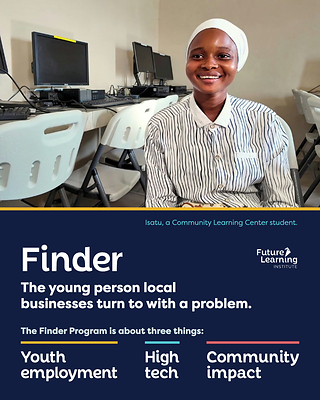
FREETOWN, Sierra Leone, Nov. 9, 2026 /PRNewswire/ — Agilix Labs has been awarded a grant to use AI and cloud technology from Amazon Web Services, Inc. (AWS) through the AWS Education Equity Initiative to support the Finder Program in Sierra Leone. The program is run by the Future Learning Institute (FLI), which Agilix Labs established in 2025 under an agreement with the country’s Ministry of Technical and Higher Education. On Nov. 10, FLI formally launches the program and opens its second Community Learning Center at Freetown Polytechnic.

A Finder is a young person the community brings its questions to. The Finder uses AI with local judgment, checks the work and brings back something a trader, a farmer or a teacher can use.

The program is for young Sierra Leoneans who qualified for university but couldn’t get a place, including young women, students with disabilities and young people from rural areas and low-income families.

“Our young people know their communities better than anyone,” said Mustapha Turay, President, FLI Centers in Sierra Leone. “I promised myself that whatever education I got in the United States, I would bring it home. We started in Kono. Now Freetown has a center of its own.”

Over the year-long program, learners take on questions from local businesses and community groups and work with AI to answer them. Lessons run on Agilix Dawn, which keeps working when the signal drops. With the grant, learners’ AI work will run on AWS, through Amazon Bedrock.

“We founded FLI to help young people get jobs, starting with those who were ready to learn and had no place to do it,” said Curt Allen, Co-Founder, Chairman and CEO, Agilix Labs. “At our centers, they use AI to serve their own communities. Finder is the job we’re training them for.”

Schedule, fact sheet and photos: www.agilix.com/fli/press.

About the Future Learning InstituteA
The Future Learning Institute (FLI) trains young Sierra Leoneans to become Finders. Its center at Freetown Polytechnic opens in November 2026. Its Kono District center opened in March 2026.

About Agilix Labs
Agilix Labs is an education technology company based in Lehi, Utah. Its Buzz platform has supported more than 55 million course enrollments, with users in more than 200 countries and territories. www.agilix.com

View original content to download multimedia:https://www.prnewswire.com/news-releases/agilix-labs-awarded-aws-education-equity-initiative-grant-for-finder-program-in-sierra-leone-302933161.html

SOURCE Agilix

Continue Reading

Trending