Connect with us

Technology

Healthcare Leaders Call for Strong Digital Leadership to Drive Sustainable Transformation and AI Value Creation

Published

on

Senior healthcare executives, policymakers and industry leaders emphasise the importance of digital leadership capabilities in translating AI and digital investments into sustainable healthcare outcomes

KUALA LUMPUR, Malaysia, June 29, 2026 /PRNewswire/ — As healthcare systems across Asia accelerate investments in artificial intelligence (AI), digital platforms, and data-driven care, increasing attention is being placed on the leadership capabilities required to guide transformation and maximise value from these investments.

The discussion comes at a pivotal moment for Malaysia as the nation advances its AI agenda as a key driver of economic growth. With AI projected to contribute between RM13 billion and RM20 billion annually to GDP by 2030, Malaysia is accelerating AI adoption across strategic sectors, including healthcare, while strengthening governance and accountability frameworks. These efforts aim to position the country as a regional leader in trusted and responsible AI that delivers tangible economic and societal benefits.

Despite growing investments in AI-enabled diagnostics, predictive analytics, digital health platforms, and automation technologies, many healthcare organisations continue to struggle with scaling successful pilot projects into enterprise-wide transformation.

Against this backdrop, IMU University and NUS-ISS of the National University of Singapore (NUS) jointly organised the executive forum, “The New Mandate: Digital Leadership as a Leadership Capability –  Navigating AI, Financial Stewardship, and Workforce Transformation for Healthcare Leaders”, bringing together senior healthcare executives, hospital leaders, policymakers and industry stakeholders to discuss how healthcare organisations can move beyond AI experimentation and translate digital investments into sustainable, enterprise-wide value.

A key theme that emerged from the forum was that digital literacy is no longer merely a technical competency but a core leadership capability. Healthcare leaders are increasingly required to make complex decisions involving AI adoption, digital investments, workforce redesign, data governance, and financial sustainability. Participants also noted that healthcare systems across the region are facing mounting pressures, including workforce shortages, rising operating costs, ageing populations, and growing demand for healthcare services. In Malaysia, these challenges are further compounded by demographic shifts, the rising burden of chronic disease, and increasing complexity in care delivery. Together with escalating healthcare expenditure, these trends underscore the need for more efficient, data-driven models of care and operations.

Many organisations also faced difficulties aligning technology investments with long-term organisational priorities and value creation. Against this backdrop, participants discussed how healthcare organisations can move beyond fragmented technology initiatives towards more integrated, scalable, and sustainable transformation. Key priorities identified included:
 

Moving beyond fragmented pilots to enterprise-wide transformationStrengthening governance and accountability for AI adoptionBuilding financially sustainable digital investment modelsRedesigning workforce capabilities for an AI-enabled futureDeveloping data-fluent leaders capable of making evidence-based decisionsAligning clinical, operational, and strategic priorities across the organisation

Leadership, Not Technology, Defines Value Creation

Another key takeaway from the forum was that successful digital transformation depends as much on leadership as it does technology. While technology can be a powerful enabler, its impact is maximised only when supported by clear strategic direction, effective governance and organisational alignment.

As Professor Gerard George, Group Managing Director of IMU University, said in his welcome speech: “AI is not just a technology shift. It is a leadership challenge. Value will not be determined by investment levels, but by how well organisations align leadership, governance, workforce readiness, and execution. In healthcare, the real opportunity is to build systems that are digitally enabled, financially sustainable, and resilient at scale.”

Mr Khoong Chan Meng, Chief Executive Officer of NUS-ISS, said: “Technology alone does not transform healthcare. What matters is the ability of leaders and organisations to turn innovation into meaningful outcomes. As healthcare systems become increasingly AI-enabled and data-driven, leaders must be able to align strategy, people, and operations to scale transformation effectively. Through this collaboration with IMU University, NUS-ISS looks forward to supporting healthcare leaders and professionals in building the capabilities needed to drive sustainable and digitally-enabled transformation across the industry.”
 

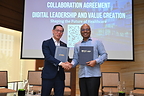
At the forum, IMU University and NUS-ISS also signed a collaboration agreement reaffirming their shared commitment to strengthening leadership and workforce capabilities across the healthcare sector. Under the agreement, both institutions will co-develop and co-deliver the “Digital Leadership and Value Creation Programme”, which will be offered by IMU University from September 2026.

Designed for senior healthcare leaders and executives, the programme will equip participants with practical frameworks and capabilities to lead digital transformation initiatives, align technology investments with organisational goals, and create sustainable value in an increasingly data-driven healthcare environment. Both institutions will also explore broader opportunities in executive education, leadership development, and industry-focused programmes to support healthcare organisations in strengthening digital readiness and building capabilities for sustainable transformation.

Building the Next Generation of Digital Health Leadership

As AI becomes a central pillar of Malaysia’s economic strategy and healthcare systems face growing structural pressure, the ability to align strategy, governance and execution will increasingly determine which organisations successfully scale transformation and deliver lasting value.

Healthcare transformation is no longer primarily a technological agenda. It is leadership and organisational challenge. Through this collaboration, IMU University and NUS-ISS are committed to helping healthcare organisations build the leadership capabilities needed to navigate change and realise the full potential of digital innovation.

About IMU University
IMU University is Malaysia’s pioneer private health-focused university, established in 1992 with the nation’s first global medical partnership programme. It has since evolved into a multidisciplinary institution offering programmes in medicine, health sciences, science, technology, and business, aligned with the evolving needs of global health systems.

IMU’s strength lies in its strong international outlook and extensive network, offering students pathways to collaborate with and transfer to over 45 partner universities across the United Kingdom, Australasia, China, and the United States, ensuring globally recognised qualifications and diverse academic and clinical exposure.

Underpinned by its progressive One Health philosophy, IMU integrates human, animal, and environmental health within a holistic interdisciplinary framework that shapes teaching and research, preparing graduates to address complex global health challenges.

Through experiential learning, structured internships, real-world projects, simulation centres, and industry collaboration, students gain early professional exposure that builds practical competence, adaptability, and confidence. Supported by strong accreditations, modern facilities, and a culture of research, innovation, and community engagement, IMU ensures graduates are well prepared to contribute meaningfully to advancing healthcare and improving outcomes globally and beyond it.

For more information on IMU, please visit imu.edu.my

About IMU Centre for Lifelong Learning
The Centre for Lifelong Learning (ICL) is the continuing professional development (CPD) and training arm of IMU. Poised as a premier leader in healthcare management education, ICL equips clinical, administrative, and corporate leaders with the vital skills needed to navigate and transform today’s industry landscapes.

While our core legacy is built on empowering healthcare communities through specialized courses in research, medicine, dentistry, pharmacy, and health sciences, ICL is actively moving beyond healthcare. By expanding our high-impact training programs to serve the wider public and diverse corporate sectors, we provide agile learning opportunities designed to drive continuous personal, professional, and organisational growth for everyone.

For more information on ICL, please visit https://web.imu.edu.my/page/v1/home

About National University of Singapore (NUS)
The National University of Singapore (NUS) is Singapore’s flagship university, which offers a global approach to education, research and entrepreneurship, with a focus on Asian perspectives and expertise. We have 15 colleges, faculties and schools across three campuses in Singapore, with more than 40,000 students from 100 countries enriching our vibrant and diverse campus 3 community. We have also established more than 20 NUS Overseas Colleges entrepreneurial hubs around the world.

Our multidisciplinary and real-world approach to education, research and entrepreneurship enables us to work closely with industry, governments and academia to address crucial and complex issues relevant to Asia and the world. Researchers in our faculties, research centres of excellence, corporate labs and more than 30 university-level research institutes focus on themes that include energy; environmental and urban sustainability; treatment and prevention of diseases; active ageing; advanced materials; risk management and resilience of financial systems; Asian studies; and Smart Nation capabilities such as artificial intelligence, data science, operations research and cybersecurity.

For more information on NUS, please visit www.nus.edu.sg

About NUS-ISS
Established in 1981, NUS-ISS nurtures digital talent for the industry through graduate education, executive education programmes, consultancy, applied research, and career services. NUS-ISS guides individuals and organisations to bridge future opportunities through a unique portfolio of multiple learning pathways such as blended learning and stackable programmes, leading the way in shaping the next curve of digital excellence. It offers a wide spectrum of programmes in critical industry disciplines, such as digital leadership, software development, data science, artificial intelligence, cybersecurity, product management, smart health and digital innovation.

To date, over 210,000 digital leaders and professionals from across 9,422 corporate client organisations, and 8,854 graduate programmes alumni have benefitted from NUS-ISS’ suite of services. Its programmes are delivered by NUS-ISS staff with an average of more than 20 years of industry experience and supported by a strong network of partners. NUS-ISS also works with industry partners and associations locally and globally to co-create a digital learning ecosystem that inspires and shapes solutions for the digital economy.

For more information on NUS-ISS, please visit www.iss.nus.edu.sg

View original content to download multimedia:https://www.prnewswire.com/apac/news-releases/healthcare-leaders-call-for-strong-digital-leadership-to-drive-sustainable-transformation-and-ai-value-creation-302812930.html

SOURCE NUS-ISS

Continue Reading
Click to comment

Leave a Reply

Your email address will not be published. Required fields are marked *

Technology

MAXHUB Participates in 2026 Leadership Policy Dialogue in South Asia: Charting Responsible and Innovative AI Integration in Higher Education

Published

on

By

KATHMANDU, Nepal, June 29, 2026 /PRNewswire/ — MAXHUB, a global leader in integrated display and collaboration solutions, today demonstrated its latest education technologies to university leaders from across South Asia at the “2026 Leadership Policy Dialogue in South Asia: Charting Responsible and Innovative AI Integration in Higher Education.”

Jointly hosted by the UNESCO Kathmandu Office, Tribhuvan University, the Asian Development Bank (ADB), and the International Centre for Higher Education Innovation under the auspices of UNESCO (UNESCO-ICHEI), the meeting drew approximately 120 representatives attending in person and over 100 participants joining online from South Asia and beyond. Government officials, higher education leaders, industry experts, and representatives from international organisations attended from Nepal, India, Bangladesh, Pakistan, Sri Lanka, the Maldives, Bhutan and other South Asian countries, as well as China, France and other countries. Among them were 13 university presidents and 26 deans from institutions including Tribhuvan University of Nepal, the University of Dhaka of Bangladesh, the University of Colombo of Sri Lanka, the Indian Institute of Technology Kharagpur, the University of Engineering and Technology Lahore of Pakistan, the Maldives National University, and the Royal University of Bhutan.

Li Hao of MAXHUB presented the company’s vision for technology-enabled education transformation during the conference. He noted that South Asia is home to approximately 50,000 higher education institutions and over 42 million enrolled students, making it the world’s second-largest region in terms of higher education enrolment.

MAXHUB also demonstrated its portable capture system on site, designed to help institutions deliver high-quality educational content with flexibility. The system addresses infrastructure constraints common among schools in the region, enabling both live streaming and recorded content distribution.

Throughout the event, MAXHUB representatives engaged with higher education leaders to understand regional needs and explore potential collaboration opportunities. The company emphasized its commitment to supporting the region’s digital transformation through practical technology solutions.

The meeting centred on the digital transformation of South Asian higher education and pathways for the responsible integration of artificial intelligence (AI) into higher education ecosystems. The event also featured the official launch of the IIOE Nepal National Centre.

About MAXHUB

Founded in 2017, MAXHUB is a trusted solution provider in integrated commercial display and unified communications. MAXHUB holds the position of World’s No.1 in both collaboration boards and all-in-one LED displays according to Futuresource and TrendForce. With a presence in over 140 countries and regions, local teams in 22 countries, and 8 global subsidiaries, MAXHUB delivers innovative solutions that transform how organizations collaborate and communicate worldwide.

About UNESCO-ICHEI

The International Centre for Higher Education Innovation under the auspices of UNESCO (UNESCO-ICHEI), based in Shenzhen, China, was established through cooperation between UNESCO and the Shenzhen Municipal People’s Government. Approved by the 38th session of the UNESCO General Conference on November 13, 2015, and officially inaugurated on June 8, 2016, UNESCO-ICHEI operates as a UNESCO Category 2 Centre focused on higher education.

View original content to download multimedia:https://www.prnewswire.com/apac/news-releases/maxhub-participates-in-2026-leadership-policy-dialogue-in-south-asia-charting-responsible-and-innovative-ai-integration-in-higher-education-302813133.html

SOURCE MAXHUB

Continue Reading

Technology

37 World’s top 2% Scientists participate in Chandigarh University’s 10th International Faculty Development Program 2026

Published

on

By

130 Renowned Global Academicians from over 100 Universities across 40 Countries Participating in the 10th International Faculty Development Program 

CHANDIGARH, India, June 29, 2026 /PRNewswire/ — The 10th edition of the International Faculty Development Program (IFDP) – 2026 commenced today here at Chandigarh University, with the participation of more than 130 renowned academicians, researchers, scientists and academic leaders from over 100 universities across 40 countries. Organized with the objective of advancing the internationalization goals envisioned under the National Education Policy (NEP) 2020, the program serves as a global platform for academic engagement, knowledge exchange and cross-border collaboration, providing a global platform for students and faculty members to gain exposure to global academic expertise and emerging research trends.

This edition of IFDP has brought together experts from 58 QS-ranked universities, including six academicians from institutions ranked among the world’s Top 20 universities. The program is also being attended by 37 scientists featured among the world’s Top 2% researchers, making it one of the most prominent international academic forums hosted by an Indian university.

While the inaugural session was graced by Prof. Pankaj Arora, Chairperson, National Council for Teacher Education (NCTE) as Chief Guest, Prof. (Dr.) Jurg Bahler, Director, Institute of Healthy Ageing and Professor of Systems Biology, University College London, United Kingdom; Prof. Dr. Luke Dickens, Founding Member and Co-Lead of the Knowledge Information and Data Science (KIDS) Research Group and Associate Professor of Machine Learning, University College London, UK; and Dr. Ian John Dixon, Associate Professor of Screenwriting, Nanyang Technological University, Singapore, attended the event as Guests of Honour.

Prof. (Dr.) RS Bawa, Advisor to Chancellor of Chandigarh University; Prof. (Dr.) Raviraja N Seetharam, Vice-Chancellor, Chandigarh University; and Prof. (Dr.) Rajan Sharma, Executive Director, International Affairs, among other academicians from different nations were also present on the occasion.

The participating experts represent leading institutions from Norway, Germany, Australia, Finland, Singapore, the United Kingdom, Canada, New Zealand, the United States, France, Israel, Spain, Italy, Cyprus, Poland, Saudi Arabia, Bahrain, Portugal, Qatar, Taiwan, Oman, Bulgaria, Georgia, Kazakhstan, Russia, Malaysia, Thailand, Peru, Mexico, Brazil, Sri Lanka, Algeria, Lebanon, South Africa, Kyrgyzstan, the Philippines, Morocco, Bangladesh, Nepal, Cameroon, Nigeria, Ethiopia and several other countries.

Speaking during the inaugural session, Prof. Pankaj Arora, Chairperson, National Council for Teacher Education (NCTE), Government of India, said, “Our nation has a rich legacy of knowledge creation, with ancient centres of learning such as Takshashila and Nalanda attracting scholars from across the world. Today, we are witnessing a resurgence of that legacy as both the performance and representation of Indian universities have risen sharply over the past few years. Under the visionary leadership of Prime Minister Narendra Modi, transformative educational reforms have been introduced under the National Education Policy that accelerated our focus on research, innovation and academic excellence, resulting in India’s remarkable rise as global knowledge powerhouse in research and innovation in recent years. Programs such as Chandigarh University’s International Faculty Development Program play an important role in strengthening global academic partnerships, elevating the quality of higher education and preparing the academicians to contribute towards India’s journey of becoming a developed nation by 2047.”

Prof. Dr. Luke Dickens, Associate Professor, Machine Learning at University College London, said, “Today, Artificial Intelligence has advanced at an unprecedented pace and we are gradually becoming increasingly dependent on it. However, we must move forward with caution. While AI offers immense opportunities, it also presents significant challenges and potential risks. Addressing these challenges will require a research-driven and evidence-based approach. We must ensure that AI is developed and applied in ways that genuinely enhance our everyday lives and serve the greater good. As members of academia, it is our responsibility to become thought leaders and help shape the world into a place that we aspire make it. Chandigarh University’s visionary approach and guiding principles are truly remarkable and represent the key ingredients required for any university to achieve global success. These very principles have enabled Chandigarh University to attain its present standing on the world stage. I am deeply impressed by the University’s remarkable rise in global rankings. It is an extraordinary achievement.”

Dr. Ian John Dixon, Associate Professor of Screenwriting at Nanyang Technological University, Singapore, said, “At a time when technology is capable of accomplishing almost everything, Artificial Intelligence can never replace human experience, creativity and the power of storytelling. Young people should leverage technology to share the stories, culture, and knowledge of their country with the world. Chandigarh University has truly embraced a student-centric approach to education. Here, Discover, Learn and Empower is not merely a slogan but the guiding philosophy of learning. I firmly believe that Chandigarh University is poised to achieve greater global recognition in the years ahead and has the potential to become the world’s leading university.”

Prof. (Dr.) Raviraja N Seetharam, Vice-Chancellor, Chandigarh University, said, “The International Faculty Development Program has evolved into a globally recognised platform for academic exchange and collaborative research. The initiative continues to strengthen international partnerships and create opportunities for meaningful engagement between scholars, researchers and institutional leaders from around the world. Over the years, IFDP has emerged as a vibrant platform for sharing best practices in teaching, learning and research while promoting internationalisation in higher education. By bringing together accomplished academicians and thought leaders from diverse cultural and disciplinary backgrounds, the program contributes to the development of globally relevant and future-ready educational ecosystems.”

“Achieving a significant milestone, Chandigarh University has secured the 526th rank in the QS World University Rankings 2027 and earlier, CU became the number one private university consecutively for three years in QS Asia University Rankings 2026. CU now ranks amongst the top 2 percent of universities worldwide and top 1 percent universities in India and has established as many as 530 international collaborations with leading global universities,” added the Vice-Chancellor.

The global cohort represents diverse academic disciplines including engineering, artificial intelligence, computer science, management, allied health sciences, architecture, legal studies, liberal arts and humanities, teacher education, biotechnology, pharmacy, data science, sustainability studies, social sciences and other emerging interdisciplinary domains.

The 10-day program will feature expert lectures, panel discussions, thematic sessions, research interactions and collaborative engagements designed to equip educators with contemporary pedagogical practices, emerging technological insights and global perspectives on higher education.

About Chandigarh University

Chandigarh University is a NAAC A+ Grade University and QS World Ranked University. This autonomous educational institution is approved by UGC and is located near Chandigarh in the state of Punjab. It is the youngest university in India and the only private university in Punjab to be honoured with A+ Grade by NAAC (National Assessment and Accreditation Council). CU offers more than 109 UG and PG programs in the field of engineering, management, pharmacy, law, architecture, journalism, animation, hotel management, commerce, and others. It has been awarded as The University with Best Placements by WCRC.

Website address: https://www.cuchd.in/

Photo: https://mma.prnewswire.com/media/3001726/Chandigarh_Univ_IFDP2026.jpg


View original content to download multimedia:https://www.prnewswire.com/in/news-releases/37-worlds-top-2-scientists-participate-in-chandigarh-universitys-10th-international-faculty-development-program-2026-302813134.html

Continue Reading

Technology

Updates About the Expanded Access Program for MN-166 in ALS

Published

on

By

Program to provide investigational drug to ALS patients who would otherwise be ineligible for clinical trials

SAN JOSE, Calif., June 29, 2026 /PRNewswire/ — WideTrial is pleased to share that the Expanded Access Program it launched in 2025, Scalable Expanded Access with Analysis of Neurofilament and other Biomarkers in ALS (SEANOBI-ALS), has reached its planned enrollment target. As a result, the program is no longer enrolling new patients.

SEANOBI-ALS was established to provide access to the investigational therapy MN-166 (ibudilast) for people living with ALS who are unable to participate in traditional clinical trials. The program is conducted in partnership with a large academic medical center and is supported by funding awarded under the ACT for ALS initiative through the National Institute of Neurological Disorders and Stroke (NINDS).

Enrollment Complete

Since enrolling its first patient in March 2025, SEANOBI-ALS has successfully enrolled 200 patients residing in 27 states through a network of 15 participating ALS clinics throughout the United States.

The strong interest in the program reflects the ongoing need for treatment access pathways for people living with ALS who do not qualify for conventional research studies due to eligibility criteria, geographic limitations, or other barriers to participation. SEANOBI-ALS swiftly reached full enrollment due to the commitment of participating sites and the strong engagement of patients and caregivers seeking access to investigational treatment options.

What Happens Next

Patients actively enrolled in SEANOBI-ALS will continue treatment and follow-up activities in accordance with the program protocol. Final patient follow-up activities are expected to conclude in early 2027, after which data collected through the program will be analyzed to support future scientific presentations and publications. WideTrial looks forward to sharing more as findings from the program become available.

Looking Ahead

Reaching 200 patients less than 13 months after first patient enrollment demonstrates both the feasibility and importance of scalable Expanded Access programs for people living with ALS.

Patients and clinics who tried but were unable to participate in SEANOBI-ALS are encouraged to continue checking with WideTrial about future EAPs, both grant-sponsored under ACT for ALS and industry-sponsored.  WideTrial is now evaluating new Expanded Access opportunities in ALS and anticipates launching at least one additional large EAP in 2027.

About EAPs: Expanded Access programs (EAPs) are a type of FDA-authorized clinical trial that prioritizes experimental treatment access for patients with serious conditions who lack other meaningful, potentially disease-modifying treatment options – particularly patients who cannot get into research trials of new medicines due to inclusion/exclusion criteria or difficulty traveling to trial sites.

About this EAP: SEANOBI-ALS was designed for swift activation of participating clinics and minimal-burden on clinical staff, in comparison to research trials. This program’s secondary objective is to generate valuable data about the kinds of patients who may benefit most from the experimental treatment.

About WideTrial: WideTrial is an emerging company with the mission of making experimental treatment options accessible to all people with serious or life-threatening diseases. The team is personally aware of the devastating toll ALS takes on patients and families and is relentlessly committed to integrating well-managed EAPs into healthcare at meaningful scale.

For inquiries, please contact WideTrial via email: community@widetrial.com

Media Contact:

Shona Allen
WideTrial, Clinical Programs Director
(650) 715-7500
community@widetrial.com

View original content to download multimedia:https://www.prnewswire.com/news-releases/updates-about-the-expanded-access-program-for-mn-166-in-als-302811403.html

SOURCE WideTrial Inc.

Continue Reading

Trending