Connect with us

Technology

In HelloNation, Tree Care Expert Pete Grisewood Details Signs a Tree Should Be Removed Before It Becomes Hazardous

Published

on

The article explains how recognizing warning signs early can help property owners reduce safety risks and make informed tree care decisions.

ROCHESTER, N.Y., July 8, 2026 /PRNewswire/ — How do I know if a tree should be removed? The answer is provided in a HelloNation article featuring insights from Tree Care Expert Pete Grisewood of Birchcrest Tree & Landscape in Rochester, New York.

Trees are valuable additions to residential and commercial properties, providing shade, beauty, privacy, and environmental benefits. The HelloNation article explains that while many trees remain healthy for decades, some eventually develop structural or health-related issues that increase the risk of failure. Understanding these warning signs can help property owners take action before a dangerous situation develops.

One of the most common indicators discussed in the article is the presence of large dead branches. Dead limbs become increasingly brittle as they stop receiving nutrients, making them more likely to break during periods of high wind, heavy rain, or snow accumulation. The article notes that while a few small dead branches may not indicate a serious concern, multiple large dead limbs can signal broader health issues that warrant a professional tree evaluation.

The article also identifies trunk cracks as a significant warning sign. Because the trunk serves as the primary support structure of a tree, substantial cracks can compromise stability and increase the likelihood of failure. Some trunk cracks remain superficial, while others extend deeper into the wood and indicate more serious structural weakness. The article recommends a professional tree evaluation whenever significant cracking is observed.

Another issue examined in the article is the presence of a leaning tree. While some trees naturally grow at an angle without creating safety concerns, a leaning tree that has recently shifted or continues to lean more noticeably over time may indicate root instability, soil movement, or internal damage. The article explains that when a leaning tree is located near homes, sidewalks, driveways, or utility lines, the potential consequences of failure become much greater.

Root damage is another factor that can contribute to instability. The article describes how construction projects, trenching, erosion, soil compaction, and severe weather can all affect root systems. Because roots remain hidden below the surface, problems may go unnoticed until visible symptoms begin to appear. Extensive root damage can weaken structural support and reduce a tree’s ability to withstand storms or saturated soil conditions.

According to the article, a hazardous tree often provides visible warning signs long before it becomes an immediate threat. The article notes that Tree Care Experts frequently rely on these indicators when evaluating risk and determining whether corrective measures remain possible. Early identification of concerns can help property owners address problems before they become emergencies.

Storm damage is another important concern highlighted in the article. Strong winds, lightning strikes, ice accumulation, and heavy snowfall can weaken trees even when no obvious damage is immediately visible. The article explains that storm damage may create hidden cracks, split limbs, or internal decay that affect long-term stability. A professional tree evaluation following severe weather can help identify these concerns before they worsen.

Disease and decay also play a major role in determining whether tree removal may be necessary. Signs such as fungal growth near the base of a tree, hollow sections within the trunk, peeling bark, and extensive deadwood can indicate internal deterioration. While some conditions can be managed successfully, advanced decay may leave a hazardous tree unable to support its own weight safely. In these situations, tree removal often becomes the most responsible course of action.

The article concludes that location is an important factor when evaluating risk. A hazardous tree in an isolated area may present limited concern, while the same tree located near buildings, vehicles, or gathering spaces can create substantial danger. Tree Care Experts often consider both the condition of the tree and its surroundings when making recommendations. By recognizing warning signs such as trunk cracks, root damage, storm damage, large dead branches, and a leaning tree, property owners can take proactive steps to protect people, property, and surrounding landscapes.

Signs a Tree Should Be Removed Before It Becomes Hazardous features insights from Pete Grisewood, Tree Care Expert of Rochester, New York, in HelloNation.

About HelloNation

HelloNation is America’s Good News Network, a premier media platform built on the idea that good news travels faster when real people tell real stories. Through its community-focused publications and innovative “edvertising” approach, HelloNation delivers content that informs, inspires, and spotlights the leaders making a meaningful impact in their communities.

www.hellonation.com

View original content to download multimedia:https://www.prnewswire.com/news-releases/in-hellonation-tree-care-expert-pete-grisewood-details-signs-a-tree-should-be-removed-before-it-becomes-hazardous-302821130.html

SOURCE HelloNation

Continue Reading

Technology

COLUMBIA DISTRIBUTING COMPLETES ALASKA TRANSACTION WITH RNDC, ESTABLISHING A FOUR-STATE PACIFIC NORTHWEST TOTAL BEVERAGE PLATFORM

Published

on

By

WILSONVILLE, Ore., Oct. 26, 2026 /PRNewswire/ — Columbia Distributing today announced it has completed its transaction with Republic National Distributing Company (RNDC) to acquire certain beverage distribution assets in Alaska, marking Columbia’s official entry into the state and completing the final component of the letter of intent announced by the companies in April.

The closing represents a major milestone in a long-term strategy Columbia set out to build: a multi-category, multi-state total beverage platform across the Pacific Northwest. With direct operations now spanning Alaska, Oregon, and Washington, along with its recently completed strategic partnership with Hayden Beverage in Idaho, Columbia has brought that vision to life, creating a connected four-state route to market and a more complete one-stop solution for supplier and retail partners across the region.

“This is a huge moment for Columbia because it represents exactly what we set out to build,” said Chris Steffanci, President and CEO of Columbia Distributing. “Our long-term vision has been to create the strongest total beverage platform in the Pacific Northwest—a multi-category, multi-state strategy that gives our partners a more complete solution across the region. With Alaska, that vision is now coming to life. We can offer suppliers and retailers a connected, capable, and increasingly seamless route to market across Alaska, Idaho, Oregon, and Washington.”

The Alaska transaction expands Columbia’s direct service territory to more than 835,000 square miles and adds nearly 1,500 customer accounts. It also brings Columbia into a market with an experienced local team, strong customer relationships, and an established beverage distribution network.

Columbia sees significant untapped potential in the Alaska business and plans to bring renewed investment, leadership, resources, and market focus to the state. The company will pair the Alaska team’s local knowledge and relationships with the culture and ways of working that drive Columbia’s performance in its existing markets, empowering people, moving with urgency, holding one another accountable, and maintaining a relentless focus on customers, brands, and execution.

“What has impressed me most is the energy and ambition of the Alaska team,” Steffanci said. “They know the market, they believe in the brands, and they are hungry to grow, compete, and win. They do not need us to teach them Alaska. Our responsibility is to give them the leadership, investment, tools, and support to show what they can do.”

“At Columbia, we trust our people, empower the teams closest to the market, and expect everyone to take ownership of results,” Steffanci continued. “That culture and the way we work across our company will bring new energy and momentum to Alaska. We are not entering the market to maintain the status quo—we are here to build, grow, compete, and raise the standard. This team is ready to be unleashed, and I believe the market is going to feel the difference very quickly.”

The expansion is the latest step in the deliberate strategy Columbia has pursued to build a broader total beverage business across multiple categories and markets. On June 30, the company completed its acquisition of certain RNDC wine and spirits distribution rights in Oregon and Washington. In September, Columbia completed a strategic partnership with Hayden Beverage, creating long-term alignment with Idaho’s leading locally based beverage distributor. The Alaska transaction completes the geographic footprint Columbia envisioned across the four-state Pacific Northwest market.

Together, these transactions create a platform designed around what suppliers and retailers increasingly need: one partner capable of representing multiple beverage categories across multiple states while still maintaining the local knowledge, relationships, and market-level execution required to succeed in each community.

Columbia’s expanded platform spans beer, wine, spirits, cider, non-alcoholic beverages, and emerging beverage categories. For supplier partners, it provides greater regional scale, category expertise, operational capabilities, and a more cohesive route to market. For retailers, it provides access to a broader portfolio backed by strong sales, delivery, merchandising, revenue management, and account execution capabilities.

“This is what total beverage means to us,” Steffanci added. “It is not simply adding categories or adding geography. It is about building a one-stop solution that connects categories, capabilities, people, and markets in a way that creates more value for our partners. We now have the platform we envisioned across the Pacific Northwest, and our focus turns to executing against that opportunity.”

Columbia is working closely with the Alaska team, suppliers, customers, and business partners to support a smooth transition. Columbia will communicate additional information about the operational transition, portfolio, and go-live timing directly to affected stakeholders.

Columbia appreciates RNDC’s partnership and the work of teams across both organizations to complete the transaction. Financial terms were not disclosed.

About Columbia Distributing

Since 1935, Columbia Distributing has helped build some of the best-known brands in the beverage business. Today, Columbia is one of the nation’s leading total beverage distributors, with a portfolio spanning beer, wine, spirits, cider, non-alcoholic beverages, and emerging beverage categories.

Columbia’s more than 3,200 teammates serve approximately 24,000 retail customers and deliver more than 80 million cases annually. With direct operations across Alaska, Oregon, and Washington and a strategic partnership with Hayden Beverage in Idaho, Columbia offers supplier and retail partners a connected four-state, multi-category route to market across the Pacific Northwest.

Columbia’s success is built on its people, its brands, and a deep-rooted commitment to execution, service, and creating sustainable growth for its teammates, customers, suppliers, shareholders, and communities. For more information, visit www.coldist.com.

Contact: Steve Gibbs
Steve.Gibbs@coldist.com | 206-920-6799

View original content to download multimedia:https://www.prnewswire.com/news-releases/columbia-distributing-completes-alaska-transaction-with-rndc-establishing-a-four-state-pacific-northwest-total-beverage-platform-302919977.html

SOURCE Columbia Distributing

Continue Reading

Technology

Secretary of the State Thomas Highlights Record Protecting Connecticut Businesses as Scams Grow More Sophisticated

Published

on

By

As early voting enters its final week, Secretary of the State Stephanie Thomas highlights her first-term record protecting Connecticut businesses, from fighting human trafficking and business hijacking to lowering fees and moving filings online, and pledges to keep business owners prepared as AI makes scams more sophisticated.

HARTFORD, Conn., Oct. 26, 2026 /PRNewswire-PRWeb/ — As scams targeting Connecticut businesses grow more sophisticated, including recent emails impersonating state offices, Secretary of the State Stephanie Thomas is highlighting the protections her team has put in place for the more than half a million businesses registered in Connecticut. She is seeking a second term to build on that work as AI-powered fraud creates new risks for business owners.

“If someone tries to steal your business, you’re not on your own. AI is making scams more sophisticated by the month, and I’ll keep making sure business owners know what to watch for.”

“Before I was Secretary of the State, I ran a small business, so I know how scarce time and money can be,” said Secretary Thomas. “That’s why our team cut fees and red tape, and why I fought for new laws that let my office investigate when fraudsters hijack a Connecticut business. If someone tries to steal your business, you’re not on your own. But the threats keep evolving. AI is making scams more sophisticated by the month, and I’ll keep making sure business owners know what to watch for. I’m not done delivering for Connecticut businesses, and I hope you’ll support me on November 3.”

Protecting Connecticut Businesses

Fighting human trafficking. Through Be a Light, Secretary Thomas made Connecticut the 7th state in the country and the first in the Northeast to help businesses identify, report and prevent human trafficking. Trafficking can reach any business through its customers, employees or supply chains. PreventHumanTraffickingCT.com gives owners practical guidance on what to watch for and what to do.

Stopping business hijacking. Fraudsters have stolen login credentials, changed a business’s listed owner and opened lines of credit in its name. Owners used to have only one remedy: hire a lawyer and go to court. Secretary Thomas brought the problem to the legislature. New laws now give her office the authority to investigate and the funding to build stronger protections, including screening that flags suspicious filings for human review.

Early warnings for owners. Business owners can turn on Follow Business alerts at Business.CT.gov to be notified whenever someone files a document for their business.

Lower costs, less red tape. Apostille fees are lower, and the entire process for authenticating documents for use abroad, used for about 40,000 documents a year, is now online. That makes Connecticut one of the first states to offer it. A new statewide trademark directory lets owners check a name before investing in it.

Help getting started and growing. A free monthly business newsletter gathers grants, funding and training opportunities in one place. A new Business Welcome Packet walks owners through their first steps, from tax IDs to fraud protection.

Early Voting Ends Sunday, Nov. 1

Early voting is open daily from 10 a.m. to 6 p.m. through Sunday, Nov. 1, with extended hours from 8 a.m. to 8 p.m. on Tuesday, Oct. 27 and Thursday, Oct. 29. There is no early voting on Monday, Nov. 2.

Every town has at least one early voting location. Voters can find theirs at MyVote.CT.gov or by contacting their town’s registrar of voters. Eligible residents who are not yet registered can register and vote the same day during early voting or on Election Day, Tuesday, Nov. 3, when polls are open from 6 a.m. to 8 p.m.

About Stephanie Thomas

Stephanie Thomas is Connecticut’s 75th Secretary of the State and the first Black person elected to the office. Since taking office in 2023, she has secured $20 million to modernize Connecticut’s election equipment, led the rollout of early in-person voting, expanded civic education through initiatives such as the Power of Civics platform and launched Be a Light, making Connecticut the first state in the Northeast to help businesses identify, report and prevent human trafficking.

Thomas is running for reelection in 2026. She serves on the Executive Board of the National Association of Secretaries of State and testified before Congress in 2025 about balancing voter access with election security.

Before becoming secretary, Thomas represented Norwalk, Wilton and Westport in the state legislature. She also ran a small business and spent nearly 30 years advising nonprofit organizations on strategy and fundraising.

Media Contact

Natasha Lopoukhine, Savvy Marketing Communications, 1 2039560920, natasha@igotsavvy.com, www.igotsavvy.com

View original content to download multimedia:https://www.prweb.com/releases/secretary-of-the-state-thomas-highlights-record-protecting-connecticut-businesses-as-scams-grow-more-sophisticated-302919955.html

SOURCE Stephanie Thomas

Continue Reading

Technology

MNA: Berkshire VNA Nurses and Healthcare Professionals Deliver Petition Calling for a Fair Union Contract to Strengthen Patient Access to Home Care

Published

on

By

While there has been bargaining progress on early-career wages, clinicians are urging BVNA to invest in experienced staff to support safe patient care

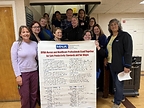
PITTSFIELD, Mass., Oct. 26, 2026 /PRNewswire/ — Berkshire Visiting Nurse Association (BVNA) nurses and healthcare professionals, represented by the Massachusetts Nurses Association (MNA), delivered a petition to BVNA management at 4 p.m. Monday, October 26, calling for a fair contract that supports recruitment, retains experienced clinicians and protects the time needed to care for patients safely at home. The parties next meet for bargaining on October 28.

The petition comes as the bargaining unit has shrunk by approximately half over the past several years amid high turnover and challenges attracting new staff. BVNA clinicians are seeking to reverse that decline to strengthen access to home care, help patients recover in familiar surroundings, and support timely hospital discharges.

“We appreciate that management has made progress toward attracting new staff by moving on wages for nurses and healthcare professionals early in their careers,” said Tamaryn Clowdus, physical therapist, and Co-Chair of the MNA Bargaining Committee at Berkshire VNA. “We also need reasonable cost-of-living increases for the experienced clinicians who have stayed with the VNA through difficult years. Building a stable workforce and supporting our home care patients requires a focus on both recruitment and retention.”

BVNA nurses and healthcare professionals provide care that helps patients manage illness, recover after hospitalization and remain safely at home. Experienced clinicians bring clinical judgment, knowledge of their communities and familiarity with patients’ needs. These are important community assets that are difficult to replace when staff leave.

With Berkshire Medical Center experiencing high patient volume, sufficient levels of home care staffing matters more than just the patients receiving visits. Ready access to home care can help patients who are ready to leave the hospital return home with the support they need, making more hospital beds available for people requiring acute care.

“Berkshire Medical Center nurses stand with our BVNA colleagues in their efforts to secure a fair contract that strengthens home care in Berkshire County,” said Sarah Roberts, RN, MNA Co-Chair at Berkshire Medical Center. “We see every day how much our patients depend on having care available when they return home. Supporting the clinicians who provide that care helps patients leave the hospital safely and keeps beds available for others who need acute care.”

The BVNA petition also calls for reasonable and achievable productivity expectations developed with clinicians and grounded in the realities of home care. A visit involves more than time spent in a patient’s home. Clinicians must also document care, coordinate services, communicate with providers and families, and travel between patients.

MassNurses.org │ Facebook.com/MassNurses │ Twitter.com/MassNurses │ Instagram.com/MassNurses 

Founded in 1903, the Massachusetts Nurses Association is the largest union of registered nurses in the Commonwealth of Massachusetts. Its 26,000 members advance the nursing profession by fostering high standards of nursing practice, promoting the economic and general welfare of nurses in the workplace, projecting a positive and realistic view of nursing, and by lobbying the Legislature and regulatory agencies on health care issues affecting nurses and the public.

View original content to download multimedia:https://www.prnewswire.com/news-releases/mna-berkshire-vna-nurses-and-healthcare-professionals-deliver-petition-calling-for-a-fair-union-contract-to-strengthen-patient-access-to-home-care-302919989.html

SOURCE Massachusetts Nurses Association

Continue Reading

Trending