Technology
97% of commercial software runs MIT-licensed open source, removing dev tool barriers, DHTMLX finds
Published
4 months agoon
By
53% of organizations cite zero license cost as the top reason for adopting open source software, according to the 2025 State of Open Source Report.
WARSAW, Poland, July 13, 2026 /PRNewswire/ — The DHTMLX Gantt Community Edition team today released an analysis of recent open-source adoption research examining how licensing models influence developer tool adoption and software component selection. The analysis finds that permissive licensing has evolved from a developer preference into a practical requirement for many organizations evaluating software components, frameworks, and user interface libraries.
According to the 2025 Open Source Security and Risk Analysis (OSSRA) Report from Black Duck, open source components now appear in 97% of commercial software applications, highlighting the extent to which modern software development depends on reusable open-source technologies.
Licensing compatibility, legal clarity, procurement requirements, and long-term maintainability increasingly influence whether software teams can move a component from evaluation into production.
Open Source Has Become the Foundation of Modern Software Development
Research published in the 2025 OSSRA Report found that 97% of commercial software contains open-source components, based on an analysis of more than 900 commercial codebases across 17 industries. The finding reflects a broader shift in software development practices, where organizations increasingly build products by combining proprietary code with open-source frameworks, libraries, and infrastructure tools.
The widespread adoption of open source has changed how development teams evaluate software. Rather than asking whether open source is appropriate for commercial use, organizations now focus on identifying components that align with security, compliance, and operational requirements.
As open source becomes the default foundation for modern software, licensing considerations become increasingly important during the evaluation process. For development teams building project management, scheduling, and workflow applications, component selection often depends as much on licensing flexibility as on technical functionality.
The importance of open source extends beyond individual applications. In a January 2026 call for evidence, the European Commission estimated that open source software now underpins between 70% and 90% of all code in the digital economy. The finding reinforces how deeply embedded open-source technologies have become across modern software development, infrastructure, and digital services.
MIT Licensing Has Become the Dominant Commercial Model
According to the 2025 OSSRA Report, the MIT license appeared in 92% of audited commercial codebases, making it one of the most widely adopted open-source licenses in commercial software development. The report attributes much of this adoption to the license’s permissive structure, which allows developers to modify, distribute, and integrate software into proprietary products with relatively few restrictions.
The popularity of MIT licensing reflects a practical reality for software organizations. Development teams frequently need to integrate third-party tools into products that may be sold commercially, deployed internally, or customized for client environments. Licenses that introduce legal uncertainty or compatibility concerns can create friction during procurement and deployment.
As organizations seek to reduce those barriers, permissive licensing models continue gaining traction across the software ecosystem.
Cost Remains the Primary Driver of Open Source Adoption
The 2025 State of Open Source Report, published by Perforce OpenLogic in partnership with the Eclipse Foundation and the Open Source Initiative, found that 53% of organizations identified “no license cost” as the primary reason for adopting open-source software. Among government and public-sector respondents, that figure rose to 92%.
While open source is often discussed in terms of flexibility and innovation, the findings suggest that financial considerations remain a major factor in adoption decisions. Licensing costs can influence project budgets, procurement timelines, and the ability of teams to experiment with new technologies before committing to large-scale implementation.
The report also highlights how cost considerations frequently affect adoption long before technical evaluation begins. Many organizations must secure stakeholder approval, procurement sign-off, or budget allocation before introducing new tools into production environments. A component that can be evaluated without upfront licensing commitments often allows development teams to move more quickly from research and prototyping into real-world testing. As software budgets face increasing scrutiny, reducing financial friction can become just as important as reducing technical friction.
For organizations evaluating developer tools, a permissive open-source option can reduce both financial and administrative barriers during the evaluation stage. Teams can assess functionality, test integrations, and build prototypes without immediately entering commercial licensing discussions.
Open Source Usage Continues to Grow Across Organizations
The same 2025 State of Open Source Report found that 96% of organizations either maintained or increased their use of open-source software during the previous year, while 26% reported significantly increasing adoption.
The consistency of these figures suggests that open source is no longer a temporary cost-saving measure or an alternative development approach. Instead, it has become a long-term strategic component of software development and digital transformation initiatives.
As software ecosystems become increasingly interconnected, organizations continue seeking technologies that provide flexibility, transparency, and community support. Open-source projects often align with those priorities because they allow development teams to inspect source code, customize implementations, and avoid vendor lock-in concerns. The result is a software landscape where open-source adoption continues expanding across organizations of all sizes.
The Industry Has Shifted Toward Permissive Licensing Models
Research published by analyst firm RedMonk in 2026 found that permissive licenses accounted for 82% of GitHub-hosted open-source projects at their peak in 2022, remaining at 73% in 2025 despite broader changes in licensing discussions.
The long-term trend reflects a structural shift toward licenses that prioritize ease of adoption and compatibility. While different licensing models continue serving different purposes, permissive licenses increasingly dominate projects intended for broad commercial use.
For developer tools, this trend is particularly significant. Components that require integration into existing applications often face adoption challenges when licensing terms create uncertainty. Legal reviews, procurement requirements, and compatibility concerns can all slow implementation timelines, especially within larger organizations. By contrast, permissive licenses generally reduce those concerns and make it easier for teams to move from evaluation to implementation.
The shift also reflects broader changes in how software is built. Modern applications frequently depend on dozens or even hundreds of third-party libraries, frameworks, and services. In these environments, licensing compatibility becomes a practical operational consideration rather than a purely legal one. The findings suggest that licensing strategy has become a competitive factor in developer tool adoption, influencing whether a project is evaluated, approved, and ultimately adopted within production environments.
What This Means for Teams Evaluating Project Management Components
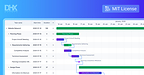
The broader adoption trends highlighted in the research help explain why permissively licensed developer tools continue gaining attention across software teams. DHTMLX Gantt Community Edition was recently released as a free JavaScript Gantt chart component distributed under the MIT license. The component enables developers to build project management and scheduling interfaces for commercial, internal, and open-source applications while retaining the flexibility commonly associated with permissive open-source software.
The Community Edition includes a configurable task grid, zoomable timeline, project and milestone support, dependency links, drag-and-drop scheduling, smart rendering, templates, plugins, TypeScript definitions, accessibility support, touch support, and localization capabilities across 50+ languages.
According to public repository data, the DHTMLX/gantt GitHub project has accumulated approximately 1,800 stars and more than 350 forks as of June 2026. The component supports integration with JavaScript applications as well as React, Angular, Vue, and Svelte environments.
The analysis suggests that tools released under permissive licenses may encounter fewer adoption barriers because organizations can evaluate and integrate them without many of the licensing restrictions associated with proprietary alternatives.
Methodology
This analysis synthesized findings from the Black Duck 2025 Open Source Security and Risk Analysis (OSSRA) Report, the 2025 State of Open Source Report published by Perforce OpenLogic in partnership with the Eclipse Foundation and the Open Source Initiative, RedMonk’s 2026 analysis of open-source licensing trends, and European Commission research examining the economic impact of open-source software.
The reviewed research covered commercial software adoption, licensing patterns, organizational usage trends, and economic outcomes associated with open-source ecosystems. All findings referenced in this release originate from publicly available research published between 2021 and 2026.
FAQ
What is DHTMLX Gantt Community Edition?
DHTMLX Gantt Community Edition is a free JavaScript Gantt chart component released under the MIT license. It allows developers to build project management and scheduling interfaces for commercial, internal, and open-source applications.
What does the MIT license actually allow teams to do?
MIT licensing allows developers and organizations to use, modify, distribute, and integrate software into proprietary or commercial applications while complying with relatively simple attribution requirements.
What core features are included in the Community Edition?
DHTMLX Gantt Community Edition includes a configurable task grid, zoomable timeline, project and milestone support, dependency links, drag-and-drop scheduling, templates, plugins, TypeScript definitions, accessibility support, touch support, and 50+ localization options.
Can DHTMLX Gantt Community Edition be used in a commercial product?
DHTMLX Gantt Community Edition can be integrated into commercial software products because it is distributed under the MIT license, which permits commercial use and distribution.
How is the Community Edition different from the previous GPL-licensed Standard Edition?
DHTMLX Gantt Community Edition is distributed under the MIT license, providing a more permissive licensing model. DHTMLX Gantt PRO remains the paid edition for organizations requiring advanced project management functionality, enterprise-oriented features, and official vendor support.
About DHTMLX Gantt Community Edition
DHTMLX Gantt Community Edition is a free JavaScript Gantt chart component available under the MIT license. The project enables developers to build project management and scheduling interfaces for web applications using plain JavaScript or frameworks including React, Angular, Vue, and Svelte.
Learn more about DHTMLX Gantt Community Edition at https://dhtmlx.com/docs/products/dhtmlxGantt/open-source/.
Source: DHTMLX Gantt Community Edition
Contact: Kate Konyukh
Email:contact@dhtmlx.com
View original content to download multimedia:https://www.prnewswire.co.uk/news-releases/97-of-commercial-software-runs-mit-licensed-open-source-removing-dev-tool-barriers-dhtmlx-finds-302824114.html
You may like
Technology
Trip.com Turns Up the Savings this November with Mega Deals on Flights, Hotels and More in Australia
Published
8 minutes agoon
November 9, 2026By
From $29 domestic flights to half-price hotel deals, Trip.com’s November Mega Sale brings a month of travel bargains across 11.11 and Black Friday
SYDNEY, Nov. 9, 2026 /PRNewswire/ — November isn’t just for shopping carts – it’s for packing suitcases for Christmas too! Trip.com is giving Aussie travellers plenty of reasons to plan their next getaway, with its Black Friday Mega Sale bringing together a line-up of travel deals across 11.11 and Black Friday.
From bargain airfares to hotel steals and discounted travel experiences, Trip.com is packing November with deals worth setting an alarm for. Kicking off the shopping festivities, the sale will feature two major flash sale days on 10 and 11 November, with domestic flights from just $29, Bali flights from $109, 4-star Bali hotels from $19 a night, and even $1 eSIMs. More deals will follow on 27 November for Black Friday.
Closer to home, travellers can also enjoy exclusive deals at the Currumbin Wildlife Sanctuary in Gold Coast, including $20 off Koala Connection Experiences and 50% off Astra Lumina tickets.
10 November: Flights Take Centre Stage
The savings take off on 10 November, with a series of limited-time flight offers dropping throughout the day.
Deals dropping at 12pm AEDT:
Deals
Offer
Domestic flights
From $29
International flights
Bali from $109Ho Chi Minh City from $149One-way flight to Guangzhou from $109 (exclusively with
China Southern Airlines)One-way flights from Sydney or Melbourne to Shanghai or
Chengdu from $189
New Zealand flights
Up to 10% off (capped at $85)
Flight promo codes
Up to 50% off (capped at $100)Up to 25% off (capped at $50) [Note: restricted to a
minimum of 2 passengers and return flights only]Up to 15% off (capped at $25)
Airline coupons
Up to $200 off with participating airlines, including Jetstar, Virgin
Australia, Qantas, Sichuan Airlines, Fiji Airways, Singapore Airlines
and Philippine Airlines, and more
Australian airport promo codes
Up to $100 off for Perth Airport
Note: Flight offers are for eligible departures from Australian cities, subject to applicable terms and conditions.
More flight savings will be released later in the day:
2pm: 5% off flights promo codes (capped at $25)6pm: Tiered flight promo codes offering up to $100 off, depending on booking value
11 November: Hotels, Attractions and More Join the Sale
On 11 November, the spotlight shifts to accommodation and experiences, with savings on hotels in Australia and overseas, alongside attractions, transport and travel essentials.
Deals dropping at 12pm AEDT:
Deals
Offer
Hotel promo codes
Up to 50% off (capped at $100) and up to 15% off
(capped at $50) on all hotels
Australia and New Zealand hotels
Up to 25% off (capped at $50)
Japan hotels
Up to 20% off (capped at $50)
International hotel flash sales
5-star hotels in Bangkok from $49/night4-star hotels in Bali from $19/night4-star hotels in China from $79/night4-star hotels in Japan from $59/night4-star hotels in Melbourne from $89/night
Note: Hotel promo codes require a minimum two-night stay, while hotel flash sale prices are limited to a maximum of two nights per hotel per user, subject to availability.
More deals will drop at 2pm, including:
$1 eSIMs in a limited-time flash saleUniversal Studios Japan: Buy one, get one on selected 1-Day Pass offersShanghai Disneyland: Up to 50% off selected flash sale offersChina train tickets: Up to 90% off promo codesCar hire: Up to 50% off promo codesInternational and domestic hotels: 5% off promo code, capped at $15
At 6pm, tiered hotel promo codes offering up to $100 off eligible bookings will also be available.
27 November: Black Friday Brings Another Wave of Travel Deals
The November savings don’t end with 11.11. On 27 November, Trip.com will bring back popular deals, including domestic flights from $29, international flights to Bali from $109, Ho Chi Minh City from $149, alongside hotel promo codes of up to 50% off (capped at $100).
Travellers can also look forward to up to 50% off flight promo codes (capped at $100), up to $200 off airline coupons with participating carriers, $1 eSIMs, and discounts of up to 50% on car hire and up to 20% on airport transfers.
Family Fun with Exclusive Currumbin Wildlife Sanctuary Deals
Trip.com has partnered with Currumbin Wildlife Sanctuary – one of Gold Coast’s iconic attractions – to offer an exclusive $20 off Koala Connection Experiences, with admission and encounter tickets from $69 for children and $89 for adults. Visitors can explore a purpose-built koala habitat, learn about its koalas from a keeper and take home a memorable photo. Named among Trip.com’s 2026 Global 100 Family-Friendly Attractions, the sanctuary will also offer 50% off Astra Lumina tickets (including general admission) during the 11.11 and Black Friday sales, for visits up to 19 December 2026.
Terms and Conditions apply. All promotional offers are available on a first-come, first-served basis within the specified period and while stocks last. Please note that all deals are in AEDT time.
For more information, please visit https://au.trip.com/.
About Trip.com
Trip.com is an international one-stop travel service provider, available in 27 languages across 48 countries and regions in 44 local currencies. Offering an extensive hotel and flight network of more than 1.7 million hotels and flights from over 680 airlines, along with over 350,000 in-destination activities, Trip.com covers 3,500 airports in 220 countries and regions. Trip.com‘s world-class 24/7 multilingual customer service helps to ‘create the best travel experience’ for its millions of customers worldwide. To book your next trip, visit Trip.com.
View original content to download multimedia:https://www.prnewswire.com/apac/news-releases/tripcom-turns-up-the-savings-this-november-with-mega-deals-on-flights-hotels-and-more-in-australia-302931936.html
SOURCE Trip.com
Technology
LG ELECTRONICS EARNS FIRST ASIL D PRODUCT CERTIFICATION FOR AUTOMOTIVE CENTRAL GATEWAY SYSTEM
Published
8 minutes agoon
November 9, 2026By
TÜV Rheinland’s First ASIL D Product Certification in the Central Gateway System Category Validates LG’s Functional Safety Capabilities
News Summary
LG Electronics has earned its first ISO 26262 ASIL D product certification for its automotive central gateway system. It is also the first ASIL D product certification TÜV Rheinland has issued in this category.The certification builds on LG’s ISO 26262 process certification in 2017 and ASIL B product certification in 2021, demonstrating the company’s ability to meet the highest functional safety requirements at the product level.The independent validation is expected to strengthen automakers’ confidence in LG and enhance its competitiveness in future vehicle platform programs, as the company extends its expertise to next-generation communication control systems, gateways and domain controllers.
SEOUL, South Korea, Nov. 8, 2026 /PRNewswire/ — LG Electronics (LG) has earned its first ISO 26262 Automotive Safety Integrity Level D (ASIL D) product certification for its automotive central gateway system, developed as the central communication unit (CCU) 2.0 for the Genesis GV90. The certification, awarded by global testing and certification body TÜV Rheinland, is also the first ASIL D product certification the organization has issued in the automotive central gateway system category.*
Under ISO 26262, ASILs range from A to D based on the severity of potential harm, exposure to hazardous situations and controllability of the resulting risks. ASIL D, the highest level, requires the most stringent measures to prevent and mitigate safety-related failures. As part of the certification process, TÜV Rheinland comprehensively assessed LG’s development processes, design documentation and verification results, confirming the system’s compliance with applicable ASIL D requirements.
From Certified Processes to ASIL D-Certified Products
The certification is the latest step in LG’s efforts to advance its functional safety capabilities. The company obtained ISO 26262 process certification for its automotive development framework in 2017, followed by ASIL B product certification for its advanced driver assistance system (ADAS) front camera module in 2021. Achieving ASIL D at the product level demonstrates LG’s ability to apply the highest functional safety requirements across the design, implementation and verification of an automotive product.
For global automakers, this independent, product-level validation offers further assurance of LG’s ability to deliver safety-critical automotive systems. It is also expected to enhance the company’s competitiveness in future vehicle platform programs.
Functional Safety Embedded in System Operations
LG’s central gateway system serves as the hub for vehicle communications, connecting electronic control units (ECUs) and managing data exchange across in-vehicle and external networks. When routing data over controller area network (CAN) and Ethernet interfaces, the system is designed to accurately transmit safety-related messages, detect routing malfunctions and relay relevant fault information to other ECUs.
The system also incorporates functional safety measures for over-the-air (OTA) software updates. These measures help prevent unintended updates and maintain safe control of vehicle start-up during updates and rollbacks. In addition, the system supports connected car services, features on demand and system diagnostics, along with cybersecurity functions such as intrusion monitoring and certificate-based authentication.
Strengthening Competitiveness for Future AIDV Platforms
As the automotive industry transitions toward AI-defined vehicles (AIDVs), central gateway systems are taking on a larger role. They manage communications across vehicle networks, enable OTA updates and support connected services, which makes functional safety increasingly critical.
The expertise LG gained through this project is applicable to other safety-critical automotive systems. That expertise spans functional safety development processes, design and verification methodologies, and certification. These capabilities lay the groundwork for LG to develop a broader range of automotive components, including next-generation communication control systems, gateways and domain controllers.
“Earning our first ASIL D product certification is a significant milestone for LG,” said Lee Sang-yong, head of the VS R&D Laboratory at the LG Vehicle Solution Company. “It reflects our progress from establishing certified functional safety processes to implementing and verifying the highest-level safety requirements in an automotive product. We will build on this accomplishment to strengthen automakers’ confidence in LG and advance next-generation solutions for the AIDV era.”
* Based on TÜV Rheinland’s certification records as of November 2026
# # #
About LG Electronics Vehicle Solution Company
The LG Vehicle Solution Company (VS) is bringing LG’s unique mobility innovations to the automotive industry. As a trusted and innovative partner, the company provides intelligent solutions including head units, displays, connectivity, ADAS vision systems, and software solutions integrating human-centered AI and automotive engineering into the modern AI/software-defined vehicle. Committed to “Driving better future mobility,” the company has diversified its portfolio to further strengthen its capabilities, including automotive lighting systems, e-powertrain and cybersecurity. For more information, visit www.LG.com/global/mobility. To stay updated with the latest news, subscribe to the LG mobility newsletter, LG Loop at www.LG.com/global/mobility/newsletter and follow the LG VS Company LinkedIn channel at www.linkedin.com/company/lgvehiclesolution.
View original content to download multimedia:https://www.prnewswire.co.uk/news-releases/lg-electronics-earns-first-asil-d-product-certification-for-automotive-central-gateway-system-302931824.html
Technology
Global Validation First: How CrossHub Is Building Trust to Scale Overseas
Published
8 minutes agoon
November 9, 2026By
SEOUL, South Korea, Nov. 9, 2026 /PRNewswire/ — For startups entering foreign markets, proving their technology and turning it into real business is an uphill battle. They must navigate local regulations, understand market demand and win the trust of companies wary of adopting new technology. CrossHub, a developer of identity verification and payment solutions, is tackling these hurdles by running proofs of concept (PoCs) with overseas partners, building a track record, and converting those references into field deployments and partnerships with financial institutions.
A voice authentication pilot in Singapore’s healthcare sector shows how CrossHub is testing the real-world potential of its technology abroad. This year, the company signed a non-disclosure agreement (NDA) with Singapore’s National Healthcare Group Diagnostics (NHGD) and is currently running a PoC. Last month, it completed an on-site demonstration ahead of the service launch.
In Singapore, patients must state their name and address by voice before seeing a doctor. Until now, staff have manually checked whether the information matched the patient. CrossHub is addressing this with V-Pay, a voice authentication solution that analyzes a speaker’s voice to confirm their identity.
“If this moves to a full contract, we’ll have the opportunity to use voice data from northern Singapore,” said Kim Dong-ju, team lead at CrossHub. “We believe the technology can be applied not only to healthcare but to other industries as well.”
CrossHub is investing heavily in overseas pilots because earning the trust of adopting companies matters as much as technical performance. Businesses considering identity verification technology need proven cases that demonstrate not only accuracy and convenience but also security and data protection. In tightly regulated industries such as finance, a startup’s pitch alone rarely leads to adoption.
“Startups offer innovative technology, but traditional industries are reluctant to adopt it,” Kim explained. “They demand safety and references, so we decided to solve that problem overseas first.”
CrossHub has validated its technology through a range of PoCs with partners including French security firm Thales. Building on that, it has begun collaborating with Korean financial institutions such as Woori Bank, Samsung Card, Woori Card and Hana Bank—leveraging its overseas track record as a foundation for partnerships at home.
The company was born out of the frustrations foreign tourists face with Korea’s digital services. Many major Korean apps require mobile phone-based identity verification, making it difficult for short-term visitors without a Korean phone number to use services such as Kakao T or Baemin. CrossHub set out to solve this by developing passport-based identity verification.
Its core technologies are self-sovereign identity (SSI) and zero-knowledge proofs (ZKP). SSI lets users manage their own identity rather than having personal data stored by individual services, while ZKP allows users to prove a necessary fact without disclosing the underlying personal information. CrossHub combines the two to verify identity while minimizing the storage and exposure of personal data.
The company is now expanding from identity verification into payments and remittances. Travel Pass, an integrated payment and travel platform for foreign visitors to Korea, is being developed with Woori Bank. It aims to help tourists pay for goods and access transportation and tourism services in Korea. In September, CrossHub broadened the service’s reach by signing an integration and sales agreement for transportation and tourism products with Japanese travel platform Linktivity.
CrossHub is also exploring opportunities in cross-border remittance. Under a project commissioned by the Korea Internet & Security Agency (KISA), it is developing a stable-token remittance solution based on cross-border API connections, with plans to link Korean and Vietnamese banks.
Kim expects blockchain to become less of a standalone industry and more of a foundational technology that enhances fields such as artificial intelligence (AI), quantum technology and AI agents. Beyond technical maturity, he stressed, what matters is securing services and markets that users find easy to adopt.
CrossHub tailors its approach to each overseas market. Japan’s regulatory environment resembles Korea’s, but market entry and building trust take time. Singapore, with its advanced financial services and relatively active collaboration between startups and corporates, is being positioned as a hub for pilots and commercialization. The company plans to expand technology validated in Singapore into Europe and North America, with North America as its long-term target market.
Product development continues on an annual cycle. CrossHub launched its identity verification solution IDBlock in 2024, followed by the payment solution B-Pay in 2025. This year it introduced V-Pay, featuring voice authentication, and it is developing another product slated for release in 2027. The company accumulates technology from identity verification to payments and voice authentication, then turns it into real business.
CrossHub has also broadened its investor base. In 2025, it raised funding from four accelerators, and all four returned as follow-on investors in its recently closed round. Two banks and a government institution also participated.
Support from SVC has aided its global expansion. CrossHub uses SVC as a base for Travel Pass, one of its flagship services. Located near Hongdae, the space allows the team to engage directly with tourists and better understand the needs of foreign visitors to Seoul. Networking through support programs, along with meeting rooms, conference spaces and other facilities, has also helped drive the business forward.
“Since moving into SVC, our global networking has grown, expanding our reach from about 20 countries last year to about 40 this year,” Kim said. “The diverse networks and support programs have helped us scale the business.”
CrossHub plans to convert the partnerships and validation cases it has secured abroad into actual contracts and service operations, and then extend them to other countries and industries. “Our strength is that we build up and expand our technology every year and commercialize it,” Kim said. “We aim to grow into a technology-driven fintech company.”
The company is also a resident of SVC Seoul, a global startup hub in Seoul’s Hongdae area. The hub was established to connect startups with strong overseas growth potential to companies, universities, and investors in Korea and abroad.
View original content to download multimedia:https://www.prnewswire.com/apac/news-releases/global-validation-first-how-crosshub-is-building-trust-to-scale-overseas-302932019.html
SOURCE CROSSHUB
Trip.com Turns Up the Savings this November with Mega Deals on Flights, Hotels and More in Australia
LG ELECTRONICS EARNS FIRST ASIL D PRODUCT CERTIFICATION FOR AUTOMOTIVE CENTRAL GATEWAY SYSTEM
Global Validation First: How CrossHub Is Building Trust to Scale Overseas
Send Rakhi to UK swiftly with UK Gifts Portal
Whiteboard Series with NEAR | Ep: 45 Joel Thorstensson from ceramic.network
Nullmax and Renesas Forge Strategic Partnership to Deliver Competitive ADAS Solutions for the Global Market
Why You Should Build on #NEAR – Co-founder Illia Polosukhin at CV Labs
Whiteboard Series with NEAR | Ep: 45 Joel Thorstensson from ceramic.network
NEAR End of Year Town Hall 2021: The Open Web World, MetaBUILD 2 Hackathon and 2021 recap
Trending
-
Technology2 days agoDiamond Foundry Announces First-Ever D200mm Single-Crystal Diamond
-
Near Videos4 days agoWhere AI money lands in crypto
-
Technology4 days agoFinshape launches Agentic DBOS: agentic AI already supporting digital banking projects
-
Technology4 days agoOpenAssets and Digital Asset Partner to Modernize Capital Markets Infrastructure
-
Coin Market3 days agoCrypto exchanges tout cold storage ratios after Binance attack
-
Technology4 days agoWhen Trade Reaches New Markets, Money Has to Keep Pace
-
Technology3 days ago2026 World Internet Conference Wuzhen Summit Opens
-
Technology3 days agoASTRI Establishes Advisory Board for Smart Mobility Technology Alliance