Connect with us

Technology

Pusan National University Introduces ASTRA-Net for Improved Lung Airway Mapping

Published

on

ASTRA-Net helps reconstruct overlooked peripheral airways, creating more complete maps for bronchoscopy procedures

BUSAN, South Korea, Aug. 6, 2026 /PRNewswire/ — Lung cancer is the most diagnosed cancer globally and is one of the leading causes of cancer-related deaths. Early detection can improve survival. However, collecting tissue samples from small tumors located deep within the lungs remains a big challenge. As many of these lesions are found in the peripheral regions of the lungs, physicians must navigate through an intricate network of tiny branching airways to reach the target.

In these cases, clinicians rely on lung navigation systems that use three-dimensional airway maps reconstructed from computed tomography (CT) scans to guide instruments toward suspicious lesions. The accuracy of these navigation systems depends on the completeness of the airway maps. Creating these maps is again difficult, as the smallest peripheral airways are extremely thin and difficult to distinguish from the surrounding tissues. This restriction raises a concern that if artificial intelligence (AI) systems are trained using incomplete information, they may also overlook clinically important airways.

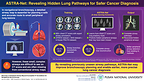
To address this challenge, researchers from Pusan National University in South Korea developed ASTRA-Net (Anatomical Segmentation with Tree-aware Refinement Attention), an AI framework designed to identify previously overlooked airway branches and generate more complete airway maps. The study was led by Dr. MinWoo Kim from the School of Biomedical Convergence Engineering, Pusan National University, and Dr. Hee Yun Seol from the Division of Pulmonary and Critical Care Medicine, Research Institute for Convergence of Biomedical Science and Technology, Pusan National University Yangsan Hospital, in collaboration with other researchers. The paper was published in IEEE Transactions on Medical Imaging (Volume 45, Issue 6) on June 1, 2026.

Unlike conventional models that may be limited by incomplete training annotations, ASTRA-Net was designed to identify anatomically plausible airway structures that may have been omitted from the original labels.

“ASTRANET is not simply another airway segmentation model. It was specifically designed to identify peripheral airways that may have been overlooked during manual annotation, thereby helping to create a more complete roadmap for bronchoscopy,” explains Dr. Kim.

ASTRA-Net utilizes a multi-stage deep learning architecture like those employed in advanced medical image analysis. A part of this network learns the overall structure of the lungs, whereas another refines regions where airway boundaries are unclear. An additional attention mechanism helps the model focus on regions where small peripheral airways are difficult to distinguish or may have been omitted from the annotations. This allows the reconstruction of airway branches that are often missing from CT annotations. By incorporating anatomical clues from the surrounding lung tissues and blood vessels, which often run alongside the airways, the system can infer the continuity of previously unrecognized airway pathways.

Researchers also evaluated the framework using multiple datasets as well as clinical CT scans obtained from Pusan National University Yangsan Hospital. This model demonstrated strong performance in identifying fine peripheral airways and remained robust even when CT scans varied in image quality and slice thickness. Additionally, expert review of the model predictions showed that some structures initially counted as false positives were genuine airway branches that had been omitted from the original annotations.

“By providing physicians with a more complete airway roadmap, we hope this technology will improve navigation to difficult-to-reach lung lesions and support the development of future AI-assisted and robotic bronchoscopy systems,” concludes Dr. Kim.

Reference

Title of original paper: Discovery of Peripheral Airway Beyond Incomplete CT Annotations for Navigational Bronchoscopy

Journal: IEEE Transactions on Medical Imaging

DOI: 10.1109/TMI.2026.3672178 

About Pusan National University

Website: https://www.pusan.ac.kr/eng/Main.do

Contact:

Goon-Soo Kim

82 51 510 7928

420227@email4pr.com

View original content to download multimedia:https://www.prnewswire.com/news-releases/pusan-national-university-introduces-astra-net-for-improved-lung-airway-mapping-302844459.html

SOURCE Pusan National University

Continue Reading

Technology

Tripo AI Releases Latest Model Tripo P2.0, Advancing AI 3D Generation with Production-Ready Assets
Published

on

By

SAN FRANCISCO, Sept. 21, 2026 /PRNewswire/ — Tripo AI unveiled Tripo P2.0, its latest 3D-native foundation model enabling high-fidelity 3D assets generation with quad topology, marking a major breakthrough in generative 3D.

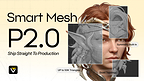
As an upgrade from Tripo Smart Mesh P1.0, P2.0 brings native quad mesh generation, a first for the AI 3D industry, representing a major advance in AI-powered 3D content creation. The model allows 3D creators to move AI-generated 3D content seamlessly into production, addressing one of the longstanding challenges in AI 3D generation.

Following the release of P2.0 Preview in August, the official launch of P2.0 added two new features: multiple versions generation per prompt and Mesh Edit. The model makes it easier than ever for creators to edit, rig, animate and integrate AI generated characters and props into production pipelines.

“Topology has been the wall between AI-generated 3D and real production: game and film pipelines are built on quad meshes, and until now AI got there only through slow, unstable retopology. P2.0 can quickly generate quad-dominant meshes natively, with clean part separation and the edge flow an artist would lay out manually. Production-ready is today’s bar; the longer-term goal for Tripo is to build models that understand, generate and interact with 3D environments,” says Dr. Yanpei Cao, Chief Scientist of Tripo AI.

The model supports both triangle- and quad-based 3D assets generation, offering up to 50,000 faces for triangle topology and up to 25,000 faces for quad topology. With one single prompt, P2.0 allows generation of a maximum of four versions of the same asset with different face counts, giving creators greater flexibility to produce assets with varying levels of complexity and details.

The newly added Mesh Edit feature gives creators direct control over the result. They can select and regenerate any region of a mesh without altering the rest of the asset. Instead of regenerating the whole asset and hoping for a better outcome, creators can refine the asset more precisely, step by step.

The model offers front, back, left and right views of the generated assets, allowing them to closely match users’ intentions.

P2.0 also supports Smart UV which enables creators to unwrap 3D assets into a 2D layout with a single click, making it easier for texturing and further editing.

Designed for games and interactive experiences, Smart Mesh P2.0 helps 3D artists, technical artists and game developers create assets ready for production. It is particularly well suited to generating game characters, hard surface objects such as vehicles, props and buildings, as well as creating 3D assets at scale.

About Tripo AI

Tripo AI is a global leader in the development of 3D-native foundation models and world models. Founded in 2023 by leading scientists in AI and computer graphics, the company has developed a comprehensive end-to-end product ecosystem, built around its proprietary 3D-native foundation models and world models. With Tripo Studio and Tripo API, Tripo AI has transformed 3D generation. Powered by a world-class AI 3D research team, the company is advancing AI toward understanding, generating, and interacting with 3D environments.

Tripo AI’s models and products have been widely adopted by individual users and enterprises globally, serving industries including intelligent manufacturing, virtual reality, interactive entertainment, and embodied AI, empowering enterprises to unlock new productivity and scale applications of generative 3D.

View original content to download multimedia:https://www.prnewswire.com/news-releases/tripo-ai-releases-latest-model-tripo-p2-0–advancing-ai-3d-generation-with-production-ready-assets-302885481.html

SOURCE Tripo AI

Continue Reading

Technology

Xinhua Silk Road: Chinese solutions for meteorological early-warning help more countries tackle climate challenges
Published

on

By

BEIJING, Sept. 21, 2026 /CNW/ — For millennia, as her believers believe, the traditional Chinese sea goddess Mazu has been blessing safe voyages. Now, Chinese meteorological early-warning solutions named after her are helping more countries prevent meteorological disasters.

“MAZU”, released by the China Meteorological Administration at the 2025 World Artificial Intelligence Conference (WAIC), is a set of China’s homegrown AI-enabled meteorological solutions featuring universal multi-hazard early warning, alerting and zero-gap coverage.

Supporting cloud-based trials in more than 40 countries, “MAZU” has been applied in countries including Pakistan, Ethiopia, the Solomon Islands, Jordan, Sri Lanka, Mongolia and Djibouti, rapidly expanding its global presence.

As the first set of solutions under the UN Early Warnings for All initiative, “MAZU” integrates AI-based meteorological early-warning models, Fengyun meteorological satellite data, multi-source monitoring products and cloud computing power.

In May this year, “MAZU” was recommended by the World Meteorological Organization at the 11th Multi-Stakeholder Forum on Science, Technology and Innovation for the Sustainable Development Goals held at UN headquarters in New York.

Unsurprisingly, “MAZU” caters to the demand for both menu-style solution offerings and highly flexible customized solutions to help relevant countries prevent meteorological disasters caused by climate change.

In Pakistan, where monsoons and rainstorms usually cause torrential floods, an early-warning system co-developed by China and Pakistan was formally embedded in relevant platforms of Pakistan’s meteorological authority.

In Ethiopia, Chinese experts leveraged the integration of data from China’s Fengyun meteorological satellites and local meteorological stations to help local weather forecasters generate high-precision nowcasts via the Fenglei and Fengqing AI models.

In Sri Lanka, the meteorological bureau of southeast China’s Fujian Province is assisting the country in achieving high spatiotemporal resolution precipitation and temperature forecasting.

Apart from the application cases of “MAZU”, nearly 1,000 people from more than 100 developing countries and regions have come to China to receive technology training focused on early warning.

As China is a crucial partner of the Early Warnings for All initiative, its platforms, satellites and AI models have helped dozens of countries enhance their early-warning capacities, noted UN Secretary-General Antonio Guterres at the 2026 WAIC.

Such a mode of cooperation, involving technology transfer, joint R&D and local capacity building to help developing countries better protect their people, is exactly what the world needs now, added Guterres.

Original link: https://en.imsilkroad.com/p/352292.html

View original content to download multimedia:https://www.prnewswire.com/news-releases/xinhua-silk-road-chinese-solutions-for-meteorological-early-warning-help-more-countries-tackle-climate-challenges-302885494.html

SOURCE Xinhua Silk Road

Continue Reading

Technology

Xinhua Silk Road: “My City, My Home” global visual submission campaign kicks off in Fuzhou for World Cities Day


Published

on

By

BEIJING, Sept. 21, 2026 /PRNewswire/ — A global call for “My City, My Home” visual submission campaign for the upcoming World Cities Day has officially kicked off in Fuzhou, southeast China’s Fujian Province, inviting people around the world to submit photos and short videos to share stories of urban development.

World Cities Day, celebrated annually on October 31 since 2014, is the first UN-designated international day dedicated to cities. Fuzhou will host the Global Observance of World Cities Day 2026.

As part of the Observance, the “My City, My Home” campaign aims to enhance the global influence of World Cities Day, encourage greater public participation, and promote the concept of sustainable urban development through a campaign open to everyone.

According to the announcement for the campaign, individuals, families, communities, schools, social organizations and other groups are all welcome to participate. The submissions should closely reflect the annual theme of this year’s World Cities Day — Regenerating the City: Adequate Housing for All.

Participants should form a square frame with the thumbs and index fingers of both hands to frame scenes that showcase the livability and renewal of their cities, and then take photos or short videos. This signature gesture symbolizes houses that shelter people, evokes the outline of early walled cities, and represents a perspective through which to capture the beauty of cities.

Participants are encouraged to start their videos with opening lines such as “This is my city”. They are also encouraged to include in their photos and videos an introduction to the city and the filming location, the reasons why the selected scene reflects urban regeneration or livability, and personal stories related to the city.

The submission period runs from the date of publication until 11:59 p.m. on October 14 (Beijing Time). Photos and videos may be submitted via Douyin or to the designated email address Mycitymyhome@outlook.com .

Photos and videos may be submitted in either 9:16 vertical or 16:9 horizontal format. Each video should be at least 5 seconds long.

Outstanding submissions will be selected for inclusion in the official campaign video, which will be presented at the opening ceremony of the Global Observance of World Cities Day 2026 in Fuzhou on October 31.

Original link: https://en.imsilkroad.com/p/352298.html

View original content to download multimedia:https://www.prnewswire.com/news-releases/xinhua-silk-road-my-city-my-home-global-visual-submission-campaign-kicks-off-in-fuzhou-for-world-cities-day-302885518.html

SOURCE Xinhua Silk Road

Continue Reading

Trending