Connect with us

Technology

Lancium Supports Governor Abbott’s Call for Transparency and Accountability in Texas Data Center Development


Published

on

Lancium backs verified reporting on power and water use, ratepayer protection, and transparent community partnership that starts long before construction

HOUSTON, Aug. 10, 2026 /PRNewswire/ — Lancium, a Texas-based developer and operator of large-scale powered land and energy infrastructure for data centers, today expressed support for Governor Greg Abbott’s directive establishing a comprehensive audit of power use, water use, and community impact for data center projects seeking interconnection to the Texas grid. We look forward to working with all stakeholders to establish a plan that achieves the Governor’s objectives while facilitating the incredible economic opportunity that is at hand for the state.

“The large load growth at hand and forecast in Texas reflects the tremendous opportunity enabled by the ERCOT market structure and the ability of business to partner with the state to achieve shared opportunity and prosperity, but this growth must be pursued responsibly,” said Michael McNamara, Chief Executive Officer of Lancium. “We support verified reporting on power and water. We support standards that keep the cost of new load off Texas households. We support an audit that will demonstrate to all stakeholders and communities that projects can be developed responsibly and result in positive benefits to municipalities and individuals across the state.”

Lancium has built its business around a specific proposition: that large computing load can be an asset to the grid rather than a burden on it. We have located our campuses in areas with excess energy, on unused land, and we have engaged local stakeholders early and transparently – learning bi-directionally the unique approach required in each location. The company’s campuses are grid-connected, but also bring behind-the-meter resources to help ensure reliability. 

“We work with communities long before development begins — before we’ve committed to a site, before there’s a plan to present,” McNamara said. “We meet with county officials, school districts, water boards, landowners, and residents to understand each of their needs and concerns. This proactive approach ultimately directs local investment toward what matters to the community as whole. If we haven’t done that work, we haven’t earned the right to build there.”

Lancium’s flagship campus is located in Abilene, TX, where we are proud to be welcomed by the community and generate significant, positive impact for the community together.

Lancium’s commitments in the communities it serves include:

Protecting ratepayers. Lancium pays all costs related to energy infrastructure upgrades to support its projects.
 Transparent reporting. Lancium supports full disclosure of power and water use and welcomes the verification and audit standards the state plans on enacting.
 Conserving water — and adding to local supply. Lancium requires closed-loop cooling systems across its campuses, and, where local water systems need strengthening, Lancium will help develop local water infrastructure, so that the net effect of a Lancium campus on local water resources is positive.
 Engaging before development. Lancium begins community engagement during site evaluation, ahead of development, so that local priorities shape the project rather than react to it.
 Investing where it matters locally. Lancium directs its local investment toward the priorities communities identify themselves — schools, workforce training, emergency services, and civic infrastructure.

The Governor’s audit directive reflects the scale of capital moving into Texas and the seriousness of the infrastructure, resource, and community questions that come with it. Lancium shares that assessment and looks forward to working with state leaders, the Public Utility Commission of Texas, ERCOT, utility partners, and local officials to support growth that keeps Texas the best place in the country to build and to live.

About Lancium
Lancium is an energy technology and infrastructure company that develops and operates large-scale campuses to meet the demands of advanced computing. Founded in Texas in 2017, the company designs its campuses to integrate with the electric grid and incorporate multiple generation sources — supporting reliability, protecting ratepayers, and delivering long-term economic benefit to the communities that host them. For more information, visit lancium.com.

View original content to download multimedia:https://www.prnewswire.com/news-releases/lancium-supports-governor-abbotts-call-for-transparency-and-accountability-in-texas-data-center-development-302847121.html

SOURCE Lancium

Continue Reading
Click to comment

Leave a Reply

Your email address will not be published. Required fields are marked *

Technology

HelloNation Article Breaks Down Lake Home Lifestyle Choices With Real Estate Expert Tony Isa

Published

on

By

The Article Explains How Infrastructure, Year-Round Access, and Community Shape Choices Between Full-Time and Seasonal Lake Living

ANGOLA, Ind., Aug. 10, 2026 /PRNewswire/ — What are the best lakes in Steuben County for full-time living and vacation homes? HelloNation has published an article featuring insights from Real Estate Expert Tony Isa that provides the answer by examining how different lakes support different lifestyles.

The article explains that choosing a lake home involves more than finding an appealing water view. Roads, utilities, nearby services, and year-round community activity can determine whether a property works better as a permanent residence or seasonal retreat.

For buyers considering full-time lake living, the HelloNation article highlights Crooked Lake as a practical option. Its four-season infrastructure includes paved roads and reliable utilities, while its proximity to Angola provides access to healthcare, grocery stores, schools, and other everyday needs.

The article also notes that many homes around Crooked Lake are designed for winter use. This can matter for residents who need their property and surrounding community to remain functional throughout colder months. These features help distinguish full-time lake living from owning a home intended mainly for summer visits.

Jimmerson Lake offers another example of a lake that can support year-round residents. According to the article featuring Real Estate Expert Tony Isa, the area combines reliable services with access to neighboring lakes, including Lake James. That connection gives homeowners additional water access while allowing them to remain close to practical services.

Infrastructure becomes especially important during winter. The article explains that snow removal, utility access, and emergency services can affect daily life once seasonal activity slows. Lakes with established year-round populations often have systems that help residents maintain their routines throughout the year.

Clear Lake represents a different type of lake home lifestyle. The article describes it as a location with strong summer appeal and a quieter atmosphere when the main vacation season ends. That pattern can suit owners seeking a seasonal lake home focused on weekends, recreation, and time away from everyday routines.

Seasonal buyers may also value features that full-time residents view differently. Fewer year-round neighbors, a slower off-season pace, and greater privacy can support the sense of retreat these homeowners want. The article notes that convenience may be less important when the property is primarily used for vacations.

These differences show why buyers should consider how a lake community operates throughout the entire year. A property that provides privacy and quiet during part of the year may not offer the access needed for daily living. A busier year-round community may provide stronger infrastructure while offering less of the seasonal atmosphere some vacation homeowners prefer.

The HelloNation article encourages readers to match their expectations with the practical characteristics of each lake. The best fit depends on how often the home will be occupied, which services residents need, and what type of community experience they expect.

Understanding those distinctions can help buyers evaluate Steuben County properties beyond shoreline features alone. From established year-round neighborhoods to quieter seasonal settings, the area provides different approaches to the lake home lifestyle. The article featuring Real Estate Expert Tony Isa shows how examining infrastructure, access, and community patterns can help buyers identify a lake that fits their intended use.

The Best Lakes in Steuben County for Full-Time Living vs. Vacation Homes features insights from Tony Isa, a real estate expert in Angola, Indiana, in HelloNation.

About HelloNation

HelloNation is America’s Good News Network, a premier media platform built on the idea that good news travels faster when real people tell real stories. Through its community-focused publications and innovative “edvertising” approach, HelloNation delivers content that informs, inspires, and spotlights the leaders making a meaningful impact in their communities.

View original content to download multimedia:https://www.prnewswire.com/news-releases/hellonation-article-breaks-down-lake-home-lifestyle-choices-with-real-estate-expert-tony-isa-302847173.html

SOURCE HelloNation

Continue Reading

Technology

HelloNation Article Explains Car Accident Injury Steps, Featuring Personal Injury Attorney and Auto Accident Expert Johnny Hawkins

Published

on

By

The article outlines practical steps that help protect health, documentation, and insurance rights after a Michigan car accident.

DETROIT, Aug. 10, 2026 /PRNewswire/ — What should you do after a car accident injury in Michigan? HelloNation answers that question in a HelloNation article featuring insights from Personal Injury Attorney and Auto Accident Expert Johnny Hawkins of Law Office of J L Hawkins, PLLC.

The article explains that the first priority after a Michigan car accident is ensuring everyone’s safety. If possible, drivers should move to a safe location away from traffic, check for injuries, and call 911 when emergency assistance or a police response is needed. The article notes that an official police report often becomes an important part of accident documentation and may help clarify what occurred.

The HelloNation article emphasizes that seeking a prompt medical evaluation is important even when injuries appear minor. Many common conditions associated with a car accident injury, including soft tissue injuries and concussions, may not produce symptoms immediately. A timely medical evaluation helps identify injuries before they worsen while creating medical records that may become important during an insurance claim or other legal matters.

The article also describes the value of gathering information at the accident scene whenever it is safe to do so. Drivers should exchange contact information, driver’s license details, vehicle registration information, and insurance information with everyone involved. Witness names and phone numbers can also be helpful. Photographs showing vehicle damage, road conditions, traffic signs, skid marks, and visible injuries provide additional accident documentation that may help if questions arise later.

According to the article, staying organized after a Michigan car accident can make the recovery process easier. Medical bills, treatment records, prescription expenses, repair estimates, and receipts for out-of-pocket costs should all be saved. If a car accident injury prevents someone from working, records showing missed time and lost wages also help document the full impact of the accident.

The HelloNation article explains that insurance companies often contact injured drivers soon after a collision. While reporting the accident to an insurance company is appropriate, the article advises taking a thoughtful approach before providing detailed recorded statements or accepting an early settlement offer. Because some injuries require ongoing treatment, the full extent of a car accident injury may not be known immediately after the crash.

The article further explains that Michigan’s no-fault insurance system contains unique rules that may affect available benefits and legal options. Understanding how no-fault insurance applies to a specific accident helps individuals make informed decisions while avoiding common mistakes during the insurance claim process. Since every collision involves different circumstances, the article notes that available options may vary based on the facts of each case.

Throughout the article, Personal Injury Attorney and Auto Accident Expert Johnny Hawkins emphasizes practical preparation rather than quick decisions. Careful accident documentation, prompt medical evaluation, and organized records help preserve important information while allowing injured individuals to focus on their recovery after a Michigan car accident. The article explains that taking these steps can reduce unnecessary complications during an already stressful time.

The article concludes that recovering from a car accident involves much more than repairing a vehicle. Paying attention to physical health, maintaining complete records, understanding no-fault insurance, and approaching every insurance claim carefully can help protect both personal well-being and important legal interests.

What to Do After a Car Accident Injury in Michigan features insights from Johnny Hawkins, Personal Injury Attorney and Auto Accident Expert of Detroit, Michigan, in HelloNation.

About HelloNation

HelloNation is America’s Good News Network, a premier media platform built on the idea that good news travels faster when real people tell real stories. Through its community-focused publications and innovative “edvertising” approach, HelloNation delivers content that informs, inspires, and spotlights the leaders making a meaningful impact in their communities.

View original content to download multimedia:https://www.prnewswire.com/news-releases/hellonation-article-explains-car-accident-injury-steps-featuring-personal-injury-attorney-and-auto-accident-expert-johnny-hawkins-302847174.html

SOURCE HelloNation

Continue Reading

Technology

webAI Releases TwiL-LM, a Family of Formal-Logic Models That Outreason a 120B Model and Run on an iPhone

Published

on

By

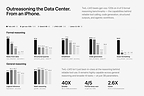
Built for compliance rules, contract logic, and research reasoning, the 3B model beats OpenAI’s open-weights gpt-oss-120b, a model 40× its size, on four of five formal-reasoning benchmarks, while the 1-gigabyte 1.7B variant outperforms every sub-2B model webAI evaluated.

AUSTIN, Texas, Aug. 10, 2026 /PRNewswire/ — webAI today released TwiL-LM (Thinking webAI Intelligence Lab Language Model), a family of small formal-logic models at 1.7 billion and 3 billion parameters that run entirely on consumer hardware and outscore far larger models at deductive reasoning. TwiL-LM3, the 3B model, beats gpt-oss-120b, a model 40 times its size, on four of five benchmarks in webAI’s formal-reasoning suite. Both models are available now on Hugging Face.

TwiL-LM does one hard thing exceptionally well: it translates plain English into formal logic, checks whether conclusions follow from their premises, and works through multi-step deductive reasoning which is the backbone of compliance rules, contract conditions, research, and everyday decision-making. This is a contribution to the sub-field known as autoformalization.

The AI-reasoning race has so far been a story about scale, with frontier labs pursuing better reasoning through ever-larger models served from data centers. TwiL takes the opposite bet: pure deductive reasoning, distilled into a package small enough to download onto a phone at about one gigabyte to connect with your non-internet data sources. It is an expert an enterprise can own and run at the edge instead of renting through an API.

“What’s surprised me most about TwiL is how useful it is beyond any single benchmark,” said David Stout, CEO and co-founder of webAI. “I use it every day for writing, tool calling, and general reasoning, but the more interesting capability is how well it works alongside other expert models. TwiL can act almost like an auto-correct for AI — checking outputs, refining reasoning, enforcing structure, and helping specialized models produce better answers. And because it runs at around 300 tokens per second on an M2 MacBook, you can use that reasoning layer continuously without slowing everything else down.”

The numbers

Against gpt-oss-120b on webAI’s formal-reasoning suite, TwiL-LM3 (3B) scores:

96.4 vs. 65.2 on rule induction (deriving rules from data)87.6 vs. 43.3 on semantic parsing (language into structured queries (token F1)64.6 vs. 63.1 on Lean formalization (theorem statements into formal code (token F1))52.0 vs. 7.0 on exact-format answering: a 7.4× gap68.7 vs. 77.5 on entailment labeling (the one lane the 120B model keeps a lead)

Beyond the formal-reasoning suite, TwiL-LM3 stays within striking distance of models many times its size on general benchmarks such as LogicBench (71.7) and GSM8K (87.3). In webAI’s throughput tests it answered 2.6× faster than gpt-oss-120b, at 32.9 vs. 12.6 answers per second. The 1.7B variant, built for phones, roughly doubles its base model (0.361 vs. 0.185 aggregate reasoning accuracy over SmolLM2-1.7B) and led every sub-2B model webAI evaluated, outscoring Phi-4-mini, SmolLM-3B, Qwen2.5-3B, and Llama-3.2-3B, models in the 3-to-4-billion-parameter class.

Expertise, not scale

TwiL-LM’s performance required no training from scratch. Instead, its small, targeted fine-tune came from a 289 MB LoRA adapter of roughly 72 million parameters, trained on a purpose-engineered, proprietary formal-logic data engine built from open sources.

The release is the continued public demonstration of webAI’s collaborative intelligence thesis: that the future of AI is not one giant generalist rented through an API, but specialized AI models as experts that teams build and run themselves.

“In the quest for artificial general intelligence (AGI) I think we are relearning the importance of narrow, specialized models that capture true expertise,” said Dr. Paul J. Maykish, Chief Intelligence Officer, webAI. “A minor consensus is growing that real work gets done by teams of specific AI models that interact and improve with your non-internet, expert data. TwiL-LM1.7B is what one of those deductive-reasoning experts looks like — in a form that downloads at 1.06 GB onto your phone. We imagine that many specialized expert models combining on a network without the need for special silicon is one path to AGI.”

Built to run where the work happens

The recommended quantized build is a 1.06 GB download that ran at roughly 367 tokens per second in webAI’s evaluation, fast enough for a small laptop or a phone. Nothing is sent to an external cloud, which matters for regulated environments in healthcare, financial services, and pharmaceuticals where data cannot leave the device.

Additional results include 0.655 on “entailment labeling” (checking if statements follow logically), the model’s strongest objective, and 0.590 on the held-out LogicBench (a test for logic puzzles) against 0.563 for the base model. The model has an 8,192-token context window. For high-stakes formal work, webAI recommends pairing TwiL-LM with verification tooling such as a symbolic solver to benefit from the speed but account for the shorter context window.

Availability

TwiL-LM 1.7B and 3B variants are available now on Hugging Face at webAI-Official/TwIL-LM, in formats for both the Transformers ecosystem and local llama.cpp deployment, under the webAI Non-Commercial License v1.0.

About webAI

webAI is the enterprise AI platform that brings AI to your data. Built for mission-critical environments, it enables organizations to build and operate private, custom models with complete data sovereignty, real-time performance, and predictable economics.

View original content to download multimedia:https://www.prnewswire.com/news-releases/webai-releases-twil-lm-a-family-of-formal-logic-models-that-outreason-a-120b-model-and-run-on-an-iphone-302847178.html

SOURCE webAI

Continue Reading

Trending