Connect with us

Technology

Meshy releases Meshy 7, a new foundation model that sets a new bar for image-3D alignment

Published

on

Meshy 7 is built around a single standard: the 3D result should agree with the image the user brought. Meshy is also publishing how it measures that agreement — geometry scored directly against reference models held out of training, not by human preference or a vision-language judge.

SILICON VALLEY, Calif., Aug. 12, 2026 /PRNewswire/ — Meshy has released Meshy 7, its new image-to-3D foundation model, together with the method behind a new 3D geometry alignment benchmark and its first results.

WHY ALIGNMENT MATTERS NOW

The first problem with image-to-3D was whether a model could produce a usable asset at all. Broken surfaces, scrambled structure and missing limbs are now rare enough among leading models that not breaking differentiates very little.

So the question that matters has changed. An asset can look entirely reasonable and still fail to reproduce the reference: a body slightly too wide, a hand shifted out of place, an engraved line from the source image simply gone. Nothing is obviously wrong, and it is not what the user designed. That is alignment, and it separates a good 3D model from one that merely does not break.

INDUSTRY-LEADING ALIGNMENT

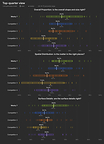
Given a single input image, Meshy 7 leads every model tested on all three aspects of alignment: 81.0% on overall proportion, 79.7% on spatial distribution, 59.8% on surface details — measured against four competing 3D foundation models on reference 3D models excluded from training, where 100% is the reference measured against itself. The pattern holds under the front view, the strictest condition, where Meshy 7 leads on aggregate and on each metric individually.

The lead is widest where the problem is hardest. Overall proportion is close across leading models now. Surface details is not — under single-view input no model tested reaches 60% — and this is where Meshy 7 pulls furthest ahead: 5.3 points clear of the closest competitor, more than twice its margin on either of the other two aspects. That is the shape of a real lead: not a fraction of a point where the field is already bunched together, but daylight on the dimension nobody has solved.

With four views the field converges: every model improves, and extra views help most on spatial distribution and surface details, the dimensions most affected by hidden geometry. The leaders end up within roughly two points of one another, and Meshy 7’s single-view lead is large enough that the closest competitor catches up rather than clearly overtakes it. Single-view input is where systems separate — and it is the condition most users are in.

Compared with Meshy 6, Meshy 7 improves alignment clearly on both geometry and texture. The benchmark above covers geometry; texture is measured separately.
 

WHERE THE DIFFERENCE SHOWS

Faces. A small geometric change is enough to alter an expression, which makes faces one of the hardest alignment tests. Across a set of portrait busts, Meshy 7 does not settle for a generic face: cheeks lift and laugh lines deepen on a smile, the brow tightens and the mouth turns down on a stern look, the face relaxes on closed eyes — while headscarf, knot and clothing stay stable.Part relationships. A mechanical object only reads as mechanical when every component sits where it belongs. On a clockwork owl of layered wing armour, exposed gears and thin legs, Meshy 7 keeps the parts distinct and placed as the concept places them, rather than collapsing the design into a bird-shaped mass.Dense surface relief. A jade medallion is almost entirely shallow relief — a dragon coiling the outer ring, dense cloud pattern, a raised centre motif, all on a nearly flat disc. Meshy 7 keeps the pattern continuous rather than fragmented, at the depth the image gives it.

Three changes got it there. The image encoder now reads the input at multiple scales and accepts higher resolution, so fine shape information survives into generation instead of being averaged out. The training data was rebuilt to a stricter standard, every sample corresponding exactly to its target geometry with style, lighting and background removed. And geometry alignment became a tracked signal inside every training cycle rather than an evaluation applied at the end — the capability users care about and the number the team optimises against are now the same number.

HOW ALIGNMENT IS MEASURED

The benchmark uses neither human preference nor a vision-language judge; it compares 3D geometry directly.

Reference 3D models held out of training are rendered into input images using known cameras. Each generative model produces a 3D result from those images, which is compared against the original reference geometry — so every test image has a known 3D correct answer. Comparing renders instead would mean estimating the source camera first, mixing camera error into the geometry error being measured.

Before scoring, each generation is aligned to its reference by translation, rotation and uniform scaling only — never stretched along a single axis, so a model’s own proportion errors cannot be corrected away. Agreement is then measured at three levels, from overall structure down to fine geometric difference. The reference set spans characters, vehicles, sculptures and thin-structure props, tested under three input conditions: front view, raised top-quarter view, and four views combined.

AVAILABILITY AND WHAT COMES NEXT

Meshy 7 went live on 10 August, open to all Meshy subscription tiers; downloading generated models requires the Pro tier or above. Ultra Mode currently supports single-view generation, with multi-view support arriving shortly. The benchmark described here will be released separately after launch. Geometry is only part of image-to-3D alignment — colour, material and pattern have their own — and a dedicated texture alignment benchmark will follow.

View original content to download multimedia:https://www.prnewswire.com/news-releases/meshy-releases-meshy-7-a-new-foundation-model-that-sets-a-new-bar-for-image-3d-alignment-302849368.html

SOURCE Meshy

Continue Reading
Click to comment

Leave a Reply

Your email address will not be published. Required fields are marked *

Technology

InventHelp Inventors Develop Anti Theft Wire Device for Railroads (LOS-634)

Published

on

By

PITTSBURGH, Aug. 12, 2026 /PRNewswire/ — “We wanted to create a secure box that would prevent access to copper wires along railroad tracks,” said one of three inventors, from Etiwanda, Calif., “so we invented the ANTI THEFT WIRE DEVICE. Our design deters copper wire theft, and it prevents delays and problems associated with missing signal wires.”

The invention provides an effective way to contain and protect copper wires on railroad tracks. In doing so, it prevents access to the wires. As a result, it helps prevent copper wire theft. It also helps maintain proper use of train traffic signals. The invention features a secure and protective design that is easy to install and use so it is ideal for the railroad industry.

The original design was submitted to the Los Angeles sales office of InventHelp. It is currently available for licensing or sale to manufacturers or marketers. For more information, write Dept. 25-LOS-634, InventHelp, 100 Beecham Drive, Suite 110, Pittsburgh, PA 15205-9801, or call (412) 288-1300 ext. 1368. Learn more about InventHelp’s Invention Submission Services at http://www.InventHelp.com.

View original content to download multimedia:https://www.prnewswire.com/news-releases/inventhelp-inventors-develop-anti-theft-wire-device-for-railroads-los-634-302846012.html

SOURCE InventHelp

Continue Reading

Technology

Spigen’s New Pixel 11 Collection: Protect the Design. Make It Yours.

Published

on

By

IRVINE, Calif., Aug. 12, 2026 /PRNewswire/ — Following today’s announcement of Google’s Pixel 11 series, Spigen unveiled its latest collection of cases, screen protectors, and MagFit accessories, all available now on Amazon.

With new colors, slimmer bezels, and the new HiLight feature, the Pixel 11 was made to stand out. Spigen’s collection is designed to complement that vision by protecting the device while giving users more ways to personalize how it looks, feels, and functions.

One Pixel, Multiple Ways to Personalize

Spigen’s Pixel 11 case lineup offers options for different styles, routines, and protection needs. Each case is designed to complement the device while providing a distinct user experience.

Ultra Hybrid MagFit: A minimalistic clear case designed to showcase the Pixel 11’s original color and design while adding everyday protection and MagFit compatibility.Tough Armor MagFit: Delivers rugged protection and practical functionality in a streamlined design for users who seek maximum coverage without the bulk.Nano Pop MagFit: Combines vibrant colors with dependable everyday protection to complement the Pixel’s playful aesthetic.Slim Armor Pro MagFit: A streamlined foldable case for the Pixel 11 Pro Fold, featuring SecuLink technology and a spring-loaded hinge cover for secure, continuous protection.

Complete the Pixel 11 Setup

The case is only the starting point. From essential screen protection to accessories built for the Pixelsnap ecosystem Google introduced last year, Spigen brings together protection, convenience, and personal style to complete the Pixel 11 setup.

EZ Fit Screen Protector: A must-have for any Pixel device. Makes screen protection simple with an included alignment tray and bubble-removal squeegee for fast, precise installation.O-Mag Grip: Crafted from CNC-machined aluminum, this premium phone grip features a rotating ring that doubles as a stand and securely attaches to any metal surface.Valentinus MagFit+: Ditch the bulky wallet with this slim, magnetic card holder that snaps securely onto MagFit cases, providing quick access while keeping pockets light.Athlex Air Band: Making its Pixel Watch debut, this lightweight, breathable band is designed for comfortable everyday wear and active routines.

A Personal Pixel Experience

Google designed the Pixel 11 to be expressive and recognizable. Spigen’s latest collection protects that identity while giving users more control over how their devices fit into their personal style and everyday routines.

Spigen’s full Pixel 11 lineup is available now on Amazon, alongside new accessories for the Pixel 11 Pro Fold and Pixel Watch 5.

About Spigen

For over 17 years, Spigen has delivered high-quality mobile accessories designed to enhance everyday tech. From cases and screen protectors, to car accessories and daily essentials, Spigen strives to be “Something You Want.” For more information about Spigen, please visit spigen.com.

Media Contact
Chad Sasaki
949-502-5121
420644@email4pr.com 

View original content to download multimedia:https://www.prnewswire.com/news-releases/spigens-new-pixel-11-collection-protect-the-design-make-it-yours-302849927.html

SOURCE Spigen Inc.

Continue Reading

Technology

BAE Systems advances to Phase 2 of DARPA’s THREADS program

Published

on

By

THREADS program seeks to address temperature limitations in advanced RF electronics

NASHUA, N.H., Aug. 12, 2026 /PRNewswire/ — BAE Systems’ (LON: BA) FAST Labs™ research, development and production organization has successfully completed Phase 1 of the Defense Advanced Research Projects Agency’s (DARPA) Technologies for Heat Removal in Electronics at the Device Scale (THREADS) program and has been awarded continued support to move into Phase 2.

The THREADS program aims to overcome temperature limitations in high-performance radio frequency (RF) electronics, specifically in gallium nitride (GaN) devices. Overcoming these limitations will significantly increase the power and range of vital military systems.

“We look forward to advancing to Phase 2 of the THREADS program,” said Isaac Wildeson, principal investigator at BAE Systems’ FAST Labs. “The progress we’ve made during Phase 1 validates our approach to material and process enhancements and brings us closer to unlocking the full potential of RF-based systems for our warfighters.”

Successful thermal management developed through this program will nearly triple the range of RF systems, enhancing the safety and engagement distances for military personnel. BAE Systems’ work on THREADS is being conducted at its Microelectronics Center (MEC) in Nashua, New Hampshire, a DoW Category 1A Trusted Supplier, leveraging its established expertise in the development and manufacturing of advanced GaN and gallium arsenide integrated circuits.

To accelerate the development of this critical technology, BAE Systems’ work on the THREADS program includes collaboration with Modern Microsystems, Penn State University, Stanford University, the University of Notre Dame, and the University of Texas at Dallas.

For more information, please contact:

Paul Roberts, BAE Systems
Mobile: 603-521-2381
paul.a.roberts@baesystems.us

www.baesystems.com/en-us
@BAESystemsInc

View original content to download multimedia:https://www.prnewswire.com/news-releases/bae-systems-advances-to-phase-2-of-darpas-threads-program-302849917.html

SOURCE BAE Systems, Inc.

Continue Reading

Trending