Connect with us

Technology

PARKROYAL COLLECTION Marina Bay, Singapore Named Among Singapore’s Top 10 Hotels by Travel + Leisure and Featured on 50 Best Discovery

Published

on

 Singapore’s first Garden-in-a-Hotel earns global recognition twice over, securing the No. 8 spot on the Travel + Leisure Luxury Awards Asia Pacific 2026 list and a place among the world’s most exceptional stays on 50 Best Discovery.

SINGAPORE, Aug. 14, 2026 /PRNewswire/ — In the heart of Singapore’s Marina Bay, a 13-metre green wall opens onto a lush indoor atrium, welcoming guests into a stay shaped by nature, wellness and genuine care. That vision at PARKROYAL COLLECTION Marina Bay, Singapore has now earned recognition from two leading travel and hospitality names, Travel + Leisure and 50 Best. The hotel has placed No. 8 on the Top 10 Best Hotels in Singapore at the Travel + Leisure Luxury Awards Asia Pacific 2026, marking its third consecutive year on the list. It has also been featured for the first time on 50 Best Discovery, a curated global platform spotlighting the world’s most exceptional restaurants, bars, hotels and vineyards, as one of only nine hotels representing Singapore on the platform.

“This recognition reflects the vision that has guided us from the very beginning: bringing together nature, design and luxury lifestyle hospitality to create meaningful experiences for our guests,” said Phil Smith, General Manager of PARKROYAL COLLECTION Marina Bay, Singapore. “We are deeply honoured to be recognised as an award-winning hotel and we celebrate this achievement with our guests, community and the environment we all share.”

As Singapore’s first Garden-in-a-Hotel, PARKROYAL COLLECTION Marina Bay, Singapore is known for its focus on biophilic design, sustainability, restorative wellness and exceptional dining, built on a farm-to-table, farm-to-bar and farm-to-spa philosophy that runs through the property.

The Travel + Leisure Luxury Awards Asia Pacific 2026 results are decided by readers of Travel + Leisure Southeast Asia, Hong Kong and Macau. Launched in 2024, the awards cover 17 countries and span categories from hotels and resorts to spas, airlines, cruise lines and luxury travel services. Nominees are shortlisted by the Travel + Leisure editorial team and industry experts, then put to a public vote. For PARKROYAL COLLECTION Marina Bay, Singapore, the achievement reflects the trust, satisfaction and memorable experiences that travellers from around the world associate with the hotel.

50 Best Discovery is an in-depth collection of city guides spotlighting exceptional restaurants, bars, hotels and vineyards around the world. Venues are selected after receiving votes from more than 3,000 Academy members, local experts across the restaurant, bar, hotel and vineyard scenes, and 50 Best Discovery operates as an extension of the annual 50 Best rankings, though it is not a ranking in itself. A place on the platform speaks to the same qualities guests already associate with PARKROYAL COLLECTION Marina Bay, Singapore: distinctive design, genuine hospitality and dining worth travelling for.

High resolution images for publication may be downloaded here.

PARKROYAL COLLECTION Marina Bay, Singapore

Sitting in the heart of the central business district and Marina Bay, with panoramic views of the Singapore city skyline, the 583-room PARKROYAL COLLECTION Marina Bay, Singapore is the country’s first Garden-in-a-Hotel.

A champion of sustainability and environmental responsibility in the hospitality industry, the hotel is home to one of Southeast Asia’s largest indoor sky-lit atriums, designed by the late Architect John Portman, containing over 2,400 plants, trees, shrubs and groundcovers from more than 60 varieties of flora spread across 1,400 square metres of interior space.

A rooftop Urban Farm spanning 150 square metres houses over 60 varieties of fruits, vegetables, herbs and edible flowers, forming the backbone of the hotel’s farm-to-table, farm-to-bar and farm-to-spa concepts.

Distinctive dining options are available for every palate and occasion, with botanical-inspired cocktails and afternoon tea at Portman’s Bar, to outdoor relaxation and poolside drinks and dining at the rooftop Skyline Bar, rotating international culinary creations at Peppermint with halal-certified buffet stations and kitchen, and modern Chinese cuisine at Peach Blossoms, which has won numerous recognitions. These include the prestigious One-Diamond Restaurant Award in the 2026 and 2025 Black Pearl Restaurant Guide, Tatler’s Singapore Best 20 Restaurants 2026 and Tatler Best’s 2025 100 Restaurants in Asia Pacific, Singapore’s Top 10 Fine Dining Restaurants in Tripadvisor’s Best-of-the-Best Travellers’ Choice Awards and attaining #78 in the coveted Asia’s 50 Best Restaurants 51-100 Extended List 2026.

The hotel is located a stone’s throw away from well-loved Singapore landmarks, world-class attractions and dynamic art scene – hallmarks of a destination hotel for travellers seeking unique experiences. Catering to environmentally conscious travellers, the award-winning PARKROYAL COLLECTION Marina Bay, Singapore focuses on contemporary vibes brought to life through biophilic design, iconic architecture, eco-friendliness and lifestyle experiences.

PARKROYAL COLLECTION Marina Bay, Singapore holds several internationally recognised sustainability certifications, reflecting the hotel’s enduring commitment to responsible tourism and environmental stewardship. These include the GSTC (Global Sustainable Tourism Council) certification, the global benchmark for sustainable travel and tourism that evaluates hotels across four key pillars — sustainable planning, social and economic benefits for the local community, cultural heritage preservation, and environmental impact reduction. The hotel also holds the BCA Green Mark Super Low Energy (SLE) Certification, awarded by the Building and Construction Authority of Singapore to buildings that achieve at least 60% energy savings through energy-efficient measures and on-site renewable energy generation. Further underscoring this commitment, the hotel is also ISO 14001 and ISO 45001 certified, both internationally recognised standards that affirms our robust environmental management and occupational health and safety practices.

Click here to view PARKROYAL COLLECTION Marina Bay, Singapore’s digital brochure.

Please click here to access our hotel, rooms, ballrooms, restaurants, and bars virtual videos.

PARKROYAL COLLECTION Hotels & Resorts

Operated by Pan Pacific Hotels Group, PARKROYAL COLLECTION Hotels & Resorts has an expanding footprint of sustainable hotels, with a current network comprising PARKROYAL COLLECTION Kuala Lumpur, Malaysia; PARKROYAL COLLECTION Marina Bay, Singapore; and PARKROYAL COLLECTION Pickering, Singapore. Driven by a passion for life, PARKROYAL COLLECTION’s iconic properties rejuvenate the wellbeing through nature-driven design, eco-wellness and refreshing lifestyle luxury.

About Pan Pacific Hotels Group

Pan Pacific Hotels Group is a global hospitality company that owns and/or manages more than 50 hotels, resorts and serviced suites across three brands – “Pan Pacific”, PARKROYAL COLLECTION, and PARKROYAL – encompassing more than 30 cities across Asia Pacific, North America and Europe. Headquartered in Singapore, it is a member of Singapore-listed UOL Group Limited.

View original content to download multimedia:https://www.prnewswire.com/apac/news-releases/parkroyal-collection-marina-bay-singapore-named-among-singapores-top-10-hotels-by-travel–leisure-and-featured-on-50-best-discovery-302851621.html

SOURCE PARKROYAL COLLECTION Marina Bay, Singapore

Continue Reading
Click to comment

Leave a Reply

Your email address will not be published. Required fields are marked *

Technology

China advances global AI governance in a comprehensive manner

Published

on

By

BEIJING, Aug. 14, 2026 /PRNewswire/ — A report from People’s Daily.

A recent commentary in The New York Times compared the development of advanced AI models to two distinct paths: “nuclear weapons” and “nuclear energy.” The former emphasizes destructive potential and calls for strict control, while the latter highlights manageable risks and advocates openness and sharing. These contrasting approaches reflect a fundamental question: Is AI a strategic tool for monopoly and competition, or a public good that benefits all of humanity?

China’s answer is clear and firm: AI should be people-centered and used for the benefit of all.

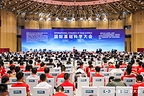
At the opening ceremony of the 2026 World AI Conference (WAIC) and High-Level Meeting on Global AI Governance, Chinese President Xi Jinping called for joint efforts to build a just and equitable system for global AI governance. The proposal reflects a profound understanding of technological and historical trends, embodies the wisdom of governing AI for the common good,  and points toward the long-term goal of building a community with a shared future for humanity.

China adheres to the principle of openness and win-win cooperation, boosting innovation-driven development, and enabling AI to benefit all sectors and businesses.

Recently, China’s next-generation large model Kimi K3 was officially released as an open-source model. With 2.8 trillion parameters, it has become the largest open-source model in the world in terms of parameter scale. China has emerged as one of the most active and fastest-growing sources of open-source large models globally, with cumulative downloads exceeding 10 billion. As Chinese large models continue to evolve rapidly, they are not only stimulating domestic demand through diverse applications but also making advanced technologies more accessible through their competitive cost-performance ratios. These models are increasingly becoming productivity tools favored by users worldwide.

Open source and openness are not just approaches to technological development; they also reflect a philosophy of collaboration and shared growth. China has proposed the AI+ International Cooperation Initiative and launched an action plan on AI cooperation and development, outlining actions in eight areas, including sharing open-source AI ecosystems and promoting the coordinated development of rules and standards. China also unveiled Fenghe, an open-source large language model.

Kazakh President Kassym-Jomart Tokayev said China’s leading role in open-source AI innovation, open platforms, and international scientific cooperation has created new development opportunities for countries worldwide.

China strengthens risk-awareness, ensuring that AI is secure, controllable, and a trusted tool for humanity.

As AI systems continue to grow exponentially in reasoning ability, scientific capability, and autonomy, policymakers around the world must follow the precautionary principle and prepare for possible scenarios and risks, Turing Award laureate Yoshua Bengio noted.

This view aligns with China’s belief that AI must always remain under human control. China has released the Global AI Governance Initiative, which includes proposals on risk assessment and classification, improving laws and regulations, and developing ethical guidelines. The initiative calls on all countries to jointly prevent risks and continuously enhance AI’s safety, reliability, controllability, and fairness.

China has also released versions 1.0 and 2.0 of its AI safety governance framework, integrating safety requirements throughout the processes of model development, deployment, and application. The country issued the Global AI Governance Action Plan, identifying safety and controllability as core principles. In addition, China released an action plan on international AI ethics governance, providing a framework that combines guiding principles with practical measures.

From setting directions to establishing pathways, China continues to provide international public goods, helping ensure that AI, like a powerful steed, can run both fast and steadily.

China encourages inclusiveness and promotes mutual learning among civilizations. It tends to the garden of civilizations with great care to ensure that the beauty of each civilization is appreciated and shared.

Unlike conventional dams that block and redirect water, the Dujiangyan irrigation system harnessed the natural flow of the Minjiang River through scientific diversion and adaptation, benefiting the Chengdu Plain for more than 2,000 years. The Chinese sage Confucius said, “The gentleman seeks harmony but not uniformity.” Different civilizations and systems each have their own characteristics. What matters is mutual respect, coexistence, and shared progress. Danil Kerimi, vice chairman of the Independent Oversight Advisory Committee of the World Intellectual Property Organization, drew on Eastern wisdom to shed light on China’s AI governance approach, which reflects a longstanding tradition of inclusiveness and mutual respect.

Today, this Eastern wisdom is being translated into concrete action. The “Cultural Interactions Engine” seeks to uncover deep connections among world cultural heritage sites and showcase the shared characteristics and diversity of human civilizations to users in more than 170 countries. At the Milan-Cortina 2026 Winter Olympics, the Qwen large language model became the first official AI model in Olympic history, creating a new intelligent experience for winter sports events.

Chinese and Malaysian companies have jointly set up an AI multilingual intelligent dubbing and translation center. The facility supports translation for over 130 languages and makes it possible to translate audiovisual content in just 30 minutes. Chinese AI technologies are now crossing borders, allowing civilizations to grow through inclusiveness and renew themselves through exchange.

China advocates solidarity, seeks to improve global governance, and works to prevent new historical injustice in the field of AI.

During the 2026 WAIC and High-Level Meeting on Global AI Governance, the World AI Cooperation Organization was established, with 38 countries becoming founding members. As the world’s first intergovernmental international organization dedicated to AI, it promotes inclusive development for the benefit of all. It follows the purposes and principles of the UN Charter and remains open to all countries, charting a new course for global AI governance in the intelligent era.

In recent years, China has hosted AI capacity-building workshops, launched the Belt and Road Special Cooperation Program on AI Science, Technology and Innovation, and developed the “Digital South” brand project under the framework of the Global Development Project Pool. Over the next five years, China will provide 5,000 AI training opportunities for developing countries and establish international AI application cooperation centers with ASEAN, the Arab League, the African Union, the Community of Latin American and Caribbean States, the Shanghai Cooperation Organization, and BRICS countries. In addition, China will promote the application of the MAZU intelligent meteorological early warning solution in 30 countries. China has consistently believed and demonstrated that AI should become a symphony of global cooperation.

Looking back to the summer of 1956, when the concept of “artificial intelligence” was first introduced at the Dartmouth Summer Research Project on Artificial Intelligence in the U.S., the past 70 years have witnessed China’s technological journey from its early beginnings to steady progress. This journey has moved from following and catching up to competing alongside global leaders and gaining an edge in more fields.

Today, with high-level technological self-reliance laying a stronger foundation for innovation and “AI Plus” opening up global opportunities, China’s AI sector is entering a period of unprecedented development. This confidence stems from continuous breakthroughs in core technologies, a thriving innovation ecosystem, institutional safeguards that balance development and security, and a commitment to inclusiveness, mutual benefit, and win-win cooperation as a responsible major country.

Standing at a new historical starting point, China is ready to work with all parties with greater openness, more practical actions, and a longer-term vision. Together, they can seize the opportunities and address the challenges in AI development, and jointly create a better future for humanity.

View original content:https://www.prnewswire.com/apac/news-releases/china-advances-global-ai-governance-in-a-comprehensive-manner-302851690.html

SOURCE People’s Daily

Continue Reading

Technology

The First Year of World Models: When AI’s Supply-Side Revolution Moves from Generation to Understanding the Physical World

Published

on

By

BEIJING, Aug. 14, 2026 /PRNewswire/ — Over the past two years, the core proposition of the AI industry has been “generation” — generating text, images, video, and music. But on July 19, 2026, at the World Artificial Intelligence Conference (WAIC), Fang Han, Chairman and CEO of Kunlun Tech (Parent company of Skywork AI), formally declared 2026 as “the first year of world models,” marking a pivotal transition in which AI evolves from content generation toward understanding and interacting with the physical world. This is not a marketing slogan. It signals that the supply-side revolution has entered its second phase: AI is no longer merely producing content — it is beginning to comprehend the physical world.

I. The Camera Analogy, Continued

This transition also echoes the camera analogy proposed by Jiao Juan, Chief Analyst for Internet and Media and Head of AI Ethics Research at Founder Securities. In Jiao’s view, when photography was invented, it did not merely add a new medium to the arts — it first destroyed the economic foundation of realist painting, then drastically lowered the cost of visual representation, and finally, on the ruins of the old supply, gave birth to an entirely new art form: cinema. The history of technology suggests that genuine revolutions do not begin by creating abundance; they begin by destroying the existing supply structure. AI’s supply-side revolution is following precisely this trajectory.

II. From “Storing Frames” to “Storing Space”: The Deepening of the Supply-Side Revolution

At the WAIC forum, the technical breakthroughs announced by Skywork AI revealed the mechanics of this deepening. Consider the most stubborn problem in world models: long-term memory. Previous models “remembered” by storing entire frames — but when the camera moved and all object positions shifted, the model could no longer recognize them. Evaluation data showed that no mainstream world model achieved an object-reappearance score above 0.6 (out of 1.0). Skywork AI’s newly released interactive world model, Matrix-Game 3.5 adopted a fundamentally different approach: instead of storing whole “photographs,” it breaks each frame into countless small patches, each tagged with its precise three-dimensional coordinates — its distance from the camera, its position in space. This mechanism, called “Patch Memory,” represents an upgrade from “storing frames” to “storing space.” The model no longer remembers “what a certain frame looked like” but rather “what exists at a certain three-dimensional location.” As the technical report states, “the problem of ‘disappearing objects’ that has plagued the industry for so long has been solved in a true sense for the first time.”

This is not an incremental improvement — it is a paradigm shift in how AI relates to physical reality. Combined with the PRoPE geometric position encoding and Warped RoPE mechanism, the model’s positional encoding evolved from merely recording “which second on the timeline” and “which row and column in the frame” into a geometrically meaningful world coordinate system. The result: a 5B-parameter model achieving real-time streaming video generation at 720P resolution and approximately 20 FPS on a single GPU, with one-minute memory capability. As the report puts it, “20 FPS is not ‘playing a video’ — it is a ‘living world’: you operate, it responds, no stuttering, no memory loss, stable visuals, fast reactions.” The supply-side revolution has produced something qualitatively new: not a video generator, but an interactive, living world.

III. Data as the Foundation: Letting AI “Understand” Rather Than Merely “See”

Beneath the technical breakthroughs lies a more foundational insight. Training a world model requires not just video, but video endowed with physical information. As the technical team recognized, “letting AI understand the physical world requires giving it data that carries physical information.” They built a multi-agent system that operates 24 hours a day, automatically surveying thousands of games and scoring them on multiple dimensions. More critically, they constructed an automated annotation pipeline that performs 3D reconstruction on every video, estimating camera pose, metric depth, and camera intrinsics for each frame. The pipeline’s output: over 5 million high-quality video segments, more than 10,000 hours of effective training data, covering over 1,200 game scenes — each carrying precise camera pose, depth maps, and text descriptions. Jiao describes this as industrial-grade infrastructure for the supply-side revolution: an “oil refinery” that turns raw pixels into training fuel with physical scale.

IV. “Not Stacking Parameters, but Clever Architecture”: The Logic of the Entry Business

Perhaps the most counterintuitive decision was the team’s choice to “almost not add any new parameters at all.” Beyond the character Reference Adapter, all of Matrix-Game 3.5’s core interactive capabilities — PRoPE geometric encoding, Patch Memory long-term memory, camera control, and dynamic-static decoupling — were implemented on the existing model architecture without additional parameter burden. This reflects a deeper design philosophy: “modular, pluggable, and transferable.” The team built the interactive framework as a lightweight “plugin system” — each module works independently and can be quickly adapted to different video foundation models. The practical benefit: “the native open-ended content generation capability of the base video model is maximally preserved.” This “not stacking parameters, but relying on clever architecture” approach reveals the essential logic of the first layer of the AIGC framework. Foundational model companies are not competing on who can pile up the most parameters — they are competing on who can establish the entry position that the entire ecosystem must pass through. The real game is architectural ingenuity and ecosystem gravity, not brute-force scale.

The open-source strategy confirms this logic. The team behind DiT, NYU Assistant Professor Xie Saining, built Solaris — the world’s first multi-person video world model — on the open-source foundation of Matrix-Game 2.0. NVIDIA and Zhejiang University’s joint work, Light Interaction, was developed on Matrix-Game 3.0. Furthermore, NVIDIA’s SANA-WM and Adobe’s RELIC, among other international leading companies’ world model projects, all use Matrix-Game-related models as comparison benchmarks. When the world’s top researchers and companies choose your foundation as their base or benchmark, the gateway position is established. This is the “positioning” phase of the gateway business — the first stage of the iOS-like three-phase path: positioning, clearing, revenue sharing.

V. Three Layers of World Models and the Concept of “Learnware”

Academic depth complemented industrial breakthroughs. Academician Zhou Zhihua of the Chinese Academy of Sciences, Professor and Vice President of Nanjing University, divided world models into a perception layer, an understanding layer, and a decision layer in his keynote speech, emphasizing that the decision layer has long faced two theoretical bottlenecks: “squared amplification of multi-step inference compound error” and “excessively high sample complexity.” He shared his team’s latest breakthrough: distribution-matching technology can compress inference error from squared to linear, while an innovative reverse application of the Bellman equation reduces the required sample size to one over the square root of T. More strikingly, he proposed the concept of “learnware” — composed of a model together with AI-automatically-generated “specifications,” allowing multiple heterogeneous models to be reused and assembled without disclosing their underlying data, opening a new path for world models to evolve from single-pipeline customization toward a growable, evolvable model ecosystem. This concept of learnware points toward a future where the supply-side revolution’s infrastructure becomes composable and reusable — models as building blocks, not monoliths.

VI. “Pores Are Acting”: The Inflection Point Signal

The most vivid signal that the supply-side revolution has crossed an inflection point came not from a technologist, but from an actor. Huang Xiaoming, Vice Chairman of the China Film Association, described seeing an AI-generated film: three months earlier, he could still discern AI traces, but upon the latest viewing, “even when told it was AI, I could no longer tell.” The detail had reached the point where “the spots and pores on the face, even the micro-expressions — the pores are acting,” which genuinely startled him. When a seasoned performer cannot distinguish AI-generated performance from the real thing, the supply-side revolution has crossed the threshold from “good enough for experiments” to “good enough to compete with traditional production.” This is the moment the camera, having destroyed realist painting, begins to give rise to cinema.

VII. Conclusion: The Supply-Side Revolution Deepens

For Skywork AI, the declaration of “the first year of world models” is not an endpoint but a starting point. As Fang Han’s three predictions suggest, world models will step out of the screen and into the physical world; the gaming industry will be the first to be transformed; and AI music and AI video tools will evolve from technical experiments into mass creation tools. The supply-side revolution is deepening: from generating content to understanding the physical world, from offline rendering to real-time interaction, from memoryless short clips to minute-level consistency.

Jiao’s camera analogy still holds: AI first disrupted the traditional supply of content production, then drastically lowered costs, and is now — through world models that understand physical reality — gestating entirely new forms. “In the next three to five years, world models will become the infrastructure of the gaming industry, and the way content is produced will be completely refreshed.” The supply-side revolution continues. What we are witnessing is not the end of one industry, but the beginning of the next.


View original content:https://www.prnewswire.com/news-releases/the-first-year-of-world-models-when-ais-supply-side-revolution-moves-from-generation-to-understanding-the-physical-world-302851691.html

SOURCE Kunlun Tech

Continue Reading

Technology

Voxtome Announces Dedicated LitRPG Audiobook App Built with Gamified Progression, Author-First Economics, and Precision Listening Tech

Published

on

By

Launching in September on iOS and Android, Voxtome introduces statblock skipping, dynamic character stat sheets, avatar progression & customization, and subscription upgrades earned through listening.

PORTLAND, Ore., Aug. 14, 2026 /PRNewswire/ — Voxtome today announced its upcoming LitRPG audiobook streaming platform for iOS and Android, projected to launch in September 2026. Built specifically for the unique structural and social demands of the LitRPG (Literary Role-Playing Game) genre, Voxtome merges purpose-built playback tools with a gamified user experience.

LitRPG has rapidly expanded into one of the most active sectors in publishing, defined by game-like progression, stat sheets, and high community engagement. Despite this growth, legacy audiobook platforms offer no features tailored to how LitRPG content is structured or consumed.

LitRPG Listening Experience Optimizations

A long-standing frustration for LitRPG listeners has been listening to narrators read repetitive, multi-minute lists of character stats and ability scores every few chapters. Voxtome solves this with genre-specific playback technology with features such as statblock-skipping which allows listeners to bypass stat blocks instantly. Users are also able to view the gamified stats of the main character based on where they are in the book.

RPG Progression and Subscription Mechanics

Voxtome applies LitRPG mechanics directly to the app itself. As users listen, their account levels up and earns Talent Points, which are spent on upgrades to their subscription, such as Endurance, adding extra listening time to a user’s monthly subscription. Users can also complete quests to obtain armor and weapons to customize their character.

Integrated Community and Discovery

Voxtome features multiple community features, such as a built in tier-list maker, enabling users to create and share custom tier lists, the LitRPG community’s primary method for ranking and discovering books. The book recommendations system also democratizes the recommendation process by integrating voting mechanics on community posts that let users upvote and react to book recommendations in real time.

Voxtome is scheduled to release on iOS and Android in September 2026. For more information, visit voxtome.app.

About Voxtome

Voxtome is a LitRPG-focused audiobook streaming platform for iOS and Android. Built to serve one of the fastest-growing communities in fiction, Voxtome combines precision listening features, gamified subscription progression, built-in social tools, and author-friendly monetization.

View original content:https://www.prnewswire.com/news-releases/voxtome-announces-dedicated-litrpg-audiobook-app-built-with-gamified-progression-author-first-economics-and-precision-listening-tech-302851695.html

SOURCE Voxtome

Continue Reading

Trending