Connect with us

Technology

CASEKOO Launches New iPhone Case Colorways: Gentle Blue & Cherry Lush

Published

on

NEW YORK, Aug. 28, 2026 /PRNewswire/ — As the fall season approaches, CASEKOO, the design-led lifestyle accessories brand trusted by over 17 million users worldwide, today debuts two striking new colorways for its Fall iPhone case collection: Gentle Blue and Cherry Lush. The launch celebrates CASEKOO’s own interpretation of the two most discussed new iPhone color directions by public while offering Apple fans a fresh way to express their style — whether they’re upgrading their device this year or giving an older device a vibrant new look.

A Nod to Fashion, Powered by Innovation

Gentle Blue pays homage to one of the most unforgettable color moments in Apple history — the timeless elegance of the beloved light blue iPhone color first introduced with iPhone 13 Pro and Pro Max. Cherry Lush, meanwhile, captures the bold, playful energy of the season — a dark cherry iPhone color that’s rich and expressive.

With CASEKOO’s MagicStand™ and ClipSafe™ technology, this Gentle Blue and Cherry Lush is reimagined for a new generation of iPhone users, blending soft understanding with rich expression. The two new hues reflect CASEKOO’s commitment to helping consumers stay ahead of the curve, offering on-trend colors that complement the latest phone color trends.

Two Finishes, Two Ways to Go Hands-Free

The new iPhone color directions are available across CASEKOO’s signature collections — the glossy Halo series and the matte Frost series — giving users the freedom to choose the finish that best fits their personal aesthetic. Both series are engineered for the way people actually live. Drop protection is military‑grade, with SGS‑certified airbag structures built into the four corners to withstand 8‑foot drops from 26 different angles. Yet the most effective protection is prevention — and that’s precisely what StandKOO and LinKOO deliver.

For users who want a hands‑free iPhone case with a built‑in stand, StandKOO integrates CASEKOO’s MagicStand™, providing stable portrait and landscape viewing for video calls, streaming, reading, and everyday desk use. By keeping your phone securely propped on flat surfaces or firmly in your grip, it reduces accidental slips before they happen. For users looking for a crossbody or wrist‑strap iPhone case, LinKOO features CASEKOO’s patented ClipSafe™ system — a foldable built‑in attachment point designed for lanyards, wrist straps, and compatible accessories. It folds flat when not in use, helping keep the case slim, while the included strap keeps your phone tethered to you — so even if it slips from your hand, it never hits the ground. Together, StandKOO and LinKOO form a hands‑free system built on prevention — keeping your iPhone safe before a drop ever happens, from life in motion to moments of focus.

A Lifestyle, Bold and Expressive

For CASEKOO, a phone case has never been just an accessory. It’s a lifestyle — bold, expressive, playful, and proud. The new Gentle Blue and Cherry Lush colorways embody that spirit, inviting users to make a statement without saying a word.

As the brand steps into its second decade, CASEKOO invites consumers to witness its continued growth — a journey built on deep heart, GRS-certified craftsmanship that helps the planet grow greener from the very beginning, obsessive attention to “invisible details,” advanced anti-yellowing technology that keeps the case back crystal clear over time — so your iPhone’s original colors always shine through, turning your device into a genuine canvas for your personal identity and lifestyle, and an unwavering belief that technology should support life, not interrupt it.

About CASEKOO

CASEKOO is a design-led lifestyle accessories brand built around a simple idea: freeing your hands in everyday life. Guided by the philosophy of “Less Effort, More Living,” the company has sold more than 20 million phone cases across 32 countries, building a global community of over 17 million users. From its breakthrough StandKOO MagicStand™ to the revolutionary LinKOO ClipSafe™ system, CASEKOO continues to redefine what a phone case can be — not just protection, but liberation.

Which CASEKOO case is better for an understated look? The new Gentle Blue and Cherry Lush colorways are available now at CASEKOO’s official channels here.

Media Contact:

Charlotte Yu
brandteam@casekoo.com

View original content to download multimedia:https://www.prnewswire.com/news-releases/casekoo-launches-new-iphone-case-colorways-gentle-blue–cherry-lush-302862842.html

SOURCE CASEKOO

Continue Reading
Click to comment

Leave a Reply

Your email address will not be published. Required fields are marked *

Technology

Five ways K-12 leaders can strengthen teacher recognition beyond appreciation weeks, according to new University of Phoenix white paper


Published

on

By

Author Dr. Contessa T. Walker-Jackson distinguishes professional recognition from general appreciation and offers practical approaches for school leaders seeking to support teacher morale and engagement

PHOENIX, Aug. 28, 2026 /PRNewswire/ — University of Phoenix College of Doctoral Studies has published a new white paper, “Beyond Appreciation Weeks: Building Teacher Recognition Into the Everyday Work of K–12 Leadership,” by Contessa Walker-Jackson, Ed.D., alumni fellow with the University’s Center for Educational and Instructional Technology Research (CEITR). In the paper, Walker-Jackson examines how K–12 school leaders can move beyond episodic teacher-appreciation activities by making substantive teacher recognition part of everyday leadership practice.

Walker-Jackson distinguishes between appreciation — general expressions of gratitude directed toward teachers as a group — and recognition, which acknowledges a specific professional contribution by an individual teacher. The paper argues that both have a place in school culture, but that recognition is most meaningful when it is specific, consistent and connected to teachers’ actual work.

“Teacher appreciation plays an important role in school culture, but recognition highlights the specific work that a teacher has accomplished,” said Walker-Jackson. “A principal who notices well is a gem to the school. A principal who departs without incorporating a system of recognition into the school’s operations creates a potential failure within the institution, as the elements that contributed to teachers feeling acknowledged and valued will leave with them.”

Why is teacher recognition different from teacher appreciation?

Walker-Jackson argues that appreciation activities such as staff celebrations, thank-you notes and appreciation weeks can help schools express collective gratitude and create opportunities for connection. However, the paper distinguishes those activities from substantive recognition, which is tied to something a leader has directly observed a teacher accomplish.

Drawing on established motivation theory, recent research on teacher engagement and narrative interviews with current and former teachers, the paper suggests that recognition becomes more meaningful when it reinforces professional competence, belonging and contribution rather than functioning primarily as a scheduled or generic gesture.

The distinction is particularly important for school leaders, Walker-Jackson writes, because recognition practices that depend primarily on the preferences of an individual principal may disappear when leadership changes. Building recognition into school routines and expectations can make the practice more consistent over time.

What did teachers say makes recognition meaningful?

For the paper, Walker-Jackson conducted semi-structured narrative interviews with 10 current and former teachers at a faith-based private school in the southeastern United States. The analysis identified six themes:

Consistency matters. Teachers described recognition as less meaningful when it was unpredictable or dependent on the preferences of an individual leader.Culture shapes recognition. Participants emphasized that recognition should reflect the values and norms of the school community, with some preferring private or quieter acknowledgment.Leadership plays a central role. Teachers reported that the presence and quality of recognition could change significantly with a change in principal.Specific recognition can affect morale. Participants described small, targeted gestures as meaningful when they acknowledged something the teacher had actually done.Tangible recognition can have lasting value. Some participants valued recognition that created a visible or enduring acknowledgment of their contribution.Structure supports continuity. Teachers with experience across different settings described recognition as more reliable when supported by established practices rather than individual goodwill.

Across the interviews, Walker-Jackson found that teachers tended to describe recognition as meaningful when it was specific and tied to a real professional contribution, while generic, inconsistent or leader-dependent recognition was more likely to be viewed as insufficient.

How can K–12 leaders make teacher recognition part of everyday practice?

The white paper identifies five practices school and district leaders can consider:

Replace generic praise with named-action feedback. Give teachers timely feedback that identifies a specific instructional action or professional contribution and its observed effect.Use post-observation conversations as recognition opportunities. Treat the conversation following a classroom observation as an opportunity to acknowledge professional strengths, not solely as an evaluation or compliance step.Protect planning time as a form of recognition. Recognize the importance of teachers’ professional preparation by protecting planning periods from unnecessary disruption when possible.Build recognition practices that survive leadership changes. Establish consistent expectations, review cycles and leadership responsibilities so recognition does not depend entirely on one principal’s personal habits.Train principals in specific recognition. Treat effective recognition as a leadership skill that can be developed through coaching and incorporated into leadership expectations.

Together, the recommendations position recognition not as a once-a-year event, but as a leadership discipline that can be practiced, reinforced and evaluated as part of everyday school operations.

The paper notes important limitations to the findings. The narrative interviews involved 10 current and former teachers from one faith-based private school in the southeastern United States, and Walker-Jackson recommends further research in public schools, additional geographic regions and other educational settings. As the five recommended leadership practices have not yet been tested together as a single intervention, the paper presents them as evidence-informed leadership practices for further consideration and study.

About the author

Dr. Walker-Jackson is an Alumni Fellow with the University of Phoenix Center for Educational and Instructional Technology Research (CEITR) and founding president of the University of Phoenix Alabama Alumni Chapter. An educator, educational consultant, and K-12 school founder with more than two decades in education, she advises schools, districts, and homeschool programs on curriculum design, differentiated instruction, and teacher development. She is a National Certified Trainer in Differentiated Instruction, holds teaching certification in Alabama and Arizona, and founded Teacher’s PETS Inc., a 501(c)(3) organization serving underserved students since 2007. Walker-Jackson earned her Doctorate in Educational Leadership with a concentration in Curriculum and Instruction from University of Phoenix, and a bachelor’s in elementary education from Oakwood University. She can be reached through her LinkedIn profile.

The full white paper is available on the University of Phoenix Research Hub or as a direct link here.

About University of Phoenix
University of Phoenix is Built for Real Life. 50 Years Strong. The University innovates to help working adults enhance their careers and develop skills in a rapidly changing world through flexible online learning, relevant courses, academic AI pillars, and skills-mapped curriculum for associate, bachelor’s and master’s degree programs. Active students and alumni have access to Career Services for Life® resources including career guidance and tools. For more information, visit phoenix.edu.

About the College of Doctoral Studies
University of Phoenix’s College of Doctoral Studies focuses on today’s challenging business and organizational needs, from addressing critical social issues to developing solutions to accelerate community building and industry growth. The College’s research program is built around the Scholar, Practitioner, Leader Model which puts students in the center of the Doctoral Education Ecosystem® with experts, resources and tools to help prepare them to be a leader in their organization, industry and community. Through this program, students and researchers work with organizations to conduct research that can be applied in the workplace in real time.

MEDIA CONTACT: Sharla Hooper
University of Phoenix
sharla.hooper@phoenix.edu 

View original content to download multimedia:https://www.prnewswire.com/news-releases/five-ways-k12-leaders-can-strengthen-teacher-recognition-beyond-appreciation-weeks-according-to-new-university-of-phoenix-white-paper-302863174.html

SOURCE University of Phoenix

Continue Reading

Technology

iScreen Introduces Interactive Digital Pet Experience for iPhone Customization

Published

on

By

New experience brings an original digital companion, customizable widgets, and stickers to personalized iPhone Home Screens

LOS ANGELES, Aug. 28, 2026 /PRNewswire/ — iScreen, a mobile customization app for iOS and Android, today introduced a new interactive digital pet experience featuring customizable widgets and stickers, giving users new ways to personalize their iPhone Home Screens with interactive characters and expressive visual elements.

Viral Animal Characters Inspire Digital Creativity

The launch comes amid growing interest in viral animal characters and internet-native personalities across social media, including Jimothy, whose playful image and fan-created content have recently attracted widespread attention online. The trend reflects a broader movement toward memes, fan art, and character-driven digital self-expression.

Drawing on its experience collaborating with well-known IPs and character brands in China, iScreen has developed mobile customization experiences that bring recognizable characters, cultural themes, and interactive features into everyday personalization. The company continues to explore new ways to combine character design, visual aesthetics, and interactive experiences, while developing original digital companions such as Nimori.

Nimori: An Original Digital Companion

Nimori is an original digital companion created by iScreen to bring the playful energy of internet culture into everyday mobile experiences. Designed as more than a static visual element, Nimori gives users an interactive character they can incorporate into their personalized digital experience.

The update introduces an interactive digital pet for the iPhone Home Screen, making everyday screens more dynamic and expressive. Alongside the digital pet experience, users can access:

Themed widgets to create personalized layoutsInteractive stickers to combine with wallpapers and visual contentCustomizable Home Screen elements for a cohesive aesthetic experience

Connecting Internet Culture with Digital Self-Expression

“Internet culture is becoming an increasingly important source of inspiration for digital self-expression,” said the iScreen creative team. “With this new experience, we wanted to bring that playful energy into an original and interactive experience that users can enjoy directly on their screens.”

With the new update, iScreen continues to evolve its mobile customization ecosystem toward more interactive and expressive experiences, exploring new ways to connect internet culture, digital characters and personalized mobile experiences.

About iScreen

iScreen  is a mobile customization app providing widgets, wallpapers, and themed layouts for iOS and Android devices. Ranking among the top home screen customization platforms worldwide, iScreen has over 100 million users and has been featured by Apple Editorial in 128 countries for five consecutive days. With interactive and decorative options, it enables users to personalize both home screens and lock screens for a more immersive experience.


Official Website:iScreen – Phone Style, iScreen it!

iOS Download:‎‎iScreen – Widgets & Wallpaper App – App Store ‎

Android Download: iScreen Google Play

View original content to download multimedia:https://www.prnewswire.com/news-releases/iscreen-introduces-interactive-digital-pet-experience-for-iphone-customization-302859973.html

SOURCE iScreen

Continue Reading

Technology

AI Agents Must Be Governed as Persistent Digital Actors, Advises Info-Tech Research Group
Published

on

By

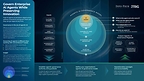
As the use of AI agents rises, organizations face a widening gap between adoption and governance. New insights from Info-Tech Research Group indicate that governing agentic AI is fundamentally different from previous governance models. Agents can autonomously access systems, trigger workflows, and make decisions faster than the organization can detect, leading to growing security, compliance, and reputational risks. The firm’s blueprint, Govern Enterprise AI Agents While Preserving Innovation, provides a structured approach to managing agent identity, access, autonomy limits, and ongoing oversight without slowing the innovation that agentic AI is meant to deliver.

ARLINGTON, Va., Aug. 28, 2026 /PRNewswire/ — AI agents are emerging as a distinct class of digital actor, operating autonomously across enterprise systems with a speed and access that outpace traditional oversight. New research from Info-Tech Research Group, Govern Enterprise AI Agents While Preserving Innovation, examines why conventional approval-based governance cannot keep pace with agentic AI and emphasizes that agents lack conscience and cannot be morally incentivized. The firm presents a step-by-step framework to help organizations limit agents’ autonomy and access while preserving space for innovation.

“AI agents cannot be governed like traditional IT assets or earlier AI models because they do more than generate outputs; they act across systems,” says Altaz Valani, principal advisory director at Info-Tech Research Group. “Many people will have multiple agents working for them, but AI agents cannot be governed the way we govern humans because they move quicker and lack emotions, conscience, and consequences.”

Info-Tech’s research outlines a practical governance model, starting with visibility into which agents exist, who owns them, what they can access, and their level of autonomy. The model helps organizations classify agents by risk, monitor behavior while they operate, and define when to intervene before a risk becomes an incident.

Key Challenges Organizations Face in Governing Enterprise AI Agents

The firm’s blueprint identifies several governance gaps that arise as organizations adopt agentic AI, including:

Shadow AI: Agents created outside sanctioned tools exist without IT’s knowledge.Capability mismatch: Agent autonomy and access lack matching validation and monitoring.Runtime drift: Agents quietly expand scope through tool, prompt, and permission changes.Unmanaged access: Permissions and service accounts overextend what agents can do.Ambiguous ownership: No clearly defined responsibility and accountability when agents cause harm.

Info-Tech’s Three-Phase Approach to Governing Enterprise AI Agents

To close the governance gap, the firm’s Govern Enterprise AI Agents While Preserving Innovation blueprint recommends a phased approach and outlines the following priorities for CIOs, CISOs, and AI governance leaders:

Phase 1: Establish Agentic AI Governance Authority and Guardrails. Governance leaders formalize the agentic AI mandate, confirm decision rights, and align on a small set of enforceable principles, guardrails, and decision rights.

Phase 2: Define the Agentic AI Governance Model. Governance and technical teams map the agent lifecycle, find agents wherever they are created, classify them by risk, and define runtime monitoring expectations and clear intervention actions based on the risk tier.

Phase 3: Operationalize Oversight and Accountability. Business owners, technical owners, AI governance, and enterprise risk leaders agree on a clear accountability model, define metrics, establish executive reporting through a dashboard view, and execute a phased rollout plan.

The Govern Enterprise AI Agents While Preserving Innovation blueprint includes case studies, practical tools, and templates, including an Agentic AI Governance Playbook, Agentic AI Governance Charter Example, State-of-AI-Agents Executive Dashboard, and Agentic AI Governance Glossary.

By applying this framework, organizations can move from a one-time approval method to ongoing governance that manages risk as agents operate, enables safe experimentation, and gives leaders a clear view of exposure as AI use expands across the organization.

For exclusive and timely commentary from Info-Tech’s experts, including Altaz Valani, and access to the complete Govern Enterprise AI Agents While Preserving Innovation blueprint, please contact pr@infotech.com.

About Info-Tech Research Group

Info-Tech Research Group is the “get things done” partner for over 30,000 IT, HR, and marketing leaders worldwide. The fastest growing research and advisory firm, Info-Tech enables leaders to make well-informed decisions and transform their organizations through AI, strategic foresight, step-by-step methodologies, practical tools, industry-leading advisory, and training programs. For nearly 30 years, tens of thousands of private and public organizations have trusted Info-Tech to lead their most important initiatives through periods of change and deliver outcomes that truly matter.

To learn more about Info-Tech’s HR research and advisory services, visit McLean & Company, and for data-driven software buying insights and vendor evaluations, visit the firm’s SoftwareReviews platform.

Media professionals can register for unrestricted access to research across IT, HR, and software, and hundreds of industry analysts through the firm’s Media Insiders program. To gain access, contact pr@infotech.com.

For information about Info-Tech Research Group or to access the latest research, visit infotech.com and connect via LinkedIn and X.

View original content to download multimedia:https://www.prnewswire.com/news-releases/ai-agents-must-be-governed-as-persistent-digital-actors-advises-info-tech-research-group-302863147.html

SOURCE Info-Tech Research Group

Continue Reading

Trending