Technology
Phillips 66 and ConocoPhillips Warned Justice Alito His Oil Investments Face Material Risk From Climate Lawsuits For Years; Their Trade Association, Suncor and Exxon Briefed Him on How to Eliminate that Risk, Says Consumer Watchdog
Published
5 hours agoon
By
Documents On File At The Supreme Court Of The United States And The Securities And Exchange Commission Establish That Justice Alito Has A Direct Financial Interest In The Outcome Of Suncor V Boulder
Consumer Watchdog Calls on Justice Alito to recuse from landmark Oct. 5 Supreme Court climate deception case
WASHINGTON, Sept. 17, 2026 /PRNewswire/ — Supreme Court Justice Samuel Alito received warnings about the same climate deception lawsuits in two very different capacities: 1) as an investor, he was warned by Phillips 66 and ConocoPhillips for years that climate deception lawsuits against them could adversely affect their businesses and his investments; 2) as a Justice, he has been told by Suncor, Exxon and oil industry amici representing Phillips 66 and Conoco Phillips that a favorable ruling in Suncor v. Boulder would prevent any climate deception lawsuits from advancing
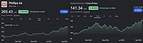
The findings are part of new research by Consumer Watchdog examining Alito’s financial interests and the Supreme Court’s Code of Conduct as the Court prepares to hear the landmark Suncor v. Boulder climate deception case on Oct. 5. Alito’s 2025 recent financial disclosure shows he continued to hold individual investments in ConocoPhillips valued at up to $15,000 and Phillips 66 valued between $15,001 and $50,000.
ConocoPhillips, Phillips 66 or both are defendants in roughly two dozen active climate deception cases brought by states, cities, counties, tribes and individuals across the country that assert many of the same state-law claims at issue in Boulder.
Alito continues to own individual stock in Phillips 66 and ConocoPhillips, both of which say in their own investor disclosures that they are defendants in climate litigation brought by governmental entities. The companies have explicitly warned shareholders over the past decade that these lawsuits could adversely affect their businesses, financial condition and investments in their stock (ConocoPhillips began warning shareholders about climate litigation against it in 2017, while Phillips 66 began issuing warnings in 2021).
Meanwhile, Suncor and Exxon have told Alito and the other Justices that Suncor v. Boulder presents an opportunity to resolve whether any climate deception cases may proceed in state courts across the country. Their petition says Boulder’s claims are representative of parallel suits nationwide and that the Court’s decision will have “immediate impact elsewhere.”
The American Petroleum Institute, whose members include Phillips 66 and ConocoPhillips, is even more explicit. API tells the Court that its decision will have implications for the entire petroleum and natural gas industry, including its members, and asks the Justices to rule that “this suit, and others like it, may not proceed under state tort law.”
The case has major implications for California because all nine of the state’s climate deception cases are stayed pending the outcome of Boulder. ConocoPhillips is a named defendant in all nine cases, while Phillips 66 is a defendant in seven. The cases were brought by the California Attorney General, the cities of San Francisco, Oakland, Richmond, Santa Cruz and Imperial Beach, and the counties of Santa Cruz, San Mateo and Marin.
Consumer Watchdog today called on Alito to recuse himself from Suncor v. Boulder.
“As a shareholder, Alito has been warned that climate deception lawsuits pose financial risks to his investments. As a Supreme Court Justice, he has been told how Suncor v Boulder can prevent those lawsuits from advancing, removing the risk to his investments” said Alexandra Nagy, Organizing Director of Consumer Watchdog. “Justice Alito has a direct and documented financial stake in the outcome of Suncor v Boulder. Under the Supreme Court’s own Code of Conduct, Alito should recuse.”
As An Investor, Alito Was Warned Climate Lawsuits Could Hurt His Investments
Alito’s financial interest in ConocoPhillips and Phillips 66 is not simply a general investment in the fossil fuel industry. Both companies have specifically warned shareholders multiple times in the past decade about the potential financial consequences of the category of climate litigation now before Alito as a Supreme Court Justice.
Phillips 66’s 2025 Annual Report instructs shareholders to consider risk factors that “could adversely affect our business, operating results, financial condition, and reputation, as well as the value of an investment in our securities.”
Among those risks, the company specifically identifies climate litigation:
“Increasing attention to global climate change has resulted in increased investor attention and an increased risk of public and private litigation, which could increase our costs or otherwise adversely affect our business.”
Phillips 66 told investors starting in 2021, counties and other governmental entities in several states have filed lawsuits against energy companies “including Phillips 66,” seeking damages allegedly associated with climate change.
The company warns that similar lawsuits may be filed elsewhere, that the ultimate impact cannot be predicted and that it “could incur substantial legal costs” defending those cases.
Phillips 66 further warns that these risks could result in unexpected costs, increased operating expenses and reduced demand for its products, which could have “an adverse effect on our business, financial condition and results of operations.”
ConocoPhillips delivers a similar warning. Its 2025 Annual Report tells shareholders that identified risks could materially and adversely affect its “business, operating results and financial condition, as well as the value of an investment in our common stock.” ConocoPhillips began warning shareholders in 2017.
The company then specifically identifies the climate lawsuits against it:
“Beginning in 2017 and continuing through 2025, cities, counties, governments and other entities in several states/territories in the U.S. have filed lawsuits against oil and gas companies, including ConocoPhillips, seeking compensatory damages and equitable relief to abate alleged climate change impacts.”
ConocoPhillips says additional lawsuits with similar allegations are expected and notes that a 2025 class action seeks to hold energy companies liable for increased home insurance premiums allegedly resulting from climate change losses. It says the ultimate impact of the litigation cannot be predicted and that it expects to incur “substantial legal costs” defending these and similar lawsuits.
The companies’ warnings are significant because ConocoPhillips and Phillips 66 have been named defendants together in approximately two dozen climate accountability lawsuits brought by states, cities, counties and tribes across the country — many of the same types of cases the oil industry is asking the Supreme Court to stop through Suncor.
Oil Industry Asks Supreme Court To Stop Boulder “And Others Like It”
The briefs before the Supreme Court leave little ambiguity about the nationwide reach and impact the oil industry is seeking from Suncor v. Boulder.
In their petition asking the Supreme Court to take the case, Suncor and Exxon explicitly told the Justices:
“Energy companies that produce and sell fossil fuels are facing numerous lawsuits in state courts across the Nation seeking billions of dollars in damages for injuries allegedly caused by the contribution of greenhouse-gas emissions to global climate change.”
They urged the Court to intervene “to prevent dozens of climate change cases from improperly barreling ahead in state court.”
And they expressly connected Boulder to the cases elsewhere:
“Respondents’ claims are representative of the claims being brought in parallel suits across the country, meaning that resolution of the question presented here will have immediate impact elsewhere.”
Suncor and Exxon ultimately ask the Court to “resolve whether climate-change claims are viable and may proceed on the merits in state courts across the country.”
For Alito, the connection to the companies in which he owns stock becomes even more direct in the amicus brief filed by the American Petroleum Institute (API), whose members include ConocoPhillips and Phillips 66.
API tells the Court that Suncor is “one of many” cases brought against petroleum and natural gas companies and that:
“The Court’s resolution of this case will have implications for the entire petroleum and natural-gas industry, including API’s members.”
API then tells the Justices what it wants them to do:
“This Court should make clear that this suit, and others like it, may not proceed under state tort law.”
API also warns that if the climate suits succeed in obtaining “billion-dollar judgments,” payouts to states and local governments will likely affect the energy supply chain.
The National Association of Manufacturers (NAM), with ConocoPhillips SVP Andrew Lundquist also serving on NAM’s board, similarly tells the Court that it has “grave concerns” about Boulder and similar attempts by state and local governments to impose climate-related liability. Its brief describes the cases as part of a national litigation campaign involving roughly three dozen lawsuits.
Phillips 66 and ConocoPhillips have warned Alito, as one of their shareholders, that these lawsuits could adversely affect the companies and investments in their stock. The oil industry is simultaneously telling Alito, as a Justice, that Suncor could determine whether those lawsuits proceed.
Supreme Court’s Response Ignores Key Parts Of Its Own Recusal Standard
The Supreme Court has already rejected calls for Alito to step aside from the case.
Responding to calls for Alito to recuse in May, a Supreme Court spokeswoman told NBC News that “Justice Alito does not have a financial interest in any party” involved in Suncor v. Boulder. Alito was advised by the Court’s legal counsel that “his recusal is not required,” she added.
But Consumer Watchdog said the response addresses only one part of the financial-interest standard contained in the Supreme Court’s own Code of Conduct.
On November 13, 2023, Alito and the other Justices subscribed to the Supreme Court’s Code of Conduct. Canon 3 states that a Justice should disqualify himself or herself when the Justice’s impartiality might reasonably be questioned — including where an “unbiased and reasonable person who is aware of all relevant circumstances would doubt that the Justice could fairly discharge his or her duties.”
The Code specifically identifies circumstances in which:
“The Justice knows that the Justice, individually or as a fiduciary, or the Justice’s spouse or minor child residing in the Justice’s household, has a financial interest in the subject matter in controversy or in a party to the proceeding, or any other interest that could be affected substantially by the outcome of the proceeding.”
The Court’s response focused on whether Alito has a financial interest “in any party.” It did not publicly address the Code’s other provisions concerning a financial interest “in the subject matter in controversy” or “any other interest that could be affected substantially by the outcome.”
Consumer Watchdog said the companies’ own investor disclosures and the oil industry’s own representations to the Court make those unanswered provisions particularly relevant.
“The Supreme Court answered a question that is much narrower than its own ethics code,” said Nagy. “Nobody is claiming Justice Alito owns Suncor stock. The issue is that companies he does own have told him these lawsuits pose a financial risk, while the oil industry is asking him to participate in a decision it says could stop those cases nationwide. That is exactly why the broader recusal standard matters.”
Alito Previously Stepped Aside from Suncor – And Other Climate Deception Cases
Questions about Alito’s participation are heightened by the fact that he previously recused himself when the same Boulder litigation came before the Supreme Court.
In 2022, Suncor asked the Supreme Court to review an earlier ruling in Boulder’s climate deception lawsuit. When the Court denied Suncor’s petition on April 24, 2023, the Supreme Court’s official docket expressly stated: “Justice Alito took no part in the consideration or decision of this petition.”
Alito has also recused himself from consideration of other climate deception cases. When oil companies asked the Supreme Court to intervene in Honolulu’s climate deception lawsuit, the Court’s docket repeatedly recorded that “Justice Alito took no part” in consideration of the petition. ConocoPhillips and Phillips 66 — the two oil companies in which Alito owns individual stock — were among the defendants in the Honolulu litigation.
But Alito did not step aside when Suncor returned to the Supreme Court with the current Boulder petition. The Court granted review on February 23, 2026 and has scheduled oral argument for Oct. 5.
Consumer Watchdog said Alito should explain what has changed since his previous recusal from the same Boulder litigation — particularly given that he continues to own stock in ConocoPhillips and Phillips 66 and new research shows those companies have warned shareholders that climate lawsuits against them pose financial risks, while the oil industry is now expressly asking the Court for a ruling that could stop similar cases nationwide.
Alito Family Oil Interests Also Intersect with Major Suncor Investor Paul Singer
The ConocoPhillips and Phillips 66 investments are not Alito’s only financial connection to the oil and gas industry relevant to Suncor.
Alito’s wife, Martha-Ann Alito, agreed in 2022 to lease the family’s Oklahoma mineral interests to private oil and gas producer Citizen Energy. In 2024, Citizen was acquired for more than $2 billion by Validus Energy, which is majority owned by billionaire Paul Singer’s Elliott Investment Management.
Singer has a separate connection to the case now before Alito: Elliott has held a major investment in Suncor, the petitioner asking the Supreme Court to stop Boulder’s case.
Singer’s relationship with Alito has previously drawn scrutiny. ProPublica reported that Alito accepted transportation aboard Singer’s private jet for a 2008 Alaska fishing trip without disclosing the flight at the time. Alito has disputed that the applicable disclosure rules required him to report the transportation.
The Alito family’s oil interests and Singer therefore intersect in two ways: an Elliott-controlled company acquired the oil producer that leased the Alito family’s mineral interests, while Elliott has been a major investor in Suncor.
Consumer Watchdog’s previous investigation of the case also identified Singer’s connections to organizations supporting Suncor before the Supreme Court, including the Manhattan Institute.
A Supreme Court Decision Could Reach Climate Cases Across The Country
The consequences of Alito’s decision whether to participate extend far beyond Boulder.
States, counties, cities and tribes across the country have brought roughly three dozen climate cases seeking to hold fossil fuel companies accountable under state law. ConocoPhillips and Phillips 66 are themselves named defendants in numerous cases within that broader litigation.
Consumer Watchdog’s previous investigation of Suncor found 38 amicus briefs supporting Exxon and Suncor, 25 of them filed by organizations funded by the defendants, fossil fuel interests or climate denial networks. ExxonMobil had funded 11 of the organizations.
Now, Consumer Watchdog’s new research finds that Alito has received warnings from both sides of his dual role.
“Justice Alito does not have to speculate about whether these lawsuits pose a financial risk to the oil companies he owns. The companies have told him they do,” said Nagy. “And he does not have to speculate about whether Suncor could affect those lawsuits. The oil industry has told him it can. Justice Alito should follow the Supreme Court’s own Code of Conduct and recuse himself before Oct. 5.”
Consumer Watchdog is calling on Justice Samuel Alito to recuse himself from Suncor Energy v. Boulder County before the Supreme Court hears oral arguments on Oct. 5.
View original content to download multimedia:https://www.prnewswire.com/news-releases/phillips-66-and-conocophillips-warned-justice-alito-his-oil-investments-face-material-risk-from-climate-lawsuits-for-years-their-trade-association-suncor-and-exxon-briefed-him-on-how-to-eliminate-that-risk-says-consumer-watchdo-302882452.html
SOURCE Consumer Watchdog
You may like
Technology
Banorte, led by Carlos Hank Gonzalez, recognized by Global Finance for “Excellence in Innovation” and “Digital Experience” Across Mexico and Latin America
Published
34 minutes agoon
September 17, 2026By
Banorte was recognized in both, Corporate/Institutional Digital Banking and Consumer Digital Banking categories at regional and national levels.
MEXICO CITY, Sept. 17, 2026 /PRNewswire/ — Global Finance recognized Banorte in the Corporate/Institutional Digital Banking and Consumer Digital Banking categories in both Mexico and Latin America for its leadership in digital transformation.
Highlights include the strength of its strategy, customer adoption of its solutions, the breadth of its product offering, and the quality of the experience it provides through its digital channels.
Carlos Hank Gonzalez, Chairman of the Board of Directors of Grupo Financiero Banorte, said: “Our commitment is to continue innovating to deliver the best hyper-personalized banking experience in Mexico, combining technology with a human-centered approach”.
Likewise, in the Corporate/Institutional category, Banorte was named Best Corporate/Institutional Digital Bank in Mexico and received awards in the Best Online Portal/User Experience (UX) and Best Online Treasury and Cash Management Services subcategories in both Latin America and Mexico. It was also recognized for the Best Digital Payments Strategy in Mexico.
In addition, in the Consumer Digital Banking category, Banorte was recognized in both Latin America and Mexico in the Best in Transformation subcategory.
Through its hyper-personalization strategy and human-digital approach, Banorte enhances its customers’ banking experience by offering faster, more secure, and more personalized services.
About the World’s Best Digital Banks 2026 Awards
The awards are granted by Global Finance in collaboration with Infosys, a global consulting and technology services company. Founded in 1987, Global Finance has a presence in 163 countries and an audience comprising senior corporate and financial executives. Renowned for its international market analysis, the publication presents annual awards that have become a standard of excellence within the global financial community.
About Banorte
Grupo Financiero Banorte (GFNorte) provides financial services to individuals and businesses through its banking, brokerage, fund management, insurance, pension, leasing and factoring, warehousing, portfolio management, and remittance operations.
GFNorte also includes Afore XXI Banorte, one of the country’s leading retirement fund administrators by assets under management. GFNorte is a publicly traded company listed on the Mexican Stock Exchange’s benchmark index and has 35,701 employees, 1,229 branches, 12,318 ATMs, 268,877 point-of-sale terminals, and 46,191 banking correspondent locations.
LinkedIn: Grupo Financiero Banorte
Facebook: Grupo Financiero Banorte
View original content to download multimedia:https://www.prnewswire.com/news-releases/banorte-led-by-carlos-hank-gonzalez-recognized-by-global-finance-for-excellence-in-innovation-and-digital-experience-across-mexico-and-latin-america-302882628.html
SOURCE Banorte
Technology
Mila and Mozilla Announce New Initiative To Build Trustworthy Open Source AI For Everyone
Published
34 minutes agoon
September 17, 2026By
The Canadian government will support this new initiative to accelerate the research & development of open source AI, providing a collaborative, safe and accessible alternative to proprietary models.
MONTRÉAL, Sept. 17, 2026 /CNW/ — Today at ALL IN, Canada’s largest AI and technology event, Mila and Mozilla announced a new initiative and fresh investment to build an open source AI foundation layer that enables organizations and institutions to own and operate advanced AI systems locally, ensuring full control over their technology and data.
Doubling down on its commitment to open source AI, the Government of Canada announced its support for the initiative. Mila will lead the technical delivery and coordination of the project, while Mozilla contributes technical expertise and provided the initial $5 million investment to kick off the project. Hypertec is committing an additional $1 million in first-year funding to accelerate initial Canadian deployments of the open source AI foundation layer on Hypertec hardware.
Founding this new initiative in Canada is a deliberate bet, and a distinctly Canadian one. The same country that took an early chance on deep learning when few others believed in it is now betting that the next generation of AI will be built on open source AI, and that Canada can help build it.
Mila and Mozilla will lead the work together: Mila drawing on a world-class community of close to 2,000 researchers and professionals, Mozilla as technical partner from industry, bringing twenty-five years of experience stewarding open infrastructure others build on. Mila and Mozilla are actively engaging new partners, inviting companies, research institutions, funders, governments and developers to join and support this work.
What’s Being Built
The goal is simple: make owning your AI as easy as renting it. Using open-source models was never the hard part. Turning a raw open-source model into something a small business, a hospital, a local charity or a government can run in production — secure, reliable, plugged into everything else — takes an engineering team most organizations and institutions do not have and months they can’t spare.
The goal is to offer businesses and organizations a ready-to-use AI package that they can run privately and keep under their own control, rather than having to build a complex system themselves or rely entirely on expensive, pay-per-use proprietary AI services.
For example, a small manufacturer could use the system as a private AI assistant for its employees. It could search the company’s manuals, procedures and past project files; help staff draft reports or answer technical questions; and help its software team write and improve code. Because the system is designed to be able to run locally, the company could do this while keeping its proprietary information and data within its own environment.
That also means lower costs. For the vast majority of everyday business tasks, companies will be able to use open-source AI running on open-source tools instead of paying a commercial provider every time an employee makes a request. But this requires reducing the technical work and expense involved in putting open-source AI into practice.
This initiative was founded to solve that problem, building the free layer that makes owning open source AI easy – the same kind of layer the web was built on. It has two halves: An open standard, published as interface contracts, so any part of the stack can be swapped for a better one. And a working “reference implementation” any organization can install on its own machines or the ones it chooses, running the models and controls it chooses against its own data, with governance and access control built in from the start. The ambition is that with the standards and foundation in place, open source AI can be built anywhere, by anyone.
The Work Already Underway
Over the last six months, Mila and Mozilla have been designing the architecture, deciding which open source components belong at each layer, and testing that the whole system works end to end. This investment builds on that progress.
Working alongside Mila and Mozilla, Hypertec will help move the initiative from research and reference implementation to real-world adoption by Canadian businesses and institutions, providing a practical, private and cost-effective path to deploy AI while maintaining greater control over their data and technology.
Why Now
Mozilla’s State of Open Source AI report found that while 79% of developers adding AI functionality use open models, only 53% of teams ever reach production, stopped by cost, security, integration and maintenance. This work aims to change that.
Within six months, Mozilla and Mila expect to publish working reference implementations for enterprise, government and public-interest use cases. The two-year ambition is bigger: to have solved this problem outright, so that open source AI can be adopted fully and easily, anywhere, by anyone.
Quotes
“Canada has a choice: depend on technologies developed elsewhere, or build more of what we need here at home. Open-source AI gives Canadian businesses and institutions greater control over their technology and data, while making powerful tools more affordable, accessible and easier to adapt. By supporting this work, we are strengthening Canada’s capacity to build and adopt AI on our own terms.” — The Honourable Evan Solomon, Minister of Artificial Intelligence and Digital Innovation and Minister responsible for the Federal Economic Development Agency for Southern Ontario
“Six months ago, we announced our partnership with Mozilla to advance open-source and sovereign AI. Today, we are bringing that work to a whole new level. By delivering an open, secure AI foundation layer, we empower organizations, from small businesses to non-profits to governments, to own their technological future so they can run, control, and maintain AI models themselves. At Mila, our research community has always believed that for AI to be trustworthy and accessible, it must be built on open standards that keep control in local hands.” — Valérie Pisano, President and CEO, Mila
“AI today is at a crossroads, where it could be closed and owned by a few, or open and available to every coder, developer, enterprise and nation. That’s what we’re building – an open source AI ecosystem that fits together as seamlessly as the web, and that anyone, anywhere can build on. We’re so grateful to Canada for scaling this work, and call on partners across sectors – from enterprises and governments to coders and startups – to join us in building this future.” — Mark Surman, President, Mozilla
“AI is advancing at an extraordinary pace and has the potential to transform our economy and society for the better. Canada has an important role to play in ensuring that AI is developed and adopted responsibly. Hypertec is proud to help turn open source innovation into AI that Canadian organizations can deploy securely and under their own control. This is exactly the kind of partnership between government, research and Canadian industry needed to realize the full potential of AI.” — Simon Ahdoot, CEO, Hypertec Group
About Mila
Founded by Professor Yoshua Bengio, Mila is one of the world’s leading AI research institutes, bringing together close to 2,000 researchers & professionals shaping the future of intelligence. A non-profit organization based in Montreal, Mila is recognized for its scientific contributions, global innovation partnerships, leadership in safe & responsible AI, and acceleration of AI venture creation. It was created through a unique partnership between Université de Montréal and McGill University to advance scientific breakthroughs for the benefit of all. Mila is supported by the Government of Canada, the Government of Quebec, and more than 150 industrial partners. For more information, visit mila.ai
About Mozilla
Mozilla is a mission-driven organization that has spent more than twenty-five years building an open, healthy internet. Best known for the Firefox browser, Mozilla today works across products, advocacy, research and investment — including Mozilla.ai and Mozilla Ventures — to ensure that artificial intelligence, like the web before it, is built as public infrastructure rather than private property. Mozilla is backed by a non-profit foundation and answers to a mission rather than to shareholders. Learn more at mozilla.org.
SOURCE Mila – Quebec AI Institute
Technology
BNCCORP Stockholders Approve Merger with OppFi, Inc.
Published
34 minutes agoon
September 17, 2026By
BISMARCK, N.D., Sept. 17, 2026 /PRNewswire/ — BNCCORP, INC. (OTCQX Markets: BNCC) (“BNCC”) and its wholly owned subsidiary, BNC National Bank (“BNC”) announced today that its stockholders have approved the previously announced sale to OppFi (“OppFi”), a tech-enabled digital finance platform, in a cash and stock transaction. Under the terms of the agreement, BNCC stockholders will receive $19.375 per share in cash and 1.9 shares of OppFi Class A common stock for each BNCC share.
BNCC stockholders approved the transaction on September 17, 2026. Completion remains subject to the satisfaction of customary closing conditions, including regulatory approvals.
The transaction brings together two complementary, market-leading businesses, combining OppFi’s sophisticated online lending platform with BNC’s national bank charter and diversified banking infrastructure to create stronger, more diversified, more scalable financial services.
“This stockholder vote is a significant development in the process of completing this transformative agreement with OppFi.” said BNCC Chairman, Michael Vekich. Mr. Vekich continued, “The BNCC Board of Directors in alignment with the management team is committed to a strategy which protects and enhances BNCC as an organization for the betterment of stockholders, employees, customers and the communities we serve.”
The final vote total will be reported by BNCC in its quarterly report for the fiscal quarter ended September 30, 2026, which will be posted to the BNCC website.
About BNC
BNC National Bank is a community-focused commercial bank headquartered in Glendale, Arizona and operating as a subsidiary of BNCCORP, Inc., providing a broad range of financial services to individuals and small-to-medium-sized businesses across markets such as North Dakota and Arizona. Founded in 1987, the bank emphasizes relationship-driven banking, offering core products including checking and savings accounts, commercial and consumer loans, wealth management, and digital banking services, with a particular strength in business financing and SBA lending. Its model is centered on customer service, positioning the bank as a stable, regionally focused institution that supports economic activity in its communities while complementing traditional banking with modern online and mobile capabilities.
About OppFi
OppFi (NYSE: OPFI) is a tech-enabled digital finance platform that partners with banks to offer financial products and services to everyday Americans. Through this transparent and responsible platform, which emphasizes financial inclusion and exceptional customer experience, the Company assists consumers who are underserved by traditional financing options in building improved financial health. OppLoans by OppFi maintains a 4.4/5.0-star rating on Trustpilot based on over 5,400 reviews, positioning the Company among the top consumer-rated financial platforms online. OppFi also holds a 35% equity interest in Bitty Holdings, LLC (“Bitty”), a credit access company that provides revenue-based financing and other working capital solutions to small businesses. For additional information, please visit oppfi.com.
Contact:
Bob McNaney (On Behalf of BNCC)
651 249 7718, bob@themcnaneygroup.com
Forward-Looking Statements This news release may contain “forward-looking statements” within the meaning of the Private Securities Litigation Reform Act of 1995 with respect to the financial condition, results of operations, plans, objectives, future performance, and business of BNCCORP. Forward-looking statements, which may be based upon beliefs, expectations and assumptions of our management and on information currently available to management are generally identifiable by the use of words such as “expect”, “believe”, “anticipate”, “plan”, “intend”, “estimate”, “may”, “will”, “would”, “could”, “should”, or other expressions. We caution readers that these forward-looking statements, including, without limitation, our future business prospects, revenues, working capital, liquidity, capital needs, interest costs and income, are subject to certain risks and uncertainties that could cause actual results to differ materially from those indicated in the forward-looking statements due to several important factors. These factors include, but are not limited to: risks of loans and investments, including dependence on local and regional economic conditions; competition for our customers from other providers of financial services; possible adverse effects of changes in interest rates, including the effects of such changes on derivative contracts and associated accounting consequences; risks associated with our acquisition and growth strategies; and other risks which are difficult to predict and many of which are beyond our control.
These forward-looking statements include, without limitation, statements regarding OppFi’s proposed acquisition of, including the anticipated timing, structure, benefits, and strategic rationale of such transactions; OppFi’s expectations with respect to the geographic expansion and product diversification that may come from the acquisition; OppFi’s expectations with respect to its full year 2026 guidance, the future performance of OppFi’s platform and underwriting models, and expectations for OppFi’s growth and future financial performance. These forward-looking statements are based on BNCC’s current expectations and assumptions about future events, including expectations of OppFi management that have been shared with BNCC management, and are based on currently available information as to the outcome and timing of future events. These forward-looking statements involve significant risks and uncertainties that could cause the actual results to differ materially from the expected results. Most of these factors are outside BNCC’s control and are difficult to predict. Factors that may cause such differences include, but are not limited to, risks related to the proposed acquisition of BNCC by OppFi, including the risk that the transaction may not be completed in a timely manner or at all; the failure to satisfy closing conditions or obtain required regulatory approvals: the impact of the transactions on OppFi’s governance structure; integration or execution challenges, adverse reactions from customers or stockholders, the impact of general economic conditions, including economic slowdowns, inflation, interest rate changes, recessions, the impact of tariffs, and tightening of credit markets on OppFi’s business; changes in the market price of OppFi’s Class A Common Stock; the impact of challenging macroeconomic and marketplace conditions; the impact of stimulus or other government programs; risks related to potential litigation in relation to the proposed sale to OppFi or the operation of the BNCC business generally; and other risks and uncertainties indicated from time to time in BNCC’s disclosures with the OTCQX. BNCC cautions that the foregoing list of factors is not exclusive, and readers should not place undue reliance upon any forward-looking statements, which speak only as of the date made. BNCC does not undertake or accept any obligation or undertaking to publicly release any updates or revisions to any forward-looking statements to reflect any change in its expectations or any change in events, conditions, or circumstances on which any such statement is based.
FOR FURTHER INFORMATION:
WEBSITE: www.bnccorp.com
View original content to download multimedia:https://www.prnewswire.com/news-releases/bnccorp-stockholders-approve-merger-with-oppfi-inc-302881966.html
SOURCE BNCCORP
Banorte, led by Carlos Hank Gonzalez, recognized by Global Finance for “Excellence in Innovation” and “Digital Experience” Across Mexico and Latin America
Mila and Mozilla Announce New Initiative To Build Trustworthy Open Source AI For Everyone
BNCCORP Stockholders Approve Merger with OppFi, Inc.
Send Rakhi to UK swiftly with UK Gifts Portal
Whiteboard Series with NEAR | Ep: 45 Joel Thorstensson from ceramic.network
New Gooseneck Omni Antennas Offer Enhanced Signals in a Durable Package
Why You Should Build on #NEAR – Co-founder Illia Polosukhin at CV Labs
Whiteboard Series with NEAR | Ep: 45 Joel Thorstensson from ceramic.network
NEAR End of Year Town Hall 2021: The Open Web World, MetaBUILD 2 Hackathon and 2021 recap
Trending
-
Technology3 days agoHexagon Creates A Constitution for AI, Adopted and Enforced on a Public Blockchain — and Anyone Can Check It
-
Technology4 days agoPANDAG G1 to Make First Official Appearance at GaLaBau 2026
-
Technology3 days agoAlphaPai Raises US$50 Million in Series B Funding as Financial AI Moves into the Depths of Professional Work
-
Coin Market3 days agoKraken brings DeFi yield to tokenized stocks and ETFs
-
Technology2 days agoHadrius AI Governance Selected by Ritholtz Wealth Management to Enable Firmwide Claude Deployment
-
Technology4 days agoAgentic AI Foundation Launches MCPA Certification to Validate MCP Expertise
-
Technology5 days agoHyundai Motor Group Accelerates Autonomous Driving Innovation with AI-Powered Data Flywheel
-
Coin Market4 days agoAnthropic chief urges slowdown in AI development to safer pace