Connect with us

Technology

Before ChatGPT, PhyPal Had the Clinical Evidence but Not the AI. Now It’s Back.

Published

on

Clinically studied patient engagement platform relaunches with conversational AI and a California workers’ compensation pilot.

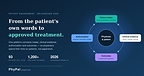
SEATTLE, Oct. 9, 2026 /PRNewswire/ — PhyPal today announced the relaunch of its patient engagement platform, combining modern conversational AI with its original deterministic clinical technology. The updated platform connects patient intake, clinical documentation, outcomes tracking, and treatment authorization, with a pilot at a major California workers’ compensation practice.

Founded in 2018 by Ranjeet Randhawa and the late Dr. Michael Brown, PhyPal developed Snapcare, a patient engagement system supported by a 93-patient randomized controlled trial published in the European Spine Journal. Patients using Snapcare alongside conventional care experienced significantly greater disability reduction at 12 weeks (p < 0.001).

Despite its clinical foundation, the technology faced a fundamental limitation: rule-based systems could follow structured pathways but struggled with unpredictable patient conversations.

“Michael used to describe patient conversations as peeling an onion,” said Randhawa. “Layer by layer, until you understand what’s really happening. We had the clinical foundation, but the technology couldn’t sustain those conversations.”

AI Changes What’s Possible

PhyPal now combines large language models with deterministic clinical workflows, enabling natural patient conversations while maintaining structured controls over information collection and downstream processes.

More than 1,200 patients have completed pre-visit intakes using PhyPal’s technology. The platform also supports after-visit summaries, longitudinal outcomes tracking, and authorization coordination.

“PhyPal has made collecting patient data faster and easier, so I can spend my time analyzing problems and communicating directly with patients,” said Dr. Richard Jimenez, rheumatologist at Seattle Arthritis Clinic.

From Patient Conversation to Treatment Authorization

PhyPal’s expanded capabilities connect patient histories and physician findings to authorization request preparation, submission, and tracking. Its California pilot will evaluate opportunities to reduce administrative work and improve treatment coordination.

“We didn’t need AI to invent our clinical foundation,” Randhawa said. “We needed AI to make that foundation accessible through natural conversation. Healthcare doesn’t need another chatbot. It needs technology that connects what patients say with what providers need to do next.”

About PhyPal

Founded in 2018, PhyPal develops AI-powered patient engagement and clinical workflow infrastructure, combining conversational intelligence with deterministic clinical processes.

Website: phypal.com

Clinical study: pubmed.ncbi.nlm.nih.gov/30324496

Media Contact

Ayumi Takasugi

8586050070

424450@email4pr.com

View original content to download multimedia:https://www.prnewswire.com/news-releases/before-chatgpt-phypal-had-the-clinical-evidence-but-not-the-ai-now-its-back-302903504.html

SOURCE PhyPal

Continue Reading

Technology

AnySignal and Andrenam partner to bring next-generation seabed-to-space communications to market

Published

on

By

Partnership combines a new underwater acoustic modem with distributed maritime infrastructure, edge processing, and resilient satellite communications

LOS ANGELES, Oct. 9, 2026 /PRNewswire/ — AnySignal and Andrenam today announced a partnership to develop and bring to market a new family of underwater acoustic communications modems, with initial shipments expected in the first half of 2027. The companies intend to make modems broadly available to the market in addition to integrating the modems into their broader suite of products and services.

AnySignal and Andrenam have a history of collaboration and are proven leaders in their respective fields of distributed maritime platforms and resilient radiofrequency (RF) communications capabilities.

Andrenam brings its underwater operating experience, existing government customer relationships, and consistent access to maritime test environments. Andrenam’s network of intelligent surface platforms connects to underwater vehicles and sensors while providing compute, communications, and sensing infrastructure for the maritime domain.

AnySignal will lead development of the core modem and communications technology, drawing on its experience designing communications products like its Terramodem, flight-proven communications terminals (AstroModem USX), and network orchestration software (AnyLink). The modems will also leverage AnySignal’s broader software-defined RF stack, which spans communications, radar, electronic warfare, SIGINT, ELINT, and other sensing applications.

Together, the companies plan to extend the acoustic modem into a complete acoustic-to-RF, seabed-to-space communications architecture. Underwater assets can communicate acoustically with distributed surface nodes, such as Andrenam’s PEARL buoys, where data can be processed locally or routed through resilient satellite and terrestrial networks like AnySignal’s AnyLink network.

“AnySignal and Andrenam see market demand for a modern, independently available acoustic modem that can be broadly integrated across government, commercial, and autonomous maritime platforms,” said John Malsbury, Co-founder and CEO of AnySignal. “AnySignal’s thesis was always to extend our network to support missions in all domains. We have proven our products across space missions, and with this partnership, now extend our reach into sub-sea operations. Our team’s deep modem, digital signal processing, and RF capabilities, paired with Andrenam’s maritime platforms, operating experience, and test opportunities, will generate exciting products for our customers.”

“One of the biggest biggest gaps in the undersea domain is getting reliable communications in and out of the water quickly, remotely and reliably,” said Matej Cernosek, Co-Founder and CEO of Andrenam. “Our partnership with AnySignal will bring a new software-defined undersea communications modem to close this gap. AnySignal’s deep experience with communications paired with Andrenam’s PEARL hardware and OBISIDIAN software will enable us to move that data from undersea sensors and vehicles anywhere in the world, in real-time. We intend the resulting modems to be available well beyond our own platforms and to be designed for rapid third party integration.”

The companies expect early modem shipments in the first half of 2027. The acoustic modem is intended to be the first product from a broader technical partnership. Andrenam’s distributed surface platforms can host communications, compute, radar, SIGINT, ELINT, acoustics, electronic warfare, and other payloads. AnySignal full stack platform, encompassing on-orbit radios, ground stations, and global networking brings proven expertise across corresponding mission areas, creating opportunities for additional distributed maritime sensing and processing products over time.

About AnySignal

AnySignal is a U.S.-based aerospace and defense technology company building the operating system for the electromagnetic spectrum. The company designs, builds, integrates, and operates end-to-end radio-frequency (RF) systems for civil, commercial, and national security customers to sense, connect, navigate, and defend across land, air, sea, and space—providing the adaptable spectrum capabilities their missions depend on.

About Andrenam

Andrenam is a Los Angeles-based dual use technology company delivering persistent, passive acoustic monitoring for maritime domain awareness. Its PEARL networked buoys and OBSIDIAN software platform turn underwater audio into actionable maritime intelligence for defense, homeland security, critical infrastructure and commercial maritime customers. Andrenam deploys and operates distributed sensor networks so customers can buy persistent coverage rather than another complex system to own.

Media Contact: 
Rey Umali
rey@anysignal.com 

View original content to download multimedia:https://www.prnewswire.com/news-releases/anysignal-and-andrenam-partner-to-bring-next-generation-seabed-to-space-communications-to-market-302903106.html

SOURCE AnySignal

Continue Reading

Technology

80% of Employees Want to Use AI More Than Their Jobs Allow

Published

on

By

The “Activation Gap” could be leaving trillions in potential global economic gains unrealized, according to new research from Cognizant

TEANECK, N.J., Oct. 9, 2026 /PRNewswire/ — A new Cognizant workplace study has identified what researchers are calling the “Activation Gap”: a wide and largely invisible divide between how much employees believe AI can enable them in their work and how much their jobs allow them to use it. In “New Frontiers, New Frictions: Mapping the DNA of AI Adoption,” the findings suggest that the biggest barrier to AI’s economic promise is translating employee willingness into effective adoption. Customization, integration and context engineering can help to close that gap.

The stakes are significant. Cognizant researchers estimate that a uniform 5% increase in global labor productivity could add roughly $6 trillion to world GDP, nearly the equivalent of adding an economy the size of Japan’s. Closing the Activation Gap is a potential path towards capturing some of that value and supporting the corresponding wage growth that frequently accompanies GDP increases. Moreover, workers’ understanding of and belief in the improved productivity that AI can deliver is an early indicator of the potential for success.

“Our research finds that people are ahead of their employers,” said Ravi Kumar S, Chief Executive Officer of Cognizant. “Willingness is the hardest part of any technology shift, and it’s already in hand. What’s ahead is the work of context: shaping tools to the rules, the workflows and the execution patterns of how a particular team gets things done. Context-specific tools perform where generic ones stall. That’s the work we do with clients every day, and it’s the opportunity in front of every company right now.”

Eager adopters: Four out of five employees say they want to use AI more than their current job permits.The human factor: Disposition— meaning how a person relates to technology, risk and work itself—is roughly six times more predictive of AI behavior than where they sit in the organizational hierarchy.Navigators and Stalwarts: 72% of workers fall into two archetypes, meaning they represent the highest-leverage opportunity: a targeted intervention aimed at these two groups alone could move the needle for the majority of a company’s workforce. Navigators are willing AI users held back by organizational barriers, while Stalwarts are looking for a clear reason and business case to adopt AI.Poor tool fit: Up to 82% say their current AI tools don’t fit their needs. 33% of Accelerators, power users who log the heaviest AI use, and Architects, the fastest-adopting employees, point to missing context and lack of customization as the top factor limiting their AI use.

Across every employee archetype, between 72% and 82% say their current AI tools don’t meet their needs. Even Precisionists, highly active AI users and the most satisfied group in the study, reported only 28% satisfaction with their tools. In other words, the group that likes its AI tools the most still has roughly three unhappy employees for every satisfied employee.

Cognizant President – Americas, Surya Gummadi, said, “dissatisfaction with workplace AI tools isn’t confined to skeptics or newcomers. It’s a near-universal experience, cutting across employees who are highly engaged with AI and those who are not. We partner with our clients to identify and implement the AI solutions best designed to drive their business results. And our experience across thousands of activations, combined with this new research, aims to help us deliver at scale for even the largest organizations.”

The study also found a gap in how AI training is delivered and received. Among Architects, 81% rate their training as effective, and 83% complete it. Among Holdouts, the group least inclined to use AI, those numbers drop to 56% effectiveness and 53% completion.

The training gap doesn’t fully explain the satisfaction gap. Architects receive the most effective, most completed training and 87% say they turn to unsanctioned tools when their approved options fall short. These are two separate problems: training isn’t reaching everyone equally, and even where it lands well, the underlying tools still aren’t meeting people’s needs.

Taken together, Cognizant’s findings point to a workforce that is more willing, and more ready, to work with AI than most organizations currently assume. Giving employees access to context-specific tools and training to match is the clearest path to closing the Activation Gap and delivering increased real world business results using AI.

“For the technology to unlock the roughly $6 trillion in potential GDP growth that AI could provide, companies must simultaneously provide context-specific tools to a receptive employee base while also improving their training programs to customize them for different personas and increase their effectiveness at producing real results,” added Kumar S.

About Cognizant
Cognizant is an AI Builder and technology services provider, building the bridge between AI investment and enterprise value by building full-stack AI solutions for our clients. Our deep industry, process and engineering expertise enables us to build an organization’s unique context into technology systems that amplify human potential, realize tangible returns and keep global enterprises ahead in a fast-changing world. See how at www.cognizant.ai or @cognizant.

For more information, contact:

Jeff DeMarrais
SVP, Global Marketing & Chief Communications Officer
Jeff.DeMarrais@cognizant.com

Alex Dudley
Alex.Dudley@cognizant.com

Katrina Cheung
Katrina.Cheung@cognizant.com

View original content to download multimedia:https://www.prnewswire.com/news-releases/80-of-employees-want-to-use-ai-more-than-their-jobs-allow-302903244.html

SOURCE Cognizant Technology Solutions Corporation

Continue Reading

Technology

CamScanner Extends Professional Scanning Beyond Capture to Meet Increasingly Diverse User Needs

Published

on

By

NEW YORK, Oct. 9, 2026 /PRNewswire/ — For users who need more than basic capture, demand remains for dedicated professional scanning apps that combine high-quality scanning with document editing, text recognition, format conversion, and AI-assisted document processing.

That continuing demand is reflected in CamScanner’s development over more than 16 years. The company has focused on improving the scanning experience while expanding the ways users can work with documents after capture.

At the capture stage, CamScanner has continued to refine the fundamentals of professional scanning. Its Auto Cropping capability helps identify and frame the page being scanned, while image processing addresses practical issues that can affect scan quality, including blur, shadows, glare, show-through, moiré patterns, and distracting backgrounds. Multi-page scanning and optimization for different document types further support users working with documents in different formats and situations.

The next layer is turning a captured image into usable information. Through Text Recognition, CamScanner can extract text from scanned documents and support subsequent tasks such as document editing and format conversion. This allows a scan to become more than a static image, making the information within it easier to access and work with.

From there, CamScanner extends into broader document processing. Its PDF capabilities support editing, conversion, merging, splitting, compression, signing, and sharing, connecting document capture with the tasks that often follow. CS AI further expands this workflow by providing AI-assisted ways to work with document content, helping users process and use information more efficiently. Rather than treating each function as an isolated tool, these capabilities are built around the document, allowing users to move between scanning, recognition, processing, and sharing according to their needs.

Dedicated professional scanning apps continue to improve the scanning experience while expanding their document-processing capabilities. CamScanner remains focused on both the quality and efficiency of document capture and the growing range of tasks surrounding the document. As user needs become increasingly diverse, professional scanning extends beyond digitizing paper to helping users recognize, edit, process, manage, and use the information within their documents.

View original content to download multimedia:https://www.prnewswire.com/news-releases/camscanner-extends-professional-scanning-beyond-capture-to-meet-increasingly-diverse-user-needs-302903203.html

SOURCE CamScanner

Continue Reading

Trending