Connect with us

Technology

Beyond a Single Payment Rail: Building Resilience into Cross-Border B2B Trade

Published

on

At the 140th Canton Fair, PhotonPay examines how fiat and stablecoin infrastructure can give advanced manufacturers more flexibility in managing cross-border payments and working capital.

HONG KONG, Oct. 19, 2026 /PRNewswire/ — A piece of industrial machinery may take months to engineer, manufacture and deliver. The payments behind it follow a different timeline. Suppliers need to be paid, freight costs must be covered, and overseas buyers may settle invoices in stages. When production, delivery and payment span multiple markets, keeping these commitments aligned becomes a challenge of its own.

At the 140th Canton Fair, where manufacturers are showcasing industrial machinery, electronic components, automotive parts and other advanced manufacturing products, this less visible side of global trade deserves closer attention. PhotonPay is participating in the fair at Area D, Booths DT1714–DT1718, examining how more flexible financial infrastructure can help businesses manage cross-border payments alongside the demands of international trade.

The Payment Gap Behind Global Supply Chains

Supply chain resilience is often discussed in terms of sourcing, manufacturing capacity and logistics. The flow of money deserves the same attention.

A manufacturer may have sufficient orders and production capacity but still face pressure when incoming payments and outgoing obligations fall out of sync. A payment initiated by a buyer does not necessarily mean the funds are immediately available to the seller. The transfer may involve multiple financial institutions, currency conversion, local processing and compliance checks before the recipient can use the money.

Costs can also be difficult to assess across different payment corridors. Depending on the banks and arrangements involved, intermediary fees, foreign exchange charges and other transaction costs may affect the final amount received. Limited visibility into a payment’s status can make it harder for finance teams to plan supplier payments and reconcile invoices.

The answer is not to abandon established banking infrastructure. Bank transfers still remain important to international trade. Nor is every payment delayed or expensive simply because it crosses a border. The more useful question is whether businesses have the right payment options for different markets, currencies and settlement requirements, rather than relying on one approach for every transaction.

Why Fiat and Stablecoin Rails Need to Work Together

Discussions about cross-border payments increasingly include stablecoins, but the choice facing corporate finance teams is not simply traditional banking versus blockchain.

Banking infrastructure remains essential. It connects businesses to local accounts, domestic payment systems and established financial relationships. Stablecoin networks offer a different set of capabilities: transfers can take place outside conventional banking hours, subject to the network and service arrangements involved.

Each serves different needs. A stablecoin transfer alone may not put spendable local currency in a supplier’s hands. The recipient’s ability to accept the asset, conversion and liquidity arrangements, access to local payout channels and applicable regulatory requirements all matter. A business also needs to know how a transaction will be screened, recorded and reconciled with its underlying commercial documents.

This is where a dual-rail model becomes relevant. By connecting traditional fiat infrastructure with stablecoin payment channels, a business can access different ways to move funds within a unified financial environment, where supported and permitted.

The choice of payment route should reflect the corridor, currency, counterparty, timing requirements and compliance obligations. For advanced manufacturers, this flexibility can help finance teams coordinate incoming payments with supplier invoices, logistics costs and other business obligations. Foreign exchange exposure, liquidity constraints and compliance reviews still require careful management, while access to different payment rails gives businesses more options to work with.

From Payment Choice to Operational Control

More payment options are useful only when they fit into the way a business operates.

For an exporter, receiving funds is one step in a longer process. The money may need to be converted into another currency, held until a supplier payment is due, or distributed to different counterparties across markets. Managing these steps through disconnected accounts and systems can add work for finance teams and make it harder to maintain a consistent view of cash positions.

PhotonPay, a stablecoin-powered payment operating system, brings together global accounts, local collection capabilities, multi-currency fund management, currency conversion and global payouts across fiat and stablecoin infrastructure.

Through PhotonPay’s global accounts, businesses can collect payments from overseas customers through local accounts and international transfers. Its multi-asset wallet connects fiat currencies with stablecoins, while its 24/7 currency conversion capabilities give businesses greater flexibility in managing different currency needs. Global payout capabilities help businesses move funds onward to suppliers and other counterparties across markets.

Together, these capabilities connect the key stages of cross-border fund management, from receiving customer payments and converting currencies to making subsequent business payments. Finance teams can manage incoming funds and outgoing obligations within a more integrated financial environment, with greater visibility across their global operations.

For B2B trade, operational visibility is as important as the ability to initiate a transfer. Finance teams need to understand the amount received, the costs associated with a transaction, its processing status and how the resulting movement of funds relates to an invoice or supplier payment.

By bringing payment infrastructure and fund management into a more connected workflow, PhotonPay helps businesses manage the movement of money alongside the commercial activity it supports.

Making Money Move at the Pace of Business

Global trade depends on two flows moving in sync: goods moving through supply chains and money moving between counterparties. For manufacturers operating across markets, the ability to collect, convert and deploy funds efficiently can shape how they manage supplier commitments, working capital and the next stage of production.

At the 140th Canton Fair, PhotonPay is showcasing how integrated fiat and stablecoin capabilities can help businesses keep capital moving alongside their operations. Visit PhotonPay at Area D, Booths DT1714–DT1718, during the Canton Fair.

About PhotonPay

PhotonPay is a stablecoin-powered payment operating system built for global infrastructure. Designed for modern enterprises, PhotonPay enables businesses to send, receive, convert, and settle funds across both fiat and stablecoin rails through a single, compliance-first integration, spanning 200+ countries and territories.

For more information, visit [www.photonpay.com].

Disclaimer

This material is for general informational purposes only and does not constitute legal, regulatory, tax, accounting, or investment advice, nor an offer or solicitation for any product or service. The availability, features, and regulatory treatment of PhotonPay’s products and services may vary depending on the user’s location, business model, and the laws and regulations that apply. Any descriptions of functionality, performance, efficiency, cost savings, or compliance support (including, without limitation, references to “real‑time”, “24/7”, “high‑efficiency”, or “compliant” solutions) are aspirational or forward‑looking in nature. Actual outcomes may differ due to market conditions, technological constraints, and regulatory developments, and PhotonPay makes no express or implied representation, warranty, or guarantee as to the achievement of any particular result.

View original content to download multimedia:https://www.prnewswire.com/apac/news-releases/beyond-a-single-payment-rail-building-resilience-into-cross-border-b2b-trade-302912425.html

SOURCE PhotonPay

Continue Reading

Technology

Silicon Valley Investors Urge Taiwan Startups to Find Niches as AI Competition Intensifies

Published

on

By

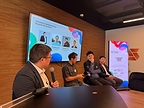
OAKLAND, Calif., Oct. 19, 2026 /PRNewswire/ — Taiwanese startups seeking to compete in artificial intelligence must develop specialized expertise, strengthen distribution networks and identify markets overlooked by larger technology companies, investors said at a Silicon Valley gathering on Monday.

The discussion took place during Taiwan × Silicon Valley: Founders, Capital & the Next Wave of Innovation, organized by Startup Island TAIWAN Silicon Valley Hub and Taiwan Global Angels in partnership with Google Cloud as part of SF Tech Week.

Opening the event, Uly Su, director and head of Startup Island TAIWAN Silicon Valley Hub, emphasized the hub’s role in connecting Taiwanese startups with U.S. investors, corporations and business opportunities, strengthening ties between Taiwan’s technology ecosystem and Silicon Valley.

The Shrinking AI Advantage

Timothy Chen, managing partner at Essence VC, said the rapid evolution of AI models has made technological advantages increasingly short-lived, forcing investors to reassess how they identify promising startups.

Rather than focusing exclusively on technologies that could dominate over the next five years, Chen said investors are examining founders’ specialized knowledge, distribution capabilities and ability to execute. Even a three- to six-month advantage could prove valuable in a rapidly changing market.

The panelists also discussed how startups could compete against larger technology companies. They emphasized identifying underserved markets, developing specialized capabilities and moving quickly before established players enter emerging sectors.

Beyond Software: Space, Robotics and Physical AI

Poseidon Ho, founding partner and CEO of Outliers Fund, highlighted opportunities beyond conventional AI applications, particularly in space and defense, where government contracts and expanding infrastructure investment are creating markets for emerging companies.

Ho said the sector offers a different investment model from software, with longer development cycles and substantial technical requirements. He encouraged Taiwanese entrepreneurs to explore opportunities within the space industry’s supply chains, including government contracting.

Austin Hwang, principal at ADVentures, identified physical AI, robotics and medical technology as areas of interest, particularly where startups combine specialized hardware with software and proprietary technical capabilities.

Hwang said Taiwan’s experience in semiconductors, electronics and manufacturing could provide an advantage as AI increasingly moves beyond software into physical applications.

From Technology to Commercial Success

A second panel featuring experienced entrepreneurs shifted the discussion toward commercialization, acquisitions and the challenges of building companies across Taiwan and the United States.

Paul Hung, CEO of Taudia, emphasized that startups must begin with a clearly defined customer problem rather than technology development alone.

Hung said founders need to understand why customers would pay for their products and build teams and investor networks capable of supporting commercialization.

Terry Hsiao, managing partner at BonHope Capital, drew on his experience building and selling companies to discuss the decisions founders face when considering acquisitions.

He noted that venture capital firms can spread their risks across multiple investments, while first-time founders often have most of their financial interests tied to a single company. Securing an initial successful exit could therefore be an important consideration.

Medical technology entrepreneur Steve Wu discussed the challenges of developing regulated healthcare products, including lengthy development cycles, regulatory requirements and the importance of understanding the commercial potential of new technologies.

The speakers also highlighted cultural differences between Taiwan and Silicon Valley, where entrepreneurship and risk-taking are more widely encouraged and founders have greater exposure to experienced investors and business leaders.

For Taiwanese startups, the discussions underscored the importance of combining the island’s engineering and manufacturing capabilities with stronger commercialization strategies, international market access and the ability to compete in rapidly changing industries.

View original content to download multimedia:https://www.prnewswire.com/news-releases/silicon-valley-investors-urge-taiwan-startups-to-find-niches-as-ai-competition-intensifies-302913355.html

SOURCE Startup Island TAIWAN Silicon Valley Hub

Continue Reading

Technology

Flexxon Partners with Tech4Biz Solutions to co-develop server infrastructure that is secure by default

Published

on

By

As organisations increasingly look to build their own servers to run AI systems, the two companies are working to ensure purpose-built infrastructure and security go hand-in-hand

SINGAPORE and BENGALURU, India, Oct. 20, 2026 /PRNewswire/ — Flexxon, a pioneer in secure memory storage and hardware-based cybersecurity solutions, today announced its strategic investment in Tech4Biz Solutions. The partnership will see the companies co-develop solutions that enable efficient and reliable deployment of secure server and data centre operations – a heightened need as enterprises move Artificial Intelligence (AI) workloads on-premises, onto infrastructure they own and must secure themselves.

The investment formalises the ongoing relationship between the two companies, and deepens joint development across the parties’ product lines: Flexxon’s X-PHY hardware security, and Tech4Biz’s Cloudtopiaa, its sovereign cloud and AI infrastructure platform.

X-PHY is Flexxon’s hardware-based cybersecurity brand. It puts AI-powered threat detection inside the drive’s own firmware and hardware, below the operating system. X-PHY’s hardware-based protection is designed to keep working even when the software above it has been compromised.

Cloudtopiaa designs, builds and operates public cloud, private cloud, HPC, GPU inference and AI data centre environments for organisations that want full control of their data, models and AI agents, in the jurisdiction they choose. 

Ms Camellia Chan, Co-founder and CEO of Flexxon, said: “Having worked with Tech4Biz for several years, I am glad to take this next step and deepen the partnership as we continue building towards more secure, more reliable standards together. We are building hardware that is secure by default, carrying that protection from devices into the servers and data centres enterprises now run themselves – the part of the stack where traditional security leaves the widest gaps.”

Ms Yasha Khandelwal, Co-founder and CEO of Tech4Biz Solutions, said, “When a company owns its whole AI stack, there is no hyperscaler behind it to absorb a mistake, so the design and the security have to be right from day one. We have spent years building and running sovereign infrastructure in production for enterprises and institutions, and bringing X-PHY into that design means every server we deliver will ship with protection built into the hardware itself.”

Where AI capability outruns protection

AI has quickly moved from pilots into systems that run on a company’s own data every hour of the day, and the data, models and agent memory involved are now among the most sensitive assets a company holds. More organisations want that capability on infrastructure they own, in the jurisdiction they choose. Accordingly, Gartner forecasts worldwide sovereign cloud infrastructure-as-a-service spending will reach US$80 billion in 2026, a 35.6 per cent increase on 2025, with mature Asia-Pacific markets among the fastest growing and governments the largest buyers. That shift moves the responsibility for securing the infrastructure back to the organisations running it.

These AI systems now work across enterprise data with valid credentials, often without a user approving each action. Software defences remain necessary, but they run on the same layers an attacker is trying to take over – and when those safeguards fail, there must be an immutable layer that protects the data.

What X-PHY and Cloudtopiaa will deliver

The parties will collaborate specifically on integrating Flexxon’s X-PHY hardware security expertise with Tech4Biz’s existing infrastructure capability through Cloudtopiaa, its cloud platform and infrastructure offering.

On the immediate horizon is the integration of X-PHY’s hardware security solutions into Cloudtopiaa environments, so that server estates are secured by default and protection arrives with the machine rather than being bolted on after. For enterprises, that means the security work no longer grows with every server added.

This includes the design, build and deployment of secure infrastructure that organisations can own and run outright. Development is already under way, with commercial deployment expected in 2027.

Cloudtopiaa already runs production workloads for customers including L&T Technology Services, which runs two production engineering platforms on it – a quality management platform for GxP-regulated industries and a multi-agent enterprise AI platform – and Cognitive PRISM. It is also building a three-year private cloud lab ecosystem for Vidyavardhaka College of Engineering, Mysuru.

The partnership will focus first on governments, regulated enterprises, research institutions and data centre operators in Singapore, India and North America.

View original content:https://www.prnewswire.com/in/news-releases/flexxon-partners-with-tech4biz-solutions-to-co-develop-server-infrastructure-that-is-secure-by-default-302913354.html

Continue Reading

Technology

SIEW 2026 Brings Together Global Energy Leaders to “Connect Energy Systems, Power Tomorrow”

Published

on

By

SINGAPORE, Oct. 20, 2026 /PRNewswire/ — The 19th Singapore International Energy Week (SIEW) will open on 26 October, bringing together global policymakers, industry leaders and innovators to navigate energy challenges and shape a more secure, connected and sustainable energy future.

Highlights of SIEW 2026

I. Opening: The Singapore Energy Lecture will be delivered by H.E. Dr Tan See Leng, Minister for Energy, Trade and Industry (Energy and Industry). YAB Datuk Amar Haji Fadillah bin Haji Yusof, Deputy Prime Minister and Minister of Energy Transition and Water Transformation, Malaysia, will deliver the Ministerial Keynote Address. Bernard Fontana, Chairman and Chief Executive Officer of Électricité de France (EDF), will share his perspectives at the SIEW Opening Keynote.

II. Ministerial and VIPs: Ministers from Australia, Bhutan, Brunei Darussalam, Finland, Lao People’s Democratic Republic, Oman, Philippines, and United States will be joined by H.E. Dr Kao Kim Hourn, Secretary-General of the ASEAN Secretariat, Dr Fatih Birol, Executive Director of the International Energy Agency, and Francesco La Camera, Director General of the International Renewable Energy Agency. Global industry leaders from Baker Hughes, China Huaneng Group, GE Vernova, Hitachi Energy, Petronas, Siemens Energy, State Grid Corporation of China, Tenaga Nasional Berhad, and Univers will share their insights impacting the energy landscape.

SIEW 2026 will host prominent decision-makers and visionaries from across government, international bodies, regulatory agencies, and industry. The list of speakers attending SIEW 2026 is available here.

Government

H.E. Dr Tan See Leng, Minister for Energy, Trade and Industry (Energy and Industry), Republic of SingaporeH.E. Gan Siow Huang, Minister of State, Ministry of Foreign Affairs & Ministry of Energy, Trade and Industry, Republic of SingaporeYAB Datuk Amar Haji Fadillah bin Haji Yusof, Deputy Prime Minister and Minister of Energy Transition and Water Transformation, MalaysiaH.E. Sonam Tashi, Minister for Energy and Natural Resources, BhutanDato Seri Setia Awang Haji Mohamad Azmi Bin Haji Mohd Hanifah, Minister at the Prime Minister’s Office (Energy, Upstream and Downstream), Brunei DarussalamH.E. Sakari Puisto, Minister of Economic Affairs, Republic of FinlandH.E. Malaithong Kommasith, Minister of Industry and Commerce, Lao People’s Democratic RepublicH.E. Eng. Salim Bin Nasser Al Aufi, Minister of Energy and Minerals, Vice Chairman of the Board of the Oman Investment Authority, OmanThe Honourable Sharon S. Garin, Secretary, Department of Energy, Republic of the PhilippinesH.E. Jean Barroca, Deputy Minister of State for Energy, PortugalDr Majid Al-Qwaiz, Deputy Minister of Development and Project Management, Kingdom of Saudi ArabiaThe Rt Hon Miatta Fahnbulleh MP, Secretary of State for Energy Security and Net Zero, United Kingdom of Great Britain and Northern IrelandChris Stark, Head of UK’s Mission for Clean Power, UK Department for Energy Security and Net Zero

International Organisations

Rafael Mariano Grossi, Director General, International Atomic Energy AgencyLin Yang, Deputy Executive Secretary for Programme, United Nations Economic and Social Commission for Asia and the Pacific (ESCAP)Hideaki Iwasaki, Director General, Sectors Department 1 (Energy and Transport Sectors), Asian Development Bank (ADB)Kim-See Lim, Chief Investment Officer, Public Sector (Region 1) & Financial Institutions and Funds (Global) Clients, Asian Infrastructure Investment Bank (AIIB)Stéphanie Guénot Bresson, Commissioner, Nuclear Safety and Radiation Protection Authority Dr Sama Bilbao y León, Director General, World Nuclear Association

Regulators and Utilities

Anna Collyer, Chair, Australian Energy Market CommissionClare Savage, Chair, Australian Energy RegulatorNarumi Hosokawa, Secretary General, Electricity and Gas Market Surveillance Commission, JapanErik Westergaard, Deputy Chair, Electricity Authority, New ZealandDato’ Sri Ir. Ts. Shamsul Bin Ahmad, President and Chief Executive Officer, Tenaga Nasional BerhadHon. Francis Saturnino C. Juan, Chairperson and Chief Executive Officer, Energy Regulatory Commission, PhilippinesTheodore J. Garrish, Assistant Secretary for Nuclear Energy, U.S. Department of EnergyJudy Chang, Commissioner, Federal Energy Regulatory Commission, United StatesEmmanuelle Wargon, Chair, French Energy Regulatory CommissionDr Narin Phoawanich, Governor, Electricity Generating Authority of Thailand Shao Guoyong, Board Director, State Grid Corporation of China

Industry

Gary Rose, Executive Vice President, Nuclear, Canada, AtkinsRéalis, and President, CANDU International, Candu Energy Inc.Allyson Anderson Book, Chief Sustainability Officer, Government Affairs & Public Policy Officer, Baker HughesYingying Zhou, Vice President, Organisation and Head of Asia, Cheniere EnergyJoseph Law, Managing Director, CLP Power Hong KongLi Rui, Vice President, China Southern Power GridLim Wee Seng, Group Head of Energy, Renewables & Infrastructure, Project Finance Strategic Advisory and Sustainability, Institutional Banking Group, DBS BankTham Chee Aun, Chief Executive Officer, Ditrolic EnergyEric Gray, Chief Executive Officer, Power, GE VernovaJames O’Reilly, Chief Executive Officer, Greenlink InterconnectorN Venu, MD and CEO, India and APAC Region, Member of Global Executive Team, Hitachi Energy, MD, Hitachi IndiaZhong Guodong, President, China Huaneng Group Co., Ltd.Dr Han-Gon Kim, President, Innovative SMR Development AgencyTadashi Maeda, Chairman of the Board, Japan Bank for International CooperationIzumi Kai, Managing Executive Officer, CEO of JERA AsiaStephanie McGregor, Chief Executive Officer, Marinus LinkEmmanuel V. Rubio, President and CEO, Meralco PowerGen Corporation (MGEN)Yasuhiro Kawabe, President & CEO of Mitsubishi Power, Ltd.Elaine Lam, Group Managing Director and Head of Global Corporate Banking, OCBCYM Tan Sri Tengku Muhammad Taufik Tengku Aziz, CEO, Petronas Thorbjörn Fors, Group Senior Vice President and President Asia Pacific, Siemens EnergyStanley Huang, Group Chief Executive Officer, SP GroupJeanne Soh, Managing Director, Head, Structured Finance, Asia, SMBC 

The SIEW week will feature high-level expert discussions across SIEW Summit, SIEW Energy Insights, SIEW TechTable and SIEW Thinktank Roundtables. Topics will include energy security, regional connectivity, system resilience and decarbonisation, including leading technologies and industrial capabilities on AI and digital grids, power interconnections, geothermal energy, and nuclear energy. More details can be found at siew.gov.sg. 

Register now at https://register.siew.gov.sg.

PR Newswire is the Official Press Release Distribution Partner of Singapore International Energy Week 2026.

About SIEW

The Singapore International Energy Week (SIEW) is an official trademarked event by the Energy Market Authority (EMA). It is an annual platform for energy professionals, policymakers and commentators to discuss and share best practices and solutions within the global energy space. 

The SIEW logo is an officially registered trademark, a symbol of credibility and prestige as the world’s leading energy event. 

About the Energy Market Authority

The Energy Market Authority (EMA) is a statutory board under the Singapore Ministry of Energy, Trade and Industry. Through our work, we seek to build a clean energy future that is resilient, sustainable, and competitive. We aim to ensure a reliable and secure energy supply, promote effective competition in the energy market and develop a dynamic energy sector in Singapore. Visit www.ema.gov.sg for more information. 

For media queries, please contact:

Ms Mahima Kathuria
FINN Partners for Singapore International Energy Week
Tel: +65 8022 6364
Email: SIEWMedia@finnpartners.com

View original content to download multimedia:https://www.prnewswire.com/apac/news-releases/siew-2026-brings-together-global-energy-leaders-to-connect-energy-systems-power-tomorrow-302912520.html

SOURCE Energy Market Authority

Continue Reading

Trending