Connect with us

Technology

Asia Pacific accounts for a third of the world’s fraud networks as identity fraud grows more complex: Sumsub

Published

on

The Sumsub Identity Fraud Report finds that one in three fraud network connections in the region emerge only after users pass identity checks, pointing to verified accounts being sold or handed over to fraudsters after onboarding.

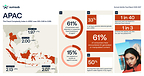
SINGAPORE, Nov. 18, 2026 /PRNewswire/ — Sumsub, the first AI-powered trust infrastructure, has released its Identity Fraud Report 2026-2027*. Now in its sixth edition, the report finds that Asia Pacific (APAC) accounted for a third (33%) of all fraud networks detected globally, more than any other region, and recorded close to a million confirmed fraud attempts, the highest of the six regions.

Fraud networks are coordinated groups of linked identities, accounts and devices run by organized fraudsters. Across APAC, around 1 in 40 approved people (2.4%) are linked to a detected fraud network, and around one-third of these links appear only after they have successfully passed identity verification. This suggests many legitimately verified accounts are later sold or handed over to fraudsters, often for use as money mules: accounts that receive and move stolen funds on a fraudster’s behalf.

Increasingly sophisticated tactics have led Sumsub to the creation of Sumsub’s new Fraud Complexity Index (FCI), which scores each confirmed case on the tooling, coordination and number of techniques behind it. This year, the report finds that the FCI rose from 2.1 to 2.2 globally.

Key APAC findings from the report include:

APAC hotspots for fraud networks: The Philippines recorded the largest number of networks in the region (17% of APAC networks), closely followed by India, while the largest single network was detected in Thailand, with 3,018 linked users.Fraud is becoming more complex: APAC’s FCI rose 14% to 2.09. Hong Kong’s FCI rose 7% to 1.97. APAC businesses also reported fraudster-operated AI agents (11%) more often than any other region.AI agents are adding new exposure: 61% of APAC businesses have detected or suspected fraud involving an AI agent, among the highest levels of any region. APAC businesses lead on limiting agent permissions and on suspending or revoking access, but these controls remain limited: only 15% can suspend or revoke an agent’s access, and 40% verify the human that authorizes one.Deepfake activity is spreading even where overall fraud is declining: Deepfakes rose sharply in Pakistan (+217%), the Philippines (+125%), India (+103%) and Hong Kong (+72%). In Indonesia, the overall fraud rate fell 64% while deepfakes increased 69%.APAC consumers are the most exposed to AI-generated content: 61% of APAC consumers have encountered AI-generated or manipulated content, the highest share of any region. Among those who experienced a fraud attempt, 44% said AI-generated content played a part.Singapore sees fewer, but more complex, attacks: Singapore’s fraud rate fell 36% year-on-year to 1.0%, while its FCI rose 9% to 2.13, above the APAC average. Deepfakes in Singapore fell 37%.Japan has the region’s highest and fastest-growing fraud rate: Japan’s fraud rate rose 219% year-on-year to 5.1%, the highest in APAC.Legitimate AI agents are being turned against businesses: Globally, among businesses that detected or suspected AI-agent fraud, 49% saw a legitimate agent manipulated by malicious instructions, and 30% saw an agent initiate a purchase, payment or transfer.

Verified accounts become building blocks for fraud networks

A single fraudulent account rarely tells the whole story. Fraud networks become visible through shared devices, contact details, payment instruments and document templates that an account-by-account review cannot show. Some of these links appear only after onboarding, as legitimately verified accounts are sold, compromised or otherwise repurposed. Passing KYC confirms an identity at a single point in time, but does not guarantee how an account will be used afterwards.

Businesses recognize the challenge, but few are equipped for it. 29% of APAC businesses say larger linked networks are making fraud harder to detect, the highest share of any region, yet only 25% use fraud network analysis.

In Southeast Asia, organized scam compounds have become highly mobile, relocating sites and reusing the same infrastructure when authorities intervene. Their human cost is significant: by April, Nepal reported that 612 of its citizens had been rescued from online scam centers across Southeast Asia and repatriated.

The impact is felt on both sides of the transaction. Among APAC businesses that experienced fraud, impersonation of a business, employee or supplier was the most commonly reported form of external fraud (42%), the highest of any region, followed by scam-induced payments (40%). Among APAC consumers, 79% experienced fraud in the past 12 months. Half of victims lost money, and 51% of those recovered none of it.

“A scam network is designed to look like a thousand ordinary people doing ordinary things. Every account is verified, and every document is real, because the person holding it was recruited, paid, or coerced into opening it, so nothing trips a wire on its own,” said Erin West, anti-scam advocate, former Deputy District Attorney and founder of Operation Shamrock, who has investigated scam compounds in Cambodia and Thailand. “Look past the person in front of you to the people behind them. The networks already cooperate beautifully with one another, and it’s time we caught up.”

Fraud grows more complex as it shifts across the region

While fraud rates fell in four of six regions globally, the FCI rose in all six. In APAC, it rose 14%, from 1.83 to 2.09.

Rather than rising everywhere at once, fraud is shifting between APAC markets and techniques. Japan’s fraud rate rose 219%, while Singapore’s fraud rate fell 36%, but its FCI rose 9%, above the regional average. In Hong Kong, fraud rate edged up 5% as deepfakes there rose 72%. APAC also leads all regions in the share of businesses saying deepfakes (31%) and synthetic identities (26%) are making fraud harder to detect while QR-code redirection (18%) and device or location manipulation (14%) were also reported more often than anywhere else.

The region also has strong foundations to respond. APAC leads every other region in digital identity wallet adoption: 50% of consumers have used a government digital identity wallet, and 65% say they would be comfortable using one. Banks and financial services remain the most trusted online category, with 74% of APAC consumers reporting high or full trust.

“Fraud in APAC isn’t rising everywhere at once. It is shifting between markets, techniques and stages of the customer lifecycle,” said Penny Chai, Vice President, APAC at Sumsub. “The region is home to some of the world’s most mature digital economies, alongside markets where digital services and organized scam operations are expanding quickly. Those markets are deeply connected, and fraud networks move easily between them. But APAC also has the tools to respond, from progressive regulation to world-leading digital identity adoption and high consumer trust in financial services. The task now is to use them together, so that trust doesn’t end at onboarding.”

Regulators and industry move towards collective action

Regulators across the region are shifting responsibility for scam payments and mule accounts towards the institutions that send, receive or facilitate them, and building new ways to share fraud intelligence. In Singapore, the Protection from Scams Act and the Scams (Countermeasures) and Other Matters Act 2026 give authorities new powers to protect people at risk of being scammed and to disrupt accounts and services linked to scams, while the National Scams List supports the exchange of information on suspicious scam accounts. Hong Kong has created a legally protected mechanism for banks to share information, and Thailand has embedded mule-account controls across banks, payment businesses and crypto operators.

The same collective approach is needed as AI agents take on more tasks. Launched in September, the Sumsub Agentic AI Council brings together cross-sector experts across APAC to develop practical guardrails for AI agents, including agent identity, delegated authority and accountability.

To explore the Sumsub Identity Fraud Report 2026-2027 in full, please download it here: http://sumsub.com/identity-fraud-report-2026/

About Sumsub

Sumsub is the first AI-powered trust infrastructure for compliance operations at scale. It connects identity and business verification, fraud prevention, transaction monitoring, and risk workflows, helping teams reduce manual work and enter new markets.

Trusted by over 4,000 clients across financial services, crypto, mobility, trading, marketplaces, education, and iGaming, including Bybit, Bitpanda, Wirex, Avis, Vodafone, Duolingo, and Kaizen Gaming.

*Methodology

The Sumsub Identity Fraud Report 2026-2027 analyzes more than 5.8 million fraud samples from Sumsub’s internal identity verification and user activity data, comparing 2025 and 2026 across multiple regions and industries. To ensure statistical reliability, only jurisdictions with more than 15,000 verification attempts during the reporting period were included. A network connection refers to a link between an applicant and a detected fraud network at any point in the applicant lifecycle, and is a risk signal rather than proof that the applicant is fraudulent.

The report also draws on Sumsub’s Fraud Exposure Survey 2026, conducted in August 2026 among more than 1,400 fraud and risk professionals and more than 1,500 end users across 21 markets, including Hong Kong, Indonesia, the Philippines, Singapore and Thailand in APAC.

View original content to download multimedia:https://www.prnewswire.com/apac/news-releases/asia-pacific-accounts-for-a-third-of-the-worlds-fraud-networks-as-identity-fraud-grows-more-complex-sumsub-302942447.html

SOURCE Sumsub

Continue Reading

Technology

Mitrade Ends Breakthrough 2026 Past 8 Million Registered Users, With Trading Volume Up 44%

Published

on

By

MANILA, Philippines, Nov. 24, 2026 /PRNewswire/ — Fast-growing global CFD broker Mitrade is closing the year strong, drawing in nearly 1.7 million new users while trading volume across the group surged 44%. In 2026, it pushed into new territories and dug deeper into established ones, refining its platform around how traders in each region handled exceptionally volatile markets.

Driving that growth, were upgrades to Mitrade’s operations, client protection and support, and a stronger reputation:

New Category 5 Capital Market Authority (CMA) licence in March, giving Mitrade regulated footing in the UAE.Grew its CFD instrument range to more than 1,100, up from 800, with selected US shares and ETFs now tradable outside regular US hoursExtended local customer support from 24/5 to 24/7Voluntary excess of loss insurance, at no extra cost, now available to eligible clients under its CySEC, CIMA, FSCA and FSC licencesReceived 13 industry awards, bringing its total to 69

Speaking about the year, Kevin Lai, Vice President of Mitrade Group, said, “Across Asia, a new generation is coming to markets through its phones, and it reacts to news in real time. What retains traders is a broker that stays dependable when markets move quickly and become unpredictable. We’re thankful that more of them chose Mitrade over the past year.”

Named AI Broker of the Year by Global Business Magazine and Best Trading Experience by Global Forex Awards, Mitrade enters 2027 with reliability at the heart of how it serves Asia’s traders.

About Mitrade

Mitrade is a globally recognised, award-winning CFD trading platform licensed under the Cayman Islands’ CIMA (SIB1612446), Mauritius’s FSC (GB20025791), Australia’s ASIC (AFSL398528), South Africa’s FSCA (FSP 54842), UAE’s CMA (20200000397), and Cyprus’s CySEC (CIF438/23). The group democratises market access, connecting 8M+ traders to 1,100+ OTC derivatives, including indices, forex, commodities, ETFs, and shares.

The platform offers millisecond execution, tight spreads, advanced risk mitigation, and multi-device compatibility, ensuring an intuitive trading experience tailored to every trader.

Trading involves risks. This article is for informational purposes only and not financial advice, an offer, or a solicitation.

Visit https://www.mitrade.com for more information.

View original content to download multimedia:https://www.prnewswire.com/apac/news-releases/mitrade-ends-breakthrough-2026-past-8-million-registered-users-with-trading-volume-up-44-302947956.html

SOURCE Mitrade Group

Continue Reading

Technology

Terminal 3 partners with banks to test safeguards for agentic finance under MAS’s PathFin.ai initiative

Published

on

By

Proof of concept explored how identity, authority, permissions and auditability could be applied to interactions involving AI agents across financial institutions and payment providers

SINGAPORE, Nov. 24, 2026 /PRNewswire/ — Green Link Digital Bank (GLDB), AXS, Terminal 3 and HSBC Singapore have participated in an industry proof of concept under the Monetary Authority of Singapore’s PathFin.ai initiative.

The proof of concept explored how safeguards for agentic finance could operate across financial institutions and payment providers in a controlled environment. It focused on establishing the identity of an AI agent, confirming whom it was acting for and what it was authorised to do, applying controls as requests were processed, and maintaining an auditable record of decisions.

The initiative was presented at the Insights2040 Annual Meetings and at the MAS booth during the Singapore FinTech Festival.

The proof of concept was informed by MAS’s Safeguards for Agentic Finance at Runtime (SAFR), covering four areas: agent identity, controls, runtime decisions and auditability.

Two controlled scenarios were used to examine how these safeguards could work in practice.

In the first, an AI agent acting for a client sought confirmation that a biller’s account was valid, retrieved billing information and submitted a payment instruction through existing payment rails.

In the second, a registered third-party agent acting for a corporate treasurer requested account information and submitted a payment request. The scenario tested the controls required to verify the agent’s identity and authority, apply the client’s mandate and obtain client confirmation before a request could proceed.

The scenarios were designed solely to test safeguards within a controlled proof-of-concept environment. They do not represent the launch of a customer proposition or autonomous payment service.

Terminal 3 provided the trust infrastructure used in the proof of concept. Before a request reached a participating financial institution, the infrastructure verified the agent, the party it represented and its permitted actions. It also checked actions against the relevant client mandate and recorded decisions in a tamper-evident audit trail.

Together, the participating organisations examined how financial institutions, payment providers and technology companies could collaborate on common approaches to identity, authority, permissions, client confirmation and auditability as the industry evaluates the potential applications and risks of agentic AI.

“Our clients are interested in how new technologies could support routine payment activities, but appropriate checks and controls are essential. This proof of concept allowed us to examine how an agent’s identity and authority could be verified across institutions, with safeguards applied at each stage. As a participant in the SAFR workgroup, we are encouraged to see the principles of trusted agent interactions and governance being validated through practical cross-industry use cases such as this,” said Patrick Sze, Chief Technology Officer, Green Link Digital Bank.

“Bill payment is a natural first use case for agentic payments: the outcome is clear and easy to verify. Through our MCP server, we are opening AXS’s established bill payment network to AI-powered partners, enabling new ways for consumers and businesses to manage and pay their bills. With safeguards for verification, client permissions and auditability in place, this is where agents can earn trust one payment at a time, before moving to more complex use cases,” said Koh Tze Yong, Lead Solutions Architect, AXS.

“AI agents will only be trusted with high-value work, such as large payments, when the rules, authority and credentials they act on are protected from tampering, even by the agent itself. This proof of concept showed how institutions can potentially give agents real responsibility without handing them the keys,” said Gary Liu, Co-Founder and CEO, Terminal 3.

About Terminal 3

Terminal 3 is a deep-tech company building cryptographic infrastructure for AI agents and digital identity. Its confidential computing network securely stores, processes and validates data across boundaries. Agent Command, Terminal 3’s agentic governance, security and compliance platform, separates an agent’s reasoning from its execution, so enterprises can enable autonomous workflows with sensitive data, credentials and transactions, without giving agents access to protected systems and databases. Terminal 3 serves more than 10 million users with cross-border identity and verifiable credentials, with clients in government, regulated financial services, hospitality, mobility and technology across Asia and the Middle East.

Learn more at terminal3.io. 

View original content:https://www.prnewswire.com/apac/news-releases/terminal-3-partners-with-banks-to-test-safeguards-for-agentic-finance-under-mass-pathfinai-initiative-302948091.html

SOURCE Terminal 3

Continue Reading

Technology

A Legacy of Excellence: Asia Pacific Enterprise Awards 2026 Celebrates the Philippines’ Leading Business Leaders and Enterprises

Published

on

By

MANILA, Philippines, Nov. 24, 2026 /PRNewswire/ — The Asia Pacific Enterprise Awards (APEA) 2026 Philippines brought together distinguished business leaders and outstanding enterprises at Hilton Manila Newport World Resorts to celebrate achievements that are advancing industries, creating lasting value, and shaping the future of Philippine business. Organized by Enterprise Asia, the prestigious awards recognize entrepreneurs and enterprises whose leadership, innovation, and commitment to excellence continue to make a meaningful difference in the business community.

Guided by the theme “Forging Legacy: Celebrating Excellence, Inspiring Tomorrow”, the APEA 2026 highlights the importance of building businesses that extend beyond immediate success. The honorees represent organizations that have demonstrated resilience, strategic foresight, and the ability to evolve in a changing business environment, while remaining committed to responsible growth and long-term value creation. Their achievements underscore the vital role of entrepreneurial leadership in strengthening the Philippines’ economic landscape and inspiring the next generation of business leaders.

The recognition follows a rigorous evaluation process in which nominees are assessed by a distinguished panel of experts across key criteria, including leadership, business performance, innovation, sustainability, corporate governance, and overall impact. Through its established standards of assessment, the APEA seeks to recognize enterprises that demonstrate not only strong business results but also the vision and responsibility required to sustain their success. Since its establishment in 2007, the Awards has recognized prominent business figures across Asia, including Kwek Leng Beng of Hong Leong Group Singapore, Dang Van Thanh of TTC Group in Vietnam, Tan Passakornnatee of Ichitan Group in Thailand, Hary Tanoesoedibjo of MNC Group in Indonesia, and Manuel Villar of Vista Land in the Philippines.

In his welcome address, Enterprise Asia Vice Chairman Datuk William Ng highlighted the importance of visionary leadership in helping businesses navigate uncertainty and seize emerging opportunities. He emphasized that enterprises must move beyond adapting to change and take an active role in shaping the future through innovation, collaboration, and purposeful decision-making. Such leadership enables businesses to pursue sustainable growth while building enduring legacies that benefit their industries and communities.

This year’s honorees reflect the diversity and dynamism of the Philippine business landscape, with enterprises across industries demonstrating excellence, innovation, and a commitment to sustainable growth. Among the awardees are Bricolage Philippines Inc. (MR. DIY Philippines) and Carelon Global Solutions Philippines, Inc., each exemplifying the vision and strategic capabilities driving progress within their respective industries. Their achievements highlight how forward-thinking leadership, customer-centric innovation, and responsible business practices can create lasting value, strengthen industry standards, and contribute to the Philippines’ continued economic development.

The APEA 2026 Philippines is supported by the Malaysia Chamber of Commerce and Industries Philippines, Inc. (MCCI), with PR Newswire serving as the Official News Release Distribution Partner and Dailywire.asia as the Media Partner.

AWARD RECIPIENT LIST OF THE ASIA PACIFIC ENTERPRISE AWARDS (APEA) 2026 PHILIPPINES

COMPANY

INDUSTRY

CATEGORY

BRICOLAGE PHILIPPINES INC.
(MR. DIY PHILIPPINES)

RETAIL

INSPIRATIONAL BRAND, FAST
ENTERPRISE, CORPORATE
EXCELLENCE

CARELON GLOBAL SOLUTIONS
PHILIPPINES, INC.

HEALTHCARE,
PHARMACEUTICAL &
BIOTECHNOLOGY

INSPIRATIONAL BRAND,
CORPORATE EXCELLENCE

FROST DESIGN &
CONSULTING GROUP INC.

PROFESSIONAL & BUSINESS
SERVICES

FAST ENTERPRISE

LAMOIYAN CORPORATION

MANUFACTURING

CORPORATE INTEGRITY AND
GOVERNANCE EXCELLENCE

NNIT DIGITAL AND LIFE
SCIENCE PHILIPPINES, INC.

PROFESSIONAL & BUSINESS
SERVICES

INSPIRATIONAL BRAND

PERSONAL COLLECTION
DIRECT SELLING, INC.

DIRECT SELLING

INSPIRATIONAL BRAND

RENT.PH

REAL ESTATE

FAST ENTERPRISE

SHORE360 INC.

PROFESSIONAL & BUSINESS
SERVICES

INSPIRATIONAL BRAND

UAM PHILIPPINES, INC.

MANUFACTURING

CORPORATE INTEGRITY AND
GOVERNANCE EXCELLENCE

UNI-PRESIDENT INFORMATION
PHILIPPINES CORP.

TELECOMMUNICATIONS & ICT

FAST ENTERPRISE

AWARD RECIPIENT LIST OF MASTER ENTREPRENEUR CATEGORY

NAME

COMPANY

INDUSTRY

ROSELLE MARISOL BELLEZA
ANDAYA
CEO

BRICOLAGE PHILIPPINES INC.
(MR. DIY PHILIPPINES)

RETAIL

ANNA LEIGH DE JOYA-DE
GUZMAN
CEO

FROST DESIGN &
CONSULTING GROUP INC.

PROFESSIONAL & BUSINESS
SERVICES

About Enterprise Asia

Enterprise Asia is a non-governmental organization in pursuit of creating an Asia that is rich in entrepreneurship as an engine towards sustainable and progressive economic and social development within a world of economic equality. Its two pillars of existence are an investment in people and responsible entrepreneurship. Enterprise Asia works with governments, NGOs, and other organizations to promote competitiveness and entrepreneurial development, uplift the economic status of people across Asia, and ensure a legacy of hope, innovation, and courage for future generations. Please visit www.enterpriseasia.org for more information.

About Asia Pacific Enterprise Awards

Launched in 2007, the Asia Pacific Enterprise Awards is the region’s most prestigious award for outstanding entrepreneurship, continuous innovation, and sustainable leadership. The Award provides a platform for companies and governments to recognize entrepreneurial excellence, hence spurring greater innovation, fair business practices, and growth in entrepreneurship. As a regional award, it groups together leading entrepreneurs as a powerful voice for entrepreneurship and serves as a by-invitation-only networking powerhouse. The program has grown to encompass 16 countries/ regions and markets all over Asia. For further information, please visit www.apea.asia.

View original content to download multimedia:https://www.prnewswire.com/apac/news-releases/a-legacy-of-excellence-asia-pacific-enterprise-awards-2026-celebrates-the-philippines-leading-business-leaders-and-enterprises-302948000.html

SOURCE Enterprise Asia

Continue Reading

Trending