Connect with us

Technology

COFE+ 7th-Generation Robotic Barista Outperforms Award-Winning Barista in 2026 Yiwu International Coffee Masters Live Competition

Published

on

A head-to-head challenge at the 7th LD International Coffee Masters Competition highlights advances in robotic beverage preparation, speed, and consistency.

SHANGHAI, Nov. 20, 2026 /PRNewswire/ — At 11:30 a.m. on November 14, 2026, COFE+, the seventh-generation robotic barista developed by Shanghai Hi-Dolphin Robot Technology Co., Ltd., outperformed an award-winning barista in a live head-to-head competition at the 7th LD International Coffee Masters Competition, held as part of The 2026 China Yiwu Imported Commodities Fair.

The publicly witnessed and recorded challenge compared human and robotic coffee preparation across five beverage categories, evaluating end-to-end serving time and the consistency of measured beverage weights. COFE+ recorded shorter serving times across all five tested drinks and demonstrated substantially lower variation in the weight of five prepared lattes.

Shanghai Hi-Dolphin positions the result as a world-first milestone for robotic coffee technology in the context of a formal international coffee masters competition, highlighting the growing capabilities of AI-powered robotics in performing tasks traditionally associated with professional baristas.

A Measurable Advantage in Serving Speed

The competition applied a consistent end-to-end timing standard. The clock started when an order was placed and stopped when the finished beverage was handed to the judges. The measurement covered the complete service process, including order placement, cup collection, preparation, completion, and handover, rather than just the time spent making the coffee.

All results were recorded to the nearest second.

The five beverages were timed as follows:

Beverage

COFE+ Robotic Barista

Award-Winning Barista

Espresso

30 seconds

32 seconds

Cappuccino

36 seconds

40 seconds

Classic latte

43 seconds

48 seconds

Swan-design latte art

70 seconds

88 seconds

Audrey Hepburn portrait latte, produced using 3D printing

68 seconds

78 seconds

COFE+ completed all five beverages in less time than its human counterpart. Its average serving time was 49.4 seconds per drink, compared with 57.2 seconds for the award-winning barista. In other words, the human barista took approximately 1.16 times as long as COFE+ across the five tested beverages.

The difference was particularly noticeable in the more intricate latte-art preparation. For the swan-design latte art, COFE+ completed the drink in 70 seconds, compared with 88 seconds for the human barista. The result demonstrated the robotic system’s ability to combine efficient beverage preparation with more elaborate presentation techniques.

These results highlight the potential of AI-driven algorithms and precision robotic control to support efficient and repeatable beverage preparation across different drink types.

Weight Consistency and Repeatability: A Measurable Advantage in Robotic Preparation

Beyond serving speed, the competition also examined beverage preparation consistency. Each side prepared five lattes of the same type, which were weighed on site.

The five drinks prepared by the COFE+ seventh-generation robotic barista weighed 232.5 g, 232.2 g, 233.3 g, 234.7 g, and 230.0 g, respectively. Their average weight was 232.54 g, with a sample standard deviation of 1.72 g.

The five drinks prepared by the award-winning barista weighed 233.7 g, 232.1 g, 230.2 g, 246.2 g, and 225.9 g, respectively. Their average weight was 233.62 g, with a sample standard deviation of 7.61 g.

The human barista’s sample standard deviation was approximately 4.43 times that of COFE+. Despite having similar average serving weights, the two sets of drinks showed substantially different levels of variation.

COFE+ demonstrated a tighter distribution of measured weights, highlighting the potential of robotic automation to deliver more repeatable beverage preparation. The results illustrate an important advantage of intelligent coffee robotics: the ability to maintain greater consistency in measurable preparation parameters, supporting standardized beverage production across commercial operating environments.

Beyond the Competition: The Evolution of Coffee Retail

The implications of the competition extend beyond the performance of a robotic barista. As coffee retailers navigate changing labor costs, operating expenses, and consumer expectations, technology-enabled service models are attracting growing attention.

Traditional cafés depend heavily on skilled personnel to manage beverage preparation, customer service, and daily operations. While professional baristas remain central to the craft and customer experience of specialty coffee, staffing, training, workforce scheduling, and service availability can present operational challenges, particularly for businesses serving high-traffic environments or managing multiple locations.

AI-powered robotics offer an alternative approach. By integrating automated beverage preparation, precision robotic control, and intelligent operations management, robotic cafés can help standardize service processes, improve space utilization, and support more flexible operating hours.

For COFE+, this approach is reflected in its Light-Store Business Model, which combines compact robotic cafés, automated beverage production, and centralized remote operations. Its systems are designed for deployment in airports, hospitals, universities, shopping centers, office buildings, transportation hubs, and other commercial environments where space efficiency and extended service availability are important.

The COFE+ Smart Store Brain connects beverage production with intelligent retail management. Operators can remotely monitor equipment status, sales performance, and inventory levels, supporting centralized oversight across multiple locations. According to the company, one operator can remotely manage five to ten robotic café units, depending on operating conditions and management requirements.

Designed for 24-hour operation, COFE+ can provide beverage service beyond the conventional operating hours of many staffed cafés. Its automated workflow reduces the need for continuous on-site beverage preparation by specialist personnel, while routine replenishment, cleaning, and maintenance remain part of normal operations.

According to company estimates, the COFE+ operating model can reduce operating costs by up to 90% and electricity consumption by up to 80% compared with conventional café formats. These potential savings are associated with its compact footprint, automated workflow, and remote management capabilities, with actual results depending on location, operating conditions, and the cost assumptions used for comparison.

Rather than simply replacing traditional cafés, this model expands the possibilities of coffee retail by enabling more flexible, standardized, and technology-driven service points across a wider range of commercial and public environments.

COFE+ 7th Generation: Eight Years of Innovation Behind Intelligent Coffee Robotics

The performance demonstrated in Yiwu reflects eight years of research and development and seven generations of technological evolution by Shanghai Hi-Dolphin Robot Technology Co., Ltd.

The seventh-generation COFE+ Robotic Café integrates robotics, artificial intelligence, automated beverage preparation, and intelligent retail management into a commercial robotic beverage platform.

Its technical capabilities include a six-axis robotic arm, freshly ground coffee preparation, automated extraction, milk steaming, beverage assembly, and robotic latte art. The system supports more than 300 beverages across eight major categories, covering coffee, tea, chocolate, dairy-based and plant-based drinks, as well as other hot and cold beverage options.

Its integrated edible 3D foam printing technology enables customized images, logos, and text on beverage surfaces. AI-driven process control helps manage key preparation variables and ingredient ratios for different beverage recipes and consumer preferences.

The technology platform is backed by the company’s accumulated R&D capabilities. Shanghai Hi-Dolphin has developed a portfolio of 120 patents and more than 1,200 proprietary process technologies. These capabilities underpin its ongoing development of robotic control, beverage preparation, and intelligent store management systems.

Designed for commercial environments, the COFE+ robotic coffee kiosk occupies approximately 2.35 square meters. The system is engineered for a rated service life of more than 10 years, with a single-unit design capacity of up to 500,000 cups and maximum daily throughput of up to 1,000 beverages, subject to operating conditions and maintenance requirements.

These capabilities are designed to support a range of commercial applications, from compact coffee points to larger robotic beverage service installations.

Expanding Across International Markets

COFE+ has continued to expand its international presence. According to the company’s September 2026 announcement, its robotic café solutions had reached 75 countries across five continents, alongside deployments in more than 200 Chinese cities across 27 provincial-level regions.

The company’s global business spans commercial, institutional, transportation, healthcare, educational, and public-service environments. Its international expansion reflects growing interest in automated beverage service solutions that combine freshly prepared drinks with compact deployment and centralized management.

According to company figures, COFE+ has served more than 500 million cups worldwide, reflecting the scale of its accumulated commercial activity. The company continues to expand its international deployment network and develop its robotic beverage technology for diverse operating environments.

Redefining the Possibilities of Coffee Retail

The live competition at The 2026 China Yiwu Imported Commodities Fair brought the capabilities of commercial robotic coffee technology into a public, measurable setting. By demonstrating faster serving times across five tested beverages and lower variation in measured beverage weights, COFE+ showcased the progress achieved through years of research, engineering, and product iteration.

From freshly ground coffee and automated latte art to intelligent remote management and compact retail deployment, COFE+ is advancing a new approach to beverage service.

As AI and robotics continue to reshape the possibilities of automated retail, Shanghai Hi-Dolphin remains committed to advancing the next generation of intelligent robotic cafés and expanding their applications worldwide.

About Shanghai Hi-Dolphin Robot Technology Co., Ltd.

Founded in January 2018 and headquartered in Shanghai, China, Shanghai Hi-Dolphin Robot Technology Co., Ltd. is an AI and robotics company specializing in the research, development, and commercial operation of intelligent robotic cafés. Through its flagship brand COFE+, the company integrates robotics, artificial intelligence, automated beverage preparation, and intelligent retail management to deliver robotic coffee and beverage solutions for commercial environments worldwide.


View original content to download multimedia:https://www.prnewswire.com/news-releases/cofe-7th-generation-robotic-barista-outperforms-award-winning-barista-in-2026-yiwu-international-coffee-masters-live-competition-302945622.html

SOURCE Hi-Dolphin Robot Technology

Continue Reading

Technology

Linkind Brings Holiday Cheer to Bowie’s Crossfire Worship Center

Published

on

By

The community-focused project illuminated a local gathering place ahead of the Christmas season, demonstrating how smart lighting can help bring people together.

BOWIE, Md., Nov. 26, 2026 /PRNewswire/ — This holiday season, Linkind, a smart lighting brand specializing in connected lighting solutions, donated and installed permanent outdoor lights at Crossfire Worship Center in Bowie, Maryland.

Following installation, Linkind hosted a special lighting reveal at the church on Friday evening, bringing together members of the congregation and local community. Families counted down together and cheered as Linkind’s holiday light show began. When the carolers started singing, bands of color moved across the church walls in time with the music. Neighbors joined in and shared warm drinks beneath the lights.

Christmas services bring families to Crossfire Worship Center during the holidays. In the months that follow, the same lights can welcome neighbors back for family gatherings and community events.

As part of its holiday community initiative, Linkind provided Crossfire Worship Center with a complimentary outdoor lighting installation, helping transform the church’s exterior into a welcoming illuminated space for its congregation and surrounding community. The lights are permanently mounted along the edge of the church roof, so the church can change its display each holiday without taking them down and rehanging them.

The installation features Linkind’s Smart Permanent Outdoor Lights ColorBlend System. Its dual-lens optical design casts overlapping bands of color on the church walls. The system offers 16 million colors, more than 120 preset lighting effects, and AI-assisted customization through the AiDot app. Church staff can use the app to switch the same fixtures from Christmas red and green to steady warm white above the entrance for an evening gathering.

“We’re grateful for the opportunity to support Crossfire Worship Center by donating lights for this holiday display,” said a spokesperson at Linkind. “We wanted to give something back to the Bowie community. We hope the finished display will be something the congregation and wider community can enjoy throughout the holiday season, and for years to come.”

Links to Products

If you are interested in Linkind’s products, you can find them here:

Linkind Smart Permanent Outdoor Lights ColorBlend | Dual Optics

Amazon.com

About Linkind

Linkind is a smart lighting brand offering solutions for home, outdoor, and entertainment spaces. Its portfolio includes smart bulbs, solar and landscape lighting, permanent outdoor lights, and immersive TV and gaming lighting.

Built on the belief that lighting should do more than illuminate, Linkind combines thoughtful design with intuitive controls and intelligent automation to make advanced lighting simple, reliable, and accessible. Its products bring everyday comfort, outdoor ambiance, and personalized entertainment experiences to homes worldwide.

Serving millions of users globally, Linkind is operated by AiDot Technology Inc., which designs, sells, and supports its products.

Media Contact
Eva Xu
EXE Group
evaxu@exe-group.net 

View original content to download multimedia:https://www.prnewswire.com/news-releases/linkind-brings-holiday-cheer-to-bowies-crossfire-worship-center-302951177.html

SOURCE Linkind

Continue Reading

Technology

FutureMain Sets Its Sights on Nasdaq, Bringing Decades of Industrial Expertise Into the AI Era

Published

on

By

The South Korean industrial AI company combines 38 years of engineering expertise with explainable artificial intelligence, targeting the next generation of intelligent manufacturing.

SUWON, South Korea, Nov. 26, 2026 /PRNewswire/ — FutureMain, a South Korean industrial artificial intelligence company specializing in machinery diagnostics and predictive and prescriptive maintenance, is pursuing a Nasdaq listing as part of its strategy to expand into global manufacturing markets.

On September 11, 2026, FutureMain announced that it had entered into a definitive business combination agreement with ChampionsGate Acquisition Corp., a Nasdaq-listed special purpose acquisition company (SPAC).

Upon completion of the proposed transaction, the combined company is expected to be listed on Nasdaq. The parties anticipate closing the transaction in 2027, subject to regulatory and shareholder approvals and other customary closing conditions.

For FutureMain, the proposed listing represents more than an opportunity to raise its international profile. It is a strategic step toward building the scale, operational capacity and global service infrastructure required to serve major industrial customers.

Deploying new technologies across large manufacturing facilities and mission-critical production systems requires more than technical performance. Global manufacturers also demand long-term business continuity, dependable delivery capabilities and confidence in their technology partners.

By pursuing access to the U.S. capital markets, FutureMain aims to strengthen its international business foundation and accelerate the adoption of its industrial AI technologies.

The ambition is substantial for a company that began with just three people and had approximately 24 employees in early 2026.

Yet the company’s vision is rooted in a problem that manufacturers around the world have faced for generations: understanding why machines fail — and preventing those failures before they disrupt operations.

Before Machines Fail, They Send Signals

When a major manufacturing facility unexpectedly shuts down, the consequences can extend far beyond the factory floor.

Automotive production lines, pharmaceutical plants, power generation facilities and shipyards all depend on complex machinery operating reliably, often around the clock.

And before many mechanical failures occur, equipment begins to exhibit subtle changes.

A vibration too faint for the human ear to detect. A temperature variation that is difficult to observe directly. An unusual pattern hidden within operational data.

For decades, experienced maintenance engineers have relied on specialized knowledge and practical experience to interpret these signals.

But what if artificial intelligence could learn to apply the diagnostic expertise accumulated by engineers over generations?

What if industrial equipment could be monitored not simply to detect abnormal conditions, but to identify emerging risks, explain their underlying causes and recommend appropriate maintenance actions?

That is the future FutureMain is working to create.

Turning 38 Years of Engineering Knowledge Into Industrial AI

The global artificial intelligence industry is advancing rapidly, with companies competing to develop increasingly capable models and applications.

Yet applying AI effectively in real industrial environments remains a fundamentally different challenge.

A factory cannot be fully understood through information learned from the internet alone.

Similar vibration patterns may indicate entirely different mechanical problems depending on equipment design, operating conditions and the physical mechanisms involved.

For plant operators, an alarm indicating that something is abnormal is rarely sufficient to justify stopping a critical production line.

What matters is understanding not only what is wrong, but why it is happening and what should be done next.

FutureMain developed its flagship ExRBM platform to address precisely this challenge.

Founded in 2014, the company has incorporated 38 years of accumulated machinery diagnostic engineering expertise from power plants, industrial facilities and manufacturing environments into its AI-based technologies.

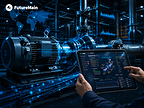
ExRBM combines expert knowledge of mechanical failure mechanisms with machine learning, deep learning and actual equipment data.

Rather than relying solely on statistical anomaly detection, the platform is designed to identify specific failure mechanisms, explain the evidence behind its assessments and recommend appropriate responses.

According to company disclosures, ExRBM can automatically identify more than 85 machinery failure mechanisms, including bearing damage and shaft misalignment.

In 100 tests conducted by the Korea Testing Laboratory (KTL), the technology recorded a reported automatic diagnostic accuracy of 98.3% under the specified test conditions.

FutureMain also reports 25 patents and international recognition, including a gold medal at the International Exhibition of Inventions Geneva.

The company believes its most important advantage, however, cannot be measured by the speed at which an algorithm is developed.

It lies in the depth of engineering knowledge embedded within that algorithm.

Decades of experience analyzing normal equipment behavior, abnormal operating conditions and mechanical failures have produced a specialized body of knowledge that is difficult to replicate through software development alone.

By transforming this expertise into AI-driven diagnostic capabilities, FutureMain aims to make advanced industrial knowledge more accessible, scalable and actionable.

Proven Across Industries, From Battery Manufacturing to Shipbuilding

Industrial AI must ultimately demonstrate its value where it matters most: in operating manufacturing facilities.

FutureMain’s technologies have been deployed across more than 10 industrial sectors, including battery manufacturing, pharmaceuticals and biotechnology, power generation, energy, shipbuilding and defense.

Its customer references include LG Energy Solution, Hanwha Ocean and Handok.

According to the company’s 2026 investor presentation, ExRBM recorded 25 deployments over the preceding three years, while FutureMain’s total customer base exceeded 48 companies.

Several customer relationships have also progressed beyond initial deployments.

At Handok’s Eumseong pharmaceutical manufacturing facility, applications have expanded from equipment predictive maintenance into the integration of production-process data and quality anomaly detection across granulation, coating and tablet-compression processes.

At Hanwha Ocean, machinery diagnostic applications have been extended to additional equipment following earlier system installations.

FutureMain’s collaboration with LG Energy Solution is also moving toward broader applications across domestic and overseas manufacturing operations.

The company is expanding into robotics as well.

In 2026, FutureMain has been carrying out a large-scale predictive maintenance implementation project involving welding robots and traversing equipment at HD Hyundai Construction Equipment’s Ulsan facility.

These developments reflect the company’s transition from solving individual machinery problems toward building an industrial AI platform applicable across different equipment types, production processes and manufacturing sectors.

International expansion is another area of focus.

FutureMain reports that it has completed a proof-of-concept evaluation at a Saudi Aramco facility and is extending its business network across the Middle East, Southeast Asia and Japan.

From its origins in Suwon, South Korea, the company is positioning its industrial AI technology for a broader role in global manufacturing.

ExRBM 2.0: Moving From Monitoring to Explainable Intelligence

In November 2026, FutureMain introduced ExRBM 2.0 at an AIoT technology presentation held at COEX in Seoul.

The next-generation platform represents an evolution from conventional equipment monitoring toward AI-assisted diagnosis and maintenance decision-making.

Traditional monitoring systems typically generate alerts when vibration, temperature or other operating parameters exceed predefined thresholds.

ExRBM 2.0 takes a more advanced approach.

By analyzing collected equipment data, the platform is designed to identify potential faults, explain their underlying causes and recommend appropriate maintenance actions.

A central feature is explainable artificial intelligence, or XAI, which allows users to examine the reasoning and evidence supporting an AI-generated diagnosis.

This distinction is particularly important in industrial environments.

When a critical machine is at risk of failure, engineers cannot always act on an unexplained warning.

They need to understand the nature of the suspected defect, the relevant frequency characteristics, the location or timing of abnormal signals and the maintenance actions that may be required.

By providing this context, ExRBM 2.0 aims to support more informed and confident decision-making.

FutureMain has also presented capabilities connecting machinery diagnostics with remaining useful life (RUL) estimation, maintenance work orders and automated diagnostic reporting.

RUL estimation is applicable depending on equipment characteristics and the availability and quality of relevant data.

In addition, the company has introduced the concept of an AI assistant based on a small language model (sLLM), enabling users to interact with machinery information and maintenance records through natural-language queries.

Instead of manually navigating multiple diagnostic screens, an engineer could ask:

“What problem has been detected in this machine?”

“Which component should be inspected first?”

“How should we determine the appropriate maintenance timing?”

The objective is not to replace experienced engineers.

It is to preserve, transfer and extend their specialized knowledge, allowing more industrial professionals to benefit from advanced diagnostic expertise.

Beyond Predictive Maintenance: AI That Understands the Entire Factory

FutureMain’s long-term strategy extends well beyond machinery diagnostics.

The company is pursuing a manufacturing-focused vertical AI platform that connects equipment health, production processes, quality management and robotics.

Modern manufacturing facilities generate enormous volumes of data, including machinery vibration, electrical current, temperature, process pressure, equipment load and quality inspection results.

When these data sources are analyzed independently, manufacturers may identify isolated problems without understanding their broader operational relationships.

FutureMain sees an opportunity to connect them.

By integrating equipment-condition data with production and quality information, industrial AI could move beyond detecting individual machinery faults to understanding more complex interactions across manufacturing operations.

The company’s longer-term vision includes industrial AI agents capable of interpreting factory-wide conditions, analyzing operational risks and recommending appropriate responses.

Robotics represents another potential growth area.

As industrial robots become more widely deployed, technologies capable of diagnosing their mechanical condition and identifying emerging failure patterns may become increasingly important.

FutureMain is conducting research into technologies that learn normal and abnormal robotic operating patterns, on-device AI and Physical AI applications tailored to industrial environments.

Some of these initiatives remain in research and development.

Nevertheless, the company’s strategic direction is clear: to build on its established machinery diagnostic expertise and expand toward AI systems that understand manufacturing processes, product quality and the increasingly interconnected relationship between humans and robots.

A Vision Built on Real-World Expertise

The ultimate purpose of industrial AI is not defined solely by the complexity of its algorithms or the number of patents behind it.

Its value can be found in more fundamental outcomes.

Helping prevent unexpected machinery shutdowns.

Supporting safer working environments.

Enabling more informed decisions where experienced specialists are in short supply.

And helping manufacturers produce the goods that society depends on with greater reliability.

While much of the world’s attention is focused on the latest advances in generative AI, FutureMain believes the physical signals produced by industrial machinery remain an essential source of intelligence.

Behind those signals are decades of engineering knowledge and practical experience.

Shine Lee, FutureMain’s Chief Operating Officer and a founding member who joined the company when it consisted of just three people, believes that this foundation will become increasingly important as the AI market matures.

“Today, countless AI-powered products and services are being created, only to disappear as quickly as they emerge,” Lee said. “AI services without deep technological foundations can easily be replaced by similar offerings. In an increasingly crowded AI market, what truly matters is building AI on technologies and expertise that cannot be easily replicated.”

Lee emphasized the importance of connecting artificial intelligence with the physical realities of manufacturing.

“Understanding real industrial equipment requires going directly into factories, examining machinery, installing sensors and collecting reliable physical data,” she said. “The ability to acquire that data and transform it into meaningful intelligence for AI-driven decision-making is what FutureMain does best. It is also the foundation of our long-term competitive advantage.”

Looking ahead, Lee described a vision that extends beyond traditional engineering AI.

“Our ambition is to evolve into a Hyperconnected Autonomous AI company — one where data from across the factory is seamlessly interconnected, enabling manufacturing operations to pursue optimal efficiency and continuous self-improvement.”

This vision reflects FutureMain’s belief that the next generation of industrial AI will be defined not simply by more powerful models, but by deeper integration with the physical world.

Building the Next Generation of Industrial Intelligence

FutureMain’s journey, supported by 38 years of accumulated engineering expertise and a team of approximately 24 employees in early 2026, is moving beyond South Korea toward new opportunities in global manufacturing.

The proposed Nasdaq listing could represent an important milestone in that journey.

Yet the company’s larger ambition is not defined by a stock market valuation.

It is rooted in the belief that AI capable of understanding real industrial environments can contribute to safer workplaces, more productive factories and a more resilient manufacturing ecosystem.

Around the world, millions of machines continue to operate inside factories, power plants, shipyards and industrial facilities.

Each generates signals that reveal something about its condition.

FutureMain is working to transform those signals into actionable intelligence — connecting decades of engineering expertise with the capabilities of modern AI.

The future of manufacturing may depend not only on making machines more intelligent, but on giving artificial intelligence a deeper understanding of the physical world.

And for FutureMain, that future is already taking shape on the factory floor.

View original content to download multimedia:https://www.prnewswire.com/news-releases/futuremain-sets-its-sights-on-nasdaq-bringing-decades-of-industrial-expertise-into-the-ai-era-302950957.html

SOURCE FutureMain

Continue Reading

Technology

Reliance Digital’s Black Friday Sale: Enjoy Up to 50% Off on Smartphones, Laptops, TVs, Home Appliances and More

Published

on

By

Customers can avail the Apple iPhone 17 Pro at an effective price of ₹54,990, AMD R3-powered laptops starting at ₹44,499, 55-inch Mini LED TVs starting at ₹37,990, Voltas 1.5 Ton 3-Star Inverter Split AC at ₹36,990 and LG 10 kg Front-Load Washing Machine at ₹39,990, along with up to 50% off on select electronics, bank discounts of up to ₹20,000 and exchange bonuses of up to ₹20,000 across Reliance Digital stores, reliancedigital.in and My Jio Stores.

MUMBAI, India, Nov. 26, 2026 /PRNewswire/ — Reliance Digital today launched its Black Friday Sale, offering up to 50% off on select products across smartphones, laptops, TVs, home appliances and more. The sale runs from 26th to 30th November 2026 at all Reliance Digital stores, on reliancedigital.in, at My Jio Stores. Along with the sale prices, customers can get up to ₹20,000 discount on leading bank cards and paper finance, up to ₹20,000 exchange bonus, free delivery and fastest installation.

The great deal is on the Apple iPhone 17 Pro (MRP ₹1,34,900), available at an effective price of ₹54,990 after in-store discount, exchange, exchange bonus and cashback. Laptops powered by AMD R3 are starting at ₹44,499, while the Apple iPad (A16, Wi-Fi, 128GB) is available at ₹43,405, including a ₹4,000 bank offer. Additionally, with iPad get Apple Pencil free with Rs.4990. The Apple Watch SE 3 (44mm) is priced at ₹25,999 and the Marshall Emberton 2 Bluetooth speaker at ₹10,999.

For home entertainment, 55-inch Mini LED TV staring from of ₹37,990 with bank and finance offers, and the JBL PartyBox Stage 320 party speaker is priced at ₹44,999.

Large appliances see strong savings too. The Voltas 1.5 ton 3 star inverter split AC is priced at ₹36,990, with an additional ₹2,000 bank offer. The LG 10 kg fully automatic front load washing machine is available at ₹39,990 with up to ₹9,000 cashback, and the Kelvinator 562L side-by-side refrigerator at ₹39,990. Customers who shop for ₹50,000 and above can also pick up the Dyson Big Ball vacuum cleaner, worth ₹32,900, at ₹14,990, or the Dyson Corrale straightener at ₹14,900.

About Reliance Digital:

Reliance Digital is India’s largest electronics retailer, present in over 800 cities with more than 700+ large-format Reliance Digital stores and 900+ My Jio stores, serving customers in every corner of the country and making the latest technology accessible to all. With over 300 international and national brands and more than 5,000 products at the best prices, Reliance Digital offers the largest selection of models to help customers find the right technology for their lifestyle. The trained and well-informed staff at every store are always ready to guide customers through every detail of each product. Importantly, Reliance Digital provides after-sales service for all its products through Reliance resQ, the service arm of the retailer and India’s only ISO 9001-certified electronics service brand. Reliance resQ is available all week and is fully equipped to provide end-to-end solutions.


View original content to download multimedia:https://www.prnewswire.com/in/news-releases/reliance-digitals-black-friday-sale-enjoy-up-to-50-off-on-smartphones-laptops-tvs-home-appliances-and-more-302951261.html

Continue Reading

Trending