Connect with us

Technology

GIVING TO U.S. COLLEGES AND UNIVERSITIES AT $58 BILLION IN FISCAL YEAR 2023

Published

on

Giving is at its highest historical level, with the sole exception of 2022, according to the 2023 CASE Insights℠ on Voluntary Support of Education survey results

WASHINGTON, Feb. 21, 2024 /PRNewswire/ — Giving to U.S. higher education institutions was $58 billion in the fiscal year ending June 30, 2023. Although this represents a 2.5 percent decline from the record high reported in 2022, it demonstrates continued significant philanthropic support to the important higher education sector. The annual survey results were released today by the Council for Advancement and Support of Education (CASE) in a research brief.

The CASE Insights℠ on Voluntary Support of Education (VSE) survey is the definitive source of data about philanthropic support for nonprofit and public higher education institutions in the United States. Now in its 50th year of supporting advancement professionals, CASE recognizes the importance of understanding the level of philanthropic support for higher education institutions and the difference such support makes to recipient institutions and the many thousands of lives touched by them.

“The philanthropic investment of over $58 billion in higher education institutions in the United States last year should be a source of celebration and pride,” says Sue Cunningham, President and CEO of CASE.

“That so many individuals and organizations support colleges and universities indicates nationwide recognition of the immense value these institutions provide through transforming lives and society. Recent headlines too frequently cast a negative light on the value of institutions of higher education. However, the trust demonstrated by this level of philanthropy tells a different story. Kudos to the many who choose to give and to those working in institutions that educate future generations and undertake research to save and improve lives,” Cunningham adds.

In 2023, 757 institutions participated in the VSE survey. Those institutions reported that gifts from organizations rose. In contemporary philanthropy, organizations are the primary sources of support for U.S. colleges and universities, accounting for 64.7 percent of the funds reported on the survey. Among the organizations that contribute are foundations (including family foundations), corporations (including privately held companies), donor-advised funds, and a range of other organizations. Giving from individuals declined. Gifts for capital purposes, which support the physical and economic infrastructure of institutions, declined. Among survey respondents, gifts to unrestricted endowments and those funding newly established irrevocable deferred gifts increased, but together these categories represent less than 3 percent of total support among responding institutions.

“As illustrated in the accompanying research brief, viewed over a five-year period, the level of support is high despite a decline in this single year,” says Ann E. Kaplan, Senior Director of the CASE Voluntary Support of Education survey. “The stock market was weak in December 2022, and many donors time their charitable gifts to coincide with stock market growth periods. Some organizational donors base gift and grant levels on the previous year’s economy, making commitments a year or more in advance. This partly explains why the level of support from organizations rose when personal giving declined.”

“The data we collect on CASE Insights℠ surveys allow each institution to understand trends in its own performance over time and to benchmark with like institutions,” says Cara Giacomini, Vice President of Data, Research, and Technology at CASE. “National data give us an overview of what occurred in the aggregate, but each institution has a unique set of relevant metrics.”

The number of gifts totaling $100 million or more was higher than in 2022. There were 11 gifts of such magnitude in 2023, accounting for 3.9 percent of total support. That is more than double these gifts’ weight in 2022, when seven such contributions accounted for 1.8 percent of the total.

Large gifts predominantly, though not exclusively, fund endowments. Much of this endowed support is targeted by donors to fund student financial aid, academic divisions, and faculty and staff compensation. In contrast, smaller outright gifts tend to be restricted to current operations, with the largest percentage earmarked for research. Both types of support are of great value to institutions, though gifts to endowments arguably redistribute income to a greater extent than do contributions to annual funds.

A detailed brief on the findings can be found here. The 2023 annual publication will be available in April at the same link.

About CASE

CASE—the Council for Advancement and Support of Education—is a global, not-for-profit membership association with a vision to advance education to transform lives and society.

CASE is the home for advancement professionals, inspiring, challenging, and equipping them to act effectively and with integrity to champion the success of their institutions. CASE defines the competencies and standards for the profession of advancement, leading and championing their dissemination and application with more than 97,000 advancement professionals at over 3,000 member institutions in more than 80 countries.

Broad and growing communities of professionals gather under the global CASE umbrella. Currently, these include alumni relations, advancement services, communications, fundraising, government relations, and marketing. These professionals are at all stages of their careers and may be working in universities, schools, colleges, cultural institutions, or other not-for-profits. 

CASE uses the intellectual capital and professional talents of a community of international volunteers to advance its work, and its membership includes many educational partners who work closely with the educational sector.

CASE Insights℠ is a way to access the data, standards, and research benefits available to all CASE members. Specialized CASE Insights℠ data, standards, and research enable members to make data-informed decisions, demonstrate strategic impact, and highlight success stories, while adhering to the ethical practices of the advancement profession. For more information, visit www.case.org/case-insights.

Headquartered in Washington, D.C., CASE works across all continents from its regional offices in London, Singapore, and Mexico City to achieve a seamless experience for all of its stakeholders, particularly its members, volunteers, and staff. For more information, visit www.case.org/.

View original content:https://www.prnewswire.com/news-releases/giving-to-us-colleges-and-universities-at-58-billion-in-fiscal-year-2023-302066501.html

SOURCE Council for Advancement and Support of Education (CASE)

Continue Reading

Technology

HTX Advances Pakistan Market Entry Through Regulatory Engagement and Community Outreach

Published

on

By

Exchange holds two community AMAs and an X Space with Pakistani users as it moves through the country’s new licensing framework

APIA, Samoa, Sept. 14, 2026 /PRNewswire/ — HTX, a leading global cryptocurrency exchange, last week held two community AMA sessions and an X Space with users and influencers in Pakistan. The events were part of a broader effort to build a long-term, regulated presence in one of South Asia’s fastest-growing digital asset markets.

The sessions were intended to introduce the platform to local users and to open direct channels with Pakistan’s crypto community. They follow a series of regulatory steps HTX has taken in the country over recent months, reflecting the exchange’s commitment to entering Pakistan through its formal licensing process rather than treating it as a short-term market.

Regulatory Progress Under the PVARA Framework

HTX is one of the first two global exchanges to receive a No-Objection Certificate (NOC) from the Pakistan Virtual Assets Regulatory Authority (PVARA). The certificate allows the exchange to proceed to the next stage of the compliance process, which includes anti-money-laundering registration, the establishment of a local Pakistani entity, and preparation of a full application for a Virtual Asset Service Provider (VASP) licence.

In late August, Pakistan formally issued its regulations for virtual asset services and opened the licence application mechanism, moving the country’s oversight of the sector into an implementation phase. HTX is aligning its work with the newly published requirements, continuing to advance the incorporation of its local company, the preparation of its formal licence application, and the build-out of its local compliance framework. The exchange is maintaining ongoing dialogue with the regulator and with local professional advisers to lay the groundwork for operating in the country under the applicable rules.

A Three-Part Approach to the Market

HTX’s work in Pakistan is proceeding along three fronts: regulatory compliance, local communication, and user service. The PVARA NOC forms one part of the compliance track. Community AMAs, user education, ongoing dialogue with local users, and outreach to prospective partners serve a different purpose: understanding what Pakistani users actually need from an exchange, from asset security to payment on-ramps and product coverage.

This week’s sessions were structured around that goal. Rather than making product announcements, they focused on questions raised by attendees, with HTX representatives addressing how the platform operates, how user assets are protected, and what the exchange’s regulatory status in Pakistan currently means in practice.

A Record Built Over Thirteen Years

Many of the questions raised in those sessions come down to a single one: whether HTX has earned users’ trust over time. On that measure, the exchange brings a history that few in the industry can match.

HTX has operated continuously since 2013. In an industry where platforms have appeared and disappeared within a single market cycle, it has remained in operation through several, adapting to changing conditions while continuing to serve users across the world. That longevity is not an accident of timing; it reflects an institution that has learned how to manage risk over the long term.

Transparency has been part of that discipline. HTX has published proof-of-reserves reports every month for 47 consecutive months as of September 2026, a practice it maintained through periods when no rule required it and when many of its peers chose not to. Users in Pakistan will find the same reports available to them as to users anywhere else, offering a verifiable account of how the platform holds client assets.

Beneath these commitments sits a mature product range spanning spot, derivatives and earn services, developed and refined over more than a decade. Taken together, HTX’s history, its transparency record and the depth of its platform demonstrate an exchange that Pakistani users can assess based on its track record rather than on its promises.

Next Steps

That track record is now extending to Pakistan. HTX said its priorities in the country for the coming period are to continue advancing its licence application, complete its local operational preparations, respond to the security and product questions raised most frequently by users, and refine its content and services on the basis of direct feedback from the Pakistani community.

The exchange added that further community engagement and educational activities will follow as its regulatory work in the country progresses.

About HTX

Founded in 2013, HTX has evolved from a virtual asset exchange into a comprehensive ecosystem of blockchain businesses that span digital asset trading, financial derivatives, research, investments, incubation, and other businesses.

As a world-leading gateway to Web3, HTX harbors global capabilities that enable it to provide users with safe and reliable services. Adhering to the growth strategy of “Global Expansion, Thriving Ecosystem, Wealth Effect, Security & Compliance,” HTX is dedicated to providing quality services and values to virtual asset enthusiasts worldwide.

To learn more about HTX, please visit https://www.htx.com/ or HTX Square , and follow HTX on X, Telegram, and Discord

View original content to download multimedia:https://www.prnewswire.co.uk/news-releases/htx-advances-pakistan-market-entry-through-regulatory-engagement-and-community-outreach-302877660.html

Continue Reading

Technology

Lumi by Lectrium Brings AI Agents to Car Dealership Websites

Published

on

By

Built on a modern agent harness, Lectrium’s first AI agent helps shoppers research vehicles, compare options, and submit high quality leads without leaving the dealer’s website.

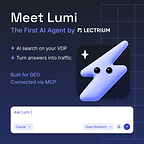
PALO ALTO, Calif., Sept. 14, 2026 /PRNewswire/ — Lectrium today launched Lumi by Lectrium, an AI agent for car dealerships that turns vehicle listings into conversations with prospective buyers.

A vehicle listing tells you what a car has. Buying a car means figuring out whether it will work for your life. Can it tow your trailer? Is the higher trim worth it? Would switching to electric actually save you money?

Shoppers are taking those questions to ChatGPT, Claude, and Gemini. Dealers have the cars, the local knowledge, and the sales teams. Yet some of the most valuable conversations in the buying process happen somewhere else.

Lumi by Lectrium brings those conversations onto the vehicle detail page, or VDP, with answers built around the cars that dealership has for sale.

Every vehicle listing becomes a conversation

A shopper can ask about the vehicle they are viewing, explore alternatives in stock, and connect with the sales team by submitting leads to the CRM when they are ready. Lumi by Lectrium uses vehicle and dealership information to keep the conversation specific, from trim differences to store policies and incentives.

The right fit may be a step up to a vehicle with more capability or a step down to one at a lower price. Helping shoppers discover those options within the dealer’s own inventory is designed to improve close rates by keeping the purchase moving forward, even when the first vehicle they viewed isn’t the one they ultimately choose.

It works across gas, hybrid, plug-in hybrid, and electric inventory. Lectrium’s EV expertise adds depth to questions about charging, range, and ownership costs, with interactive tools that help shoppers work through the numbers inside the conversation.

For dealers, those questions are valuable in their own right. They reveal what buyers care about, what is confusing them, and what they need to know before moving forward.

A modern agent harness built for automotive retail

Lumi by Lectrium runs on a modern agent harness: the software that connects frontier AI models to dealership context, data sources, and tools so the agent can look things up and take action.

The harness brings together inventory search, web search, information retrieval, and lead workflows. Vehicle feeds, manufacturer sources, EPA data, and government information help ground its answers. Dealers can customize the agent’s knowledge and voice around their own business.

The architecture supports models from multiple frontier LLM providers, allowing Lectrium to adopt new capabilities as models improve.

The startup has also received credits from major frontier LLM providers to support deployment across its existing base of more than 500 active dealership customers.

Built with dealers, improving with every release

At Germain Automotive Partnership, Lumi by Lectrium is already running on 17 dealership websites across new and used inventory.

“In a marketplace where most shoppers now turn to AI tools to compare models and research vehicles, Lectrium lets us bring that same experience to our own sites, across all of our new and used inventory,” said John Germain, Vice President at Germain Automotive Partnership.

Germain said the platform’s responses have been accurate and helpful, and that shopper insights have helped his team improve its websites, messaging, and customer interactions. He also highlighted how quickly the team ships:

“In a space where many companies move slowly, Lectrium has been the opposite: fast to take feedback, and quick to turn a simple ‘what if?’ into a fully functioning feature.”

AI agents for car dealerships, starting where buyers decide

Lectrium is starting with a specific job: help someone understand a vehicle well enough to take the next step.

That opportunity exists on every listing, after hours and during the busiest Saturday on the showroom floor. Lumi by Lectrium answers the recurring questions and helps interested shoppers reach the sales team.

It is Lectrium’s first AI agent, with a broader ambition to support the daily work of automotive retail, from merchandising inventory to responding to buyers. Feedback from dealerships is shaping what gets built next.

Available today

Lumi by Lectrium is available now. Lectrium integrates with all major dealership website and inventory feed providers and coordinates setup once the dealer supplies its feed and website approval.

See Lumi by Lectrium in action and request a demo.

About Lectrium

Lectrium builds AI and merchandising software that helps car dealerships sell every vehicle on their lot. Based in Palo Alto and backed by Antler, the company serves more than 500 active dealership customers and works with OEM programs across North America. Lumi by Lectrium is its first AI agent for car dealerships.

Media Contact
Peter Barba
CEO, Lectrium
Email: 422527@email4pr.com
Phone: 2169732963

View original content to download multimedia:https://www.prnewswire.com/news-releases/lumi-by-lectrium-brings-ai-agents-to-car-dealership-websites-302877164.html

SOURCE Lectrium

Continue Reading

Technology

FairJourney Bio Consolidates Antibody Discovery Data with the Sapio Sciences Scientific AI Platform

Published

on

By

Leading Antibody Discovery Expert Standardizes on the Sapio Scientific AI Platform to Accelerate Delivery for Biotechnology Clients

The Sapio Scientific AI Platform will serve as the informatics backbone across FJBio’s discovery and cell sciences operations, spanning sites in Cambridge, Porto and San Diego.Sapio Sciences’ ELN and LIMS solutions will replace disconnected, paper-based data capture and manual reporting processes across phage display, screening and cell sciences programs.Users will gain an AI co-scientist, Elain to expedite efficiency while file-based integration of 10 laboratory instruments will output directly to Sapio experiment records.

BALTIMORE, Sept. 14, 2026 /PRNewswire/ — Sapio Sciences, the AI lab informatics company, today announced that FairJourney Bio (FJBio), an antibody discovery expert, has selected the Sapio Scientific AI Platform, including Sapio’s LIMS, ELN and AI co-scientist solutions to replace spreadsheet-based records and manual reporting processes across its international operations.

FJBio is a global antibody discovery and engineering partner. Founded in 2012, the Company takes programs from target to preclinical candidate within a single integrated workflow, run by one team across three centers of excellence: Porto (Portugal), Cambridge (UK) and San Diego (USA). The antibody company completed more than 1,400 programs for over 250 industry partners across pharma, biotech, and academia, with 20 partner assets in clinical trials.

Unifying Informatics Across Connected Discovery Operations

The volume and complexity of experimental data generated across those programs made consistent, structured records a scientific and operational priority for FJBio. The Sapio Scientific AI Platform will serve as the informatics backbone across all of FJBio’s discovery and cell sciences operations.

Sapio’s ELN solution will record experimental data across phage display, screening and cell sciences programs, replacing the need for scientists to capture data on paper templates before manually re-entering results into spreadsheets. As FJBio’s program portfolio has grown across three sites, the Sapio LIMS gives the company a single entity registry, from target registration through clone identification and screening results, searchable across programs.

The solution will also ensure integration of laboratory instruments, connecting instrument output directly to Sapio’s experiment records and eliminating manual data transcription at the bench. FJBio clients will now get more scientist time on their programs and their data sooner. Structured client data reports, that were assembled by hand from individual experiment records will now come straight out of the platform, expected to return up to 40% of scientific staff time back to discovery.

Mike Hampton, Chief Commercial Officer at Sapio Sciences, commented, “FairJourney Bio runs discovery programs of genuine depth and complexity across multiple international sites. The Sapio Scientific AI Platform gives their scientists a single, structured environment where experimental records connect directly to client deliverables and where time spent on data consolidation becomes time spent on science.”

Strategic Foundation for Scalable Antibody Discovery

FJBio selected the Sapio Scientific AI Platform following a strategic review of its informatics infrastructure. For an antibody discovery expert managing high-complexity discovery programs across three international sites, the ability to configure a single environment spanning both ELN and LIMS capabilities, without fragmentation across separate systems, was a core requirement.

The depth of Sapio’s Scientific AI Platform data model, and its ability to support full traceability from target registration through screening and hit identification, provided the technical foundation FJBio needed. The inclusion Elain, Sapio’s native AI co-scientist, rather than a bolt-on capability, was a further differentiator as FJBio looks to build long-term informatics capability alongside its expanding discovery operations.

José Vidal, Chief Operations Officer at FairJourney Bio, commented, “Our clients trust FairJourney Bio to deliver rigorous, high-quality data at every stage of their discovery programs. As our operations have grown across three international sites, we needed an informatics platform that could keep pace with that responsibility. The Sapio Platform gives our scientists a single connected environment for every experiment, every sample and every result, and it holds that data to the integrity and security standards our clients expect: consistent, traceable and unaltered from the moment it is generated, and held under the access controls each program requires.”

Advancing Productivity with AI Capabilities

Elain, Sapio’s native AI co-scientist, brings intelligence directly into FJBio’s scientific workflows. Working across the structured experimental data held within the Sapio Platform, Elain enables scientists to interact with their data using natural language, without leaving the environment where their experiments, samples and results are managed.

Elain is designed to help scientists understand, reason and act. It can find and summarize information across experimental records, analyze scientific data and surface relevant insights. It can then help scientists act on those insights by generating reports, supporting workflow execution and automating repetitive tasks. For FJBio, this creates the potential to reduce time spent searching for information, consolidating results and preparing client deliverables, giving its scientists more time to focus on advancing antibody discovery programs.

About FairJourney Bio

FairJourney Bio (FJBio), The Antibody Company, is a global antibody discovery and engineering partner. Founded in 2012, the Company takes programs from target to preclinical candidate within a single integrated workflow, run by one team across three centers of excellence: Porto (Portugal),; Cambridge (UK); and San Diego (USA).

FJBio has completed more than 1,400 programs for over 250 industry partners across pharma, biotech, and academia, with 20 partner assets in clinical trials. Its team of more than 250 scientists, including over 60 PhDs in mAb antibody research, designs developability into each molecule from the first sequence, delivering advanceable leads rather than hits that still need fixing.

In 2024, Partners Group, one of the largest firms in the global private markets industry, invested in FJBio and supported the start of its US expansion. The Company has since built a dedicated structural biology hub in San Diego, including in-house 300kV cryo-EM, to advance structure-guided antibody design under EU and US intellectual property and regulatory frameworks.

For more information, please visit: www.fjbio.com/

About Sapio Sciences

Sapio Sciences delivers the Sapio Platform, an agentic AI lab informatics platform for biopharma R&D, clinical diagnostics and manufacturing. Built on a shared foundation, the Sapio Platform unifies Sapio LIMS and Sapio ELN in one configurable environment, with Sapio Elain, the AI co-scientist, orchestrating intelligence across every workflow. Learn more at www.sapiosciences.com and follow Sapio Sciences on LinkedIn.

Media Inquiries
Dayna Carlin
410.800.4620
422545@email4pr.com 

View original content to download multimedia:https://www.prnewswire.com/news-releases/fairjourney-bio-consolidates-antibody-discovery-data-with-the-sapio-sciences-scientific-ai-platform-302877575.html

SOURCE Sapio Sciences

Continue Reading

Trending