Connect with us

Technology

wolfSSL Inc. announces wolfHSM for Automotive HSMs (Hardware Security Modules)

Published

on

A framework that makes it easy to integrate Automotive HSMs. Quantum-resistant cryptography now available for Automotive HSMs

EDMONDS, Wash., June 5, 2024 /PRNewswire-PRWeb/ — wolfSSL INC. (Headquarters: Edmonds, Washington, USA), a vendor specialized in cryptography and network security, announces its new product wolfHSM. Automotive HSMs (Hardware Security Modules) dramatically improve the security of cryptographic keys and cryptographic processing by isolating signature verification and cryptographic execution, which are the core of security, into physically independent processors. Automotive HSM’s are mandatory or strongly recommended for ECU’s that require robust security. With this in mind, wolfSSL has ported our popular, well tested, and industry leading cryptographic library to run in popular Automotive HSMs like Aurix Tricore TC3XX.

Automotive HSM’s are mandatory or strongly recommended for ECU’s that require robust security. With this in mind, wolfSSL has ported our popular, well tested, and industry leading cryptographic library to run in popular Automotive HSMs like Aurix Tricore TC3XX.

“Automotive Tier 1’s and OEM’s are tired of inflexible, slow moving, and costly HSM software vendors. We’re the new alternative for better price, performance, speed of execution, and cryptographic knowhow in this market segment.” said Todd Ouska, CTO of wolfSSL Inc.

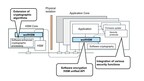
wolfHSM provides a portable and open-source abstraction to hardware cryptography, non-volatile memory, and isolated secure processing that maximizes security and performance for ECUs. By integrating the wolfCrypt software crypto engine on hardware HSM’s like Infineon Aurix Tricore TC3XX, Chinese mandated government algorithms like SM2, SM3, SM4 are available. Additionally, Post Quantum Cryptography algos like Kyber, LMS, XMSS and others are easily made available to automotive users to meet customer requirements. At the same time, when hardware cryptographic processing is available on the HSM, we leverage it to enhance performance.

One of the prime consumers for wolfHSM is wolfBoot, which is a mature and portable secure bootloader solution designed for bare-metal bootloaders and equipped with failsafe NVM controls. It offers comprehensive firmware authentication and update mechanisms, leveraging a minimalistic design and a tiny HAL API, which makes it fully independent from any operating system or bare-metal application. wolfBoot manages the flash interface and pre-boot environment, accurately measures and authenticates applications, and utilizes low-level hardware cryptography as needed. wolfBoot can use the wolfHSM client to support HSM-assisted application core secure boot, Additionally, wolfBoot can run on the HSM core to ensure the HSM server is intact, offering a secondary layer protection. This setup ensures a secure boot sequence, aligning well with the booting processes of HSM cores that rely on NVM support.

All of the other wolfSSL products that consume cryptography can now also consume HSMs via wolfHSM, including our flagship TLS 1.3 implementation, wolfSSH, and curl.

Extensibility of cryptographic algorithms:

When it comes to security, it is necessary to keep in mind that the technology on the attacker side is constantly evolving, so the technology on the defense must also evolve. With wolfHSM, you are not limited to fixed functions provided by hardware, but can enhance and expand cryptographic algorithms and functions using software while maintaining high security at the hardware level.

For example, as post quantum cryptography becomes necessary in more requirements, wolfHSM allows you to seamlessly add it within the HSM without changing the hardware.

Migration from conventional technology:

wolfHSM provides an interface (API) that unifies traditional software-based cryptographic processing and HSM processing, allowing smooth implementation of HSM without major changes to existing system structure.

Consistency with security functions:

In addition to being used as a standalone HSM, wolfHSM offers integration with security protocols such as wolfSSL, wolfSSH, and wolfBoot for secure firmware updates.

Integration with Autosar:

wolfHSM exposes the wolfCrypt API, which comes complete with an Autosar shim layer for compatibility.

The currently supported HSMs are as follows:

Infineon Aurix TC3xx

ST SPC58NN

Infineon Aurix TC4x (Coming soon)

Infineon Traveo T2G (Coming soon)

Renesas RH850 (Coming soon)

Renesas RL78 (Coming soon)

wolfSSL Inc., will be exhibiting at the AutoTech Detroit, which will be held at The Suburban Collection Showplace in Novi, MI June 5-6, 2024. In addition to wolfHSM, we will explain the latest network security including post-quantum cryptography and FIPS 140-3. For those who wish to use the TLS 1.3 library wolfSSL, we will also guide you through the preparations to start using it at the venue.

Date: Wednesday, June 5th, 2024Thursday, June 6th

Venue: Suburban Collection Showplace

wolfSSL booth number: 730

About wolfSSL

wolfSSL focuses on providing lightweight and embedded security solutions with an emphasis on speed, size, portability, features, and standards compliance. With its SSL/TLS products and crypto library, wolfSSL is supporting high security designs in automotive, avionics and other industries. In avionics, wolfSSL has support for complete RTCA DO-178C level A certification. In automotive, it supports MISRA-C capabilities. For government consumers, wolfSSL has a strong history in FIPS 140-2/3, with upcoming Common Criteria support. wolfSSL supports industry standards up to the current TLS 1.3 and DTLS 1.3, is up to 20 times smaller than OpenSSL, offers a simple API, an OpenSSL compatibility layer, is backed by the robust wolfCrypt cryptography library, and much more. Our products are open source, giving customers the freedom to look under the hood. wolfSSL has a mean time to release a fix for vulnerabilities of less than 36 hours, offers commercial support up to 24/7, and has the best tested cryptography and the largest team of software engineers dedicated to crypto in the market today.

Media Contact

Christin Casperson, wolfSSL, 1 206 459 7061, christin@wolfssl.com, https://www.wolfssl.com/

Twitter

View original content to download multimedia:https://www.prweb.com/releases/wolfssl-inc-announces-wolfhsm-for-automotive-hsms-hardware-security-modules-302163846.html

SOURCE wolfSSL

Continue Reading
Click to comment

Leave a Reply

Your email address will not be published. Required fields are marked *

Technology

Jtibot Showcases Autonomous Outdoor Sweeping Innovation at Interclean Amsterdam 2026, Accelerating European Market Expansion

Published

on

By

AMSTERDAM, April 24, 2026 /PRNewswire/ — Jtibot, a developer of autonomous outdoor cleaning solutions, concluded a successful showcase at Interclean Amsterdam 2026, highlighting its focus on large-scale, AI-driven sweeping for industrial, municipal, and campus environments.

At Hall 8, Booth 538, Jtibot presented its autonomous outdoor sweeper designed for environments exceeding 10,000 sqm. Positioned between traditional equipment and emerging robotics, the system addresses the growing demand for more efficient and less labor-dependent outdoor cleaning operations.

During the exhibition, Jtibot attracted strong interest from European distributors and facility management professionals seeking scalable solutions for large-area maintenance. The company was also featured in an official media interview at the event, reflecting increasing attention toward autonomous technologies in the cleaning industry.

Jtibot’s approach centers on human-machine collaboration. By reducing repetitive manual work while maintaining operational flexibility, its systems support more sustainable and efficient facility management practices. This aligns with broader ESG (Environmental, Social, and Governance) priorities, including improved resource efficiency and enhanced working conditions.

Building on its presence at Interclean, Jtibot is currently advancing discussions with multiple European partners for regional distribution and deployment. The company is also in the final stage of a fleet procurement agreement valued at approximately $1.4 million, signaling early commercial traction in large-scale applications scenarios.

“As outdoor environments continue to grow in scale and complexity, automation is becoming essential,” said Steven, VP at Jtibot. “Our goal is not to replace people, but to empower them—making operations more efficient and labor more sustainable.”

Following Interclean Amsterdam 2026, Jtibot is actively expanding its European partner network and preparing for broader market deployment across key regions, as it accelerates its global commercialization strategy.

About Jtibot
Jtibot specializes in autonomous outdoor sweepers designed for large-scale environments. By combining AI-driven navigation with industrial-grade hardware, the company enables efficient, scalable, and sustainable cleaning operations worldwide.

Photo – https://mma.prnewswire.com/media/2965027/PR_image.jpg

View original content:https://www.prnewswire.co.uk/news-releases/jtibot-showcases-autonomous-outdoor-sweeping-innovation-at-interclean-amsterdam-2026-accelerating-european-market-expansion-302752777.html

Continue Reading

Technology

2U Refinances and Raises Growth Capital

Published

on

By

ARLINGTON, Va., April 24, 2026 /PRNewswire/ — Many education technology companies spent 2024 and 2025 scaling back. New university partnerships slowed as institutions built internal capacity. Against that backdrop, 2U completed a growth recapitalization, with its existing owners putting growth capital into the business alongside a refinancing of its current credit facilities.

The question worth asking is: why now, and what did they see?

2U operates edX, a global online learning platform originally co-founded by Harvard and MIT that now reaches more than 100 million people through over 5,300 programs with 250-plus institutional and enterprise partners. Employees from more than 60% of Fortune 500 companies use edX for professional development. To date, over 76,000 people have graduated from 2U-powered degree programs from leading institutions, including UC Berkeley, Howard University, and Georgetown. The company has been privately held since completing a financial reorganization in 2024, and Kees Bol has served as CEO since January 2025.

Lincoln International, which advised 2U on the transaction exclusively, described the refinancing outcome: extended credit maturities, improved capital structure, and financial flexibility to continue executing on 2U’s long-range plan. Managing Director Alex Stevenson said the deal “reflects the confidence of 2U’s owners in the long-term value of the business.”

Confidence in what, exactly? The AI workforce training market. Skills in AI-affected roles are evolving 66% faster than average according to PwC research, and IDC has estimated that unfilled AI skills gaps could cost the global economy $5.5 trillion. Universities and enterprises are both trying to solve that problem, and both are looking for platforms with the breadth and accreditation backing to do it credibly.

2U’s partnerships are designed for exactly that. IBM’s six technical microcredentials on edX train the engineers and data scientists who build AI systems. Microsoft’s CxO Edge program, launched in late 2025, targets the C-suite executives who need to move from AI pilots to enterprise-wide adoption, part of a Microsoft presence on edX that has drawn over 40,000 learners in the past six months alone.. Oxford’s Faculty of Law program addresses governance: what board members and legal advisors need to understand about AI liability, compliance, and fiduciary responsibility. UC Berkeley’s Master of Information and Data Science (MIDS) online program prepares learners to shape the future of AI and data science with human-centered values and focuses on solving the world’s most pressing data challenges. Each program exists because a specific employer community identified a specific gap.

That’s the differentiation investors are backing. Generic online courses are abundant. Programs designed in partnership with IBM, Microsoft, UC Berkeley, and Oxford’s Faculty of Law and delivered on a platform with proven Fortune 500 adoption are not.

Credentials earned on 2U’s edX platform carry the academic standing of the issuing partner institutions. Its programs span executive education, professional certificates, microcredentials, and accredited online degree programs, all powered by 2U’s infrastructure but conferred by partner universities and institutions with their own accreditation.

HolonIQ data puts the broader trend in context: microcredentials grew from 7% of global online program offerings in 2022 to 19% by 2025. The shift toward stackable, job-aligned credentials, in addition to traditional degrees,  is real and accelerating. The global online education market is projected to exceed $200 billion as that trend matures. 2U’s decision to build depth in short-form, employer-designed AI training aligns directly with where learner demand is heading.

None of this is abstract for the organizations that use edX at scale. When a company needs to certify 500 engineers on AI development, or prepare its entire C-suite for a board presentation on AI governance, the platform’s reach and credential quality both matter. A certification backed by IBM and a degree from institutions such as Berkeley carries weight with hiring managers in a way a generic online course does not.

The refinancing extends 2U’s ability to keep building that catalog and the partnerships behind it. Stevenson framed it as giving the management team “the financial foundation to keep executing on its mission.” The mission, under Bol’s leadership, is straightforward: help universities and enterprises close the AI skills gap by meeting learners where they are, at the pace the market demands.

The investors who contributed growth capital made a bet that a platform that reaches 100 million people and has 250-plus partners, including IBM, Microsoft, UC Berkeley, and Oxford in its program portfolio, is better positioned to close that gap than any platform that would need to build from scratch.

Media Contact:
Kees Bol
social@2u.com 

Logo: https://mma.prnewswire.com/media/2965091/2U_Logo.jpg


View original content:https://www.prnewswire.co.uk/news-releases/2u-refinances-and-raises-growth-capital-302752776.html

Continue Reading

Technology

Autonomous Resource Corporation and Oak Ridge National Laboratory Partner to Accelerate AI-Enabled Defense Manufacturing at National Scale

Published

on

By

Strategic partnership combines ORNL’s supercomputing and advanced manufacturing expertise with ARC’s autonomous production platform to address critical defense industrial base shortfalls

OAK RIDGE, Tenn. and NEW YORK, April 24, 2026 /PRNewswire/ — Autonomous Resource Corporation (ARC), a Delaware corporation, and Oak Ridge National Laboratory (ORNL), the U.S. Department of Energy’s largest multi-program science and energy laboratory, today announced a Memorandum of Understanding (MOU) establishing a strategic public-private partnership to accelerate the on-demand manufacture of qualified, mission-critical components for U.S. national security applications.

The partnership combines ORNL’s HPC and manufacturing capability with ARC’s ARCNet distributed AI-manufacturing platform

The partnership — known as the Exascale Foundry — will combine ORNL’s computing and manufacturing capabilities with ARC’s ARCNet distributed manufacturing platform to create a closed-loop system for AI-enabled materials and manufacturing qualification and autonomous production at defense-relevant scale.

“The United States faces an urgent need to rebuild its manufacturing capacity for critical defense components,” said Bryan Wisk, CEO of ARC. “By combining ORNL’s world-leading computational, materials science, and manufacturing capabilities with our autonomous production infrastructure, we can compress manufacturing and qualification timelines from years to months and deliver manufactured parts at the volumes the warfighter needs.”

Partnership Highlights

Under the MOU, ARC will deploy advanced manufacturing equipment organized into seven production nodes connected to ORNL via ARC’s secure ARCNet infrastructure. ARC will expand capability through ORNL’s high-performance computing (HPC) resources.

ORNL will provide access to HPC expertise for simulation-driven materials characterization and qualification, along with technologies developed at the Manufacturing Demonstration Facility (MDF), the Department of Energy’s only large-scale, open-access advanced manufacturing facility. ORNL’s Peregrine AI software, which has analyzed over 1.9 million additive manufacturing layers, will be integrated into ARC’s production nodes for real-time adaptive control and quality assurance.

This partnership also supports DOE’s Genesis Mission, a national initiative to build the world’s most powerful scientific platform to accelerate discovery science, strengthen national security and drive energy innovation. ARC and ORNL’s collective capabilities will help reenvision advanced manufacturing and industrial productivity, accelerate defense production and qualification, and secure critical supply chain elements.

“ORNL’s advanced manufacturing and computing capabilities are uniquely positioned to help accelerate the transition of laboratory-proven technologies into production-scale defense manufacturing,” said Moe Khaleel, ORNL associate laboratory director for National Security Sciences. “Partnering with ARC ensures we are transitioning our research into real production outcomes.”

The initial implementation will focus on high-temperature nickel superalloy turbine components for autonomous air vehicle engines using metal binder jetting technology, directly addressing demonstrated production bottlenecks in the U.S. defense supply chain.

ORNL Chief Manufacturing Officer Craig Blue added, “This partnership exemplifies the type of relationship necessary to build and grow domestic supply chains for our national security.”

About Autonomous Resource Corporation

ARC is a New York–headquartered corporation building and operating an AI-enabled, autonomous manufacturing platform for national security and critical infrastructure applications. ARC’s Autonomous Resource Controller Network (ARCNet) connects distributed production cells into a secure, federated manufacturing grid capable of producing qualified components at scale. ARC’s leadership team brings deep experience across defense technology, capital markets, materials science, and additive manufacturing at production scale.

About Oak Ridge National Laboratory

Oak Ridge National Laboratory is the largest U.S. Department of Energy science and energy laboratory, conducting basic and applied research to deliver transformative solutions to compelling problems in energy and security. DOE’s Manufacturing Demonstration Facility at ORNL partners with more than 300 companies, spurring over $5.5 billion in economic growth. ORNL is managed by UT-Battelle, LLC for the U.S. Department of Energy’s Office of Science.

Media Contacts:

ARC: Bryan Wisk, Chief Executive Officer | bryan@autonomousresource.com | 929-523-3953

ORNL: Eric Swanson, National Security Sciences Communications Lead | swansonej@ornl.gov | 865-206-5794

View original content to download multimedia:https://www.prnewswire.com/news-releases/autonomous-resource-corporation-and-oak-ridge-national-laboratory-partner-to-accelerate-ai-enabled-defense-manufacturing-at-national-scale-302752414.html

SOURCE Autonomous Resource Corporation

Continue Reading

Trending