Connect with us

Technology

Rugged Smartphone Market size is set to grow by USD 278.5 million from 2024-2028, increasing demand from defense sector to boost the market growth, Technavio

Published

on

NEW YORK, June 19, 2024 /PRNewswire/ — The global rugged smartphone market size is estimated to grow by USD 278.5 million from 2024-2028, according to Technavio. The market is estimated to grow at a CAGR of  4.36%  during the forecast period. Increasing demand from defense sector is driving market growth, with a trend towards emerging applications of rugged smartphones. However, use of consumer-grade devices in place of rugged devices poses a challenge. Key market players include American Reliance Inc., Atexxo B.V., BARTEC Top Holding GmbH, Caterpillar Inc., CROSSCALL, Doke Communication HK Ltd., Getac Technology Corp., Gigaset Technologies GmbH, Honeywell International Inc., Kyocera Corp., OUKITEL, Panasonic Holdings Corp., Pepperl and Fuchs SE, RugGear GmbH, Samsung Electronics Co. Ltd., Shenzhen Dingtaifu Technology Co. Ltd., Sonim Technologies Inc., Ulefone, Unitech Computer Co. Ltd., and Zebra Technologies Corp..

Get a detailed analysis on regions, market segments, customer landscape, and companies – Click for the snapshot of this report

Forecast period

2024-2028

Base Year

2023

Historic Data

2018 – 2022

Segment Covered

Type (Semi-rugged, Fully-rugged, and Ultra-rugged), End-user (Industrial, Commercial, Military and defense, and Government), and Geography (North America, Europe, APAC, South America, and Middle East and Africa)

Region Covered

North America, Europe, APAC, South America, and Middle East and Africa

Key companies profiled

American Reliance Inc., Atexxo B.V., BARTEC Top Holding GmbH, Caterpillar Inc., CROSSCALL, Doke Communication HK Ltd., Getac Technology Corp., Gigaset Technologies GmbH, Honeywell International Inc., Kyocera Corp., OUKITEL, Panasonic Holdings Corp., Pepperl and Fuchs SE, RugGear GmbH, Samsung Electronics Co. Ltd., Shenzhen Dingtaifu Technology Co. Ltd., Sonim Technologies Inc., Ulefone, Unitech Computer Co. Ltd., and Zebra Technologies Corp.

Key Market Trends Fueling Growth

The rugged smartphone market is experiencing significant growth due to digitalization and advanced communication technologies. These devices, built to withstand harsh environments, are increasingly being adopted as primary alternatives to consumer handheld smartphones. Integration of features like Bluetooth, walkie-talkie, data/voice communication, and Wi-Fi is driving demand. Industries such as retail, hospitality, waste management, and public transportation are embracing rugged smartphones for supply chain, inventory, and operational management, enhancing customer experience. Microsoft’s collaboration with Kyocera to integrate walkie-talkie in Microsoft Teams on ultra-rugged 5G Android smartphones further boosts market growth. Rugged smartphones’ low total cost of ownership and resistance to falls, dust, and liquid spills make them ideal for industries like construction, emergency services, and hospitality. GPS location tracking is an added advantage for emergency responders. Overall, the rugged smartphone market is expanding across various sectors. 

The rugged smartphone market is experiencing significant growth due to increasing demand for durable devices in various industries. Sensors, such as temperature, touch, and brand new technology like ruggedness sensors, are integrated into these devices to cater to specific needs. Brands offer different product lines, including those with long battery life, water resistance, and drop protection. Markets for these devices include construction, healthcare, and military sectors. Producers also focus on producing compact and lightweight models without compromising durability. Additionally, the trend towards remote work and the need for reliable communication devices have boosted the market. Overall, the rugged smartphone market is a dynamic and evolving sector, with continuous innovation and improvement. 

Research report provides comprehensive data on impact of trend. For more details- Download a Sample Report

Market Challenges

The global rugged smartphone market faces challenges as some industries opt for consumer-grade smartphones due to their cost-effectiveness and comparable ruggedness levels. Companies like Apple, Samsung, and Sony enhance the durability of their devices, with iPhones and Galaxies boasting IP67 and IP68 ratings, respectively. Consumer-grade smartphones offer additional features such as barcode scanning, IoT applications, and advanced technologies like AR, AI, gesture recognition, voice recognition, and VR. These functionalities negatively impact the rugged smartphone market’s growth in sectors like hospitality.The rugged smartphone market faces several challenges. Sensors, such as temperature, shock, and humidity, require robust designs. Brands must ensure durability and longevity, using materials like Gorilla Glass and military-grade standards. Brands also face competition from regular smartphones with improved features. The cost of rugged smartphones is a significant challenge, as they are typically more expensive than standard devices. Brands must differentiate themselves by offering unique features, like long battery life and advanced security. Additionally, brands must cater to various industries, including construction, healthcare, and military, with specific requirements. Overall, the rugged smartphone market requires a balance between functionality, durability, and affordability.

For more insights on driver and challenges – Download a Sample Report

Segment Overview 

This rugged smartphone market report extensively covers market segmentation by

Type 1.1 Semi-rugged1.2 Fully-rugged1.3 Ultra-ruggedEnd-user 2.1 Industrial2.2 Commercial2.3 Military and defense2.4 GovernmentGeography 3.1 North America3.2 Europe3.3 APAC3.4 South America3.5 Middle East and Africa

1.1 Semi-rugged-  The rugged smartphone market is experiencing robust growth due to increasing demand for durable devices in various industries. Businesses value rugged phones for their ability to withstand harsh environments and offer extended battery life. These phones cater to professionals in sectors like construction, healthcare, and field services, ensuring productivity and reliability. The market is expected to continue expanding, driven by technological advancements and consumer preferences for rugged devices.

For more information on market segmentation with geographical analysis including forecast (2024-2028) and historic data (2018 – 2022)  – Download a Sample Report

Research Analysis

The rugged smartphone market caters to industries and sectors where harsh environmental conditions are commonplace. These include military and defense, outdoor exploration, construction, and the public safety sector. Rugged smartphones are engineered to meet military-grade standards, ensuring connectivity and functionality under extreme temperatures, pressure, and other challenging conditions. Advanced security features such as iris scanners, facial scanners, and fingerprint sensors add an extra layer of protection. Sensors like temperature, pressure, imaging, and touch play a crucial role in enhancing user experience and application functionality. The gaming sector also benefits from rugged smartphones, as they can handle high-performance gaming applications and 5G penetration. Artificial intelligence (AI) integration further expands the capabilities of rugged smartphones, making them indispensable tools for various industries.

Market Research Overview

The Rugged Smartphone Market represents a niche segment in the broader mobile industry, catering to consumers seeking durable devices for harsh environments. These devices are engineered to withstand extreme conditions, including shock, water, dust, and temperature extremes. The market is driven by the increasing demand for rugged smartphones in industries such as construction, military, healthcare, and oil and gas. Features such as long battery life, high-performance processors, and advanced security systems are essential for rugged smartphones. The market is also witnessing the integration of new technologies like 5G, artificial intelligence, and biometric authentication to enhance functionality and user experience. The future of the rugged smartphone market looks promising, with continued innovation and growth expected.

Table of Contents:

1 Executive Summary
2 Market Landscape
3 Market Sizing
4 Historic Market Size
5 Five Forces Analysis
6 Market Segmentation

TypeSemi-ruggedFully-ruggedUltra-ruggedEnd-userIndustrialCommercialMilitary And DefenseGovernmentGeographyNorth AmericaEuropeAPACSouth AmericaMiddle East And Africa

7 Customer Landscape
8 Geographic Landscape
9 Drivers, Challenges, and Trends
10 Company Landscape
11 Company Analysis
12 Appendix

About Technavio

Technavio is a leading global technology research and advisory company. Their research and analysis focuses on emerging market trends and provides actionable insights to help businesses identify market opportunities and develop effective strategies to optimize their market positions.

With over 500 specialized analysts, Technavio’s report library consists of more than 17,000 reports and counting, covering 800 technologies, spanning across 50 countries. Their client base consists of enterprises of all sizes, including more than 100 Fortune 500 companies. This growing client base relies on Technavio’s comprehensive coverage, extensive research, and actionable market insights to identify opportunities in existing and potential markets and assess their competitive positions within changing market scenarios.

Contacts

Technavio Research
Jesse Maida
Media & Marketing Executive
US: +1 844 364 1100
UK: +44 203 893 3200
Email: media@technavio.com
Website: www.technavio.com/

View original content to download multimedia:https://www.prnewswire.com/news-releases/rugged-smartphone-market-size-is-set-to-grow-by-usd-278-5-million-from-2024-2028–increasing-demand-from-defense-sector-to-boost-the-market-growth-technavio-302176401.html

SOURCE Technavio

Continue Reading

Technology

WaterField Designs Introduces Shield Case for Steam Frame VR Headset and Accessories

Published

on

By

The compact, foam-reinforced case protects and organizes the Valve Steam Frame headset and its accessories between gaming sessions at home and on the road. An interior Padded Accessory Case keeps the controllers separate from the headset and helps stabilize it, while fleece lining, waterproof YKK zippers and durable materials provide added protection.

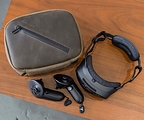
SAN FRANCISCO, Oct. 29, 2026 /PRNewswire/ — WaterField Designs introduces the Shield Case for Steam Frame, a compact protective case for Valve’s Steam Frame virtual reality (VR) headset, which ships without a dedicated carrying case. Designed and handcrafted in San Francisco, the new Steam Frame case protects and organizes the headset, both controllers and the included wireless adapter in a structured, foam-reinforced, fleece-lined interior for home storage and travel.

Shield Case for Steam Frame video demo.

The Steam Frame supports wireless PC game streaming and standalone play, whether at home, in a hotel room or at a friend’s house. To keep the case compact and the accessories organized, WaterField designed the Padded Accessory Case. Positioned between the goggles and headband, its main compartment holds both controllers, while an Ultrasuede® pocket holds the included wireless adapter. For owners with an Arcturus Vision Camera, the pocket also accommodates the camera alongside the adapter. The padded compartment cushions and helps stabilize the headset.

“We wanted to give the Steam Frame a protected place between gaming sessions and make it easy to take the whole setup along,” said company founder Gary Waterfield. “The tricky part was fitting the controllers without making the case larger than it needed to be. We used the space between the goggles and headband to give them their own padded compartment.”

Firm foam reinforces all sides of both the Shield Case and the Padded Accessory Case inside it. Three-layer, foam-padded fleece lines the interior, while cushioned zipper guards help protect the headset from scratches. Each case is handcrafted in small batches using 1680-denier ballistic nylon, 15-ounce waxed canvas, or Forza, a high-performance nylon with a distinctive, two-tone basketweave. Select versions feature full-grain leather accents. Waterproof YKK zippers and custom metal hardware complete the construction.

Key Features

Custom fit: Holds the Steam Frame headset, both controllers, the included wireless adapter, and other included accessories. The headset fits with its headband extended or collapsed and with or without the eye spacer attached.Padded Accessory Case: Holds both controllers between the goggles and headband, helping stabilize the headset. Its Ultrasuede® pocket fits the wireless adapter, with room for an Arcturus Vision Camera alongside it.Additional accessory storage: A plush, padded pocket in the main Shield Case holds a power adapter, power cables and other accessories.Exterior storage: A diagonal zippered front pocket holds a USB-C cable, cleaning cloth, or other small items; a hidden pocket holds an AirTag.Impact protection: Firm foam reinforces all sides of the Shield Case and Padded Accessory Case to help protect against bumps during storage and transport.Scratch protection: Three-layer, foam-padded fleece lining, fleece-covered sides of the Padded Accessory Case, and cushioned zipper guards help protect the headset and its sensitive surfaces from scratches.Weather-resistant closure: Waterproof YKK zippers secure the main compartment and exterior pocket.Carry options: A wide padded handle allows hand carry; D-rings accommodate an optional 1-inch shoulder strap (not included).

Availability and Pricing

Shield Case for Steam Frame

Price: $169—ballistic nylon, waxed canvas, or Forza; $189—ballistic nylon or waxed canvas with full-grain leather.

Colors: Black ballistic nylon; tan waxed canvas; blue Forza; titanium Forza; black ballistic nylon with black full-grain leather; tan waxed canvas with chocolate full-grain leather.

Materials: 1680-denier ballistic nylon, 15-ounce waxed canvas, or Blue Forza basketweave nylon; full-grain leather on select versions; foam reinforcement; padded fleece lining; Ultrasuede®; waterproof YKK zippers; custom metal hardware.

Dimensions: 10.5 x 8.5 x 5 inches.

Capacity: 5 liters.

Weight: Non-leather models: 1 pound. Models with leather: 1.25 pounds.

Compatibility: Valve Steam Frame VR headset and all included accessories, with headband extended or collapsed and with or without the eye spacer.

Optional add-on: 1-inch Cam Lock Shoulder Strap — $25.

Manufacturing: Handcrafted in small batches in San Francisco.

Availability: Non-leather models ship today. Models with leather ship Nov. 12, 2026.

About WaterField Designs

Founded in 1998, WaterField Designs handcrafts premium laptop bags, backpacks, travel bags and gaming cases in San Francisco. Known for meticulous craftsmanship, premium materials and functional design, the company produces bags and accessories in small batches for professionals, travelers and technology enthusiasts worldwide. More at Our Story.

WaterField Designs, SFbags, and Shield Case for Steam Frame are trademarks of WaterField Designs. Other company and product names may be trademarks of their respective owners. Copyright ©2026. All Rights Reserved.

View original content to download multimedia:https://www.prnewswire.com/news-releases/waterfield-designs-introduces-shield-case-for-steam-frame-vr-headset-and-accessories-302922653.html

SOURCE WaterField Designs

Continue Reading

Technology

From Pitch to Pilot: Lee Kuan Yew Global Business Plan Competition Opens Global Search for Deep Tech Urban Solutions and Sustainability focused Founders

Published

on

By

Finalists compete for over S$2.5 million (US$2 million) in prizes and gain a pathway to SMU’s Urban SustaInnovator accelerator and US$10 million USI Fund

SINGAPORE, Oct. 29, 2026 /PRNewswire/ — For many deep-tech start-ups tackling urban and sustainability challenges, the biggest hurdle is not developing breakthrough technologies, but finding the customers, partners and opportunities to deploy them at scale.

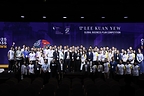
Addressing this challenge, the 13th Lee Kuan Yew Global Business Plan Competition (LKYGBPC) today opened applications for university founders and recent graduates seeking to turn frontier ideas into real-world impact. Organised by Singapore Management University’s Institute of Innovation & Entrepreneurship (SMU IIE), LKYGBPC is one of Asia’s most globally representative deep-tech start-up competitions, spanning 12 focus areas including climate tech, energy, food and land use, urban mobility, longevity and healthtech, and sustainable materials and circularity.

Fifty finalists will be flown to Singapore 28 September to 1 October 2027 to compete for over S$2.5 million in prizes and take part in an Innovation Festival featuring investor engagement, mentorship, and connections with corporate and ecosystem partners.

Beyond the Competition: A Gateway to SMU’s Urban SustaInnovator (USI) accelerator

Selected LKYGBPC finalists can join SMU’s Urban SustaInnovator (USI) accelerator, launched in 2025, which supports start-ups through market access, pilot projects and strategic introductions across Asia. In May 2026, SMU IIE launched the USI Fund to back promising ventures as they pilot and scale.

“Founders of breakthrough technologies can create value only when they reach the people, industries, and communities they are designed to serve. SMU created LKYGBPC as a platform to help founders bring their innovative ideas to life by connecting them with the partners, markets and opportunities needed to turn innovation into real-world impact. Now, through the USI programme and USI Fund, we offer a post-competition pathway to pilot, scale, and raise capital throughout Asia,” said Rony Palathinkal, Head of the LKYGBPC and Urban SustaInnovator at SMU IIE.

One of the biggest challenges for sustainability start-ups is getting access to the right partners to validate and deploy new technologies.

SMU is uniquely positioned to help startups make these connections with its network of Overseas Centres in Bangkok, Jakarta, Ho Chi Minh City and Shenzhen, and its International Advisory Councils in eight countries. “SMU’s expansive network of partners from industry, government and community across Asia enables us to forge connections that enable startups to cross borders and scale their innovative solutions,” says Professor Sun Sun Lim, SMU’s Vice President of Partnerships and Engagement, and Lee Kong Chian Professor of Communication & Technology.

Singapore-based Standard Physics (formerly Inviscid AI), founded by Qiu Ziming and Kabir Jain, was a finalist in the 12th LKYGBPC before joining Y Combinator’s Winter 2026 cohort and SMU’s inaugural Urban SustaInnovator (USI) accelerator. The startup uses physics-informed AI and IoT-powered digital twins to optimise energy efficiency in buildings and data centres. Through USI, it secured a pilot with The GEAR by Japanese construction giant Kajima and is discussing three more opportunities. It has also raised US$2.3 million in seed funding led by Square Peg Capital and is preparing to launch an AI-powered agentic engineering platform. Jain credits Y Combinator’s start-up expertise and USI’s regional network for supporting its growth.

“The accelerators were very complementary. YC was good at getting us from zero to one, and then USI has been very helpful in getting us from one to 10. The USI team can make the right introductions and help you grow,” said Jain. 

Singapore is strengthening its position as a global sustainability innovation hub, providing start-ups with opportunities to pilot, validate and scale technologies across Asia and beyond. This government-led ambition is backed by the S$37 billion RIE 2030 plan, including S$10.8 billion for mission-oriented research, and a S$40 million USS Translation Fund to support the development and commercialisation of urban and sustainability solutions.

Building a Global Pipeline of Innovation

Established by SMU in 2002, LKYGBPC is a biennial competition open to start-ups with at least one founder currently enrolled in a university programme or who graduated within the past five years. Its 12th edition in October 2025 attracted over 1,500 entries from founders representing 1,200 universities across 91 countries. Finalists from the 9th to 12th editions have collectively raised over S$1 billion. Finalists from the 9th to 12th editions have collectively raised over S$1 billion.  Finalists from the 9th to 12th editions have collectively raised over S$1 billion.

Said Shirley Wong, Entrepreneur-in-Residence at SMU IIE, Chairperson of the 13th LKYGBPC Advisory Committee, and Managing Partner of TNF Ventures: “As Asia continues to urbanise, the region presents both complex challenges and significant opportunities for innovation. LKYGBPC brings together founders worldwide and connects them with Singapore’s ecosystem of industry, investors and institutions to accelerate solutions with regional and global impact.”

Applications are open at https://iie.smu.edu.sg/lkygbpc and close on 31 March 2027.

View original content to download multimedia:https://www.prnewswire.com/in/news-releases/from-pitch-to-pilot-lee-kuan-yew-global-business-plan-competition-opens-global-search-for-deep-tech-urban-solutions-and-sustainability-focused-founders-302920237.html

Continue Reading

Technology

Dragonpass Showcases AI-Powered Travel Experiences and Member Engagement Solutions at ITB Asia 2026

Published

on

By

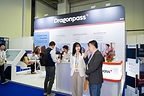
SINGAPORE, Oct. 29, 2026 /PRNewswire/ — Dragonpass, a global travel and lifestyle platform and membership solutions provider, participated in ITB Asia 2026, held from 21 to 23 October at Marina Bay Sands, Singapore. The event provided an opportunity for Dragonpass to connect with industry stakeholders across the travel value chain and explore new partnership opportunities to deliver more connected travel and lifestyle experiences.

Under the theme “Experiences in Motion: Human-Centred Design in Travel & Tourism”, the event brought together more than 1,000 exhibiting brands and industry leaders to explore the future of travel and tourism. Dragonpass showcased its integrated travel ecosystem, highlighting how premium services, member engagement and AI-driven personalisation can create greater value for partners and travellers.

Connecting Partners Across the Travel Ecosystem

With 20 years of experience, Dragonpass demonstrated how it transforms travel benefits into long-term customer loyalty for corporate partners worldwide, bringing together airlines, airports, hotels and travel service providers to create more connected experiences across the journey.

Its integrated solutions span premium travel services, including first-class services, airport transit and flight delay assistance, alongside targeted member engagement through premium privileges, daily engagement and miles redemption. By connecting these services with partners’ existing membership programmes, Dragonpass helps make benefits more accessible and relevant to members, encouraging ongoing engagement beyond individual transactions.

Through co-branded lounges, dedicated counters and co-branded events, Dragonpass also enables partners to extend their brand presence into the airport environment and build more valuable connections with their members.

Reimagining Member Experiences for Interest-Driven Travel

As travel patterns evolve, interest-driven travel is creating new opportunities for membership programmes to move beyond benefit redemption towards more personalised, experience-led engagement.

“One of the most noticeable changes we see is that people are increasingly travelling around their interests — whether it’s flying to another city for a concert, a sporting event, a food experience or an art exhibition,” said Jane Zhu, Co-founder and CEO of Dragonpass.

“AI allows us to connect membership benefits with these real-life journeys, helping travellers discover relevant services when planning a trip and access available lounge or privileges at the airport. The opportunity is to move beyond simply offering benefits to showing members how those benefits can enrich their travel and lifestyle experiences,” she added.

As Dragonpass continues to expand its global ecosystem, the company is focused on using AI to deepen member relationships, connect more partners across the travel and lifestyle value chain, and transform membership benefits into meaningful experiences throughout the journey.

About Dragonpass

Established in 2005, Dragonpass is a leading global travel and lifestyle platform, providing premium benefits and experiences to more than 40 million members worldwide. Its growing ecosystem spans travel, health and wellness, lifestyle and entertainment, with a global network covering more than 140 countries and regions and partnerships with more than 800 enterprises.

For more information, please visit www.dragonpass.com.

Dragonpass Brand & Marketing
Email:brandmarketing@dragonpass.com

View original content to download multimedia:https://www.prnewswire.com/apac/news-releases/dragonpass-showcases-ai-powered-travel-experiences-and-member-engagement-solutions-at-itb-asia-2026-302923075.html

SOURCE Dragonpass

Continue Reading

Trending