Technology
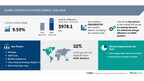
Damper Actuators Market size is set to grow by USD 978.1 million from 2024-2028, Increasing demand for enhanced energy efficiency in HVAC systems to boost the market growth, Technavio
Published
2 years agoon
By
NEW YORK, June 26, 2024 /PRNewswire/ — The global damper actuators market size is estimated to grow by USD 978.1 million from 2024-2028, according to Technavio. The market is estimated to grow at a CAGR of almost 9.59% during the forecast period. Increasing demand for enhanced energy efficiency in hvac systems is driving market growth, with a trend towards increasing adoption of iot-enabled damper actuators. However, improper selection of damper actuators poses a challenge. Key market players include AB Regin, Azbil Corp., BELIMO Holding AG, Chao Feng Technology Ningbo Co. Ltd., DMI Technology Corp., Dura Control Systems, Dwyer Instruments LLC, Greenheck Fan Corp., Honeywell International Inc., HONUTEC BV, iO HVAC Controls, Johnson Controls International Plc., Kinetrol Ltd., KMC Controls Inc., Matsushima Measure Tech Co. Ltd., Rotork Plc, Schneider Electric SE, Siemens AG, Sontay Ltd., and Soolon Controls Beijing Co. Ltd..
Get a detailed analysis on regions, market segments, customer landscape, and companies – Click for the snapshot of this report
Forecast period
2024-2028
Base Year
2023
Historic Data
2018 – 2022
Segment Covered
Type (Non-spring return damper actuator and Spring return damper actuator), End-user (Commercial, Residential, and Industrial), and Geography (North America, Europe, APAC, South America, and Middle East and Africa)
Region Covered
North America, Europe, APAC, South America, and Middle East and Africa
Key companies profiled
AB Regin, Azbil Corp., BELIMO Holding AG, Chao Feng Technology Ningbo Co. Ltd., DMI Technology Corp., Dura Control Systems, Dwyer Instruments LLC, Greenheck Fan Corp., Honeywell International Inc., HONUTEC BV, iO HVAC Controls, Johnson Controls International Plc., Kinetrol Ltd., KMC Controls Inc., Matsushima Measure Tech Co. Ltd., Rotork Plc, Schneider Electric SE, Siemens AG, Sontay Ltd., and Soolon Controls Beijing Co. Ltd.
Key Market Trends Fueling Growth
Damper actuators are becoming essential components of smart building systems, offering advanced control and automation for HVAC operations. These actuators communicate with central management systems for centralized monitoring, optimization, and predictive maintenance. Equipped with wireless connectivity, they enable remote monitoring and control, leading to enhanced energy efficiency and improved system performance. Smart damper actuators provide variable positioning and modulating control for precise airflow regulation, boosting indoor comfort and customization options. The market growth is driven by these benefits and the increasing integration of IoT technology in building automation.
The damper actuator market is experiencing significant growth due to the increasing demand for energy efficiency and comfort in buildings. Compressor controls, dampers, and pneumatic components are key elements in HVAC systems, and damper actuators play a crucial role in regulating airflow. Companies are focusing on developing compact and cost-effective solutions to meet the needs of various industries. The market is also driven by the trend towards automation and the integration of IoT technology in building management systems. Additionally, the growing demand for sustainable and eco-friendly solutions is expected to boost the market further. Overall, the damper actuator market is an essential component of the HVAC industry and is expected to continue its growth trajectory in the coming years.
Research report provides comprehensive data on impact of trend. For more details- Download a Sample Report
Market Challenges
The damper actuators market faces challenges due to inappropriate selection for various building types, including industrial, commercial, and residential. Factors such as incorrect torque and oversizing can negatively impact system performance and efficiency, leading to additional costs and inefficiencies. Proper assessment of building space usage is crucial before customizing HVAC solutions. Regulations for historic buildings add complexity, requiring permits and specific airflow and torque requirements. Despite industry training, incorrect selection remains a concern, potentially hindering market growth.The damper actuator market faces several challenges in its operation and application. One major challenge is the need for durability and reliability in harsh environments. These actuators must function effectively in extreme temperatures and pressures. Another challenge is the requirement for precise control and quick response times. The use of advanced technologies, such as servo drives and position sensors, can help address these challenges. Additionally, the increasing demand for energy efficiency and cost-effectiveness is driving the development of new materials and designs. The integration of artificial intelligence and machine learning algorithms is also expected to improve the performance and functionality of damper actuators. Overall, the damper actuator market is continuously evolving to meet the demands of various industries, including HVAC, power generation, and oil and gas.
For more insights on driver and challenges – Download a Sample Report
Segment Overview
This damper actuators market report extensively covers market segmentation by
Type 1.1 Non-spring return damper actuator1.2 Spring return damper actuatorEnd-user 2.1 Commercial2.2 Residential2.3 IndustrialGeography 3.1 North America3.2 Europe3.3 APAC3.4 South America3.5 Middle East and Africa
1.1 Non-spring return damper actuator- Damper actuators without springs offer precise positioning for optimal airflow control in HVAC systems. These actuators provide faster response times, enhancing system performance and energy efficiency. They can be customized for various applications and integrated with building automation systems. With fewer mechanical components and a robust design, non-spring damper actuators require less maintenance and have longer service life. The market for these actuators is growing due to the focus on energy efficiency, smart building solutions, and the need for precise control in HVAC systems.
For more information on market segmentation with geographical analysis including forecast (2024-2028) and historic data (2018 – 2022) – Download a Sample Report
Research Analysis
In the HVAC industry, motor-operated rotary actuators, specifically damper actuators, play a crucial role in regulating airflow and maintaining optimal indoor environmental conditions. These actuators are essential components of control systems in various sectors, including industrialization and public utilities. During installation, it is important to consider motor limits switches and opening transmitters for proper functioning. Speed reduction techniques can be employed to ensure precise control and reduce wear and tear on the system. Overload switches provide an additional safety measure, preventing potential damage from overloading. Compatibility problems and regulatory compliance difficulties can arise in the implementation of damper actuators, necessitating careful consideration and planning. Economic downturns and competition from alternatives, such as manual handling, can impact market demand. Political, economic, and social scenarios, including curfews and workers’ strikes, can also influence the damper actuator market landscape. The Ace matrix and offerings from companies like Dura Control and Dwyer Instruments can help address these challenges and provide effective solutions.
Market Research Overview
The damper actuator market encompasses the production, supply, and installation of systems that regulate the damping of mechanical systems. These actuators are essential components in various industries, including HVAC, renewable energy, and process control. They function by controlling the flow of fluids or gases to adjust the position of dampers, ensuring optimal system performance and energy efficiency. The market for damper actuators is driven by factors such as increasing demand for energy-efficient solutions, growing focus on automation, and the expansion of industries that rely on damper systems. The market is segmented based on technology, application, and region. Actuators can be pneumatic, electric, or hydraulic, while applications include HVAC, power generation, and process control. Regions covered include North America, Europe, Asia Pacific, and the rest of the world.
Table of Contents:
1 Executive Summary
2 Market Landscape
3 Market Sizing
4 Historic Market Size
5 Five Forces Analysis
6 Market Segmentation
TypeNon-spring Return Damper ActuatorSpring Return Damper ActuatorEnd-userCommercialResidentialIndustrialGeographyNorth AmericaEuropeAPACSouth AmericaMiddle East And Africa
7 Customer Landscape
8 Geographic Landscape
9 Drivers, Challenges, and Trends
10 Company Landscape
11 Company Analysis
12 Appendix
About Technavio
Technavio is a leading global technology research and advisory company. Their research and analysis focuses on emerging market trends and provides actionable insights to help businesses identify market opportunities and develop effective strategies to optimize their market positions.
With over 500 specialized analysts, Technavio’s report library consists of more than 17,000 reports and counting, covering 800 technologies, spanning across 50 countries. Their client base consists of enterprises of all sizes, including more than 100 Fortune 500 companies. This growing client base relies on Technavio’s comprehensive coverage, extensive research, and actionable market insights to identify opportunities in existing and potential markets and assess their competitive positions within changing market scenarios.
Contacts
Technavio Research
Jesse Maida
Media & Marketing Executive
US: +1 844 364 1100
UK: +44 203 893 3200
Email: media@technavio.com
Website: www.technavio.com/
View original content to download multimedia:https://www.prnewswire.com/news-releases/damper-actuators-market-size-is-set-to-grow-by-usd-978-1-million-from-2024-2028–increasing-demand-for-enhanced-energy-efficiency-in-hvac-systems-to-boost-the-market-growth-technavio-302182746.html
SOURCE Technavio
You may like
Technology
Manulife Named #1 Life Insurer for AI Maturity for Second Consecutive Year by Evident
Published
14 minutes agoon
June 16, 2026By
C$ unless otherwise stated TSX/NYSE/PSE: MFC SEHK: 945
Named top insurer in Canada, first in the AI Leadership category, and ranked third overall –
underscoring Manulife’s strategic priority to be an AI-powered organization
TORONTO and BOSTON and HONG KONG, June 16, 2026 /PRNewswire/ — Manulife has been named the number one life insurance company for AI maturity overall for the second consecutive year in the 2026 Evident AI Index for Insurance, is now the top insurer in Canada and number one in the AI Leadership category and ranks third overall. These accolades highlight Manulife’s ability to scale AI-driven innovation across its global footprint, delivering measurable business value and impact, and accelerating its strategic priority to operate as an AI-powered organization.
“We’re proud to be named the number one life insurer for AI maturity for the second year in a row – and are now a top three company overall. This is a powerful validation of Manulife’s refreshed enterprise strategy, and our commitment to being an AI-powered organization globally,” said Phil Witherington, President and CEO, Manulife. “As we continue to scale, we are focused on disciplined execution and responsible deployment. We expect to generate more than $1 billion1 of enterprise value by 2027, with $300 million achieved as of year-end 2025, reinforcing that our approach is not only improving productivity and efficiency, but also delivering real impact for our customers, colleagues and shareholders.”
According to Evident, Manulife has disclosed the deployment of more use cases than any other insurer across the Index. This deployment over the past year reflects a continuous focus on prioritizing AI solutions that deliver measurable outcomes, including the Manulife Automated Underwriting Decision Engine (MAUDE) in Canada, which processes more than half of eligible individual life insurance applications automatically, delivering decisions in as little as two minutes for qualified applicants; John Hancock’s Quick Quote, which simplifies and accelerates the insurance quoting experience; a suite of AI-enabled tools within Manulife Wealth & Asset Management designed to enhance investment insights and decision-making; and AI-driven capabilities across Asia, from digital underwriting and claims management, AI Assistants for distribution partners, and more personalized customer experiences .
______________________________________
1 The expected value from our AI initiatives include realized run-rate expense reductions, top-line revenue uplift from AI-powered workflows, fraud reduction, and growth absorption.
The Evident AI Index for Insurance assesses AI maturity across 30 of the most prominent insurance companies in North America and Europe, measuring progress across four key categories: Talent, Innovation, Leadership, and Transparency. This year’s results reflect a significantly higher bar across the industry, as insurers transition from capability building to scaled deployment and optimization.
Manulife ranked first in the Leadership pillar and with strong scores in Transparency, with Evident citing the company’s consistent executive engagement, industry influence, and transparent approach.
“This recognition reflects the depth of AI integration across Manulife and the deliberate way we are scaling its impact,” said Jodie Wallis, Global Chief AI Officer, Manulife. “Our focus is on practical, responsible applications of AI that deliver measurable outcomes, underpinned by strong governance that is increasingly automated and embedded into how AI is developed and used. Being recognized among industry leaders in AI maturity reflects the sustained progress our teams are making as we evolve from adoption to consistent, enterprise-wide execution.”
“Manulife ranks first amongst life insurers in the Evident AI Index for Insurance for the second year running, reflecting its ability to build AI capability around the workflows that matter most,” said Alexandra Mousavizadeh, Co-Chief Executive Officer and Co-Founder, Evident. “Manulife shows a deliberate approach towards building AI capacity, growing the AI talent pool by 41% year-on-year, embedding a scalable architecture, and using AI to deliver improvements in access, conversation and long-term customer relationships. Being amongst a very small number of insurers to publish both realized and projected returns at the company level demonstrates Manulife’s robust internal methodologies.”
These results demonstrate the consistency and scale with which Manulife is putting AI into practice across the enterprise. Guided by its refreshed Enterprise Strategy and Responsible AI Principles, the company is embedding AI into day-to-day work to simplify processes, improve decision making and deliver better outcomes for customers, advisors and colleagues.
To learn more about Manulife’s approach to artificial intelligence, visit manulife.com/AI. The full 2026 Evident AI Insurance Index report and methodology are available at evidentinsights.com.
Caution regarding forward-looking statements
This document contains forward-looking statements within the meaning of the “safe harbour” provisions of Canadian provincial securities laws and the U.S. Private Securities Litigation Reform Act of 1995 with respect to Manulife’s use of its digital capabilities and the expected benefits it expects to realize from AI. Although we believe that the expectations reflected in such forward-looking statements are reasonable, such statements involve risks and uncertainties, and undue reliance should not be placed on such statements. Certain material factors or assumptions are applied in making forward-looking statements, and actual results may differ materially from those expressed or implied in such statements. Important factors that could cause actual results to differ materially from expectations include but are not limited to general business and economic conditions; changes in laws and regulations with respect to the use of AI-enabled tools; our ability to execute our digital plans and to deploy future digital use cases; our ability to adapt products and services to the changing market; our ability to attract and retain key employees and our ability to protect our intellectual property and exposure to claims of infringement from others. Additional information about material risk factors that could cause actual results to differ materially from expectations may be found in our most recent annual and interim reports and elsewhere in our filings with Canadian and U.S. securities regulators.
The forward-looking statements in this document are, unless otherwise indicated, stated as of the date hereof. We do not undertake to update any forward-looking statements, except as required by law.
About Manulife
Manulife Financial Corporation is a leading international financial services provider, headquartered in Toronto, Canada. Anchored in our ambition to be the number one choice for customers, we operate as Manulife across Canada and Asia, and primarily as John Hancock in the United States, providing financial advice, insurance and health solutions for individuals, groups and businesses. Through Manulife Wealth & Asset Management, we offer global investment solutions, financial advice, and retirement plan services to individuals, institutions, and retirement plan members worldwide. At the end of 2025, we had more than 37,000 employees, over 106,000 agents, and thousands of distribution partners, serving over 37 million customers with operations across 25 markets globally. We trade as ‘MFC’ on the Toronto, New York, and Philippine stock exchanges, and under ‘945’ on the Hong Kong stock exchange.
Not all offerings are available in all jurisdictions. For additional information, please visit manulife.com.
Media Contact
Gina Simonis
617-840-4794
GSimonis@Manulife.com
View original content to download multimedia:https://www.prnewswire.co.uk/news-releases/manulife-named-1-life-insurer-for-ai-maturity-for-second-consecutive-year-by-evident-302801126.html
Technology
Dreamology Labs Sues MSC Cruises, Seeking Nearly $1.9 Billion Over Alleged IP Theft
Published
14 minutes agoon
June 16, 2026By
Complaint alleges abuse of power by Executive Chairman Pierfrancesco Vago and a years-long pattern of fraudulent inducement and NDA-protected IP misuse
MIAMI, June 16, 2026 /PRNewswire/ — Alessandra Maderni, founder and CEO of Dreamology Labs, Inc., filed a federal lawsuit in the U.S. District Court for the Southern District of Florida against MSC Cruises, MSC Cruises USA, and MSC Executive Chairman Pierfrancesco Vago, alleging a years-long pattern of fraudulent business inducement, breach of a nondisclosure agreement, and trade secret misappropriation.
According to the complaint, filed on June 2, 2026, Maderni and Dreamology Labs spent years developing proprietary experiential entertainment IP and travel-technology ventures, including the Shipsomnia franchise and XploraWorld platform. At a formal NDA-protected presentation in Geneva in September 2019, former senior Disney executives personally endorsed the Shipsomnia venture directly to Vago and MSC executives. Plaintiffs allege MSC later launched at least four onboard attractions and entertainment offerings aboard multiple vessels that incorporated Plaintiffs’ proprietary IP and commercialization strategies without credit or compensation.
Among the offerings is Pirates Cove Aquapark, recipient of the 2023 World Waterpark Association Leading Edge Award. A WhiteWater vendor case study credited Vago as the attraction’s “creative driver” and described his role in pushing the team to dream bigger and shifting the concept from a space-themed attraction to a pirate-and-Kraken-themed experience. Plaintiffs allege those distinctive IP elements were previously disclosed to MSC through NDA-protected Shipsomnia materials.
The complaint asserts eleven causes of action, including trade secret misappropriation, copyright infringement, breach of NDA, fraudulent inducement, and additional allegations involving business practices and abuse of corporate authority. An independent preliminary but-for analysis estimates damages at nearly $1.9 billion, subject to discovery and expert analysis. The valuation is not a court finding or damages award.
About Dreamology Labs
Dreamology Labs, Inc. is an experiential entertainment IP and travel-technology company founded by Alessandra Maderni. Through brands including Shipsomnia, Culturepunk, and XploraWorld, the company produces immersive concepts that bring together travel, storytelling, culture, technology, and ESG-driven impact in support of a more sustainable and equitable creator economy.
Resources
Full complaint with exhibits, media kit and case summary: www.dreamologylabs.com/presskit
Dreamology Labs Inc. www.dreamologylabs.com
Case 1:26-cv-23846-DPG | All claims are allegations. Defendants have not yet filed a response.
Media Contact: info@dreamologylabs.com | For television, podcast, radio, print, and speaking inquiries: info@dreamologylabs.com
Legal Inquiries: John M. Pierce, John Pierce Law, P.C. | (321) 292-2366 | jpierce@johnpiercelaw.com
View original content to download multimedia:https://www.prnewswire.com/news-releases/dreamology-labs-sues-msc-cruises-seeking-nearly-1-9-billion-over-alleged-ip-theft-302801095.html
SOURCE Dreamology Labs Inc.
Technology
Satellite Communication Market Size to Reach USD 223.0 Billion by 2033, at 11.0% CAGR, driven by Rising Demand for High-Speed Connectivity and Expanding LEO Satellite Deployments
Published
14 minutes agoon
June 16, 2026By
SAN FRANCISCO, June 16, 2026 /PRNewswire/ — The global satellite communication market continues to experience strong momentum as governments, enterprises, telecommunications providers, and media organizations increasingly rely on satellite-based infrastructure to support global connectivity, broadcasting, mobility, and data-intensive applications. According to recent industry analysis by Grand View Research, the global satellite communication market was valued at USD 98.2 billion in 2025 and is expected to reach USD 107.4 billion in 2026. The market is projected to grow to USD 223.0 billion by 2033, registering a compound annual growth rate (CAGR) of 11.0% from 2026 to 2033.
The satellite communication industry is entering a transformative growth phase fueled by advancements in satellite technology, expanding low Earth orbit (LEO) constellations, increasing demand for broadband connectivity, and the growing importance of resilient communication infrastructure across commercial, government, and defense sectors. As digital transformation accelerates globally, satellite networks are becoming critical to bridging connectivity gaps, supporting mission-critical operations, and enabling next-generation communication services.
Market Growth Driven by Expanding Connectivity Requirements
Demand for reliable and high-speed communication services continues to rise across both developed and emerging economies. Satellite communication systems are increasingly being deployed to provide broadband access in remote and underserved regions where terrestrial infrastructure remains limited or economically unfeasible.
The growth of cloud computing, Internet of Things (IoT) deployments, autonomous systems, maritime connectivity, aviation communication, and defense modernization initiatives is creating significant opportunities for satellite service providers and technology vendors. Enterprises are also seeking greater network resilience through hybrid communication architectures that combine terrestrial and satellite networks.
The increasing dependence on uninterrupted connectivity during natural disasters, geopolitical disruptions, and infrastructure outages has further reinforced the strategic value of satellite communication technologies.
Get Sample of this Research report for more Insights
Services Segment Maintains Market Leadership
By component, the services segment accounted for the largest market share of 58.6% in 2025. The segment’s dominance reflects growing demand for managed communication services, satellite bandwidth leasing, network management, consulting, and value-added communication solutions.
Organizations across multiple industries are increasingly focusing on operational efficiency and scalability, driving adoption of service-based business models. Service providers are responding by offering integrated solutions that combine connectivity, analytics, cybersecurity, and network optimization capabilities.
As enterprises prioritize flexibility and reduced capital expenditure requirements, service-oriented satellite communication offerings are expected to remain a major contributor to market revenue throughout the forecast period.
LEO Satellite Constellations Reshaping Industry Dynamics
By satellite constellation, Low Earth Orbit (LEO) satellites held the largest market share in 2025, highlighting a significant shift in the global satellite communication ecosystem.
LEO satellites offer several operational advantages, including lower latency, improved coverage, faster deployment cycles, and enhanced support for broadband applications. These capabilities are enabling satellite operators to deliver high-performance connectivity solutions to businesses, governments, and consumers across geographically diverse regions.
The rapid expansion of large-scale LEO constellations is transforming global communications by improving internet accessibility, supporting mobility applications, and enabling new digital services in previously underserved markets.
Industry experts anticipate continued investment in LEO infrastructure as operators seek to expand capacity, improve network performance, and meet growing customer expectations for seamless connectivity.
Ku-Band Continues to Dominate Frequency Band Segment
By frequency band, the Ku-band segment dominated the market in 2025. Ku-band technologies remain widely adopted due to their ability to support a broad range of communication applications, including broadcasting, broadband internet services, maritime communications, enterprise networking, and government operations.
The widespread availability of Ku-band infrastructure, combined with advancements in antenna technology and satellite capacity, continues to support its strong market position. As demand for bandwidth-intensive applications increases, operators are investing in advanced network architectures to maximize spectrum efficiency and service quality.
Broadcasting Remains a Core Application Area
By application, broadcasting represented the leading segment in 2025. Satellite communication remains a foundational technology for television distribution, live event coverage, digital media delivery, and global content transmission.
The ability of satellite networks to deliver high-quality content across large geographic areas makes them indispensable for broadcasters seeking reliable and cost-effective distribution channels. Growing demand for high-definition and ultra-high-definition content, coupled with increasing consumption of live programming, continues to support market growth.
As media organizations expand their global reach and content delivery capabilities, satellite broadcasting infrastructure is expected to remain a key pillar of the communications ecosystem.
Media & Broadcasting Vertical Leads Market Revenue
By vertical, the media and broadcasting segment accounted for the largest market share in 2025. The sector continues to rely heavily on satellite communication technologies to facilitate content acquisition, distribution, contribution, and transmission activities.
The growing popularity of live sports, global entertainment programming, news broadcasting, and digital content services has reinforced demand for advanced satellite communication solutions. Media organizations are increasingly leveraging satellite networks to ensure uninterrupted service delivery and maintain high-quality viewer experiences across diverse markets.
North America Maintains Regional Leadership
North America emerged as the largest regional market in 2025, accounting for 34.5% of global revenue. The region benefits from strong technological infrastructure, significant investments in space and satellite programs, high broadband adoption rates, and the presence of major industry participants.
Government initiatives, defense spending, commercial satellite deployments, and continued innovation in satellite communications technologies continue to strengthen North America’s leadership position.
Meanwhile, Asia Pacific is expected to be the fastest-growing regional market throughout the forecast period from 2026 to 2033. Rapid digitalization, expanding telecommunications infrastructure, rising internet penetration, and increasing government investments in connectivity projects are driving regional growth.
Countries across Asia Pacific are actively pursuing satellite-enabled connectivity solutions to support economic development, bridge digital divides, and enhance national communication capabilities.
The United States accounted for the largest country-level market share in 2025, supported by robust industry investments, technological innovation, and strong demand from commercial, government, and defense sectors.
Browse more Satellite Industry Research report by Grand View Research
Competitive Landscape
The satellite communication market remains highly dynamic, with industry participants focusing on constellation expansion, capacity enhancement, technological innovation, strategic partnerships, and service diversification. Market leaders are investing heavily in next-generation satellite systems, software-defined networking capabilities, and integrated communication platforms designed to meet evolving customer requirements.
As demand for global connectivity continues to increase, competition is expected to intensify across broadband, mobility, enterprise, government, and media communication segments.
Industry Outlook
The satellite communication market is positioned for substantial long-term growth as connectivity becomes increasingly essential to economic development, digital transformation, and global communication infrastructure. With market revenue expected to increase from USD 107.4 billion in 2026 to USD 223.0 billion by 2033, industry stakeholders are expected to benefit from expanding opportunities across commercial, public sector, and emerging technology applications.
The convergence of advanced satellite architectures, expanding LEO networks, growing broadband demand, and increasing reliance on resilient communication systems is expected to shape the next phase of industry evolution and create significant value across the global satellite communication ecosystem.
About Grand View Research
Grand View Research, U.S.-based market research and consulting company, provides syndicated as well as customized research reports and consulting services. Registered in California and headquartered in San Francisco, the company comprises over 425 analysts and consultants, adding more than 1200 market research reports to its vast database each year. These reports offer in-depth analysis on 46 industries across 25 major countries worldwide. With the help of an interactive market intelligence platform, Grand View Research Helps Fortune 500 companies and renowned academic institutes understand the global and regional business environment and gauge the opportunities that lie ahead.
Explore Grand View Brainshare – Delivering value and creating impact for our clients through actionable business insights
Contact:
Michelle Thoras
Corporate Sales Specialist, USA
Grand View Research, Inc.
Phone: 1-415-349-0058
Toll Free: 1-888-202-9519
Email: sales@grandviewresearch.com
Web: https://www.grandviewresearch.com
Blog – https://globalindustryherald.com/
View original content to download multimedia:https://www.prnewswire.co.uk/news-releases/satellite-communication-market-size-to-reach-usd-223-0-billion-by-2033–at-11-0-cagr-driven-by-rising-demand-for-high-speed-connectivity-and-expanding-leo-satellite-deployments-302800617.html
Manulife Named #1 Life Insurer for AI Maturity for Second Consecutive Year by Evident
Dreamology Labs Sues MSC Cruises, Seeking Nearly $1.9 Billion Over Alleged IP Theft
Satellite Communication Market Size to Reach USD 223.0 Billion by 2033, at 11.0% CAGR, driven by Rising Demand for High-Speed Connectivity and Expanding LEO Satellite Deployments
Send Rakhi to UK swiftly with UK Gifts Portal
Whiteboard Series with NEAR | Ep: 45 Joel Thorstensson from ceramic.network
New Gooseneck Omni Antennas Offer Enhanced Signals in a Durable Package
Why You Should Build on #NEAR – Co-founder Illia Polosukhin at CV Labs
Whiteboard Series with NEAR | Ep: 45 Joel Thorstensson from ceramic.network
NEAR End of Year Town Hall 2021: The Open Web World, MetaBUILD 2 Hackathon and 2021 recap
Trending
-
Coin Market5 days ago
Japan crypto bill advances with ETF, tax reform path: Report
-
Technology5 days agoKrya Global Solutions expands U.S. presence to strengthen Background Screening Services
-
Technology5 days agovivo Robotics Team Wins ICRA 2026 AGIBOT World Challenge Reasoning to Action Track
-
Technology5 days ago
Jennifer Biro Named a 2026 Philadelphia Titan 100 Honoree for Second Consecutive Year
-
Technology4 days agoSmartOrg releases Version 10.x of its Decision Intelligence platform
-
Technology5 days agoGenesis Computing Announced as Validated Technology Partner of Databricks
-
Technology5 days agoLingokids Serves Up a Summer of Interactive Inspiration for Kids — Starting with Soccer
-
Technology5 days agoFrost & Sullivan Celebrates 65 Years of Enabling Growth in Times of Transformation