Connect with us

Technology

5G Equipment Market size is set to grow by USD 146.95 billion from 2024-2028, Adoption of 5G networks for smart cities boost the market, Technavio

Published

on

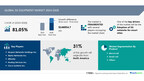
NEW YORK, July 2, 2024 /PRNewswire/ — The global 5G equipment market size is estimated to grow by USD 146.95 billion from 2024-2028, according to Technavio. The market is estimated to grow at a CAGR of 81.05% during the forecast period. Adoption of 5G networks for smart cities is driving market growth, with a trend towards growing r and d and deployment of 5G network. However, energy efficiency challenges in 5g small cell networks poses a challenge. Key market players include Airspan Networks Holdings Inc., Alpha Networks Inc., Altiostar, Analog Devices Inc., Cisco Systems Inc., Comba Telecom Systems Holdings Ltd., CommScope Holding Co. Inc., Fujitsu Ltd., Huawei Technologies Co., Ltd., Infinite Electronics Inc., Laird Connectivity, Mavenir Systems Inc., NEC Corp., Nokia Corp., Qorvo Inc., Qualcomm Inc., Samsung Electronics Co. Ltd., Telefonaktiebolaget LM Ericsson, Wireless Excellence Ltd., and ZTE Corp..

Get a detailed analysis on regions, market segments, customer landscape, and companies- View the snapshot of this report

5G Equipment Market Scope

Report Coverage

Details

Base year

2023

Historic period

2018 – 2022

Forecast period

2024-2028

Growth momentum & CAGR

Accelerate at a CAGR of 81.05%

Market growth 2024-2028

USD 146954.7 million

Market structure

Fragmented

YoY growth 2022-2023 (%)

69.9

Regional analysis

North America, Europe, APAC, Middle East and Africa, and South America

Performing market contribution

North America at 31%

Key countries

US, China, UK, South Korea, and Japan

Key companies profiled

Airspan Networks Holdings Inc., Alpha Networks Inc., Altiostar, Analog Devices Inc., Cisco Systems Inc., Comba Telecom Systems Holdings Ltd., CommScope Holding Co. Inc., Fujitsu Ltd., Huawei Technologies Co., Ltd., Infinite Electronics Inc., Laird Connectivity, Mavenir Systems Inc., NEC Corp., Nokia Corp., Qorvo Inc., Qualcomm Inc., Samsung Electronics Co. Ltd., Telefonaktiebolaget LM Ericsson, Wireless Excellence Ltd., and ZTE Corp.


Market Driver

The global 5G equipment market is experiencing significant growth due to increased R&D investments in 5G technology by companies like Ericsson. With over USD350 million spent on 5G R&D since 2018, the focus is on creating innovative portable technologies. The shift from 4G to 5G is evident in regions such as Sub-Saharan Africa, where 48% of 2023’s 5G network launches occurred. India, too, has seen the expansion of 5G networks to over 730 districts and 100 million subscribers. These factors collectively contribute to the market’s growth during the forecast period. 

The 5G equipment market is experiencing significant growth with the implementation of new technologies. Networking equipment such as routers, switches, and modems are in high demand. The use of 5G technology requires advanced capabilities, leading to the need for new and upgraded equipment. Manufacturing companies are responding with innovative solutions, including customizable and efficient 5G infrastructure. The demand for 5G equipment is driven by the increasing need for faster and more reliable connectivity. The market is expected to continue growing, with Tablets, bandwidth, and cloud-based services also playing a role. Overall, the 5G equipment market is an essential component of the digital transformation trend. 

Research report provides comprehensive data on impact of trend. For more details- Download a Sample Report

Market Challenges

The 5G equipment market faces challenges in ensuring energy efficiency, particularly with the deployment of small cells. The increase in network traffic due to higher consumer adoption of 5G and 4G will necessitate redesigning network infrastructure. Ultra-dense network (UDN) organization will increase energy usage, primarily due to the rising number of users. Telecommunications firms must balance transmission and computational power to offer increased bandwidth while maintaining energy efficiency. Manufacturers must address this trade-off and focus on energy-saving solutions to mitigate the impact on the global 5G equipment market growth.The 5G equipment market is experiencing significant growth, with numerous companies and manufacturers investing in new technologies. However, challenges persist in the implementation and deployment of 5G infrastructure. One major challenge is the high cost of 5G equipment and components, such as antennas and base stations. Additionally, the complex nature of 5G technology requires advanced technical expertise and specialized skills. Another challenge is the need for extensive network coverage and capacity to support the increasing demand for high-speed data and connectivity. Furthermore, regulatory issues and standardization processes also pose challenges to the market’s growth. Despite these challenges, the potential benefits of 5G technology, including increased efficiency, faster data transfer, and improved network reliability, make it a worthwhile investment for businesses and consumers alike.

For more insights on driver and challenges – Request a sample report!

Segment Overview 

This 5g equipment market report extensively covers market segmentation by 

Product 1.1 Macrocell1.2 Small cell1.3 OthersEnd-user 2.1 Non-retail sector2.2 Retail sectorGeography 3.1 North America3.2 Europe3.3 APAC3.4 Middle East and Africa3.5 South America

1.1 Macrocell- The 5G equipment market is experiencing significant growth due to the increasing demand for macrocells in expanding urban areas. Macrocells, high-power network cells, provide extensive coverage for large towns and transmit intense data signals. Integrated with power semiconductor devices, they support the high-power density requirements of 5G infrastructure. The focus on smart city development worldwide is driving this trend, as macrocells enable the deployment of 5G networks over extensive city areas and offer high user connection capacity.

For more information on market segmentation with geographical analysis including forecast (2024-2028) and historic data (2017-2021) – Download a Sample Report

Research Analysis

The 5G equipment market is experiencing significant growth due to the increasing adoption of fifth-generation technology standard worldwide. This advancement in wireless communication is revolutionizing various sectors, including data-intensive applications, smartphones, tablets, and data-driven services. The proliferation of high-definition videos, cloud-based applications, online gaming, and IoT devices is driving the demand for 5G equipment. Governments and nations are investing heavily in 5G infrastructure to support the remote work culture and edge computing capabilities. The integration of 5G with semi-autonomous vehicles, digitalization, IoT, big data, and cloud computing is transforming industries and enhancing global connectivity. The hardware and software components of 5G equipment are essential for delivering the required bandwidth and reliability for these applications.

Learn and explore more about Technavio’s in-depth research reports

Global 5G Fixed Wireless Access (FWA) Market: The global 5G Fixed Wireless Access (FWA) market is poised for substantial growth, driven by increasing demand for high-speed internet connectivity in residential and commercial sectors. With 5G technology’s promise of ultra-low latency and higher data speeds, providers are expanding their FWA offerings to capitalize on this burgeoning market.

Global Vehicle-to-Grid Market: The global Vehicle-to-Grid (V2G) market is gaining traction as a pivotal solution for energy management and electric vehicle integration. V2G technology allows electric vehicles to not only consume power but also supply excess energy back to the grid, enhancing grid stability and enabling cost-effective energy management solutions globally.

Market Research Overview

The 5G Equipment Market is experiencing significant growth due to the increasing demand for faster and more reliable wireless communication. This market encompasses various components such as antennas, base stations, routers, and other networking equipment necessary for 5G networks. The technology behind 5G, including Massive MIMO and beamforming, requires advanced and sophisticated equipment. The implementation of 5G is also driving the development of new applications in areas like autonomous vehicles, smart cities, and telemedicine. The global market for 5G equipment is expected to reach substantial growth in the coming years, with key drivers being the increasing number of 5G deployments and the ongoing advancements in 5G technology.

Table of Contents:

1 Executive Summary
2 Market Landscape
3 Market Sizing
4 Historic Market Size
5 Five Forces Analysis
6 Market Segmentation

ProductMacrocellSmall CellOthersEnd-userNon-retail SectorRetail SectorGeographyNorth AmericaEuropeAPACMiddle East And AfricaSouth America

7 Customer Landscape
8 Geographic Landscape
9 Drivers, Challenges, and Trends
10 Company Landscape
11 Company Analysis
12 Appendix

About Technavio

Technavio is a leading global technology research and advisory company. Their research and analysis focuses on emerging market trends and provides actionable insights to help businesses identify market opportunities and develop effective strategies to optimize their market positions.

With over 500 specialized analysts, Technavio’s report library consists of more than 17,000 reports and counting, covering 800 technologies, spanning across 50 countries. Their client base consists of enterprises of all sizes, including more than 100 Fortune 500 companies. This growing client base relies on Technavio’s comprehensive coverage, extensive research, and actionable market insights to identify opportunities in existing and potential markets and assess their competitive positions within changing market scenarios.

Contacts

Technavio Research
Jesse Maida
Media & Marketing Executive
US: +1 844 364 1100
UK: +44 203 893 3200
Email: media@technavio.com
Website: www.technavio.com/

View original content to download multimedia:https://www.prnewswire.com/news-releases/5g-equipment-market-size-is-set-to-grow-by-usd-146-95-billion-from-2024-2028–adoption-of-5g-networks-for-smart-cities-boost-the-market-technavio-302187320.html

SOURCE Technavio

Continue Reading
Click to comment

Leave a Reply

Your email address will not be published. Required fields are marked *

Technology

IR announces Iris for Card Payments: AI-powered observability that sees transactions end-to-end

Published

on

By

SYDNEY, June 22, 2026 /PRNewswire/ — Leading global observability software provider Integrated Research (“IR”) today announced Iris for Card Payments, the AI‑powered assistant designed to help payments teams detect issues earlier, understand their impact faster, and act before revenue and customer trust are at risk.

As card payments environments grow in scale and complexity, issues can cascade in minutes. Transaction volumes spike, dependencies multiply, and even highly experienced teams can struggle to correlate schemes, response codes, flows, and performance metrics in real-time. AI-powered observability can unlock faster, deeper insight for payments teams at precisely the moment when clarity matters most.

Via natural language prompts, Iris for Card Payments delivers real-time card payments insights, and is built on IR’s core observability platform Prognosis which monitors over 80 billion transactions each year for some of the world’s largest banks and financial institutions.

Iris: AI that truly understands card payments

Extra pair of Expert Eyes: Iris makes deep card payments expertise instantly accessible, reducing reliance on scarce specialists and building confidence 24/7.Purpose-built with context-aware insights: Iris understands card payments end-to-end, with built-in IR correlation logic to explain why something happened, not just what.Natural-language queries: Clear answers about transaction declines, approvals, volumes and performance – no syntax or dashboard stitching required.

Iris for Card Payments is available from May 2026 in Beta to customers globally as part of the release of Prognosis 13.3. Future releases will extend Iris to High Value Payments and Real‑Time Payments domains.

For more information or to request a demo, visit the website.

About IR
At IR, we power elite business performance. Trusted by the world’s largest organizations for more than 30 years, our market-leading observability solutions are powered by Prognosis – the real-time intelligence platform built for multi-vendor infrastructure, UC&CX and payments environments. To find out more, visit www.ir.com.

View original content to download multimedia:https://www.prnewswire.com/news-releases/ir-announces-iris-for-card-payments-ai-powered-observability-that-sees-transactions-end-to-end-302804079.html

SOURCE Integrated Research (IR)

Continue Reading

Technology

Montana-Dakota Utilities Announces Electric Service Agreement with Applied Digital for Proposed AI Factory

Published

on

By

BISMARCK, N.D., June 22, 2026 /PRNewswire/ — MDU Resources Group, Inc.’s (NYSE: MDU) subsidiary, Montana-Dakota Utilities Co., has entered into an electric service agreement (ESA) with Applied Digital Corporation (NASDAQ: APLD) to provide power to Polaris Forge 3, an AI Factory near Center, North Dakota.

At full capacity, the campus would require 430 megawatts of electricity. Under the ESA, Applied Digital would be responsible for the costs of purchasing the energy directly from the market or through other power supply arrangements. Applied Digital anticipates initial operations to commence in August 2027.

Polaris Forge 3 will expand Applied Digital’s footprint in North Dakota, where the company is developing purpose-built campuses designed to support high-density artificial intelligence workloads. Applied Digital has previously announced a 15-year lease with a U.S. based high investment-grade hyperscaler for this site.

“Polaris Forge 3 is another example of how Applied Digital is turning power into operational AI capacity through disciplined execution and long-term partnerships,” said Wes Cummins, Chairman and CEO of Applied Digital. “This campus is expected to create approximately 200 full-time jobs, generate meaningful property tax revenue and support long-term growth across Oliver County and the surrounding region. We believe AI infrastructure should create value well beyond the campus, and we’re proud to continue building in North Dakota.”

Montana-Dakota Utilities currently serves Applied Digital at Polaris Forge 1, its AI Factory near Ellendale, North Dakota, where the companies have worked together to integrate significant power demand while maintaining reliable, cost-effective service for customers, crediting $38.4 million back to North Dakota customers over the past three years.

“This proposed project reflects the growing interest in North Dakota as a location for large energy users,” said Nicole Kivisto, president and CEO of MDU Resources. “We are committed to serving these customers in a way that benefits our communities, supports the regional grid and delivers value to our customers.”

Approval of the ESA and other regulatory filings by the North Dakota Public Service Commission is required for the company to provide power under the agreement with Applied Digital.

About MDU Resources Group, Inc.
MDU Resources Group, Inc., a member of the S&P SmallCap 600 index, strives to deliver safe, reliable, cost-effective and environmentally responsible electric utility and natural gas distribution services to more than 1.2 million customers across the Pacific Northwest and Midwest. In addition to its utility operations, the company’s pipeline business operates a more than 3,800-mile natural gas pipeline network and storage system, ensuring reliable energy delivery across the Northern Plains. With a legacy spanning over a century, MDU Resources remains focused on energizing lives for a better tomorrow. For more information about MDU Resources, visit www.mdu.com or contact the investor relations department at investor@mduresources.com.

About Applied Digital Corporation
Applied Digital (Nasdaq: APLD) named Best Data Center in the Americas 2025 by Datacloud — designs, builds, and operates high-performance, sustainably engineered data centers and colocation services for artificial intelligence, cloud, networking, and blockchain workloads. Headquartered in Dallas, TX, and founded in 2021, the company combines hyperscale expertise, proprietary waterless cooling, and rapid deployment capabilities to deliver secure, scalable compute at industry-leading speed and efficiency, while creating economic opportunities in underserved communities through its award-winning Polaris Forge AI Factory model. Learn more at applieddigital.com or follow @APLDdigital on X and LinkedIn.

Investor Contact: Brent Miller, treasurer, 701-530-1730

Media Contacts:

MDU Resources: Byron Pfordte, director of integrated communications, 208-377-6050

Montana-Dakota Utilities: Jamie Tescher, senior public relations representative, 701-204-8274

Applied Digital: JSA (Jaymie Scotto & Associates), jsa_applied@jsa.net, 856-264-7827


View original content to download multimedia:https://www.prnewswire.com/news-releases/montana-dakota-utilities-announces-electric-service-agreement-with-applied-digital-for-proposed-ai-factory-302806791.html

SOURCE MDU Resources Group, Inc.

Continue Reading

Technology

Florida International University researchers reveal how altered images can bypass AI safeguards

Published

on

By

MIAMI, June 22, 2026 /PRNewswire/ — It may look like a picture of a panda bear to you, but to your business’s AI agent, it can act like a skeleton key, bypassing safety safeguards and potentially causing the model to generate harmful, misleading or policy-violating outputs.

That risk is the focus of new research from Hadi Amini, associate professor at Florida International University’s Knight Foundation School of Computing and Information Sciences. Together with graduate assistant Md Jueal Mia, he is studying how manipulated images can “jailbreak” certain AI systems, pushing them beyond their built-in safeguards.  

“AI models don’t see images the same way humans do,” Amini said. “They see patterns of numbers and pixels. By carefully manipulating those pixels, we can influence how the AI interprets the image and responds.” 

The team’s research demonstrated how small-language AI models – the kind frequently employed by small businesses to execute routine tasks like accounting or customer service – have become particularly susceptible to image-based hacks. As shown in research presented at the 2025 International Conference on Machine Learning and Applications (ICMLA), the team found that by introducing microscopic pixel-level changes called “perturbations” into an image, they could trick these AI systems into generating responses that they would normally block.  

“The manipulated image is like the face of a stranger,” Amini said. “The AI has to learn when a request should be treated with caution before it answers. In order to protect AI systems from attacks, we try to break them ourselves, identify potential vulnerabilities and design defense mechanisms.” 

The researchers then set out to probe the system’s defenses. The more successfully they penetrated the models’ guardrails, the more the systems could be trained to resist future threats. To do this, Amini and his team developed a method called JaiLIP (Jailbreaking with Loss-guided Image Perturbation), which uses an algorithm to determine the optimal degree of pixel-level manipulation.

In tests using BLIP-2, a multimodal AI model used by researchers and developers, Amini and his team found that images modified with JaiLIP significantly increased the likelihood that the system would generate harmful or unsafe responses. In one example, a JaiLIP-altered version of a stoplight tricked the AI model into divulging detailed instructions on how to run the light while avoiding a traffic ticket. Overall, the use of JaiLIP images nearly doubled the number of harmful responses generated by AI models. 

The risk extends beyond users simply prompting AI systems for instructions on illegal activity. As businesses increasingly adopt AI-powered customer service agents, chatbots and automated workflows, vulnerabilities in open-source or lightly protected systems could negatively impact users’ trust or create new avenues for cyberattacks.

“Small businesses and companies can benefit from AI to enhance their efficiency, but they have to be aware of the potential vulnerabilities,” Amini said. “They must make sure they’re deploying sufficient guardrails to maintain the safety and integrity of their AI tools.” 

Amini said there are some basic precautions that everyone should use before integrating AI into their business or workplace, including limiting the sensitive information they provide to AI systems (especially images), restricting who can access those systems and carefully evaluating the security measures built into AI tools before deployment.  

Because safety is paramount, Amini and his team are working to stay one step ahead of potential bad actors in the AI sphere. The more vulnerabilities he and his team can find, the quicker the AI will learn to repair them. The challenge, he said, is ensuring that AI can recognize threats hidden in plain sight — even when humans cannot. 

Photos and videos of Amini’s AI research, including interviews and b-roll, are available for media use via Dropbox

Media Contact:
Brian Zimmerman
305-348-8448
bzimmerm@fiu.edu 
news.fiu.edu
@FIU

View original content to download multimedia:https://www.prnewswire.com/news-releases/florida-international-university-researchers-reveal-how-altered-images-can-bypass-ai-safeguards-302806851.html

SOURCE Florida International University

Continue Reading

Trending