Connect with us

Technology

Restaurant Management Software Market size is set to grow by USD 4.50 billion from 2023-2027, Growth of foodservice industry boost the market, Technavio

Published

on

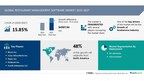
NEW YORK, July 10, 2024 /PRNewswire/ — The global restaurant management software market size is estimated to grow by USD 4.50 billion from 2023-2027, according to Technavio. The market is estimated to grow at a CAGR of  15.85%  during the forecast period. Technological advancements such as AI and IoT are significantly influencing the landscape of restaurant management software. AI enables predictive analytics for inventory management and customer preferences, enhancing operational efficiency and personalized service. IoT devices, like smart kitchen appliances and connected POS systems, streamline data collection and real-time monitoring, improving decision-making and reducing costs. These innovations are pivotal amid the industry’s shift towards digital payments and the adoption of more sophisticated management systems, despite challenges associated with transitioning from traditional methods. Key players like Block Inc., Fiserv Inc., and Microsoft Corp. are leveraging these technologies to drive market growth

Get a detailed analysis on regions, market segments, customer landscape, and companies- View the snapshot of this report

Restaurant Management Software Market Scope

Report Coverage

Details

Base year

2022

Historic period

2017 – 2021

Forecast period

2023-2027

Growth momentum & CAGR

Accelerate at a CAGR of 15.85%

Market growth 2023-2027

USD 4507.94 million

Market structure

Fragmented

YoY growth 2022-2023 (%)

14.7

Regional analysis

North America, Europe, APAC, South America, and Middle East and Africa

Performing market contribution

North America at 48%

Key countries

US, Canada, Germany, France, and UK

Key companies profiled

Block Inc., Cozy Infosystems Inc., Fiserv Inc., Fishbowl Inc., Fourth Enterprises LLC, GOFRUGAL, i3 Verticals Inc., International Business Machines Corp., Jolt Software Inc., Lavu Inc., Lightspeed Commerce Inc., Microsoft Corp., NCR Corp., Oracle Corp., Restaurant365 LLC, Revel Systems Inc., Technoheaven, Toast Inc., and TouchBistro Inc.

Market Driver

The foodservice industry’s shift towards digital transactions is a global trend, with Canada anticipating that digital payments will account for nearly 90% of total spending by 2030. To stay competitive, foodservice enterprises are integrating digital payment solutions into their operations. These solutions offer numerous benefits, such as an increase in online orders, operational ease, convenience in logistics, and a decrease in internal thefts. Restaurant management software plays a crucial role in facilitating cashless transactions, allowing businesses to capture valuable consumer data for insights and opportunities. Notable vendors in the restaurant management software market, including Clover by Fiserv, Microsoft, Square, and NCR Corp, offer contactless payment solutions. The market’s growth is expected to continue as digital transactions become increasingly common in the foodservice industry. 

The Restaurant Management Software market is experiencing significant growth due to priority given to digital solutions. Trends include digital menu boards, special dietary requests handled seamlessly, and POS systems integrating with food delivery websites like GrubHub, PostMates, and Zomato. IT budgets are seeing investments in touchscreen ordering solutions and mobile POS systems. Smartphones and internet penetration have increased disposable incomes, driving demand for AI-powered virtual assistants and IoT solutions. Cloud-based solutions from companies like ParTech, Inc, Jolt, and Brink POS dominate, offering administrative and promotional elements, order management, payment processing, and daily reconciliation. Security is a priority with data security features. Businesses focus on enhancing customer experiences and retention rates through front-end software segments, Android and iOS-based systems, and cross-platform technologies. Key players like KFC, Pizza Hut, and Domino’s are implementing voice-activated ordering systems and chatbots. 

Discover 360° analysis of this market. For complete information, schedule your consultation – Book Here!

Market Challenges

To effectively manage customer interactions, restaurants require advanced software solutions. However, transitioning from traditional systems presents challenges. Firstly, a dedicated team is necessary for implementing and supporting the new system, adding to costs. Secondly, clear processes and security measures must be established to ensure proper implementation and data protection. Lastly, the software must align with the team’s culture and map users to the lead management applications. These challenges may hinder market growth during the forecast period.The Restaurant Management Software Market is experiencing significant growth due to increasing internet penetration and rising disposable incomes. Advanced technologies like artificial intelligence and virtual assistants are transforming the industry, with voice-activated ordering systems and chatbots becoming popular. Cloud-based solutions are gaining traction over on-premise systems, with companies like KFC, Pizza Hut, and Domino’s adopting these technologies. The front-end software segment is seeing strong demand, with Android and iOS-based software leading the way. Cross-platform technologies are essential for businesses to provide seamless customer experiences and improve customer retention rates. Administrative and promotional elements, order management, payment processing, daily reconciliation, and data security features are key functionalities. Business organizations require POS technology to enhance customer satisfaction and improve internal processes, including sales, labor, inventory data, and point-of-sale transactions. Digital transformation through web applications and mobile devices is essential to meet shifting consumer trends, offering individualized and customized services. Secured cards and data security features are crucial for maintaining customer trust. Companies like ParTech, Inc., Jolt, and Brink POS are leading the market with innovative solutions.

For more insights on driver and challenges – Request a sample report!

Segment Overview 

This restaurant management software market report extensively covers market segmentation by  

Deployment 1.1 On-premises1.2 Cloud-basedEnd-user 2.1 QSR2.2 FSR2.3 OthersGeography 3.1 North America3.2 Europe3.3 APAC3.4 South America3.5 Middle East and Africa

1.1 On-premises-  The Restaurant Management Software market is growing significantly due to the increasing demand for efficient and automated restaurant operations. This software streamlines various processes such as inventory management, table reservations, order taking, and payment processing. It helps restaurants reduce errors, save time, and improve customer satisfaction. Additionally, it provides valuable insights through data analytics, enabling better decision-making and strategic planning. Overall, it is a valuable investment for restaurant owners looking to optimize their business operations.

For more information on market segmentation with geographical analysis including forecast (2023-2027) and historic data (2017-2021) – Download a Sample Report

Research Analysis

The Restaurant Management Software market is prioritizing digital solutions to enhance customer experiences and streamline operations. Digital menu boards are becoming increasingly popular, allowing real-time menu updates and promotions. Special dietary requests are easily managed with advanced filtering and customization features. POS systems are integrated with touchscreen ordering solutions, enabling faster service and reducing errors. IT budgets are seeing investments in mobile POS systems, food delivery websites, and restaurant review sites to expand reach and improve online presence. Smartphones and internet penetration have fueled the demand for voice-activated ordering systems, chatbots, and artificial intelligence-powered virtual assistants. Cloud-based solutions and cross-platform technologies are key trends, offering flexibility and scalability. Android and iOS-based software cater to various restaurant needs, with advancements in front-end software segment and AI integration.

Market Research Overview

The Restaurant Management Software market is prioritizing digital solutions to enhance customer experiences and streamline operations. Digital menu boards are becoming increasingly popular, allowing for real-time menu updates and promotions. Special dietary requests are easily managed through POS systems, touchscreen ordering solutions, and food delivery websites like GrubHub, PostMates, and Zomato. IT budgets and investments in cloud-based solutions, artificial intelligence, and virtual assistants are on the rise. Mobile POS systems and voice-activated ordering systems cater to the growing use of smartphones and internet penetration. The front-end software segment, including Android and iOS-based software, is seeing significant growth due to cross-platform technologies. Restaurant review sites and customer experiences are key drivers for customer retention. The cloud segment and on-premise segment each offer unique benefits, with cloud-based solutions providing flexibility and on-premise solutions offering greater control. Administrative and promotional elements, order management, payment processing, daily reconciliation, and business organization are essential features for effective restaurant management. Data security, internal processes, sales, labor, inventory data, and point-of-sale technology are crucial for maintaining customer satisfaction and experience. Digital transformation continues to shape the industry, with web applications and mobile devices becoming essential tools for restaurants. Secured cards and shifting consumer trends towards individualized and customized services are also influencing the market. Key players in the market include ParTech, Inc, Jolt, and Brink POS.

Table of Contents:

1 Executive Summary
2 Market Landscape
3 Market Sizing
4 Historic Market Size
5 Five Forces Analysis
6 Market Segmentation

DeploymentOn-premisesCloud-basedEnd-userQSRFSROthersGeographyNorth AmericaEuropeAPACSouth AmericaMiddle East And Africa

7 Customer Landscape
8 Geographic Landscape
9 Drivers, Challenges, and Trends
10 Company Landscape
11 Company Analysis
12 Appendix

About Technavio

Technavio is a leading global technology research and advisory company. Their research and analysis focuses on emerging market trends and provides actionable insights to help businesses identify market opportunities and develop effective strategies to optimize their market positions.

With over 500 specialized analysts, Technavio’s report library consists of more than 17,000 reports and counting, covering 800 technologies, spanning across 50 countries. Their client base consists of enterprises of all sizes, including more than 100 Fortune 500 companies. This growing client base relies on Technavio’s comprehensive coverage, extensive research, and actionable market insights to identify opportunities in existing and potential markets and assess their competitive positions within changing market scenarios.

Contacts

Technavio Research
Jesse Maida
Media & Marketing Executive
US: +1 844 364 1100
UK: +44 203 893 3200
Email: media@technavio.com
Website: www.technavio.com/

View original content to download multimedia:https://www.prnewswire.com/news-releases/restaurant-management-software-market-size-is-set-to-grow-by-usd-4-50-billion-from-2023-2027–growth-of-foodservice-industry-boost-the-market-technavio-302192965.html

SOURCE Technavio

Continue Reading
Click to comment

Leave a Reply

Your email address will not be published. Required fields are marked *

Technology

SOPHiA GENETICS Announces Closing of $57.5 Million Public Offering of Ordinary Shares With Full Exercise of the Underwriters’ Option to Purchase Additional Shares

Published

on

By

BOSTON and ROLLE, Switzerland, June 19, 2026 /PRNewswire/ — SOPHiA GENETICS (Nasdaq: SOPH), a global leader in Ai-driven precision medicine, announced today the closing of its previously announced underwritten public offering with total gross proceeds of $57.5 million, before deducting the underwriting discounts and commissions and estimated offering expenses payable by the Company. As a result of strong investor demand, the offering was oversubscribed, and the underwriters fully exercised their option to purchase an additional 1,578,900 ordinary shares at the public offering price, less the underwriting discounts and commissions. The Company sold 12,104,900 ordinary shares at a price to the public of $4.75 per share, which included the 1,578,900 ordinary shares issued upon exercise in full by the underwriters of their option to purchase additional shares. All of the ordinary shares were sold by the Company.

TD Cowen acted as the lead book-running manager for the offering. Guggenheim Securities acted as book-running manager, and BTIG and Craig-Hallum acted as lead managers for the offering.

A registration statement on Form F-3 (File No. 333-289266) relating to the ordinary shares and other securities of the Company has been filed with the U.S. Securities and Exchange Commission (the “SEC”) and was declared effective on August 15, 2025. The offering was made only by means of a prospectus supplement and accompanying prospectus. A final prospectus supplement and accompanying prospectus relating to this offering has been filed with the SEC. Electronic copies of the final prospectus supplement and accompanying prospectus are available on the SEC’s website located at www.sec.gov. Copies of the final prospectus supplement and accompanying prospectus relating to this offering, may be obtained for free by contacting TD Securities (USA) LLC, c/o Broadridge Financial Solutions, 1155 Long Island Avenue, Edgewood, NY 11717 or by email at TDManualrequest@broadridge.com.

This press release shall not constitute an offer to sell or a solicitation of an offer to buy these securities, nor shall there be any sale of these securities in any state or jurisdiction in which such offer, solicitation or sale would be unlawful prior to registration or qualification under the securities laws of any such state or jurisdiction. Any offers, solicitations or offers to buy, or any sales of securities will be made in accordance with the registration requirements of the Securities Act of 1933, as amended. There is no intention or permission to publicly offer, solicit, sell or advertise, directly or indirectly, any securities of SOPHiA GENETICS SA, such as the ordinary shares, in or into Switzerland within the meaning of the Swiss Financial Services Act (“FinSA”) and these securities will not be listed or admitted to trading on the SIX Swiss Exchange or on any other regulated trading venue (exchange or multilateral trading facility) in Switzerland. Neither this press release nor any other offering or marketing material relating to these securities, such as the ordinary shares, constitutes or will constitute a prospectus pursuant to the FinSA, and neither this press release nor any other offering or marketing material relating to these securities, such as the ordinary shares, may be publicly distributed or otherwise made publicly available in Switzerland.

About SOPHiA GENETICS

SOPHiA GENETICS (Nasdaq: SOPH) is an Ai-native healthcare technology company on a mission to transform patient care by expanding access to data-driven medicine globally. It is the creator of SOPHiA DDM™, an Ai platform that analyzes complex genomic and multimodal data to generate real-time, real-world insights for a broad global network of hospital, laboratory, and biopharma institutions.

View original content to download multimedia:https://www.prnewswire.com/news-releases/sophia-genetics-announces-closing-of-57-5-million-public-offering-of-ordinary-shares-with-full-exercise-of-the-underwriters-option-to-purchase-additional-shares-302805285.html

SOURCE SOPHiA GENETICS

Continue Reading

Technology

The New Safe Haven Isn’t Gold, It’s Electricity

Published

on

By

FN Media Group Presents Oilprice.com Market Commentary

NEW YORK, June 19, 2026 /PRNewswire/ — The U.S. dollar is cracking—and the market knows it. After years of monetary excess, swelling deficits, and policy uncertainty, the world’s reserve currency is losing its grip as a store of value. Capital is fleeing paper promises and piling into hard assets at a pace not seen in decades.  Companies mentioned in today’s commentary includes:  Bitzero Holdings Inc.  (NASDAQ: AIBZ) (CSE: AIBZ-U), Advanced Micro Devices, Inc. (NASDAQ: AMD), Palantir Technologies Inc. (NASDAQ: PLTR), Quanta Services, Inc. (NYSE: PWR), SpaceX (NASDAQ: SPCX).

Nowhere is this more visible than in precious metals: Gold has surged to above $4,100 per ounce, silver has ripped past $70, and palladium—once written off—has clawed its way back to $1,350. Add an unstable geopolitical backdrop stretching from war in the Middle East to Venezuela and the ongoing Ukraine War, and it’s no surprise that traditional safe havens are looking increasingly crowded—and increasingly fragile. But here’s the twist: even as precious metals soar, the smartest money in the room is already looking past them.

Gold doesn’t generate cash flow. Silver doesn’t power economies. And when trades get crowded, volatility cuts both ways. The dollar debasement trade and overbought precious metals have pushed some institutional investors into something with steady, growing cash flows: generating power for the Data Centre boom. This is something that Canadian billionaire investor Kevin O’Leary understands like no other.

Finding Hottest Real-Estate in Tech

Securing land and dirt-cheap power contracts is the number one pre-requisite for data centre developers, hyperscalers and crypto miners. In a recent interview, O’Leary highlighted how BitZero (NASDAQ: AIBZ) (CSE: AIBZ-U), a company in which he is a strategic backer, created a unique strategic advantage by being able to lease power for compute business such as data centres or crypto miners.  At a time that Big Tech is scrambling for capacity, the real winners control Gigawatts of power capacity and real estate in strategic locations. Smart money didn’t even need a wake-up call.

“The need for new capacity is very urgent—it needs to be procured now,” says Tania Tsoneva, Head of Infrastructure Research at CBRE Investment Management, one of the world’s largest real-estate investment firms. By partnering with operators that have already locked in land, permits, and power supply, hyperscalers can fast-track new compute deployments, effectively bypassing years of development work and moving straight to installing their hardware.

BitZero succeeded in those two hardest challenges and has secured sites with long-term, low-cost electricity at the outset of the AI-boom. This is exactly what sets BitZero apart from its competitors. Because the company owns its land, power infrastructure, and hardware, its cost base is largely fixed. That structure protects margins and allows expansion without renegotiating leases or power-purchase agreements.

Leveraging True Energy Sovereignty

Founded in 2021, Bitzero has quietly assembled one of the most scalable clean-energy portfolios in the digital infrastructure sector, with more than 1 gigawatt of growth capacity across four strategic sites in Norway, Finland, and North Dakota. Its flagship hydro-powered facility in Namsskogan, Norway, already delivers 40 MW of self-mining capacity at power costs below $0.05 per kWh, among the lowest globally.

According to CEO Mohammed Bakhashwain, each million dollars of capital deployed into Bitzero’s grid and mining equipment generates roughly $700,000 in annual net profit. That efficiency comes from vertical integration: the company owns its high-voltage connections and operates as a licensed grid operator at the 132 kV level, eliminating middle-layer grid fees that most competitors still pay. With expansion capacity exceeding 320 MW in Norway, a one-gigawatt campus in Finland, and up to 300 MW staged in North Dakota, Bitzero has achieved something rare in this market: true energy sovereignty. And it’s this energy sovereignty that institutional investors value so much. We’re living in an age where new generation capacity is bottlenecked and new connections to the grid are almost impossible.

Bitzero’s energy sovereignty gives it a rare two-fold advantage in today’s compute economy: it can either lease scarce, low-cost power directly to hyperscalers and data-center operators, or deploy that same power internally to mine Bitcoin at industry-leading margins and potentially run its own GPU clusters. Bitcoin‘s economics now heavily favor miners who control their energy destiny—at current hash difficulty, every fraction shaved off power costs drops straight to the bottom line. Bitzero’s all-in energy cost of about 4.3 cents per kWh—less than half that of major U.S. peers like Riot Platforms and Marathon Digital—puts its cost per Bitcoin near $50,000 today and below $40,000 once new hardware is fully deployed.

That efficiency, combined with ultra-lean operations where five staff run a 40 MW facility using fully automated monitoring and fault-response systems, creates powerful optionality. When Bitcoin economics are attractive, Bitzero mines; when hyperscalers need capacity fast, it can redirect power to AI-ready data centers. This flexibility is already visible in its purpose-built 200 MW Norwegian site on a former UN airbase, designed exclusively for AI compute and expandable to 500 MW on offshore-wind-backed grid capacity—turning energy control into a switchable revenue engine across both Bitcoin and AI. 

The real inflection point for BitZero (NASDAQ: AIBZ, CSE: AIBZ-U) in 2026 may now be its newly announced 110 MW Norway project, which has the potential to transform the company from a profitable Bitcoin miner into a major AI infrastructure and hyperscaler landlord almost overnight.

Under the binding letter of interest, the site would generate roughly $176 million in annual recurring revenue through long-term contracted compute capacity, with the customer covering energy costs separately and pricing escalating by 3% annually. That structure dramatically improves margin visibility and reduces exposure to power-price volatility, potentially allowing the project to generate well over $135 million in annual net income once operational. Just as importantly, the project highlights why BitZero’s Norwegian assets are so strategically valuable in today’s market: while many competing AI data-center developments face 3–5 year build timelines due to grid bottlenecks and permitting delays, BitZero believes this facility could be delivered as early as Q3 next year thanks to already-secured power access, existing infrastructure, and partnerships with established EPC contractors and cooling-system providers. In a market where hyperscalers are desperately searching for immediately deployable capacity, that speed-to-market advantage could prove enormously valuable.

Skyrocketing valuations in the AI-space

The handful of technology companies that have successfully built a proprietary energy moat similar to BitZero’s now command multi-billion-dollar valuations. Yet despite rising institutional interest in BitZero’s power-first model and asset base, the company remains meaningfully undervalued relative to peers.

Investors in names like TeraWulf (WULF) and BitMine Immersion (BMNR) have seen one-year gains of more than +554% and +269%, respectively. Smart money has learnt that the real advantage in compute and crypto mining is cheap, scalable electricity, and this reality is repeating cycle after cycle. The dynamic in 2026 is no different. 

Other companies to keep an eye on:

Advanced Micro Devices, Inc. (NASDAQ: AMD) reported Q1 2026 data center revenue of $5.8 billion, up 57% year over year — an all-time record — with total Q1 revenue of $10.25 billion, up 38%, beating Wall Street consensus by roughly $350 million. Free cash flow more than tripled to $2.57 billion. CEO Lisa Su called the quarter “a clear inflection in our growth trajectory,” and guided Q2 revenue to $11.2 billion, with server CPU revenue alone expected to grow more than 70% year over year. The stock surged roughly 14% in after-hours trading following the release.

AMD’s data center story runs on two rails that NVIDIA’s does not. First, EPYC server CPUs, which now hold significant market share in hyperscaler deployments across AWS, Google Cloud, and Microsoft Azure, deliver four consecutive quarters of record server CPU revenue. Second, Instinct GPUs are gaining traction as an alternative to NVIDIA in AI training and inference — and the demand signal is large. Meta signed a multi-year agreement to deploy up to 6 GW of AMD Instinct GPUs, with the first 1 GW built around a custom version of the MI450 accelerator and Meta named as a lead customer for AMD’s upcoming sixth-generation EPYC processors.

Palantir Technologies Inc. (NASDAQ: PLTR) sits in a different part of the AI data center stack than most names on this list — it’s the software layer that makes the data inside those data centers actionable for governments and large enterprises. Q1 2026 revenue grew 85% year over year to $1.633 billion, the company’s fastest growth rate since going public in 2020. U.S. revenue grew 104% to $1.28 billion, with U.S. government revenue up 84% to $687 million and U.S. commercial revenue up 133% to $595 million. The company reported a GAAP operating margin of 46%, an adjusted operating margin of 60%, and a Rule of 40 score of 145 — a metric where 40 is considered strong.

The government side of the business is increasingly anchored by AI-enabled defense and intelligence programs. Palantir’s Maven AI system — which analyzes battlefield data and supports targeting and command decisions in real time — is moving closer to becoming a formal U.S. Department of Defense program of record. The Pentagon expanding long-term use of Maven means the revenue base here is contracted and durable, not project-by-project. A $10 billion U.S. Army contract and a $300 million USDA deal in the quarter are concrete data points for what that looks like at scale.

Quanta Services, Inc. (NYSE: PWR) builds and maintains the electrical infrastructure that connects data centers to the grid — transmission lines, substations, high-voltage distribution systems, and the last-mile electrical work that no data center can operate without. It’s not a flashy AI story, but it’s a foundational one: none of the $200 billion Amazon is spending on data centers in 2026 translates into operational compute capacity without the grid connections Quanta builds. CEO Duke Austin has pegged the company’s addressable opportunity at $2.4 trillion through 2030, driven by data center electrification, grid hardening, and renewable interconnection combined.

The constraint driving Quanta’s order book is simple physics: large transformers for high-voltage substation connections have lead times of two years or more, and the skilled labor to install them is in short supply nationally. Quanta has both the relationships with utilities and hyperscalers, and the crew deployment capacity, to capitalize on that constraint. Its backlog has been expanding steadily as hyperscaler capex converts from announced projects into actual construction contracts.

SpaceX (NASDAQ: SPCX) completed the largest IPO in history on June 12, pricing at $135 a share for a $1.77 trillion valuation and topping $2 trillion in market cap on its first trading day. The listing raised roughly $75 billion and made Elon Musk the world’s first trillionaire on paper. But the AI data center story here isn’t really about rockets. It’s about what SpaceX became after merging with xAI in February: a company that now describes itself in its own IPO filing as the operator of “the largest AI training data center clusters on Earth.”

Those clusters are Colossus 1 and Colossus 2, the xAI supercomputers built near Memphis, Tennessee, originally to train Grok. In May, SpaceX struck a deal with Anthropic that hands over essentially the entire Colossus 1 facility — more than 300 megawatts of capacity across roughly 220,000 NVIDIA GPUs, including H100, H200, and GB200 accelerators. Anthropic will pay xAI $1.25 billion a month through May 2029, a contract that could bring in more than $40 billion over its life. It’s a striking arrangement: a direct AI competitor renting out the infrastructure that was supposed to be Grok’s competitive edge, in order to monetize compute Grok wasn’t fully using.

By. Tom Kool

Oilprice Intelligence brings you the inside view on where the next gains will come from, breaking down the market’s biggest growth driver with analysis from veteran oilmen and experts. Click here to get this crucial intel for free

IMPORTANT NOTICE AND DISCLAIMER

Neither the author nor the publisher, Oilprice.com, was paid to publish this communication concerning Bitzero Holdings, Inc. (NASDAQ: AIBZ). The owner of Oilprice.com owns shares and/or stock options of the featured company and therefore has an incentive to see the featured company’s stock perform well. The owner of Oilprice.com may buy or sell shares of the featured company at any time including at or near the time you receive this communication. This share ownership should be viewed as a major conflict with our ability to be unbiased. This is why we stress that you conduct extensive due diligence as well as seek the advice of your financial advisor or a registered broker-dealer before investing in any securities.

This communication is not, and should not be construed to be, an offer to sell or a solicitation of an offer to buy any security. Neither this communication nor the Publisher purport to provide a complete analysis of any company or its financial position. The Publisher is not, and does not purport to be, a broker-dealer or registered investment adviser. This communication is not, and should not be construed to be, personalized investment advice directed to or appropriate for any particular investor. Any investment should be made only after consulting a professional investment advisor and only after reviewing the financial statements and other pertinent corporate information about the company. Further, readers are advised to read and carefully consider the Risk Factors identified and discussed in the advertised company’s SEC, SEDAR and/or other government filings. Investing in securities is speculative and carries a high degree of risk. Past performance does not guarantee future results. This communication is based on information generally available to the public and does not contain any material, non-public information. The information on which it is based is believed to be reliable. Nevertheless, the Publisher cannot guarantee the accuracy or completeness of the information.

INDEMNIFICATION/RELEASE OF LIABILITY. By reading this communication, you acknowledge that you have read and understand this disclaimer, and further that to the greatest extent permitted under law, you release the Publisher, its affiliates, assigns and successors from any and all liability, damages, and injury from this communication. You further warrant that you are solely responsible for any financial outcome that may come from your investment decisions.

TERMS OF USE. By reading this communication you agree that you have reviewed and fully agree to the Terms of Use found here http://oilprice.com/terms-and-conditions If you do not agree to the Terms of Use http://oilprice.com/terms-and-conditions, please contact Oilprice.com to discontinue receiving future communications.

INTELLECTUAL PROPERTY. Oilprice.com is the Publisher’s trademark. All other trademarks used in this communication are the property of their respective trademark holders.  The Publisher is not affiliated, connected, or associated with, and is not sponsored, approved, or originated by, the trademark holders unless otherwise stated. No claim is made by the Publisher to any rights in any third-party trademarks.

This press release was distributed on behalf of Bitzero Holdings Inc.

DISCLAIMER:  OilPrice.com is Source of all content listed above.  FN Media Group, LLC (FNM), is a third party publisher and news dissemination service provider, which disseminates electronic information through multiple online media channels. FNM is NOT affiliated in any manner with OilPrice.com or any company mentioned herein.  The commentary, views and opinions expressed in this release by OilPrice.com are solely those of OilPrice.com and are not shared by and do not reflect in any manner the views or opinions of FNM.  FNM is not liable for any investment decisions by its readers or subscribers.  FNM and its affiliated companies are a news dissemination and financial marketing solutions provider and are NOT a registered broker/dealer/analyst/adviser, holds no investment licenses and may NOT sell, offer to sell or offer to buy any security.  FNM was not compensated by any public company mentioned herein to disseminate this press release but was compensated twenty one hundred dollars by Bitzero Holdings Inc. to distribute this release on behalf of the company.  #tickertagpressreleases #pressrelease #stockalerts

FNM HOLDS NO SHARES OF ANY COMPANY NAMED IN THIS RELEASE.

This release contains “forward-looking statements” within the meaning of Section 27A of the Securities Act of 1933, as amended, and Section 21E the Securities Exchange Act of 1934, as amended and such forward-looking statements are made pursuant to the safe harbor provisions of the Private Securities Litigation Reform Act of 1995. “Forward-looking statements” describe future expectations, plans, results, or strategies and are generally preceded by words such as “may”, “future”, “plan” or “planned”, “will” or “should”, “expected,” “anticipates”, “draft”, “eventually” or “projected”. You are cautioned that such statements are subject to a multitude of risks and uncertainties that could cause future circumstances, events, or results to differ materially from those projected in the forward-looking statements, including the risks that actual results may differ materially from those projected in the forward-looking statements as a result of various factors, and other risks identified in a company’s annual report on Form 10-K or 10-KSB and other filings made by such company with the Securities and Exchange Commission. You should consider these factors in evaluating the forward-looking statements included herein, and not place undue reliance on such statements. The forward-looking statements in this release are made as of the date hereof and FNM undertakes no obligation to update such statements.

Contact Information:
Media Contact e-mail:  editor@financialnewsmedia.com
U.S. Phone: +1(561)486-1799
OilPrice.com 
+44 203 239 4080
info@oilprice.com


View original content:https://www.prnewswire.com/news-releases/the-new-safe-haven-isnt-gold-its-electricity-302805225.html

SOURCE OilPrice.com

Continue Reading

Technology

World’s 1st HIV-to-HIV Lung Transplant Performed at NYU Langone Health

Published

on

By

NEW YORK, June 19, 2026 /PRNewswire/ — The world’s first HIV-positive-to-HIV-positive lung transplant was performed at NYU Langone Health. 

The surgery brings new hope for HIV-positive patients in need of lung transplants, as it opens a pool of potential donors who were previously ineligible.

“This is a watershed moment for the HIV-positive community and represents real progress in creating equity in organ transplantation,” said Sapna Mehta, MD, clinical director of NYU Langone Transplant Institute and co-architect of the research protocol, sanctioned by the U.S. Food and Drug Administration, that enabled the complex procedure. “While these transplants are still only allowable under certain research protocols, this marks an expansion of options for people in need of a lifesaving organ.”

Approximately 1.2 million people in the United States are living with HIV. People with HIV can live long, healthy lives due to advances in antiretroviral therapies, or ART. Most people using ART are unable to transmit the virus and have near-normal life expectancies.

A Breath of Fresh Air

Bertrand Nelson, 56, has had HIV for nearly 26 years. In 2000, he was diagnosed with HIV and sarcoidosis, which can affect the lungs and spread to the liver. The disease had not yet spread from his lungs, and soon after diagnosis his doctors told him it was in remission. 

Then, in 2021, he acquired Legionnaires’ disease and was hospitalized for weeks with severe pneumonia. The disease reactivated his sarcoidosis, which attacked his liver. His condition worsened in 2024—he required an increasing amount of oxygen to breathe—and his doctor referred him to NYU Langone Transplant Institute to be evaluated for both lung and liver transplants. A research protocol for lung transplantation under the 2013 HIV Organ Policy Equity Act, or HOPE Act, had begun, and he was evaluated for HOPE dual-organ transplant in 2025.

“Transplantation of HOPE hearts and abdominal organs has been done before, but this has not been done in lung transplantation. It takes a special kind of patient to be willing to do something that hasn’t been done before,” said Mark A. Sonnick, MD, transplant pulmonologist at NYU Langone Transplant Institute and co-author of the research protocol with Dr. Mehta.

NYU Langone Transplant Institute is one of the only transplant centers in the United States equipped and approved under a research protocol to perform HOPE lung transplants. Nelson received the first in the world on March 21, 2026, by Stephanie H. Chang, MD, surgical director of lung transplantation at NYU Langone. He received a new liver that same day, performed by Karim J. Halazun, MD, surgical director of liver transplantation at NYU Langone. 

Nelson is now off oxygen for the first time in four years and getting back in shape after years of limited mobility. 

He credits his mother, who will be 82 in August, for always supporting him and helping him throughout his journey.

“I want to be well for her,” he said. “I want her to see me thriving.” 

He hopes his story of perseverance might inspire others and help raise awareness of people in the HIV community in need.

“There are so many others who need access to this level of care, and the more organs that become available, the better the odds of finding the right match and living a long life,” he said.

About NYU Langone Health

NYU Langone Health is a fully integrated health system that consistently achieves the best patient outcomes through a rigorous focus on quality that has resulted in some of the lowest mortality rates in the nation. Vizient Inc. has ranked NYU Langone No. 1 out of 118 comprehensive academic medical centers across the nation four years in a row, and U.S. News & World Report recently ranked four of its clinical specialties No. 1 in the nation. NYU Langone offers a comprehensive range of medical services with one high standard of care across seven inpatient locations, its Perlmutter Cancer Center, and more than 330 outpatient locations in the New York area and Florida. The system also includes two tuition-free medical schools, in Manhattan and on Long Island, and a vast research enterprise.

Media Inquiries
Colin DeVries
Phone: 212-404-3588
Colin.DeVries@NYULangone.org

View original content to download multimedia:https://www.prnewswire.com/news-releases/worlds-1st-hiv-to-hiv-lung-transplant-performed-at-nyu-langone-health-302804894.html

SOURCE NYU Langone Health

Continue Reading

Trending