Technology
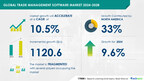
Trade Management Software Market size is set to grow by USD 1.12 billion from 2024-2028, Growing need for improved supply chain efficiency to boost the market growth, Technavio
Published
2 years agoon
By
NEW YORK, July 18, 2024 /PRNewswire/ –The global trade management software market size is estimated to grow by USD 1.12 billion from 2024-2028, according to Technavio. The market is estimated to grow at a CAGR of over 10.5% during the forecast period. Growing need for improved supply chain efficiency is driving market growth, with a trend towards incremental functionality improvements in gtm software. However, changing regulations and business conditions poses a challenge. Key market players include Acme Trade Group Pty Ltd., AEB SE, Aptean Group of Companies, Bamboo Rose LLC, Cognizant Technology Solutions Corp., Descartes Systems Group Inc., E2open Parent Holdings Inc., Expeditors International of Washington Inc., Koch Industries Inc., Livingston International Inc., MIC Datenverarbeitung GmbH, Noatum Holdings SLU, OCR Services Inc., Oracle Corp., QAD Inc., S and P Global Inc., SAP SE, Thomson Reuters Corp., Trademo Technologies Inc., and United Parcel Service Inc..
Get a detailed analysis on regions, market segments, customer landscape, and companies – Click for the snapshot of this report
Forecast period
2024-2028
Base Year
2023
Historic Data
2018 – 2022
Segment Covered
Deployment (Cloud-based and On premise), End-
user (Retail and consumer goods, IT and telecom,
Automotive, Transportation and logistics, and
Others), and Geography (North America, Europe,
APAC, South America, and Middle East and
Africa)
Region Covered
North America, Europe, APAC, South America,
and Middle East and Africa
Key companies profiled
Acme Trade Group Pty Ltd., AEB SE, Aptean
Group of Companies, Bamboo Rose LLC,
Cognizant Technology Solutions Corp., Descartes
Systems Group Inc., E2open Parent Holdings
Inc., Expeditors International of Washington Inc.,
Koch Industries Inc., Livingston International Inc.,
MIC Datenverarbeitung GmbH, Noatum Holdings
SLU, OCR Services Inc., Oracle Corp., QAD Inc.,
S and P Global Inc., SAP SE, Thomson Reuters
Corp., Trademo Technologies Inc., and United
Parcel Service Inc.
Key Market Trends Fueling Growth
With the rise in global trade and e-commerce, trade management software has gained significant importance for businesses. The increasing complexity of international regulations necessitates continuous updates in these software solutions. A US company exporting goods from China to the UK, for instance, must first bring the products back to the US before shipping them to the UK. Trade management software vendors are addressing this need by integrating features that facilitate global shipping at minimal costs. The ongoing globalization trend and e-commerce boom will fuel the growth of the trade management software market during the forecast period.
The Trade Management Software market is experiencing significant growth, particularly in sectors like Aerospace and Defense and Aerospace Development, where complex processes and compliance risks are high. AI and automation are driving innovation, enabling real-time cargo tracking and efficient supply chain management. Cloud adoption and deployment of cloud-based technologies, including SaaS and cloud-based software, are transforming international commerce, making it more accessible to firms of all sizes. Emerging technologies like AI and digitalization are disrupting traditional trade methods, addressing inefficiencies in import-export activities and streamlining cross-border transactions. Industries like Consumer Goods, Energy, and Defense are embracing GTM software to optimize finances, manage customs filings, and meet delivery deadlines. However, impediments like import-export legislation and infrastructure challenges persist, requiring consulting expertise to navigate complexities and ensure compliance. Global trade volumes continue to grow, driven by e-commerce and free trade zones, leading to increased competition and the need for efficient and cost-effective solutions. Developing countries are adopting these technologies to participate in international commerce, leveling the playing field and driving digitalization and disruption across industries.
Discover 360° analysis of this market. For complete information, schedule your consultation- Book Here!
Market Challenges
Trade management software is essential for businesses dealing with international shipments, as these transactions involve multiple languages, time zones, currencies, and modes of transport. Each shipment may involve numerous parties located in different countries, each subject to unique trade laws. Providers of trade management software must ensure their platforms remain updated with the latest regulatory content to enable businesses to review and act accordingly. Additionally, each trading partner may have distinct functional requirements, necessitating a flexible solution that can accommodate various combinations. To facilitate seamless integration, software providers must offer easy-to-use application programming interfaces, minimizing the need for extensive IT consulting and professional services. However, the challenge of adapting to changing regulations and business conditions may impact the growth of the global trade management software market.Trade Management Software: Overcoming Challenges in Organizations’ Trade Businesses Trade management software has become essential for businesses in trade-related sectors to enhance supply chain efficiency, visibility, and compliance. Primary drivers include predictive analysis, real-time insight, and technology adoption. However, organizations face challenges in implementing these systems. Small & Medium Enterprises (SMEs) and retailers grapple with resource utilization and affordability. Trade compliance, restricted party screening, and trade-related regulations add complexity. Traditional techniques like manual processes and spreadsheets hinder progress. The transportation & logistics industry, with its focus on shipping and transportation management systems, faces challenges in supply chain visibility and real-time tracking. Social distancing measures and worldwide shipping costs further complicate matters. Traders and trading activities require systems that offer accurate, timely information for effective decision-making. Research and development in software solutions continue to address these challenges, providing vertical solutions for various industries. Training and technology adoption are key to successful implementation. In conclusion, trade management software offers significant benefits, but organizations must navigate challenges to fully realize its potential. By addressing these issues, businesses can streamline their operations, increase supply chain efficiency, and stay competitive in the global market.
For more insights on driver and challenges – Download a Sample Report
Segment Overview
This trade management software market report extensively covers market segmentation by
Deployment 1.1 Cloud-based1.2 On premiseEnd-user 2.1 Retail and consumer goods2.2 IT and telecom2.3 Automotive2.4 Transportation and logistics2.5 OthersGeography 3.1 North America3.2 Europe3.3 APAC3.4 South America3.5 Middle East and Africa
1.1 Cloud-based- Trade management software is a modern solution for businesses seeking to replace manual processes and traditional enterprise resource planning systems. This software comes with built-in trade management features or internally developed solutions. The cloud-based deployment model is popular among enterprises aiming to reduce IT infrastructure costs, enhance supply chain flexibility, and improve efficiency. For instance, Oracle Corp.’s expansion of their transportation and trade management suite in Oracle Fusion Cloud SCM in February 2024 aimed to help businesses manage logistics networks and handle supply chain disruptions. Cloud-based trade management software is scalable, manages all assets centrally, and streamlines workflow. It can be deployed quickly and requires minimal investment, making it ideal for businesses requiring real-time access to updated information. Advanced enterprises, especially those with complex trade operations, benefit from cloud-based solutions to maintain updated product codes and classifications, share information with partners, and communicate effectively with customs authorities and trading partners. The global trade management software market is expected to grow due to these advantages.
For more information on market segmentation with geographical analysis including forecast (2024-2028) and historic data (2018 – 2022) – Download a Sample Report
Learn and explore more about Technavio’s in-depth research reports
The global trade finance market facilitates international trade by providing financing solutions like letters of credit and trade credit insurance. It enables businesses to mitigate risks and secure payment for goods and services across borders, fostering economic growth and trade relationships globally.
The global algorithmic trading market employs automated systems to execute high-speed trades based on pre-defined criteria. It enhances market efficiency by reducing human error and reaction times, thereby increasing liquidity and trade volumes across financial markets worldwide.
Research Analysis
Trade management software is a vital tool for businesses engaged in international trade, facilitating the execution and optimization of import-export activities. This software assists organizations in managing trade compliance, ensuring adherence to import-export legislation, and mitigating compliance risks. Key features include custom filings, restricted party screening, free trade zone management, and shipment tracking. Additionally, trade management software offers components like vendor management, import/export management, invoice management, services, consulting, implementation, deployment, and on-cloud solutions to streamline the entire supply chain process. By automating and integrating various aspects of international trade, businesses can improve efficiency, reduce errors, and enhance overall competitiveness.
Market Research Overview
The Trade Management Software market is experiencing significant growth due to the digitalization of international commerce and the increasing complexity of import-export activities. The market is driven by various factors including the adoption of cloud-based technologies, automation, AI, and ML in supply chain management. Compliance risk, cross-border transactions, and customs filings are major impediments in global trade, leading firms to invest in efficient supply chain solutions. The impact of emerging technologies such as AI and automation on trade management is substantial, with predictive analysis and real-time insight enabling firms to optimize resource utilization and reduce lead times. The aerospace and defense industry, energy sector, IT & telecom industry, and consumer goods are major end-users of trade management software. However, impediments such as limited bandwidth, lack of access in developing countries, and legal policies pose challenges to the market. The implementation of GTM software requires careful consideration of on-cloud or on-premise deployment, infrastructure, and system compatibility. The market is expected to continue growing, driven by the need for supply chain efficiency, supply chain visibility, and compliance with international trade legislation. The market is also impacted by disruptions such as social distancing measures and e-commerce growth, which require organizations to adapt quickly to changing market conditions. The market for trade management software is expected to continue to evolve, with a focus on automating complex processes, improving compliance risk management, and increasing supply chain visibility.
Table of Contents:
1 Executive Summary
2 Market Landscape
3 Market Sizing
4 Historic Market Size
5 Five Forces Analysis
6 Market Segmentation
DeploymentCloud-basedOn PremiseEnd-userRetail And Consumer GoodsIT And TelecomAutomotiveTransportation And LogisticsOthersGeographyNorth AmericaEuropeAPACSouth AmericaMiddle East And Africa
7 Customer Landscape
8 Geographic Landscape
9 Drivers, Challenges, and Trends
10 Company Landscape
11 Company Analysis
12 Appendix
About Technavio
Technavio is a leading global technology research and advisory company. Their research and analysis focuses on emerging market trends and provides actionable insights to help businesses identify market opportunities and develop effective strategies to optimize their market positions.
With over 500 specialized analysts, Technavio’s report library consists of more than 17,000 reports and counting, covering 800 technologies, spanning across 50 countries. Their client base consists of enterprises of all sizes, including more than 100 Fortune 500 companies. This growing client base relies on Technavio’s comprehensive coverage, extensive research, and actionable market insights to identify opportunities in existing and potential markets and assess their competitive positions within changing market scenarios.
Contacts
Technavio Research
Jesse Maida
Media & Marketing Executive
US: +1 844 364 1100
UK: +44 203 893 3200
Email: media@technavio.com
Website: www.technavio.com/
View original content to download multimedia:https://www.prnewswire.com/news-releases/trade-management-software-market-size-is-set-to-grow-by-usd-1-12-billion-from-2024-2028–growing-need-for-improved-supply-chain-efficiency-to-boost-the-market-growth-technavio-302199241.html
SOURCE Technavio
You may like
Technology
Verda and Compal Announce Partnership to Accelerate AI Infrastructure Development and Expansion
Published
1 hour agoon
May 7, 2026By
TAIPEI, May 7, 2026 /PRNewswire/ — Compal Electronics (Compal; TWSE: 2324) and Verda, the Helsinki-headquartered European AI cloud provider, purpose-built for the demands of frontier model training and agentic inference, today announced a strategic partnership under which Compal will supply next-generation GPU server systems to accelerate the build-out of its next-generation AI infrastructure across Europe and the APAC region.
Under this collaboration, Compal will supply high-density, liquid-cooled AI server platforms. The platforms are engineered for the workloads defining the next wave of AI: agentic applications that process extensive context and operate at high concurrency, while maintaining the thermal efficiency required for Verda’s sustainable cloud deployments.
The partnership underlines the growing global traction for Verda’s services as well as Compal’s growing role as an infrastructure partner to neocloud operators addressing rising demand for localized AI compute. As enterprises and governments increasingly prioritize data residency, security, and regulatory compliance, neocloud providers like Verda are emerging as key enablers of Sovereign AI strategies.
“Verda’s platform reflects where AI infrastructure demand is heading—toward regional, high-performance, and energy-efficient deployments,” said Alan Chang, Vice President, Infrastructure Solutions Business Group (ISBG) at Compal. “This collaboration demonstrates our ability to deliver advanced AI systems at scale for customers building the next generation of AI clouds.”
“Our mission is to build the next generation of cloud infrastructure for AI and empower pioneering teams across the globe. Working with Compal helps us deliver with world-class quality and reliability, and is an important step in our plans to expand our presence in the APAC region. We’re excited about what’s ahead,” said Jorge Santos, Chief Operating Officer at Verda.
Compal brings deep engineering expertise in accelerated computing, advanced thermal design, and system integration, enabling customers to deploy AI infrastructure efficiently while managing power density and operational complexity. To support global AI deployments, Compal continues to expand its manufacturing footprint across Taiwan, Vietnam, and the United States, strengthening supply-chain resilience and aligning production capacity with regional customer requirements.
About Compal
Established in 1984, Compal has grown into a leading global manufacturer of computers and smart devices, partnering with top-tier brands worldwide. Compal was recognized by CommonWealth Magazine as one of Taiwan’s top 7 manufacturers and has consistently ranked among the Forbes Global 2000 companies. Compal has actively expanded into new growth areas, including cloud servers, automotive electronics, smart medical and healthcare, and advanced communication solutions. Headquartered in Taipei, Taiwan, Compal operates design and production facilities in the United States, Taiwan, China, Vietnam, Mexico, Brazil, and Poland. Learn more at https://www.compal.com
About Verda
Verda (formerly DataCrunch) is a European AI cloud provider operating high-density GPU data centers across Europe, delivering on-demand compute for training and inference at scale. Headquartered in Finland, Verda runs infrastructure powered by renewable energy and serves frontier AI labs, research teams and startups building the next generation of models. Learn more at https://verda.com
View original content to download multimedia:https://www.prnewswire.com/news-releases/verda-and-compal-announce-partnership-to-accelerate-ai-infrastructure-development-and-expansion-302765319.html
SOURCE COMPAL ELECTRONICS,INC.
Technology
Mastercard and Yellow Card Partner to Unlock Stablecoin Payment Innovation Across EEMEA
Published
1 hour agoon
May 7, 2026By
The two companies will explore innovative real-world use cases for stablecoin-enabled payments including strengthening digital asset payment security with Mastercard Crypto Credential
JOHANNESBURG and NEW YORK, May 7, 2026 /PRNewswire/ — Mastercard and Yellow Card, a licensed stablecoin infrastructure provider operating primarily across Africa, with additional capabilities in select emerging markets, have announced a strategic partnership to accelerate stablecoin-enabled payment innovation across Eastern Europe, the Middle East, and Africa (EEMEA), with plans for global expansion.
The collaboration will explore breakthrough applications for stablecoin payments across four key verticals: cross-border remittances, B2B settlement, digital loyalty ecosystems, and treasury management. Both companies will work with banks, financial institutions, and regulatory bodies to pilot secure, compliant stablecoin solutions that enhance payment efficiency and reduce costs for businesses and consumers.
The alliance will establish joint working groups to identify high-impact use cases, and create interoperable solutions for banks and financial institutions in the Mastercard network that bridge traditional finance with blockchain-powered payments. Initial focus markets include Ghana, Kenya, Nigeria, South Africa, and the United Arab Emirates.
“Emerging markets represent the greatest opportunity for payment innovation, but success requires deep local expertise and regulatory navigation,” said Chris Maurice, CEO of Yellow Card. “We bring years of experience building compliant stablecoin infrastructure where traditional banking falls short. Mastercard’s global network amplifies these capabilities, allowing us to serve businesses and consumers who need better, more affordable ways to move money across borders,” added Mr. Maurice.
“Stablecoins are an exciting and useful option for some payments, and we look forward to working on additional use cases with Yellow Card, while continuing to leverage Mastercard’s expertise to make stablecoins seamless and secure. Together we look forward to taking digital finance into a new sphere, unlocking new efficiencies in cross-border trade, business-to-business settlements, and digital asset security, to generate a wide-ranging positive impact across the financial ecosystem,” said Mete Güney, Executive Vice President, Market Development, EEMEA, Mastercard.
The partnership builds on Mastercard’s expanding blockchain ecosystem and Yellow Card’s proven track record as one of Africa’s leading licensed stablecoin operators, reinforcing both companies’ commitment to utility-focused digital asset innovation. As stablecoins gain regulatory clarity and institutional adoption across emerging markets, the collaboration positions both partners at the forefront of secure, scalable digital payment solutions that bridge traditional finance with blockchain technology.
About Mastercard
Mastercard powers economies and empowers people in 200+ countries and territories worldwide. Together with our customers, we’re building a resilient economy where everyone can prosper. We support a wide range of digital payments choices, making transactions secure, simple, smart and accessible. Our technology and innovation, partnerships and networks combine to deliver a unique set of products and services that help people, businesses and governments realize their greatest potential.
About Yellow Card
Yellow Card is one of the largest licensed stablecoin-based infrastructure providers with capabilities in 20 African countries and major emerging markets. From Stablecoin payment infrastructure to fiat settlement rails, wallet services, and custom local Stablecoin issuance, Yellow Card provides the complete à-la-carte infrastructure businesses need to manage Stablecoins, payments, and operations across emerging markets.
Photo: https://mma.prnewswire.com/media/2973777/Yellow_Card_x_Mastercard.jpg
Logo: https://mma.prnewswire.com/media/2973776/Yellow_Card_Logo.jpg
View original content to download multimedia:https://www.prnewswire.com/news-releases/mastercard-and-yellow-card-partner-to-unlock-stablecoin-payment-innovation-across-eemea-302765320.html
SOURCE Yellow Card
Technology
Chunghwa Telecom Reports Un-Audited Consolidated Operating Results for the First Quarter of 2026
Published
1 hour agoon
May 7, 2026By
TAIPEI, May 7, 2026 /PRNewswire/ — Chunghwa Telecom Co., Ltd. (TAIEX: 2412, NYSE: CHT) (“Chunghwa” or “the Company”) today reported its un-audited operating results for the first quarter of 2026. All figures were prepared in accordance with Taiwan-International Financial Reporting Standards (“T-IFRSs”) on a consolidated basis.
(Comparisons throughout the press release, unless otherwise stated, are made with regard to the prior year period.)
First Quarter 2026 Financial Highlights
Total revenue increased by 7.5% to NT$ 59.99 billion.Consumer Business Group revenue increased by 6.2% to NT$ 36.73 billion.Enterprise Business Group revenue increased by 8.5% to NT$ 18.81 billion.International Business Group revenue increased by 10.7% to NT$ 2.70 billion.Total operating costs and expenses increased by 8.3% to NT$ 46.89 billion.Operating income increased by 4.6% to NT$ 13.10 billion.EBITDA increased by 3.4% to NT$ 23.30 billion.Net income attributable to stockholders of the parent increased by 3.2% to NT$ 10.11 billion.Basic earnings per share (EPS) was NT$1.30.Total revenue, operating income, net income attributable to stockholders of the parent, and EPS all exceeded the high-end target of quarterly guidance.
“We began 2026 with a strong start, delivering financial performance across revenue, operating income, net income attributable to stockholders of the parent and EPS all exceeding our quarterly forecasts. Moreover, revenue reached a first-quarter record, the highest since 2012. These results reflect the continued strength of our business momentum,” said Mr. Chih‑Cheng Chien, Chairman and CEO of Chunghwa Telecom.
“This performance was primarily driven by robust growth in our ICT business, where both recurring revenue and order intake reached new highs. Our ICT revenue grew significantly year over year, supported by strong demand across key areas such as IDC, cloud, and AIoT services, underscoring our success in capturing emerging digital and AI-driven opportunities,” said Mr. Rong-Shy Lin, President of Chunghwa Telecom.
“Our mobile and broadband businesses also continued to deliver stable growth, benefiting from escalating 5G penetration and ongoing improvements in ARPU. Notably, our four value-added services all exceeded their remarkable million-subscriber thresholds, demonstrating our success in delivering value to users. These results reflect not only the resilience of our core operations, but also the effectiveness of our long-term strategy to balance stable cash-generating businesses with high-growth digital initiatives,” Mr. Lin continued.
“We are committed to advancing our 6G transition and AI-powered future. Our phased 5G standalone deployment is strengthening networking founding by targeting services in select verticals and high-traffic commercial districts for the 6G era,” Mr. Lin added. “Meanwhile, by building ‘CHT AI Factory platform’ to integrate our DeepFlow solutions, compute power, AI models and agents, we offer AI-enabled applications to customers and accelerate AI-related revenue growth in 2026. Alongside our technology advancements, ESG remains a core pillar of our long‑term strategy. We are confident in our ability to achieve sustainable growth and create long‑term value for our shareholders.”
Revenue
Chunghwa Telecom’s total revenues for the first quarter of 2026 increased by 7.5% to NT$ 59.99 billion.
Consumer Business Group’s revenue for the first quarter of 2026 increased by 6.2% Year-over-year to NT$ 36.73 billion and income before tax increased by 5.3% year-over-year, supported by steady increases in core telecom business and strong iPhone demands.
Enterprise Business Group’s revenue for the first quarter of 2026 increased 8.5% year-over-year to NT$ 18.81 billion, driven by robust ICT growth, while pre-tax profit declined 2.7% due to fixed voice service decrease. Notably, ICT order intake hit a quarterly record-high, led by network resilience, anti-fraud initiatives, and large projects for national fiscal and public surveillance systems, underpinning future growth momentum.
International Business Group’s revenue for the first quarter of 2026 increased by 10.7% to NT$ 2.70 billion and income before tax increased by 1.6% year-over-year, driven by rising demand for ICT services and stronger roaming revenue. In addition, we expanded investment in the AUG-East submarine cable this quarter, boosting Taiwan to Japan and Taiwan to Singapore bandwidth to 18+ Tbps, supporting international business growth.
Operating Costs and Expenses
Total operating costs and expenses for the first quarter of 2026 increased by 8.3% to NT$ 46.89 billion, mainly due to higher costs associated with growth in sales and ICT project revenue, as well as an increase in personnel expenses.
Operating Income and Net Income
Operating income for the first quarter of 2026 increased by 4.6% to NT$ 13.10 billion. The operating margin was 21.75%, as compared to 22.44% in the same period of 2025. Net income attributable to stockholders of the parent increased by 3.2% to NT$ 10.11 billion. Basic earnings per share was NT$1.30.
Cash Flow and EBITDA
Cash flow from operating activities, as of March 31st, 2026, decreased by 13.6% year over year to NT$ 11.19 billion.
Cash and cash equivalents, as of March 31st, 2026, increased by 20.8% to NT$ 35.10 billion as compared to that as of March 31st, 2025.
EBITDA for the first quarter of 2026 was NT$ 23.30 billion, increased by 3.4% year over year. EBITDA margin was 38.85%, as compared to 40.37% in the same period of 2025.
Business Highlights
Mobile
As of March 31st, 2026, Chunghwa Telecom had 13.34 million mobile subscribers, representing a 1.7% year-over-year increase. In the first quarter, total mobile service revenue increased by 4.4% to NT$ 17.70 billion, while mobile post-paid ARPU excluding IoT SIMs grew 3.6% year over year to NT$ 573.
Fixed Broadband/HiNet
As of March 31st, 2026, the number of broadband subscribers slightly increased by 0.5% to 4.45 million. The number of HiNet broadband subscribers increased by 1.4% to 3.80 million. In the first quarter, total fixed broadband revenue grew 3.0% year over year to NT$ 11.81 billion, while ARPU increased 2.5% to NT$ 818.
Fixed line
As of March 31st, 2026, the number of fixed-line subscribers was 8.57 million.
Financial Statements
Financial statements and additional operational data can be found on the Company’s website at http://www.cht.com.tw/en/home/cht/investors/financials/quarterly-earnings
NOTE CONCERNING FORWARD-LOOKING STATEMENTS
This press release contains forward-looking statements. These statements constitute “forward-looking” statements within the meaning of Section 27A of the Securities Act of 1933, as amended, and Section 21E of the Securities Exchange Act of 1934, as amended, and as defined in the U.S. Private Securities Litigation Reform Act of 1995. These forward-looking statements can be identified by terminology such as “will,” “expects,” “anticipates,” “future,” “intends,” “plans,” “believes,” “estimates” and similar statements. Statements that are not historical facts, including statements about Chunghwa’s beliefs and expectations, are forward-looking statements. Forward-looking statements involve inherent risks and uncertainties that could cause actual results to differ materially from the forward-looking statements. A number of important factors could cause actual results to differ materially from those contained in any forward-looking statement. Investors are cautioned that actual events and results could differ materially from those statements as a result of a number of factors including, but not limited to the risks outlined in Chunghwa’s filings with the U.S. Securities and Exchange Commission on Forms F-1, F-3, 6-K and 20-F, in each case as amended. The forward-looking statements in this press release reflect the current belief of Chunghwa as of the date of this press release and Chunghwa undertakes no obligation to update these forward-looking statements for events or circumstances that occur subsequent to such date, except as required under applicable law.
This press release is not an offer of securities for sale in the United States. Securities may not be offered or sold in the United States absent registration or an exemption from registration. Any public offering of securities to be made in the United States will be made by means of a prospectus that may be obtained from the issuer or selling security holder and that will contain detailed information about the company and management, as well as financial statements.
NON-GAAP FINANCIAL MEASURES
To supplement the Company’s consolidated financial statements presented in accordance with International Financial Reporting Standards pursuant to the requirements of the Financial Supervisory Commission, or T-IFRSs, Chunghwa Telecom also provides EBITDA, which is a “non-GAAP financial measure”. EBITDA is defined as consolidated net income (loss) excluding (i) depreciation and amortization, (ii) total net comprehensive financing cost (which is comprised of net interest expense, exchange gain or loss, monetary position gain or loss and other financing costs and derivative transactions), (iii) other income, net, (iv) income tax, (v) (income) loss from discontinued operations.
In managing the Company’s business, Chunghwa Telecom relies on EBITDA as a means of assessing its operating performance because it excludes the effect of (i) depreciation and amortization, which represents a non-cash charge to earnings, (ii) certain financing costs, which are significantly affected by external factors, including interest rates, foreign currency exchange rates and inflation rates, which have little or no bearing on our operating performance, (iii) income tax (iv) other expenses or income not related to the operation of the business.
CAUTIONS ON USE OF NON-GAAP FINANCIAL MEASURES
In addition to the consolidated financial results prepared under T-IFRSs, Chunghwa Telecom also provide non-GAAP financial measures, including “EBITDA”. The Company believes that the non-GAAP financial measures provide investors with another method for assessing its operating results in a manner that is focused on the performance of its ongoing operations.
Chunghwa Telecom’s management believes investors will benefit from greater transparency in referring to these non-GAAP financial measures when assessing the Company’s operating results, as well as when forecasting and analyzing future periods. However, the Company recognizes that:
these non-GAAP financial measures are limited in their usefulness and should be considered only as a supplement to the Company’s T-IFRSs financial measures;these non-GAAP financial measures should not be considered in isolation from, or as a substitute for, the Company’s T-IFRSs financial measures;these non-GAAP financial measures should not be considered to be superior to the Company’s T-IFRSs financial measures; andthese non-GAAP financial measures were not prepared in accordance with T-IFRSs and investors should not assume that the non-GAAP financial measures presented in this earnings release were prepared under a comprehensive set of rules or principle.
Further, these non-GAAP financial measures may be unique to Chunghwa Telecom, as they may be different from non-GAAP financial measures used by other companies. As such, this presentation of non-GAAP financial measures may not enhance the comparability of the Company’s results to the results of other companies. Readers are cautioned not to view non-GAAP results as a substitute for results under T-IFRSs, or as being comparable to results reported or forecasted by other companies.
About Chunghwa Telecom
Chunghwa Telecom (TAIEX 2412, NYSE: CHT) (“Chunghwa” or “the Company”) is Taiwan’s largest integrated telecommunications services company that provides fixed-line, mobile, broadband, and internet services. The Company also provides information and communication technology services to corporate customers with its big data, information security, cloud computing and IDC capabilities, and is expanding its business into innovative technology services such as IoT, AI, etc. Chunghwa has been actively and continuously implemented environmental, social and governance (ESG) initiatives with the goal to achieve sustainability and has won numerous international and domestic awards and recognitions for its ESG commitments and best practices. For more information, please visit our website at www.cht.com.tw
Contact: Angela Tsai
Phone: +886 2 2344 5488
Email: chtir@cht.com.tw
View original content:https://www.prnewswire.com/news-releases/chunghwa-telecom-reports-un-audited-consolidated-operating-results-for-the-first-quarter-of-2026-302765329.html
SOURCE Chunghwa Telecom Co., Ltd.
Bithumb enters Vietnam crypto license race with SSI Digital deal
Luffa unveils major brand upgrade: Repositioned as AI × Web3 Super Connector
Verda and Compal Announce Partnership to Accelerate AI Infrastructure Development and Expansion
Send Rakhi to UK swiftly with UK Gifts Portal
Whiteboard Series with NEAR | Ep: 45 Joel Thorstensson from ceramic.network
New Gooseneck Omni Antennas Offer Enhanced Signals in a Durable Package
Why You Should Build on #NEAR – Co-founder Illia Polosukhin at CV Labs
Whiteboard Series with NEAR | Ep: 45 Joel Thorstensson from ceramic.network
NEAR End of Year Town Hall 2021: The Open Web World, MetaBUILD 2 Hackathon and 2021 recap
Trending
-
Technology5 days agoFirst Online Conversations Are Changing in 2026, According to New Secretmeet Research
-
Technology5 days agoPOVADDO AND PROLEGIS ANNOUNCE STRATEGIC PARTNERSHIP TO EXPAND ACCESS TO PUBLIC POLICY PROFESSIONALS FOR OPINION RESEARCH
-
Technology5 days agoPOVADDO AND PROLEGIS ANNOUNCE STRATEGIC PARTNERSHIP TO EXPAND ACCESS TO PUBLIC POLICY PROFESSIONALS FOR OPINION RESEARCH
-
Technology4 days agoCupidFeel Insights Show How Shared Interests Affect Initial Connection Outcomes
-
Coin Market5 days ago
Riot posts $167M in Q1 revenue as data center arm pulls in $33M in first quarter
-
Coin Market4 days agoNew York forces Uphold to pay $5M over fraudulent crypto investment scheme
-
Coin Market5 days ago
Bitcoin mining stocks climb in 2026 as BTC lags behind
-
Coin Market4 days agoAmericans distrust crypto, AI as industry super PACs flood midterms, poll finds