Connect with us

Technology

Data Center Market Size In China is set to grow by USD 181.33 billion from 2024-2028, Rising demand for hyper-converged data centers boost the market, Technavio

Published

on

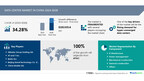
NEW YORK, July 24, 2024 /PRNewswire/ — The data center market size in China is estimated to grow by USD 181.33 billion from 2024-2028, according to Technavio. The market is estimated to grow at a CAGR of 34.28% during the forecast period. Rising demand for hyper-converged data centers is driving market growth, with a trend towards use of server disaggregation to improve utilization rates. However, growing focus on consolidating data centers poses a challenge. Key market players include Alibaba Group Holding Ltd., AT and T Inc., Baidu Inc., Beijing Sinnet technology Co. Ltd., China Mobile Ltd., China Telecom Corp. Ltd., China Unicom Hong Kong Ltd., CICC Data Group Co. Ltd., Digital Realty Trust Inc., Eaton Corp. Plc, Equinix Inc., Fujitsu Ltd., GDS Holdings Ltd., Global Switch Ltd., Shanghai Dataport Co. Ltd., Telstra Corp. Ltd., Tencent Holdings Ltd., VNET Group Inc., Wangsu Science and Technology Co. Ltd., and Zenlayer Inc..

Get a detailed analysis on regions, market segments, customer landscape, and companies- View the snapshot of this report

Data Center Market In China Scope

Report Coverage

Details

Base year

2023

Historic period

2018 – 2022

Forecast period

2024-2028

Growth momentum & CAGR

Accelerate at a CAGR of 34.28%

Market growth 2024-2028

USD 181335.6 million

Market structure

Fragmented

YoY growth 2022-2023 (%)

25.64

Regional analysis

China

Performing market contribution

APAC at 100%

Key countries

China

Key companies profiled

Alibaba Group Holding Ltd., AT and T Inc., Baidu Inc., Beijing Sinnet technology Co. Ltd., China Mobile Ltd., China Telecom Corp. Ltd., China Unicom Hong Kong Ltd., CICC Data Group Co. Ltd., Digital Realty Trust Inc., Eaton Corp. Plc, Equinix Inc., Fujitsu Ltd., GDS Holdings Ltd., Global Switch Ltd., Shanghai Dataport Co. Ltd., Telstra Corp. Ltd., Tencent Holdings Ltd., VNET Group Inc., Wangsu Science and Technology Co. Ltd., and Zenlayer Inc.

Market Driver

Data centers in China are facing the challenge of increasing power consumption due to the growing adoption of cloud computing, AI, machine learning, and IoT workloads. To address this issue, server disaggregation is gaining popularity as a solution. This approach logically separates server components into memory and compute subsystems, increasing server efficiency and reducing power consumption. With server disaggregation, workloads can utilize exactly the resources they need, preventing the need for replacing entire servers for just one component. Vendors are introducing composable server infrastructure solutions to help data centers in China allocate resources dynamically and efficiently, driving market growth during the forecast period.

The Data Center market in China is witnessing significant growth due to increasing digital services and data storage needs. Regulatory requirements and expanding user bases drive businesses to prioritize scalability and efficiency in their infrastructure. This includes increasing storage capacity, computing power, and adopting green data centers with renewable energy sources like solar, wind, and hydroelectric electricity. Energy-efficient solutions and the rollout of 5G networks are also key trends. Businesses, including large enterprises and cloud service providers, are investing in data centers for hyper scalability and modern processes. The market consists of hardware and software segments, with enterprise network equipment, virtualization, and professional services playing crucial roles. Traditional data centers are being replaced by modularized, compact, and portable options, which offer cost savings and flexibility. Despite the high initial cost, data center operators are turning to hyperscale and hyper-dense server racks for advanced technologies like Artificial Intelligence and Machine Learning.

Discover 360° analysis of this market. For complete information, schedule your consultation – Book Here!

Market Challenges

Infrastructure-as-a-Service (IaaS) is a cloud computing concept that enables organizations to utilize virtualized computing resources over the Internet. The adoption of IaaS has resulted in data center consolidation, which involves reducing data center sizes or merging facilities. This consolidation leads to cost savings as organizations shift to common cloud platforms. However, the transition to virtualized storage requires careful planning for efficiency and capacity. Virtualization increases I/O streams through resource pooling, but efficiency can be compromised due to the high IOPS. Data center consolidation is a complex process requiring expertise and time, and carries risks. Despite these challenges, the focus on consolidation is expected to negatively impact the growth of the data center market in China during the forecast period.The Data Center market in China is experiencing significant growth due to the increasing demand for digital data from organizations, driven by remote working and the internet. Hyperscale data centers and cloud service providers lead this trend, requiring high server rack density and advanced technologies like Artificial Intelligence and Machine Learning. Traditional data centers face challenges in hyper scalability, sustainability, and automation. Modular data centers offer a solution, but small enterprises may find the upfront costs prohibitive. Technology providers are focusing on energy efficiency and green data centers to address concerns over electricity consumption and sustainability. The Department of Energy is pushing for modern business processes and asset performance management to optimize data center capacity and functionality. Information security is a top concern, with software testing and enterprise engineering solutions essential for maintaining operating conditions. Global traffic and internet usage continue to surge, driving the need for cloud computing and edge computing. Energy consumption remains a challenge, with electricity costs a significant expense. Organizations must balance functionality and cost-effectiveness while ensuring data security. Overall, the Data Center market in China presents both opportunities and challenges for businesses and technology providers alike.

For more insights on driver and challenges – Request a sample report!

Segment Overview

This data center market in China report extensively covers market segmentation by

Component1.1 IT infrastructure1.2 Power management1.3 Mechanical construction1.4 General construction1.5 OthersEnd-user2.1 BFSI2.2 Telecom and IT2.3 Government2.4 Energy and utilities2.5 OthersGeography3.1 APAC

1.1 IT infrastructure- The Data Center market in China continues to grow, with significant investments from domestic and international companies. In 2020, the market size was valued at over USD30 billion and is projected to reach USD60 billion by 2025. Key drivers include increasing digitalization, cloud adoption, and data protection regulations. Companies like Alibaba, Tencent, and Huawei are major players, expanding their data center capacities to meet growing demand. China’s favorable business environment and large population make it an attractive market for data center investments.

For more information on market segmentation with geographical analysis including forecast (2024-2028) and historic data (2017-2021) – Download a Sample Report

Learn and explore more about Technavio’s in-depth research reports

The global Data Center Colocation and Managed Hosting Services Market is experiencing significant growth, driven by increasing demand for scalable, cost-effective IT solutions. Parallelly, the global Containerized and Modular Data Center Market is expanding due to rising adoption of flexible and efficient data center solutions. Additionally, the global Data Center Infrastructure Management (DCIM) Solutions Market is thriving as organizations seek enhanced visibility and control over data center operations. These markets are pivotal in supporting the evolving needs of businesses in a rapidly digitizing world.

Research Analysis

The Data Center Market in China is experiencing significant growth due to the increasing demand for digital services and expanding user base. Businesses require more storage capacity and efficient infrastructure to support modern processes and advanced technologies like Artificial Intelligence and Machine Learning. Regulatory requirements are also driving the need for data centers that prioritize sustainability and energy efficiency. Renewable energy sources, such as solar, wind, and hydroelectric electricity, are being integrated into data centers to reduce carbon emissions. Hyper scalability and automation are essential for business scalability, while energy-efficient solutions and 5G network enable faster data transmission speeds and edge computing services. Micro data centers and cloud services are also gaining popularity among large enterprises for their cost-effectiveness and flexibility. Overall, the Data Center Market in China is a dynamic and innovative space, driven by the demands of the digital economy and the pursuit of sustainability.

Market Research Overview

The Data Center Market in China is experiencing significant growth due to the expanding user base and increasing digital services adoption. Businesses require more data storage needs to support modern business processes, leading to a surge in demand for efficient infrastructure with high computing power. Regulatory requirements for data security and sustainability are driving the adoption of green data centers, which utilize renewable energy sources like solar, wind, and hydroelectric electricity. Energy-efficient solutions are essential for data center operators to reduce their carbon footprint and lower operating costs. The market comprises various segments, including hardware, software, and professional services. The hardware segment includes server racks, enterprise network equipment, and virtualization solutions. The software segment offers cloud services, data transmission services, and edge computing services. Modularized data centers, micro data centers, and portable data centers are gaining popularity for their scalability and flexibility. Despite the high initial cost, large enterprises are investing in hyperscale data centers for hyper scalability and advanced technologies like Artificial Intelligence and Machine Learning. Small enterprises and cloud service providers are also adopting data centers to support remote working and increasing internet usage. The market is expected to continue growing, driven by the global traffic and digital data generated by organizations. The Department of Energy is also promoting energy efficiency and sustainability in data centers to address concerns over electricity consumption and functionality.

Table of Contents:

1 Executive Summary
2 Market Landscape
3 Market Sizing
4 Historic Market Size
5 Five Forces Analysis
6 Market Segmentation

ComponentIT InfrastructurePower ManagementMechanical ConstructionGeneral ConstructionOthersEnd-userBFSITelecom And ITGovernmentEnergy And UtilitiesOthersGeographyAPAC

7 Customer Landscape
8 Geographic Landscape
9 Drivers, Challenges, and Trends
10 Company Landscape
11 Company Analysis
12 Appendix

About Technavio

Technavio is a leading global technology research and advisory company. Their research and analysis focuses on emerging market trends and provides actionable insights to help businesses identify market opportunities and develop effective strategies to optimize their market positions.

With over 500 specialized analysts, Technavio’s report library consists of more than 17,000 reports and counting, covering 800 technologies, spanning across 50 countries. Their client base consists of enterprises of all sizes, including more than 100 Fortune 500 companies. This growing client base relies on Technavio’s comprehensive coverage, extensive research, and actionable market insights to identify opportunities in existing and potential markets and assess their competitive positions within changing market scenarios.

Contacts

Technavio Research
Jesse Maida
Media & Marketing Executive
US: +1 844 364 1100
UK: +44 203 893 3200
Email: media@technavio.com
Website: www.technavio.com/

View original content to download multimedia:https://www.prnewswire.com/news-releases/data-center-market-size-in-china-is-set-to-grow-by-usd-181-33-billion-from-2024-2028–rising-demand-for-hyper-converged-data-centers-boost-the-market-technavio-302204048.html

SOURCE Technavio

Continue Reading
Click to comment

Leave a Reply

Your email address will not be published. Required fields are marked *

Technology

HydraForce, Elevāt, and Bosch Rexroth Announce Enhanced Remote OTA Update Capabilities for Off-Highway Equipment

Published

on

By

SEATTLE, July 23, 2026 /PRNewswire/ — Building on their strategic collaboration, HydraForce, a global leader in motion control systems and Elevāt, an industrial IoT and applied AI platform provider, announced a significant advancement in remote machine management.

The HydraForce Connected Control Unit (CCU) from Bosch, integrated with Elevāt software, is now capable of providing remote access and performing over-the-air (OTA) updates on Bosch Rexroth BODAS controllers.

This enhanced capability empowers HydraForce and Elevāt customers to streamline operations, reduce downtime, and significantly improve machine performance and serviceability. By leveraging the integrated solution, OEMs can use the Elevāt platform to remotely diagnose issues and deploy critical software updates to the BODAS controllers on their equipment without requiring on-site service personnel.

“The ability to remotely access and update Bosch Rexroth BODAS controllers using the Elevāt platform takes our collaborative vision of bridging hydraulics, electronics, and digital services to the next level,” said Russ Schneidewind, director of business developmentat at HydraForce.  “The cooperation between Elevāt and Bosch Rexroth is directly addressing the industry’s need for complete, future-ready solutions.”

Adam Livesay, co-founder and CEO of Elevāt, commented, “At Elevāt, we believe the future of equipment service is connected, intelligent, and proactive. This collaboration helps OEMs deliver the next generation of service by  accelerating software deployment and enabling faster issue resolution in the field. The addition of remote BODAS controller updates is another key milestone toward a fully integrated ecosystem that simplifies the connection between hardware, software, and digital services—helping manufacturers bring intelligent equipment to market faster while creating new opportunities for recurring customer value.”

HydraForce and Elevāt plan to further their collaboration with additional remote machine management capabilities to be announced in the future.

About HydraForce HydraForce is a global designer and manufacturer of motion control systems, encompassing hydraulic cartridge valves, manifolds and electronic controls for a variety of off-highway industries, including farming, construction, marine, material handling, mining, and forestry. HydraForce was acquired by Bosch Rexroth, becoming a significant part of the Compact Hydraulics Business Unit. Bosch Rexroth and HydraForce combine their presence in complementary regions to provide comprehensive coverage in Europe and North America, while enabling growth in Asia.

About Bosch Rexroth As one of the world’s leading suppliers of drive and control technologies, Bosch Rexroth ensures efficient, powerful and safe movement in machines and systems of any size. The company bundles global application experience in the market segments of Mobile and Industrial Applications as well as Factory Automation. With its intelligent components, customized system solutions, engineering and services, Bosch Rexroth is creating the necessary environment for fully connected applications. Bosch Rexroth offers its customers hydraulics, electric drive and control technology, gear technology and linear motion and assembly technology, including software and interfaces to the Internet of Things. With locations in over 80 countries, around 31,900 associates generated sales revenue of 6.5 billion euros in 2025.  To learn more, please visit www.boschrexroth.com.

About Bosch Having established a presence in North America in 1906, today the Bosch Group employs around 38,000 associates in more than 100 locations in the North American region (as of Dec. 31, 2024). According to preliminary figures, Bosch generated consolidated sales of $18.7 billion in the U.S., Mexico and Canada in 2025. For more information visit www.bosch.us, www.bosch.mx and www.bosch.ca. The Bosch Group is a leading global supplier of technology and services. It employs roughly 412,000 associates worldwide (as of December 31, 2025). According to preliminary figures, the company generated sales of 91 billion euros in 2025. Its operations are divided into four business sectors: Mobility, Industrial Technology, Consumer Goods, and Energy and Building Technology. With its business activities, the company aims to use technology to help shape universal trends such as automation, electrification, digitalization, connectivity, and an orientation to sustainability. In this context, Bosch’s broad diversification across regions and industries strengthens its innovativeness and robustness. Bosch uses its proven expertise in sensor technology, software, and services to offer customers cross-domain solutions from a single source. It also applies its expertise in connectivity and artificial intelligence in order to develop and manufacture user-friendly, sustainable products. With technology that is “Invented for life,” Bosch wants to help improve quality of life and conserve natural resources. The Bosch Group comprises Robert Bosch GmbH and its roughly 490 subsidiary and regional companies in over 60 countries. Including sales and service partners, Bosch’s global manufacturing, engineering, and sales network covers nearly every country in the world. Bosch’s innovative strength is key to the company’s further development. At 136 locations across the globe, Bosch employs some 82,000 associates in research and development. The company was set up in Stuttgart in 1886 by Robert Bosch (1861-1942) as “Workshop for Precision Mechanics and Electrical Engineering.” The special ownership structure of Robert Bosch GmbH guarantees the entrepreneurial freedom of the Bosch Group, making it possible for the company to plan over the long term and to undertake significant upfront investments in the safeguarding of its future. Ninety-four percent of the share capital of Robert Bosch GmbH is held by Robert Bosch Stiftung GmbH, a limited liability company with a charitable purpose. The remaining shares are held by Robert Bosch GmbH and by a company owned by the Bosch family. The majority of voting rights are held by Robert Bosch Industrietreuhand KG. It is entrusted with the task of safeguarding the company’s long-term existence and in particular its financial independence – in line with the mission handed down in the will of the company’s founder, Robert Bosch. Additional information is available online at www.bosch-press.com, www.bosch.com.

About Elevāt Elevāt is a leading industrial IoT and applied AI platform purpose-built for off-highway OEMs. Elevāt enables manufacturers to connect machines, unlock actionable intelligence, and deliver next-generation digital services across the entire equipment lifecycle. Additional information is available online at www.getelevat.com

View original content to download multimedia:https://www.prnewswire.com/news-releases/hydraforce-elevt-and-bosch-rexroth-announce-enhanced-remote-ota-update-capabilities-for-off-highway-equipment-302833060.html

SOURCE Elevat, Inc

Continue Reading

Technology

FutureSports launches as new index provider transforming sports statistics into tradable financial instruments

Published

on

By

Backed by leading financial and sports institutions, firm will leverage partnerships to bring critical new hedging vehicles to sports ecosystem

CHICAGO, July 23, 2026 /PRNewswire/ — FutureSports, the new independent index administrator transforming professional and college sports statistics into rules-based, benchmark financial indexes, today announced its emergence from stealth. Backed by a broad range of leading financial and sports institutions, FutureSports in the coming months will announce a series of partnerships, collaborations and products that will bring significant new risk management and trading opportunities to the massive ecosystem supporting the most popular sports.

FutureSports previously raised a seed investment round co-led by Marquee Ventures, spun out of the ownership group of the Chicago Cubs. Major financial industry leaders joined the round, including CME Ventures (the corporate venture capital division of CME Group), Robinhood Markets, Inc., WEDBUSH and DRW Special Investments (an investment arm of DRW). Other investors include Motivate VC, Phoenix Capital Ventures, and John and Linda Henry (Fenway Sports Group).

The company also announced the addition of industry experts to its board of directors, including Chairman Mark Wassersug, longtime Chief Operating & Information Officer of Intercontinental Exchange (ICE); Tim McCourt, Senior Managing Director, Global Head of Equity, FX, and Alternative Products at CME Group, and Erik Hammer, Managing Partner at Marquee Ventures.

The firm will soon unveil its first series of exclusive partnerships with major sports leagues, paving the way for institutional investors and companies in and around the sports industry to manage their risk in an unprecedented fashion and participate in regulated, tradable, broad-based index futures contracts based on team and athlete statistical performance. FutureSports creates rules-based financial indexes, known as FutureSports Performance Indexes (FSPI), that accurately represent the performance of teams and athletes in prominent sports leagues. By utilizing transparent, rules-based methodologies based on officially reported statistical outcomes, the company creates continuous values designed to underpin tradable financial products, such as listed derivatives, exchange-traded funds (ETFs) and over-the-counter (OTC) swaps.

Potential market participants will include league broadcasting partners, team and athlete sponsors and endorsers, insurers, stadium owners and operators, private equity investors, lenders, and apparel manufacturers. Asset managers, pension funds and professional trading firms are expected to participate in the contracts and contribute to liquidity in this new uncorrelated asset class. Retail investors will also be able to participate in the first-of-their-kind trading vehicles, which the company expects to capture the interest of sophisticated traders looking for more traditional financial trading instruments

Leigh Taylforth, FutureSports Co-Founder, said: “The global sporting industry generates $650 billion a year, yet there has been no liquid, robust opportunity to hedge the extensive and varied industry risks that range from weather events, to injuries, to unanticipated behavior issues and more. That is about to change. We’ve been truly gratified to see the interest our business has generated within the sports and sports-adjacent industries and the quality of investors we have attracted already.”

Rhett Dinsdale, FutureSports Co-Founder, said: “Up until today, we have been operating in stealth mode while developing our products and establishing key relationships that we expect to be fundamental to our success as we move forward. The recent rise in popularity of prediction markets has only reinforced the concept we created several years ago, that sports as an asset class has huge utility within the sports and entertainment industries, with indexes serving as key institutional instruments to manage risk. What is sorely needed is the type of reliable data and financial instruments that institutional investors have leveraged for so long within the regulated derivatives industry, and we’re excited to bring these to market.”

The Executive team includes Co-Founders Taylforth and Dinsdale, who each have more than 20 years of experience in derivatives trading for market makers, investment banks and hedge funds, along with:

Dave Abbott, Chief Technology Officer – formerly Managing Director at Sportradar;Steve Byrd, Head of Partnerships – formerly Chief Operating Officer (COO) at STATS LLC & Chief Commercial Officer at Sportradar US;Jodie Gunzberg, Head of Index Services – formerly Managing Director at S&P Dow Jones Indices, Morgan Stanley & CoinDesk;Tom Jenkins, Head of Business Development – formerly Head of Index Partnerships & Strategy at FTSE Russell;Josh Kravitt, Head of Operations – formerly Director at CME Ventures;Sunny Modi, Head of Product – formerly Head of BI at Ardent Leisure Group;Mike Philipp, Chief Legal & Strategy Officer – formerly partner at Morgan, Lewis & Bockius LLP;Charlie Thornton, Chief Regulatory Affairs Officer – formerly Chief of Staff and COO at the U.S. Commodity Futures Trading Commission (CFTC).

About FutureSports

Under development since 2022 and launched in 2026, Chicago-based FutureSports has created a proprietary index methodology for measuring on-field, on-ice and on-court performance for a range of professional sporting teams and athletes. Partnering with many of the most recognizable sports leagues and financial market participants, FutureSports transforms live, play-by-play statistical data into rules-based, benchmark indexes that may be referenced by exchange-listed financial products. The indexes are designed to serve the same benchmarking function as the leading equity, commodity and fixed income indexes utilized every day across major global exchanges to track performance and hedge risk in the financial markets. For more information, visit www.futuresports.com.


View original content to download multimedia:https://www.prnewswire.com/news-releases/futuresports-launches-as-new-index-provider-transforming-sports-statistics-into-tradable-financial-instruments-302832829.html

SOURCE FutureSports

Continue Reading

Technology

Capital Group Canada Launches Three Active Equity ETFs on TSX

Published

on

By

The ETF suite now includes five active equity ETFs and two active fixed income ETFs designed to sit at the core of investment portfolios

TORONTO, July 23, 2026 /CNW/ — Capital International Asset Management (Canada), Inc. (“Capital Group Canada”) has launched three new active exchange-traded funds (ETFs) that begin trading on the Toronto Stock Exchange (TSX) today. The three equity strategies are designed to give options for investors looking to diversify their portfolios with non-domestic exposures including U.S., international and developed market securities.  

The new active ETFs are:

CAPU – Capital Group U.S. Equity Select ETF (Canada): Seeks long-term growth of capital and income through investments primarily in common stocks of U.S. issuers.CAPN – Capital Group International Developed Equity Select ETF (Canada): Seeks to provide prudent growth of capital through investments primarily in equity securities of issuers in developed markets outside North America. CAPQ – Capital Group Global Developed Equity Select ETF (Canada): Seeks to provide prudent growth of capital through investments primarily in equity securities of issuers in developed markets.

“As demand for ETFs continues to grow, our expanded lineup gives investors more ways to access Capital Group’s distinctive active investment approach, including our deep research capabilities and multiple portfolio manager system,” said Rick Headrick, president of Capital Group Canada. “As one of the world’s largest active investment managers with over 90 years of experience, we are able to share the benefits of our global scale and offer competitively priced active ETFs designed to sit at the core of an investor’s portfolio.”

“Clients tell us they are looking beyond borders for opportunities to build diversified portfolios,” said Angela Shim, head of product and development at Capital Group Canada. “The three equity strategies expand Capital Group Canada’s core offerings in U.S., international, and global equities, giving investors flexible solutions that can help them navigate global markets and stay focused on their long-term investment goals.”

The three ETFs closed their initial offering of units on July 22, 2026.

The additions expand Capital Group Canada’s ETF lineup to seven, building on a prior launch of two equity and two fixed income ETFs. Details of Capital Group Canada’s full suite of active ETFs can be found here.

About Capital Group

Capital International Asset Management (Canada), Inc. is part of Capital Group, a global investment management firm originating in Los Angeles, California. As Capital Group approaches its 100th anniversary in 2031, its long-term strategy remains firmly rooted in its mission to improve people’s lives through successful investing. With over 9,000 associates and 34 offices around the world, Capital Group manages US$3.6 trillion in assets for millions of wealth management and institutional clients around the world*.

*As of June 30, 2026.

For more information, visit: www.capitalgroup.com/ca/en

SOURCE Capital Group Canada

Continue Reading

Trending