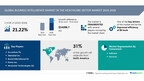
NEW YORK, July 26, 2024 /PRNewswire/ — The global business intelligence in the healthcare sector market size is estimated to grow by USD 14.20 billion from 2024-2028, according to Technavio. The market is estimated to grow at a CAGR of 21.22% during the forecast period. Improved efficiency of BI tools is driving market growth, with a trend towards increasing use of predictive analytics and artificial intelligence in healthcare. However, presence of open-source bi vendors poses a challenge. Key market players include Accenture Plc, Alphabet Inc., Board International SA, Domo Inc., Hexaware Technologies Ltd., Idera Inc., Infor Inc., International Business Machines Corp., Microsoft Corp., MicroStrategy Inc., OpenText Corp., Oracle Corp., Perficient Inc., QlikTech international AB, Salesforce Inc., SAP SE, SAS Institute Inc., Sisense Ltd., Tata Consultancy Services Ltd., and TIBCO Software Inc..
Get a detailed analysis on regions, market segments, customer landscape, and companies – Click for the snapshot of this report
Forecast period
2024-2028
Base Year
2023
Historic Data
2018 – 2022
Segment Covered
Component (Software and Services), Deployment (Cloud-based and On-premise), and Geography (North America, Europe, APAC, South America, and Middle East and Africa)
Region Covered
North America, Europe, APAC, South America, and Middle East and Africa
Key companies profiled
Accenture Plc, Alphabet Inc., Board International SA, Domo Inc., Hexaware Technologies Ltd., Idera Inc., Infor Inc., International Business Machines Corp., Microsoft Corp., MicroStrategy Inc., OpenText Corp., Oracle Corp., Perficient Inc., QlikTech international AB, Salesforce Inc., SAP SE, SAS Institute Inc., Sisense Ltd., Tata Consultancy Services Ltd., and TIBCO Software Inc.
Key Market Trends Fueling Growth
The healthcare sector’s business intelligence market is experiencing a significant trend towards the adoption of predictive analytics and artificial intelligence (AI). With the abundance of healthcare data, such as electronic health records (EHRs), medical images, and patient-generated data from wearables, healthcare organizations are leveraging advanced analytics to uncover valuable insights and enhance patient care. Predictive analytics enables identification of patients at risk for specific conditions, enabling early intervention. AI assists radiologists in analyzing medical images for quicker and more accurate abnormality detection. Natural language processing (NLP) is utilized to analyze unstructured data from sources like clinical notes and patient feedback, revealing patterns and trends. Predictive analytics applications in healthcare include forecasting sepsis rates, identifying high-risk readmission patients, determining co-morbidities requiring additional care, estimating finances per quarter, and managing PPE supply and demand. Historically, decisions were reactive, but predictive analytics offers a proactive approach, making it a crucial driver of growth for the global business intelligence market in healthcare during the forecast period.
In today’s data-driven world, Business Intelligence (BI) plays a crucial role in the healthcare sector. With the increasing penetration of data, managing and analyzing patient data has become essential for better patient safety, clinical performance, and improved patient outcomes. Chronic diseases and critical care units generate massive data that require advanced analytics tools like Artificial Intelligence (AI) and Machine Learning (ML) for effective analysis. Self-Service BI tools are trending, allowing healthcare professionals to access critical insights without IT intervention. Electronic Health Records (EHR) are the new norm, and BI tools help make sense of this data. Industries 4.0 and Cloud Computing have made BI tools more accessible, with Google Cloud leading the way. Healthcare Analytics includes Clinical, Financial, and Operational categories, with on-premise and cloud-based deployment options. Function categories include Corporate BI, Self-Service BI, and Dashboard models. Deployment categories include On-Premise, Cloud-Based, and Self-Service BI models. BI tools offer interactive graphs, dashboards, and data-supported decisions, enabling predictive analytics and epidemiology. Large-scale data distribution is made possible through software solutions and SaaS applications. Data-driven decision-making is the future, and BI tools provide the infrastructure, data modeling, database design, and data visualizations needed to make it a reality. Big data operations and telehealth are also benefiting from these advanced tools.
Discover 360° analysis of this market. For complete information, schedule your consultation- Book Here!
Market Challenges
Open-source Business Intelligence (BI) vendors offer cost-effective and flexible software solutions for the healthcare sector. These solutions can be customized according to user needs, posing a challenge for commercial BI vendors. Notable open-source BI providers include Pentaho, BIRT, SpagoBI, KNIME, and JasperReports. Commercial vendors face difficulties monetizing their products due to the availability of free alternatives. Additionally, open-source BI vendors often have large communities of developers and users, making it challenging for commercial vendors to keep up with the latest trends and technologies. Their larger user bases also make it difficult for commercial vendors to compete on price. As a result, commercial BI vendors must offer additional features or services to attract customers and remain competitive in the healthcare sector market.Business intelligence (BI) plays a crucial role in the healthcare sector, helping providers make data-driven decisions to improve patient care and operational efficiency. However, implementing BI solutions comes with challenges. Hospitals, government agencies, and various organizations face obstacles in integrating data from multiple sources, including electronic health records, medical devices, and health information exchanges. Private exchangers, software vendors, and IT firms offer on-premise, cloud-based, and hybrid BI solutions. Challenges include claims processing, operational analysis, supply chain analysis, workforce analysis, strategic analysis, clinical analysis, quality improvement, clinical benchmarking, clinical decision support, comparative analytics, precision health, patient care, and financial analysis. BI tools help with revenue cycle management, payment integrity, query and reporting, OLAP and visualization, and more. Key stakeholders like practitioners, payers, and third-party administrators benefit from BI in healthcare. Market segments include healthcare providers, physician practices, post-acute care organizations, ambulatory care settings, accountable care organizations, managed care organizations, and managed care organizations. Chronic disorders, global healthcare, and remote patient monitoring are areas where BI can make a significant impact. BI tools enable data-driven insights for managing costs, improving patient outcomes, and enhancing overall quality of care.
For more insights on driver and challenges – Download a Sample Report
Segment Overview
This business intelligence in the healthcare sector market report extensively covers market segmentation by
Component 1.1 Software1.2 ServicesDeployment 2.1 Cloud-based2.2 On-premiseGeography 3.1 North America3.2 Europe3.3 APAC3.4 South America3.5 Middle East and Africa
1.1 Software- The global business intelligence market in the healthcare sector is segmented into five main software categories: BI platforms, dashboard and reporting software, data analytics software, data warehousing software, mobile BI software, self-service BI software, and cloud-based BI software. These tools help healthcare organizations enhance operational efficiency, reduce costs, and enhance patient outcomes by deriving insights from their data. BI platforms serve as software tools that analyze data from various sources to generate valuable insights. Dashboard and reporting software create customized visualizations of key performance indicators (KPIs) and metrics in real-time. Data analytics software uses advanced algorithms to uncover hidden patterns and trends. Data warehousing software stores, manages, and organizes large volumes of structured and unstructured data. Mobile BI software enables healthcare professionals to access business intelligence data on mobile devices, while self-service BI software empowers non-technical users to create their reports and dashboards. Lastly, cloud-based BI software offers a scalable and flexible platform for managing and analyzing business intelligence data in the cloud. These software solutions play a crucial role in driving the growth of the business intelligence market in the healthcare sector, as they provide valuable insights that help organizations make informed decisions, ultimately improving patient care and outcomes.
For more information on market segmentation with geographical analysis including forecast (2024-2028) and historic data (2018 – 2022) – Download a Sample Report
Learn and explore more about Technavio’s in-depth research reports
The global Artificial Intelligence (AI) in the healthcare sector market is experiencing rapid growth, driven by advancements in machine learning, big data analytics, and the increasing need for personalized medicine. AI technologies are revolutionizing diagnostics, treatment planning, and patient management, enhancing efficiency and outcomes. Simultaneously, the global Healthcare Analytics Market is expanding as healthcare providers leverage data analytics for predictive modeling, patient care optimization, and operational efficiency. The integration of AI and analytics is poised to transform healthcare, offering significant opportunities for innovation and improved patient care.
Research Analysis
Business Intelligence (BI) in the healthcare sector is revolutionizing the industry by enabling data-driven decisions, improved patient outcomes, and enhanced clinical performance. With the increasing penetration of Electronic Health Records (EHR), the sector is witnessing a data explosion. Self-Service BI tools are empowering healthcare providers to analyze this data and gain insights into patient safety, clinical performance, and financial analysis. Industries 4.0 and advanced technologies like Artificial Intelligence (AI) and Machine Learning (ML) are transforming healthcare analytics. Critical Care Units (CCUs) are leveraging real-time data from remote patient monitoring and telehealth to deliver personalized care. Google Cloud is a significant player in this data-supported world, offering predictive analytics, epidemiology, and customer relationship management solutions. BI tools are helping healthcare providers make data-driven decisions, manage chronic disorders, and optimize resources. The future of healthcare lies in the effective use of BI tools to improve patient care and outcomes in this data-driven world.
Market Research Overview
In the healthcare sector, Business Intelligence (BI) has become a crucial tool for transforming data into valuable insights. With the increasing penetration of data in healthcare, self-service BI has emerged as a popular choice for patients, providers, and industries. Electronic Health Records (EHR) are the primary source of data, and Industries 4.0, Artificial Intelligence (AI), and Machine Learning (ML) are revolutionizing the way data is analyzed. Critical Care Units, Cloud Computing, and Healthcare Analytics are some of the function categories that heavily rely on BI. Clinical Analytics, Financial Analytics, and Operational Analytics are the three main model categories, with on-premise and cloud-based deployment options. Cloud-based BI tools offer advantages like data-supported decisions, predictive analytics, and interactive graphs in a data-driven world. Customer Relationship Management (CRM) and Google Cloud are gaining popularity in the healthcare sector. Patient safety, clinical performance, and patient outcomes are some of the critical areas where BI plays a significant role. BI tools enable data-driven decision-making, data visualizations, and customizations. However, security breaches and cost management are major concerns in the healthcare sector. Software solutions and SaaS applications offer various functionalities like claims processing, operational analysis, supply chain analysis, workforce analysis, strategic analysis, clinical analysis, quality improvement, clinical benchmarking, clinical decision support, comparative analytics, precision health, patient care, and corporate BI. Healthcare payers, providers, hospitals, government agencies, private exchanges, and pharmaceutical companies are some of the industries that heavily rely on BI. BI tools help in cost management, cash flow management, claims management, and financial analysis. The future of BI in healthcare is promising, with advancements in big data operations, telehealth, telecloud, and on-premises, hybrid, and cloud-based deployment options.
Table of Contents:
1 Executive Summary
2 Market Landscape
3 Market Sizing
4 Historic Market Size
5 Five Forces Analysis
6 Market Segmentation
ComponentSoftwareServicesDeploymentCloud-basedOn-premiseGeographyNorth AmericaEuropeAPACSouth AmericaMiddle East And Africa
7 Customer Landscape
8 Geographic Landscape
9 Drivers, Challenges, and Trends
10 Company Landscape
11 Company Analysis
12 Appendix
About Technavio
Technavio is a leading global technology research and advisory company. Their research and analysis focuses on emerging market trends and provides actionable insights to help businesses identify market opportunities and develop effective strategies to optimize their market positions.
With over 500 specialized analysts, Technavio’s report library consists of more than 17,000 reports and counting, covering 800 technologies, spanning across 50 countries. Their client base consists of enterprises of all sizes, including more than 100 Fortune 500 companies. This growing client base relies on Technavio’s comprehensive coverage, extensive research, and actionable market insights to identify opportunities in existing and potential markets and assess their competitive positions within changing market scenarios.
Contacts
Technavio Research
Jesse Maida
Media & Marketing Executive
US: +1 844 364 1100
UK: +44 203 893 3200
Email: media@technavio.com
Website: www.technavio.com/
View original content to download multimedia:https://www.prnewswire.com/news-releases/business-intelligence-in-the-healthcare-sector-market-size-is-set-to-grow-by-usd-14-20-billion-from-2024-2028–improved-efficiency-of-bi-tools-to-boost-the-market-growth-technavio-302206692.html
SOURCE Technavio










 Technology4 days ago
 Technology4 days ago
 Technology5 days ago
 Technology4 days ago
 Coin Market4 days ago
 Technology4 days ago
 Technology1 day ago
 Technology4 days ago