Connect with us

Technology

Smart Healthcare Market size is set to grow by USD 115.39 billion from 2023-2027, Growing demand for remote health monitoring boost the market, Technavio

Published

on

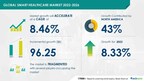
NEW YORK, July 30, 2024 /PRNewswire/ — The global smart healthcare market size is estimated to grow by USD 115.39 billion from 2023-2027, according to Technavio. The market is estimated to grow at a CAGR of  9.26%  during the forecast period. Growing demand for remote health monitoring is driving market growth, with a trend towards iot in healthcare. However, high costs involved with smart healthcare  poses a challenge. Key market players include Abbott Laboratories, Alphabet Inc., Altera Digital Health Inc, Apple Inc., AT and T Inc., athenahealth Inc., Cisco Systems Inc., F. Hoffmann La Roche Ltd., General Electric Co., Hewlett Packard Enterprise Co., Honeywell International Inc., International Business Machines Corp., Johnson and Johnson Services Inc., Koninklijke Philips N.V., Medtronic Plc, Microsoft Corp., Olympus Corp., Samsung Electronics Co. Ltd., Zebra Technologies Corp., and Oracle Corp..

Get a detailed analysis on regions, market segments, customer landscape, and companies- View the snapshot of this report

Smart Healthcare Market Scope

Report Coverage

Details

Base year

2022

Historic period

2017 – 2021

Forecast period

2023-2027

Growth momentum & CAGR

Accelerate at a CAGR of 9.26%

Market growth 2023-2027

USD 115.39 billion

Market structure

Fragmented

YoY growth 2022-2023 (%)

8.28

Regional analysis

Europe, North America, Asia, and Rest of World
(ROW)

Performing market contribution

North America at 43%

Key countries

US, Canada, Germany, UK, and Japan

Key companies profiled

Abbott Laboratories, Alphabet Inc., Altera Digital
Health Inc, Apple Inc., AT and T Inc., athenahealth
Inc., Cisco Systems Inc., F. Hoffmann La Roche
Ltd., General Electric Co., Hewlett Packard
Enterprise Co., Honeywell International Inc.,
International Business Machines Corp., Johnson
and Johnson Services Inc., Koninklijke Philips
N.V., Medtronic Plc, Microsoft Corp., Olympus
Corp., Samsung Electronics Co. Ltd.,Zebra
Technologies Corp., and Oracle Corp.

Market Driver

The healthcare industry is experiencing a significant shift towards smart healthcare solutions, driven by the increasing use of Internet of Things (IoT) and connected medical devices. IoT infrastructure is bridging the gap between physical and digital data sources, enabling real-time patient monitoring and improving access to healthcare services. Key applications of IoT in healthcare include telemedicine, connected imaging, clinical workflow management, dosing management, and inpatient monitoring. Governments worldwide are promoting IT usage in healthcare, reducing costs, and the growing penetration of smartphones and the Internet are fueling the adoption of IoT in healthcare. The rise of wearable medical devices and technological innovations are enhancing the quality of healthcare. However, the increasing number of data sources and data generated necessitate improved network security. Hospitals and clinics are adopting Electronic Health Records (EHRs) to optimally collect and integrate data from external and wearable devices. This trend presents significant growth opportunities for vendors offering cloud-based solutions in the smart healthcare market, such as Cisco, Microsoft, and Alphabet. The demand for connected systems to optimize healthcare deployments is expected to drive the growth of the global smart healthcare market during the forecast period. IoT and connected applications are revolutionizing healthcare, offering improved patient care and operational efficiency. 

Smart healthcare is a rapidly growing market that integrates digital technology into healthcare items for improved patient care and efficiency. Trends include pedometers, activity trackers, and smart wearables for monitoring health metrics like blood pressure, heart rate, oxygen level, and temperature. Smart syringes, RFID cabinets, and RFID Kanban systems streamline inventory management. Remote monitoring, mobile health, and telemedicine enable real-time patient care. Market restraints include data security concerns and high implementation costs. Leading companies like Vera Smart Health, Teladoc Health, and RFID Smart Cabinets leverage information technologies such as big data, cloud computing, artificial intelligence, and RFID for innovative solutions. Smart pills and mHealth apps offer personalized care. The market’s future lies in seamless integration of digital technology with the traditional medical system. 

Discover 360° analysis of this market. For complete information, schedule your consultation – Book Here!

Market Challenges

The high cost of implementing smart healthcare solutions, such as Electronic Health Records (EHR), is a significant challenge for the industry. The costs involved, including hardware, software, installation assistance, licensing fees, maintenance expenses, and opportunity costs, can be substantial. For instance, the average cost of EHR implementation for hospitals is approximately USD14,500 per bed, with annual operating costs amounting to USD2,700 per bed per year. These costs can limit the adoption of EHR and other smart healthcare technologies, particularly for smaller hospitals with limited IT budgets. The high cost of integrating biosensors into healthcare products is another challenge. The novel technology behind these sensors significantly increases the overall cost of the final product, which can deter consumers from adopting them. The high costs associated with certain smart healthcare solutions can hinder their adoption and negatively impact the growth of the global smart healthcare market.The Smart Healthcare Market is experiencing significant growth due to the increasing demand for advanced healthcare solutions. However, challenges persist, such as obtaining necessary approvals for new technologies, catering to cognitive impairment patients, and integrating wearable devices with cloud communication. Caregivers, patients, families, physicians, hospitals, and insurance companies seek improved healthcare services through eHealth solutions like cell phones, tablets, and patient monitoring devices. Oral Biology and Craniofacial Research are also benefiting from digital health programs. Sensor-based IoT technology in illness causes research, surgery, and health outcomes is a major advantage, but high costs remain a concern. Key market participants include medical record-keeping companies, device integration specialists, and healthcare infrastructure providers. Digital literacy and infrastructure development are essential for the successful implementation of connected healthcare and health-related apps. Smart wearable devices like smartwatches and health monitors, using acoustic resonance for lung function assessment and blood glucose monitors, are transforming essential cardiology and asthma management.

For more insights on driver and challenges – Request a sample report!

Segment Overview 

This smart healthcare market report extensively covers market segmentation by  

Distribution Channel1.1 Offline1.2 OnlineSolution 2.1 Telemedicine2.2 mHealth2.3 EHR2.4 Smart pills2.5 OthersGeography 3.1 North America3.2 Europe3.3 Asia3.4 Rest of World (ROW)

1.1 Offline-  The offline segment of the global smart healthcare market refers to the distribution of smart healthcare products and services through physical channels. Retail stores, including specialty and healthcare equipment stores, electronics retailers, medical equipment suppliers, and distributors, serve as crucial offline distribution channels. These channels enable customers to personally examine and purchase devices like fitness trackers, smartwatches, blood pressure monitors, and telehealth systems. Medical equipment suppliers and distributors play a pivotal role in offline distribution, leveraging relationships with healthcare providers, hospitals, clinics, and pharmacies. Offline segments offer face-to-face interactions and personalized customer experiences, enhancing satisfaction and trust. Customers often prefer these channels due to the reliability, professional expertise, and after-sales support they provide. These factors are anticipated to fuel the expansion of the offline segment in the smart healthcare market during the forecast period.

For more information on market segmentation with geographical analysis including forecast (2023-2027) and historic data (2017-2021) – Download a Sample Report

Research Analysis

The Smart Healthcare Market is experiencing exponential growth due to the integration of mHealth and information technologies. Vera Smart Health and Teladoc Health are leading the charge in this space, offering remote monitoring solutions for various health metrics such as blood pressure, heart rate, oxygen level, and temperature. These smart healthcare products leverage digital technology, including RFID and Real-Time Location Systems, to ensure accurate tracking and delivery of essential items. Big data and cloud computing play a crucial role in analyzing patient information and providing personalized care. The market includes a range of smart healthcare items, from wearables like smartwatches and fitness trackers to innovative solutions like smart syringes and medicines with embedded sensors. These advancements aim to improve patient outcomes, reduce healthcare costs, and enhance overall healthcare efficiency.

Market Research Overview

Smart Healthcare Market: Transforming Traditional Healthcare with mHealth and Information Technologies The Smart Healthcare Market is revolutionizing the traditional healthcare system by integrating digital technology, sensors, and real-time communication. MHealth solutions, such as Vera Smart Health and Teladoc Health, are leading the charge with RFID and Real-Time Location Systems enabling seamless patient monitoring. Blood pressure, heart rate, oxygen level, and temperature are just a few vital signs monitored by smart healthcare products. Oral Biology and Craniofacial Research are also benefiting from this digital transformation, with sensor-based IoT technology providing valuable data for health research. Advantages of smart healthcare include improved health outcomes, remote patient monitoring, and increased access to healthcare services. However, high costs and infrastructure requirements can be market restraints. Caregivers, patients, families, physicians, hospitals, and insurance companies all benefit from this connected healthcare infrastructure. Wearable devices like smartwatches, health monitors, pedometers, and activity trackers are popular smart healthcare items. Digital technology, including cloud computing, artificial intelligence, and big data, plays a crucial role in this market. EHealth programs, health-related apps, and smart wearable devices are essential components of this digital health revolution. Market restraints include the need for approvals, cognitive impairment, and device integration challenges. However, the advantages far outweigh the challenges, making the Smart Healthcare Market a promising and growing industry. Key market participants include healthcare services, healthcare research institutions, and digital health companies. The internet and cell phones are essential infrastructure for this market, with tablets and patient monitoring devices completing the digital health ecosystem. Smart syringes, smart medicines, smart RFID cabinets, and remote monitoring are other innovative smart healthcare solutions. Acoustic resonance technology is used for lung function assessment in asthma patients, and essential cardiology benefits from blood glucose monitors and smartwatches. In conclusion, the Smart Healthcare Market is transforming healthcare by integrating digital technology, sensors, and real-time communication. The advantages of this digital health revolution far outweigh the challenges, making it a promising and growing industry.

Table of Contents:

1 Executive Summary
2 Market Landscape
3 Market Sizing
4 Historic Market Size
5 Five Forces Analysis
6 Market Segmentation

Distribution ChannelOfflineOnlineSolutionTelemedicineMHealthEHRSmart PillsOthersGeographyNorth AmericaEuropeAsiaRest Of World (ROW)

7 Customer Landscape
8 Geographic Landscape
9 Drivers, Challenges, and Trends
10 Company Landscape
11 Company Analysis
12 Appendix

About Technavio

Technavio is a leading global technology research and advisory company. Their research and analysis focuses on emerging market trends and provides actionable insights to help businesses identify market opportunities and develop effective strategies to optimize their market positions.

With over 500 specialized analysts, Technavio’s report library consists of more than 17,000 reports and counting, covering 800 technologies, spanning across 50 countries. Their client base consists of enterprises of all sizes, including more than 100 Fortune 500 companies. This growing client base relies on Technavio’s comprehensive coverage, extensive research, and actionable market insights to identify opportunities in existing and potential markets and assess their competitive positions within changing market scenarios.

Contacts

Technavio Research
Jesse Maida
Media & Marketing Executive
US: +1 844 364 1100
UK: +44 203 893 3200
Email: media@technavio.com
Website: www.technavio.com/ 

View original content to download multimedia:https://www.prnewswire.com/news-releases/smart-healthcare-market-size-is-set-to-grow-by-usd-115-39-billion-from-2023-2027–growing-demand-for-remote-health-monitoring-boost-the-market-technavio-302209504.html

SOURCE Technavio

Continue Reading

Technology

Primero Games Acquires Win Systems Gaming Division, Expanding International Reach

Published

on

By

Acquisition adds slot and electronic-roulette products, manufacturing capabilities and an installed base of more than 3,000 gaming positions across Latin America and the Caribbean.

NORCROSS, Ga., Sept. 4, 2026 /PRNewswire/ — Primero Games LLC (“Primero”), a provider of gaming content, technology and products, today announced the acquisition of the Gaming Division of Win Systems (“WSG”), including its Gold Club electronic-roulette business.

The acquisition expands Primero’s international presence and product portfolio, adding established slot and electronic-roulette products, manufacturing capabilities and gaming operations across Latin America and the Caribbean. Financial terms of the transaction were not disclosed.

The acquired operations have an installed base of more than 3,000 gaming positions in Mexico, Peru, Colombia, Puerto Rico, and Panama. Primero will support existing customers and products while introducing additional Primero game content, platform technology and development resources.

“This is an important step forward in executing Primero’s growth strategy to build a diversified, global gaming company,” said Mike Macke, Chairman of Primero Games. “Primero has built its reputation by creating compelling game content and developing innovative technology that helps operators deliver consistent revenue via engaging player experiences.”

“We are excited to welcome Eric Benchimol, Dario Zutel, and the talented WSG team to Primero,” Macke continued. “By combining Primero’s content and development expertise with WSG’s products, operations and customer relationships, we can deliver more products, more content and greater value to customers across a wider range of gaming markets.”

“This combination makes both businesses stronger,” said Eric Benchimol, CEO of Win Systems. “Pairing our installed base, manufacturing operations and market knowledge with Primero’s game library and development engine means we can bring more, and better, products to our customers faster than either company could alone. The team is energized, and we’re looking forward to getting to work as part of Primero.”

“This transaction marks an exciting new chapter for our Gaming Division,” said Dario Zutel, Executive Chairman of Win Systems. “We are confident that Primero Games is the right partner to build on what we have achieved and drive the business into its next stage of international growth.”

Building International Scale

Primero has an established presence in U.S. gaming markets, with a portfolio that includes game content, online gaming solutions, redemption kiosks, and a mature omnichannel gaming platform.  The WSG acquisition adds established products, manufacturing capabilities and long-standing customer relationships in international markets.

The WSG teams and infrastructure will continue to support customers in Mexico, Peru, Colombia, Puerto Rico, Panama and many other countries around the world. Primero and WSG are committed to providing continuity for every customer as Primero invests in the business and introduces additional products, content and technology.

About Primero Games

Primero Games is a leading provider of innovative games, platforms and products designed to deliver engaging player experiences and value to gaming operators across land-based and digital environments. Founded by gaming-industry veteran Mike Macke, Primero has made significant investment in its Hurricane gaming platform to support international expansion. The Hurricane platform is designed to support offline, online, single, and multi-game applications across emerging and regulated gaming markets. Primero’s Spark server-based gaming solution extends the Hurricane platform by offering value-added features such as business intelligence, linked and wide-area progressive jackpots, game content subscription features, and player marketing/retention.

Headquartered in the United States, the company designs, manufactures and markets a portfolio of more than 100 original titles for land-based and multi-game platforms, as well as online games for markets worldwide. With studios in the U.S., the U.K., and Canada, Primero combines international creative talent with deep technical expertise to produce high-performing, scalable gaming solutions. For more information, visit www.primerogames.com.

About Win Systems

Win Systems is a global technology company with extensive experience providing innovative solutions to the gaming industry. Through its international operations and long-standing customer relationships, the company specializes in casino management systems and has a strong track record of delivering technology and solutions to operators across multiple markets worldwide. Following the transaction, Win Systems will continue to focus on its remaining businesses and strategic opportunities, building on its technology expertise, international experience, and commitment to delivering value to its customers and partners.

Contacts:

Primero Games
Gina Lanphear, Director of Marketing
422019@email4pr.com 

WinSystems Gaming
Virginia Pin, Marketing Manager
422019@email4pr.com 

View original content to download multimedia:https://www.prnewswire.com/news-releases/primero-games-acquires-win-systems-gaming-division-expanding-international-reach-302870282.html

SOURCE Primero Games

Continue Reading

Technology

AEON Launches Agentic Checkout, Powered by AI Card for Autonomous Commerce

Published

on

By

HONG KONG, Sept. 4, 2026 /PRNewswire/ — AEON, the settlement layer built for the AI economy, has launched Agentic Checkout, enabling AI agents to autonomously shop, check out, and pay across e-commerce platforms such as Shopify and Amazon. Powered by the AEON AI Card, Agentic Checkout gives agents controlled spending capabilities to turn user intent into completed purchases.

Natively integrated with Model Context Protocol (MCP) and the Universal Commerce Protocol (UCP), Agentic Checkout allows users to interact with an AI agent through a conversational interface, describe what they are looking for, and let the agent search for suitable products and build a shopping cart based on their requirements.

Once a product is selected, the user can authorize the purchase with an AEON AI Card settled over the Visa/Mastercard networks, allowing the agent to complete the transaction without exposing the user’s primary payment credentials or treasury wallet. The agent can move from product discovery to cart creation and payment, turning a natural-language request into a completed purchase.

AI Card: Giving AI Agents Controlled Spending Power

At the core of this experience is the AEON AI Card, designed to give AI agents financial autonomy while keeping spending under defined controls. 

The infrastructure supports single-use agent cards and predefined budget limits, allowing spending authority to be scoped to individual tasks or transactions. Backed by crypto-based authorization and connected to existing Visa payment infrastructure, the AI Card creates a bridge between on-chain assets and everyday commerce.

This allows agents to spend on behalf of users without requiring direct access to their primary wallets or traditional credit cards, bringing agentic commerce closer to a model where AI can not only assist users with decisions, but also securely execute those decisions in the real economy. 

Agentic Checkout to Bigger Commerce Ecosystem

Agentic Checkout is designed to give AI agents access to an open commerce ecosystem, rather than a limited list of curated merchants. Through Shopify, agents can search across 3M+ active storefronts in 175+ countries and more than a billion products, spanning categories including apparel, home, beauty, electronics, and books.

Shopify is one of the first environments where AEON’s Agentic Checkout capability is being demonstrated, but the underlying infrastructure is designed to extend across e-commerce ecosystems and support both physical and digital goods. Amazon and Travala are next, bringing mass-market retail and travel inventory into the same agent interface.

The infrastructure is also designed with the safeguards required for production use. Full card numbers and security codes never enter conversation logs or model context, while uncertain payment states are verified before any retry to prevent silent double charges.

As more commerce platforms become accessible to AI agents, the ability to securely authorize and settle these transactions will become increasingly important. AEON Agentic Checkout and AI Card provides the financial execution layer that allows agents to act within defined spending boundaries. And AEON is building the settlement infrastructure to enable these agents to transact, pay, and settle securely across the digital and physical economies.

Building the Settlement Layer for the AI Economy

The Agentic Checkout and AI Card represent two connected components of AEON’s agentic payment infrastructure: Agentic Checkout gives agents the ability to execute commerce, while AI Card gives them controlled financial authority to pay for it. Together, they connect agent intent, payment authorization, checkout execution, and settlement into a unified flow.

AI agents are increasingly capable of searching, reasoning, coordinating tasks, and making decisions on behalf of users. The next step is enabling those decisions to result in secure, verifiable economic transactions. AEON is building toward this infrastructure by combining agent identity, payment authorization, checkout execution, and settlement into a unified framework for the AI economy, enabling AI agents to transact across digital and physical economies, autonomously, securely, and within clearly defined financial boundaries.

About AEON

AEON is the native settlement layer built for the AI economy. By equipping agents with a comprehensive suite of programmable payment primitives, spanning across Agent Account, AI Card, AI Gateway, and more, AEON empowers autonomous AI to seamlessly navigate global value networks. Designed to eliminate the fee overhead, programmability gaps, and settlement lag of legacy infrastructure, AEON provides the universal financial rails needed for agents to enter the global economy across any currency, chain, or protocol.

Natively integrating with leading standards like x402, ERC-8004, MCP, and Google A2A, AEON enables verifiable AI payments at scale and connects agentic capabilities directly to a network of 50M+ global merchants. Having processed over $514M in cumulative volume for 2.3M+ users, AEON is backed by top investors including YZi Labs, IDG Capital, HashKey Capital, and the Stanford Blockchain Builders Fund. The $AEON token is live on major global exchanges including OKX, Bitget, Binance Alpha and Bithumb.

Website | X | Telegram | Medium | AEON Pay

View original content:https://www.prnewswire.com/news-releases/aeon-launches-agentic-checkout-powered-by-ai-card-for-autonomous-commerce-302870306.html

SOURCE AEON

Continue Reading

Technology

WOODLAND DIRECT OPENS NEW DISTRIBUTION CENTER IN RENO, NV

Published

on

By

AUBURN HILLS, Mich., Sept. 4, 2026 /PRNewswire/ — Woodland Direct, the nation’s premier e-commerce site for fire products, is opening a new 47,000-square-foot distribution center in Reno, NV. This is the company’s second distribution center, joining its world headquarters and distribution center in Auburn Hills, MI.

The new facility, officially opening in September, will improve the customer experience by shortening shipping times for West Coast customers.

“Woodland Direct has grown and evolved substantially over the past several years,” said President and Founder Andrew Ingram. “We already ship all around the country. By opening the Reno distribution center, we’re able to serve our West Coast customers more quickly and efficiently.”

The leadership team began exploring the idea of opening a second distribution center in the final quarter of 2025. Woodland worked with logistics consultants to determine whether an expansion west of the Rocky Mountains made sense, and Reno’s strategic location made it a natural choice for the expansion.

“We are excited to be a part of the Reno community, and we look forward to making our customers’ experience even more enjoyable,” said Gunnar Bennethum, senior manager of supply chain operations and business planning.

In addition to using local Reno companies Engineered Solutions, Teledata Technologies, and WTR Electrical to build and prep the warehouse, Bennethum and Warehouse Assistant Wesley Davey will be making the move from Auburn Hills to Reno to oversee operations.

The Reno distribution center will be using industry-standard software NetSuite to increase efficiency.

“This will be a new milestone for Woodland,” Bennethum added, “that will improve our inventory accuracy and allow our sales team to have better visibility of product availability.”

For more information on Woodland Direct, visit our website www.woodlanddirect.com/ or contact Drew Maresco at drew.maresco@woodlanddirect.com or (877) 771-2925.

ABOUT WOODLAND DIRECT

Woodland Direct is a premier online retailer specializing in fireplaces, patio heaters, fire pits, and outdoor living products. Founded in 2004, Woodland Direct offers a curated selection of top fire brands to homeowners, contractors, and businesses. Woodland Direct has the most NFI-certified sales professionals and Master Hearth Professionals under one roof. For more information, visit woodlanddirect.com.

Media Contact:

Drew Maresco

Drew.maresco@woodlanddirect.com

(877) 771-2925

View original content to download multimedia:https://www.prnewswire.com/news-releases/woodland-direct-opens-new-distribution-center-in-reno-nv-302870312.html

SOURCE Woodland Direct

Continue Reading

Trending