
Technology
ePlus Reports First Quarter Fiscal Year 2025 Financial Results

Published
2 years agoon
By

First Quarter Fiscal Year 2025
Net sales decreased 5.2% to $544.5 million from last year’s first quarter; technology business net sales decreased 5.3% to $535.5 million; services revenues increased 15.8% to $78.2 million.Technology business gross billings decreased 1.0% to $833.7 million.Consolidated gross profit decreased 5.5% to $134.5 million.Consolidated gross margin was 24.7% as compared to last year’s 24.8%.Net earnings decreased 19.2% to $27.3 million.Adjusted EBITDA decreased 19.9% to $43.1 million.Diluted net earnings per common share decreased 19.7% to $1.02 and non-GAAP diluted net earnings per common share decreased 19.9% to $1.13.
HERNDON, Va., Aug. 6, 2024 /PRNewswire/ — ePlus inc. (NASDAQ: PLUS), a leading provider of technology and financing solutions, today announced financial results for the three months ended June 30, 2024, the first quarter of its 2025 fiscal year.
Management Comment
“We continued to see strong growth in security and services overall with our managed services up 28%. For many years we have been building strong services and recurring revenue streams, in part to offset headwinds created by the increase in netted down revenues and ratable recognition of sales, both to build a more consistent financial model, but also to deliver the solutions that customers demand with today’s advanced technologies,” said Mark Marron, president and CEO of ePlus. We are seeing strong customer interest in our AI Ignite program and discovery services. While these create nominal current revenue, they also are key to locking in future business opportunities and securing customer mindshare in this fast moving technology solution.
“Given a hard compare, with last year’s first quarter growth of 25% due to supply chain easing, our first quarter net sales were down 5.2% and gross billings were down 1%. Both the revenue and gross billings decline year over year is attributable to a more normalized supply chain, the absorption of prior purchases by our customers, product mix, and the ratable trend as noted above. We do not see any long-term diminished demand for our products and services and our full year guidance remains unchanged.”
Mr. Marron continued, “We ended the quarter with a strong cash position of $350 million, providing ePlus the resources to invest in organic growth initiatives, continue our track record of strategic acquisitions, and increase shareholder returns through share repurchases.”
First Quarter Fiscal Year 2025 Results
For the first quarter ended June 30, 2024, as compared to the first quarter ended June 30, 2023:
Consolidated net sales decreased 5.2% to $544.5 million, from $574.2 million.
Technology business net sales decreased 5.3% to $535.5 million, from $565.7 million driven by lower product sales. Technology business gross billings decreased 1.0% to $833.7 million from $842.0 million.
Product sales decreased 8.2% to $457.3 million, from $498.2 million, due to decreases in net sales of cloud and networking products, offset by increases in net sales of collaboration and security products. Gross profit decreased 11.6% to $98.5 million, from $111.4 million last year, due to the reduction of product sales and a 90-bps decline in product margin to 21.5% from 22.4% last year, due to a shift in customer mix, offset by a larger proportion of third-party maintenance and services sold in the current quarter which are recorded on a net basis.
Professional service revenues increased 4.8% from last year to $37.3 million from $35.6 million. Gross profit increased 5.0% and gross margins increased 10 bps to 41.5% from 41.4% last year.
Managed service revenues increased 28.0% to $40.9 million due to ongoing demand in these offerings, including Enhanced Maintenance Support, Cloud, and Service Desk services. Gross profit increased 31.0% from last year due to the scaled growth in these services resulting in a 70-bps gross margin improvement.
Financing business segment net sales increased 6.4% to $9.0 million, from $8.5 million due to increases in portfolio earnings. Gross profit in the financing business segment increased 20.8% to $7.7 million from $6.4 million last year.
Consolidated gross profit decreased 5.5% to $134.5 million, from $142.3 million. Consolidated gross margin was 24.7%, down 10 bps from last year’s 24.8%, due to lower product margin in our technology business.
Consolidated operating expenses were $99.0 million, up 3.2% from $95.9 million last year, primarily due to increases in salaries and benefits from additional headcount. Our headcount at the end of the quarter was 1,907, up 54 from a year ago, including 28 employees from PEAK Resources, Inc. (“PEAK”) which we acquired in January 2024.
Consolidated operating income decreased 23.4% to $35.5 million. During the quarter ended June 30, 2024, we had other income of $2.1 million from interest income of $2.6 million offset by foreign currency transaction loss of $0.5 million. Earnings before tax decreased 19.3% to $37.5 million.
Our effective tax rate remained at 27.2% year over year.
Net earnings decreased 19.2% to $27.3 million from $33.8 million.
Consolidated adjusted EBITDA decreased 19.9% to $43.1 million from $53.9 million.
Diluted net earnings per common share was $1.02 for the first quarter ended June 30, 2024, compared with $1.27 for the first quarter ended June 30, 2023. Non-GAAP diluted net earnings per common share was $1.13 for the first quarter ended June 30, 2024, compared with $1.41 for the first quarter ended June 30, 2023.
Balance Sheet Highlights
As of June 30, 2024, cash and cash equivalents were $349.9 million, up from $253.0 million as of March 31, 2024, primarily due to improvements in working capital, offset by repurchases of our common stock. Inventory decreased 36.2% to $89.1 million compared with $139.7 million as of March 31, 2024. Total stockholders’ equity was $921.9 million, compared with $901.8 million as of March 31, 2024. Total shares outstanding were 26.9 million and 27.0 million on June 30, 2024 and March 31, 2024, respectively.
Fiscal Year Guidance
ePlus is maintaining fiscal year 2025 guidance for net sales growth over the prior fiscal year of between 3% and 6%, and an adjusted EBITDA range of $200.0 million to $215.0 million. ePlus cannot predict with reasonable certainty and without unreasonable effort, the ultimate outcome of unusual gains and losses, the occurrence of matters creating GAAP tax impacts, fluctuations in interest expense or interest income and share-based compensation, and acquisition-related expenses. These items are uncertain, depend on various factors, and could be material to the ePlus’ results computed in accordance with GAAP. Accordingly, the ePlus is unable to provide a reconciliation of GAAP net earnings to adjusted EBITDA for the full year 2025 forecast.
Summary and Outlook
“Looking ahead, as we add new products and services and benefit from recent acquisitions, ePlus continues to be positioned to achieve top-line growth. Our business is supported by deep customer and channel relationships. We have invested across the organization to strengthen our product and services offerings and to customize our solutions to meet the evolving needs of our customers. Our teams continue to execute well and operate efficiently with an unwavering commitment to superior customer service. These factors support our confidence in the underlying fundamentals of our business and our ability to deliver on our 2025 financial outlook and objectives.
“Additionally, our strong financial position provides us with considerable capital allocation options to drive long-term shareholder value, including the ability to expand our product offerings, make larger accretive acquisitions, and continue to return capital to shareholders through share repurchases. This flexibility, together with ongoing investments in differentiated capabilities, should enable us to build on our competitive advantage and advance our market positioning,” concluded Mr. Marron.
Recent Corporate Developments/Recognitions
In the month of July:
Announced Storage-as-a-Service leveraging NetApp.IGXGlobal, a subsidiary of ePlus, began offering Storage-as-a-Service powered by Pure Storage.
In the month of June:
Awarded the Lenovo U.S. Infrastructure Solutions Partner of the Year Award.Announced the launch of Azure Recover.Recognized as Juniper Networks 2023 Partner of the Year for Cloud Ready Data Center in both Worldwide and Americas Categories.
In the month of May:
Named Growth Partner of the Year by Varonis.Earned a spot on CRN’s 2024 Solution Provider 500 List.
Conference Call Information
ePlus will hold a conference call and webcast at 4:30 p.m. ET on August 6, 2024:
Date:
August 6, 2024
Time:
4:30 p.m. ET
Audio Webcast (Live & Replay):
https://events.q4inc.com/attendee/653117486
Live Call:
(888) 596-4144 (toll-free/domestic)
(646) 968-2525 (international)
Archived Call:
(800) 770-2030 (toll-free/domestic)
(609) 800-9909 (international)
Conference ID:
6593768# (live call and replay)
A replay of the call will be available approximately two hours after the call through August 13, 2024. A transcript of the call will also be available on the ePlus Investor Relations website at https://www.eplus.com/investors.
About ePlus inc.
ePlus has an unwavering and relentless focus on leveraging technology to create inspired and transformative business outcomes for its customers. Offering a robust portfolio of solutions, as well as a broad range of consultative and managed services across the technology spectrum, ePlus has proudly achieved more than 30 years of success, carrying customers forward through adversity, rapidly changing environments, and other obstacles. ePlus is a trusted advisor, bringing expertise, credentials, talent and a thorough understanding of innovative technologies, spanning security, cloud, data center, networking, collaboration and emerging solutions, to organizations across all industry segments. With complete lifecycle management services and flexible payment solutions, ePlus’ more than 1,900 associates are focused on cultivating positive customer experiences and are dedicated to their craft, harnessing new knowledge while applying decades of proven experience. ePlus is headquartered in Virginia, with locations in the United States, UK, Europe, and Asia‐Pacific. For more information, visit www.eplus.com, call 888-482-1122, or email info@eplus.com. Connect with ePlus on LinkedIn, X, Facebook, and Instagram. ePlus, Where Technology Means More.
ePlus® and ePlus products referenced herein are either registered trademarks or trademarks of ePlus inc. in the United States and/or other countries. The names of other companies and products mentioned herein may be the trademarks of their respective owners.
Forward-looking statements
Statements in this press release that are not historical facts may be deemed to be “forward-looking statements,” including, among other things, statements regarding the future financial performance of ePlus. Actual and anticipated future results may vary materially due to certain risks and uncertainties, including, without limitation, exposure to fluctuation in foreign currency rates, interest rates, and inflation, including as a result of national and international political instability fostering uncertainty and volatility in the global economy, which may cause increases in our costs and our ability to increase prices to our customers, negative impacts to the arrangements that have pricing commitments over the term of the agreement, which may result in adverse changes in our gross profit; significant adverse changes in, reductions in, or loss of one or more of our larger volume customers or vendors; reliance on third-parties to perform some of our service obligations to our customers, and the reliance on a small number of key vendors in our supply chain with whom we do not have long-term supply agreements, guaranteed price agreements, or assurance of stock availability; our ability to remain secure during a cybersecurity attack or other IT outtage, including both disruptions in our or our vendors’ or other third party’s Information Technology (“IT”) systems and data and audio communication networks; our ability to secure our own and our customers’ electronic and other confidential information, while maintaining compliance with evolving data privacy and regulatory laws and regulations; ongoing remote work trends, and the increase in cybersecurity attacks that have occurred while employees work remotely and our ability to adequately train our personnel to prevent a cyber event; the possibility of a reduction of vendor incentives provided to us; our dependence on key personnel and our ability to hire, train and retain qualified personnel by recruiting and retaining highly skilled, competent personnel, and vendor certifications; our ability to manage a diverse product set of solutions, including artificial intelligence (“AI”) products, in highly competitive markets with a number of key vendors; changes in the IT industry and/or rapid changes in product offerings, including the proliferation of the cloud, infrastructure as a service, software as a service, platform as a service and AI; supply chain issues, including a shortage of IT products, may increase our costs or cause a delay in fulfilling customer orders, or increase our need for working capital, or delay completing professional services, or purchasing IT products or services needed to support our internal infrastructure or operations, resulting in an adverse impact on our financial results; our inability to identify acquisition candidates, or perform sufficient due diligence prior to completing an acquisition, or failure to integrate a completed acquisition may affect our earnings; our ability to raise capital, maintain or increase as needed our lines of credit with vendors or floor planning facility, obtain debt for our financing transactions, or the effect of those changes on our common stock price; our ability to implement comprehensive plans for the integration of sales forces, cost containment, asset rationalization, systems integration, and other key strategies; and other risks or uncertainties detailed in our reports filed with the Securities and Exchange Commission. All information set forth in this press release is current as of the date of this release and ePlus undertakes no duty or obligation to update this information.
ePlus inc. AND SUBSIDIARIES
UNAUDITED CONSOLIDATED BALANCE SHEETS
(in thousands, except per share amounts)
June 30, 2024
March 31, 2024
ASSETS
Current assets:
Cash and cash equivalents
$349,909
$253,021
Accounts receivable—trade, net
577,019
644,616
Accounts receivable—other, net
54,987
46,884
Inventories
89,134
139,690
Financing receivables—net, current
109,119
102,600
Deferred costs
59,985
59,449
Other current assets
23,951
27,269
Total current assets
1,264,104
1,273,529
Financing receivables and operating leases—net
85,032
79,435
Deferred tax asset
5,620
5,620
Property, equipment and other assets
94,417
89,289
Goodwill
161,508
161,503
Other intangible assets—net
40,292
44,093
TOTAL ASSETS
$1,650,973
$1,653,469
LIABILITIES AND STOCKHOLDERS’ EQUITY
LIABILITIES
Current liabilities:
Accounts payable
$270,614
$315,676
Accounts payable—floor plan
119,511
105,104
Salaries and commissions payable
40,491
43,696
Deferred revenue
138,619
134,596
Non-recourse notes payable—current
29,898
23,288
Other current liabilities
29,103
34,630
Total current liabilities
628,236
656,990
Non-recourse notes payable—long-term
10,854
12,901
Other liabilities
89,955
81,799
TOTAL LIABILITIES
729,045
751,690
COMMITMENTS AND CONTINGENCIES
STOCKHOLDERS’ EQUITY
Preferred stock, $0.01 per share par value; 2,000 shares
authorized; none outstanding
–
–
Common stock, $0.01 per share par value; 50,000 shares
authorized; 26,940 outstanding at June 30, 2024 and
26,952 outstanding at March 31, 2024
276
274
Additional paid-in capital
184,733
180,058
Treasury stock, at cost, 609 shares at June 30, 2024 and
447 shares at March 31, 2024
(35,746)
(23,811)
Retained earnings
770,317
742,978
Accumulated other comprehensive income—foreign currency
translation adjustment
2,348
2,280
Total Stockholders’ Equity
921,928
901,779
TOTAL LIABILITIES AND STOCKHOLDERS’ EQUITY
$1,650,973
$1,653,469
ePlus inc. AND SUBSIDIARIES
UNAUDITED CONSOLIDATED STATEMENTS OF OPERATIONS
(in thousands, except per share amounts)
Three Months Ended June 30,
2024
2023
Net sales
Product
$466,349
$506,656
Services
78,189
67,519
Total
544,538
574,175
Cost of sales
Product
360,157
388,904
Services
49,900
42,998
Total
410,057
431,902
Gross profit
134,481
142,273
Selling, general, and administrative
93,608
90,298
Depreciation and amortization
4,819
4,792
Interest and financing costs
585
851
Operating expenses
99,012
95,941
Operating income
35,469
46,332
Other income (expense), net
2,073
190
Earnings before taxes
37,542
46,522
Provision for income taxes
10,203
12,675
Net earnings
$27,339
$33,847
Net earnings per common share—basic
$1.03
$1.27
Net earnings per common share—diluted
$1.02
$1.27
Weighted average common shares outstanding—basic
26,642
26,552
Weighted average common shares outstanding—diluted
26,801
26,648
Technology Business
Three Months Ended June 30,
2024
2023
Change
(in thousands)
Net sales
Product
$457,312
$498,166
(8.2 %)
Professional services
37,279
35,556
4.8 %
Managed services
40,910
31,963
28.0 %
Total
535,501
565,685
(5.3 %)
Gross profit
Product
98,505
111,391
(11.6 %)
Professional services
15,455
14,724
5.0 %
Managed services
12,834
9,797
31.0 %
Total
126,794
135,912
(6.7 %)
Selling, general, and administrative
90,084
87,100
3.4 %
Depreciation and amortization
4,819
4,764
1.2 %
Interest and financing costs
–
550
(100.0 %)
Operating expenses
94,903
92,414
2.7 %
Operating income
$31,891
$43,498
(26.7 %)
Gross billings
$833,708
$841,970
(1.0 %)
Adjusted EBITDA
$39,501
$50,949
(22.5 %)
Technology Business Gross Billings by Type
Three Months Ended June 30,
2024
2023
Change
(in thousands)
Networking
$281,528
$276,645
1.8 %
Cloud
241,274
258,924
(6.8 %)
Security
151,883
147,343
3.1 %
Collaboration
32,976
22,161
48.8 %
Other
44,592
69,761
(36.1 %)
Product gross billings
752,253
774,834
(2.9 %)
Service gross billings
81,455
67,136
21.3 %
Total gross billings
$833,708
$ 841,970
(1.0 %)
Technology Business Net Sales by Type
Three Months Ended June 30,
2024
2023
Change
(in thousands)
Networking
$234,740
$245,188
(4.3 %)
Cloud
137,231
172,044
(20.2 %)
Security
48,005
45,796
4.8 %
Collaboration
20,899
12,956
61.3 %
Other
16,437
22,182
(25.9 %)
Total product
457,312
498,166
(8.2 %)
Professional services
37,279
35,556
4.8 %
Managed services
40,910
31,963
28.0 %
Total net sales
$535,501
$ 565,685
(5.3 %)
Technology Business Net Sales by Customer End Market
Three Months Ended June 30,
2024
2023
Change
(in thousands)
Telecom, Media, & Entertainment
$117,553
$ 141,335
(16.8 %)
Technology
109,106
73,403
48.6 %
SLED
92,096
109,405
(15.8 %)
Healthcare
75,280
86,656
(13.1 %)
Financial Services
49,725
65,690
(24.3 %)
All other
91,741
89,196
2.9 %
Total net sales
$535,501
$ 565,685
(5.3 %)
Financing Business Segment
Three Months Ended June 30,
2024
2023
Change
(in thousands)
Portfolio earnings
$4,161
$3,073
35.4 %
Transactional gains
1,293
1,279
1.1 %
Post-contract earnings
3,315
3,634
(8.8 %)
Other
268
504
(46.8 %)
Net sales
9,037
8,490
6.4 %
Gross profit
7,687
6,361
20.8 %
Selling, general, and administrative
3,524
3,198
10.2 %
Depreciation and amortization
–
28
(100.0 %)
Interest and financing costs
585
301
94.4 %
Operating expenses
4,109
3,527
16.5 %
Operating income
$3,578
$2,834
26.3 %
Adjusted EBITDA
$3,642
$2,930
24.3 %
ePlus inc. AND SUBSIDIARIES
RECONCILIATION OF NON-GAAP INFORMATION
We included reconciliations below for the following non-GAAP financial measures: (i) Adjusted EBITDA, (ii) Adjusted EBITDA for business segments, (iii) non-GAAP Net Earnings and (iv) non-GAAP Net Earnings per Common Share – Diluted.
We define Adjusted EBITDA as net earnings calculated in accordance with US GAAP, adjusted for the following: interest expense, depreciation and amortization, share-based compensation, acquisition and integration expenses, provision for income taxes, and other income (expense). Adjusted EBITDA presented for the technology business segments and the financing business segment is defined as operating income calculated in accordance with US GAAP, adjusted for interest expense, share-based compensation, acquisition and integration expenses, and depreciation and amortization. We consider the interest on notes payable from our financing business segment and depreciation expense presented within cost of sales, which includes depreciation on assets financed as operating leases, to be operating expenses. As such, they are not included in the amounts added back to net earnings in the Adjusted EBITDA calculation.
Non-GAAP net earnings and non-GAAP net earnings per common share – diluted are based on net earnings calculated in accordance with GAAP, adjusted to exclude other income (expense), share based compensation, and acquisition related amortization expense, and the related tax effects.
We use the above non-GAAP financial measures as supplemental measures of our performance to gain insight into our operating performance and performance trends. We believe that such non-GAAP financial measures provide management and investors a useful measure for period-to-period comparisons of our business and operating results by excluding items that management believes are not reflective of our underlying operating performance. Accordingly, we believe that such non-GAAP financial measures provide useful information to investors and others in understanding and evaluating our operating results.
Our use of non-GAAP information as analytical tools has limitations, and you should not consider them in isolation or as substitutes for analysis of our financial results as reported under GAAP. In addition, other companies, including companies in our industry, might calculate adjusted EBITDA, non-GAAP net earnings and non-GAAP net earnings per common share or similarly titled measures differently, which may reduce their usefulness as comparative measures.
Three Months Ended June 30,
2024
2023
(in thousands)
Consolidated
Net earnings
$27,339
$33,847
Provision for income taxes
10,203
12,675
Depreciation and amortization [1]
4,819
4,792
Share based compensation
2,855
2,205
Interest and financing costs
–
550
Other expense, net [2]
(2,073)
(190)
Adjusted EBITDA
$43,143
$53,879
Technology Business Segment
Operating income
$31,891
$43,498
Depreciation and amortization [1]
4,819
4,764
Share based compensation
2,791
2,137
Interest and financing costs
–
550
Adjusted EBITDA
$39,501
$50,949
Financing Business Segment
Operating income
$3,578
$2,834
Depreciation and amortization [1]
–
28
Share based compensation
64
68
Adjusted EBITDA
$3,642
$2,930
Three Months Ended June 30,
2024
2023
(in thousands)
GAAP: Earnings before taxes
$37,542
$46,522
Share based compensation
2,855
2,205
Acquisition related amortization expense [3]
3,750
3,469
Other (income) expense [2]
(2,073)
(190)
Non-GAAP: Earnings before provision for income taxes
42,074
52,006
GAAP: Provision for income taxes
10,203
12,675
Share based compensation
799
607
Acquisition related amortization expense [3]
1,047
952
Other (income) expense, net [2]
(580)
(52)
Tax benefit (expense) on restricted stock
308
137
Non-GAAP: Provision for income taxes
11,777
14,319
Non-GAAP: Net earnings
$30,297
$37,687
Three Months Ended June 30,
2024
2023
GAAP: Net earnings per common share – diluted
$1.02
$1.27
Share based compensation
0.08
0.06
Acquisition related amortization expense [3]
0.10
0.09
Other (income) expense, net [2]
(0.06)
–
Tax benefit (expense) on restricted stock
(0.01)
(0.01)
Total non-GAAP adjustments – net of tax
0.11
0.14
Non-GAAP: Net earnings per common share – diluted
$1.13
$1.41
[1] Amount consists of depreciation and amortization for assets used internally.
[2] Legal settlement, interest income and foreign currency transaction gains and losses.
[3] Amount consists of amortization of intangible assets from acquired businesses.
View original content to download multimedia:https://www.prnewswire.com/news-releases/eplus-reports-first-quarter-fiscal-year-2025-financial-results-302215801.html
SOURCE EPLUS INC.

You may like
Technology
MiTAC Computing Scales Agentic AI with Full-Stack Infrastructure at SC26
Published
5 minutes agoon
November 17, 2026By
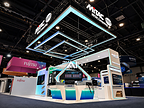
CHICAGO, Nov. 16, 2026 /PRNewswire/ — MiTAC Computing Technology Corporation, a subsidiary of MiTAC Holdings Corporation (TWSE: 3706) and a global leader in high-performance server solutions, today unveiled its comprehensive AI infrastructure ecosystem at SC26. At Booth 4615, themed “Scaling Agentic AI. Built on Full-Stack Infrastructure,” MiTAC demonstrates how full-stack innovation overcomes the compute, thermal, and data bottlenecks of enterprise AI deployment. As Agentic AI drives an exponential surge in inference workloads, scaling infrastructure demands more than just raw GPU power. Through strategic collaborations with AMD, Canonical, DDN, Intel, NVIDIA, and Rafay, MiTAC delivers scalable AI factory architectures combining high-density liquid cooling, disaggregated inference, and end-to-end orchestration.
“Scaling Agentic AI requires cohesive infrastructure, not fragmented systems,” said Rick Hwang, President of MiTAC Computing Technology. “MiTAC provides the foundational full-stack solution to make sustainable AI factories a reality.”
Pioneering the Disaggregated AI Inference Engine
MiTAC and Skymizer are collaborating on an inference architecture that assigns compute-intensive prefill to GPUs and memory-intensive decode to Skymizer’s HTX301 accelerator cards. The approach is designed to let enterprises provision each stage for its workload while keeping model inference on premises.
The proposed configuration combines two server platforms:
Prefill Stage: The MiTAC G8825Z5 (8U), featuring AMD EPYC™ 9575F or 9755 processors and AMD Instinct™ MI350X GPUs, is proposed for prefill processing and transfer of the resulting Key-Value (KV) cache to the decode server over high-speed networking.Decode Stage: The air-cooled MiTAC G4520G6 (4U), equipped with Intel® Xeon® 6 processors, is proposed with eight Skymizer HTX301-4S accelerator cards, each with 256 GB of memory, providing 2 TB of aggregate accelerator memory across eight PCIe slots.
Together, the collaborative MiTAC G4520G6 decode server is designed to run massive models—such as the 2.8-trillion-parameter Kimi K3 large language model—on-premises to drive complex, deep-reasoning agentic AI workloads. Visit the landing page to learn more.
Orchestrating the Full-Stack Software Ecosystem
A scalable AI factory requires a cohesive software ecosystem. For foundational security, Canonical Ubuntu provides the certified operating system layer, ensuring seamless deployment and enterprise-grade reliability. Integrating the DDN Infinia solution ensures monumental data streams are processed with ultra-low I/O latency, preventing accelerator data starvation. Building on this foundation, MiTAC collaborates with Rafay to empower organizations with dynamic GPU-as-a-Service (GPUaaS) orchestration, efficiently allocating GPU resources across distributed workloads to eliminate idling and maximize ROI. Binding this ecosystem together is MiTAC’s proprietary MiCoreView™ software, a comprehensive POD management solution granting deep telemetry and unified visibility across the data center.
Showcasing Diversified AI Infrastructure Through Rack-Scale Innovations
Building on AMD Chair and CEO Dr. Lisa Su’s vision announced at OCP Global Summit last month, MiTAC is collaborating with AMD to develop the Helion Agentic AI Rack. Purpose-built for next-generation rack-scale agentic architectures, the upcoming ORv3 44OU Helion solution will scale up to 32,768 AMD Zen 6 CPU cores within an open-source stack—empowering hyperscale and enterprise environments to intelligently route complex workloads and maximize agents-per-watt efficiency.
Live on the SC26 show floor, MiTAC is also showcasing three rack-scale innovations built for modern workloads:
52U High-Density AI Liquid-Cooled Rack: Integrating 12 MiTAC G4826Z5 servers with 96 AMD Instinct™ MI355X GPUs, this solution achieves 50% higher GPU density than conventional deployments.Advanced Liquid Cooling Rack: Partnering with ZutaCore, MiTAC exhibits a PoC integrating the G4826Z5 with Waterless Two-Phase Direct Liquid Cooling (DLC). Vaporizing dielectric fluid directly at the chip supports thermal design powers exceeding 4,000W and a heat flux over 250W/cm², enabling an annualized pPUE of 1.03.High-Performance Storage Rack: Designed to feed Agentic AI without I/O bottlenecks, MiTAC’s storage rack—powered by the DDN Infinia intelligent AI data platform utilizing seven GC68C-B8056 1U storage servers—delivers ultra-high-throughput, low-latency performance for continuous data streams.
Expanding the Foundation with Comprehensive Server Platforms
Beyond rack-scale architecture, MiTAC offers comprehensive server platforms for customized enterprise deployments:
AI Servers
G4827Z6: A 4U modular enterprise AI server leveraging NVIDIA MGX architecture and AMD EPYC™ 9006 SP7 processors. It pairs optimally with NVIDIA RTX PRO 4500 and 6000 Blackwell Server Edition GPUs for diverse inference workloads.G2610Z6: A compact 2U edge GPU server with AMD EPYC™ 9006 SP8 processors. It seamlessly integrates with NVIDIA RTX PRO 4500 and 6000 Blackwell Server Edition GPUs, bringing robust AI capabilities to edge locations.TN85-B8261: A dual-socket platform supporting the AMD Instinct™ MI350P PCIe Card, delivering highly efficient AI acceleration for specialized applications.
Enterprise Servers
R1917GC: Serving as the orchestrating brain of edge data centers, this 1U management server utilizes NVIDIA Vera and NVIDIA Grace CPUs to coordinate complex clusters without internal GPUs.R1610Z6: Featuring AMD EPYC™ 9006 SP8 processors in a dense 1U footprint, it delivers uncompromising single-socket performance for cloud-native workloads.
Multi-Node Servers
M2810Z6: A 2U2N multi-node server with AMD EPYC™ 9006 SP7 processors, optimizing compute density for software-defined hyper-converged infrastructure (HCI).C2611Z6: A liquid-cooled multi-node server designed for OCP ORv3 racks and powered by AMD EPYC™ 9006 SP8 processors. It integrates four compute nodes in a compact 2OU form factor, each supporting 16 DDR5-8000 RDIMM slots and OCP 3.0 expansion for high-density, liquid-cooled infrastructure.
Attendees are welcome to visit MiTAC Computing at Booth 4615 from Nov. 17-19 at McCormick Place, Chicago.
Learn more:
AMD Platform BrochureIntel Platform BrochureNVIDIA Platform Brochure
About MiTAC Computing Technology Corporation
MiTAC Computing Technology Corp., a subsidiary of MiTAC Holdings, delivers comprehensive, energy-efficient server solutions backed by industry expertise dating back to the 1990s. Specializing in AI, HPC, cloud, and edge computing, MiTAC Computing employs rigorous methodologies to ensure uncompromising quality—across barebones, systems, racks, and cluster levels—fully achieving performance and integration. This commitment to quality at every level sets MiTAC Computing apart in the industry.
With a worldwide presence and end-to-end capabilities—from R&D and manufacturing to global support—MiTAC Computing provides agile, customized platforms for hyperscale data centers, HPC, and AI applications, ensuring optimal performance and scalability to meet unique business needs. By leveraging the latest advancements in AI and liquid cooling, and unifying the MiTAC brand with Intel DSG and TYAN server products, MiTAC Computing stands out for its innovative, efficient, and reliable server technology as well as its hardware and software integrated solutions—empowering businesses to meet future challenges.
MiTAC Computing Technology Corporation website: https://www.mitaccomputing.com/
AMD, the AMD logo, EPYC™, AMD Instinct™, and combinations thereof are trademarks of Advanced Micro Devices, Inc.
View original content to download multimedia:https://www.prnewswire.com/news-releases/mitac-computing-scales-agentic-ai-with-full-stack-infrastructure-at-sc26-302941327.html
SOURCE MiTAC Computing Technology Corporation

Return to loan growth, with net loans up 1.3% QoQ in real terms and accelerating to 3.7% MoM in September
NPL ratio improved to 5.4%, approximately 200 bps below industry, with net cost of risk down 100 bps to 4.6%
Lower cost to serve, with personnel expenses excluding severance down 14% QoQ and administrative expenses down approximately 10%
BUENOS AIRES, Argentina, Nov. 16, 2026 /PRNewswire/ — Grupo Supervielle S.A. (NYSE: SUPV; BYMA: SUPV), (“Supervielle” or the “Company”) a universal financial services group headquartered in Argentina with a nationwide presence, today reported results for the three- and nine-month period ended September 30, 2026.
Starting 1Q20, the Company began reporting results applying Hyperinflation Accounting, in accordance with IFRS rule IAS 29 (“IAS 29”) as established by the Central Bank.
Commenting on third quarter 2026 results, Patricio Supervielle, Grupo Supervielle’s Chairman & CEO, noted: “The third quarter marked a return to loan growth as we began to deliver on the priority we outlined last quarter: selectively expanding lending in strategic products and sectors with stronger credit profiles while maintaining disciplined risk management and a clear focus on profitability. Our net loan portfolio grew 1.3% sequentially in real terms, with momentum strengthening in September, when loans increased 3.7%, and 2% in October.
Asset quality continued to improve. Our NPL ratio edged down to 5.4%, remaining 200 basis points below the industry, while net cost of risk declined by 100 basis points sequentially to 4.6% and loan loss provisions fell 14.5%. Although conditions remain challenging, particularly for some SMEs, these results reinforce our confidence in our approach to managing credit risk and rebuilding lending momentum.
On the funding side, we actively managed our deposit base as interest rates increased, reducing high-cost institutional peso deposits (as interest rates increase) to better align funding with our lending needs and contain interest expense, while dollar deposits continued to grow.
Net interest margin decreased to 16.0%, while the year-to-date margin stood at 18.0%, within our full-year guidance range. As anticipated, the temporary benefits we highlighted last quarter unwound as asset yields repriced, following the prior quarter decline in funding costs. Lower inflation reduced income from inflation-linked loans, and lower investment securities gains also contributed to margin compression. Renewed loan growth is an important step toward strengthening our earnings capacity, with its contribution is expected to build as origination volumes recover. We reported net income of AR$6.8 billion, equivalent to 2.2% ROAE. Excluding extraordinary severance charges associated with the completion of our rightsizing plan, adjusted net income was AR$10.7 billion, equivalent to 3.4% adjusted ROAE.
The transformation of our operating model is translating into a lower cost to serve. Personnel expenses excluding severance charges declined 14% sequentially, while administrative expenses fell approximately 10%, reflecting savings from branch consolidation and a leaner operating structure. Although lower revenues weighed on efficiency during the quarter, the year-to-date efficiency ratio excluding extraordinary severance charges stood at 55.5%. Building revenues on this lower cost base remains central to improving operating leverage and sustainable profitability.
On November 5, we marked an important milestone in Supervielle’s transformation, unveiling a new brand identity that brings to life the integrated financial ecosystem we have been building over the past two years. Our renewed SuperApp connects everyday banking, family finances and investing through “SuperFamilia”, closer integration with IOL Inversiones and AI-assisted customer service needs within a simpler, more personalized experience. We also launched “Pollen X”, our Banking as a Service platform, enabling companies, fintechs and digital platforms to embed our financial services into their own offerings. Together, these capabilities strengthen our role in customers’ everyday financial lives and open new opportunities for growth through a broader range of channels.
At IOL, assets under custody increased 20% sequentially in U.S. dollar terms to US$3.5 billion, while total accounts reached 2.5 million. Assets under management in mutual funds managed by IOL also continued to grow, reaching US$ 492 million at quarter-end. This growth underscores the opportunity to connect our banking and investment capabilities more closely and support a broader range of our customers’ financial needs.
Looking ahead, our priorities remain clear: sustain the improvement in asset quality, build on the return to lending growth and continue our permanent agenda of lowering the cost to serve into stronger, sustainable returns. Argentina’s low level of financial penetration presents a significant long-term opportunity. With a solid CET1 ratio of 13.5%, we are well positioned to pursue it through disciplined risk management, close customer relationships and a more efficient operating model. As we mark ten years as a publicly listed company, we look forward to sharing our Five-Year vision and strategic priorities at our Supervielle Day on November 23,” concluded Mr. Supervielle.
Third quarter 2026 Highlights
The Company reported an Attributable Net Income of AR$.6.8 billion in 3Q26, compared to Ps.13.6 billion in 2Q26 and an Attributable Net Loss of AR$.67.0 billion in 3Q25. In 9M26, the Company posted an Attributable Net Income of Ps.1.1 billion, compared to an Attributable Net Loss of Ps.35.9 billion in 9M25. Group headcount was 16% below year-end 2025 levels at quarter-end, following the headcount rightsizing plan implemented in 1H26 across its Banking ecosystem to align its workforce with a more efficient distribution model, as a growing share of customer activity migrates to digital and virtual hub service channels. Excluding severance charges, which in 3Q26 were limited to residual charges related to the headcount rightsizing plan implemented in 1H26, the Company posted an Adjusted Net Income of AR$.10.7 billion in 3Q26 and AR$.56.5 billion in 9M26.
During 3Q26, the structural improvements implemented in recent quarters became increasingly visible in the Company’s efficiency metrics, with a lower cost base driving the cost-to-assets ratio to 7.9%, its lowest level in the last five quarters. Credit costs also continued to decline, reflecting the sustained impact of portfolio management, collection and refinancing initiatives undertaken since 2025, together with a disciplined and cautious origination strategy. These trends translated into improved asset quality indicators, with the NPL ratio improving to 5.4% and net cost of risk easing to 4.6%.
However, these improvements were more than offset by lower Net Financial Income, reflecting the anticipated unwinding of the temporary spread benefits observed in the previous quarter, together with lower returns on UVA loans and CER-adjusted securities as inflation slowed. As a result, Net Income declined sequentially. In 9M26, results continued to reflect a transitional period, with underlying cost and credit trends improving.
3Q26 ROAE was 2.2% while adjusted ROAE was 3.4%, and Structural ROAE, which reflects the full run-rate of the salary savings associated with the headcount reductions under the voluntary retirement program, as if those reductions had been fully in effect throughout the period, was 3.5%. ROAA was 0.3%. 9M26 ROAE was 0.1%, while adjusted ROAE was 6.1% and structural ROAE was 7.2%.
In 3Q26, the Company reported Profit Before Income Tax of AR$.12.2 billion, compared to a Profit Before Income Tax of AR$.20.4 billion in 2Q26 and a Loss Before Income Tax of AR$.108.3 billion in 3Q25. This result included approximately AR$.5.9 billion in residual severance charges, compared with AR$.38.1 billion in 2Q26. Excluding these charges, Adjusted Profit Before Income Tax, was AR$.18.1 billion in 3Q26.
The sequential decline primarily reflects a 22.4% QoQ decrease in Net Financial Income, to AR$.241.8 billion, as the lagged repricing of interest-earning assets to lower market rates and to lower inflation, compressed spreads following the exceptional margin expansion recorded in 2Q26. This was partially offset by a 26.5% QoQ reduction in personnel and administrative expenses, to AR$.141.5 billion (down 12.2% excluding severance charges in both quarters), and a 14.5% QoQ reduction in Loan Loss Provisions, which declined to AR$.61.5 billion, extending the downward trend from the AR$.133.9 billion peak reached in 4Q25. Additionally, the loss from the net monetary position (RECPAM) declined 1.8% QoQ as inflation moderated. Net Service Fee Income decreased 6.7% QoQ to AR$.53.2 billion, primarily reflecting lagged fee repricing, as account package repricing was only implemented in September, and lower credit card commissions amid lower loan volumes, together with a weaker performance in asset management fees, partially offset by a 4.1% increase in net fee income from the IOL brokerage business.
On a cumulative basis, the Company posted a Profit Before Income Tax of AR$.7.4 billion in 9M26, compared to a Loss Before Income Tax of AR$.73.7 billion in 9M25. Excluding extraordinary severance charges, Adjusted Profit Before Income Tax amounted to AR$.92.6 billion in 9M26.
3Q26 Net Financial Income totaled AR$.241.8 billion in 3Q26, decreasing 22.4% QoQ and increasing 45.0% YoY. The sequential decline reflects the unwinding of the temporary spread benefits observed in the previous quarter, as anticipated. In 2Q26, the sharp decline in market rates, with average TAMAR falling to 22.8% from 32.0% in 1Q26, was passed through quickly to funding costs, while asset yields adjusted with a lag, temporarily widening spreads. In 3Q26, average TAMAR edged up slightly to 23.5%, keeping funding costs broadly stable, while interest-earning assets continued to reprice to the lower rate levels reached in the prior quarter, compressing spreads, together with lower inflation, which reduced the accrual on inflation-linked (UVA) loans and CER-adjusted securities. YoY, the increase reflects the recovery from the exceptionally compressed margins of 3Q25, when the monetary tightening ahead of the mid-term elections drove the average TAMAR to 46.4%, alongside historically high reserve requirements. Net Financial Income plus the Result from exposure to changes in the purchasing power of the currency totaled AR$. 208.5 billion, decreasing 24.9% QoQ, but increasing 63.1% YoY.
In 9M26, Net Financial Margin amounted to AR$841.1 billion, increasing 16.4% from 9M25.
Net Interest Margin (NIM) was 16.0% in 3Q26, declining 430 bps QoQ from the exceptionally high level recorded in 2Q26, but 520 bps above YoY. As anticipated in the previous quarter, the sequential compression reflects the lagged repricing of interest-earning assets to the lower rate environment, after funding costs had adjusted faster in 2Q26, as well as lower inflation, which reduced the accrual on inflation-linked (UVA) loans and CER-adjusted securities. The impact was reflected across the balance sheet: Loan Portfolio NIM was 17.2%, down 360 bps QoQ, and Investment Portfolio NIM was 13.7%, down 410 bps QoQ. AR$ NIM was 19.4% in 3Q26, 480 bps lower QoQ but 770 bps higher YoY. In pesos, loan portfolio NIM fell 450 bps to 21.8%, as loan yields caught up with lower market rates, while the AR$ cost of funds remained broadly stable. The peso investment portfolio NIM contracted 560 bps to 14.4% reflecting lower yields on AR$ government securities although 1,250 bps above 3Q25 level.
YoY, the expansion in NIM reflects the normalization of funding costs from the exceptionally elevated levels of 3Q25, when the monetary tightening ahead of the mid-term elections drove average TAMAR to 46.4%, compared to 23.5% in 3Q26.
The Total NPL Ratio was 5.4% as of September 30, 2026, down from 5.5% as of June 30, 2026 and approximately 200 bps below the industry average. While the ratio continues to reflect the carry-over effects of credit stress from prior quarters in a challenging macroeconomic environment, portfolio dynamics continued to improve, with delinquency indicators declining consistently since March. The 90-day delinquency ratio was 4.4% at the end of 3Q26, 100 bps below the reported NPL ratio. This gap reflects exposures classified as non-performing under Central Bank criteria that were performing or less than 90 days past due according to the Bank’s records. The Retail NPL ratio declined to 8.6% from 9.6% in June, while the retail 90-day delinquency ratio improved to 7.1% from 7.9%.
Quarterly NPL formation declined for the third consecutive quarter and stood approximately 25% below the 4Q25 peak, with retail NPL formation down 44% from that peak.
Measured in constant pesos, the stock of retail loans more than 90 days past due declined every month since February 2026, ending the quarter 27% below its peak and 16% below June. This reflects improved collection and refinancing dynamics resulting from active portfolio management and a disciplined origination strategy in place since early 2025, with origination cohorts since 4Q25 continuing to perform meaningfully better. In contrast, the commercial portfolio showed some deterioration during the quarter, with higher delinquency and NPL formation, reflecting the lagged impact of the high interest rate environment in prior months on SME customers. While conditions remain challenging, the sustained improvement in retail and the stronger performance of recent origination cohorts reinforce our confidence in our credit risk management approach.
Loan Loss Provisions (LLPs) declined 14.5% QoQ to AR$61.5 billion in 3Q26. This reduction was consistent with easing delinquency trends throughout the quarter and reflects the early benefits of the collection and refinancing initiatives implemented since December 2025, together with disciplined risk-adjusted loan origination. The Coverage Ratio was 92.8% as of September 30, 2026, compared to 98.9% as of June 30, 2026, and 112.2% as of September 30, 2025. The decline reflects the contraction of the retail portfolio over recent quarters, where loans require higher provisioning. At the same time, NPL formation increased in the commercial portfolio, where loans require lower allowances relative to their outstanding balance under the IFRS 9 expected credit loss model. On an adjusted basis, considering loans to individuals more than 90 days past due at the Bank, the coverage ratio was 105%.
Efficiency Ratio was 61.3% in 3Q26, compared with 63.4% in 2Q26. The sequential improvement mainly reflects lower severance charges, which declined to approximately AR$5.9 billion in 3Q26 from AR$38.1 billion in 2Q26, with 3Q26 charges mainly reflecting residual costs related to the voluntary retirement program. Excluding these items, the adjusted efficiency ratio would have been 59.2% compared with 52.3% in 2Q26. The increase in the adjusted efficiency ratio reflects the 19.7% sequential decline in revenues, driven by lower net financial income as asset yields continued to reprice downward while funding costs remained broadly stable, compressing spreads. This more than offset the 9.2% decline in operating expenses excluding severance charges, reflecting continued cost discipline and the benefits of the structural efficiency initiatives implemented across the organization. In 9M26, the efficiency ratio was 64.6%. Excluding AR$ 85.2 billion of extraordinary severance costs, the 9M26 efficiency ratio would have been 55.5%.
The Loans to Deposits Ratio was 82.8% as of September 30, 2026, compared to 72.6% as of June 30, 2026, and 67.3% as of September 30, 2025. The QoQ increase mainly reflects the 11.6% decline in deposits during the quarter reflecting asset and liability management, combined with the 0.9% growth in the net loan portfolio.
Total Deposits were AR$ 5,587.6 billion at quarter-end, decreasing 11.6% QoQ and 17.2% YoY. The sequential decrease was driven by asset and liability management initiatives reducing high-cost institutional peso deposits and a seasonal decrease in savings accounts.
Total private sector deposits were AR$ 5,367.6 billion, decreasing 11.5% QoQ and 17.8% YoY. AR$ deposits totaled AR$ 3,676.0 billion, decreasing 15.9% QoQ and 17.8% YoY.
The QoQ performance of AR$ Deposits, down 15.9%, or AR$ 695.2 billion, primarily reflects lower institutional funding, together with the reversal of the seasonal increase in retail deposits recorded in the previous quarter. During the quarter, the Company continued to actively manage its funding mix, reducing higher-cost institutional time deposits as well as corporate and public sector deposits, and partially replaced them with alternative funding sources, mainly repo transactions. As a result, the blended AR$ and US$ cost of funds declined approximately 50 bps QoQ, while the AR$ cost of funds increased only 10 bps sequentially, significantly less thanthe 70 bps increase in average TAMAR, limiting the impact of higher market rates on funding costs.
Foreign currency deposits amounted to US$1.3 billion, increasing 1.5% QoQ and 0.9% YoY.
Total Assets were AR$9,114.6 billion as of September 30, 2026, decreasing 1.3% QoQ and 8.4% YoY. The sequential performance mainly reflected: i) a 9.3%, or AR$201.0 billion, decrease in the public sector investment portfolio and repo transactions reflecting asset and liability management decisions following the reduction in institutional deposits, partially offset by: ii) a 17.1%, or AR$43.1 billion, increase in the corporate notes investment portfolio. In addition, iii) the loan portfolio (net of provisions) increased 1.3%, or AR$ 58.1 billion, driven by 13.4% increase in US dollar–denominated loans partially offset by a 1.7% decline in peso-denominated loans, as the Company prioritized disciplined origination and attractive risk-adjusted returns over volume, while iv) cash and due from banks remained broadly stable declining 1.0%, or AR$ 14.1 billion, reflecting lower regulatory liquidity needs at quarter-end. The leverage ratio (Assets to Shareholders’ Equity) was 7.3x, decreasing 10 bps QoQ, from 7.4x as of June 30, 2026, and 60 bps YoY, from 7.9x as of September 30, 2025. The average leverage ratio in 3Q26 was 6.9x, stable compared with 2Q26 and 3Q25.
Total Loans amounted to AR$4,624.0 billion as of September 30, 2026, increasing 0.9% QoQ and 1.8% YoY and 155.5% since March 31, 2024. Loan growth since March 31, 2024, has significantly outpaced the industry’s 142% increase, while remaining in line with the industry on a YoY basis. Net loans amounted to AR$ 4,383.0 billion as of September 30, 2026, increasing 1.3% QoQ and 1.1% YoY.
The sequential performance was primarily driven by a 13.4% increase in U.S. dollar loans, mainly to corporate clients in export-oriented sectors, which continued to lead economic activity, while peso–denominated loans decreased 1.7% reflecting soft loan demand and a disciplined origination strategy focused on attractive risk-adjusted returns.
By segment, quarterly performance was driven by commercial loans, which increased 4.2%, while retail loans declined 5.1%. Lending activity gained momentum toward quarter-end, with total loans increasing 3.7% in September compared to August. Retail loan origination also picked up, with origination volume in September 20% higher than in August. On a YoY basis, commercial loans grew 24.6%, while retail loans declined 19.4%, reflecting the disciplined approach to retail origination maintained since early 2025.
Common Equity Tier 1 Ratio (CET1) was 13.5% as of September 30, 2026, declining from 14.2% in the prior quarter but remaining 30 basis points higher than a year earlier. The sequential decline primarily reflects higher RWA density, driven by an increase in loans and an increase in market risk associated with the expansion of the corporate notes portfolio.
View original content to download multimedia:https://www.prnewswire.com/news-releases/grupo-supervielle-reports-3q26-results-302941254.html
SOURCE Grupo Supervielle S.A.
Technology
QuiX Quantum Advances the Industrial Foundations for Fault-Tolerant Quantum Computing Through the Dutch-Taiwanese QSPAD Project
Published
1 hour agoon
November 17, 2026By

With Taiwanese partners Artilux Inc. and its affiliate Brillink Inc., and supported by a TechBridge grant from the Netherlands Enterprise Agency (RVO) and Taiwan’s Industrial Development Administration (IDA), QuiX Quantum will develop room-temperature, chip-integrated single-photon detectors — removing the cryogenic bottleneck that constrains scalable, fault-tolerant photonic quantum computing.
ENSCHEDE, Netherlands and HSINCHU, Nov. 17, 2026 /PRNewswire/ — QuiX Quantum, a Dutch-German developer of universal photonic quantum computers, together with Taiwanese partners Artilux Inc. and its affiliate Brillink Inc., has been awarded funding under the TechBridge Taiwan Call 2026 – Photonics Integrated Circuits, a joint programme of the Netherlands Enterprise Agency (RVO) and Taiwan’s Industrial Development Administration (IDA). The 36-month project, QSPAD, will run from January 2027 to December 2029 to develop, integrate and demonstrate photonically integrated single-photon detectors that operate near room temperature.
For QuiX Quantum, QSPAD represents an important industrial building block for its long-term roadmap toward scalable, fault-tolerant quantum computing — removing one of the last hardware barriers to quantum systems that can be deployed beyond specialised laboratories.
Removing the Cryogenic Bottleneck in Photonic Quantum Computing
Today, the most advanced photonic quantum computers depend on superconducting nanowire single-photon detectors that operate only below about 2.5 kelvin — colder than deep space. This requirement binds an expensive, bulky cryogenic system to the heart of every machine and keeps the technology out of environments where such cooling is impractical.
QSPAD is designed to remove that constraint. The project will develop and demonstrate waveguide-based germanium-silicon (GeSi) single-photon avalanche diode (SPAD) arrays that operate at or near room temperature — down to –40 °C using conventional thermoelectric cooling — co-integrated with QuiX Quantum’s low-loss silicon nitride photonic integrated circuits. The detectors are CMOS-compatible and sensitive at the 1310/1550 nm telecom wavelength, and the detector and photon-source circuits are joined through an engineered optical coupling packaged in a compact Photonic Assembly Control Unit.
Eliminating cryogenic detection removes the single largest cost item from a photonic quantum system and opens applications that are structurally closed to cryogenic hardware, from commercial data centres to field-deployed quantum sensing, while supporting a route to European volume manufacturing for the underlying photonic circuits.
Supporting the Path Toward Fault-Tolerant Quantum Computing
QSPAD’s objectives align closely with QuiX Quantum’s development roadmap. Building on CARINA, the universal photonic quantum computing platform the company delivered in 2026, QuiX Quantum is advancing its next-generation Dedalo architecture, with loss-tolerant logical-qubit capabilities planned throughout 2028–2030 and commercially deployable fault-tolerant systems targeted beyond 2030.
Dedalo is designed around modular photonic hardware, quantum error correction, photon-loss protection, energy-efficient operation, and integration with classical HPC and data-center infrastructure. Achieving these objectives requires not only advances in quantum-system architecture but also the industrial manufacturing and integration of high-performance photonic components — including efficient, scalable single-photon detection.
By developing non-cryogenic, chip-integrated detectors across the 2027–2029 period, QSPAD helps translate the system-level requirements of this roadmap into concrete, manufacturable technology, supporting the industrial foundations on which increasingly scalable photonic quantum computers can be built.
A Netherlands–Taiwan Partnership Strengthening the Photonic Quantum Supply Chain
QSPAD pairs two ecosystems whose strengths are highly complementary. QuiX Quantum contributes its silicon nitride photonic platform, photon-source design and quantum-system integration expertise; Artilux contributes GeSi single-photon detector technology, CMOS-compatible fabrication at commercial volumes, while Brillink bridges the region’s world-class advanced packaging and testing supply chain. Neither partner could deliver QSPAD alone.
The collaboration also strengthens a resilient, internationally competitive quantum-photonics supply chain — combining Taiwan’s detector leadership with a European manufacturing pathway and deepening a long-term partnership between the Dutch and Taiwanese photonics ecosystems. QuiX Quantum and its partners look forward to beginning the joint work in early 2027.
“Room-temperature single-photon detection is one of the missing industrial building blocks on the path to deployable fault-tolerant quantum computers. With Artilux and Brillink, we are combining Taiwan’s leadership in GeSi detectors and advanced packaging and testing supply chain with our photonic-integration and system expertise to remove the cryogenic bottleneck — and we are proud to be building this bridge between the Dutch and Taiwanese photonics ecosystems,” said Stefan Hengesbach, CEO of QuiX Quantum.
“Together with our Dedalo roadmap toward logical-qubit demonstrations between 2028 and 2030, QSPAD helps lay the manufacturing and integration foundations for quantum systems that can operate beyond the laboratory. It is another step in turning European — and now European and Taiwanese — scientific excellence into scalable industrial capability.”
“This collaboration is an important step in translating our GeSi technology into a key building block for future quantum computing and network. Together with QuiX Quantum and Brillink, we look forward to realizing integrated, manufacturable solutions for next-generation quantum systems.” said Dr. Erik Chen, Co-founder & CEO, Artilux Inc.
“The future of photonic quantum computing depends not only on advances in individual devices but also on reliable integration and scalable packaging. At Brillink, we are committed to advancing photonic integration and packaging technologies that bridge innovative components with practical system-level solutions” said Dr. Fang Yen Hsiang, COO, Brillink Inc.
About QuiX Quantum
QuiX Quantum is a European photonic quantum computing company founded in Enschede, the Netherlands, in 2019. The company develops integrated photonic quantum computing hardware and describes its approach as full-stack and fabless, with systems designed for modularity, scalability, and compatibility with data center and HPC environments. QuiX Quantum has offices in the Netherlands and Germany and is developing universal photonic quantum computing systems based on its silicon nitride photonic technology. More information: www.quixquantum.com
About Artilux
Founded in 2014, Artilux is a global leader in GeSi photonics, delivering a CMOS-compatible platform engineered for the AI era. The company powers three pillars of intelligence: Cloud AI, through high-speed optical interconnects (Connect Enterprise), hybrid electro-photonic computing (Inception), and scalable quantum photonics (Odyssey); Edge AI, through low-power on-device processing (Inception) and device-level optical connectivity (Connect Consumer); and Physical AI, through wide-spectrum sensing (Aware) and 3D spatial imaging (Explore)—advancing sharper perception, faster connectivity, and scalable compute to enlighten the path from information to intelligence. For more information, please visit www.artilux.ai
About Brillink
Founded in 2025, Brillink delivers AI-driven optical solutions featuring proprietary 2D array surface-coupling technology. We offer end-to-end capabilities—from AI-assisted PIC design to optical engines integrating Micro LEDs and Meta-optics. As a comprehensive provider bridging chip development and system design, we are “Connecting Intelligence at Light Speed” to power the next generation of AI infrastructure. For more information, please visit www.brillink.ai
About TechBridge
TechBridge is an RVO programme, commissioned by the Dutch Ministry of Economic Affairs, that supports Dutch companies and knowledge institutions in developing key technologies with international partners. The Taiwan Call 2026 on Photonics Integrated Circuits is run jointly with Taiwan’s Industrial Development Administration (IDA), with each country funding its own partners.
Media contact:
QuiX Quantum
Artilux Inc.
Brillink Inc.
Communications@quixquantum.com
Angela Wang
Linda Wu
+886-910-030-255
+886-910-383-527
View original content to download multimedia:https://www.prnewswire.com/apac/news-releases/quix-quantum-advances-the-industrial-foundations-for-fault-tolerant-quantum-computing-through-the-dutchtaiwanese-qspad-project-302941060.html
SOURCE QuiX Quantum; Brillink Inc.; Artilux Inc.


MiTAC Computing Scales Agentic AI with Full-Stack Infrastructure at SC26

Grupo Supervielle Reports 3Q26 Results

QuiX Quantum Advances the Industrial Foundations for Fault-Tolerant Quantum Computing Through the Dutch-Taiwanese QSPAD Project

Send Rakhi to UK swiftly with UK Gifts Portal

Whiteboard Series with NEAR | Ep: 45 Joel Thorstensson from ceramic.network

Nullmax and Renesas Forge Strategic Partnership to Deliver Competitive ADAS Solutions for the Global Market

Why You Should Build on #NEAR – Co-founder Illia Polosukhin at CV Labs
Whiteboard Series with NEAR | Ep: 45 Joel Thorstensson from ceramic.network

NEAR End of Year Town Hall 2021: The Open Web World, MetaBUILD 2 Hackathon and 2021 recap
Trending
-
 Technology4 days ago
DomoAI Launches InkoAI Agent – One Sentence to Ready-to-Post Video
-

 Near Videos4 days ago
Illia Polosukhin on NEAR’s answer to Big Tech AI
-

 Coin Market5 days ago
South Korea to permit crypto withdrawal freezes during hacking threats
-

 Near Videos3 days ago
Illia Polosukhin on NEAR as encrypted Ethereum
-
 Technology3 days ago
Innovative Immunology Biotech Windward Bio Lists on Nasdaq
-

 Coin Market4 days ago
Gemini’s quarterly retail trading volume sinks to 3-year low
-

 Coin Market4 days ago
DOJ moves to seize $1.2B from Binance hack, disrupts FaceStealer scam
-

 Technology2 days ago
The First Cartridge-Free Smart Waterless Diffuser Is Here. What Would You Fill It With?