Technology
Artificial Intelligence (Ai) In The Education Sector Market size is set to grow by USD 2.32 billion from 2024-2028, Growing emphasis on customized learning paths using ai boost the market, Technavio
Published
2 years agoon
By
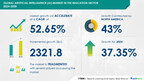
NEW YORK, Aug. 7, 2024 /PRNewswire/ — The global artificial intelligence (AI) in the education sector market size is estimated to grow by USD 2.32 billion from 2024-2028, according to Technavio. The market is estimated to grow at a CAGR of about 52.65% during the forecast period. Growing emphasis on customized learning paths using AI is driving market growth, with a trend towards increased emphasis on chatbots. However, high cost associated with ai poses a challenge. Key market players include 2U Inc., Alphabet Inc., Amazon.com Inc., Brainly, Carnegie Learning Inc., Century Tech Ltd., Cognii Inc., Cognizant Technology Solutions Corp., DreamBox Learning Inc., Fishtree Inc., International Business Machines Corp., Jenzabar Inc., John Wiley and Sons Inc., Kaltura Inc., LAIX Inc., McGraw Hill LLC, Microsoft Corp., n2y LLC, Pearson Plc, and Quantum Adaptive Learning LLC.
Get a detailed analysis on regions, market segments, customer landscape, and companies- View the snapshot of this report
Artificial Intelligence (AI) In The Education Sector Market Scope
Report Coverage
Details
Base year
2023
Historic period
2018 – 2022
Forecast period
2024-2028
Growth momentum & CAGR
Accelerate at a CAGR of 52.65%
Market growth 2024-2028
USD 2321.8 million
Market structure
Fragmented
YoY growth 2022-2023 (%)
37.35
Regional analysis
North America, Europe, APAC, South America, and Middle East and Africa
Performing market contribution
North America at 43%
Key countries
US, China, UK, Germany, and Canada
Key companies profiled
2U Inc., Alphabet Inc., Amazon.com Inc., Brainly, Carnegie Learning Inc., Century Tech Ltd., Cognii Inc., Cognizant Technology Solutions Corp., DreamBox Learning Inc., Fishtree Inc., International Business Machines Corp., Jenzabar Inc., John Wiley and Sons Inc., Kaltura Inc., LAIX Inc., McGraw Hill LLC, Microsoft Corp., n2y LLC, Pearson Plc, and Quantum Adaptive Learning LLC
Market Driver
Artificial Intelligence (AI) chatbots are revolutionizing the education sector by providing personalized learning experiences for students. Utilizing AI, Machine Learning (ML), and deep learning technologies, these chatbots store, process, and communicate data to students. They perform various functions, including answering queries, assessing and correcting assessments, and facilitating conversations. Georgia Tech’s Jill Watson, an IBM virtual teacher assistant, is an example of this innovation. Chatbots can identify a student’s study pattern and offer customized learning pathways. They can also help students learn at spaced intervals by repeating old lessons at optimal times. The increasing adoption of online learning models will drive the demand for chatbots in education, creating new business opportunities for vendors.
Artificial Intelligence (AI) is revolutionizing various industries, including Education. AI technology, such as machine learning, computer vision, and deep learning, is transforming how we learn. In the Education sector, AI is used for personalized learning, automated grading, and content creation. The IT & telecommunication industry, Retail & e-commerce, BFSI, and Media & Entertainment industries are leading AI adoption. Large enterprises in the Education sector are deploying AI on-premises and in the cloud. AI is used in Sales & Marketing for student engagement, Supply Chain Management for resource allocation, Human Resource Management for recruitment, Finance & Accounting for financial forecasting, Cybersecurity for data protection, and Legal & Compliance for regulatory adherence. Netflix, Amazon, Anthropic, and others use AI for content creation and recommendation. AI market trends include generative AI, big data analytics, robotics, and chatbots. AI tools like ChatGPT and AI art generators are transforming business models. Autonomous AI, algorithms, and machine learning techniques are driving innovation. Data availability and quality are crucial for effective AI implementation.
Discover 360° analysis of this market. For complete information, schedule your consultation – Book Here!
Market Challenges
The implementation of Artificial Intelligence (AI) in the education sector faces significant financial barriers. The high cost of developing, procuring, and maintaining AI solutions is a major hindrance to its widespread adoption. Schools and educational institutions require substantial funding to cover the expenses of installing AI software and the ongoing costs of maintenance. The availability of AI solutions is increasing, but the high research and development costs, capital expenditure, and sustainability risks limit their affordability for many public educational institutions. These financial constraints hinder schools from offering students advanced learning environments and resources, and make it challenging for vendors to enter the market. Consequently, the high cost of AI is expected to impede the growth of the global AI market in the education sector.The Artificial Intelligence (AI) market in education is rapidly growing, with AI technologies like Big Data analytics, robotics, and chatbots transforming the sector. Companies like ChatGPT and AI art generators offer innovative solutions, but challenges persist. The technology roadmap includes business models, autonomous AI, algorithms, and machine learning techniques like natural language processing. Data availability and quality are crucial, with potential issues of bias and inaccurate output. Software and service providers offer solutions, while cloud, network, and security providers ensure infrastructure. Ethical and regulatory concerns, privacy issues, and AI-driven automation in customer service are key challenges. Edge AI and edge computing components like deployment mode, enterprise size, business function, and industry vertical are also important considerations. Hardware, software, and the use of supercomputers and quantum computers with deep learning techniques are part of the technology landscape.
For more insights on driver and challenges – Request a sample report!
Segment Overview
This artificial intelligence (ai) in the education sector market report extensively covers market segmentation by
End-user1.1 Higher education1.2 K-12Learning Method2.1 Learner model2.2 Pedagogical model2.3 Domain modelGeography3.1 North America3.2 Europe3.3 APAC3.4 South America3.5 Middle East and Africa
1.1 Higher education- The global artificial intelligence (AI) market in the education sector is projected to expand at a consistent rate. Universities and colleges worldwide are integrating AI tools to enhance education quality and offer personalized learning experiences. AI solutions, such as IBM’s Watson, are used for automating administrative tasks, reducing costs, and minimizing errors. Grading processes are also being streamlined with AI-driven programs like Gradescope, which allows simultaneous assessment of multiple assignments and provides comprehensive student performance analysis. Federal funding, collaborations, and the growing emphasis on AI-driven virtual assistants and Intelligent Technology Systems (ITS) are key growth drivers for the AI market in education during the forecast period.
For more information on market segmentation with geographical analysis including forecast (2024-2028) and historic data (2017-2021) – Download a Sample Report
Learn and explore more about Technavio’s in-depth research reports
The global Artificial Intelligence (AI) market is witnessing rapid growth, driven by advancements in machine learning and data analytics. In the US education sector, AI’s adoption is transforming learning experiences with personalized education tools, intelligent tutoring systems, and administrative efficiency. The market is projected to expand significantly, with AI enhancing student engagement and outcomes while streamlining educational operations. Key players are investing heavily in AI-driven solutions to address evolving educational needs and improve institutional performance. The sector’s focus on innovative technologies promises continued growth and transformation.
Research Analysis
Artificial Intelligence (AI) is revolutionizing the education sector with its ability to process big data analytics, enhance learning experiences, and automate administrative tasks. AI technologies such as robotics, chatbots, AI art generators, and generative AI tools are transforming teaching and learning. The technology roadmap for AI in education includes the use of algorithms and machine learning techniques like deep learning and natural language processing. Data availability and quality are crucial for effective AI implementation, with potential challenges including bias and inaccurate output. Software providers, service providers, cloud providers, network providers, and security providers are essential partners in this transformation. Computer science education is increasingly focusing on AI algorithms, while supercomputers and quantum computers power advanced research. AI’s business models range from freemium to subscription-based, with autonomous artificial intelligence set to redefine education delivery.
Market Research Overview
The Artificial Intelligence (AI) market in the education sector is experiencing significant growth, driven by advancements in Big Data analytics, robotics, and AI technologies like ChatGPT and AI art generators. The technology roadmap includes generative AI tools, algorithms, machine learning techniques, natural language processing, and deep learning. Business models in the sector vary, with software providers, service providers, cloud providers, network providers, and security providers offering solutions. Autonomous AI and ethical concerns, regulatory issues, and privacy are key considerations. AI-driven automation includes chatbots and virtual assistants for customer service. Edge AI and edge computing are gaining popularity for deployment. The education industry, along with IT & telecommunication, retail & e-commerce, BFSI, and media & entertainment industries, are major adopters. Deployment modes include on-premises and cloud, with large enterprises being the primary consumers. Functions like sales & marketing, supply chain management, human resource management, finance & accounting, cybersecurity, and legal & compliance are also utilizing AI. Hardware, software, and services are essential components of the technology. Supercomputers and quantum computers are powering advanced AI applications. Machine learning techniques, computer vision, and generative AI are transforming education. However, challenges like data availability, data quality, bias, and inaccurate output must be addressed.
Table of Contents:
1 Executive Summary
2 Market Landscape
3 Market Sizing
4 Historic Market Size
5 Five Forces Analysis
6 Market Segmentation
End-userHigher EducationK-12Learning MethodLearner ModelPedagogical ModelDomain ModelGeographyNorth AmericaEuropeAPACSouth AmericaMiddle East And Africa
7 Customer Landscape
8 Geographic Landscape
9 Drivers, Challenges, and Trends
10 Company Landscape
11 Company Analysis
12 Appendix
About Technavio
Technavio is a leading global technology research and advisory company. Their research and analysis focuses on emerging market trends and provides actionable insights to help businesses identify market opportunities and develop effective strategies to optimize their market positions.
With over 500 specialized analysts, Technavio’s report library consists of more than 17,000 reports and counting, covering 800 technologies, spanning across 50 countries. Their client base consists of enterprises of all sizes, including more than 100 Fortune 500 companies. This growing client base relies on Technavio’s comprehensive coverage, extensive research, and actionable market insights to identify opportunities in existing and potential markets and assess their competitive positions within changing market scenarios.
Contacts
Technavio Research
Jesse Maida
Media & Marketing Executive
US: +1 844 364 1100
UK: +44 203 893 3200
Email: media@technavio.com
Website: www.technavio.com/
View original content to download multimedia:https://www.prnewswire.com/news-releases/artificial-intelligence-ai-in-the-education-sector-market-size-is-set-to-grow-by-usd-2-32-billion-from-2024-2028–growing-emphasis-on-customized-learning-paths-using-ai-boost-the-market-technavio-302215635.html
SOURCE Technavio
You may like
Technology
BTQ Technologies’ QSSN Selected as Core Security Infrastructure for South Korea’s First Bank-Led KRW Stablecoin Proof-of-Concept
Published
12 hours agoon
May 6, 2026By
BTQ provides strategic advisory support and QSSN as core PQC security infrastructure for the iM Bank initiative on the Kaia mainnet, advancing post-quantum migration across global financial infrastructure
BTQ has been selected as the core post-quantum cryptography security technology provider for South Korea’s first bank-led KRW stablecoin proof-of-concept, delivering its Quantum Secure Stablecoin Settlement Network (“QSSN”) for the initiative.
BTQ is providing strategic advisory support and helping coordinate implementation across the partnership with iM Bank and Finger, supporting the integration of post-quantum protections into regulated digital money infrastructure.
Built on the Kaia mainnet, the proof-of-concept is connected to the blockchain ecosystems originally developed by Kakao and LINE, linking the initiative to two of the largest messaging and digital platform ecosystems in Korea and Japan.
VANCOUVER, BC, May 6, 2026 /PRNewswire/ – BTQ Technologies Corp. (“BTQ” or the “Company”) (Nasdaq: BTQ) (CBOE CA: BTQ), a global quantum technology company focused on securing mission-critical networks, today announced that it it has been selected as the core PQC security technology provider through its Quantum Secure Stablecoin Settlement Network (“QSSN”) in a proof-of-concept with its Korean strategic partner, Finger Inc. (“Finger”), and iM Bank, a leading Korean commercial bank, for South Korea’s first bank-led Korean won stablecoin infrastructure incorporating post-quantum cryptography (“PQC”).
The proof-of-concept represents more than a technical pilot. It marks an important step in bringing next-generation quantum security into banking infrastructure within Korea’s regulated financial system. In addition to providing QSSN as the core PQC security framework, BTQ is contributing consulting and strategic coordination across the three-way partnership, helping align the project’s security architecture, implementation approach, and long-term post-quantum migration objectives.
“Post-quantum migration requires more than a cryptographic upgrade. It requires coordination across infrastructure, implementation, and institutional stakeholders,” said Olivier Roussy Newton, Chief Executive Officer of BTQ Technologies. “In this initiative, BTQ is providing both strategic advisory support and QSSN as the post-quantum security architecture, while helping lead coordination across the three-way partnership. We believe this proof-of-concept demonstrates how financial institutions can begin integrating quantum-resilient protections into digital money systems in a practical and operationally viable way.”
South Korea’s First Bank-Led PQC Stablecoin Infrastructure Initiative
BTQ is working alongside iM Bank and Finger on a three-way initiative to validate the issuance and distribution infrastructure for a Korean won stablecoin. In addition to supplying QSSN as the PQC security layer, BTQ is providing consulting support and helping to guide coordination across the partnership as the parties evaluate how to integrate post-quantum protections into bank-led digital asset infrastructure.
The proof-of-concept will validate several key components, including real-time reconciliation between bank reserves and blockchain-issued supply, a global-standard smart contract architecture, connectivity to global infrastructure for overseas distribution, and the integration of a PQC-based dual-signature security structure. By applying BTQ’s PQC signature architecture alongside the existing ECDSA cryptographic framework, the system is designed to preserve operational continuity for financial institutions while proactively addressing future quantum computing threats.
Built on Kaia Mainnet
A notable feature of the proof-of-concept is that it will be implemented on the Kaia mainnet, one of Korea’s leading Layer 1 blockchain networks. Kaia was created through the merger of Klaytn, the blockchain originally developed by Kakao, and Finschia, the blockchain associated with LINE. Kakao and LINE sit at the center of two of the largest messaging and digital platform ecosystems in Korea and Japan, respectively, making Kaia a significant piece of regional digital infrastructure.
Klaytn previously participated in the Bank of Korea’s CBDC pilot ecosystem, and the Bank of Korea has continued to advance CBDC testing through initiatives such as Project Hangang.
By combining BTQ’s PQC technology with blockchain infrastructure tied to the Kakao and LINE ecosystems, the proof-of-concept is intended to establish a model that aligns institutional-grade security, blockchain scalability, and evolving regulatory requirements for digital money infrastructure.
QSSN as the Security Layer
The PQC security foundation for the initiative is BTQ’s Quantum Secure Stablecoin Settlement Network, or QSSN, a quantum-secure network architecture designed for stablecoin, tokenized deposit, payment, and digital asset infrastructure. QSSN is designed to protect critical issuer functions, including stablecoin issuance, burning, transfer authority, upgrade control, and administrative permissions, by integrating PQC-based signatures while maintaining existing user experience and operational workflows.
BTQ has previously announced that QSSN was highlighted in the U.S. Post-Quantum Financial Infrastructure Framework (“PQFIF”) as a model architecture for post-quantum digital money infrastructure. The Company has also positioned QSSN as a standards-oriented initiative advanced through QuINSA and aligned with emerging post-quantum financial infrastructure requirements.
Addressing the Harvest-Now, Decrypt-Later Risk
The timing of the proof-of-concept reflects the growing urgency surrounding the “Harvest-Now, Decrypt-Later” risk, in which attackers may collect encrypted financial data today and decrypt it later once sufficiently advanced quantum capabilities emerge. Global institutions are already accelerating post-quantum migration. The U.S. National Institute of Standards and Technology (“NIST”) has finalized its first set of post-quantum cryptography standards, including ML-DSA, ML-KEM, and SLH-DSA, while major technology companies and financial institutions continue to define their own post-quantum transition timelines.
BTQ’s QSSN addresses this challenge through a dual-signature design that allows existing ECDSA-based infrastructure to operate in parallel with NIST-aligned PQC signatures such as ML-DSA. This approach enables banks and payment infrastructure providers to begin a phased transition toward quantum-safe security without disrupting existing systems.
Expanding BTQ’s Korean Ecosystem
BTQ continues to expand its Korean ecosystem across digital assets, payments, banking infrastructure, and hardware-based security. In October 2025, BTQ announced that Finger had joined Danal as an early participant in BTQ’s QSSN pilot program, with the initiative expected to progress from proof-of-concept toward commercialization under QuINSA-aligned guidelines and broader industry frameworks such as PQFIF.
The commencement of the iM Bank proof-of-concept represents an important commercial signal for BTQ, indicating that demand for post-quantum migration among Korean financial institutions is beginning to move from policy discussion toward infrastructure-level implementation. As Korea advances both quantum technology policy and stablecoin-related regulatory discussions, BTQ believes QSSN is well positioned at the intersection of regulated finance, digital asset infrastructure, and post-quantum security.
About iM Bank
iM Bank is a South Korean commercial bank and a subsidiary of DGB Financial Group. Headquartered in Daegu, iM Bank presents itself as a financial companion for customers and traces its roots to Daegu Bank, which was established in 1967 as Korea’s first regional bank. For more information, please visit https://www.imbank.co.kr/
About Finger Inc. Group
Finger supplies and develops financial IT solutions to provide optimized money management strategies for employees and corporate customers. Providing “Smartphone Financial Services”, “Corporate Cash Management Services” for businesses, “Private Wealth Management Services” for private consumers.
Since the year 2000, Finger has accumulated a number of awards and patents regarding its businesses. Based on its Mobile Enterprise Application Platform(MEAP) Orchestra and its funds management system using screen-scrapping technologies, Finger was the first company in Korea to deliver a smartphone banking banking-service. For more information, please visit http://www.finger.co.kr/
About BTQ
BTQ Technologies Corp. (Nasdaq: BTQ | Cboe CA: BTQ) is a quantum technology company focused on accelerating the transition from classical networks to the quantum internet. Backed by a broad patent portfolio and deep technical expertise, BTQ is advancing a full-stack, neutral-atom quantum computing platform spanning hardware, middleware, and post-quantum security solutions for finance, telecommunications, logistics, life sciences, and defense.
Connect with BTQ: Website | LinkedIn | X/Twitter
ON BEHALF OF THE BOARD OF DIRECTORS
Olivier Roussy Newton
CEO, Chairman
Neither Cboe Canada nor its Regulation Services Provider accepts responsibility for the adequacy or accuracy of this release.
Forward Looking Information
Certain statements herein contain forward-looking statements and forward-looking information within the meaning of applicable securities laws. Such forward-looking statements or information include but are not limited to statements or information with respect to the business plans of the Company, including with respect to its research partnerships, and anticipated markets in which the Company may be listing its common shares. Forward-looking statements or information often can be identified by the use of words such as “anticipate”, “intend”, “expect”, “plan” or “may” and the variations of these words are intended to identify forward-looking statements and information.
The Company has made numerous assumptions including among other things, assumptions about general business and economic conditions, the development of post-quantum algorithms and quantum vulnerabilities, and the quantum computing industry generally. The foregoing list of assumptions is not exhaustive.
Although management of the Company believes that the assumptions made and the expectations represented by such statements or information are reasonable, there can be no assurance that forward-looking statements or information herein will prove to be accurate. Forward-looking statements and information are based on assumptions and involve known and unknown risks which may cause actual results to be materially different from any future results, expressed or implied, by such forward-looking statements or information. These factors include risks relating to: the availability of financing for the Company; business and economic conditions in the post-quantum and encryption computing industries generally; the speculative nature of the Company’s research and development programs; the supply and demand for labour and technological post-quantum and encryption technology; unanticipated events related to regulatory and licensing matters and environmental matters; changes in general economic conditions or conditions in the financial markets; changes in laws (including regulations respecting blockchains); risks related to the direct and indirect impact of COVID-19 including, but not limited to, its impact on general economic conditions, the ability to obtain financing as required, and causing potential delays to research and development activities; and other risk factors as detailed from time to time. The Company does not undertake to update any forward-looking information, except in accordance with applicable securities laws.
View original content to download multimedia:https://www.prnewswire.com/news-releases/btq-technologies-qssn-selected-as-core-security-infrastructure-for-south-koreas-first-bank-led-krw-stablecoin-proof-of-concept-302763840.html
SOURCE BTQ Technologies Corp.
Technology
Zimmer Biomet to Present at the BofA Securities 2026 Health Care Conference
Published
12 hours agoon
May 6, 2026By
WARSAW, Ind., May 6, 2026 /PRNewswire/ — Zimmer Biomet Holdings, Inc. (NYSE and SIX: ZBH), a global medical technology leader, today announced that members of the Zimmer Biomet management team will participate in the Bank of America Securities Health Care Conference on Wednesday, May 13, 2026, with a fireside chat at 8:40 a.m. PT (11:40 a.m. ET).
A live audio webcast can be accessed via Zimmer Biomet’s Investor Relations website at https://investor.zimmerbiomet.com. It will be available for replay following the fireside chat.
About Zimmer Biomet
Zimmer Biomet is a global medical technology leader with a comprehensive portfolio designed to maximize mobility and improve health. We seamlessly transform the patient experience through our innovative products and suite of integrated digital and robotic technologies that leverage data, data analytics and artificial intelligence.
With 90+ years of trusted leadership and proven expertise, Zimmer Biomet is positioned to deliver the highest quality solutions to patients and providers. Our legacy continues to come to life today through our progressive culture of evolution and innovation.
For more information about our product portfolio, our operations in 25+ countries and sales in 100+ countries or about joining our team, visit www.zimmerbiomet.com or follow on LinkedIn at www.linkedin.com/company/zimmerbiomet or X at www.x.com/zimmerbiomet.
Contacts:
Media
Investors
Troy Kirkpatrick
David DeMartino
614-284-1926
646-531-6115
troy.kirkpatrick@zimmerbiomet.com
david.demartino@zimmerbiomet.com
Kirsten Fallon
Zach Weiner
781-779-5561
908-591-6955
View original content to download multimedia:https://www.prnewswire.com/news-releases/zimmer-biomet-to-present-at-the-bofa-securities-2026-health-care-conference-302763299.html
SOURCE Zimmer Biomet Holdings, Inc.
Technology
NextLadder Ventures Announces Co-Founder Leadership Team, Investment Focus Areas For Over $1 Billion Initiative Empowering Americans with Personalized, Tech-Enabled Support Tools
Published
12 hours agoon
May 6, 2026By
New senior hires from Google and The Collaborative Fund to lead product strategy and venture investing
Fund unveils first investment focus areas to catalyze new ‘Navigation Technology’ market, equipping Americans with cutting-edge tools to achieve economic security, opportunity and empowerment
ST. LOUIS, May 6, 2026 /PRNewswire/ — NextLadder Ventures, a new fund backed by more than $1 billion in capital, today announced its priority investment areas for building a new market for “Navigation Technology” (NavTech) — tools that provide Americans with personalized solutions to navigate life’s challenges and achieve greater economic mobility — and announced its co-founding team, including two new senior hires.
The fund’s active focus areas are based on extensive research identifying the key experiences and high-stakes decision points that have an outsized impact on American families’ economic mobility. Launched investment areas include financial health, career navigation, and benefits and social services access, with further exploration underway around housing, legal aid, justice and re-entry, and mental and physical health.
The organization is also today welcoming two senior leaders: Lauren Loktev is joining NextLadder as Managing Director of Investments and Brigitte Hoyer Gosselink as Managing Director of Product. Loktev was most recently a partner at the Collaborative Fund, where she backed several breakout companies in early child development, education, and sustainability. Gosselink comes to NextLadder from Google, where she led the company’s AI and social impact portfolio. They join a growing team which has deep expertise at the intersection of economic mobility, technology, public policy, and philanthropy.
NextLadder’s Focus Areas for Investment
Today, the fund is kicking off a plan to deploy $1 billion over the next seven years to accelerate the design, development, and deployment of accessible NavTech tools that aim to help families more successfully navigate the major life experiences that determine whether they get ahead or fall behind. As NextLadder’s inaugural frontier AI lab partner, Anthropic is supporting the build-out of the organization’s AI-native capabilities and is offering technical assistance to NextLadder’s portfolio organizations.
As an increasing proportion of Americans across income levels find themselves overextended and overwhelmed, NavTech tools are designed to help individuals and families understand their options, connect to information and resources, and take action to recover from a setback or take advantage of an opportunity and reclaim their economic futures.
“Life is getting harder, and too many Americans are stuck facing some of the most complex and consequential moments of their lives without much support,” said Ryan Rippel, CEO of NextLadder Ventures. “Every day, millions in this country face fork-in-the-road decisions that have major implications on whether they climb up the economic ladder or fall farther behind. AI has understandably intensified many Americans’ anxieties about their jobs and their security in the economy. But these technologies are now also making it possible to deliver highly personalized, affordable tools to meet the needs of tens of millions of Americans in a way that has never been practically achievable or financially viable before. With NavTech tools, built for the reality of families’ everyday experiences, we can empower Americans to overcome setbacks, navigate life’s toughest financial decisions, and build more secure futures.”
NavTech tools, built with the needs of individuals, families, and trusted community partners at the center of their design, have the potential to ease burdens most acutely faced by 90 million Americans who live in households that have difficulty in paying for usual home expenses, and turbocharge the capacity of the 1.6 million community workers in non-profit or local, state, and federal government roles who serve them. This growing category of digital technologies includes tools that help families access opportunities such as personalized financial advice and legal aid, get connected with available resources and programs, and manage unexpected hurdles like losing a job or facing an eviction – while freeing social workers and service providers to spend more time on people and less time on red tape and paperwork.
The fund’s active investment areas include:
Financial Health: Developing highly personalized, AI-powered financial health tools that can provide tailored, sustained counsel to help users build savings and protect and recover from financial shocks;
Career Navigation: Building tools to support career navigation, manage and support career transitions, and help workers, case managers, and employers identify pathways to living wage work — all designed to help people successfully find the right jobs for them.
Benefits & Social Services Access: Helping eligible Americans seamlessly identify and enroll in all the benefits and social services available to them, particularly those that support career navigation and transitions, help them navigate critical life moments, and achieve stability toward economic opportunity.
NextLadder is exploring additional focus areas, including housing, legal aid, justice and re-entry, caregiving, and mental and physical health. More on the organization’s vision of these focus areas is available HERE.
In addition to backing direct NavTech solutions, NextLadder is investing in the developers, partners, and standards required to build a durable, self-sustaining market. Across all focus areas, the fund is prioritizing efforts to ensure NavTech tools are reliable, protect users’ privacy, and are trusted by the families who depend on them.
NextLadder’s Co-Founder Leadership Team
NextLadder’s five co-founders will be CEO Ryan Rippel, Chief Strategy and Operations Officer Rhett Dornbach-Bender, Chief of Staff Callie Schwartz, and the two new senior hires: Managing Director of Investments Lauren Loktev and Managing Director of Product Brigitte Hoyer Gosselink, rounding out the fund’s expertise in investing, technology, and impact.
“We’re thrilled to welcome Lauren and Brigitte to the NextLadder team,” said Rippel. “Brigitte has spent her career proving that when applied purposefully, AI and technology can deliver meaningful benefits for communities, and she’ll set the bar for what NavTech tools can deliver for American families today and in the years to come. And with her deep experience backing mission-driven founders, Lauren is the perfect leader to build our venture practice from the ground up and accelerate the growth of the NavTech field. With this team in place, we’re positioned to make NavTech tools easier to build, fund, and access so they reach the people who need them most.”
Loktev brings 15 years of venture capital experience investing at the intersection of for-profit and for-good. Most recently at Collaborative Fund, she backed several companies to significant scale and launched Collab+Sesame, a first-of-its-kind thematic seed fund in partnership with Sesame Workshop focused on early childhood education. At NextLadder, she will build and lead the fund’s venture practice, sourcing and scaling investments in the founders building the next generation of NavTech tools.
“We have a once in a generation opportunity to help steer AI solutions toward those who need them most,” said Loktev. “Many amazing, accomplished founders see this too, and they are on a mission to build scalable, transformative businesses in the critical verticals that help people navigate life-changing moments. I couldn’t be more excited to join NextLadder and to support the most inspiring leaders building this market from the ground up. Thanks to our unique, long-term mandate, we can be creative and flexible in investing across stage and check size to partner with the entrepreneurs and leaders we believe will change the world.”
Prior to her role at NextLadder, Gosselink spent over a decade at Google in several roles including Director of AI and Social Impact, directing more than $500 million in funding for organizations applying AI to address challenges including crisis response, education, and economic opportunity. At NextLadder, she will lead AI and product strategy across the fund’s portfolio, backing solutions and setting market-wide standards for how NavTech tools are designed, evaluated, and improved over time.
“If we collectively harness the AI transformation strategically and purposefully, we can transform the way Americans are empowered to access greater economic mobility,” said Gosselink. “We believe that people-centered products, combined with shifts in the market and the services available to families, can fundamentally reshape how millions of Americans navigate critical moments and achieve prosperity on their own terms.”
To request interviews from the NextLadder Ventures leadership team, contact media@nextladder.com.
About NextLadder Ventures
NextLadder Ventures is a time-bound venture with one goal: empower millions of Americans to reach their potential by 2040. Backed by over $1 billion in capital, the organization invests in breakthrough technologies that remove barriers to economic success and put people in control of their futures. NextLadder Ventures is trailblazing a new market for tech-enabled Navigation Technology tools that help people access the resources they need to navigate pivotal moments — offering flexible, risk-tolerant capital to entrepreneurs building these transformative tools today, while creating a pipeline of tech, talent, and capital for the long run.
SOURCE NextLadder Ventures
Bitcoin market dominance moves above 61%: Will altcoins follow?
US Senator says crypto market structure vote could happen by August
Crypto-backed Republican candidate wins Indiana congressional primary
Send Rakhi to UK swiftly with UK Gifts Portal
Whiteboard Series with NEAR | Ep: 45 Joel Thorstensson from ceramic.network
New Gooseneck Omni Antennas Offer Enhanced Signals in a Durable Package
Why You Should Build on #NEAR – Co-founder Illia Polosukhin at CV Labs
Whiteboard Series with NEAR | Ep: 45 Joel Thorstensson from ceramic.network
NEAR End of Year Town Hall 2021: The Open Web World, MetaBUILD 2 Hackathon and 2021 recap
Trending
-
Coin Market5 days ago
Bitcoin rally extends, yet BTC options price only 25% chance of $84K in May
-
Coin Market5 days ago
CLARITY Act stablecoin yield rules finalised: ‘Go time’ for crypto bill
-
Technology5 days agoFirst Online Conversations Are Changing in 2026, According to New Secretmeet Research
-
Technology4 days agoPOVADDO AND PROLEGIS ANNOUNCE STRATEGIC PARTNERSHIP TO EXPAND ACCESS TO PUBLIC POLICY PROFESSIONALS FOR OPINION RESEARCH
-
Technology4 days agoPOVADDO AND PROLEGIS ANNOUNCE STRATEGIC PARTNERSHIP TO EXPAND ACCESS TO PUBLIC POLICY PROFESSIONALS FOR OPINION RESEARCH
-
Technology5 days ago/C O R R E C T I O N — Applied Intuition, Inc./
-
Coin Market5 days ago
Riot posts $167M in Q1 revenue as data center arm pulls in $33M in first quarter
-
Technology5 days agoUS Startup PerZeption Inc. Announces Collaboration with Alcon Research