Technology
Infrastructure As A Service (IaaS) Market size is set to grow by USD 1.25 billion from 2024-2028, Shift from capex model to OPEX model boost the market, Technavio
Published
2 years agoon
By
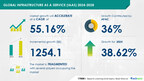
NEW YORK, Aug. 7, 2024 /PRNewswire/ — The global infrastructure as a service (IaaS) market size is estimated to grow by USD 1.25 billion from 2024-2028, according to Technavio. The market is estimated to grow at a CAGR of almost 55.16% during the forecast period. Shift from capex model to opex model is driving market growth, with a trend towards increasing demand for cloud-based applications. However, increasing incidences of data breaches poses a challenge. Key market players include 11 11 Systems Inc., Akamai Technologies Inc., Alibaba Group Holding Ltd., Alphabet Inc., Amazon.com Inc., AT and T Inc., Cisco Systems Inc., Datacom Group Ltd., Dell Technologies Inc., DigitalOcean Holdings Inc., Fujitsu Ltd., HCL Technologies Ltd., Hewlett Packard Enterprise Co., International Business Machines Corp., Microsoft Corp., Nippon Telegraph and Telephone Corp., Oracle Corp., Rackspace Technology Inc., Redcentric plc, and VMware Inc..
Get a detailed analysis on regions, market segments, customer landscape, and companies- View the snapshot of this report
Infrastructure As A Service (Iaas) Market Scope
Report Coverage
Details
Base year
2023
Historic period
2018 – 2022
Forecast period
2024-2028
Growth momentum & CAGR
Accelerate at a CAGR of 55.16%
Market growth 2024-2028
USD 1254.1 billion
Market structure
Fragmented
YoY growth 2022-2023 (%)
38.62
Regional analysis
North America, APAC, Europe, South America, and Middle East and Africa
Performing market contribution
APAC at 36%
Key countries
US, China, UK, Germany, and Japan
Key companies profiled
11 11 Systems Inc., Akamai Technologies Inc., Alibaba Group Holding Ltd., Alphabet Inc., Amazon.com Inc., AT and T Inc., Cisco Systems Inc., Datacom Group Ltd., Dell Technologies Inc., DigitalOcean Holdings Inc., Fujitsu Ltd., HCL Technologies Ltd., Hewlett Packard Enterprise Co., International Business Machines Corp., Microsoft Corp., Nippon Telegraph and Telephone Corp., Oracle Corp., Rackspace Technology Inc., Redcentric plc, and VMware Inc.
Market Driver
The global Infrastructure as a Service (IaaS) market is experiencing significant growth due to the increasing adoption of cloud computing by organizations of all sizes. Cloud-based solutions offer numerous benefits, including quick implementation, improved customer experience, data accessibility, and reduced cost. Small businesses and startups can leverage the scalability of hardware and resources offered by cloud providers, while large organizations can scale their workload as needed without the need for expensive data center setup. The retail, healthcare, manufacturing, telecommunication and IT, media and entertainment, and BFSI industries are among the major adopters of cloud services due to their advantages in reliability, enhanced uptime, and flexibility. Government agencies are also turning to IaaS to address challenges in managing diverse data types and sizes, optimizing services, and ensuring security and compliance. Vendors like Microsoft Azure Government and Datacom Group Ltd. Offer IaaS solutions tailored to government agencies’ specific needs. Despite security concerns, the market is expected to grow due to the benefits of cloud services, including cost savings, increased efficiency, and scalability.
Infrastructure as a Service (IaaS) is a popular cloud computing solution that provides businesses with on-demand access to computing resources, including servers, storage, and networking hardware. IaaS is a key trend in the IT & telecom industry, with many businesses, even Small and Medium-sized Enterprises (SMBs), adopting this model for its flexibility and cost savings. IaaS enables businesses to build a customized IT infrastructure, using hypervisors for virtualization and service-oriented architecture for efficient computing. Data centers provide the necessary physical infrastructure, while cloud services offer plug-and-play services for easy deployment. Sectors like retail & e-commerce, energy & utilities, and healthcare are embracing IaaS for its processing capabilities and evidence-based care, with electronic health records and AI being key applications. However, with the increased use of IaaS comes cybersecurity risks, including cyberattacks and data breaches. Infrastructure-as-a-Service providers offer automation, digitization, and compostability to mitigate these risks and ensure business continuity through disaster recovery. IaaS also supports mobility, enabling businesses to access their applications and data from anywhere, at any time. Overall, IaaS is a game-changer for businesses, offering scalability, flexibility, and cost savings, while minimizing the need for skilled resources and hardware investments.
Discover 360° analysis of this market. For complete information, schedule your consultation – Book Here!
Market Challenges
The global Infrastructure as a Service (IaaS) market is experiencing significant growth due to the increasing adoption of cloud-based application software. However, this market faces a major challenge in the form of data security breaches. XSS, XSRF, and SQL injection attacks are common security threats that put customer data at risk. In a multi-tenant cloud environment, a vulnerable application can compromise the security of other applications sharing the same database infrastructure. This growing concern over data security is leading customers to demand stronger security measures from IaaS providers. Failure to address these security challenges could negatively impact the growth of the IaaS market.Infrastructure as a Service (IaaS) market is witnessing significant growth due to the increasing adoption of cloud computing services. Tintri’s Cloud Engine and Cloud Platform offerings are popular choices for businesses looking to deploy workloads in public, private, or hybrid cloud environments. The Computing and Networking segments are key areas of focus, with industries such as Healthcare, Manufacturing, Retail and e-commerce, IT and Telecom, and Edge Computing leading the charge. Challenges in IaaS include rapid deployment and scalability, hardware requirements, and data security concerns. Data access, location, and privacy are critical issues, especially for sensitive industries. Security threats like data leaks, permanent data loss, application vulnerabilities, and cloud service exploitation are major concerns. Multitenancy, de-provisioning, and hybrid models add complexity to IaaS adoption. Companies must carefully consider their cloud supplier, data protection, and de-provisioning policies to mitigate risks. On-premises data centers and virtualized IT components continue to coexist with cloud solutions. The use of flash drives and external hard drives for data storage adds to the infrastructure complexity. The mobile workforce and distributed cloud computing further complicate network management. Ultimately, businesses must balance the benefits of cloud services with the risks and choose the right infrastructure model for their needs.
For more insights on driver and challenges – Request a sample report!
Segment Overview
This infrastructure as a service (iaas) market report extensively covers market segmentation by
Deployment 1.1 Public cloud1.2 Private cloud1.3 Hybrid cloudEnd-user 2.1 Large enterprises2.2 SMEsGeography 3.1 North America3.2 APAC3.3 Europe3.4 South America3.5 Middle East and Africa
1.1 Public cloud- The Infrastructure as a Service (IaaS) market refers to the delivery of virtualized computing resources over the internet. IaaS providers offer businesses on-demand access to computing power, storage, and networking resources. Companies can rent these resources, pay only for what they use, and easily scale up or down as needed. Major players in the IaaS market include Amazon Web Services, Microsoft Azure, and Google Cloud Platform. These providers offer reliable, secure, and flexible solutions, enabling businesses to focus on their core competencies rather than managing IT infrastructure.
For more information on market segmentation with geographical analysis including forecast (2024-2028) and historic data (2017-2021) – Download a Sample Report
Learn and explore more about Technavio’s in-depth research reports
The global cloud computing market is driven by the increasing demand for scalable IT solutions and cost efficiency. Key players include Amazon Web Services, Microsoft Azure, and Google Cloud. Simultaneously, the global cloud storage services market is expected to fueled by the rising need for data backup and disaster recovery solutions. Major companies in this space are Amazon, Microsoft, and IBM, offering advanced storage solutions and enhanced security features.
Research Analysis
Infrastructure as a Service (IaaS) is a type of cloud computing service that provides businesses with on-demand access to computing resources, such as servers, storage, and networking, without the need for physical infrastructure. IaaS enables rapid deployment of IT resources for running applications and handling day-to-day operations. It offers plug-and-play services, making it easier for businesses, especially Small and Medium-sized Enterprises (SMBs), to digitize their operations. IaaS also supports distributed cloud computing, allowing businesses to access resources from multiple locations. With automation and virtualization, IaaS offers high processing capabilities and scalability, making it an ideal solution for businesses in the IT & telecom industry, retail & e-commerce industry, and other sectors requiring high-performance computing. IaaS also supports disaster recovery, ensuring business continuity in case of unforeseen events. Hardware components like flash drives and external hard drives can be attached to IaaS instances for additional storage needs.
Market Research Overview
Infrastructure as a Service (IaaS) is a cloud computing model that provides virtualized computing resources over the internet. These resources include processing capabilities, storage, and networking, delivered as plug-and-play services. IaaS allows businesses to rapidly deploy and scale their IT infrastructure, making it an attractive option for organizations in various industries such as healthcare, manufacturing, retail and e-commerce, IT and telecom, and more. IaaS providers offer public, private, and hybrid cloud solutions, catering to different business needs. The computing segment includes servers, virtual main memory, and virtualized IT components, while the networking segment focuses on networking hardware and networking services. The benefits of IaaS include automation, digitization, and rapid deployment. However, it also comes with cybersecurity risks, such as cyberattacks, data breaches, and permanent data loss. To mitigate these risks, IaaS providers offer security features like AI, Big Data, and Tintri Cloud Engine and Platform. IaaS enables businesses to access their application workloads and data from anywhere, making it ideal for mobile workforces. It also supports industry-specific requirements, such as evidence-based care in healthcare and service-oriented architecture in IT and telecom. Despite the advantages, IaaS adoption requires careful consideration of factors like data access, data center location, and data security. Businesses must also ensure they have skilled resources to manage their cloud infrastructure and mitigate potential security threats. In conclusion, IaaS is a powerful cloud computing service that offers businesses the flexibility and scalability they need to grow and compete in today’s digital economy. However, it also comes with its challenges, and businesses must carefully evaluate their needs and risks before making the transition.
Table of Contents:
1 Executive Summary
2 Market Landscape
3 Market Sizing
4 Historic Market Size
5 Five Forces Analysis
6 Market Segmentation
DeploymentPublic CloudPrivate CloudHybrid CloudEnd-userLarge EnterprisesSMEsGeographyNorth AmericaAPACEuropeSouth AmericaMiddle East And Africa
7 Customer Landscape
8 Geographic Landscape
9 Drivers, Challenges, and Trends
10 Company Landscape
11 Company Analysis
12 Appendix
About Technavio
Technavio is a leading global technology research and advisory company. Their research and analysis focuses on emerging market trends and provides actionable insights to help businesses identify market opportunities and develop effective strategies to optimize their market positions.
With over 500 specialized analysts, Technavio’s report library consists of more than 17,000 reports and counting, covering 800 technologies, spanning across 50 countries. Their client base consists of enterprises of all sizes, including more than 100 Fortune 500 companies. This growing client base relies on Technavio’s comprehensive coverage, extensive research, and actionable market insights to identify opportunities in existing and potential markets and assess their competitive positions within changing market scenarios.
Contacts
Technavio Research
Jesse Maida
Media & Marketing Executive
US: +1 844 364 1100
UK: +44 203 893 3200
Email: media@technavio.com
Website: www.technavio.com/
View original content to download multimedia:https://www.prnewswire.com/news-releases/infrastructure-as-a-service-iaas-market-size-is-set-to-grow-by-usd-1-25-billion-from-2024-2028–shift-from-capex-model-to-opex-model-boost-the-market-technavio-302215605.html
SOURCE Technavio
You may like
Technology
UPM Half Year Financial Report 2026: Improved second quarter results in all businesses and portfolio change progressing
Published
1 minute agoon
July 23, 2026By
UPM-Kymmene Corporation Stock Exchange Release (Half Year Financial Report) July 23, 2026 at 09:30 EEST
HELSINKI, July 23, 2026 /PRNewswire/ —
UPM Half Year Financial Report 2026:
Improved second quarter results in all businesses and portfolio change progressing
Q2 2026 highlights, continuing operations
Sales totaled €2,355 million (2,341 million in Q2 2025)Comparable EBIT increased by 71% to €212 million, 9.0% of sales (124 million, 5.3%)All businesses improved their results from last yearUPM and Sappi signed a definitive agreement on the graphic paper Joint VentureThe Board approved a plan to demerge the Plywood business into a new listed company. The Extraordinary General Meeting to decide on the demerger plan will be held on August 31, 2026UPM achieved a Platinum rating from EcoVadis and an A score from CDP for its supplier engagement
H1 2026 highlights, continuing operations
Sales totaled €4,781 million (4,914 million in H1 2025)Comparable EBIT increased by 17% to €471 million, 9.8 % of sales (404 million, 8.2 %)Strong performance in Decarbonization solutions businesses (UPM Energy and UPM Biofuels)Robust sales growth and performance in Advanced materials businesses (UPM Adhesive Materials and UPM Specialty Materials)Operating cash flow was €225 million (468 million)1)The first installment of the dividend for the year 2025 was paid in April, totaling €395 millionNet debt was 3,313€ million at the end of June (3,310 million) and net debt to EBITDA ratio was 2.36 (2.12)1)
1) Operating cash, net debt and net debt to EBITDA ratio include continuing and discontinued operations.
UPM Plywood is presented as discontinued operations due to the proposed demerger
On April 29, 2026, the Board of Directors of UPM approved a demerger plan for the separation of the Plywood business into an independent listed company. As a result of the proposed demerger, the Plywood business is presented as a discontinued operation in accordance with IFRS 5. Unless otherwise stated, the commentary in this report relates to UPM’s continuing operations. More information in Financial statement information Note 10 assets and liabilities classified as held for distribution to owners and discontinued operations.
Key figures, continuing operations
Q2/2026
Q2/2025
Q1/2026
Q1-Q2/2026
Q1-Q2/2025
Q1-Q4/2025
Sales, € million
2,355
2,341
2,425
4,781
4,914
9,392
Comparable EBITDA, € million
356
250
375
732
659
1,254
% of sales
15.1
10.7
15.5
15.3
13.4
13.4
Operating profit (loss), € million
208
105
245
453
296
719
Comparable EBIT, € million
212
124
259
471
404
883
% of sales
9.0
5.3
10.7
9.8
8.2
9.4
Profit (loss) before tax, € million
182
83
226
409
249
660
Comparable profit before tax, € million
186
103
240
426
359
825
Profit (loss) for the period, € million
163
70
195
358
208
466
Comparable profit for the period, € million
163
87
203
366
305
684
Earnings per share (EPS), €
0.29
0.13
0.36
0.65
0.38
0.86
Comparable EPS, €
0.29
0.16
0.38
0.67
0.56
1.27
Return on capital employed (ROCE), %
5.9
3.2
7.2
6.6
4.2
5.4
Comparable ROCE, %
6.0
3.7
7.6
6.9
5.7
6.5
Capital employed at the end of period, € million
13,954
14,213
14,186
13,954
14,213
13,948
Personnel at the end of period
13,665
14,764
13,347
13,665
14,764
13,676
UPM presents certain measures of performance, financial position and cash flows, which are alternative performance measures in accordance with the guidance issued by the European Securities and Markets Authority (ESMA). The definitions of alternative performance measures are presented in UPM’s » Annual Report 2025
Key figures, discontinued operations
The financial information presented for the discontinued operations is not representative of the historical or future profitability of the UPM Plywood business area as a standalone business. Information on UPM Plywood’s performance is presented in the segment information.
Q2/2026
Q2/2025
Q1/2026
Q1-Q2/2026
Q1-Q2/2025
Q1-Q4/2025
Sales, € million
84
59
80
164
132
264
Comparable EBITDA, € million
20
7
20
39
19
57
% of sales
23.3
11.9
24.8
24.0
14.8
21.5
Operating profit (loss), € million
9
2
10
20
9
30
Comparable EBIT, € million
18
2
15
33
9
38
% of sales
21.4
3.2
19.0
20.2
6.9
14.4
Profit (loss) before tax, € million
4
2
10
14
9
30
Comparable profit before tax, € million
18
2
15
33
9
38
Profit (loss) for the period, € million
3
1
5
9
7
24
Comparable profit for the period, € million
14
1
9
24
7
31
Return on capital employed (ROCE), %
21.7
3.9
22.0
21.9
9.8
16.4
Comparable ROCE, %
37.4
4.3
32.7
35.1
10.0
20.8
Capital employed at the end of period, € million
196
181
189
196
181
181
Personnel at the end of period
1,519
1,543
1,454
1,519
1,543
1,451
Key figures, UPM total
UPM total
Q2/2026
Q2/2025
Q1/2026
Q1-Q2/2026
Q1-Q2/2025
Q1-Q4/2025
Sales, € million
2,440
2,400
2,505
4,945
5,046
9,656
Comparable EBITDA, € million
376
257
395
771
678
1,311
% of sales
15.4
10.7
15.8
15.6
13.4
13.6
Operating profit (loss), € million
217
107
255
472
305
749
Comparable EBIT, € million
230
126
274
504
413
921
% of sales
9.4
5.2
10.9
10.2
8.2
9.5
Profit (loss) before tax, € million
186
85
236
422
258
690
Comparable profit before tax, € million
204
105
255
459
367
863
Profit (loss) for the period, € million
166
71
200
366
215
491
Comparable profit for the period, € million
177
89
213
390
312
714
Earnings per share (EPS), €
0.30
0.13
0.37
0.67
0.39
0.91
Comparable EPS, €
0.32
0.17
0.39
0.71
0.57
1.33
Return on equity (ROE), %
6.4
2.7
7.6
7.1
3.9
4.5
Comparable ROE, %
6.8
3.4
8.1
7.6
5.7
6.5
Return on capital employed (ROCE), %
6.1
3.2
7.4
6.8
4.3
5.5
Comparable ROCE, %
6.5
3.7
7.9
7.2
5.8
6.7
Operating cash flow, € million
136
179
89
225
468
1,405
Operating cash flow per share, €
0.26
0.34
0.17
0.43
0.88
2.66
Equity per share at the end of period, €
18.86
18.96
19.48
18.86
18.96
18.97
Capital employed at the end of period, € million
14,149
14,394
14,375
14,149
14,394
14,129
Net debt at the end of period, € million
3,313
3,310
2,962
3,313
3,310
3,004
Net debt to EBITDA (last 12 months)
2.36
2.12
2.30
2.36
2.12
2.29
Personnel at the end of period
15,184
16,307
14,801
15,184
16,307
15,127
Massimo Reynaudo, President and CEO, comments on the results:
“In the second quarter, we reached two important milestones in the transformation of UPM. We signed the definitive agreement to create the graphic paper joint venture with Sappi, and advanced the separation of the plywood business into the future WISA Group. Following these steps, UPM is positioned with stronger growth prospects and improved earnings quality.
During the quarter, all our businesses improved their results compared to the same period last year, with most also outperforming the previous quarter. Increased volumes, margin management and sustained efficiency measures supported our profitability in a business environment that turned inflationary.
In Q2, sales from our continuing operations were slightly up at €2,355 million, and comparable EBIT increased to €212 million, 71 percent higher than in the same period last year. Net debt at the end of the reporting period was €3,313 million, including both continuing and discontinued operations, and net debt to EBITDA ratio was 2.36.
In decarbonization solutions, UPM Biofuels recorded a strong quarter with good demand and healthy bio-premiums for advanced renewable fuels. Prices were further supported by higher fossil fuel reference prices. The ramp-up of our biorefinery in Leuna, Germany, continued. Customer deliveries of industrial sugars reached substantial volumes, and deliveries of renewable functional fillers and other lignin derivatives are expected to start during Q3. UPM Energy improved its results from last year, although the second quarter saw normal seasonality. Structurally, electricity consumption continued to grow year-on-year, and we are well positioned to create value by serving new large-scale consumers.
The markets for our advanced materials businesses, UPM Adhesive Materials and UPM Specialty Materials, showed robust growth in Europe and Asia. Both businesses succeeded in the markets, thanks to a focus on commercial excellence and product portfolio development, and sharpened competitiveness.
Our world-class pulp platform in Uruguay, UPM Fibres South, has consistently improved efficiency for several quarters in a row. In the second quarter, this helped us to fully offset the increases in logistics and other costs. Profitability was further improved by a moderate increase in pulp prices.
For the Fibres North platform in Finland, the business environment is challenging. Even though pulpwood prices have decreased, profitability remains low. The second quarter earnings were also impacted by the maintenance shutdown at the UPM Pietarsaari mill. We are planning temporary shutdowns of the UPM Kaukas pulp mill and potentially the UPM Pietarsaari pulp mill, to optimize production and wood sourcing, and ensure profitability.
UPM Communication Papers’ business performance was broadly stable, with slightly improved margins. Preparations for the planned graphic paper Joint Venture continued. In late May we signed the definitive agreement with Sappi, and secured financing arrangements for the Joint Venture. The EU merger control process moved to Phase II, with final resolutions expected by the end of 2026.
UPM Plywood continued to perform well as the business prepared for separation into an independent listed company, WISA Group. In April, the Board of Directors approved the demerger plan. Subject to the decision of the Extraordinary General Meeting, trading in the shares of WISA Group on Nasdaq Helsinki is currently expected to commence in early November. By separating the plywood business onto its own growth path, we are strengthening its future prospects and streamlining UPM’s business portfolio.
Following the planned graphic paper joint venture and plywood separation, UPM operates in structurally growing markets. The ongoing reshaping of UPM’s portfolio highlights our position in businesses with stronger growth characteristics, and our direction going forward is towards higher value-added products and lower cyclicality.”
Profit guidance, continuing operations
UPM’s comparable EBIT in H2 2026 from continuing operations is expected to be approximately in the range of €375-575 million (€479 million in H2 2025, and €471 million in H1 2026). These figures exclude UPM Plywood, which is classified as discontinued operations.
Outlook
There continue to be significant uncertainties in geopolitics and trade.
In H2 2026, compared with H1 2026, UPM’s performance is expected to be supported by moderately higher sales prices. Variable costs are expected to increase moderately. Energy refunds are expected to support UPM Communication Papers’ result in Q4. Maintenance activity is expected to increase from the comparison period. The production ramp-up at UPM Leuna is expected to increase costs.
In H2 2026, compared with H2 2025, UPM’s performance is expected to benefit from higher sales prices. Variable costs are expected to increase moderately. Fair value change of forest assets is expected to have a significantly smaller impact on comparable EBIT in H2 2026 than in H2 2025 (€131 million). The energy refunds to be booked in UPM Communication Papers in Q4 are anticipated to have a somewhat smaller positive impact than in 2025. Maintenance activity is expected to increase from the comparison period. The production ramp-up at UPM Leuna is expected to increase costs.
Sensitivity to pulp and electricity prices
UPM’s comparable EBIT is sensitive to pulp and electricity prices. The figures below represent group earnings sensitivities on annual level.
UPM is a large producer and consumer of chemical pulp. A €50/tonne change in average pulp price would impact annual comparable EBIT by approximately €180 million (net impact: assuming no correlation between pulp and paper prices) to approximately €270 million (gross impact: assuming paper pricing would match changes in pulp costs).
UPM is a large producer and consumer of electricity in Finland and separately hedges part of its electricity sales and purchases. Based on UPM’s estimated unhedged net electricity sales position in Finland in 2026, a €10/MWh change in average electricity market price in Finland would impact annual comparable EBIT by approximately €40 million.
Foreign exchange exposure
Fluctuations in monetary policies and economic conditions can significantly impact the value of various currencies, which in turn may affect UPM. Additionally, the escalation of global trade tensions could influence currency exchange rates. These currency fluctuations could impact UPM’s cash flow, earnings, or balance sheet, and may also affect the relative competitiveness between different currency regions.
The Group’s policy is to hedge an average of 50% of its estimated net currency cash flows on a rolling basis over the next 12-month period. At the end of Q2 2026, UPM’s estimated net currency cash flows for the next 12 months totaled approximately €1.5 billion. USD was the largest exposure at approximately €1.4 billion, followed by UYU, GBP, CNY and JPY. In addition, the earnings of UPM’s foreign subsidiaries are translated to euros in reporting. UPM has significant foreign subsidiaries in Uruguay, the U.S. and China. Foreign exchange risks are discussed in UPM’s Annual Report 2025 on pages 313-314.
Invitation to UPM’s webcast on the half-year financial report 2026
A webcast and a conference call for analysts and investors will start at 13:15 EEST. The 2026 half-year financial report will be presented in English by President and CEO Massimo Reynaudo and CFO Tapio Korpeinen. Participants can follow the webcast online via this link.
Participants wishing to ask questions after the presentation must register for the conference call. To participate in the conference call, please register here. After registering, you will be provided with telephone numbers, a user ID and a conference ID to access the conference. To ask a question, press *5 on your telephone keypad to join the queue.
The webcast will be available on the company website for 12 months after the call.
*
It should be noted that certain statements herein, which are not historical facts, including, without limitation, those regarding expectations for market growth and developments; expectations for growth and profitability; and statements preceded by “believes”, “expects”, “anticipates”, “foresees”, or similar expressions, are forward-looking statements. Since these statements are based on current plans, estimates and projections, they involve risks and uncertainties which may cause actual results to materially differ from those expressed in such forward-looking statements. Such factors include, but are not limited to: (1) operating factors such as continued success of manufacturing activities and the achievement of efficiencies therein including the availability and cost of production inputs, continued success of product development, acceptance of new products or services by the Group’s targeted customers, success of the existing and future collaboration arrangements, changes in business strategy or development plans or targets, changes in the degree of protection created by the Group’s patents and other intellectual property rights, the availability of capital on acceptable terms; (2) industry conditions, such as strength of product demand, intensity of competition, prevailing and future global market prices for the Group’s products and the pricing pressures thereto, financial condition of the customers and the competitors of the Group, the potential introduction of competing products and technologies by competitors; and (3) general economic conditions, such as rates of economic growth in the Group’s principal geographic markets or fluctuations in exchange and interest rates. The main earnings sensitivities and the group’s cost structure are presented on page 276 of the Annual Report 2025. Risks and opportunities are discussed on pages 31-33, and risks and risk management are presented on pages 128-132.
UPM, Media relations
Mon-Fri 9:00-16:00 EEST
tel. +358 40 588 3284
media@upm.com
UPM
UPM is a material solutions company, renewing products and entire value chains with an extensive portfolio of renewable fibres, advanced materials, decarbonization solutions, and communication papers. Our performance in sustainability has been recognized by third parties, including EcoVadis and the Dow Jones Sustainability Indices. We operate globally and employ approximately 15,100 people worldwide, with annual sales of approximately €9.7 billion. Our shares are listed on Nasdaq Helsinki Ltd.
UPM – we renew the everyday
Read more: upm.com
Follow us on LinkedIn | YouTube | Instagram | #UPM #materialsolutions #WeRenewTheEveryday
This information was brought to you by Cision http://news.cision.com
The following files are available for download:
https://mb.cision.com/Main/23100/4377000/4201405.pdf
UPM-Half-Year-Financial-Report-2026-en
View original content:https://www.prnewswire.co.uk/news-releases/upm-half-year-financial-report-2026-improved-second-quarter-results-in-all-businesses-and-portfolio-change-progressing-302833082.html
Technology
Acrab Unveils GΞLIX 1 SoC and Agent Box, Bringing State-of-the-Art AI to the Edge
Published
1 minute agoon
July 23, 2026By
Built on a 5-nanometer process, the new SoC is designed to support models in the 100 billion parameter class, with full-stack software for private and responsive AI agents at the edge
SINGAPORE, July 23, 2026 /PRNewswire/ — Acrab, a technology company building agentic AI compute infrastructure for the next generation of intelligent systems, today unveiled GΞLIX 1, its first-generation edge AI system-on-chip (SoC), together with Agent Box, a personal edge AI system powered by the company’s full-stack computing platform.
As AI moves from generating answers to completing tasks, agents increasingly need to understand context, remember preferences and coordinate tools and devices in real time. Running these capabilities locally can produce faster responses, keep sensitive information under the user’s control and maintain core functions when cloud connectivity is limited.
For years, models in the 100 billion parameter class have required cloud infrastructure. GΞLIX 1 is designed to bring state-of-the-art AI models at this scale into locally operated edge systems. Powered by GΞLIX, Acrab’s Agent Box is a high-performance personal edge AI center designed to put AI agents into action in a more personal and customized way, with local large model inference, persistent memory, multimodal interactions and agent orchestration capabilities.
By replacing cloud AI’s recurring token-fees per use, Agent Box is a one-time investment with long-term value, hence relieving users’ token anxiety, and allowing AI to move from an occasional tool into an always-available assistant woven into everyday work and life.
“Generative AI helped people find answers. Agentic AI will help them get things done,” said Dr. Ken Phua, CEO of Acrab. “Running models in the 100 billion parameter class on a system small enough to sit on a desk presents a significant computing challenge. GΞLIX 1 is designed to deliver the performance, memory bandwidth and responsive local inference required, while Agent Box shows how that capability can become a complete user experience.”
A private AI center built for everyday life
Agent Box is designed as a private, always-on AI center for personal workspaces and homes. It keeps intelligence close to the people, information and physical environments it serves, while showing how device makers can turn Acrab’s computing platform into complete agentic AI experiences.
For decades, personal computing advanced in predictable steps: faster processors, larger screens, more storage. Agent Box represents something else entirely—the first system designed not to run programs, but to host intelligence.
Agent Box brings together local language and vision model inference, multimodal interaction, persistent memory and an orchestration layer that can understand goals, break tasks into steps and coordinate action across agents, systems and connected devices. Users’ data and memories remain private and stored locally on the device, while the system grows more capable and customized as the context deepens and memories accumulate. Acrab designed the compute architecture from the ground up to achieve optimal local AI performance, usability, cost efficiency, and power efficiency within one device.
A purpose-designed SoC for large model inference at the edge
GΞLIX 1 is built on a 5-nanometer process and is Acrab’s first SoC designed specifically for edge AI. Rather than relying on separate compute components, it integrates CPU, GPU and NPU resources with a unified memory architecture engineered for large AI models and agentic workloads.
The SoC features a 20-core Arm CPU, multicore NPU acceleration and 273 GB/s of unified memory bandwidth. It is designed to support local deployment of open-source models in up to the 100 billion parameter class, with coordinated execution across CPU, GPU and NPU resources. Supporting models at this scale locally places substantial demands on computing performance, memory bandwidth and power efficiency.
GΞLIX 1 is engineered for rapid responses at power levels suitable for systems that remain active throughout the day. A central design goal was reducing the delay before a model begins to respond, particularly with long prompts and large context windows.
In company testing, GΞLIX 1 achieved a prefill rate of 1416.8 tokens per second under a Gemma 26B A4B configuration with a 40K KV cache and a 10K token input, compared with 188.9 tokens per second on Mac Mini M4 Pro, representing up to 7.5X faster prefill performance. These capabilities turn a single chip into a versatile supercomputing platform for a wide range of applications.
A full-stack platform, from silicon to applications
Beyond the SoC, Acrab has built the software and system layers needed to turn local model inference into working agentic products. These include an optimized runtime and developer toolchain, agent operating system capabilities, reference designs and applications that help devices understand context, retain memory and coordinate real-world action.
Agent Box is the first expression of Acrab’s broader ambition to provide a horizontal computing foundation for agentic AI across a wide range of edge devices and intelligent systems.
Processing a substantial share of AI workloads locally can reduce dependence on metered cloud inference, lower recurring processing and data transfer costs, and avoid the delay involved in sending every interaction to a remote service. Cloud resources can still be used when a task requires them, allowing developers to choose the right balance between local and cloud execution.
Building a broader edge AI device ecosystem
Acrab plans to work with device manufacturers and developers to bring its computing platform into products including AI NAS systems, AI PCs, smart vehicles, and industrial and service robots.
Agent Box demonstrates how Acrab’s silicon and software can be integrated into a complete product experience. The company aims to provide a complete set of compute platform and agent-native infrastructure for the next generation of AI transformation across industries. By combining custom AI silicon, full-stack software, and reference designs of agents for use scenarios, Acrab enables industry partners and developers to bring intelligent AI products to market faster.
“Our goal is to give device makers and developers the foundation to bring agentic intelligence into many different products and environments,” Dr. Phua said. “Agent Box demonstrates what the technology can do today, while GΞLIX 1 and our full-stack platform are designed to support a much broader ecosystem of devices and applications.”
Product Launch Event Video Replay:
https://www.acrab.ai/https://www.youtube.com/watch?v=WdojjwucdTQhttps://www.linkedin.com/events/7484797078045401088/
About Acrab
Acrab is a technology company building agentic AI compute infrastructure for the next generation of intelligent systems. Founded in 2024, the company develops high-performance AI compute architecture and integrated software platforms designed to bring AI agents into action, providing personalized assistance and real-time execution across a range of edge environments.
By combining purpose-designed silicon, advanced edge AI models, full-stack software and system orchestration, Acrab provides the computing foundation for AI agent systems across everyday life, bringing assistance, creativity, utility and value.
In June 2026, Acrab announced that it had received over US$350 million in cumulative financing from global venture capital firms and strategic industry investors, including early backers Vertex Ventures Southeast Asia & India, Vertex Growth, and K3.
For more information about Acrab, please visit https://www.acrab.ai/.
View original content to download multimedia:https://www.prnewswire.com/news-releases/acrab-unveils-glix-1-soc-and-agent-box-bringing-state-of-the-art-ai-to-the-edge-302833081.html
SOURCE Acrab
Technology
IDnow Appoints Philippe Morel as Chief Executive Officer
Published
1 minute agoon
July 23, 2026By
Philippe Morel brings over 30 years of financial services and technology leadership experience, with a track record of scaling regulated platform businesses in partnership with private equity.
MUNICH, July 23, 2026 /PRNewswire/ — IDnow, Europe’s leader in digital identity and fraud prevention, today announces the appointment of Philippe Morel as Chief Executive Officer, effective today. Philippe succeeds Andreas Bodczek, who steps down after more than seven years of leadership that transformed IDnow into a leading European provider of digital identity and fraud prevention.
The IDnow Trust Platform: From KYC to Continuous Trust
In June 2026, IDnow launched the IDnow Trust Platform, marking the company’s expansion beyond traditional identity verification. Designed to help regulated organisations move from Know Your Customer (KYC) to Trust Your Customer (TYC), the platform orchestrates identity verification, fraud prevention, biometric authentication and qualified digital trust services across the full customer lifecycle. Through four modular services — Identify, Authenticate, Protect and Trust — and its Orchestrate, Observe and Decide capabilities, customers can configure workflows, monitor risk signals in real time and automate decisions through a single integration. The platform is built to help organisations adapt to the evolving European regulatory landscape, including AMLR, eIDAS 2.0 and the emergence of EU Digital Identity Wallets, while addressing increasingly sophisticated AI-driven fraud.
A New Chapter for IDnow
Philippe Morel brings more than 30 years of leadership experience spanning financial services, technology platforms and regulated environments, with a consistent track record of strategic transformation and value creation in partnership with private equity.
Most recently, Philippe served as Chief Executive Officer of Railsr, a payments and embedded finance platform, where he led strategic repositioning and commercial rebuilding before the merger with Equals Money.
Prior to that, Philippe served as CEO of SETL, a blockchain-based financial market infrastructure provider, where he repositioned the business into payments and digital settlement networks, launched the Regulated Liability Network (RLN) tested with the New York Federal Reserve, and delivered tokenisation projects for tier-one financial institutions.
Before his executive career, Philippe worked at Boston Consulting Group, rising to Senior Partner and Managing Director. He led BCG’s Global Capital Markets practice and its Private Equity EMEA business, advising boards and CEOs of major financial institutions on strategy, transformation, M&A and growth across Europe, the US and Asia. He also served for nine years as Chair of BCG’s Global Audit and Risk Committee.
Philippe holds an MBA from Harvard Business School and a degree in Finance from HEC Paris.
Board Statement
Martin McCourt, Chair of IDnow, said: “We are delighted to welcome Philippe to IDnow at a pivotal moment. IDnow has recently launched its Trust Platform, expanding beyond traditional identity verification to help regulated organisations orchestrate identity, fraud prevention and compliance across the full customer lifecycle. Philippe’s background — combining deep strategic expertise with hands-on leadership of regulated technology and financial services platforms — is ideally suited to the opportunity ahead. We are confident that he will lead IDnow into its next phase of growth.”
Philippe Morel Statement
“IDnow is a genuinely exceptional business — a European-born leader in digital identity and fraud prevention at a moment when regulation, digital identity wallets and increasingly sophisticated fraud are reshaping the market. The newly launched IDnow Trust Platform is designed to help customers move beyond one-time verification towards continuous trust across the full customer lifecycle. I am energised by what this team has achieved and by the opportunity ahead. My first priority is to listen: to our customers, our colleagues and our partners. From there, we will define and execute IDnow’s next phase of growth together.”
A Tribute to Andreas Bodczek
The Board also takes this opportunity to express its deep gratitude to Andreas Bodczek, who has led IDnow with extraordinary vision and commitment since 2018. A seasoned technology entrepreneur with a Diplom Kaufmann from LMU München, Andreas brought to IDnow the experience of building and scaling digital businesses: as co-founder and CEO of Fyber, which he grew into a globally recognised mobile technology platform, a board partner at Point Nine Capital, and chairman at JTL Software.
At IDnow, his impact was transformative. He led the company through a pivotal transition from founder-led to PE-backed under Corsair’s ownership, providing the foundation for sustained growth. He drove the acquisitions of identity Trust Management AG and ARIADNEXT — the French market leader in remote identity verification — which significantly expanded IDnow’s capabilities, brought the Rennes engineering hub into the group, and established IDnow’s presence across Europe. Most recently, he oversaw the launch of the IDnow Trust Platform, marking the company’s expansion beyond traditional identity verification and creating a unified platform for identity, fraud prevention, authentication and qualified digital trust services across the customer lifecycle. His leadership has positioned IDnow well for its next chapter, and we wish him every success in what comes next.
About IDnow
IDnow is Europe’s leader in digital identity and fraud prevention, with a mission to transform trust into a powerful asset in the digital world. Through its broad portfolio of AI-driven, SaaS-based identity and fraud prevention solutions, IDnow establishes, maintains and enriches trust throughout the customer journey, enabling businesses to operate securely while driving growth and scalability. The IDnow Trust Platform provides unified access to identity verification, fraud prevention, biometric authentication and qualified digital trust services. IDnow has offices in Germany, the United Kingdom, Romania and France and is backed by Corsair Capital.
For more information, visit idnow.io.
View original content to download multimedia:https://www.prnewswire.com/news-releases/idnow-appoints-philippe-morel-as-chief-executive-officer-302832286.html
SOURCE IDnow
UPM Half Year Financial Report 2026: Improved second quarter results in all businesses and portfolio change progressing
Acrab Unveils GΞLIX 1 SoC and Agent Box, Bringing State-of-the-Art AI to the Edge
IDnow Appoints Philippe Morel as Chief Executive Officer
Send Rakhi to UK swiftly with UK Gifts Portal
Whiteboard Series with NEAR | Ep: 45 Joel Thorstensson from ceramic.network
New Gooseneck Omni Antennas Offer Enhanced Signals in a Durable Package
Why You Should Build on #NEAR – Co-founder Illia Polosukhin at CV Labs
Whiteboard Series with NEAR | Ep: 45 Joel Thorstensson from ceramic.network
NEAR End of Year Town Hall 2021: The Open Web World, MetaBUILD 2 Hackathon and 2021 recap
Trending
-
Technology4 days agoEmdoor Launches “Ailyn” AI Hub at WAIC 2026: Unifying Intelligence Across Every Device
-
Coin Market4 days agoSaylor turns up heat with ‘110 reasons’ why BIP-110 is a bad idea
-
Technology5 days agoLaifen Expands U.S. Retail Footprint with Costco Launch of Best-Selling SE Hair Dryer
-
Technology5 days agoAI-Powered Connectivity: APAC Charts a Path to a Smarter Digital Future
-
Coin Market3 days agoWill the US get CLARITY this week? Bitcoin’s new $80K target: Hodler’s Digest, July 19
-
Technology4 days agoPenetron Strengthens Global Research Collaboration at ICSHM 2026
-
Technology3 days ago“Every Day CO₂ Challenge”: More Than a Game, A New Way of Learning
-
Technology5 days agoBest AI Design Tools (2026): CapCut Named a Top Choice for Creating Images and Marketing Assets by Software Experts